

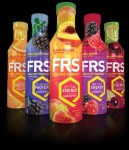
The Long Road for FRS
Raising money, buying factories, killing product lines, searching for distribution: The tale of a functional beverage company in disarray.

As Editor-in-Chief of BevNET, Jeff Klineman oversees the organization's reporting across all of its web sites, as well as BevNET Magazine. Jeff also plans, curates, and hosts the BevNET Live and NOSH Live conferences. Jeff previously worked as a newspaper reporter for the Lawrence Eagle-Tribune, the Boston TAB and the Metrowest Daily News, and has freelanced for publications like Slate, Boston Magazine, Self, George, Commonwealth, and the Chronicle of Philanthropy. He is a graduate of Yale University and Columbia University’s Graduate School of Journalism. A frequently-cited expert on the beverage industry, Jeff has also twice been named in Forbes as one of the 25 Most Influential when it comes to Consumer and Retail Companies.
Raising money, buying factories, killing product lines, searching for distribution: The tale of a functional beverage company in disarray.
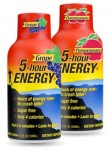
Celebrity lawyer Mark Geragos is shepherding a class-action lawsuit filed against 5-Hour Energy Monday in the U.S. District Court in the Central District of California. According to the suit, 5-Hour energy’s advertising claims of “hours of energy now, no crash later” are not scientifically supported and that its effects are not superior to other caffeine-based products like coffee or caffeine pills.

FTC Commissioners recently ruled against POM Wonderful on a variety of claims made in advertisements and on the company's web site that the company's pomegranate juice products could treat, prevent, or reduce the risk of heart disease, prostate cancer, and erectile dysfunction.
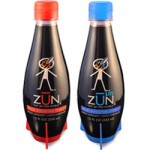
ZUN founder Brian Stearns is pulling out of the energy and brain boosting business altogether, announcing that the brand is reinventing itself “as an all-natural ‘kid friendly’ beverage.”

Two of the largest tart cherry producing states, Michigan and New York, had terrible yields in 2012, the result of an early spring heat wave that encouraged blooms 5 1/2 weeks early -- and put the tender blossoms, as well as the juice company's own prospects, at the mercy of the snow and ice that followed. Cheribundi was forced to adapt, and did so by re-branding its products.
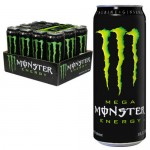
The company issued a statement that called the DAWN report, which included information that energy drink-related emergency room visits had doubled in the U.S. from 10,068 in 2007 to a total of nearly 21,000 in 2011, "highly misleading and does not support any conclusion that energy drinks are unsafe for consumers."

On Thursday, Sens. Richard Blumenthal (D-Conn.) and Richard Durbin (D-Ill.) joined an effort by Rep. Edward Markey (D-Mass.) to push the FTC to begin investigating the marketing practices of energy drink companies. The move, while not a full strategic pivot, as the agencies often work on parallel tracks to ensure consumer protection, represents something of a strategic recalibration from the two senators’ previous attempts to force the FDA to take a harder look at energy drinks.

Mistakes have been made, but they're acceptable. So is spending a lot of money to spend a brand. At least, that's the assessment of Mike Repole, the chairman of Body Armor, who earlier today revealed that he and company founder Lance Collins, along with other investors, are willing to spend approximately $50 million over a 4-5 year period in marketing and building their year-old brand of "superdrink."
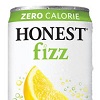
It's a Whole Foods exclusive for a while, natch. According to the company's Twitter account, it is releasing the four-flavor line in "Austin, SA, Houston, Dallas, New Orleans and beyond." The flavors for Honest Fizz, which will be available in 12 oz. cans and 6-packs, include Root Beer, Lemon "Limey", Orange Pop, and (perhaps in tribute to Yale School of Management-based co-founder Barry Nalebuff?) cherry-flavored "Professor Fizz."
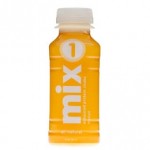
The nutritional and performance shake company, which was 69 percent Hershey-owned, "has decided to immediately cease operations and dissolve," noted a brief press release sent to BevNET. The reasons? A competitive category requiring further investment to make the company work.
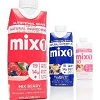
All-natural protein smoothie company Mix1 is on the verge of shutting its doors, just three months after the Hershey-controlled brand announced a broad redesign. Employees were informed of the state of the company on Wednesday and an announcement is expected from Mix1 on Friday; calls to CEO Brian Murphy were unreturned.

The original cap dispensing brand, which is now majority-owned by Indian conglomerate Tata, is planning a major functional innovation push in the late spring, according to Reza Mizra, who became president of the company in October.
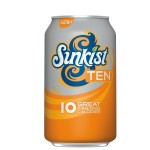
Dr Pepper Snapple Group announced via Twitter today that next month it will begin a national roll-out of 10-calorie versions of five soda brands, including 7-Up, Sunkist, Canada Dry, RC Cola and A&W Root Beer.

As my children have taught me, the scariest monsters are the ones you can’t see. And when it comes to scares, it’s certainly been a tough couple of months for Monster Energy, which has seen its share price ride something like the “Scream Machine” while it faces waves of negative publicity and scrutiny from state and federal authorities, lawyers, the media, and a public that is increasingly starting to rethink its relationship with these products.