Search across the BevNET CPG Media network including BevNET, Nosh, Brewbound, Taste Radio, Nombase and CPG Jobs.

Beverage School: Angel and Venture Capital Transactions
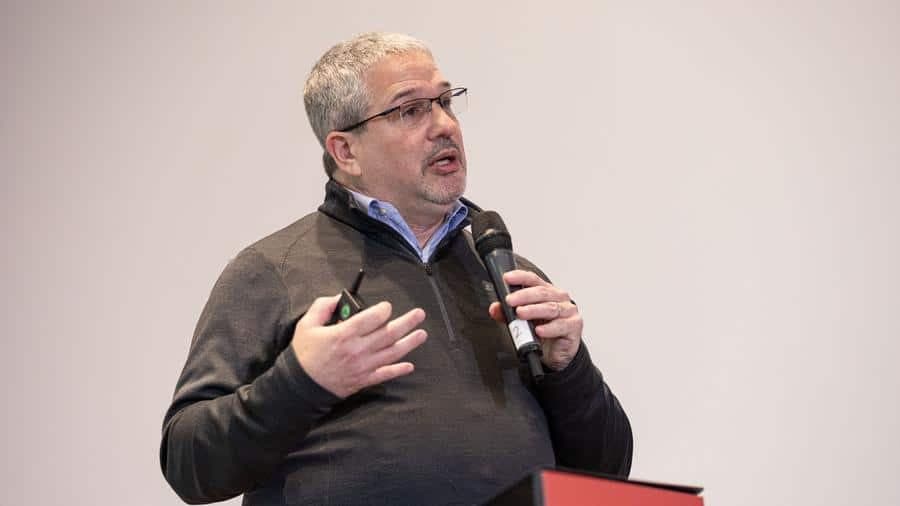
Partner; Co-Lead, Food and Beverage Group, Nutter
Jeremy Halpern is a Partner at Nutter, McClennen & Fish, LLP and the Co-Chair of its Emerging Companies Group and its Food and Beverage Practice Group. Jeremy’s practice focuses on emerging and mature operating companies, private equity, venture capital and angel financing transactions, mergers and acquisitions, commercial transactions, executive and team compensation matters, and general support for high growth and privately held companies in technology, life sciences, and consumer products. Concurrently, Jeremy is a member of the board of Naturally New England, a non-profit serving the natural and organic consumer product industry, and is a member of the Advisory Board for the UCLA School of Law Resnick Center for Food Law & Policy. Previously, Jeremy served on the Board of Directors and the Investment Committee of MassVentures, an early stage venture capital fund geared toward technology companies in Massachusetts, and as the founder of Edible Ventures, the nation’s first angel group specifically investing in high growth food and beverage companies. Jeremy was also previously a Director and the Executive Chairman of The Capital Network, a Boston-based nonprofit serving entrepreneurs seeking high growth capital. Jeremy was previously the co-founder of a company in the mobile technology synchronization space. Jeremy is a prior recipient of the Boston Business Journal’s 40 under 40 Award. Jeremy spent nine years teaching entrepreneurial leadership at Tufts University and has guest lectured at Babson, Harvard, Boston University, Tufts, MIT and Savannah College of Art and Design (SCAD). Jeremy received his B.A. from U.C. Berkeley, summa cum laude; phi beta kappa, and his J.D., from the UCLA School of Law.
Transcript
Note: Transcripts are automatically generated and may contain inaccuracies and spelling errors.
Speaker 1 [00:16] Next up, we have Jeremy Halpern. He is co-chair and partner of another emerging Companies Group and Food and beverage Practice Group. He's here to walk us through everything you need to consider when taking Angel or VC money.
Speaker 2 [00:32] Good Morning. We are insufficiently caffeinated. Good morning. Fantastic. Nothing says super high energy like three lawyers in a row. Jesus. Um, well, thanks everybody for coming. Uh, I'm gonna just breeze through the intro slides as fast as humanly possible, but, um, uh, who is Nutter? Uh, the long name of the firm is Nutter, McClennan and Fish, since nobody can ever spell that. Uh, we just go by Nutter. Uh, we're based on the East Coast, but the practice is all across the country. Um, the Things that you guys are interested in are all the things that we do corporate, commercial, intellectual property, mergers and acquisitions, finance, employment tax, all that stuff. So all the kind of core nuts and bolts of your company are stuff that we do. Um, and we do that for brands like you, kind of smaller early stage brands. We also do it for brands that have kind of reached that next level, right? National distribution, a lot of penetration in that growth stage, starting to kind of work towards an exit. And we also work for some very large brands who are either family owned, public, uh, employee owned, and they're, they're not necessarily on the exit path, but they are real players in the field. So, um, kind of a broad spectrum. And we do work with companies all the way from the beginning all the way to the end, so everybody from the buys of the world where the exits were in the billions to smaller companies that had more compact exits, but that made sense for that brand and those stockholders. Um, it's a big team. I'm not going to make you look at all the pictures. My colleague Ellie Meyers is in the back. If you get a chance to chat with she or I, please do so. My background's a little unusual. I'm a lawyer, but I spent time as an entrepreneur, as an angel investor, as a venture capitalist, and even spent a stint as an investment banker. So raising money. I have put my own money in. I've put other people's money in. I've put other people, other people's money in. I've helped other people put money in. It's a little nutty, but It does give me a little bit of an interesting perspective, and one of the things to remember is that sometimes we contextualize things in our heads and we use the wrong analog. So how many of you own like a Fidelity or an E-Trade account? Right? So when you buy shares of Microsoft, that is not the thing we are doing in this context when you are raising money. Why? Because when you buy shares on a public market, you're buying those shares from who? From the company? No, from another stockholder. Does the company even know it's happened? No. In fact, if you're both, if the buyer and seller are on the same platform, if you're both Fidelity, they will never know what's happened. As far as that company knows, Fidelity owns x amount of shares. They don't care who's underneath that. So nothing happens to the company. Shareholder A sells to shareholder B. Shareholder A, the seller, experiences a tax event. Shareholder B is the new owner. But that's not our world. And sometimes founders will come to us and say, Well, how many shares am I going to sell of my shares to my angel investors? And we go, 0. Zero of your shares. Your shares, your units, they stay in your pocket in the vault, never to be seen again. What actually happens? The company issues new shares. So whatever, if you're a sole founder, just picture A, B, and C as all you. In your world there's a preexisting group of people. They own the equity of the business, and when you go to sell new equity, cash flows into the company and shares or membership units flow out from the company to the new investors. That process of going from owning 100% of a thing. To owning less than 100% of a thing as a group is dilution. That's when you hear the word dilution, that's what that means. My percent went down. That's not a bad thing. If you could sell one share for $100 million. Anybody sad that you went from 100 to 99%? Right? It's dilution is not the enemy. Dilution at low value is the enemy, right? And I will remind you, and somewhere there's one of the investment bankers who is about to come up here or venture firms. No company fails for dilution. A lot of companies fail for running out of cash. Right, so when you're thinking about what would I take, what kind of dilution would I accept to run this business, you really have to contextualize it with what's my next best option. It's like any kind of negotiation. What's my alternative to saying yes to this deal? What do I want? What are my goals? What are the risks? So in this story you take some money from folks. How does that work? You start off with a number, a negotiated number. We can run 2 hours' worth of conversation around how do you get to a valuation. This is just a number. You can put any number you want up there. Let's say somebody says $900,000. How do you get to how much they own? An easy way to think about it is The valuation plus the new money is the post. Pre plus cash is post, and they own their dollars divided by the post. So if I put 100 on $900 I own 1/10, not 1/9, not 1/9. Because we're not transferring value, we're adding value into the bucket. Right, so there's 900,000, it doesn't matter what number you start with as the pre-money capitalization of the company, it could be a billion units, it could be two units, doesn't matter. It all works the same. But here's where it gets a little tricky, is that The people investing in you are usually much more sophisticated about this than you are, and one of the reasons to work with good counsel and to have a good board of advisors or good just general advisors is because they're also repeat players. They see how this stuff plays out, and we can do the same deal, 100 on 900, and we can end up with wildly different economic results based on a bunch of the other levers that get thrown in that deal. Price is one lever. And everything that you get with price can be taken away from you. With those other levers and so angel investors used to have a joke, and I ran the first angel group in America that only invested into CPG. OK, the joke is, you want to set the price? Cool. I'll set the rest of the terms. Don't take that deal. Say no, run away. OK, they all the terms matter. And we talked about to negotiate a price. What's one of the first things that happens? One of the first things that happens is investors start monkeying with what that pre-money capitalization looks like, because the first thing they'll say is, Well, you've showed me this cool PowerPoint plan. That says you're going to go from $500,000 in sales to $3 million in sales and you're going to use my $1 million.02 million dollars, whatever it is to do it. And the investor goes, Cool, but you're going to have to hire 5 people in marketing and sales, and all those people are going to come in and they're going to want cash. That's what part of my cash is being used for, and they're going to want equity. And so all that equity, I'm going to pretend like it already was issued to people before I put money in. So I, the new investor, am not deluded by those issuances. I'm going to pretend like they've already happened. We're going to count it as if they have already happened. So by adding numbers to that denominator. All of a sudden we change who gets deluded by what, and I'm just going to show you a graphic. Well, that's in chart form, right? All of a sudden, I investors still ended up with the same 10%. 1 on 9 But all of a sudden you went from 90% to 81%. Why? Because I said, well, there's going to be a plan of shares that's available for those new hires, and all of it is coming out of your side. I am not sharing in any of the dilution. I'm still 10%. By the way, that game happens at every stage of financing. So you do this at the seed round, and at the A round, and at the B round. There's a whole conversation about how many new shares show up in the pre-money. So that's how you think of it. I own the whole enchilada, you being you and your cofounders. But the reality is it's not true. Right from the beginning we're going to set out that out of your end of the pie is going to be a bunch of folks who are getting equity. And then, and we'll talk about this in a minute, I get my new investment. I get my 10%. It doesn't matter what's happening in the rest of the pie, I get my 10%. Everyone clear? If I say 1 on 9, I'm going to get 10%. We can do all kinds of things to the deal. I'm going to get 10%. PS Here's what happens a lot these days. A lot of you have sold notes, safes, napkin commitments. I came from Holly Hollywood where no joke, like people did cocktail napkin deals. Here you go. We see a lot of that. All of that stuff from the investor's point of view comes out of your end of the deal. You'll notice the investor in this story, the number of shares keeps going up, but the percentage stays the same. New investor, still 10%. If you've sold notes, you've sold safes, your end of the deal. Right, it's all coming out of the pre-money. So what does that mean when investors are buying these days equity investors, they're buying a percentage of the company. Now that percentage will get diluted over time in the future, but at the moment of closing, they know what percentage they own. If I put 1 on 9, I have 10%. I have 10%. That means you have to agree on a valuation. Oftentimes people will use derivative things like notes and safes, which I'll talk about in one minute. Uh, in order to delay that conversation, we don't want to agree on what the valuation is, we want to kick that can down the road and agree on it in the future. OK? But if we're going to do price equity, we have to agree on a valuation today. We agree on a bunch of control rights. You can sell a tiny fraction of the company and give away huge pieces of control that have long lasting implications. I was on the phone with an investor, an entrepreneur yesterday. An investor is putting in half a million dollars. They want the right to say no to any change to the company's charter. Well, that just means they get the right to say no to any new investment. They want the right to say no to a change in executive compensation. To changes in employment deals to taking on debt to trade spend outside of a budget to the budget itself, like you've given somebody a tiny fraction of your company and they now basically have the big brake pedal. You guys all remember from driver's training you had a wheel and a brake pedal, but the very unpleasant smelling person next to you usually had a big brake pedal they could step on at any time. That's what those control rights are. They can keep saying no to things and they can use that no as leverage in future conversations. But the good news about priced equity is that we're aligned. Once I'm in for my 10%, I want every next dollar that comes in to be at the highest price possible. Why? Because now I'm sharing the delusion. So I want every deal in the future to be high priced. So what do people do instead? About 10 years ago, convertible notes. Became popular almost 12 years ago now, and then all of a sudden safes started. So what the hell are those things? Convertible notes are a deal where I, the investor, give you money. It's denominated as debt. It has interest and a maturity, and it says if the company goes and does a qualifying financing, usually somewhere in the neighborhood of anywhere from $500,000 to $3 million in priced financing, then my debt automatically converts into equity. I don't have a choice. I'm in. But if I don't, if the company doesn't do that, I'm a creditor. And at the end of that maturity date, 1 year, 18 months, 2 years, I show up and go, hey please. What happens if you can't pay? In almost every case we work it out, but we work it out on terms that you are definitely not going to like. If you didn't like the deal in the first place, like, I would not accept a $3 million valuation for your $1 million investor, cool. When you get to maturity and you can't pay me back, your valuation might now be $2 million because the alternative is they run into court and they go default judgment and they own 100% of the company. That's not bueno. So convertible notes have a maturity date. They have interest. They're your creditor, and they will flip into a future financing, and that flip in is usually done at either or both of a discount to the pricing of the next round, a maximum price called the cap against the next round, or both, the better of. And better of for the investor means the lower of the two prices. So let's just do quick math. If I say I get a 20% discount and a cap of $4 million you have to go do a deal, you entrepreneur, at more than $5 million to get me to pay the $4 million price, because if you do a deal at $4 million what do I get? 3.6. I get 20% off that price. So if you would ever do a deal at whatever price x is, if you say today, you know, 4 million sounds fair, you should never ever, ever, ever, ever agree to a deal that has a cap equal to that price. Because you've agreed to a one-way option. Where the best you can do is the thing you would have already done as a fixed price today and at worst it will turn out to be much worse for you, right? We would have done a deal at 4 million, but as it turns out that next round was done at $4 million. The new investor price is in again at 3.2. Why didn't I just do it at $4 million to begin with? I did not save dilution. So there's internet wisdom which is never true and never wisdom. That you save dilution by doing these things by kicking the can down the road, but the reality is that's not always true. You have to build value above the discount and above the cap at a high speed in order for those things to work out. Um What are safes? Safes work. I'm going to skip all this. This is all going to be in the in the deck. You'll get it all later. Safes work like notes, but they're kind of a prepaid warrant, and they work a little bit differently for LLCs and corporations. How many of you are LLCs? OK, all of you, before you leave, make sure you ask me the question of why I must never ever file an S Corp election, and we'll have a whole separate conversation. Um, but for LLCs they're considered truly an option. For corporations they're considered basically a prepayment for equity for an indeterminate amount of equity. So same rules like a convertible note, but there's no maturity and no interest. So they're a little bit more friendly to you, except that the way modern safes price is instead of putting the new money on the old. And getting to a post, it's new money out of the old. So when you agree to a safe at $4 million if you took a million dollars with a $4 million cap, that doesn't mean that they get a million dollars out of 5. That means they get a million dollars out of 4. And it's a really important distinction to understand that those safes are actually more diluted in many cases than similar convertible notes. So just a thing to be wise on. What happens? People go and they do a safe round. They do a note round, and then the very first question Ellie or I get a client calls. Investor wants to know what percentage of the company they own, and we go, I don't know. We'll only know when that next transaction happens, right? We can do a model that says if we raise $10 at y price, here's how your safe or your note will play out. But that's why you have to have an Excel model. Every one of you should have an Excel spreadsheet that you keep. Don't believe, like Carter is a great place. Or you know any of those systems to file docs, it's not a good place to do a model. So you should have a model that you maintain in Excel that says if I do X financing, what happens to me so I know exactly as the entrepreneur whether I'm doing a deal that's worth my time and energy or not. So these are things that are unknowns, they're cheaper to document. They're higher velocity, but they do add a lot of complexity, and you have to be prepared. It is not free money. So long and short of it is I've done, I've been doing this 25 years. I've done literally billions of dollars of venture transactions, angel venture private equity. These things are complicated and investors are usually more educated about this stuff. And so get help, get help, ask questions. Don't be afraid to ask those questions and try and get to informational parity as much as you can so you really see what's coming. I think with that I'm out of time. Am I out of time? All right, I'm out of time. Thank you guys very much.
Speaker 3 [16:51] Jeremy, thank you so much.