Search across the BevNET CPG Media network including BevNET, Nosh, Brewbound, Taste Radio, Nombase and CPG Jobs.

New Beverage Showdown 20: Final Round + Winner Announcement
Transcript
Note: Transcripts are automatically generated and may contain inaccuracies and spelling errors.
Ray Latif [00:06] Hey, folks, thanks for tuning in to the final round of Bevnet's New Beverage Showdown 20. I'm Ray Latif, the editor and producer of Bevnet's Taste Radio podcast, the number one podcast for the food and beverage industry. The new beverage showdown is Bevnet's signature beverage brand competition and sponsored by venturing emerging brands, and operating unit of the Coca-Cola Company. The showdown gives early-stage and promising brands the opportunity to present their business plans and products to a panel of expert judges and the audience watching at home on the live stream. The winner of the two-day competition will receive a $10,000 ad package, join a shortlist of brands that have triumphed in the showdown, including Health Aid, Owl's Brew, Malk, Hop tea, and Grady's Cold Brew. Out of the 12 semi-finalists who participated on Tuesday, 6 have made it through to the finals. Let's talk about the rules for the final round. Each of these 6 brands will have 5 minutes to present and receive 5 minutes of immediate feedback from the judging panel. The judges will have the opportunity to ask any questions they want of the finalists. Judges have also sampled the products or have samples in front of them right now. After all the brands have presented, the judges will convene and pick a winner. We're going to announce the winner at just after 4:30 p.m. and also conduct a short interview with the winner shortly after that. Just a quick note, there's no audience voting in the final round. All right, let's meet our panel of esteemed judges, beginning with the one and only John Craven, the founder and CEO of Bevnet. John is a widely recognized authority on the beverage industry. His vision shapes the editorial publishing and positioning of all of Bevnet's properties. Recently, he announced an initiative that will award $100 million to the first person that can create a non-alcoholic yet full flavored Negroni. If you've got one, send him a DM to to at Bevnet raven on Instagram.
Speaker 2 [02:06] Thanks, Ray. Love that idea.
Ray Latif [02:08] OK. Bill Ford is the group director for venturing and portfolio Management at Coca-Cola's Venture and Emerging Brands Unit. Prior to joining the VEB team, Bill was the general manager of the coffee business at Treehouse Foods. Bill's interest in partnering with brands to drive value comes from his years as a management consultant at the Boston Consulting Group. Next up is Kerry Lopez, who is the head of merchandizing and marketing for Thrive Market, leading all shopper marketing efforts to connect brands with the company's 1 million members. Kerry previously worked as a category lead for the fresh business at Jet.com, focused on dairy, beverage and cross-category initiatives such as managing the artisanal and local food assortment. Last but certainly not least, is Brian Balte, who is a managing director, excuse me, a managing partner with Livwell Ventures, an early-stage venture capital firm investing in better for you and wellness-focused brands. Brian Lee's brand acquisition and development for the firm and its portfolio includes Weller, LemonPerfect, C4 Energy, Big Swig, Mad Tasty, Yerba, Owen, Dirty Lemon, Recess, Uptime, Morning Recovery, amongst many others. Clearly, they have a thirst for beverage brands. All right, really excited to have our judging panel with us today. I know they're gonna offer a lot of great feedback and advice to our finalists, uh, presenting. Speaking of presenting, let's get to our first finalists for this round. Those are Claudia Marion and Michelle Primondi, who are the co-founders of Kite. Michelle, Claudia, how are you?
Speaker 3 [03:39] Hi, hi, we're doing well, thank you. Excited.
Ray Latif [03:42] Great to see you again. Love the t-shirts. Love what you guys are wearing, and, uh, I'm not gonna make any promises about 2 minutes because you've got 5 minutes now. So are you ready to present?
Speaker 3 [03:54] We, yeah,
Ray Latif [03:56] fantastic. Your 5 minutes begins now.
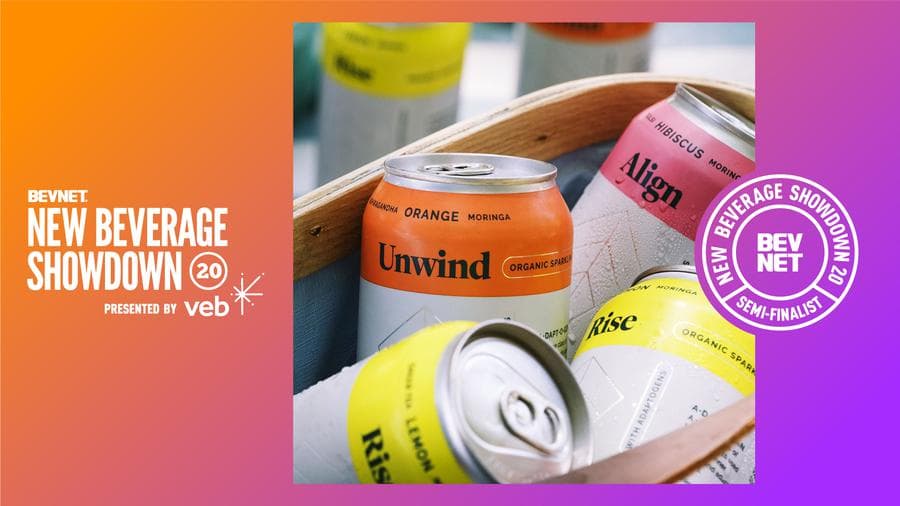
Speaker 3 [04:00] Hi, I'm Claudia and I'm Michelle, and we're the founders of Kite. Kite is a beverage company with a mission of connecting people to the wisdom of clients. As a nutritionist, with a passion for holistic well-being, I've seen great success when it came to using herbalism with family, friends, and clients. Claudia was the same. A biologist with a passion for plants, she started a tea company in Europe in the 2000s and witnessed customer after customer come back with stories about the healing benefits of herbs like tulsi and moringa. Magic happened when we met and came together as friends. I was pregnant with my first child, and with Claudia being a mom of 4, she shared all of her motherhood wisdom with me over tea. Over the years, we bonded over a shared passion for living a holistic lifestyle, yet we found ourselves constantly falling out of balance. We were stressed. Our mom had was adaptogens, and we fully believed in their magic. This aligned passion kicked off the two year long R&D process that eventually led to Rise, Align and Unwind coming to the market. As a society, we are grappling with the damaging effects of stress, all the while suffering physical problems related to the standard American diet. We know that when people have less stress and they're healthier, they have a greater capacity for personal growth and to show up better as themselves into the world. And this is what excites us. We're now seeing an increase in health for consumers becoming more conscious with their choices. There's clear interest in choices offering a high health and wellness value, such as organic, functional, and things without sugar or other harmful ingredients on that label. Kite is steeped in goodness. As a brand, it represents balance, equilibrium in all things supporting our well-being. Kite as a metaphor seeks to support us finding alignment in our lives. Kite uses the wisdom of adaptogens and functional herbs to bring us back to our most balanced selves, and we make kite by using whole plant botanicals, which we steep into an infusion similar to how you brew a strong cup of tea. This method allows us to extract flavor, function, and healing properties of plants without the use of questionable natural flavors. We identify kite as a sparkling botanical infusion. That said, we're always listening to feedback. Kite is where better for you meets functionality. With its many health forward attributes, Kite is made for that wellness-centric consumer that seeks a clean label. Kite is zero sugar. It's just simply not an ingredient that we can get behind. By keeping the sugar out, we're also able to appeal to the Paleo, whole 30, and keto communities. With a price point of 299, we believe that Kite is accessible with driving new trial. This has been also validated by all of our distribution partners with respect to our packaging. As an early stage startup, our motto is iterate, iterate, iterate, and we're already on our 3rd generation label. It's no secret that the functional beverage market is growing based on several key drivers, with an increased, increased consumer demand for products that make beneficial claims, increased consumer spending on organic products, and an increased willingness to pay higher prices in order to gain these advantages. With all that in mind, we believe that we know our consumer well. Our consumers are conscious, they're active, they're smart, and they use products to meet their health and wellness goals. They value a deeply wellness-centric lifestyle. They seek clean labels, and they demand transparency around the brands that they choose to support. Despite launching at the outset of a pandemic, we're really proud of how far Kite has come. We've built a community within our local market. We have a growing fan base. We've rolled out national distribution across Canada. We're on target to launch into select Whole Foods in March 21, and we've grown our direct to consumer business within the USA and Canada. And we're currently in the process of onboarding with a major US distributor. This year has been challenging, but we're looking ahead to the future. We're broadening the assortment of skews based on different adaptogen and botanical functionalities targeting key functions of our bodies. We've said it before and we'll say it again. People love kite, and we can't wait to continue to seek the goodness. Thank you. It's time to unwind.
Ray Latif [08:56] Time to unwind. I think it's time to hear from our judges too. Uh, let's start with, uh, Carrie. Um, you know, we heard from Claudia and Michelle about how they identified adaptogens as a mom hack. Um, And I think it's, you know, it's interesting because adaptogenic ingredients within our industry, within the food and beverage industry, and how we report, seems like everyone knows about it, but how much education is going to be needed for them to be really successful on a sort of broad level when it comes to their primary focus of adaptogens?
Speaker 3 [09:27] Yeah, that was actually gonna be one of my main pieces of feedback with the packaging is potentially adding what the specific ingredient um included on on each of the labels does. Um, I love the packaging in general. I think it really connects back to the The lifestyle element and to that conscious consumer you guys are going after, um, so I think maybe just, you know, adding something on the side panel potentially where you have adaptogen currently about, you know, what is moringa, what effect is that going to have on you and then how does that connect. Back to these really sweet titles that you guys have for each of the the individual cans um there's definitely more, uh, education, I think that could happen on on that end but in terms of your customer I think many of them will inherently know what each of these does. Awesome. Thank you. Thank you.
Ray Latif [10:18] Bill, in terms of the positioning of kite as a sparkling botanical beverage, um, do you see that as the right way to, uh, promote this product, to promote this beverage, or do you, would you feel that they'd be better off calling it something else?
Speaker 4 [10:35] Right, yeah, Ray, I, I think that's a really good question. Um, and, you know, I think most importantly is, is to think a little bit about the, the usage occasion. And I guess kind of a question I would come back to for, for you both is, do you, do you envision this going after folks who are, are drinking sparkling water, sparkle or, or, or, or tea products, or, you know, what is the future kite consumer consuming today?
Speaker 3 [11:02] Oh yeah, we, we believe that they're consuming other functional beverages right now, things like kombucha, um, and other water kfir, things like that, um, and they're sort of actively looking for ingredients that can help to boost their, you know, performance and energy and things like that. But, um, we, we want to differentiate ourselves a little bit from the sparkling water category, given that our price point is 299 and, you know, we're organic and all of the other attributes.
Speaker 4 [11:30] Yeah, I know, I, and I think that makes sense. And, and so I think that Ray, to your question, the most important thing is just to make it relatable to the consumer. So whether that's a sparkling tea with, you know, adaptogenic and botanical benefits, um, you know, just making sure that that comes across on, on the label, and I think you guys are doing a nice job with that.
Speaker 3 [11:49] Thank you.
Ray Latif [11:51] John, let's stay with the label. Um, Kite uses uh sort of a functional attribute to differentiate between some of its flavors along with the flavor name. Um, what do you think about uh the, the, the way that they're going about describing each different product that they have, each different SKU, um, and also, you know, what did you think of the taste of these products?
Speaker 2 [12:12] Yeah, I mean, I, I definitely will commend you guys for, I mean, these taste really good. Um, I think it's just more a question of where do you position this, you know, do you try to go into a sparkling tea, or do you just, you know, instead of fighting those currents, try to be an upgrade on a sparkling water. Um, I do think when I look at the label, and this is, you know, it's great to see the progress that you're making on this. I wish that the kite logo were kind of up where I see rise on this can, for example, um, because I just want to, you know, kind of read down almost, you know, in some hierarchical fashion. And I think that vertical sparkling tea on the side, it might be nice if that were a little more prominent. Um, and then I think the last thing, you know, that I would just I don't know. I think it's a tough call is, do you lead with flavor or do you lead with something like rise and align, which are kind of these conceptual things that I don't know, I, I'm someone who just believes that ultimately we're going to a beverage cooler, sort of like picking with, you know, our appetite or, or palate or whatever. So I think, you know, you guys have done a pretty good job of putting the flavor like front and center, but I think, you know, the more you can make that stand out. Like that's what's going to pull me in, the flavor, and I feel like the moringa, the adaptogens, that's just like the gravy because I mean this, this tastes really good for zero calories, clean ingredients. It's got a lot of good stuff in here. So I think, you know, you just, I don't know, should be proud of all that.
Speaker 3 [13:44] Thank you so much. That's great feedback.
Ray Latif [13:46] Brian, uh, you get the last word here. Um, obviously, adaptogens being, the main focus for Kite. Um, but, you know, Claudia and Michelle also mentioned a few other attributes, um, that are sort of on trend, including sober curious. Um, I'm wondering, do you think that leaning on adaptogenic ingredients, as an investor, do you think leaning on adaptogens is the right path forward, um, for this particular brand?
Speaker 2 [14:12] Yeah, you know, we've, we've looked at a lot of them, uh, you know, recess is doing something, you know, obviously they have the CBD, but, uh, you know, Mina, Hop tea, Tiva Moment, they're kind of all these, uh, beverages that are all looking at that category and, and, you know, the sober curious is definitely, I think the angle that you guys could go after that's, that's exploding right now. Um, I, I actually enjoyed the beverages, um. The packaging, I think is probably some of the best in the competition that, that we looked at. Um, I do agree with a lot of the remarks, you know, when I'm holding just one can, I don't really know what the brand name is, uh, like if I'm just holding Ryse, I almost thought that the name was Ryse because they're, they're equal, but, um, I think this has legs. The, the biggest question I have is around the price, and I know 299 seems like a good price. I think, and it, it will be initially with kind of your You know, your innovate your innovators, but I think at at scale it, it'd be interesting to see what you guys could do with more of a pack or some way of getting that price down to where you can hit that mass market a little bit more.
Speaker 3 [15:21] Absolutely, we, we, that's our plan, and we're, we're, we'll get there next year. We're working on it. It's easier to go, go, um, yeah, down and up for sure.
Ray Latif [15:33] Outstanding. All right, great feedback. Great presentation, Claudia and Michelle. Thank you so much. Thank you. All right, let's move on to our second finalist for this round. That's Kayleigh McLaughlin, who's the founder and CEO of Kaylee's Culture. Kayleigh, how are you?
Speaker 3 [15:47] Hi. So excited.
Ray Latif [15:49] We're so excited too. Great to see you again. Uh, you ready? You ready to give your pitch?
Speaker 3 [15:54] Yes,
Ray Latif [15:55] fantastic. Your 5 minutes you're gonna begin now.
Speaker 3 [15:58] Hi, good afternoon, everyone. I'm Kayleigh McLaughlin, and I created Kaylee's Culture for families who need a fun, delicious, and most importantly, healthy beverage option for our children. I'm so happy and extremely grateful to be here with you today and to introduce to you what I consider to be my fourth child, my product, Kaylee's Culture. For kids, Kayleigh's Culture for Kids is a probiotic sparkling water with organic fruidescence. It uses monk fruit for an all-natural superfood sweetness that kids can't get enough of. Each individual beverage contains literally billions of culture-forming units of the very specific probiotic culture I personally selected called Bacillus subtili. I chose this probiotic to support our children's immune systems. I'll start way back from the beginning. I was born and raised in San Diego, where I met my husband in high school. He was dead set on joining the Navy. He thankfully got orders to San Diego, which is where we started our family. It was after the birth of our first baby that my health journey really took off. I dove right in. I could be found in our kitchen making baby food, baby formula, juicing, and making kombucha, water keeper, just to name a few. As a military family, you can't control where you end up living, and we ended up at an austere military base in Nevada. When we arrived in Nevada, we had our 3rd child, and now with 3 kids, 3 and under, making all these things I loved became nearly impossible. Probiotics through food and drinks have always been part of our daily lives, and I had seen the incredible benefits they produced, and I didn't want to lose that overnight. I looked to stores for a replacement beverage for my family. It just wasn't there. What I found though, were dozens of healthy, functional beverages for adults, but not one for kids that met my standards. The products designed for children were loaded with sugars, empty calories, a long list of ingredients, or they just seemed like fillers. Nothing was there that I that was exciting about sharing with my family. Until now. Fast forward to today, and I'm still busy as ever. It hasn't been easy building a business with the ups and downs of my husband's deployments, workups, but as they say, nothing worth having comes easy. I'm proud of being a military spouse, entrepreneur, mother of three, and delivering my product to families today. As you can see, it clearly stands out amongst other products marketed towards children, and it fills the gap in the marketplace. I spent the past few years researching ingredients and probiotics best suited for an everyday, simple powerhouse beverage for our family. I found it. Bacillus subtilis, the powerhouse probiotic. Billions of CFUs per can. It has a shelf life. It can survive past stomach. Acid, it aids in digestion. It helps kids absorb the nutrients from their food and vitamins, supports a healthy immune system. All of this in one can. Giving our kids their probiotics can be enjoyable, and it can be made into a fun, memorable, cheersing moment with the whole family. It's fun and bubbly, but not too bubbly. I formulated the drink with a lower CO2 density. Kaylee's culture is in an 8.4 ounce slim can that kids can get excited about, because it's different and special. My kids are always asking to drink my sparkling beverages, and now I can offer them one of their own that has health benefits. We launched a market test in Los Angeles just a month ago, and considering the type of year 2020 has been, we're selling really well. With little to no marketing, we're we're seeing positive organic sales in small grocers and convenience stores. Kaylee's Culture is also available for purchase on the website. We're working on launching on Amazon very soon and looking at distribution on military bases as well. Have you ever pulled into a gas station or a convenience store with your kids and had to choose between watered-down sugar juice and chocolate milk? Well, today's consumers have a watchful eye on sugar, and they say they try to limit consumption. Consumers also understand that certain beverages can help maintain good health or even treat issues. 55% of global consumers always choose beverages that provide protective, preventive health benefits. 51% of global consumers say they've increased consumption of functional foods just in this past year. Kayley's culture is the first functional beverage for kids that sits on the same pedestal as the adult options that kids beg for. Finally, an authentic, truly healthy, functional beverage. Designed for families that we can feel good about sharing with our kids and families. This is a product of my individual culture as a mother and our collective culture of aspiring, healthy families. I'm intimately familiar with what our families need, and I am so excited to finally deliver it to you. Thank you.
Ray Latif [20:33] Right, well done, Kaylee. Uh, John, I know you've seen your share of kids' beverages on the market, coming to market, um, and, uh, you know, Kaylee's has a very, very specific functional component to it. Um, this is a question I asked in the semi-final round. I'd like to hear your opinion on it, you know, is the kids' beverage category, is this, is this the right time to launch a functional beverage for the kids category? Is it needed? What's the opportunity?
Speaker 2 [21:01] Um, I'm not sure it's ever a good time to launch a kid's beverage specifically. I mean, I think I look at this, and I, I mean, I love the story. I love, you know, just the background you gave. I mean, I think that's just like great stuff as an entrepreneur, like all the stuff that you're, you're working through to, to build this thing that you love. And I think it's, it's great to have the story of you created it for your kids, but I'm not sure that you need to say that like on the package and go out and limit your audience for it because I mean I think this is pretty good. Like why would I want to age out of this, you know? And I think, you know, there are outside of like, you know, junk food, there are a few products that are kind of like, you know, or entrepreneurial products that are truly like for kids that aren't baby food. It's like tough to be in that sort of like middle demographic. I mean, I think if you got rid of the 4 kids on here, like, I think, you know, you've got a much wider audience with like the same exact product, and it's got a, you know, it's got a good brand, it's got some good bones to work with here, so that would be my comment on it is just, you know, think a little more broad, keep everything else kind of the same.
Speaker 3 [22:12] Great, thank you. Tough, but not impossible.
Speaker 2 [22:15] There you go.
Ray Latif [22:17] Well, I mean, we have a, we have someone who tasted the product, uh, and he can tell you whether or not, you know, he would drink it on a regular basis, and that's Brian. I saw you drinking this, um, during, uh, Kayla's presentation. What do you think of the taste? And again, is this something you would buy if it wasn't, I guess, positioned towards, uh, for kids?
Speaker 2 [22:35] Yeah, you know, I, I was, honestly, John, I was thinking the same thing. Uh, my wife and I actually like this, uh. My wife didn't know it's for kids and then I kind of told her and, and she, you know, realized it. And so we kind of, we have 3 boys, we handed it to them. 2 of them kind of put it down, the other one loved it. Uh, so I do think there's some work that needs to be done if it is going to be positioned for kids. Um, we've, we've had a lot of kids' beverages come through my desk, um, and I usually just kind of leave them out and see which ones they They kind of go towards, but I think to echo what John was saying, I think it is hard to go after kind of the family and whole, but it does create just a, uh, just a longer tail customer and, and, you know, I, I would take a look at like what some of the brands like Poppy are doing out there with, with, uh, it's very kid-looking, um, but it doesn't say kids on it, and I think they nailed the, the liquid. Um. But I really like the probiotic angle. I like the size of the can. I think it's a perfect size, um, and just kind of getting the probiotics in, but great story. I, I love how you, uh, you know, the background and how you created it.
Ray Latif [23:43] Thank you. Carrie, uh, Kayleigh mentioned that this is a functional beverage for kids, the first functional beverage for kids. It sits on the same pedestal as functional beverages for adults. Um, it may sit on the same pedestal. Should it sit on the same shelf? Should it be positioned next to other functional beverages, or, you know, does it fit in the, in the kids' uh, beverage, uh, section?
Speaker 3 [24:08] That's a really good question. Yeah, I think that goes back to some of what others are talking about with, um, will people buy this just for kids or will they buy it for the whole family. So I would say put it on the shelf with the other beverages and, and give it the opportunity to stand up against some of the other options for an adult to choose, you know. I guess potentially between this and a kombucha, um, I also think the price point might sit better in, in sort of overall beverages versus the kids specific area. The price point to me felt a little high for a kid-specific beverage. Um, so that's my perspective, but, um, I think it goes back to that larger question of could this be more of like a full family drink versus something specific to kids. Thank you.
Ray Latif [24:57] Bill, uh, we already had a couple of judges, uh, comments and praise Kayleigh on her presentation. Um, when you, when you're seeing presentations come in at VEB, you know, what are you looking for? And, and did you see some of those things in Kayleigh's presentation? What should she be highlighting more? What are some of the things that she, she might need to improve upon?
Speaker 4 [25:14] Yeah, absolutely. Um, yeah, first of all, Kayleigh, great, great job on the pitch. Um, I, I thought the The founder story and background was, was really good, as the other judges mentioned. Ray, that's one of the things we're looking for is what's, what's sort of the passion at the at the soul of the product or the brand that's being launched. And then in addition to that is, you know, what, what's the market we're going after and, and, and how is it differentiated from other things that are on the market today. So that's where I think the conversation we're having here is really interesting. Of, you know, you're, you're differentiated in that you're trying to target kids, but there of course is this broader addressable market beyond just kids, and so that's, that can sometimes be a tough needle to thread, but certainly a question that's worth looking after. And so I think you touched on some of those points really well.
Speaker 3 [26:03] Great, thank you.
Ray Latif [26:04] All right, great job, Kayleigh. Uh, let's move on to our next, uh, finalist for this round, who is Sean Dunn, the owner of Shroom Shot.
Speaker 5 [26:14] Sean, how are you? I'm doing great, Ray. How are you?
Ray Latif [26:17] I'm doing great. Great to see you again. All right, you have 2 minutes, uh, in the semifinals. You got 5 minutes now. You ready to pitch? Absolutely. Fantastic. Your 5 minutes begin now.
Speaker 5 [26:27] Hi, everyone. My name is Sean. I am the co-founder of Shroomshot. Shroomshot is exactly what it sounds like a wellness shot infused with functional mushrooms. Before I get into our business, I want to give a little background about who I am and why we started this business. Foraging is one of my favorite passions. I love looking for wild foods, and mushrooms are my favorite thing to look for. I love learning about their history. And most importantly to me, I love learning about their benefits for my health. I'm a strong believer in the idea that food is medicine, and that what we eat directly impacts the way that we feel. And I find that mushrooms really exemplify this idea. So with values like these, um, I sought work in the health and wellness industry, and I've worked for companies that specialize in probiotics, fermentation, and organic foods. So with all this information about mushrooms from foraging and my nutritional background and working in the health and wellness space, I was sold on mushrooms and I was looking for a commercial product that I can incorporate into my daily routine. However, what I found then and what is still true today, is that the vast majority of mushroom products are pills, powders, and tinctures that really don't taste so great. And to be honest, the idea of drinking mushrooms to the average consumer doesn't sound very appealing. So I teamed up with my brother Justin, and we set out to create something that solved those issues. And Shroom Shot was born. Shroomshot delivers the functional benefits of mushrooms with a great taste in that convenient and ready to drink format with fun and approachable branding. So, the experience of drinking our products really starts with our package. Um, a lot of mushroom products tend to be designed with earthy tones, uh, sometimes spiritual, even sometimes psychedelic design, and we wanted to go in a different direction. As you can see, our labels are very simple and clean, but they also have a distinct personality that makes you wanna pull them off the shelf and learn more about what they actually are. Um. Beyond that, our bottles and our our white labels kind of look like a pill or a medicine bottle, and, but we also, but we balance that with vibrant colors in our mushroom lids, which people absolutely love. And again, that balance is going back to the idea that we're at the intersection of beverages, medicine. Um So beyond just the packaging, we're very intentional about the colors we're using too. So many mushroom products have earthy tones. They tend to be brown in color, and we're really, we want to interject some color into that space. So, moving on from the actual packaging, what's actually inside of our drinks? So we currently have 2 skews to market. Our mental magic shot has lion's Maine mushroom. And it's also paired with uh ashwagandha, which is another adaptogen, and all of our shots have live probiotics, um, adaptogens, 100% organic ingredients, and all of our flavors are with all natural fruit juices and herbs. So this is our mental magic. We also have our golden immunity, which is using turkey tail mushroom, and our flavors not only taste great, but they also complement the functionality of our shots. So for example, in our golden immunity shot, we use turkey tail mushroom, which is great for supporting the immune system, and we're also using things like pineapple, ginger, turmeric, and black pepper. So here are a few of the mushrooms that we're using, like I mentioned, lion's mane in our mental magic shots, turkey tail in our golden mini shots, and we have a third skew that I'll be launching before the end of the year with quarticiceps mushroom for energy and endurance. So many of you might be wondering, what is the market for drinking mushrooms? And what we found is that we're actually getting a lot of traction in all sorts of walks of life. Health-conscious millennials who might have heard about mushrooms in a podcast or watched them on a YouTube video, busy professionals who are seeking function with all natural ingredients, traditional homeopaths who already recognize the values of mushrooms, and people from the uh older baby boomer generation who are recognizing the benefits of mushrooms, they might have read about them in the news, and they want to use uh an easy and ready to use product. So, here's one of our user reviews, um, One of our customers loving our shots. He's using his, uh, he's using our shots to incorporate mushrooms into his daily routine, and he's really feeling the functional benefits of them. And This is all connecting to a larger movement that's happening. We like to call it the shroom boom. People are really resonating with mushrooms as a symbol for positive change, and they're just loving our products to embody that movement. And to finish our sales strategy, we're really targeting natural grocery stores, juice bars, health cafes, coffee shops in the grab and go section, and we're retailing for between 449 and 499.
Ray Latif [31:37] All right, well done, Sean. Thank you. Uh, that's, uh, that first slide of you holding that gigantic mushroom kind of freaked me out, to be honest. Uh, I, I don't think I've seen a mushroom that big before. Um, yeah, but yeah, that's, that's, that's a big one. I'm sure everyone watching at home probably has the same question that I do, which is how do these things taste? Because, you know, the idea of mushrooms in a drink isn't necessarily that intuitive. Um, so, uh, John Craven, um, How do these things taste, especially given that Sean said that the function, I'm sorry, the flavors complement the functionality of these products, do they?
Speaker 2 [32:13] Um, well, I mean, I guess I'm kind of thinking along the lines of what Sean said of, you know, kind of these earth tones and whatnot that you typically expect from mushroom products, which You know, these have that in sort of a subtle way as opposed to being like the primary flavor. I mean, I think they both taste really good. They seem in line with other shot type products. You know, I kind of wish that was a little more part of like the front and center, you know, things, I think, you know, a name like Mental Magic kind of goes against like what you were saying about other products that are, you know, trying to pitch you on psychedelics and stuff like that. I mean, I think at this point, like this product's like super solid. I would just, you know, be riding the wave, like, you know, the New York Times article is a great example. You know, mushrooms are like becoming a known healthy ingredient that I think kind of don't need that sort of stuff. Like I'd rather just know like what's this going to taste like since it's clearly not a bottle of like mushroom juice, thank God. So, but yeah, I mean both pretty solid in my opinion.
Ray Latif [33:23] Bill, um, Sean mentioned, uh, food is medicine and that notion of what you eat can heal you, um, is, has taken, uh, some traction, has some traction, uh, over the past few years. Um, you know, given the ingredients, given the positioning, should they be leaning, should the company be leaning more in that direction, um, or is that something where consumers, as John mentioned, are just looking for a great tasting product?
Speaker 4 [33:51] Yeah, it's interesting. I think the food as medicine trend is certainly a real trend and one that we're seeing taking off. The nuance though is I think it's happening ingredient by ingredient, so you see maybe probiotics are a little bit more advanced in mainstream acceptance than maybe adaptogenic mushrooms. And so I think that's Maybe some of the challenge that comes in here is there's a shroom boom going on, as was described, but, but maybe we're still at the early stages of that as you just don't see the mainstream acceptance here. And so that, that's my biggest question I think on this one is what, what's the addressable market now and what do we expect that to grow into over time.
Ray Latif [34:33] Brian, Sean talked about, uh, not a lot of products, there's not a lot of products out there that contain mushrooms that taste good and that people have been going after pills, tinctures, powders, things like that to get the benefits of eating mushrooms. Um, but are they looking for it or do you think they'll be looking for it, uh, in a shot product like shoe shot?
Speaker 2 [34:53] You know, it's a good question. I, I, uh, we live in Austin, right? So, uh, Tim Ferriss is here and I think he's, he's uh definitely educating the market. I think there's a couple of brands doing it as well, 4 Sigmatic. Obviously, uh, they have a shot, um, that's out that I think you actually did a better job with the liquid. It's hard for me to get down the 4 Sigmatic shot. This was actually done really well. Um, I actually think this has legs, but I agree with a lot of the education part. But I think if this packaging just kind of had a face lift, I was kind of scared to drink it. You know, when you, when you first look at it, it looked a little, you know, anything with mushrooms in it's, you just never know what it's gonna taste like. But the liquid's spot on. I would, I would go with a more full wrap on the shot. I like how you have the wider bottle, so you can fit more information on the front, but I agree, league with the flavor and just, you know, the people that are looking for them will go at them. Um. But I, I actually really like this. Um, I think you did a great job.
Speaker 5 [35:56] Thank you. And can I make a quick comment on that? Absolutely, sure. Um, so, yeah, I agree with you that we have a different feel than the four sigmatic ones. And one of the things is people are kind of afraid to try mushroom products. So we wanted to show the color there of the liquids. So that's why we leave that space so you can kind of see, OK, this isn't some dark, kind of sludgy looking mushroom product. Got it.
Ray Latif [36:19] Carrie, uh, Sean outlined, uh, the retailers that they're going after with the brand. Uh, I'd love to hear your thoughts on what you think of that retail strategy and how the brand might perform online, perhaps, uh, in a place like Thrive Market.
Speaker 3 [36:34] Yeah, we actually, we sell the 4 Sigmatic shots, um, uh, all three of their shots, and, um, they haven't picked up as much as I would have expected them to. Um, from an e-commerce perspective, I love the idea of the shop format because it's a lot more profitable for us to ship than a big can or bottle of something, um, so I think from a packaging and shipping standpoint, these are really interesting, um. our consumers very health conscious, and I don't think they've picked up on the shot format just yet, um, but to echo what some others are saying, I do really like, um, and what you just kind of talked about. I do like that you've left some space to actually see the liquid, whereas with 4 Sigmatic, you don't really know what's inside. Um, I think also that the size for me is a little bit big to be considered a shot. I think it's about a 0.5 ounce bigger than the 4 Sigmatic ones and about double like a standard. You know, shot that you might take of, of, uh, a less healthy beverage. So, um, maybe considering, you know, how, how much of the benefits you can get across in a slightly smaller format, um, but yeah, from an e-commerce perspective, I love the idea of shots. I'm not sure that mushroom shots are taking off just yet for our customers.
Ray Latif [37:55] Carry, we're out of time, but I, I'd be remiss if I didn't ask you for one word because I saw you take a swig of the shot. One word in one word, how would you feel about this or how would you describe it?
Speaker 3 [38:04] Oh man, um. One word? That's hard. I guess it's sweeter than I thought it would be, um, and you've gotten away with that without too much sugar, so I was pleasantly surprised by that.
Ray Latif [38:22] Fantastic. All right, Sean, great job. Well done. Thank you. All right, let's move on to our next finalists for this round or finalists. Those are, uh, Michael Sheriron and Cal Freeze, who are the co-founders of Tika. Michael, Cal, how are you?
Speaker 6 [38:36] Doing good. Great. How are you doing, Ray?
Ray Latif [38:38] I'm doing fantastic, Michael. Good to see you again, Kel. Good to see you, well, for this first round anyway. Uh, are you guys ready to present?
Speaker 6 [38:47] We are,
Ray Latif [38:47] yeah, fantastic. Your 5 minutes will begin as soon as your slideshow begins.
Speaker 6 [38:58] Hi, my name is Cal. I'm Michael, and we're the co-founders of Tica, Coffee that accentuates reality. So with Taika, we took the rich, um, craft tradition of specialty coffee and combined it with our unique blend of adaptogens to create a coffee that makes you awake, aware, and inspired. So, um, we take, we started working with these functional ingredients. It was really important for us that they're all FDA certified and being consumed by humans for hundreds or thousands of years. And the thing that you guys have pointed out before, is that with a lot of these mushroom ingredients, they often don't taste very good, or people don't know that they want to be consuming them. So for us it's important that we have really high quality ingredients, but we don't lead with that. A lot of coffee right now is about the origin, but we focus more on the destination, so how does it make you feel? Um, so we have a blend of 5 adaptrogens. We have LPNine for, uh, from green tea for focus, Ashwaganda for calm, quarters for energy, last man for clarity, and rashi for immunity. And the result is a coffee that's dolphin smooth, has an ideal amount of caffeine, thanks to our patent pending process that we use to control the naturally occurring caffeine in coffee, um, has no added sugar and it's plant-based. So one thing you didn't know is that Taika is the Finnish word for magic, and we have 3 enchanting flavors. We have a brilliantly bold and smooth black coffee. We have a creamy oat milk latte that tastes like coffee cereal milk, and we have a first of its kind macadamia latte that tastes like melted coffee ice cream. Uh, all of our coffees are plant-based, have no added sugar, and have the exact same blend of adaptogens that Kel was just telling you about. And when we started working on Taika, um, just over a year ago, we realized that a lot of those other coffees in the market have a lot of caffeine, way more than it's actually ideal, and a ton of added sugar, yet no added functionality. And so we wanted to create a keto-friendly coffee that tastes amazing, and makes us feel great. So, um, my background is in the tech industry. Uh, I started one of the first mobile social location companies way back in 2005, uh, and then I just worked in a whole lot of really high-stress tech jobs. And that's really why I discovered the power of adaptogens, especially when combined with caffeine, to really just chill you out. My background is in coffee and food science. I went to school for food science, been working in coffee since I was 16. I'm a two-time Finnish burger champion and got ranked 9th best in the world a few years ago. Before Taika, I started a company that pioneered the instant coffee market. Um, and then after that, took some time off and realized that coffee was giving me all these side effects that I didn't enjoy at all. And so with Taika, we set out to create this perfectly calibrated coffee that tastes great, it makes me feel great. But soon we realized that we're actually solving a much, much bigger problem. And that is, how do we help people with a healthier lifestyle without forcing them to change their habits or behavior because we all know that that's really hard. And so our approach, our vision is what we call self-help. We take these CBG products, starting with canned coffee and redesign them from the ground up to be both delicious and authentically good for you, with the focus of eliminating sugar and especially added sugar, which is linked to this rise of chronic diseases that are causing a lot of suffering and pain in the world. So one of the questions we get is, why the phone number? Like what's up with the phone number? Well, we started off selling Tika to friends and friends' offices. And so it seemed natural for us to put our phone number on the front of the can, uh, for them to like send us feedback and like order more coffee. Um, then we realized after just a few months of this, this is just the best method of communication we had. It was transparent, it was direct, we were getting people immediately. They were like communicating to us all the time, um, and it's very, very different to the way most other people are using text messaging, uh, and texting phone numbers in general. Um, for us, it's about inviting people to connect and text with us, which is really, really different to how most of the CPG companies think of the text marketing channel. Um, and so here's an example of what a conversation with Tya looks like. When you text us, what actually happens? So, you can see here that this conversation, that what we're talking about is really, it's all about the brand experience and so for us it's a brand experience touch point. We want to get people a little bit of the magic, the weirdness, the community that is tighter and then also the phone number on the front is really highly differentiated on the shelf. So we launched just over 6 months ago and we're available in uh New York, San Francisco and LA for 2-hour delivery from our website. And then we're also available at over 100 different retailers and with select brand partnerships again in the same 3 markets. So I hope you all get a chance to taste some Tika and let us know what you think. Thank you, thank you.
Ray Latif [44:03] Well done. Um, Brian, uh, I'm wondering, since it's the largest thing you see on the can, whether or not you called that, uh, phone number or texted that phone number. Did you, were, were you, uh, inclined to do so? Were you motivated to do so?
Speaker 2 [44:18] I was, you know, I, I didn't, but, uh, I did check out on the website. It's a pretty clean experience. Um, I'm, I'm guessing it's similar to like a dirty lemon type text to order. Um, I really like the macadamia latte. I actually gave it to my kids and at least a couple of sips and they loved it. But, um, you know, I, I like the phone number on the front of the can. At first, I was kind of like, that's strange, but once you kind of brand block it on a shelf, I think it looks really good and it stands out.
Ray Latif [44:50] Uh, Bill, you know, Michael and Cal mentioned a few phrases that represent Taika, um, a perfectly calibrated coffee, one that accentuates your reality, stealth health, um, a lot of different messages that you could go with. Is there one that seems like it's going to be a better fit for long-term success of the brand?
Speaker 4 [45:14] Yeah, the stealth health is one I haven't heard before, but I think that's really interesting and differentiated when it comes to coffee, because obviously there's a lot of coffees that are out there, and I give you guys props. The oat milk latte is just the formulation on it is great. I think it's one of the better tasting oat milk lattes I've had. But the one other thing that's stealth unfortunately on the can is the functional benefit. You have like the adaptogens listed off to the side, and I had to really read into the label to realize that the oat milk latte that was so delicious also had these other functional benefits. So the self-health thing is good as a moniker, but I think from a labeling standpoint, making that a little bit more prominent, I think would be really useful.
Speaker 6 [45:56] Yeah, can you comment on that? Absolutely. Yeah, so for us, the idea with the stealth help is that Our sort of hypothesis is that people don't want to buy health products. They want to buy delicious products. And so we don't really lead with the stealth health aspect, and we think about it in terms of creating these feedback loops. And so the first and foremost, the most important thing is that we make something delicious that people want to keep consuming, and that something delicious sort of immediately makes you feel better. So that's the instant gratification feedback loop, so you want to keep consuming it more and more. And then that leads and feeds into the longer term kind of delayed gratification. feedback loop, which leads to, you know, better health outcomes by producing sugar from your diet.
Speaker 2 [46:38] What other innovation do you guys have in the pipeline, if you don't mind me asking?
Speaker 6 [46:44] So we're, um, right now the product is refrigerated. We are working on a shelf stable version which we're looking to launch sometime next year, and we have some other ideas. Um, we're working on a matcha latte, um, that's gonna be really delicious. And then sort of starting coffee and staying in this place, but uh I think there's a lot of other beverages where we can take a similar approach and kind of start expanding where the, you know, we have the brand permission to do so.
Ray Latif [47:16] Harry, uh, I assume, and I imagine that you receive a lot of new coffee brands, uh, coming into your office, uh, with the entrepreneurs hoping that Thrive will carry them, um. You know, having seen so many different coffee brands, having tasted so many different ones, do you think Taika is differentiated enough to fit on shelves, not just in, uh, at your, not just in Thrive Market, but potentially in a lot of different places?
Speaker 3 [47:44] I do, yeah. I, I, this is one of the few um brands that I tried before today when it first got to my house, I was sort of anxious to try it, so um it definitely caught my eye in that regard. I haven't seen. Um, a functional coffee in a can just yet and the way that you guys are doing it and then also, um, you know, with some of the other key attributes like no added sugar, um, dairy-free, it seems like you're being really thoughtful where you can about using organic ingredients. Um, so I felt like this one was really differentiated. Um, the phone number for me, I, I am still trying to decide on my thoughts, especially as it relates to e-commerce, um. And retail as a whole, I did text you guys this morning and it took a while to get a text back. So, um, still figuring that piece out, but I, I, I love the packaging and I love the concept. I think it's, it feels really different.
Ray Latif [48:41] John, you get the last word. Um, you know, you having tried, I don't know, probably what, 10,000 coffee brands in your career. Um, I, I'm sure you know what good coffee tastes like, uh, and what a good flavor fit, what good flavors fit into coffee. Uh, do those, or do those skews that you tried from Taika fit the bill?
Speaker 2 [49:01] Yeah, well, we, as you know, Ray, we have a bottom 1000 globally barista in our office here. So sorry, Mike. Um, no, I mean this is, this is like instantly one of the best, like, you know, ready to drink coffees I've had, and You know, I think I, I, I don't know when I met you guys first, a year ago or something like that. Pandemic time flies, but, um, you know, I, I originally thought the text thing on the front of the can, I was like, that's cool, that's clever. But honestly, now I sort of feel like as I've tried this a couple of times, like there's one thing missing, which is the actual like quality of the liquid. You guys have serious coffee chops. And I feel like the challenge with this is that at some point you've got to downplay the text number because look, if it works, somebody else is going to do it and then you're just going to be like, guys with the phone number on the front of your can, and I think it kind of takes away from just the quality of the liquid. Like I wouldn't say get rid of it. I'd just start thinking about making it smaller and start just, you know, talking about this stuff as like top notch liquid. Otherwise totally agree on like the stealth health. Like I think that's got to be like a tertiary benefit to this or a thing that you're promoting, but I want to see more that's just making me feel like this can hold its own with like the la colos of the world, which, which it totally can, and you have no sugar and functional ingredients. Like I think that's got to be more part of like what I'm seeing on the can, and I, I agree with, I don't know if it was Bill or Brian that said it, but I mean, The macadamia latte, oat milk, like those are awesome, you know, like great work. Hope, hope the matcha latte is like that as well.
Ray Latif [50:47] Melted coffee ice cream is I think how they described it. So I, I gotta try some. I gotta get to the office and try some of that. Hopefully there's some left. Uh, Michael Cal, great job. Uh, and, uh, let's move on to our next uh finalists for this round. Those are Shaylo Haywood and Sandra Reed, the co-founders of Gination. Shaylon, Sandra, how are you?
Speaker 3 [51:10] Doing great today. Happy to be here. Thank you.
Ray Latif [51:13] I'm happy you're with us. Thank you so much.
Speaker 3 [51:16] Great, thank you.
Ray Latif [51:17] Thank you so much, Sandra. All right, uh, you have about 5 minutes, about 5 minutes. You have 5 minutes to present. Are you ready?
Speaker 3 [51:26] Yes, I'm ready.
Ray Latif [51:27] Fantastic. Let's get started.
Speaker 3 [51:30] When you buy a ginger drink, do you want to taste it? Well, so do we. Hi, judges, I'm Shaylyn. And I'm Sandra, and we are the founders of Densation. We created this beverage in the spirit of wanting to feel, taste, and experience the natural potency of ginger. Our belief is if a product states it contains ginger, then you should be able to taste and feel the natural potency of the ginger in your drink. When Sandra became pregnant with her first child, this resulted in her having a weakened immune system, extreme nausea, and digestive issues that made it hard to stomach anything. We tried to buy every product we could find that had ginger in it, but unfortunately, this left her feeling worse because of the additives and sugar. Being the fabulous big sister I am and mixologist that I am, I went to work and we made it. Like my sister, 74% of Americans are living with a digestive issue, and in 2019 $5.1 billion were spent on digestive health products and stomach remedies. The gut is a powerhouse of the human body. When you have an unhealthy gut, it can take a toll on your entire body. Today, products that are formulated to boost immunity are highly sought after. Because of the coronavirus, health and wellness will continue to be a top priority for many. Gensation is an everyday problem solver. Ginger is known for its immune boosting ability as well as aids in digestion, relieves nausea, and calming cold and flu symptoms. We use a premium, high quality, potent organic Peruvian ginger that comes straight from the Amazon basin. The Amazon is a very competitive environment. You've heard the saying that only the strong survives, right? Our ginger is strong, mature, robust, and hearty as a result of the environment it grows in. Photoperiodic response refers to how sunlight can affect the growth of ginger, and the Amazon provides the right amount of light for our ginger to grow and thrive in. Our organic Peruvian ginger provides a robust spice and a powerful punch of ginger that gives gensation a personality of its own. This is also reflected in our packaging. It is bright, bold, and a standout in color. The center of our bottles represents a burst of energy, a burst of life, and a burst of hope for better wellness and health. When you feel good within, it affects how you think and what you want out of life. We have 4 amazing flavors. 3 are packaged and accompanied with organic Peruvian ginger, with fruity and citrus flavors, berries, and a subtle sweetness of wildflower honey. Our fourth flavor is fresh zest, and that is a vegan formulation, and it is paired with organic Peruvian ginger and a touch of elderflower. Gensation is drinkable until the last drop. Here we have our consumer. Gensation caters to all and it is a beverage you can consume daily without feeling guilty. We just launched at Dr Gensation.com and we have a launch promotion. We also offer a mixed case so consumers can try each flavor. We'll be hitting shelves in January with a price of $3.99. We will begin in Atlanta, Georgia and slowly but diligently work our way throughout the Southeast the first year. Here are our revenue projections, $140,000 over year one at grocery to $8.6 million by year four. We have a strong social media plan that we began a couple of months ago. Included in our plan for engaging with our consumer are Monday Meminder affirmations. You're all able to sign up for free. Here at Gensation, we believe that true beauty and overall health begins with a strong spiritual and mental foundation. Remember, everyone, you are what you eat and drink. Drink gination. Thank you. Thank you.
Ray Latif [56:26] Excellent. Well done, Shayla. Well done, Sandra. Thank
Speaker 3 [56:30] you. Thank you.
Ray Latif [56:32] Uh, Carrie, let's start with you. Um, You know, Shayle and Sandra talked a bit about the difference between the ginger they use, that organic Peruvian ginger, um, and others on the market, and why it's so important in their particular beverage. Is that something that er will resonate with a consumer? Is that something that will resonate with an online consumer?
Speaker 3 [56:58] I think so. I think it's a really cool part of the story, um, and just to take a step back, I feel like I need both of you in my house to give me a pep talk every morning because you're. So positive and uplifting. Um, so thank you for that. Thank you so much. Yeah, I think it's, I haven't heard of Peruvian ginger specifically. I'm actually a quarter Peruvian, so I feel like I need to research it more. Um, I mean, I'd love to see the story come to life a bit more. And the packaging, I think in e-commerce we could definitely do a great job of bringing that to life through the product pages and storytelling. So since it's called out so prominently on the front of the packaging, I'd love to be able to read a bit more about that story. But yeah, I thought, I thought it was an excellent beverage. Great job. Thank you so much.
Ray Latif [57:49] Brian, how do you think about and evaluate ingredients specific or ingredient centric products like a ginseation, um, and, uh, within that evaluation, you know, what did you like? What are some of the things you liked about this brand? What are some of the things that you think they need to improve upon?
Speaker 2 [58:07] Yeah, I had a quick question for you guys. How much ginger do we need to consume a day?
Speaker 3 [58:14] So you know, recommended daily intake on ginger is to have at least 2 tablespoons of ginger a day, and this is coming from a well-known doctor called Doctor Weir. And our ginger bottles contain at least a minimum of 4 tablespoons of ginger, approximately 4 tablespoons, but it can range in the bottles. Sure,
Speaker 2 [58:34] so I think You know, putting something like that on the, on the package might help because I, I never, I know ginger is good. I just don't know how much I'm supposed to have, and I know there's a lot of education coming out on ginger, so just maybe somewhere on the package saying how much ginger is in it would be super helpful. I think the, the bottle shape is really cool. Um, it's eye-catching. There's probably some work you guys can do on the flavor. It's really tiny. Um, I'm, I'm, I'm saying the flavor on the label, uh, the liquid actually tastes really good. I don't think it's too spicy, which some of those shots are out there, um, you know, this is a product I could see it, you know, like Whole Foods or, you know, something like that. Um, the price, I didn't, I didn't do enough research to figure out how that price point would look, um, but I think overall this is great. I did notice Rebel, um, is coming out with a, uh, a ginger-focused sparkling. Um, and there's a couple of other brands out there with, with a lot of brands with shots, so this is, seems like it's could be good timing.
Speaker 3 [59:35] Thank you so much. Thank you so much. Note of the putting the amount on the bottle. I really like that.
Speaker 2 [59:42] The
Speaker 3 [59:42] last thing I,
Speaker 2 [59:43] I know other people have to go, but I don't know if I like the logo and how it, it's stacked. Sometimes that's, it could be confusing. Um, I know that's kind of harsh to hear, but I, I would consider maybe at least double stacking it or just doing like one line, but just something to think about.
Speaker 3 [1:00:02] OK, thank you.
Ray Latif [1:00:05] John, uh. John, you know, sometimes it can be difficult to, uh, to highlight refreshment in a functional beverage. Um, do you think that Gensation has appeal from a refreshment standpoint as much as it does from a functional standpoint?
Speaker 2 [1:00:22] Yeah, I think that's a great question. I mean, I think for a product like this, You know, most people are going to have a preconceived notion of ginger, and I think it'll be kind of along the lines of, you know, digestive health and stuff like that. So I think, yeah, there's some, you know, there's some work to be done to sell me on this tastes good. And I think, you know, kind of similar to what Brian was saying, I mean, I totally agree. I think you need to quantify like the ginger content somehow because for sure, I mean, my first, you know, question when I was going to try this is like, all right, is there really going to be a lot of ginger in here? And like I love that you guys were directly addressing that. So I feel like that's something I'd love to see on the label, um, you know, from a taste perspective, I mean, look, these all taste like ginger. It's kind of like, I think at the right point where it doesn't burn, but you can taste it. It lingers, you know, ginger's definitely in there. My only feedback, I think the fresh zest, I know what you're trying to do with, you know, being vegan, getting rid of the honey. I'd probably just go agave or something like that. I'm not really sure that this will be successful like without sweetness because it just is too close to a shot format, but I mean, I think otherwise, like love, love, love the flavors that you have, and I would, I guess otherwise just Uh, you know, 2nd, that I think, or 3rd, I think it's been said, I think there's some work that needs to be done on the packaging just to sort of simplify this, get the flavors out more, quantify the ginger. I think you've got a lot of like, you know, space that could be used better like in the center, um, but anyway, great stuff though. Thank you so much.
Speaker 3 [1:02:01] Thank you so much.
Ray Latif [1:02:03] Bill, you get the last word. I want to go back to this question about, um, you know, an ingredient-focused brand or an ingredient centric brand. I know you've had experience seeing a lot of these brands in the market. Some have done better than others. What do you think about, you know, the idea of a ginger-focused, ginger-centric brand? Do you think it can be successful in the long run?
Speaker 4 [1:02:23] Well, you know, it's, it's tough because you, you, there's certainly some risk inherent with tying your brand to a specific ingredient because ingredients come in and out of favor with consumers. And so I, I think, you know, whether it's with the brand name or with the marketing, but, but really thinking about what, what's the need state or, or the functional benefit that you're targeting. Whether it's the, the anti-nausea or the immunity that you spoke about so well in your, in your pitch, and really tying your messaging to, to that more than the ingredient is one way to, to mitigate some of that risk, um, to, to your question there, Ray. But, you know, just to echo what I think Carrie mentioned, you guys, I thought did a great job on your pitch. I love the spirit and the energy you have behind your brand. Um, I, I thought I had a pretty high tolerance for ginger spiciness, but maybe not compared to the rest of this ginger, the, the, the panel here when it comes to ginger. There's definitely a punch of that up front, but then it really mellows out over time and it's really nice to actually sit back and enjoy the entire bottle.
Speaker 3 [1:03:24] Great, thank you. Great. We appreciate all of you guys' comments and inputs.
Ray Latif [1:03:30] Outstanding. Well, we appreciate you being with us in this final round, Shay and Sondra. Thank you so much.
Speaker 3 [1:03:36] Thank you. Thank you so much. Thanks.
Ray Latif [1:03:38] All right, we're down to our final finalist of this round. That's Paul Vogue, who's the co-founder and CEO of Aura Bora. Paul,
Speaker 3 [1:03:46] how
Ray Latif [1:03:46] are you? Doing well, Ray. How are you doing? Pretty good. I feel like it was, it's only been 2 days since I last saw you. I know it's like we're friends now. It's awesome. Indeed, indeed it is. All right, are you ready to give your 5 minute presentation? I'm ready to go. Can you see my screen? I can. Great. All right, as soon as your slides begin, your 5 minutes will begin. All right, well, everyone, thanks for having me. I know it's the last presentation. Appreciate the patience. I'll try to inject this with some energy and most importantly, to the audience that voted us in here, thank you for voting. Sparkling water is the fastest growing category in beverage right now with no signs of slowing. The last decade, there's been double-digit growth rates year over year. It's currently a $4 billion sized market in the US alone. So why sparkling water? My wife Maddie and I are both sparkling water aficionados, if I can use that word. We're both working at tech companies where every day you walk up, go over to the stocked fridge, and drink 6 to 8 sparkling waters if you're me, maybe fewer if you're you. And we just weren't happy. It's kind of a bland taste, boring branding, sometimes artificial ingredients. We wanted a sparkling water that spoke to us. We were inspired by a brand we love, ingredients we can trust, and most importantly, something that's kind of tailor-made to our palates. We bought a SodaStream, started making This in our kitchen forced our friends to drink gallons of disgusting sparkling water until we found a few flavors that worked. And at the end of 2019, we launched a trade show. We're one year in and Orabora is born. It's a sparkling water, craft sparkling water made of herbs, fruits, and flowers. We launched with 5 skews. I'll talk briefly about each of them lemongrass coconut for any Thai food fans, peppermint watermelon. This is a refreshing flavor on a hot day. Lavender cucumber, this is currently our fastest selling skew. Cactus rose, if you've ever had a prickly pear margarita, and finally, basil berry. Each of those are served in a 12 ounce can. Our SRP is $1.99 per can. They all have zero sugar, zero calories, zero sodium, vegan, whole 30% approved, non-GMO, and we donate 1% of sales to 1% for the planet. I want to talk quickly about how we differentiate because I mentioned it's a big growing market, but it's an extremely crowded market. I'm sure everyone on this panel has a refrigerator filled with some daily driver sparkling water brands, and the way we differentiate is we are the artisanal sparkling water brand. We have one of a kind varieties. We have best in class ingredients. You don't get that citric acid aftertaste. The herbs give it a nice natural experience and of course our packaging sells the first time. It's a brand people can get excited about. What Jenny's did to ice cream, Kettle did to potato chips, Sam Adams did to beer. We hope to do a sparkling water. Of course, there's always going to be these competitors. There always exists a bottom of the barrel mass consumer, but the occasion is slightly different. Yes, people are drinking this for hydration. It's a core hydration drink, but they're looking for something a little more delightful, something to get them through the day. Um, as a result, we have this vibrant flavors that we use the herbal extracts to get that experience. Three major trends have pushed us forward thus far. First, the demand for low calorie, or in our case, no calorie drinks. Second, the mainstream adoption of herbs. Herbs have long lived on the outskirts of society with essential oil diffusers and an increased palate that's become a norm to flavor things that way. And then finally, as I mentioned, a growing desire for craft artisanal goods, flavors tailor-made to our palates. $199 is our price point. Where that puts us on the shelf because we're almost always the most expensive sparkling water in that ready to go fridge, single serve, we're almost always $1 to $3 cheaper than everything else. What I think that means is a lot of people discover our products because they're looking for value. They want a sophisticated taste without breaking the bank. Give them a depth of flavor they're looking for without paying $5. $2 is manageable for trial. And finally, as I mentioned, retail, you know, we've had tremendous traction. I firmly believe that people were looking for a differentiated sparkling water, particularly this year. We're spending a lot of time at home, but you don't necessarily want to be caffeinated all day or drinking alcohol all day. Although, John, you're free to mix these with an alcohol of your choosing. Um, today we're in 600 stores. We launched 12 months ago. We're in one region of Whole Foods. We're on Thrive Market. Thank you, Carrie. You can find us in the Midwest in Meyer, as well as a ton of natural grocery stores west of Texas. Next year we're doing a launch with Walmart and a few other exciting big retailers, as well as expanding into Whole Foods. We're really thrilled to be here. Thanks for putting this on. Thanks for your consideration. And if you find us in store, we're grateful for you trying our products. Thanks so much. Right, well done, Paul. Uh, let's get, let's get right to it. Um, Brian, uh, you know, seeing the retailers on that, uh, second to last slide, uh, seemed pretty impressive, uh, 600 stores, a variety of different retail channels. How important is that to you and an investor to see a, uh, a slide like that in a, in a pitch deck?
Speaker 2 [1:09:09] No, it's important for sure, but, um, you know, the sell-through actually is a little bit. More intriguing to look at, obviously, but, um, you know, this, this brand I really struggled with, and I think it's because we've made a couple of sparkling water investments. Um, I, I think the price for me, um, versus the, the value that I'm getting is where I, I just got kind of stuck on. Um, I do agree that people want different flavors, and I think you're spot on with uh, with some of these flavors. The lemongrass coconut's excellent, um. But I would just really think about, there's, there's some pretty big brands coming out with some pretty interesting flavors and more like a 12-pack for like 6.99. And I think that's something like, once you hit kind of scale past kind of the natural grocery stores, I think you might bump into a little uh wall there potentially. Um, That, that's kind of where I got stuck on the name. I think the packaging's cool, it's catchy. Uh, there's definitely some, some work there too, but, um, overall, I,
Ray Latif [1:10:14] I, I,
Speaker 2 [1:10:14] I like it. I like the liquid. I just kind of struggled there.
Ray Latif [1:10:20] Bill, how much do you think Arabora can really hang their hat on this notion of an artisanal sparkling water brand? Is that a significant enough differentiator, uh, a differentiating factor to separate itself from the pack?
Speaker 4 [1:10:35] Yeah, and first of all, I just want to say, Paul, great, great job on, on the pitch. That was an outstanding presentation. I think you, you did justice to the brand here. Um, and, and you, you convinced me during the pitch to try the lemongrass coconut, and I concur with Brian. It's a, it's a great flavor. Yeah, so Ray, I would say that that's the toughest thing going for Ora Bora right now is to convince consumers that there's a need to go, you know, premium above, you know, what Paul described as some of the commoditized sparkling water on the market today and to do so, you know, with, with, with herbal as sort of the leading differentiator and these interesting flavors along with that. So I think that's That's tough sledding, but it's, it's doable. The, the only other thing I would mention is, um, I, I was initially drawn to the packaging. I think it's really fun and playful. Um, if the positioning is, is meant to be premium, I, I think there might be some alignment that needs to happen there because it, it, it doesn't jump out immediately as premium. It jumps out more as kind of fun and, and, and, and, and playful, but, um, but no, great job overall.
Ray Latif [1:11:42] Thanks, Bill. Carrie, we know that Aurabora is sold on Thrive Market. Uh, I'm curious as to, um, you know, how consumers are responding to the brand and, you know, what initially drew, uh, Thrive to bring the brand on board.
Speaker 3 [1:12:00] Yeah, um, the response has been really positive so far. I, I was a little skeptical at first, and for us again being an e-commerce, it takes a lot to launch a beverage brand, one that will be, you know, heavier to ship to our customers, especially at, um, what's an accessible price point, but one that, that can be a little bit difficult when you look at kind of the contribution margin aspect, um. It's done really well though. I think the, the flavor uniqueness specifically has attracted a lot of customers. It's gotten good reviews since we launched it just, I think a few weeks or a month ago, um, and that lavender flavor, followed by, I think the peppermint have been the two top sellers. Um, I think. What's helping it do really well is we do have very health conscious consumers, so consumers who are, you know, on whole 30 or different diets where they're trying to consume very clean beverages and ones that still taste good, so it's not just, you know, pouring water or seltzer all day. So I think that's definitely been a big uh unique aspect for this brand specifically. Um, and yeah, I think the occasion aspect to that Paul touched on is important. This is the type of drink I think especially as people are kind of in this continued lockdown period, um, that can kind of just help their day be a bit more, uh, a bit more fun, so. Yeah, great job so far. Thanks, Carrie.
Ray Latif [1:13:28] John, you get the last word of the round. Um, Paul talked about wanting Ara Bora to be thought of in the same way that Jenny's was thought to sort of change the way people think about ice cream or Sam Adams and the way people think about beer. Um, but are consumers ready for the kind of flavors that Ara Bora is bringing to the table?
Speaker 2 [1:13:49] Yeah, I mean, I think so, but I think, you know, kind of similar to what Brian and Bill touched on, I mean, I think This category is just in a different place where you've got some companies with deep work chests that have, you know, certainly turned this into like a pennies business or even they're willing to lose a few pennies just to, you know, per can to sell top line volume, right? So I think from that perspective, I look at this and I'm, you know, thinking like how can you, you know, position this so that it's not just perceived as one of those products or even a premium version of it. Um, because I think there's some really good stuff in this, and they taste great. Um, I guess I'd wonder if maybe exploring and, and highlighting the herbal end of it, you know, a bit more would help that out, you know, like, even just like reorganizing some of the words. So it's like sparkling herbal water as opposed to like herbal sparkling water. Um, You know, I think the brand, you know, to me, it's got this kind of like funky, cool, playful look to it. Um, it doesn't really say premium to me. Um, it says fun, it says different, and I think you've delivered in terms of like the flavors. It's just, I think, more of, you know, an execution question of like, how do you not get clobbered by these big guys that will just keep dumping money in and they'll bleed you to death. And I think that's going to be the biggest challenge with this, but You know, kudos for creating something that, you know, definitely stands out in his memorable packaging and flavor.
Ray Latif [1:15:22] Thanks, John. If I can just talk quickly, you know, we've had a big struggle. I'll say I'm, I'm the son of two lawyers, so I'm not gonna make any kind of functional claim on anything. Um, that said, you know, we, we use better ingredients to Brian's point about how this is a higher price point. Are people willing to pay, in some cases twice the price for a single can of sparkling water. Um, we found the answer to that question to be yes. It's part of what I mentioned. Yes, we're $1 more expensive than a conventional sparkling water on shelf, but we're $2 less expensive than a kombucha on shelf. So I think there is a niche there. But to your point, John, you know, we definitely want to talk about the herbs in terms of the flavor they give, but it's a sparkling water. This is. 90+% water, you know, there's no way I can make a functional claim with what we're using in good conscience. Um, so it's definitely been something we've been very sensitive to and thus far we've found that consumers are interested in trying it just on the unique flavors and unique ingredients alone and we hope that can set us apart, but you know, time will tell.
Speaker 2 [1:16:22] You could be right. Yeah, just to clarify the ingredients speak for themselves You know, look, I think it's just, it's one of those things that a lot of brands when they're, they're really young, you know, there's opportunity out there for any brand to get their foot in the door. It's more like, I think someone else said it, when you scale, you know, is this a product that I'd buy a 12 pack of to replace one of those commodity brands, and that I think is ultimately what you need to really make a dent in sparkling water. Um, and I think it's OK if you don't have the answer for that now, like figure it out as you go. Hopefully there's a way to like, You know, maybe pivot a little bit and, you know, carve out a niche for this.
Ray Latif [1:17:05] Yeah, we, we have one retailer signed on for multi-packs, um, so we'll, we'll try that next year and see, see how
Speaker 2 [1:17:11] people
Ray Latif [1:17:12] react. All right, great feedback, great advice, great presentation. Well done, Paul. Thanks, Ray. Thanks, everybody. All right. Oh man, it's fantastic. I, I, this is just such a, such an honor for me to be. Uh, you know, with all these amazing entrepreneurs and, you know, showcasing their brands and, and introducing these new amazing products to the world, um, I'd like to take the next few minutes, 3 or 4 minutes, just to chat with the judges and get some general feedback on how everyone did. You know, we saw a lot of new concepts or a lot of disruptive concepts, um, today. Um, let's start with, you know, from an ingredient focus, um, a lot of adaptogenic ingredients, um, you know, a lot of interesting flavors, um, but in terms of The promotion, the marketing, the branding of these flavors and these functional ingredients, what are some things that really stood out again, just in general terms, what are some of the things that stood out and what are some of the things that, you know, brands and entrepreneurs can do to highlight and improve upon those things? Carrie, let's start with you.
Speaker 3 [1:18:18] Well I think that uh Taika probably did the best job at explaining what the ingredients do, um, and also, you know, bringing that to the front of pack would be important, but at least on the side panel having the breakdown of each of the adapts that they use. Um, I was really impressed by the thoughtfulness that went into the ingredient use across the board. Um, I also was a little worried by the end of the day I would be like Super jittery from all the adaptogens or falling asleep and I feel fine right now. So I think each of the, the formulators did a good job at kind of creating a well-balanced beverage. Um, yeah, I think it's just Kind of as we're, we're thinking of more of these wellness conscious consumers, um, keeping in mind, uh, you know, that you're also going to probably attract new consumers being in that beverage case versus in the supplements aisle. So just being thoughtful about how you describe those, um, those ingredients for people who don't automatically know what they are or I think, um, somebody brought up, you know, with ginseng and. Doing a bit more extra education about how much ginger is in there and how much you need in your daily, um, your daily diet. So, um, yeah, that would be my initial feedback.
Ray Latif [1:19:31] Yeah, piggybacking on this idea of wellness conscious consumers and what they're looking for in products, we'd assume that they're probably willing to pay a higher price point for some of these products as well, but isn't there a limit? Brian, you know, did you see anything that really stood out in terms of Uh, where brands need to rethink their pricing strategy, um, and if so, I mean, um, you know, how do you do that in an efficient way?
Speaker 2 [1:19:58] Yeah, it's really tough. Um, I talked to brands, probably 10 brands a week, and, and, uh, I think a lot of them, they, they know they need to get their price down, but they, they kind of just put it on the shelf and they'll think about it later, right? But I think you got to understand um that's, I always think about things at scale like how much will people really pay for this product. Um, and you got to make sure you're adding enough value. There's only so much share of stomach. And there's a lot of really, really professional entrepreneurs out there putting out really good beverages. So I do think that you guys all did a really good job, um, of kind of finding your little niche in the market. Um, I think, I think across the board, there's some tweaks on packaging always. I think someone mentioned, I think it was Taika that they're constantly iterating and I think that's, you have to do that. And it's expensive, but until you print that can. You know, just keep iterating until you know that you have something down and you can tell your story pretty quickly on a can.
Ray Latif [1:20:58] Bill, um, I think the, um, the judges all had some comments and feedback in terms of category placement, statement of identity, you know, what is this product? How are you describing it, how are you talking to consumers about it? Um, what's the, what are some of the best or the more effective ways. That a brand can get across what they are and describe their ingredients and their flavors in a way that's really going to resonate with a wide variety of consumers.
Speaker 4 [1:21:29] Yeah, and you know, I think one thing I saw across a lot of the brands in the finals here and something for them to think about is, is information hierarchy or visual hierarchy, and I think we saw that across a lot of these brands of just where, where do the consumer's eyes go when they look at the label? Does it go to the brand name? Does it go to the flavor? Does it go to the, you know, the need state or occasion that they're pushing or certain ingredients? And I, and I think some brands did a better job of that than others. I think some your eyes were drawn to maybe the something that wasn't important. Maybe it was kind of tertiary in the lineup. And so I think these brands, you know, could benefit from being very mindful of, you know, that overall hierarchy and in doing so address this point you raise around, you know, how should I categorize my, my, my beverage, but I think making sure that You know, your brand stands for something and that you're, you're addressing a consumer need and making sure that that need and differentiation comes across on the label. I think that's all very critical here.
Ray Latif [1:22:32] John, you mentioned a few times, and I know this is something you've, you've talked about in the past that, you know, brands have to have an element of fun and refreshment, no matter whether, no matter if they're a functional ingredient or a function centric product as well, um. It is, how do you do that or you know, in what ways did some of these brands do that in a, in a, in a Well, in what ways did some of these brands do that well? What's the, what, what's the ways did some brands sort of, I guess, fall off?
Speaker 2 [1:23:01] Um, well, I think most of these brands actually did that pretty well in that I think it's more about, you know, maybe what they didn't do. than what some of them did do, and I think a lot of products that are trying to promote functional ingredients, adaptogens, stuff like that. That fail often are like hitting you over the head with that, you know, it's like bulleted list on the front of the can sort of stuff, and Tells you all these life-changing things it'll do for you, forgetting that, you know, these are food products, and I think in this batch of products, you know, we had, honestly, I, I think this will be tough for us to go through these, these couple of brands here, but I think they all did a good job of that, you know, they, they're products that didn't forget about that, and, you know, the liquid of all of these, I mean, I think these are all products like I would personally drink, um. So I think it's just, you know, more about having kind of a balance of, you know, getting that messaging in there without it hitting you over the head, having good packaging, having flavor that you actually want to drink as opposed to like drink this because you get X benefit. Um, and, you know, there's work to be done on, on all these brands for sure, but, you know, I think they, they've all got a pretty good foundation to work with.
Ray Latif [1:24:21] Fantastic. Well, um, you know, it was an honor once again to sit through and watch and hear from our finalists. Uh, Amazing job. Uh, we'll do a quick clap for them because I think they all really, really deserved it. Um, also, just an amazing job by our judges. We're so lucky to have the experience and the passion from our four final judges. Um, it's going to be a tough decision, but they're going to make a decision, and we're going to announce. Uh, the winner, uh, in the next half hour. Uh, so please stay tuned. We'll touch that dial because we'll be back with the winner announcement and an interview with that winner shortly. So, uh, signing off for our finalists, our amazing judging panel, our fantastic team at Bevnet, Nash, and Taste Radio. I'm Ray Latif. We'll see you soon. Hello and welcome back to the announcement of the winner of New Beverage Showdown 20. I'm Ray Latif, the editor and producer of Bevnet's Tastes Radio podcast. Thanks so much for tuning in. It's been a remarkable competition. Uh, so we started with 12 brands, we're down to 1, but all 12 brands who participated were fantastic in their presentation and branding and products. Uh, They're all to be congratulated. This was a tough competition, an exciting competition, and I'm personally excited for the future of the beverage industry, knowing that we have these kinds of folks involved, these kinds of brands that will be on shelves and being sipped by consumers in the near future. So before we get to the announcement, however, a couple of housekeeping notes or a couple of things to remember for the next couple of weeks. Number one, We have our Best of 2020 awards. It's Bevnet's Best of 2020 awards coming out soon. If you would like to submit your brand or product for an award, you have until tomorrow, November 20th, to do so. Head to bevnet.com to learn more about how you can apply to be one of the best of Bevnet's 2020. Also, we have upcoming our speed dating event on December 8th from 4 to 6 p.m. Eastern Time. It's a one on one networking event with designers. It's a can't miss opportunity for brands looking to enhance their packaging and branding. If you are a subscriber to Bevnet or Nosh, you can join for free. If you are not, you better sign up today because it's a can't miss event. Also, of course, uh, one of the virtual events of the year, one of the events of the year period, Bevnet Live Winter 2020, is taking place on December 7th through the 9th. Just plenty of analysis, networking, and information about what's coming, what's happening in the beverage industry right now. Networking aplenty. Once again, your registration is included, or at least your attendance is included with a subscription. I don't know why you wouldn't subscribe to Bevnet at this point. This is just a can't miss opportunity. $375 a year. It seems like a pittance in comparison to everything that you're going to get from this event and all the content you would get on a daily basis from Bevnet itself. All right, without further ado, it's time to announce the winner. Of Bev's New Beveridge Showdown 20 competition. That winner is Kite. Congratulations to Kite, uh, a remarkable brand, uh, for a remarkable competition. Congratulations to the founders, Michelle Termandi and Claudia Marian, who are joining with me right now. Michelle, Claudia, how are you?
Speaker 3 [1:28:03] We're really great. Um, we're, yeah, we're over the moon actually, right?
Ray Latif [1:28:07] Fantastic. Well, uh, it's a well-deserved honor. Uh, I know John Landis called you about a half an hour ago or a little less than that, excuse me. Um, how did you feel when you got that call?
Speaker 3 [1:28:20] Well, we haven't stopped smiling. I cried. She cried. I always cried, but I'm a crier. I was warranted. Yeah, yeah, we were, I think I'm still in shock a little bit. We're blown away. We're so excited. We're so grateful. Thank you. Thank you so much.
Ray Latif [1:28:38] Well, thank you so much for sharing, uh, your presentation with us, your presentations, that is, uh, everyone had to prepare a semifinal round presentation and a final round presentation regardless of whether or not you thought you'd make it. Uh, you guys obviously did make it. Talk about that process of preparing for the showdown. Uh, you know, how do you think about everything that went into, uh, what you pitched?
Speaker 3 [1:28:59] It was really tough. I, I think you all can tell I got a bit of stage fright. We did a pivot yesterday morning and rewrote our entire presentation and, um, yeah, I, I just blanked on it and I, yeah, it was, um, it was a journey like we really tried to tell a story, um, and talk about our truth. It was really honest and Um, we love kite and we're so excited about it and it just kind of came out. So, uh, there was a lot of 5 a.m. mornings for me, uh, balancing kids and drop-offs and shorter windows because of COVID, um, so lots of kind of scrambling and like we killed several trees. I'm sad to say because we kept printing things out a lot of things. The paper was printed. Yeah, all recycled, but, um, we tried to address the, um, you know, the questions that the judges had in the first round, um, and, um, there we have reworked a lot of our content, and it is nerve-wracking. It is a tight deadline, and 5 minutes is not a lot of time. We had a lot to say and we had a lot more to say actually. We timed ourselves just before and it was like, oh my gosh, this is 10 minutes. It's crazy. We can't do this. So it was, it was actually a really good process though. We're really, you know, grateful for it because it was a good chance for us to connect as founders and, you know, just kind of reignite that vision and that passion and, um, really get our story, you know, concise. It's always good to have an elevator pitch and now I think we almost have one. Yeah, we're gonna practice more now.
Ray Latif [1:30:41] Well, you know, one thing that the judges were really impressed by was the fact that you're willing to iterate, you're willing to make changes necessary to improve your brand. Uh, I think you guys mentioned you've iterated 3 times just on the packaging as it is, um, which leads me to a funny, uh, story, or Michelle, perhaps, uh, to tell a funny story, uh, about your interaction with Mike Schneider, our CMO. About a year
Speaker 3 [1:31:05] ago, yeah, I follow up my therapy session with Bevnet Mike, and it was last year, so we were really excited. We had just scrambled to do our first production run to get product ready for Bevnet flying down to California, like big deal for us also on our shoestring budget. So, uh, you know, showed up really excited, and then me as a first-time entrepreneur. We're obviously like kind of nervous. She's a pro, um, and we, um, went to the party, you know, that great party at the, at the big airport museum, and I went up to bed met Mike just to introduce myself, and as soon as he saw my name back, he said, oh, and kind of took a few steps back. Uh, I think I might have trashed your brain. And pretty harshly on the live stream that we did earlier today and what they were doing was just really talking about, you know, similar comments,
Ray Latif [1:32:04] for context, it was a live stream interview where Mike was talking with a designer about some of the products that were being sampled at Bevnet Live and Kite happened to be one of those products, and it sounds like he didn't have a great opinion of it, at least at first.
Speaker 3 [1:32:17] He loved the taste. He loved the flavor. He was clear on that. He loved everything about it the next day he, uh, he invited me to have a little therapy session with him in the lounge, and, and we went through it all. He gave us really good feedback and, you know, you know, plate changes and all. We've adapted and, and now with the, with the feedback we got from this, this two rounds, you know, we'll be changing, you know, the hierarchy and iterating. She left the party and she cried. So just that's on the record. Mike
Ray Latif [1:32:50] Mike Schneider. Oh man, I don't know. He's never gonna live this one down. I'm not gonna let him live this one down, but you know what, uh, you guys are the winners of New Beverage Showdown 20, so you know that says it all. Uh, you got a $10,000 ad package coming as well as a trophy. Uh, I'm, I'm curious, you know, what's, uh, what's next for the brand aside from making some changes to the packaging and iterating a little bit more. Uh, what do you guys see next as the next stage of development for Kite?
Speaker 3 [1:33:19] We, we have, firstly, we want to start filling the pipe and getting our product out there, um, into, you know, all to all the folks who want it because at the, at the moment, um, you know, that's, yeah, that, that certainly is our, our main focus, but, uh, we do want to introduce some seasonal products and some new, yeah, we have a lot of innovation up our sleeve in terms of what we believe we can do with herbs and sort of work that herbal magic and wisdom, bringing plant, plant power to people. Um, it's what excites us. I mean, it's what you know, just brewing and iteration in, in product and formulation, but also, um, yeah, not so exciting iterations on the cans, but you know, we'll get there and we know it's part of the process.
Ray Latif [1:34:02] And, and, and perhaps even more apparel, uh, branded apparel that you can wear, you know, I'm a big fan of, uh, being on brand. Those t-shirts that you that you rocked yesterday were awesome. Uh, excuse me, the t-shirts that you rocked on Tuesday were awesome. And now getting to see these, uh, sweatshirts are awesome as well. So, uh, great stuff. Uh, once again, well-deserved honor. Congratulations, um, and, uh, please stay in touch. Uh, I'd love to, uh, perhaps see Kite and speak with you guys on Taste Radio, uh, in the near future, find out where you guys are at, and I'm sure there's a, there's a great runway, as I mentioned, uh, of success for your brand.
Speaker 3 [1:34:37] Thank you. Thank you so much. Thanks, everyone. Thanks for the honor and just also to give a big shout out to all the other amazing brands that were alongside us like. You know, it's too bad we couldn't have met in person, but Instagram buddies and you know. So thank you.
Ray Latif [1:34:54] Well, 2021, uh, is a new year and hopefully we'll all get to see each other in person at the next Revnet Live in person. Uh, in the meantime, uh, just an amazing shout out to, uh, the participants of this showdown. Uh, again, um, this is a really tough competition. As Claudia and Michelle mentioned, it's not a lot of time to talk about your brand, um, but everyone did a really, really good job. I would say that if there are more questions, or recommendations that I would give to to these participants, I would say reach out to the judges or if you're looking for contact information, reach out to us. The judges want to speak to you about your presentations and help you along your journey. So, uh, if you do have any questions or concerns or comments, let me, let us know and we'll, uh, we'll connect you with the judges. Um, and thanks so much to our judges who are amazing in both rounds, uh, just doing so much great work for the community. Uh, last but not least, an amazing shout out to our uh team at Bevnet and Osh, AV team was stellar as always, um, and, uh, we are a team that I'm really proud to be a part of. Signing off for everyone in this competition, everyone who participated. I'm Ray Latif, and I'll see you next time.
Related Videos
New Beverage Showdown 20 Semi-Finals - Kite
Kite presents their line of sparkling botanical beverages in the semi-final round of NBS 20.
New Beverage Showdown 20 Semi-Finals - KUL MOCKS
KUL MOCKS presents their line of craft mocktails during the semi-finals of NBS 20.
New Beverage Showdown 20 Semi-Finals - Rviita Energy Tea
Rviita Energy Tea presents their line of clean tea focused energy drinks during the semi-final round of NBS 20.
New Beverage Showdown 20 Semi-Finals - Ginsation
Ginsation presents their line of ginger-focus beverages during the semi-final round of NBS 20.
New Beverage Showdown 20 Semi-Finals - Shroomshot
Shroomshot presents their line of functional mushroom wellness shots in the semi-final round of NBS 20.