Search across the BevNET CPG Media network including BevNET, Nosh, Brewbound, Taste Radio, Nombase and CPG Jobs.

New Beverage Showdown 22: Finals - This PKN
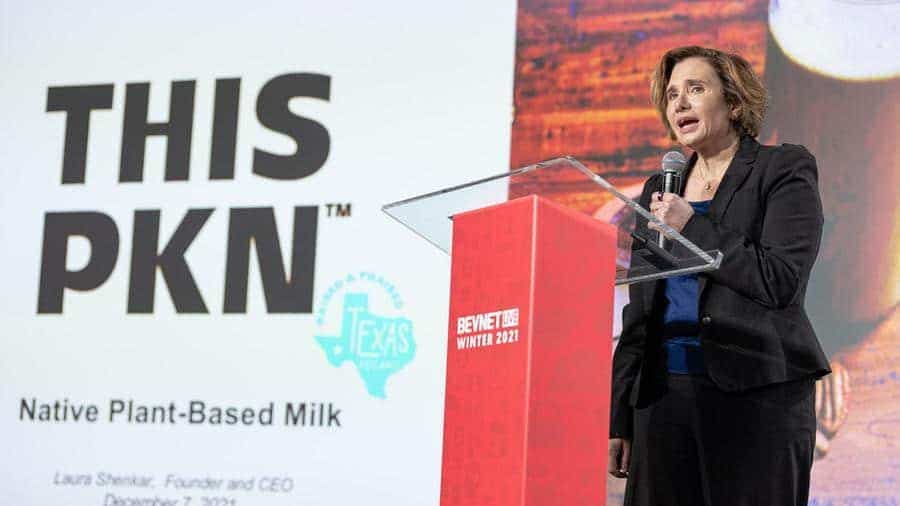
Laura Shenkar, Founder & CEO, This PKN
Transcript
Note: Transcripts are automatically generated and may contain inaccuracies and spelling errors.
Ray Latif [00:12] Good morning. Once again, I'm Ray Latif, the editor and producer of Bevnet's Taste Radio podcast, the number one podcast for the food and beverage industry. I'm also the host of Bevnet's new beverage showdown, Bevnet's signature beverage brand competition. We've reached the final round of the showdown and which is sponsored by Venturing and Emerging Brands, an operating unit of the Coca-Cola Company, and gives early-stage and promising brands the opportunity to present their business plans and products to a panel of expert judges and the Bevnet Live audience. The winner of the two-day competition will receive an industry awareness package worth $10,000 and join a shortlist of brands that have triumphed in the showdown, including Health Aid Kombucha, Malk, Can, and Hop Lark. Out of the 12 semi-finalists who presented yesterday, 6 have made it to the final round. Let's talk about the rules for the final round. Each of the 6 brands will have 5 minutes to present and receive 5 minutes of immediate feedback from the judging panel. The final round is split up into a morning session and an afternoon session with 3 brands participating in each. After all the brands have presented, the judges will convene and we'll announce the winner here on stage at 3:20 p.m. Pacific time. Just to note, there's no audience voting in this round. Let's introduce our esteemed judges. Starting all the way to my left is John Craven, who's the founder and CEO of Bevnet and a widely recognized authority on the beverage industry. He's frequently cited in mainstream media as well. His vision shapes the editorial, publishing, and positioning of all Bevnet properties, and he told me that if I mention a certain sport where you kick a ball with your foot, he would drop kick me off the stage, so I'm not gonna do that. All right. Up next is Maxine Kosler- Kovin, who is the co-managing director of LDR Ventures and Consulting, a female-led and Los Angeles-based firm that consults to and invests primarily in female entrepreneurs at the Seed and Series A stages. They focus on marketplaces, consumer products, and services that make people's lives better. LDR also helps to develop platforms, products, and business models with clear paths to profitability. Maxine is also a limited partner at Bell Capital, which invests exclusively in early stage and emerging female founded and led companies. Next up is Eric Kcker, who's the team lead of the North American marketing operations team at Coca-Cola. Prior to his current role, Eric most recently led competitive and marketplace intelligence for North America, and he also has run Human Insight for the company's venturing and emerging brands division. Before joining Coca-Cola, Eric spent 8 years at Delta Airlines managing their consumer insights and research team. Next and finally, someone you all know, Ken Sadowski, a senior advisor with Verlinvest and known by insiders in the beverage business as the beverage whisperer. Ken has an incredible track record of investing in and advising many of the fastest growing and most successful new beverages over the last 20 years, including Glasso vitamin Water, Vitacoco, Hint, and Bay. Very excited to be with this incredible panel. Thank you. All right. Let's get to the competition and introduce our first finalist for this part of the New Beverage Showdown final round. That's Laura Shenkar, who's the founder and CEO of this PKN. Laura, come on up.
Speaker 2 [03:30] Thank you very much, Ray. So I, I wanted to thank everyone, uh, the team, uh, behind me is very excited to be getting feedback. We got some great comments yesterday and we're looking forward to hearing comments today. I wanna get a call out quickly. How many people here are from Texas? Nobody. All right, so I'm gonna make some references and we can check them afterward. Anyway, I wanted to start off. Answering a question from yesterday. When humans first walked the alluvial plain of the Mississippi more than 8000 years ago, there were already lots of plants and bees and bugs, uh, and animals, and there were pecans, and those pecans have an understanding of the great heat waves and the great droughts that will be important as we go forward into the future. Uh, those native plants are an anchor that will enable, enable us to continue to produce food. So we've named our product, uh, uh, with a 21st century turn on the word pecan, which is the Native American term for, uh, nuts for, uh, pecans. This pecanan. The story starts with me as uh a consultant and entrepreneur working in water and natural resources looking at water preservation. The places included Texas and we were struck by the potential for pecans. The the trouble is that in terms of pecans, farmers need a reason to want to get into regenerative farming to think ahead years and decades. Over the last 18 months, we've put together a team of dedicated female founders who come from incumbents in CPG as well as startups, uh, and I bring a lot of experience from both the venture capital side as well as, uh, management of startups. Our partnerships with PR firms like NAC PR, uh, the design firm 11 Creative are essential. We've been bootstrapping this and so we look toward those partners as an essential part of the team. This is our concept. You choose the right plant, you support the farmers, you find food that is nutritious and provides dense nutrition for the future, and then you look toward how you can be on top of the latest manufacturing, all to reduce the greenhouse gas emissions and environmental footprint of a product that is what you're going to be eating 40 years from now. We're targeting people who aren't tree huggers, so when you talk about sustainable brands, the thing that always used to drive me nuts was when people would say, oh dear, that's so nice that you're taking care of water. Well, what we want to do is have a a business that really makes money, that really is a mainstream product we need to hit people who aren't tree huggers. So what we're talking about are using all the elements to tug at. The heartstrings of people who aren't worried about the environment but who love specific places we've chosen Texas as a first step and we're doing something in a very maverick way we're looking at how we can launch in a place that isn't Los Angeles please forgive me, everyone, and isn't New York, but really, uh, taps into the local pride of a $25 million.25 million person market. What we see is an enormous white space. Most Americans know what a pecan is, and they love it. There's no pecan milk on the shelf with all of those other milks. Oatley, Califia, and some other great brands like nut pods have burst through and created a new generation of, uh, plant-based milks of CPG brands, but they're tied to a lot of the old identity of what a CPG is with very large global manufacturing, global sourcing, and you. Can't continue for that for the long term and we're beginning to see that on the other hand you have these handmade brands that are local favorites but they don't, they don't have the ability to last, uh, more than a few days and they're constantly running into economic issues as well as supply issues. In the middle we have a shelf stable product that is clean label and refers to a long term food that makes sense for the next 40 years. These are the specs of the product. And I guess we'll get into those in more depth, but this is a high antioxidant nut. Uh, we're planning on selling it at 599. I'm about to run out of time. I'm gonna flip through. This is the long term that we're seeing as we progress into retail.
Ray Latif [08:45] Nicely done. If you can just grab your microphone. You can slide up here with me. Thank you. So, uh, yeah, you can stand right there where the X is. Great. Um, so Laura described, uh, pecan or pecan milk as an enormous opportunity. Ken, I'm sure you've seen a lot of alt milks, uh, pitched to you. Uh, what do you think of the opportunity for pecan milk?
Speaker 3 [09:09] Well, the short answer is I don't know, but it is unique. So I do like, you know, the sort of identification of the white space. Um, it's a good start.
Ray Latif [09:19] Eric, uh, Laura outlined the target consumer and a regional opportunity for the brand. Can you talk about, uh, your thoughts on both? Yeah,
Speaker 4 [09:26] no, I echo what Ken said. I think that it is a unique white space opportunity, so I applaud you, Laura, for identification there, and I do, I really, I wrote that down. I really admire your, um, your focus on the target consumer that's beyond the coastal markets. I I think that's a consumer we often forget when we're launching new products. I loved your attention there and you know I think in terms of my wonder, I think your package is really, really strong. It's very clear in terms of communicating what's in the product. I wonder if there's a way to amplify your message around sustainability and create more of a consumer problem you're solving there with your offering.
Speaker 2 [09:59] You want to address that? Sure, yeah, so I, we, I launched online with a very, um, strong, uh, social media program. Uh, we've been benefited, um, from some wonderful press coverage at the beginning. I think we have a tremendous firm of mavericks working in PR and I guess that that's the real question we need to, when we talk about customer discovery, we want the customers to discover us online, but we also need to discover them. So I guess the idea is how do you get to someone who isn't a tree hugger and talk to them about sustainability? I spend my whole life talking to these people and what we see with social media in particular is this is an enormous opportunity to listen. So what we, what we see going forward for the next year in particular is how do we learn as much as possible.
Ray Latif [10:47] Thank you. Are consumers looking for a brand like this, Maxi? I mean, do you see, uh, do you see a long runway for pecan milk?
Speaker 5 [10:54] Um, I think again, congratulations on finding something new because that in itself is, um, a good challenge to have conquered, and I do again, um, think Texas and starting somewhere else is the best way to go for it because if you can build strength there and you have your numbers and you have a lot of power to it. Um, I look at it like there's no other pecan milk out there, but why pecan? I, I, you know, there's a lot of dairy alternatives, a lot and really good ones, so I almost feel like it's like when kombucha came on the market, you have an education process or a Pom Wonderful, um, how are you educating the consumer? Why would I pick pecan over any other nut-based milk?
Speaker 2 [11:37] God bless you for answering that question that way. That was wonderful. Thank you. So I, I guess it is that this is one of those rare moments where it sells itself. I guess if you don't have a nut allergy, you probably know what pecan pie is. And we have any other questions, I think, I think it sells itself. There is, uh, uh, getting to the customer with a new product is always a challenge. So as we choose our first retail retailers, as we choose our first presence, I was listening to the story of nut pods and thinking about how we need to be very, very attentive. To those first presentations and I think you see with the with the uh with the collaterals that we've paid a lot of attention to creating an optimistic and audacious uh very American feel this is not neutral we're Americans we can't help ourselves we're not this isn't Switzerland.
Ray Latif [12:30] John, um, we haven't talked about the brand name. Uh, I'd love to hear your thoughts on the brand name this PKN and the liquid itself.
Speaker 6 [12:36] Sure, I mean, I think the brand name, you know, it's, it's one of those like, you have to think about what it is the first time, and I kept calling it this PKN, you know, I don't know if that's good or bad, but You know, a lot of brands, you know, some of the, the big ones, I mean, I remember thinking Google was stupid when I first heard it, you know, so, I mean, everything's kind of got a chance, right? Um, you know, I, I do sort of, I, I guess as far as how it rolls off the, you, you know, your tongue and whatnot, I mean, I think it's, to me it feels a little clunky having the word this in it. I have less, I have more issue, more issue with the word this as opposed to the PKN part, um. Just because it doesn't sound like something that can be like a, a Kleenex or something like that, you know, one of those brands that's ubiquitous, kind of the way oatley is, honestly, at this point with oat milk. Um, I think, you know, the liquid, you know, there's no mistaking that it's a pecan milk. Um, I didn't particularly like the stevia and the chocolate flavor. I also kind of thought that would be a sweet flavor, so I'm kind of not totally sure what you're supposed to do with it. The original like makes total sense, like quality is great.
Ray Latif [13:44] All right, we're almost out of time, but Ken, you have one more comment.
Speaker 3 [13:46] And one of the first things that I asked myself was, is this a line extension for an existing alt milk player, and full disclosure, I'm an investor in Califia, or is it going to be white space?
Ray Latif [14:00] Gotcha. All right, great feedback. Great presentation. Well done, Laura. Thank you so much.