Search across the BevNET CPG Media network including BevNET, Nosh, Brewbound, Taste Radio, Nombase and CPG Jobs.

Sponsored Workshop: Craft the Perfect Collagen Beverage: Differentiate Your RTD with BCP®
Transcript
Note: Transcripts are automatically generated and may contain inaccuracies and spelling errors.
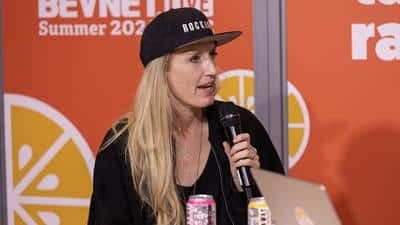
Speaker 1 [00:18] GELITA is a world leader in manufacturing and supplying collagen proteins, and here with me is,
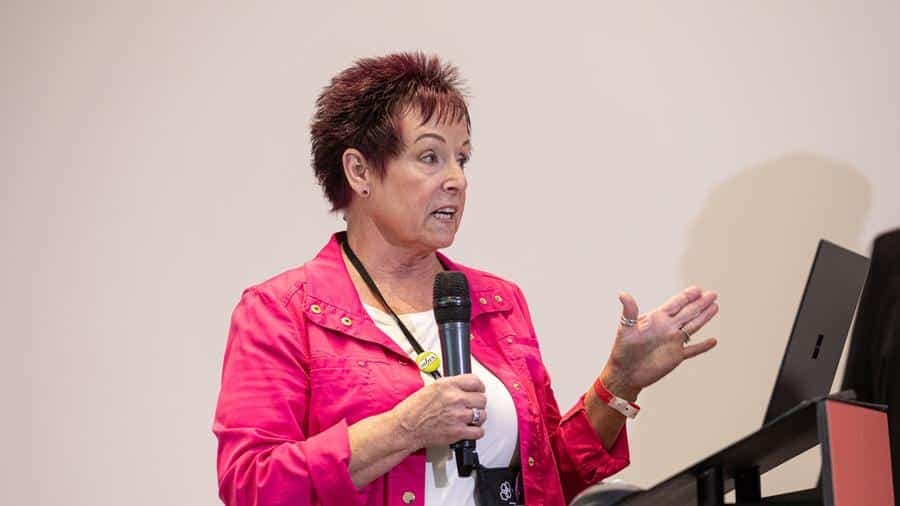
Ginger Waller [00:25] I'm Ginger Waller, I'm the manager of technical services for the food application side, which includes beverages.
Speaker 1 [00:31] So we are going to share with you how to craft the perfect collagen beverage by differentiating your RTD with our BCPs. So first, a little overview of what we're going to tell you. I'll do an overview, tell you a little bit about GELITA, introduce our company, talk about collagen trends, why is collagen important to our body, and then we're going to tell you why all collagen is not the same. We'll talk about bioactive collagen peptides, their mode of action, and beverage and supplement collagen trends with solutions. And then we're going to tell you how to develop great formats with different bioactive collagen peptides. So first, GELITA has been an innovator in collagen protein since 1875, incorporated in 1987. It is a private non-listed company owned by the founding families. We have a globally and locally effective network. We are where our customers are. We're headquartered in Germany and in 2 years ago, we opened a biotech hub in Frankfurt. So first, the collagen peptides market. The global collagen peptides market is estimated at $700 million USD in 2023, expected to grow to 922 million by 2028. North America has an estimated 30% of the market. The USA drives the collagen peptide market. So let's see what globally consumers are saying. 1 in 3 is interested in collagen functional ingredients. Wellness brands have adopted diverse formulations that have functional ingredients to address holistic wellness in beauty, fitness, healthy aging, and just overall wellness. So how else do we know that collagen peptides are popular? Well, it's in the industry news. It's in the news in general. I've seen it in The Wall Street Journal. Influencers are talking about it, social media buzzword collagen. Here we can see collagen is bridging the gap from beauty to healthy aging to sports nutrition. What about collagen drinks? Well, they cater to diverse customers' preferences beyond beauty. We have women's health, holistic wellness, addressing beauty from within and mobility issues, revitalizing wellness. Now let's take a look. How is collagen good for the body? Well, it's the body's primary building block, comprises 30% of the body's protein. It is the most abundant protein in the body. It is the primary building block for skins, muscles, tendons, and ligaments, cartilage, and bone, and sometimes you may hear this referred to as white tissue. Healthy collagen levels contribute to skin elasticity, nail strengthening, and hair thickness, bone and joint health, muscle tone, overall beauty and wellness. So here collagen levels contribute to, like I said, to the skin elasticity, etc. but as we age, collagen production starts to decline even though it is naturally in our bodies. So what do we do to combat that? Well, First, let's talk about with age, how does it decline? By, we peak at the age of 20. And 1%, oops I forgot to switch 1% per year is lost each year of your age. So by the time you get to age 60, only 40% of your collagen is left. So what do you notice? Fine lines and wrinkles appear, loss of elasticity, cellulite. Increases thinning hair, brittle nails, your joints and bone exhibit stiffness and inflexibility. You might have pain, decreasing bone density. Tendons, ligaments, and muscles become weaker. You lose muscle mass, and you might even have an ACL rupture. So although We can collagen is a supplementation and an obvious effective solution. Not all collagen is the same. Now Ginger is going to tell you why.
Ginger Waller [04:55] OK. OK, you know, one of the as we age of death or fatalities is basically because we take falls in our older years, and a lot of that is because of the collagen instability. Instability when we lose the collagen, we're not as muscle toned, we're not as our tendons and ligaments don't work as well. So basically collagen basically is very important, OK, but not all collagen is created equally, while collagen is good for the body in general. GELITA has unlocked the full potential of collagen production with our bioactive collagen peptides. GELITA's BCPs interact with different cells in the target organs in kind of a lock and key principle. And that results in optimal results. The specific BCP Verisol, for example, you have a sample on your seat, would interact with the fibroblasts in your skin cells. OK. The specific BCP and Fortageel would interact with the chondrocytes. You don't have a sample of that one on your chair, but chondrocytes in the joints, and then Fortibone with the osteoblasts and osteoclasts in bone to actually rebuild bone. OK, so how does it work? Well, after oral ingestion, it goes into your bloodstream via uptake in the small intestine, and that's in partly intact form. About 10% remains intact, and about 90% of the rest is absorbed as amino acids, which is the building blocks of our body. The intact BCPs are distributed throughout the bloodstream to our target organs, the ones that it's going for, reaching the target organ. The specific BCPs stimulate the cells in that target organ. It depends on what it is fibroblasts in the skin, chondrocytes in the joints, osteoblasts in bone and tenocytes in ligaments and tendons, and that happens via receptor interaction. To produce more extracellular matrix, including collagen. Now there's some other components in there as well, such as elastin and proteoglycans. The increased synthesis of connective tissue leads to the beauty benefits such as reduced wrinkles or an increased stability in joints, bones, and tendons and ligaments. But I do want to say this much about it. It's not going to just magically erase the wrinkles. Believe you me, I've been trying for years and it just doesn't quite work that way. OK, so this graph shows an exemplary example of how the human fibroblast cells with different molecules and single amino acid stimulation is highest with our bioactive collagen peptide variol compared to a lower stimulation rate of an unspecified bioactive collagen peptide. It was one of ours, and then we used just a generic collagen peptide, which is very commonly found on the market. Now the high molecular molecular weight gelatin, as well as the very small molecular weight bipeptides and trip peptides and even the amino acids in and of themselves show almost zero result. There's almost zero efficacy. There's a little bit with the proline, but you know, as you can see, there's a lot more efficacy and Effectiveness with the variol in and of itself. So the same, you know, targeted bioactivity with the highest stimulatory effect is only possible if the bioactive collagen peptide is produced by our proprietary enzymatic hydrolysis and it shows that specific peptide fingerprint, which is what I said earlier, the lock and key principle. So now let's listen to Angie tell us a little bit more about the studies.
Speaker 1 [08:31] So our bioactive collagen peptides, we have developed a whole portfolio to address consumers' concerns as they age with collagen or even overuse. So we see here skin, hair, and nails, Verisol, you have joint health, Fortel, and on these. Ingredients, these products are supported by high-level clinical studies. Regulatory bodies around the globe have reviewed these studies and awarded corresponding health claims. Part of GELITA's DNA is to claim only what we have proven with our studies. Next, let's take a look at some key trends in beverage and supplements markets. Now I know you, the audience, are intimately familiar with the trends, but we'll look at some that could be relevant to the collagen. So first we have ingredients taking the spotlight, consumers prioritizing prevention, women's health, and performance nutrition. So for ingredients taking the spotlight, consumers globally say that they are always looking at the ingredients of interest on the product package. 42% of consumers globally say protein is the most important ingredient. How can collagen peptides support collagen is well known and has high consumer acceptance. There are many specific studies, and it's a natural ingredient. Clean label. Then we have Want to show how collagen is taking the spotlight in beverages. There it is, loud and proud, near waters, juices, anything to formulate for a ready to drink. The next trend is prioritizing prevention. More than 1 in 3 consumers claim that they prioritize in preventing health issues, so this is relevant for skin aging, sports performance, and bones and joints. Bioactive collagen peptides that can support a proactive approach are Verisol Beauty from Within addresses skin aging, tend to for for tendons and ligaments, body balance always in shape for body composition, sports performance preventive or proactive approach, and then we have two distinguished solutions for bones and joints for to gel for the joints, 4 to bone to stimulate collagen matrix. Here you can see many different ways. There's even an alcoholic beverage. There's powder, powders ready to mix, ready to drink, concentrates. Now, women's health is a hot, hot topic. No longer is this a whispered about taboo topic, OK? It's in the mainstream and it, it, it, it is relevant to all life stages in women's health. It's Beginning with puberty, maturity, menopause, and the elderly. How can collagen peptides support here? Well, skin elasticity improvement, wrinkle reduction, cellulite decrease, nail improvement, hair strengthening, lean body mass optimization, bone density, mineral density increase, muscle mass maintenance, and joint mobility. Bioactive collagen peptides for women's health to address these issues. Verisol beauty from within, 10 to 4 and body balance for active nutrition and body toning, and fortel and for the bone again for the bones and joints. Now, our next trend is performance nutrition. So, sports nutrition, the huge trend, uh, for here, we have developed a new product, Pept Endure, which supports improved endurance performance. So we saw a white space opportunity here. Sports nutrition brands realized there's a need for endurance sports, but nothing really to offer. The market had two topics for muscle growth something for short term amino acids, and then the long term protein-based products like whey. Then for, for endurance, there were short-term solutions, energy drinks, which you would use during the race, but nothing really for long term. So for this white space, we developed Peptinure, not as a short-term solution, but as a long-term trading partner. How does Peptinure work? OK, we did 3 clinical studies with both men and women. There was showed a 14% higher speed, a quicker recovery after exercise, and boost to adaptive changes in the muscle. Um, basically reducing your energy expenditure, resulting in faster recovery, and then there is an increase in speed shown again. collagen peptides are friendly, user friendly, easy to formulate with pure collagen peptides, and in addition, it is also compliant with the World Anti-Doping Agency. Here is an example of the first launch of our product in a ready to mix in Europe, when we are looking forward to the first one in the USA at the end of this month. OK. Another segment for performance nutrition. Gamers, huge part of the sports nutrition industry. There is a strain-related injury that's pesty to gamers called the gamer's thumb. Here, GELITA tested in a clinical trial with professional gamers over a period of 3 months. During that 3 months, they Checked their pain, which they reported in a questionnaire as being reduced. There was also a specific thumb movement that was tested. There was an increased performance from 5.3 seconds to 3.6 seconds. Gamers are always looking for a way to edge out their opponent. So ultimately BCPs are very easy to formulate with. They are supported by science and health claims, natural clean label ingredients. Gelita is a powerhouse of formulations. Remember, collagen proteins is all we do. So consumers are becoming more educated and understand what they are putting in their bodies. Brand owners can elevate their brand with our BCPs and support it with unique positioning and a story that will answer the consumer trends. So Today we have addressed a bit about Gelita. We have talked about the nutrition and health ingredients. We've connected the dots between the global trends and Gelita's portfolio. We've touched on the size, scope, and growth of beauty from within and mobility-related markets and the importance of collagen to these markets. Its we now understand the vital role of collagen to our bodies and what happens naturally with age. Better yet, we've discussed how bioactive collagen peptides offer unique and targeted stimulation for the body's cells that are responsible for producing the collagen. So now to talk more about concepting and applications is ginger.
Ginger Waller [15:53] Thanks, Angie. So let's talk about some uh applications in beverages. I mean, that is why we're all here, right? OK. So we have infinite possibilities to catapult your beverage formulations to the next level and then using collagen, it's very easy to formulate with. Now, why is it easy to formulate with? Excellent solubility in warm and cold water up to a concentration of 10 to 50% without impacting viscosity or mouthfeel. It's got a high pH resistance, high temperature resistance. It has a buffering effect in aqueous solutions, and carbonation has been used with bioactive collagen peptides tested up to 5 g per liter of carbon dioxide. Possible beverages include ready to drinks, ready to mixes, shots, and or concentrated beverages, and canned and carbonated beverages, as I said. Now let's look at the agglomeration aspect of it. So the agglomeration of Gelita collagen peptides dissolve rapidly. Basically after about 5 seconds you've got the majority of the agglomerated powder sinks to the bottom of this vessel, and after 1 minute you can see that it's basically completely clear. So at the back of the room we have samples of Peptendure. Actually you have them on your seats. They're not at the back of the room anymore, are they? Oh, both, OK. So, and we have water bottles back there as well to take if you'd like to. We have our high-end dose and our low end dose. The high end dose is 15 g per serving. That's the highest maximum dose that we have studied for efficacy with regard to endurance in sports training, as well as in our building up muscle mass, maintaining the muscle mass, and helping with fat loss, which is body balance. And then we start at the low end, which is 2.5 g daily dose, and that is Verisol. That's the scientifically substantiated dosage we have to prove efficacy in wrinkle reduction, skin increasing skin elasticity, etc. and it actually even helps reduce the appearance of cellulite by reducing the depth of the skin, that dimpling on the skin, and who doesn't want to reduce that. So it's got excellent flowability, no lump formation, and no cohesion or clogging. OK, so everything that I'm going to show you we have formulated in-house. We share our formulations with everybody unless it's developed with someone in confidence. We don't share our customers' stuff, so we just share what we develop because ultimately at the end of the day we want you to use our product. So this was actually formulated in Germany. It's with Fortibone. It's a hot beverage, the hot cocoa drink. It was a powder, but I don't think there would be any issues in making it into a ready to drink. Everybody loves hot cocoa, and this one, like I said, contains our Fortibone. The next beverage is a dairy beverage, a dairy drink, and then we also have a drinkable yogurt beverage formulation. So these have been formulated in-house and tested. A little bit of stability testing on it. That's why we know about the pH stability and some of the high temperature stability. Even fermented beverages. Who hasn't heard of kombucha? Everybody likes kombucha, so, and collagen, bioactive collagen peptides can be used in these fermented beverages. And like I said earlier, carbonated beverages, collagen peptides can be used in carbonated beverages. CO2 concentration tested up to 5 g per liter of carbon dioxide, and our protein concentration that we've tested is up to 10%. So we worked with a product developer many years ago, I want to say maybe 5, 10, somewhere around there, maybe 5, and he developed, invented a patent protected carbonated beverage using collagen peptides and bioactive collagen peptides. So I wanted to see about the stability of this beverage. This beverage is not on the market. It's never been marketed at all, but it has an extremely low pH. AH is at 3.2 and that's very low for a beverage, any beverage. It's actually very low for a lot of applications. However, I wanted to see the stability of it, so I performed a two year shelf life study on it and you can see the HPLC analysis. The results are there on the one, you know, all the way down through there. There's a lot of lines on that graph, by the way, but I can share with you a bigger version of it. But as you can see from the chromatogram, the molecular weight range is stable. The actual little bit of shifting that you have there is within the noise range of the test. Even near water, near collagen waters can be developed. There's a very neutral organeleptic profile. So now we have integrity of BCPs and hot beverages. I personally take mine every day with my coffee, OK? I just dump it into my coffee. Sometimes in the summertime, I make iced coffee and sometimes winter, you know, most of the time winter it's cold coffee because I live in Iowa, where it's cold. But I get questions about the stability of putting bioactive collagen peptides into a hot beverage. So in this particular study, we took a bioactive and we poured poured 100 degrees sea water, which is boiling temperature, over the green tea, and we did GPC analysis and then we performed it to determine to see if the Verisol and the Fortibone were hydrolyzing. The GPC diagram is characteristic for both bioactive collagen peptides, so we don't think that we have any degradation. We know we don't, and green tea and coffee beverages are extremely popular. There are more lines also on that chromatograph, but your key is down below, and you can see they're all falling, falling within range of each other for the Verisol and for the Fortibone. OK, beauty concentrates also called shots, but a lot of times when we say shots here it means alcohol beverage. There's no alcohol in these, OK, but basically you can get a 2.5 g daily dose in about 10 mL of liquid. That's just a very small amount of liquid. And we did the same thing with our Fortigel as well. We put it into a very small amount. We got 5 g into 10 mLs and we also put 5 mLs into 25 mLs. Now basically we did not see an impact on the viscosity of the beverage, even though, you know, getting 5 g into 10 mLs can be a little bit challenging. You would expect to see a little bit of viscosity change, but it was a very pleasant and palatable viscosity. Now this eSports beverage product example, the formulation is not here, but I do have it. I promise I made it. So the beverage I formulated several years ago for a trade show and we were targeting specifically e-gamers for that gamer's thumb problem issue specifically. And the interesting thing I like about this particular flavor is I used a tamarind flavor which is not a common flavor to a lot of people, and I'll tell you I have a lot of people that were very reluctant to taste it. But once they tasted it, it was their favorite over the blue blue blue raspberry, so they preferred the tamarind, which I thought was rather interesting. Now this beverage application is actually my base formulation, and it's the one that I use to start everything with. In this particular formulation, I'm using 15 g of Body Balance, which we could interchange that with 15 g of the Peptendure to fit that. A little bit of maltodextrin I have formulated both with and without the maltodextrin, little citric acid, some flavor, and the pure sweetener. It's very clean. There are only 4 non-collagen ingredients, so it's very simple and it's very clean. I've had so many people tell me they loved this pina colada flavor more than anything. So if they like coconut, they like coconut. But the pure sweetener is plant-based. It's an organic blend of stevia and erythritol. I did not use color in this particular formulation. It was just kind of a light yellow color, so basically that kind of fits with the pina colada. But if color is needed, I typically put in an all-natural flavored, all natural colors. So, thank you very much for attending. So when you think of functional beverages, think of Gelita. Just like Gelita BCPs deliver more of the right thing to sell, Gelita can support your beverage formulation to deliver more of the benefits your consumers want.
Speaker 3 [24:22] Thank you so much. We're gonna do, um, we're gonna do a little Q&A up here and then we can all break out back for some networking so you can, uh, speak with Ginger and Angie for yourself. You may have, um, questions for them directly as well. Thank you so much for that presentation. That was fantastic. Um, I'm curious which collagen products are you seeing see the most growth right now? So you know we're here for beverage of. but it comes in so many different formats powder, bars, anything interesting trend wise?
Speaker 1 [24:55] Well, I think what I see the most interest in collagen is actually the science-backed ingredients. Customers are very consumers are very aware and they're looking to make sure that it's backed. And of course powders are definitely a supplement, but the grab and go ready to drinks and ready to mix are All really popular.
Ginger Waller [25:17] The other thing that I see that's a very hot topic right now, like Angie said earlier, is women's health. You know, women's health, and there's a lot of the issues that are addressed with our bioactives. When is beauty going to go out of style? I mean, when do you reach an age and you say, ah, I don't care about fighting wrinkles anymore. You just don't. I mean, it's always gonna be there, and we're seeing trends younger and younger and younger are actually getting into. The preventative aspect of skincare. I have a 13 year old granddaughter and she cleans me out every time she comes to the house. So basically it's a popular thing. And then along with that there's bone mass density. That's a big topic because osteoporosis is not a disease that you have symptoms of until you actually have the disease. So basically, for women, there's checks, there's checks, there's DEXA scans. I'm going to tell you a personal story. 3 years ago I was diagnosed with osteoporosis. My doctor said, OK, I want you to take injections, and I said, Nope, nope. I said, I'm going to do a few things. I'm going to change, you know, make some lifestyle choice changes, and I want to do a few other things. And she didn't agree. She said, No, no, no, you need to take the drug. And I said, just give me a chance here. Last year I went for my DEXA scan and I'm no longer osteoporosis. She called me and she said, Well, whatever you're doing, just keep doing. So I said, OK, I will, but basically that's one of the benefits of our Fortibone is it actually helps to rebuild the bone. Most medications on the market today actually stop bone loss but don't do much of anything for building backbone. But that again, you know, there were lifestyle choices. I had to go back to lifting weights. I had to go back to doing, you know, more regular exercise and a few other things.
Speaker 1 [26:54] I think too it's important to point out that men are also interested in skin health and Bone loss, all of these things for healthy aging can affect across all demographics and ethnic, um, ethnicity groups. And so Julita continues to innovate and study, um, even more diverse groups, and I do want to brag just a little bit. We have men's and women's studies, and not every company, I don't think has, has that, so I'm kind of proud of the fact that we, we do have
Ginger Waller [27:26] anyway. So cross gender specific studies, so that's, that's a benefit.
Speaker 3 [27:30] Yeah, that's really good to know and important for everyone to know. Um, you've listed so many of the nutritional benefits of collagen. How do you see brands calling those claims out on their packaging and, you know, what are their regulations that brands. And sort of need to be aware of and how do you market what you have to work with effectively.
Speaker 1 [27:50] OK, let me start with that. First of all, there you can partner with Glita if you want to develop a brand that specifically addresses one of, let's say it is Vordabone, OK. You can partner with Julia through a uh TLA. You will be able to use our logo. We speak out about our products. Here, other editorial contributions where it shows. We have, of course, our website. If you, if you Google Verisolford, you will be able to see information about it. And then our scientific studies are there to support your structure function claims on your nutritional or supplement labels. OK. There are legal, Ginger would want to know more about this. There are legal, but we can't give you advice about what to put on your label, but of course we can support it with the science.
Ginger Waller [28:43] We always recommend, you know, of course, the FDA, you know, this, this product is not intended to cure, diagnose or treat any disease. So basically that standardized statement is highly recommended. However, you can call out some structure function claims on, you know, with our, with our science-backed evidence,
Speaker 1 [29:00] which is supported. And like I said, if you partner with us, you can use the logo.
Ginger Waller [29:06] We also provide, I mean all of our studies are published, they're published, so we, and we can give links to most of the studies.
Speaker 3 [29:13] Yeah, absolutely. Um, does anybody have, yes, please.
Speaker 4 [29:19] Uh, Formulation of the collagen. Will that dream fall under I got you.
Ginger Waller [29:32] You know that's a very good question. I know we have a lot of products that are crossing over into fortified foods. Um,
Speaker 1 [29:39] but Foods, yeah, Tammy, do you, this is Tammy and Zinna. She is, uh, our national account manager. She is also very familiar with these, uh, questions as she addresses them on a daily basis with customers. It doesn't have to be a supplement. I think it depends. You can determine which market you want to go to, which, whether you want it to be a supplement or a functional food, um.
Ginger Waller [30:08] And that is more of a marketing choice, you know. Do you want your product in GNC in the vitamin shop, or do you want your product in the grocery store?
Speaker 1 [30:16] And there's crossover too. I mean there is see in Target, you see these things or Whole Foods, and it's a kind of a crossover, but you can determine and then you can make your claim in for whichever, um, market you choose.
Ginger Waller [30:31] Does that answer your question? And
Speaker 1 [30:32] if you want more information.
Speaker 4 [30:36] Then left some area also where because some legal Who are explaining the same that you make the product and everything that you need to make that need to go through the lens of FDA approval they will look at your ingredient and then. That your food or your drink. Right?
Speaker 1 [31:00] Doesn't it? It has grass qualifications.
Ginger Waller [31:03] Yeah, gelatin and collagen. Now there's, there's two different types of gelatin gelling gelatin, which is the kind you buy when you, when you want to make something with texture or like Jell-O shots, anything like that. And then there's non-gelling gelatin, which is collagen peptides and bioactive collagen peptides. The protein is broken down into such to such an extent that it can never reform or add texture back into something. So, and gelatin has the gross status here in the USA with the FDA and probably pretty much everywhere. I mean, it's been around for thousands of years. So
Speaker 1 [31:38] collagen peptides falling, falling under the gelatin,
Ginger Waller [31:42] non-gelling gelatin,
Speaker 1 [31:44] and then therefore,
Speaker 4 [31:48] OK.
Speaker 1 [31:48] I was gonna say, further information can be gleaned by even smarter people in marketing.
Speaker 3 [31:56] And you know, another consideration in figuring out whether you want your product positioned as a supplement or a food, a lot of times you're taking into consideration where those things are being merchandis. So if you want to be pulled out of a grab and go cooler versus in like a body care section, I mean that's also obviously something that's important to think about, right? Who else? Any other, uh, who else has a question? Nobody. All right, I have another one. so we're, we're talking specifically about bioactive collagen peptides. Uh, do consumers understand what that means and where do they get the information? Like, where is the, where is the marketing showing up right now?
Speaker 1 [32:37] Let me start with a simple one. Ginger has good points to offer. OK. Consumers are becoming, it's an evolution. They're becoming more and more educated all the time. They know collagen is good for them, right, but then when they, the discerning, uh, consumer will look and, and try to understand what is this really helping, what, what does this help, right? It's all out there on Google. There's influencers, of course, Jalita, we're trying, we're offering, you know, education through our website and, you know, things like this. However, There's a lot of misinformation out there about collagen too, and that I will let Ginger explain just a little bit.
Ginger Waller [33:23] How many scientists do we have in the group? OK, basically, uh, collagen is a linear protein. It is not a globular protein, and most all proteins other than collagen are globular proteins. The fact of that lineage basically makes it very unique, and the other aspect that makes it unique is a specific amino acid linkage within the protein, and it's prolene, hydroxyprolene, and glycine. Those that linkage is not found anywhere else in nature. It's not found in whey. It's not found in plant proteins. It can't be combined with anything. The hydroxyprolene-prolene linkage with glycine only occurs in actual collagen, and there's no such thing as a vegetable source of it. That's one of the reasons we have our biohub in Frankfurt is we're trying to figure out a way to make a basic collagen that contains that particular. linkage using a fermentation process. OK,
Speaker 1 [34:20] so I think if you're developing a brand, it's important to somehow feature that, and I think an excellent way to point that out would be to use Deleta's bioactive collagen peptides, do a TLA, get the logo on there. It says right there Verisal beauty from within. They look it up and it's right there on it's Google. I'm.
Ginger Waller [34:42] Two of the actual bioactive collagen peptides that Angie's talking about and that we brought up, one of them is Verisol. Verisol has been around for at least 10 years.
Speaker 1 [34:51] It celebrated its 10 year birthday a couple of years ago, and Fortageel has been around for 20 years now.
Ginger Waller [34:58] 20 years. It is the most studied bioactive collagen peptide, and I started taking it almost 20 years ago because I've been with Julita that long. So basically I have 8 grandkids. They like me to get down on the floor and play with them. More than that, I like. Able to get up off the floor without having to crawl over to a piece of furniture to get myself up. So basically, and that is one of our most studied bioactive collagen peptides, but we don't stop with these studies. We go on and we do in vivo and cellular testing every year just to maintain surety that the efficacy is still there in these bioactives. Now that being said, collagen is produced under a lot of different names out in the market, and the consumer actually knows that collagen is good for them. But a lot of times they don't really understand exactly why, and that's because it's, it's complicated and marketing techniques have a lot to do with it. For example, if I were to market a collagen product and I put in big bold print on the front Type 1 and Type 3, the consumer that picks that up and looks at it is going to discern and say, OK, wait a minute, type's important. What can I find out about type? So they go out and they hit Dr. Google up and Dr. Google comes back and says, Well, there's over 30 different types of collagen. So that's like mass confusion, OK. What happens then? Well, basically the understanding of what determines type is where the actual raw material is used that is to source the product. For example, mine and hers collagen is exactly the same. There is no genetic differences. There's no, I mean, it's exactly within our, within each other. Same with everybody else in the room within species like cattle. Theirs is all the same, and there's a very high degree of similarity between ours and cattle's and porcine as well. So what has to do with skin and bone contain the highest percentage of collagen, type 1 and type 3. Type 3 has to do with a cross-linking process that occurs as we age, OK, so we have this beautiful layer of collagen and proteoglycans and all this hyaluron. Acid and water underneath our skin. Who doesn't like to pinch babies' cheeks? And that's because they're plump with collagen and it's got a very nice matrix. Well, over time that matrix starts to collapse, and when that happens, basically that's when the wrinkles develop and those things that we don't want to have happen happen whether we like it or not. So basically that particular aspect of it is very important. So consumers consumers don't understand. Why the type is not that relative, we have determined that type is not that important. It's actually irrelevant when it gets down to the actual bioabsorption, like I said, of that 10% intact of those peptides and then the 90%, that's the amino acid building blocks, and that's because you can't discern between the types. But as we age, the type 3, the crosslinking occurs which causes the collapse in the skin. I have seen type 2. Type 2 is a very beneficial. It comes from cartilage. It comes from cartilage, chicken sternums primarily. Um, it's produced. It's very expensive because we all know that there's a lot bigger, a lot more cattle, and a lot more porcine creatures slaughtered here in this, in the US and globally, rather than, you know, chicken sternum is very small. How many have cut up a chicken and seen how small it is. So that's one of the reasons. The other thing I've seen is that the vegetarian component. This is kind of off topic, but I have seen other collagen sources that are animal sourced marketed in vegetarian capsules, and that's called out on the label. So it's marketing and trying to figure out, and there's a lot of misinformation out there with regard to collagen, a lot of misinformation. I went way overboard. I'm passionate about this stuff. I apologize.
Speaker 3 [38:49] In a nutshell, did have a question? No, um, in a nutshell, how does, how do bioactive collagen peptides behave differently in the human body versus other forms of collagen peptides?
Speaker 1 [39:03] Basically, because they're optimized, so it's how they're processed, and Gleta has a. patent protected process to Adjust the molecular weight of your collagen so that it best interacts with the cells. That's why there's different, we have variol fiber that affects the fibroblasts in the skin. And then for the bone that affects the osteoblasts and on. So, um, that is really the difference is how it's optimized.
Ginger Waller [39:38] It is, and that's what makes each bioactive specific. That's what we've studied is that molecular weight range profile because that's what targets those cells or what those cells recognize within, Body, when you take a generic collagen, you're getting probably a little bit of all of them, OK, of all of those different molecular weight range profiles, but you may not be getting the efficacious dose that we have found to be most best at fighting and warding off certain things for joints, bones, tendons, ligaments, etc.
Speaker 3 [40:11] Uh, you just mentioned a number of different sources of collagen, um, you know, beef, porcine. Which forms of collagen does Deleta work with typically? Is it the full range?
Speaker 1 [40:24] Well, the, for the bioact, well, here's what we found. That is really a consumer preference. Somebody wants a fish or a marine, a pork or a beef, OK. It, in the end, collagen is good for you, collagen is collagen. Um, we have pork, beef, and then some fish.
Ginger Waller [40:44] We have a barisol fish sauce that we get it out of Thailand. Yeah, so it's manufactured in Thailand and interestingly enough I just recently did some sensory evaluations on it because in Asia the expectation is that their marine sourced or fish sourced collagen will have that fishy taste and smell. We just don't like that quite as much here. We want to have a much cleaner profile. So basically I compared some of ours and we have a very nice clean profile and you can talk to Tammy about that if you're interested in the Verisol fish source stuff.
Speaker 3 [41:17] I think I just have one last question for you, and you just touched on it with fishy smell. What are, what are some of the biggest issues that brands have when they're looking to formulate with collagen?
Speaker 1 [41:29] There really isn't any issue. It's so easy, really, you guys, we're saying it's easy to formulate with. It is.
Ginger Waller [41:36] It's very easy to formulate. Like I said, it's agglomerated, so it goes into solution very quickly. The dissolvability is very, very good. It's stable at a wide range of pHs, you know, and we have stability study information to cover all of that.
Speaker 1 [41:51] One thing, so this is part of the reason why we gave you the different samples, the 2.5 g Verissol and the 15 g peptinure. You can try it for yourself. We did bring water bottles, take it home. Try it in your Gatorade. You will be able to shake up your bottle of water and see how easy it dissolves and you see this, see this for yourself with the bioactive collagen peptides. Keep in mind your dose is low, so instead of needing 30 g to get a good dose of collagen overall, use 2.5 and target the skin. And they're excellent for combination products as well, again because of the low dose. I, if, do we have time for me to ask a couple questions? OK, so I have a couple of questions for you guys. Um, if you could market a collagen product, what would you, which, what would, would you choose one of the trends to address or which category? Would you be most interested just Out of curiosity, beauty from within. Sports nutrition, anybody? Which if I list pile. Just menopause? OK. There you go. That's a really hot topic. That, um, actually we are working with someone on something like that. So, uh, the other thing I want to ask you for my, for Mark a marketing question from Julita. Do you guys, would you, how effective do you feel, does anybody feel that influencers are effective in marketing? Would you, we're a business to business marketer. Would you, would that be effective marketing for you, if we had an influencer? Not really, OK. What about athlete testimonials, for example? OK, those we have. What's your question? Yes.
Speaker 4 [43:56] with
Speaker 1 [44:05] OK. Thank you. That is good, that is good for us to hear because we do feel that science is so important and earlier when I was explaining each ingredient that we have that addresses the collagen. Specific, the specific physiological benefit such as skin, joints, tendons, and ligaments have their own studies, OK, and they're published and then um earlier, like I said, global regulatory bodies have reviewed them and then have made supporting health claims. So when you make your structure function claim, this will support you.
Ginger Waller [44:46] They're all double blind random placebo controlled, that type of thing, and they're the gold standard.
Speaker 1 [44:50] We continue to study. There will be more studies come out. There's we're the pipeline is full with continuing innovation here, so. Yes.
Speaker 5 [45:00] The profile. Uh
Ginger Waller [45:05] Yes. There is a very high degree of homology between all collagen in all species, but when you get within a species, it can be very close to identical. But there is a slight difference, and that may be involved in our proprietary enzymatic hydrolysis in order to attain specified molecular weight ranges.
Speaker 5 [45:26] Consumer data in terms of Getting the consumer to understand that this molecular weight is how it's target. Because it becomes this issue of the magic bullet where it does everything and it's like, well I take knowledge with my hair skin and now someone else says they. Bone health and then trying to get the consumer to understand that it's being used differently in the body based on. Mhm.
Ginger Waller [45:49] We have, we have a, a YouTube channel and we have some videos out there on it with regard to it, although it's not specifically clear that that's what's occurring, um, because it's just an animated graphic.
Speaker 1 [46:02] Well, and I think what he's asking, do we have any consumer data? Um, we do have access to that and if you want more information, we can connect with you afterwards. Um, there is the College and Stewardship Association. And they are out talking, of course, to, um, the public also about, about what you're talking about, um.
Ginger Waller [46:24] So and at the end of the day it comes back down to when the consumer buys their container of collagen, is it a 20 g dose or is it a 2.5 g dose? And
Speaker 1 [46:33] they need to understand what he's saying too, I think they need to understand why. And as we pointed out that consumers are becoming more educated. 1 in 3 are looking at the package to see if they're getting what they need, what they want. So I think more and more, and I think consumers are smarter. They're looking for science to back to back it up. Nobody wants to take something that is not. What's promised, I think.
Speaker 3 [47:02] Great, great job. Thank you so much, Angie and Ginger of Glita Bioactive collagen peptides. Learned so much. Thank you all for coming and please make sure that you know you come up and um say hi to Angie and Ginger and ask any questions that you have. So thanks so much for joining us.
Speaker 4 [47:20] Yes, thank you.