

 Ready-to-drink (RTD) cocktails may be one way through the bourbon glut, according to Bardstown Bourbon president Pete Marino.
The contract distiller already sports a growing portfolio of owned brands, and is now getting crafty as it aims to tackle a challenge for the industry: an oversupply of bourbon.
“When you have periods like this, you have to get really creative,” said Marino at Wine and Spirits Daily’s Beer, Wine and Spirits Summit in January.
Bardstown’s “early explorations” in RTDs – the fastest-growing spirits category – come as demand for barrels of the aged liquid wanes after years of revving up production. Industry veterans have warned that the bourbon boom has peaked, weighed down now by an oversupply, coupled with high interest rates which encourage “de-inventorying” at both distribution and retail levels.
American whiskey is still a dynamic category, reaching $5.2 billion in U.S. sales, but the industry is facing a second year of tightening sales after falling -1.8% in 2024. Luxury and ultra American whiskey (+$40) are still up 30% and 3.9% respectively in off-premise sales in the 52-weeks prior to January 25 according to NIQ. On-premise, CGA data shows bottles priced $24 and above have earned sales uplift and gained share in the 52 weeks prior to December 28.
But industry experts caution that markets may struggle to absorb all the capacity that has come online recently, at least in the short term. Bernstein analysts have said that a significant excess supply of U.S. whiskey is likely over the next five years and that if demand remains where it is, supply will outstrip demand by 1.29 million barrels by 2028.
Contract distillers are dealing with the glut in a number of ways. Aiming to keep production going, Bardstown Bourbon announced late last year it has partnered with Brindiamo, a bulk whiskey sourcer, to launch a barrel leasing program. Whiskey House of Kentucky, a high tech contract producer from the founders of Bardstown that began production last year, also launched a barrel financing program. One of the country’s largest whiskey producers, MGP, has cut back on whiskey production and honed in on its own brands; investors are suing the company for failing to inform them of a “breathtaking” oversupply issue.
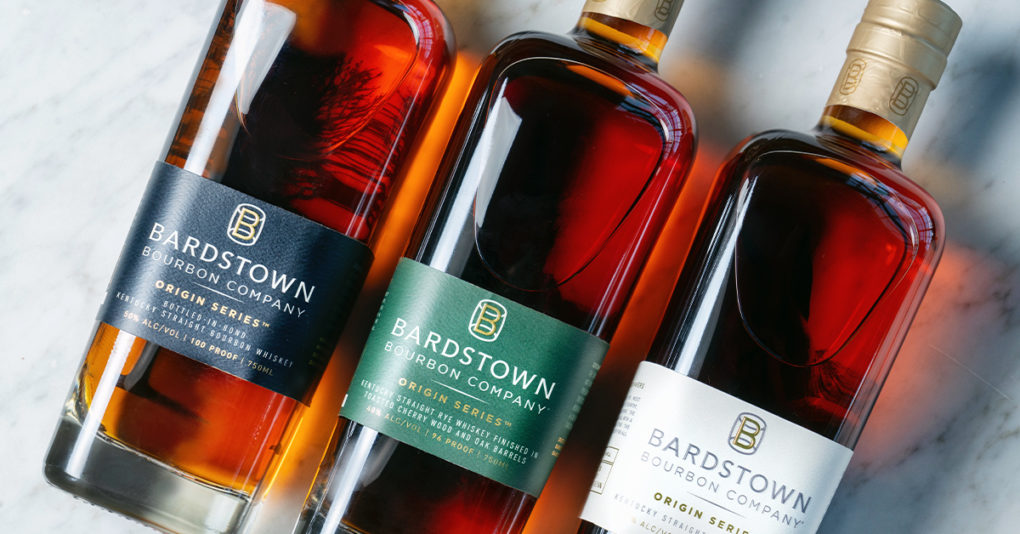
Bardstown has also been beefing up its own portfolio, building a range of price points from its more affordable Green River brands to its Collaborative series which tops $100. Last July, Green River introduced a new bourbon geared toward becoming a staple in the on-premise, a 1-liter bottle hovering around $20. Other independent players, such as Uncle Nearest, have also launched lower proof bottles at $30 price points in the last year with on-premise initiatives to kick off sales. These brands are aiming to recruit younger or new drinkers into whiskey.
The next hook may be RTDs, at least for Bardstown.
“I think when you look at vodka or tequila-based RTDs, and then you look at the percentage of vodka and whiskey and tequila drinkers, the balance is all off in the RTD category,” said Marino.
American whiskey-based RTDs are well behind tequila, vodka, rum and gin-based cocktails, and were down -3.8% in off premise sales in the 52 weeks prior to December 28, 2024, according to NIQ. Showing more promise, on-premise whiskey-based RTDs rank third in popularity, according to CGA. As of now, whiskey-based prepared cocktail brands are largely split between big brand extensions such as Jack & Coke and smaller independents.
To start out Bardstown is exploring RTDs in the 5% to 7% ABV range.
“I think that’s a good sweet spot,” said Marino. “We’ve got a number of the route-to-market partners also with beer distributorships so I think it allows flexibility in route-to-market as well.”
But don’t expect anything too soon, the company is “early in its exploration” of canned and ready-to-pour formats, said Marino.