

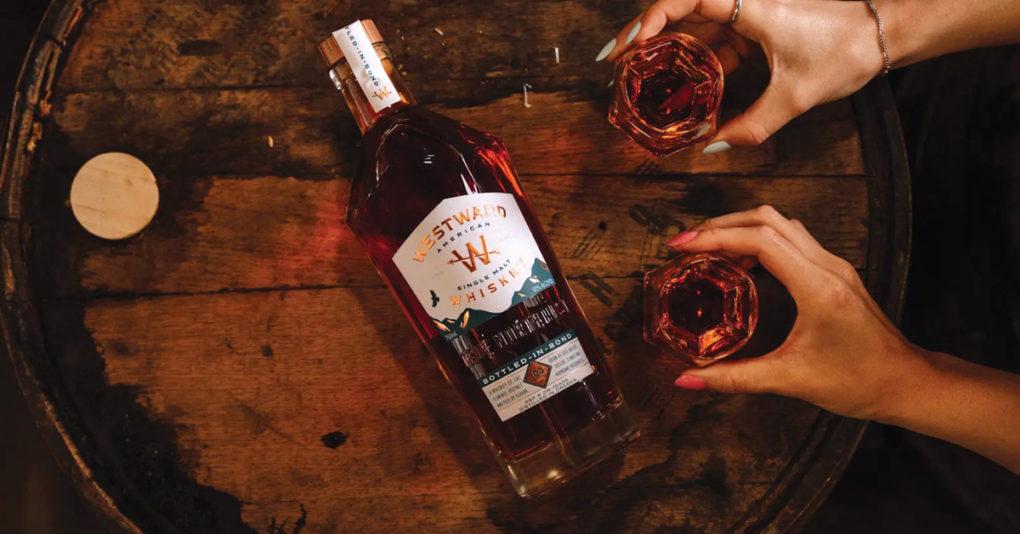
 The parent company of Westward Whiskey has filed for Chapter 11 bankruptcy, citing a decline in demand for spirits and the rising costs of goods among its challenges, echoing the pressure on many craft distillers.
Portland, Oregon-based House Spirits Distillery launched in 2004 as one of the first craft distilleries in the U.S. and debuted its whiskey in 2012. The distiller, under the brand Westward Whiskey, has since become known as one of the top American Single Malt producers, a category that recently earned official status. In 2021, Westward Whiskey grew distribution around the globe, before re-focusing regionally in the last year.
But pressure on the distillery’s liquidity pushed the company to file for subchapter V – a mechanism designed to allow small businesses with low debt amounts to restructure and retain control of the business – in the U.S. Bankruptcy Court for the District of Delaware on April 6.
The petition listed $1 million to $10 million in assets and debts, with a balance sheet attached to the petition listing about $29 million in assets and liabilities as of February.
A number of factors squeezed the business, according to the petition and a statement from CEO Thomas Mooney to BevNET.
“The need for this restructuring process is driven by numerous challenges that have put a significant strain on our business,” Mooney said.
Those obstacles included a decline in demand for bottled spirits in general, the rising cost of goods and services due to inflation that “will only accelerate with tariffs,” and market access constraints that “make it difficult for independent craft spirits producers to reach consumers,” he said.
Large obligations that the company entered into “at a different time and under different circumstances” and significant investment toward increasing production and inventory, piled on top. According to the petition, the company invested too much in building up its production capacity and now, like other whiskey companies, faces unsold inventory and an underutilized distillery.
Reducing monthly costs from $1 million-plus to less than $300,000, wasn’t enough to float the distillery. In 2024, it reported a $9.8 million loss and $3.44 million in sales.
Challenges were further exacerbated by limits in its operating agreement to seek outside financing. In 2018, Westward was backed by Diageo’s Distill Ventures accelerator, which recently announced it would cease investments and reduce its portfolio. The petition noted that restrictions on outside financing partners were recently lifted, and the company is now “exploring financial and strategic alternatives.”
The bankruptcy filing comes shortly after another whiskey company in the Distill Venture’s cohort, Danish whiskey Stauning, cut its workforce by 25% while awaiting Diageo’s exit plans.
Mooney is now aiming to preserve jobs as the company will continue “operate as usual.” The distillery makes four whiskeys, with the capacity to produce approximately 50,000 nine-liter cases annually, in addition to the capacity to produce clear spirits (the distillery was responsible for Aviation Gin, which was eventually acquired by Diageo).
“We have chosen to embark on this process because we are confident that Westward has a bright future, and restructuring will position us to compete and win in the marketplace as it exists today, not as it was in the past,” Mooney said.
Spirits Under Pressure: News Follows String of Bankruptcies
Westward Whiskey’s filing comes as several other craft distillers have sought bankruptcy protection this year.
Craft spirits producer Boston Harbor Distillery, founded by Boston Beer Company’s co-founder Rhonda Kallman, also filed for Chapter 11 bankruptcy on March 31. Further west, the Montana Distillery also filed for Chapter 11 bankruptcy citing a tough regulatory environment and cost increases. The distillery was known for its tasting room and a range of flavored spirits, as well as its Careless Creek Red Sheep whiskey.
Illustrating the pressure on whiskey and contract producers, Garrard County Distilling Co., which opened in January 2024, also appears to now be sitting idle amid a $2.2 million lawsuit filed against the distillery by its contractor. The failed $250 million project by Atlanta-based spirits company Staghorn is likely a victim of the bourbon slowdown, which has caused some of the sector’s major players to layoff workers or pause production.
In 2023, 49 craft distilleries closed with the rate of closures accelerating last year, according to the American Craft Spirits Association.