Search across the BevNET CPG Media network including BevNET, Nosh, Brewbound, Taste Radio, Nombase and CPG Jobs.

Beverage School: Crafting Success: Navigating Regulatory Pathways and Marketing Strategies for Beverages
Whether you're launching a new line of health drinks, looking to expand your beverage selections, or entering the competitive market of sparkling waters, understanding the nuanced landscape of regulations and marketing is essential. Join us in "Crafting Success" where industry experts will unveil the complexities of legal and regulatory compliance while intertwining smart, effective marketing strategies designed to quench the market's thirst. This session will feature a presentation from legal experts, ensuring that your beverage not only meets legal benchmarks but also captures the imaginations and tastes of consumers while managing your litigation risks. Dive into the core elements of labeling, health claim substantiation, and ingredient approval processes that determine your product's viability in the marketplace. Participants will leave equipped with the necessary toolkit to navigate innovation, branding, and compliance for the beverage industry. With a clear understanding of how to harmonize adherence to regulations with innovative marketing tactics, your beverage business can pour its way into success.
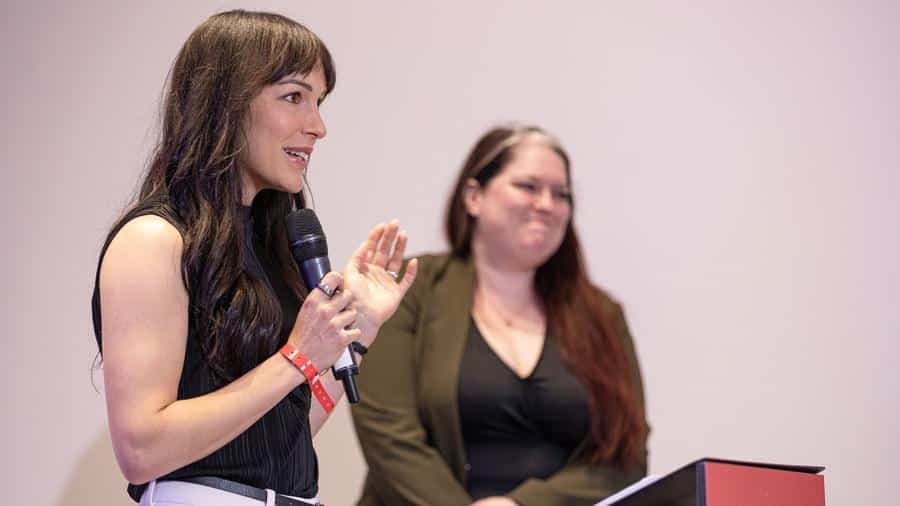
Featuring Emily Lyons - Partner, Husch Blackwell & Megan Beebe - Senior Associate, Husch Blackwell.
Transcript
Note: Transcripts are automatically generated and may contain inaccuracies and spelling errors.
Speaker 1 [00:15] Without further ado, I would like to present our first presenters Emily Lyons and Megan BB, partner and senior associate of Hush Blackwell. They are going to be talking about the nuanced landscape of legal and regulatory issues, and they'll give you some really smart marketing tactics that won't get you in trouble. So thank you so much.
Megan Vebe [00:40] Alright, good morning everyone. Um, I'm Megan Vebe and this is my colleague Emily Lyons, and we're here bright and early as you all are uh to chat about how to legally market your products. Um, our goal today is to help you guys comply with both state and federal law while still marketing your products in a way that captures consumer attention. We have a lot of information to cover this morning, but first we need to tell you a little bit about us and our firm. Emily and I are attorneys at Hush Blackwell, which is a national law firm. We have offices. Across the country from coast to coast as you'll see here, uh, we have more than 1000 attorneys nationwide and we advise all types of clients including beverage, alcohol, and cannabis. I am a corporate and M&A attorney by trade and I'm also the lead of our firm's functional food and beverage practice.
Emily Lyons [01:37] And I'm Emily Lyons. Uh, my practice focuses on the regulation of food, agricultural commodities. I do tons of beverage work, um, both traditional conventional beverages, dietary supplements, as well as alcohol beverages.
Megan Vebe [01:51] And Emily and I are also part of our food systems SBU. You'll see the fun color wheel here. Um, it's really just comprised of all types of attorneys in the food space from corporate, regulatory, labor and employment, litigation, etc. We advise all types of clients from startups in the early stage to large scale operating companies and everything in between. All right, so here's what we're going to cover this morning and as you'll see up here, marketing 101, a little bit of uh conventional food versus dietary supplements, marketing risks, and if we have time, some litigation trends advertising. Is one of the most important marketing elements for you guys all to understand, uh, all advertisements must be truthful and not misleading, which seems pretty easy, but the FDA and the FTC, as we'll chat about a little bit later, actually consider all aspects of your product's marketing to to determine whether your product complies with applicable law and whether it is misleading to consumers. Advertising claims include both express and implied claims, and advertisements can also be misleading by what they fail to say if an omission would be materially misleading to a consumer. So the takeaway here is that an advertisement is considered misleading if a reasonable consumer would be deceived by the representations being made about your product, whether on its label or packaging or through your marketing efforts. Next we'll chat about labeling. Uh, as you're all aware, the FDA is tasked with ensuring the safety and labeling of your products and products labels also cannot be false or misleading. Labeling includes everything from what's on your product's label to what's on your website and in your marketing materials. Whoop. Um, many functional beverages as are around here are actually unintentionally misbranded because their labels or advertisements are inconsistent with the way their product is marketed, and an example of this would be a product may be marketed as a traditional beverage, but it's labeling or advertisements may imply that the product is intended to be consumed as a dietary supplement as opposed to a beverage. Ultimately, the laws that will apply to your products depend on whether it's categorized as a beverage or dietary supplement, so what's the difference? I'm sure you're asking, and we'll show you in a second, um, but a conventional food or beverage is intended to quench thirst or satiate hunger and is consumed primarily for taste, aroma, or nutritive value, whereas a dietary supplement is consumed and intended to be consumed to supplement the diet. Uh, a product supplements the diet if it contains ingredients such as vitamins, herbs, minerals, amino acids, um, and other dietary substances such as probiotics. Unlike beverages, dietary supplements cannot be represented for use in a conventional food or beverage products, so a dietary supplement cannot be marketed as refreshing or rehydrating because those sort of claims would represent the product as a traditional beverage as opposed to a dietary supplement. All right, I'm sure many of you guys have seen these labels, um, and a lot of you have likely probably seen supplement facts panels on some competitor beverages, and these are often an attempt to categorize a product as a dietary supplement as opposed to a traditional beverage and as you'll see here, supplement facts panels are pretty similar to nutrition facts panels, but there are a couple of key differences. First, supplement facts panels, um, include all information regarding dietary ingredients regardless of whether RDI or DRV is established, and whereas conventional foods and beverages can only include specific nutrients. Additionally, nutrition facts panels focus on the individual nutrients themselves and the nutritional value in the food or beverage. Although supplement facts panels provide some of the same nutritional information, their primary focus is on the dietary ingredients in the product. In many instances you'll also see proprietary blends um listed here on the nutritional information uh but the but the required nutrition information on a supplement facts panel, um, they're not required to be disclosed so a popular way for companies not to disclose the individual amount of ingredients in their product is actually to use this proprietary blend term to avoid giving away the secret sauce for their product. Um, although a product contains a supplement facts panel as opposed to a nutrition facts panel, that categorization does not inherently imply that the product is a dietary supplement as opposed to a beverage. So how does the FDA determine which line your product falls under? Is it a conventional food or beverage or a dietary supplement? Well, unsurprisingly, the FDA has not given clear guidance on this. Instead, they conduct a holistic analysis to determine whether the intended use of your product is to be consumed as a beverage or a dietary supplement. The FDA considers these eight factors holistically. And as you can see, the FDA will look at everything from your products ingredients to how it is packaged, labeled, and marketed when determining whether it is intended to be consumed as a beverage or dietary supplement. Ultimately, you all need to make a determination of whether your product is a beverage or dietary supplement prior to production because the ingredients used in your product may require FDA notification or even pre-approval depending on your product's categorization. If a product is misbranded and the appropriate regulations are not followed, the product may be deemed unsafe or adulterated or also misbranded. Adulterated or misbranded products may subject your business to enforcement from the FDA, FTC, and more commonly private plaintiffs. So with that, I'll turn it over to Emily to discuss marketing risks in even more detail.
Emily Lyons [08:10] Thanks Megan. So Megan touched on a number of these things already, and that's kind of our primary regulatory authorities both at the federal government, which is the FDA, sometimes TTB if you're making an alcohol beverage, but low alcohol products are regulated by FDA and the Federal Trade Commission. Um, we listed these standards again. Just as a reminder, truthful and not misleading is very similar to not false or deceptive. Um, additionally, very similar laws are incorporated into every single state law through consumer protection laws or through similar laws authorizing consumer protection agencies. A great example is, um, the Wisconsin. Department of Agricultural Trade and Consumer Protection, it's one of the few agencies in at the state level that is specific on consumer protection versus having a state attorney general be in charge of that. Additionally, um, your competitors monitor your marketing and labeling. And advertising and there are avenues for them to bring cases against you through unfair trade practice laws at the state level as well as uh the Federal Lanham Act which is really a trademark law but includes some regulation of competitor advertising. Additionally, there are self-regulatory bodies that we see competitors bring people to because it's a lot faster than the courts. Uh, this is called the National Advertising division. Um, it's a part of the Better Business Bureau, um, and then the biggest risk truly to everyone is class action or consumer-based litigation, um, because really it is generally done under state statutes versus federal law, but they incorporate those federal violations or potential violations into their complaints. So as it goes to marketing risks, one thing that I hear a lot from companies is I'm not making any regulated claims on my products, and unfortunately, that's incorrect. Every statement on your label is regulated in some way, whether or not there's a specific definition, and we've included a list here of some of the types of claims that are specifically defined by regulation. Um, generally beverages will have these definitions by FDA, but if you're making an organic claim or other claim, um, especially if you have certain fruits or vegetables in your products, those may be regulated by the US Department of Agriculture. So we're gonna dive into just a few of the ones that are that we see biggest in the beverage market, and the first is structure function claims. These are claims where you talk about how the product has an impact on the body. Um, generally these are considered kind of health and wellness type claims, um. A great example, uh, is calcium builds strong bones. When it comes to foods, um, and like a conventional beverage, you have to tie a specific nutrient, not just in general the product, but a specific nutrient in that product that provides that benefit to you. Um, or if you're making a dietary supplement, you can provide more general claims about those benefits without tying it to a specific nutrient or dietary ingredient, but it is good sometimes to tie that to the dietary ingredient because you wanna highlight those in your products. If you're making a dietary supplement, you're required to notify FDA within 30 days of first marketing the product with a structure function claim. I'll say many companies don't do that, um, and. And then also dietary supplements are required to include our favorite disclaimer on products that you'll see all the time that says FDA basically hasn't reviewed these claims for their veracity, um, and but we're not saying that this is a drug product because dietary supplements really edge that line of, uh, treatment and mitigation of diseases, but truly it's focused on promoting the normal function of the human body compared to treatment or mitigation. Nutrient content claims are those types of claims that categorize the amount of a nutrient in your product. Um, these can be used on both dietary supplements as well as conventional foods. One that I wanna highlight for everyone because I hear this all the time, especially with the way nutrition facts panels look, is no added sugars actually has a specific definition in the regulations. That is not the same as declaring zero added sugars in the nutrition facts panel. We run into that a lot. I've actually dealt with a number of, um, consumer litigation complaints for clients, uh, where the the claim on the front of the label does not meet the definition of no added sugars. Additionally, healthy is clearly defined in the regulations, um, but FDA. Is looking at updating that right now and gonna make it even more complicated than it is right now, um, but most of these, uh, you know, you have to meet the nutrient content claim requirements that are outlined in the regulations. You can't just really make up your own type of definition or claim if it's not outlined there are some very specific requirements on when you can make them. You know, because health and wellness is the big thing in beverages right now, um, you have to be very careful with making health claims on products. They require FDA pre-authorization, so basically don't make them on your products unless it is already authorized through regulation, um, by FDA through a very clear health claim or what's known as a qualified health claim. Megan touched on this briefly, but you can run into marketing risks if you're using unauthorized ingredients in your products. Um, basically, you need to make sure that your product meets one of these categories depending on the type of product that you're making. So the big thing is, is that new dietary ingredients do not mean that they can be used in a conventional beverage, but all ingredients in a conventional beverage can generally be used in a dietary supplement. Nice and confusing for everyone, right? A big thing also is substantiation. So because health and wellness claims are scientifically based, you actually need scientific evidence, and this is known as the competent and reliable scientific evidence standard. And really what that digs into for us is, you know, the, where the rubber meets the road is. Most of companies come to me with individual, you know, studies on individual ingredients, but the true gold standard is having studies related to your specific product. Uh, briefly related to influencer marketing, we just wanna touch on this. Just know it working with influencers is great, but you are liable for anything that your influencers say about your products, so they must follow the exact same requirements you have to follow. Follow now one thing is, is we've had um instances in the industry where companies don't have a formal relationship with an influencer but then they reshare those um their statements that also means that you now have impliedly said that so there can be some restrictions there. Regarding litigation trends, I'm sure you guys see these. We see a number, um, as it relates to use of certain ingredients, um, and then imagery of products. So really make sure that you're thinking about that one in your packaging design. A big one that we're seeing a lot right now is failure for a single product, uh, to include and receive the purported benefit, um, in the product. Uh, one of those cases was very recent. filed, um, so these are some of those. Another area is highly caffeinated beverages which are great products but have been facing quite a bit of scrutiny. So we have some recommendations for you for you guys to look at on your own, but a lot of it is it can take a holistic team to make your marketing and advertising as well as your products themselves, not just you as a single individual. So we'll be around for questions afterwards.