Search across the BevNET CPG Media network including BevNET, Nosh, Brewbound, Taste Radio, Nombase and CPG Jobs.

Beverage School: Meet the Angels
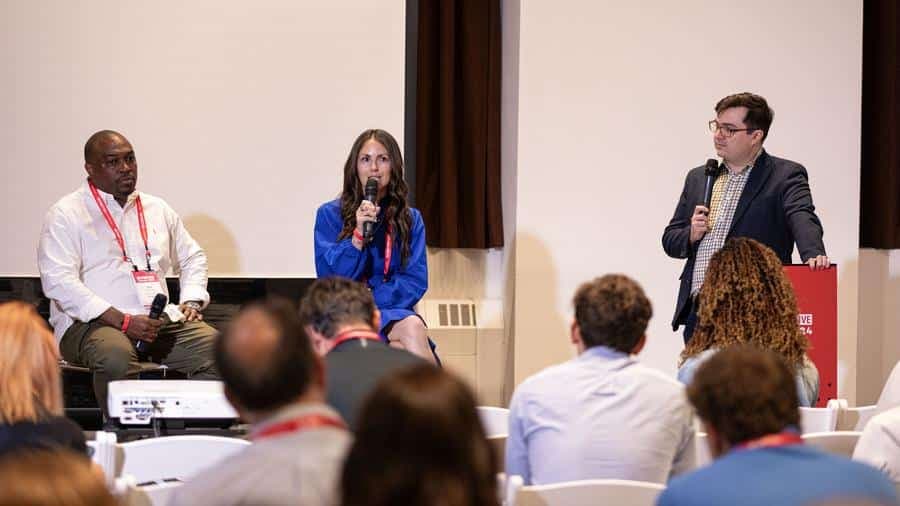
Greer Tessler - Co-Founder, Simple Food Ventures
Rachel Mansfield - Co-Founder, GRT SHT Ventures
Dace Graham - Managing Partner, 1731 MGMT
Transcript
Note: Transcripts are automatically generated and may contain inaccuracies and spelling errors.
Speaker 1 [00:16] As the old saying goes, it's much harder to raise $1 million.10 million dollars, not just because early stage brands have more to prove, but because these smaller investors can be a lot harder to find. They don't have the marketing budgets of big PE or VC firms. They have their own networks, connections, and experience to drive deal flow. That's why we brought together this panel of Seed Stage CPG investors to talk about their own processes for meeting and engaging with founders, uh, how they make their decision to invest, what they're looking for in a brand, and an entrepreneur. So, I'd like to please welcome our three panelists, Dace Graham of 1731 Management. Luke Goldstein of Simple Food Ventures and Rachel Mansfield of Great Shit Ventures, and yes, I asked, that is the name. Well, thank you for joining us. Do we, do we have Luke? Well, I suppose it'll be the two of us. I'll join you and uh I'll stand up here and uh I'll throw the questions to you. All good, but um, So, thanks for being here this morning. Um, I wanted to just start by asking, you know, what are you typically looking for in an investment? And, you know, what's your average investment size?
Rachel Mansfield [01:42] Thank you. Um, hi, everyone, I'm Rachel. Um, so our average check size varies anywhere from $500,000 to $250,000. So, we're not gonna be a brands only investor, but we're a nice starting point or add-on. And when it comes to brands that but what we're looking for, we're looking for brands that are like modernizing the products that we already know and love. We're not looking for brands that are revolutionizing the space or creating something new. We look for products that can really sell themselves, and when a consumer picks them up off of the shelf, they know what it is. They're not questioning like, what is this? What am I supposed to do with it? A product that's like very simple, um, and isn't reinventing the wheel.
Dave Graham [02:29] Uh, my name is Dave Graham. Um, 1731, um, typical type size is very similar to Rachel's, uh, between 50 and 250K, and I would say what we typically look for is we look for brands that are innovative, um, disruptive within high growth categories, um, brands that, um. When someone goes uh into the retail space that's gonna drive potentially some uh change in consumer behavior, um, typically consumers go into stores and they, you know, they, they're pretty set in the things that they, um, buy, right? So as a kind of a new and emerging brand or startup, you have to think about what's gonna. Potentially drive uh that consumer to change the behavior that they typically have to, to pick up your product. So we look for those innovative, disruptive products, but they are still in kind of key growth uh categories.
Speaker 1 [03:32] Um, you know, so what do you expect your investment to, you know, the immediate impact to be for a company when you make that first investment? What are you looking for?
Rachel Mansfield [03:45] For us, it's typically for like retail strategy and growth. So when we're chatting with brands, trying to figure out if we're going to invest in them and doing the diligence, we wanna know what their retail strategy is and typically, it's to help expand into more Targets or more Whole Foods or whatever their focus may be, um, or it may be for like a larger co-packer or something with like the supplies. It's definitely like, you know, earlier on when they're trying to figure it out.
Dave Graham [04:14] Yeah, I would say for us when we look at our initial investment. Um, our family office has a strong background, um, specifically within beverage and, um, specifically within supply chain and operation. So one of the things that I think that, uh, we look at is how will they potentially, um, while, um, the financial piece and the marketing, I think those things are obviously very essential and key to be successful. We really look at, um, how they could potentially leverage, uh, the. Funds that we provide to build a good foundation from a supply chain and operational standpoint because regardless if you uh you make it into the Targets the Walmarts, etc. um, at the beginning of the day you have to procure something, make it and deliver it on time and so we look to see how they could utilize our funds as well as um expertise to help them kind of uh solve that foundational gap at the beginning.
Speaker 1 [05:13] You know, so something that everyone always seems to say is that it's the it's the founder and not the brand necessarily, at least early on. So what do you look for in a founder that you're going to partner with?
Rachel Mansfield [05:26] Someone who has a lot of chutzpah, someone who's going to get the job done, um, not necessarily someone who has like an extremely impressive background. I look for a founder that has a lot of grit. Um, prep, like usually someone who doesn't have an impressive background because I think and oftentimes they have a little bit more like motivation and energy to, to grow something because it is their first time. Um, someone who's easy to speak to, who communicates, very responsive, uh, and all of the founders that we're, I'm an investor in 18 different companies now, and I like to really get to know the founders and the team, uh, behind each of those brands, so someone could sell an amazing. Product that we really like and I continue to buy and consume, but if the founder behind that brand isn't one that, you know, we're really vibing with or can have a relationship with, it makes us a little bit more hesitant because, you know, we're investing, we invest other people's money and our own money and I don't take that. I take it very seriously, so it has to be someone that we, you know, would go out to dinner with and enjoy their presence.
Dave Graham [06:34] Yeah, I would say very similar to some of the things that Rachel said, but I would also say, um, we look for founders that are coachable. Um, we recognize that starting a new brand is something that requires a lot of passion, and, uh, a lot of times at the point where we're engaging with founders, um, they've been at it for a while, so they are very entrenched within their business, and, um, so we really look for people that are coachable, and then also for people that, um, have the self-recognition. that they may need to bring in other resources, and other skill sets, in order for them to really grow and scale their business.
Speaker 1 [07:13] Now you mentioned not necessarily getting along with someone is definitely a sign of not wanting to work with them, obviously, but are there any particular red flags that you look out for, warning signs?
Rachel Mansfield [07:24] I think to Dace's point about the, uh, a founder being coachable is like someone who is open to hearing feedback, um, and doesn't think that they know everything and have all the answers. There's been, you know. Very few founders that we speak to and we hang up the phone and we're like, oh my gosh, I don't think that they're gonna be even, they, they may want our money, but I don't think they want any of our um commentary or, or advice, and that's fine, it's not for everyone. Um, so yeah.
Speaker 1 [07:54] Excellent. And um we have Luke joining us. Hi Luke. Luke, what do you typically look for in an investment?
Speaker 4 [08:03] Uh, certainly, certainly founders who are punctual, but, um, Uh, my, my firm has a partnership with Albertson's, the grocery store chain. Um, so we look for like mass applicable products, like large market, low price point, uh, yeah.
Speaker 1 [08:23] Excellent. Well, so we were just talking about, um, you know, the qualities and founders that you look for before making the investment. Everyone always says the founder, not the brand, at least, you know, from day one. So what do you seek out in a founder?
Speaker 4 [08:37] You know, I think transparency is key and collaboration is key. I, I think a lot of times early stage founders think of investors as being like an authoritative figure, and I don't, you know, I don't, I think it's much more of a collaboration, um. Sometimes situations can arise and it's easier to be collaborative about solutions and to find them together and so I think transparency is, is really key.
Speaker 1 [09:03] Yeah and so I had just asked about um possible red flags and founders and Dace I think uh you had an answer for that.
Dave Graham [09:10] Um, I would say red flags. Nothing just jumps right out at me. I think a lot of it is just. When we speak to founders, we usually get just, I don't know, we just get a general sense, right, if, if it, if it's someone that would be a good fit for us just from that, from the interpersonal perspective, not even looking at like the, the numbers or the business or any of those things. It's just a normal true human interaction, right? You can sometimes, um, have an affinity for certain people that you think you would work well with and collaborate as Luke said.
Speaker 1 [09:45] Yeah, there's, there's a vibes component to this.
Dave Graham [09:48] For lack of a better word, yeah, yeah, absolutely.
Speaker 1 [09:50] I mean, so something though, in the beverage businesses that you've looked at, is there anything that founders do tend to overlook, you know, especially, you know, those day one early stage companies. They like, do you see anything repetitive?
Speaker 4 [10:07] Um, I think for, for, for beverage in particular, I think like beverage is such an amazing concept because at scale, you, you have amazing velocities, there's an insane amount of distribution potential. Um, but that's at scale. So I think like, oftentimes, it's overlooked what it takes to get there. Um, and I think beverage in general is a tricky category because margins typically are compressed. Um, and so there's a lot of capital that needs to go into building these types of businesses, and I often see founders who, you know, have a great product, have a great brand, have brought it to market, but there's a big difference between, you know, bringing a concept to market and doing 1 or 3 or 5 million in top line and then, and scaling it into, you know, a business that has real acquisition potential. Um, and so I think like really understanding what the capital requirements are gonna be to getting there and really understanding like what you're gonna need to raise in order to, to execute your business appropriately is probably, is probably overlooked often,
Dave Graham [11:05] you know, yeah, I would say I would, uh, I would say that as well it's that there's no, uh, from what we see in the beverage space there's no lack of great ideas. I think the piece around the commercialization is, is where a lot of, uh, founders. Um, there's a gap there in understanding the concept, but the, the commercialization piece, and by that I mean that's the actual, the elements of the supply chain, but not only actually making the product, but then there's a whole another component around working with the retailer and understanding promos and pricing. Because as Luke mentioned, the, the beverage business is not typically a high margin business, so it's volume, so you've, you've got to really understand the business, understand where your price points are, and also to understanding your channel. Because the product and the pricing for a convenience channel may not necessarily be the same right product for a grocery channel because they're just different consumers and different price points that they're looking for, um, so all those things, I think holistically around not just having the concept but thinking all the way through the full commercialization is, is really key to be successful.
Speaker 1 [12:19] Yeah, excellent. Um, you know, so you each have experience in the food and beverage space and going route to market. How does that affect the way that you view entrepreneurial challenges? And, you know, when the founders you're working with, you know, face these headwinds, you know, what's your viewpoint?
Rachel Mansfield [12:38] I think that's where, you know, your investors and your advisor advisors really come into play because the team that you're surround yourself with, no one expects that the founder of a company is gonna have the answers to everything and you're always gonna have all these challenges ahead of you and, you know, we're in the beginning stages of starting a company and challenges that I never anticipated happening. Um, but having a team around us that can help us, that has experience and knows more than we do, I always say to surround yourself with people that are smarter than you, and I think that for brands that's really important to bring yourself a team like of advisors, investors, and your actual team within your company that can help you, um, get through those challenges together.
Speaker 1 [13:21] Yeah, Luke, do you have, you know, a perspective on viewing entrepreneurial challenges?
Speaker 4 [13:30] You know, it's, it's, I think it's, it's tough in general because Starting a company is difficult, right, and I agree that like leaning on your advisors and leaning on your investors is really important. That's what they're there for, um. Yeah, I mean, I think that that's one of the biggest resources you can have early on.
Dave Graham [13:50] Excellent. Yeah, I, I would say the things, um, challenges that, that, um, specifically within beverage that, that give me, um, some pause or make me really nervous is, um, if I speak to a founder and they're manufacturing their product in, say, California. But they're going into Whole Foods in the Northeast like right away that makes me really nervous just understanding the logistics that are involved with that or two, just understanding the product type, um, like if it's a product that requires a refrigerated. Um, logistics and transportation, that's like a whole another, um, from a cost standpoint, refrigerated transportation within the beverage space and warehousing and shelf life, like all of those things. So those are the type of things that I, that we look for at 1731, um, to just kind of understand um the strategy that they have and then also understanding what their supply chain looks like to go against that.
Speaker 1 [14:49] And I mean, when you have those conversations, sometimes it can be really difficult where it's like, well, we're manufacturing in California because that was the only place we could find a co-packer can make our product, but we're distributing in the Northeast because it's the only place that would take us in. And so, I mean, how do you navigate those challenges?
Dave Graham [15:06] Um, that's where I think even going back to, um, The perspective that um in our case of our family office where we're investing 50 to 250 again we won't be the lead investor, but where we think we can have like major impact is from an advisory standpoint and so it's great if we can connect with founders at an early enough stage to think through that because you're right there. Um, there may be other options or uh other solutions, and sometimes it's OK to say no. Like if it, if it, if it's not a scenario that makes sense and it's gonna be profitable, it's OK to sometimes tell a retailer no and wait till you have those, um, logistics or strategies in place that allow you to, to execute fully. Because a lot of times you're only gonna get one shot once you get in at a Target or a Walmart or Costco and you can't deliver on time or in full, then you may miss that opportunity for the long run. So, um, that's kind of my perspective there.
Speaker 4 [16:07] Yeah, I will say also, you know, in an ideal world as an investor, you want to interact with founders who have foresight into executions. They really know like. You know, if my, if my route to market is Whole Foods in the Northeast, I'm setting up some sort of distribution system that makes that most efficient, but not everyone does. So I think adaptability and the ability to pivot is super important, you know, and like understanding what resources you have at your disposal and setting up the operation that you can and then making it as efficient as you can along the way is, is, is OK and important.
Speaker 1 [16:41] So right now, are there any particular product types or trends that are exciting to you that you want to be invested in?
Rachel Mansfield [16:51] Well, I'm a mom of 3. I have 3 little ones, 5. They're 53, and 1, and, um, yeah, uh, uh, uh, kids, we're, I'm very focused personally and professionally on the children's category because I think it needs help. My kids go to endless birthday parties and I look at the Capri Suns and the juice boxes and it drives me nuts. Um, I try to, you know, make. Watch their sugar intake as much as I can, and we don't have juice in our home, but I'm like, why isn't there something for them? And when I crack open like a Spin drift or something that's lower in sugar but still flavorful, like they love it, and I think parents and guardians can really underestimate the palate of a child where it's so cliche, like give your child apple juice and orange juice, but they're only drinking it because. Parents giving it to them, so I think that category really like desperately needs help and then I mean selfishly I'm a big beverage girlie, so I'm always just like looking for beverages that taste good and aren't loaded again with sugar and I don't really like caffeine so
Speaker 1 [17:57] kids, kids is so hard though. I mean it's not for lack of trying that category hasn't gotten healthier.
Rachel Mansfield [18:03] I know, but I'm ready to take it on. I'm ready I'm ready for it.
Speaker 1 [18:07] Dace, Dace, what
Dave Graham [18:08] about you? Um, categories obviously, uh, low sugar, um, low and zero sugar drinks, um, I would say beverages that have functional benefits, uh, for sure, um, clean labels, um, so in addition to them being, uh, low or zero sugar, I think, um, consumers are getting really, really savvy. There's so much information that's out in public domain now, so it's not. Only just having low sugar or zero sugar, but it's, you know, what are the actual ingredients that you, you're, you're utilizing because some of them have been found to not be so great for you. So I think that's really key. And then I would say the other one that's of interest would be ethnic flavors, so things like Vietnamese coffee, savory spicy drinks, those seem to be trending in the right direction and in alignment with kind of the Cultural diversity within the country.
Speaker 4 [19:07] Um, I mean, anything with high margins and low price points, that's fair, uh, but, but, uh,
Speaker 1 [19:14] um, not a lot in this space
Speaker 4 [19:17] and large. I mean, in beverage in particular, I think there's a lot to still be done, and maybe I'm, uh, maybe I'm alone in this, but a lot to be done in energy still, um, and clean energy. Um, our firm sort of put out a couple initiatives, one of which was, um, like culturally inspired cuisines and. I think like there's a lot of sort of subsets of of cultural Americans in the country and um a lot of them are underrepresented in grocery um we've been really interested in like Korean flavors in the Korean space, um, sustainability, you know, anything that sort of promotes upcycled products in a, in a way that has, you know, a financially viable system behind it, um. We, we call it throwback snacks, but like, you know, different products that you're giving to your kids, you know, that, that stem from nostalgia and sort of stem from, from, from your past, especially as new, new parents, um, yeah,
Speaker 1 [20:13] I mean, that's been, you know, it's interesting you both mentioned it's been a huge trend is East Asian flavors, you know, really innovating. You mentioned Korean foods and flavors, you mentioned Vietnamese coffee. Um, I mean, I'm curious just to get a little more insight into how you are viewing this sort of. Upheaval of the international aisle and stores and the embrace of these types of flavors and cuisines. I,
Speaker 4 [20:36] well, I mean, I think you really saw a lot of it in like Chinese American food entering grocery with like fly by Jing and Mila and, you know, um. Amsom and a bunch of different, you know, a bunch of different brands that have sort of come to fruition in the past couple of years. And I think of it as like, there's all of these subsets of, you know, First generation American cultures like Korean American, Chinese American, Vietnamese American who represent massive parts of our, you know, of our country and, and, and, but are really underrepresented in terms of the, the types of food that represent their cultures that are available to the mass public, so they see it seems like low hanging fruit to capture, you know, a wider audience.
Rachel Mansfield [21:18] I do think though that the so we're I'm an investor in Omsum and anytime I, I run um I guess like a healthier food Instagram account and every time I post a brand that's like, you know, more of like an ethnic like food or beverage, it requires a lot of education I think that like right now that. Part of the space is very intimidating for someone where they pick something up and like they don't really know how to use it or it might be something that they're like how do I cook with this or how do I consume it so I think that like adding to the educate like there has to be like an educational piece along those products for sure.
Speaker 1 [21:53] So I do want to ask, I mean just. To put it simply, I mean, what don't founders know about angel investors that they should know?
Rachel Mansfield [22:04] I think that when a brand is, you know, raising capital and they're vetting angel investors, they should be interviewing them just as much as the investor is interviewing the brand because like we said a few minutes ago, like they're going to lean upon them for challenges and for advice in the future and. You know, you don't want to just take money to take money. I think brands should be really strategic about who they accept money from instead of just being like, oh wow, that venture fund or angel or whomever is gonna write X amount of dollars. You want to make sure it's like worth accepting that check.
Dave Graham [22:37] Yeah, I would say, um, it's, it's, it's pretty simple and, and not to really overthink it. I mean, we typically want to know how much have you sold, how much did you make, and who do you owe? So for me, it gets as simple as
Speaker 1 [22:55] that. Well, I mince words. Yeah,
Speaker 4 [22:58] yeah, I think angel investors are unique and, you know, compared to institutional investors, and I think a lot of us probably straddle the line of of those two things, but um. There's like a humanizing element to angel investing where like you really believe in the founder and you really want them to succeed and it's not just a numbers game at the same time like there needs to be a return that's underwritten into it so. I think like really being passionate about your product and really being passionate about your story and letting that shine through, but also like having a clear understanding of like where you want to go in terms of growing your business and what the return's gonna look like for the investor,
Speaker 1 [23:36] right, so we do have some time left. Um, I wanna throw it out to the audience. I mean, does anyone have any questions for our panel right now? Yes,
Speaker 5 [23:46] what are the sort of, um, minimum like sales records that you like to look for for uh for a potential investment like, like what, what do you start at, like, uh, you know, 500,000, you know, cans or something like that, a million? What does that look like for an investment?
Speaker 1 [24:03] So, so the question was, what are, what do you look for in minimum sales requirements?
Speaker 4 [24:10] Our firm's unique again because we have a relationship with Albertson's and we, we work in a way where we basically invest in companies and then help them secure distribution at Albertson's. And so, um, we look for a little bit more traction just because we need some sort of a sophisticated supply chain and a little bit of traction in order to like justify sort of a, an expedited route to all door distribution. Um, but it really depends. I, I think of it as like, um, we do engage in some pre-revenue companies, um, but it's really a game of like valuation. So like if it's worth it for us to take that kind of risk, then like, we really want to come in as a partner and own a significant portion of the business and help guide your retail strategy. Um, otherwise, I think like that threshold for us, if we're going into a company that's already generating revenue is, is probably around like the $1 million mark.
Dave Graham [25:05] Oh, I would say for us, yeah, we're, um, typically investing post revenue. Um, there have been a few situations where, um, We invested in a founder who had previously exited and so had a strong previous track record of success so we were uh you know, willing to invest a little bit earlier stage but I think around 5000 is, is, um, you know, generally a good number that shows some traction and then also to um looking at their kind of retail strategy like what retailers do, you know, are they in and what traction do they have from that perspective, um, it's kind of the things we look at.
Rachel Mansfield [25:45] And for us, I mean, I'm not a big numbers person. I would say around a million, but it just depends on like how many retailers they're in for that amount. Are they D2C, um, how much are they spending to make that amount of money, so, but I would say a million is usually our average.
Speaker 1 [26:02] Yes.
Speaker 6 [26:03] Thank you all so much. When you are engaging with early founders who are not yet at the stage. What are your recommendations for going
Speaker 1 [26:19] So the question is about founders who aren't ready yet to receive that investment, but how do they start building a relationship now?
Rachel Mansfield [26:28] I mean, we keep in my, my husband is my, my business partner for our venture fund, and we keep in touch with all of the brands that even if they're ones that we're not writing a check to at that moment in time, um, we're always checking in quarterly, at least at least a few times a year just to keep tabs on them to see how they're doing because while we. Might not want to write a check or we might not be in a position to do so where they're at. You never know about the future. So I also, I come in as an advisor for a lot of companies. So even if there's not something that we could do monetarily, I and it's a product that I love and believe in like I want to try to find a way to help them, um, but I'm like just a relationship person, so I like keeping in touch with them as much as as much as possible.
Dave Graham [27:10] Yeah, I would say, um, participating in in forums and things like we are today and and meeting um founders and meeting investors and just starting to build those relationships and um very similar to Rachel 1731 we also do advisory as well so um a lot of times if brands aren't quite at that the level where we would make investment, um, we're always open to um potential advisory as well to help them grow.
Speaker 4 [27:37] Um, yeah, I mean, I, I think like when you're fundraising, you kind of have to be shameless to a certain extent like we're, we're raising our second fund right now and one of our advisors the other day was like, from the ground floor to the top floor, you give everyone your business card. Um, so I think. Creating relationships and being consistent is really important and you know, forming personal connections with potential investors and just asking for advice and staying in their inbox is probably the best way.
Speaker 1 [28:06] Great, so we got about a minute left. Uh, let's go with you. What, what do you, when you commit to, as a, when you commit as an advisor, what is the expectation as far as meetings and communication?
Rachel Mansfield [28:29] So for me it's not cookie cutter. I customize something that works for the brands because where they're at and what they want from me or seeking from me or it varies brand to brand. Um, it's usually a percentage of shares, um, and I would say on average like quarterly meetings, but there's brands I talk to like biweekly, monthly, so it kind of varies.
Dave Graham [28:51] Yeah, I would say very similar. It's, it's, it would depend on, um, each particular engagement, um, and then we would look at those engagements and, um, and kind of figure out what's, what's the best approach, um, both from either, um, a compensation standpoint and time. Same.
Speaker 1 [29:10] Well, great. Well, so I'm sorry we are out of time, but if you didn't get to ask your question, the good news is you will get a chance because they are going to be available along with all of our other speakers at our roundtables. So please take advantage and we encourage you to speak to as many of our speakers as you can, and, uh, you know, stick around for the rest of the day. We've got a full day of stage sessions, and uh I hope to meet you all throughout the next few days. Thank you. Thank you very much for joining us.