Search across the BevNET CPG Media network including BevNET, Nosh, Brewbound, Taste Radio, Nombase and CPG Jobs.

Black Founders Club, Ep. 2 - Navigating Identity, Opportunity & Legacy
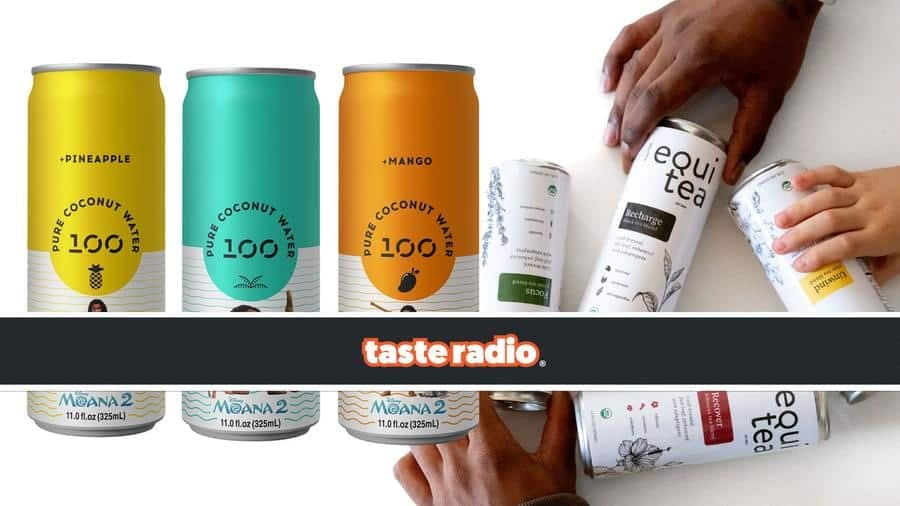
In a candid and insightful conversation, Equitea founder and CEO Quentin Vennie and Greg Lowe II, the founder and CEO of coconut water brand 100 Coconuts, dive into the complexities of embracing their Black identity while navigating the business world.
As part of the conversation, they discuss the dual reality of finding support and facing systemic barriers, alongside the evolving landscape of DEI initiatives. They also explore the ongoing challenges Black founders face in accessing capital and the opportunities international markets offer Black-owned brands.
Greg also shares the story of securing a major partnership with Disney, highlighting how creativity, culture, and agility set his brand apart from industry giants. He and Quentin also unpack misconceptions about DEI, the long road ahead for equal opportunities, and how their respective journeys are paving the way for other Black founders in CPG.
Brands in this episode: Equitea, 100 Coconuts, Better Sour
Transcript
Note: Transcripts are automatically generated and may contain inaccuracies and spelling errors.
Speaker 1 [00:03] Hey folks, it's Ray with Taste Radio. Right now, I am honored to be sitting down with Quentin Venny, who is the founder of Equity, and Greg Lowe the 2nd, the founder of 100 Coconuts. Gentlemen, great to see you. Yes sir.
Speaker 2 [00:17] Good to see you.
Speaker 3 [00:17] Great to see you, Ray. Thank you for having us. It's
Speaker 1 [00:20] great to see you. It's been, uh, about 1 year, almost 2 years now. The last time we sat down, we were in New York City at your office. It was right around the time of the summer fancy food show out there, and, uh, You don't look like you aged today, which is pretty
Speaker 3 [00:34] impressive. Well, thank you, man. I appreciate that. I feel like, you know, when you've got a son running around and he's, you know, a 6 year old, they age you pretty quickly. If you could see up close, I've got some grades all in here.
Speaker 1 [00:46] I can't see a single one. And Quentin, you, as always, are looking fresh. Uh, I appreciate the fact that, uh, you have done so much to, uh, help put these episodes together with us, and I really appreciate it. As our audience knows, the Black Founders Club is a limited series that we are highlighting here on Taste Radio. Uh, Quentin, we produced and published our first episode last year and, uh, just as a refresher to folks, uh, just talk about The focus and what we're trying to do here with the series.
Speaker 2 [01:20] Yeah, no, thank you. Um, again, we're looking to really highlight the challenges, the experiences, but also the victories, right, uh, associated with being black founders in the CPG space, right? Our, our, our experiences tend to be a bit unique, um, and I think that Bev Ned and Tase Radio provides an incredible resource platform. Um, for information sharing, right? I think a shared story can really make a significant impact, um, and I think it's important as we continue to navigate this space to really highlight, you know, um, a lot of the opportunities that we found, a lot of the challenges that we experienced, but also a lot of the victories that we have. In the face of all of it and how we continue to grow and thrive within the food and beverage CPG landscape,
Speaker 1 [02:16] the three of us had an opportunity to sit down a couple weeks ago, and one of the things we were chatting about was this notion of being both an entrepreneur in CPG and also a black founder and sort of the nuances. Of the, of being both.
Speaker 2 [02:34] There's a starting point, right? You know, we're, we're constantly in this interesting juxtaposition between being identified publicly as a black-owned company and being identified publicly as a company. Right? And, and I think that's a, a really unique space for us to exist in because, you know, I've had multiple conversations with other founders and a lot of what we've been pushing and fighting for is This recognition that though we are black. We are building incredible companies and I think a lot of times there's a perception attached to black-owned brands that were only created for Black people. Right? And, and when you look at other brands regardless of, you know, the ethnicity and nationality or history of its founder, these brands are looked at and perceived as being for everyone, right? And so we're constantly in the space of having to operate. With the recognition and pride of being Black, right? I, I often say if I could go back and do it again, I'd come back to, I'd come back Black. So there's a pride attached to our history, um, our ethnicity and who we are, right, as Black people, but there's also this other side of like at what point do we no longer become classified as just Black businesses. And become classified as good businesses. Um, and I think, you know, uh, that was one of the foundational ideologies behind naming the company equity, right? It wasn't just merely about creating equitable access to better for you products, primarily tea, we're a tea company, but it was really about like breaking down these barriers of inequity, um, so that we can all enjoy the, the benefits and the fruits of our labor.
Speaker 3 [04:38] Yeah, that's, that's, that's cool, man. I mean, and I think you hit it on the head, um, being an African American entrepreneur and running a black business, um, you have your pros and your cons, right? I mean, just with anything in life, uh, but as you know, being an African American in this, in, in this space, which is, you know, I wouldn't even say 1% or maybe, maybe 0.something, um, you know, you come up against some tra, some Trials and tribulations that maybe our counterparts wouldn't come up against, um, and that's just the fact of the matter that happens with women, minorities, etc. and we need to just be real about it instead of, you know, acting like it's not there. But I do think that there's the positives of running a black business, and those are when you launch, people have so much enthusiasm about where you're going to go because it's never been done before, right? Or They haven't seen much of it. So even with 100 coconuts, you know, coming out, black first black owned coconut water, and I took pride in that even though I didn't know it at the time and the media came at it, but I took pride in that because, you know, let's break barriers in everything we do. They are our ancestors, the people who came before us. Mentors who weren't given the same opportunities that we were given, and they're like, man, I wish I was able to do that. So I think having that tag gives a certain pride to the business. It makes people feel good when they're walking into the store and they're purchasing. They're like, yeah, and it's, and it's also black owned. I see it on social media all the time.
Speaker 2 [06:06] There is definitely a pride in having that ownership. And also seeing ourselves represented on those shelves, you know, I mean, I, I can't, I, I can't name how many times I've gone to a grocery store and I never saw myself represented. I never saw my culture represented. I never saw the ingredients that that are native to the The, the African diaspora, right, celebrated and represented, um, and I, and I think there's a, you know, there's something to be proud about that and, and, and, and not shy away from the fact that we are black, right? Um, I, I, the challenge again is, you know, we are growing and scaling and building incredible businesses and we just happen to be black.
Speaker 3 [06:54] That's exactly, you hit it right on the head, Quinton. Hit it right on the head, Q.
Speaker 1 [06:58] Yeah, although, you know, in this current political environment and it seems like the federal government's loathe for the term DEI. A I, I wonder if it's made it more difficult to talk about. You know, being a black owned business in any context.
Speaker 3 [07:21] Everything has its cycle, and I, I see what, yeah, I mean, we both were starting it the same way, right? I mean, look, we went through this before and you know, black tiles came about, you know, um, revolution is never televised, and the thing is, is that when you're in a, in a space that we're in where people are split and they're trying to take away the division even though replacing. DEI and that's dividing even more, I think what you'll start to see is people leaning in a little bit more. I think you'll start because you've got to realize, you know, half of America or a little bit more than half of America, is about DEI and you have companies that are standing up to say we're keeping our programs. So, um, for women, for minorities, for, you know, for everyone that is included in DEI, I think we should look at it as this is just You know, a, a, a break away from the formal way of saying it, and people are just going to do it, which is naturally what you, what you want anyway, all right? You want people to give up opportunities for who they are, and I wish we could continue to have DEI as a forefront because I think we have so much more to do before we can just say it's over. Let's start treating everybody equal and see what we get, um. But hey, you know, it's 4 years, and then we'll go from there.
Speaker 2 [08:39] Yeah, I agree with that. I think. I think there are more people who, who want it than people who don't, right? And, and we're, we're starting to see it. I think the challenge that I'm seeing, you know, is that it's creating division within community, right? Um, and, and, and, and those are things that, you know, get highlighted during moments like this. But this is nothing new, right? Like we've built and, and, and, and have established ourselves and then Things have gotten destroyed, right? Look at Black Wall Street, right? Like that's, that's just one example of, of how we've built and it's been destroyed and dismantled, and yet we continue to build, right? And we continue to, to, to, um, to build those bridges, to build those allies, um, and continue to thrive, right? And, and so, uh, you know, as, as long as the world is spinning, you know, we're, we'll continue to, to push the envelope. Uh, in, in, in, in context of that, Greg, I, you know, I, I hope I'm not jumping out the, the window on this one, but, you know, you, you mentioned, you know, your retail partners, two of which have publicly come out against, um, continuing the DEI programs. Um, how has that impacted your business and or do you see it impacting your business?
Speaker 3 [10:07] Well, I got to, you know, I got to be frank and say, you know, I've seen, um, some of these companies outwardly say we are getting rid of DEI, but like I said, they're still giving us opportunities. We're still expanding, um, the Walmarts and Targets are still expanding our brand, and I think what's, and, and not every. One obviously, but I think people are more so instead of putting it through a DEI program, you're just going through the regular program that everyone else goes through, and that way you get the exposure that everyone else gets, right? So. Um, so I haven't seen any issues even with the partners that have denounced DEI, but, um, I've actually seen growth, um, which I'm proud of because I think the people that are in place, um, and that, that's ultimately what's needed. It's the people that are in place in the decision making positions. To make decisions that reflect the culture in the world. It, it's not about, hey, we have to make this more black or we have to bring more women. It's, that's what the world is. So if Target wants to sell to more women, they're going to have to have female-led products on the shelves. If Target is going to sell to more African Americans, which is a huge part of their revenue generation base, if they have 15% of their sales. From the African American crowd, they're gonna have to put African American brands on the, on the, on the shelf. So, you know, we're never going back to that, um, you know, what we call, uh, the, the full, uh, what do you, white Caucasian toy world. Remember that where all the toys were Caucasian? We're not going back to that. It's, there's gonna have to be a representation because little black girls are buying, uh, dolls and also Little white girls and Indian girls, so we'll see it all.
Speaker 2 [11:53] 100%. No, I'm, I'm glad you brought that up, Greg, because there's, there is a nuance and there's like these, you know, very loud conversations within the, within our community of like what that means for us as founders, but then also what does that mean for consumers and, you know, I, I think a lot of it has yet to be determined because, you know, as you mentioned, you know, which I think is a really interesting point, you know, it's something to point out that Though these companies have publicly denounced these, you know, DEI initiatives, you as a Black founder have also seen continuous growth, and I think that's, um, that's something that most people wouldn't have anticipated because I think the perception is by getting rid of these DEI initiatives or these programs. It's then eliminating, you know, black founders and, and businesses from being a part of the conversation or having a seat at the table, and, um, some would argue that that's, that's, that's not what's happening and, and, you know, you have other sides that, that would argue the opposite. So I'm, I'm, I'm grateful that you shared and offered that perspective.
Speaker 1 [13:00] Absolutely. And the other part of this, I think, is if, as Greg pointed out, there's a whole part of the population that is looking for Um, and looking to support black owned brands, um, well, the funding has to be there as well to support these brands, and I think that's something we've talked about ad nauseam for every CPG company out there, and it was something we talked about in the last episode, the Black Founders Club. But Quentin, you know, I, I'm, I'm sensing that the path has gotten even more challenging over the past 6 months or so. Has it?
Speaker 2 [13:37] Yeah, I mean, the, the landscape in primarily in food and beverage, you know, is, uh, has significantly shifted. The access to capital has, has slowed up even more than it was before, which, you know, it's like, you know, there was an episode of Martin. He said if you move any slower, you'll be moving backwards, right? It's like, you know, it seems like if we move any slower, then we're, you know, then we're moving. In the opposite direction, um, and, and that's not just, you know, from my experience, I think every black founded CPG brand, food and beverage primarily, uh, founder that I've, that I've spoken to has, has had these challenges. I mean, the, you know, when you look at the numbers and it already states. That we're receiving less than 1% of venture capital funds and then you look at the goalposts constantly moving and shifting, um, you know, it, it definitely provides some room for concern, um, and creates a lot of challenge in having our, you know, the ability to not only start good, you know, founded businesses, but also grow and scale them. And we're having to be very diligent and creative, um, with, with how we're funding and how we're looking at the, the, the economic landscape in order for us to be able to continue to, to thrive and grow.
Speaker 3 [14:58] Yeah, most definitely. I think, um, you know, we have to look outside of America, um, you know, and that's something that I had to do. That's something that a lot of people are doing, you know, we went as far as the Middle East. We're in Saudi Arabia and Abu Dhabibi, Dubai. Um, you know, London, you know, you look outside and you see that people want to be a part of the American market, um, and they want to take place in it because it's one of the most thriving and robust markets in the world. So, um, as you're building a business as a black founder, the world doesn't look at it as a black founder. They look at it as an opportunity to get into the American market if you have a good product. So, um, what I would say is that's not easy for everyone. I mean, it dried up for us as well in America, um. You know, the percentage of investment in black businesses overall is below 1% as far as venture capital is concerned, and we're not, and you know, I would never say we're not playing the black card when you say that. These are data points, and people need to understand that those data points mean something. There's an innate bias that goes around with black businesses that they either can't scale because what's going to happen is you're going to get your initial or you're going to make it so far. Off bootstrapping and fighting and clawing tails that the next round is going to be damn near impossible for you or you're going to come up against the position where this company may not exit because there haven't been but a handful of black companies that have exited. Um, so you come up against that, and sometimes it goes, it's race driven, but it's also even beyond race because it could be a VC fund that has LPs that they have to answer to, and what happens is they're looking for companies that they know in the next 5 to 10 years they're going to be able to exit. If the percentage of African American black businesses aren't settling at the rate um that our counterparts are, are getting acquisitions or exits, then they feel like they have a fiduciary duty not to invest in these businesses, which sucks, right? So, um, I think going forward into 2025, what we'll start to see is people basing investments off of one, Pity and inclusion. I think that's going to be a big thing because now that you have um a crypto and, and the stock market doing what it's doing, obviously with this thing with Deep Sea just a few days ago that took it down, but now that you see people really get into, into that brand scope, you're going to start seeing investors take advantage. of DEI because like we said, when you take it away, it's only going to amplify the message, so you're going to have people actively looking for black owned brands. I'm only buying black, for instance, my mother, love her to death, she called me, she said, don't go to Target again, and I said, Mom, what do you mean I've got to go to Target. We're not going to Target anymore, and you know, so I get that, but when she's not going to Target, she's gonna be looking outside to companies that are actually including her as a person and a voice, and if we know anything, African-American women are one of the top Spenders in all of the economy. So, you know, I, it, there's a, there's a two sided story here. We can talk about all the bad things. We can talk about all the good things, but what we, what we won't do is we won't quit. There's going to continuously be new companies coming about. Yeah,
Speaker 2 [18:18] I, and I'm, I'm glad you spoke that, man, because you, you really hit the nail on the head, and I think it's important as black founders. As founders in general, right, but primarily as Black founders considering, you know, the, the primary reason why we haven't seen a lot of Black founded companies exit is because The data points that most black founded companies don't have access to capital. You know, and you need that level of capital in in order to be able to grow and scale. I mean, not everybody, you know, has been able to do what, um, you know, Richie Lou Dennis has done, right? And when you have individuals like him who then takes, you know, a portion of, of, of what he made from that, from that acquisition and invests it back into the community, now you're starting to see black-founded primarily, primarily black. Women founded beauty brands having the opportunity to exit and having the opportunity, um, to get this access to, to, to capital to grow in scale, we haven't seen it in food and beverage, right? And I think what you're doing, you know, is really speaking about and tapping into something that's, you know, that's an opportunity that expands beyond the domestic reach, you know, yes, people are looking to get into. The American market, but I think America needs to be looking into getting into other markets as well, right? And being able to tap into those economic resources and those brick and mortar resources expands, you know, our customer base, expands our impact, right? And then gives us the opportunities that, you know, that haven't necessarily been allotted, uh, in this country. So I think what you've done and what you're speaking about. Um, is brilliance in action. So congratulations.
Speaker 3 [20:06] I appreciate it. Thank you, man. I mean, we, we, we have to continue to open up doors. That's the biggest thing, right? And you know, we have a, a duty as a, and it's crazy, and you know, I always wonder, I say, what would it be like to build a business and not have a duty, right, as a, as a, as a person, um, but as a, as an African American founder, I have a duty outside of beverage. I have a duty to be, um, You know, there's a, there's a certain saying in our, in our culture, right, that, um, that I won't say on this, on this podcast, but there's a certain type of business that it was used to be known that African-Americans operated in, and, you know, this is a professionalized business with a board, with cap table, evaluations, um. This is, this is, this is very buttoned up, and I think in order for us to continue to showcase that we can be there, we have to continue to educate ourselves. Go back for continued learning if we can get business acumen, because that's what's going to help you to navigate the waters because guess what, green is green, and if something's making money, it's going to be very hard to not attract people from around the globe even after you look beyond some of those with limited vision.
Speaker 1 [21:24] Greg, I imagine you were advised by your board and by others to not go internationally, to not look at opportunities because It's just going to take your eye off the ball, um, but you did it anyway. I mean, any challenges that any hiccups that you might have faced, I mean, obviously it seems to be working out, but um, is this something that you could or you would advise others like a Quentin? Like a, like an equity to
Speaker 3 [21:48] do. Yeah, I would say, you know, the issues that we had were not understanding the capital extensive, um, the capital necessary in order to launch in new markets now. Um, you know, launching online first is always the way to go. That way you can push content via social media from wherever you are. Brick and mortar gets a little bit more difficult, but have partners in those areas. That's what I would say. Yeah, like we're in London. I have a distributor here and a broker who I work with consistently to manage the business here and same in the UAE. I think when you're looking at international markets, you have to not only look at Your partners there, but you have to look at what's going on in that space and spend time in that country to see because the language is different, the, the, the slang is different, the everything's different, things that you don't even, you know, know, you know, so you have to spend time in that market before you just jump in, but don't be afraid to. Um, you know, if you say for instance, there's businesses that are from America that are big here in the UK that don't have the sales in America but are able to now get their foot wet here, get their feet wet here, generate some revenue and now take that, those learnings back to America and be able to do it in a, in an even better way. So You know, we live in an international world right now. We're talking on Zoom and it's nothing, whereas before, You know, if someone was in London, they're pretty much out of the space until they get back. OOS out of the office, but that's not how it is now. We're working from all time zones anywhere, um, so as long as you can do that, you know, they call them digital nomads, uh, be a, um, a nomad entreprene. Etrepreneur, um, take your skills and like, like LeBron said, I'm taking my skills to Miami. Take your skills to London, take your skills to Turkey, you know, if you're a designer, one of the good things in Japan, I have a, a, a good friend of mine who runs a golf line, and they're out in Japan heavy, you know, pushing their their product, and they're actually making sales in Japan because they have a culture for this specific product. So that's where you just have to look at is where is the market, and let me go there.
Speaker 2 [24:03] And that's, I'm, I'm, I'm glad we're talking about that, right? Because that's something that I've personally been in the process of doing. I've had conversations with investors in the UK, um, I, I do see that there's opportunity, but for anybody listening that's, you know, like not in the, in the same, um, chapter of their business, you know, uh, you know, journey as, as you may be or that I, I may be, like, what would Be some things that you could share as like step by step or or maybe not even step by step but some things that you would encourage people to do in order to reach those brokers internationally in order to understand if there's product market fit in the UK or in Singapore or in Japan, you know, how do you, how do you reach out, right, because we've been so Americanized that we believe that. You know, all of our opportunities are in the first four corners, you know, in our, in our sphere, right? How do we expand that sphere and start tapping into, you know, other, um, you know, other countries and markets that that may want what we have, but we don't even know that the opportunity exists? This
Speaker 3 [25:12] is gonna be, um, very simple, probably too simple, and people are gonna be like, man, is that it? Um. You know where it starts? I watched a movie one time and um it was about The Big Short actually, and they wanted to figure out what was going on in this market and was that really happening. So what did they do? They bought a plane ticket, coached class, jumped in a flight, went over and saw it for their own two eyes. I think we live in a world now where they're making flights cheap enough where, hey, it may not be the most A comfortable seat, but let me go over there and see what's going on. Let me go over there and talk to a friend on social media. We're so connected as a world that you can get on social media and say, hey, um, you know, friend in Japan, um, do you think they would like this product? Hire a microinfluencer. Do you think this, they will like this product, you know, get online in that area and then hire a microinfluencer to help you push, see if you get some sales slowly. But surely, that's what I say, you know, that's what, that's, you know, I, I posted something on Instagram the other day or today, and it's, you know, a slow but a for show, right? As long as you're getting into the market, you're showcasing your product, you get 12 sales online, and then you're able to kind of pull it up, that's where you start. That's where any major brand start and the easiest way is to buy a plane ticket. Um, beyond that, you know, and I know people want to hear a little bit more detail as to business. We have Google, um, and, and, you know, if you don't have the relationship because I didn't start out with having The relationships to be able to know about venture capital partners and you know how did I meet a prince in Saudi Arabia or a prince in Abu Dhabi, like these came from relationships, friends that I never would have thought that would have these relationships, you say, hey man, I'm looking to do this, and people open up doors. So it's really about your network and just taking a trip, man. I, I, I would say in any industry, just, you know, going over and just seeing how it, how it operates.
Speaker 1 [27:09] Greg, is it a bit easier just to stay on this for, uh, one more sec, is it a bit easier for you to operate your business internationally because your product is produced internationally? And correct me if I'm wrong,
Speaker 3 [27:22] yeah, it is, because since we produce in Vietnam, we're already shipping across the world, so it actually makes it easier for UAE in London because the shipping times are less. So yes, my product is produced overseas, which helps, but the majority of products right now are either produced in Thailand. Um, Vietnam, if they're a textile, China, um, we have a ton of import into the United States now. American owned brands, it's a little bit harder because, you know, you've got to go into another country which may have, um, different, um, you know, uh, different food, um, health health inspecting certificates that you may need, right, um, if it's food, um, if It's product based. They may put a tariff on your product. You never know. So it may make it harder depending on what industry you're in, and you're right, having an international product does make it a lot easier to jump into that market, but it still has its challenges because you're still bringing it to another country.
Speaker 1 [28:23] Well, whatever country you're in, everyone knows Moana, right?
Speaker 3 [28:26] Everybody knows Moana. Uh, I got stopped on the street one day, the other day, uh, from someone who recognized me and was like, Man, I drink 100 coconuts all the time, that Maijuana. I was like, What? I was with my, my good friend Roger. He was like, Dang, dude, like I was like, no, man, that's random, bro. That is so random, but Yeah, people know Moana.
Speaker 1 [28:47] Yeah, Quentin, have you seen the Moana, the 100 coconut Moana cans out there, because it seems like they're everywhere. Yeah, it's
Speaker 2 [28:51] incredible, you know, I'm, you know, it's, it's one of the most amazing partnerships that, you know, I, I couldn't have imagined, you know, a better alignment. Um, it's just incredible, bro, like serious, major congratulations. I'm a huge Moana fan. I got a little girl. She turned me on to it. I cried on the first Moana, so, you know, like to see this happen. Um, is, is, is just major congratulations.
Speaker 3 [29:19] Thank you, man. That was a, that was a labor of love, but also we enjoyed working with Disney. We have a two-year deal with them, so we'll be coming with other opportunities from Disney. But yes, I mean, having Moana on the can, having Maui on the can, and the coconuts, you know, it, we're in, you know, Whole Foods, Walmart, Target, Publix, and they just blow off the shelf because kids are walking by and they're like, Oh, Moana, you know, and I was walking with. My son, and I didn't even tell him it was on the shelf. I just wanted to see if he was going to walk past and notice it because it's right at his eye level, and he turned around and said, Moana, ah, and then he noticed it. So, you know, having an iconic character, especially one that was a part of the biggest movie in the world, um, really helps, but also because it tied together, right? Cause you have Moana whose family used to be travelers and, but now they're coconut farmers, right? So they live off everything on the coconut, which We saw was a direct, uh, partnership that, that kind of meshed in a perfect world, um, even with the Kokamura who are little coconuts running around and, and, uh, and doing things and being mischievous, um, we thought that that fit right into the brand language, um, and we went for it, and it, it ended up working out very well for us.
Speaker 2 [30:33] Yeah, how do you, how do you go about, um, establishing those types of partnerships, right? And what, what do you see as the impact? Um, in these partnerships and highlighting, you know, black-founded brands.
Speaker 3 [30:47] Yeah, um, well, first, that product, uh, that project took a while for us to pitch Disney, showcase what we were able to do through media, um, you know, really bringing that professionalism that we talked about earlier in this conversation because they have systems and processes that they follow. And if you can't fit into those systems and processes, you're not going to be able to make it, and they're not going to give you that opportunity because they know you haven't done it before. And like I had the benefit of working with Pepsi and Def Jam and all these in my tech world, so I hit my head with Pepsi and understood that in order to get it done with Pepsi, it has to be done like this, this, this, right? So. Um, that those systems have to be put in place. Um, you know, we're partners with Inner Miami as well, the MLS soccer team, and, you know, that, that contract is about this thick and it took months for it to, to get done because I had to go to the MLS and come back to the team and Messi had to review it and all. This, so, you know, those types of things all come down to setting up your company with the most professionalism as possible and you actually, you know, I know people say, oh, professionalism, you think degree and master's and you don't need that. We have Google this these days, we have chat GPT. You know, get on and understand what it takes for you to take your business from A to B and scale, and if you know that, it's always, you know, keep the first thing first, right? Sell product. That's, that's what you want to sell coconut water at great margins. And that's what we try to do. But when we are able to take advantage of these partnerships that we have to spend on, but when we're spending, we're actually drawing in eyeballs that are pushing velocity, it's the same as if you're going to spend $50,000 on a social media post, right? You know, spend that money on a major partnership they can now transcend because Moana, we got the Disney cruises from that, and that's, you know, ongoing, so we'll always be producing the Moana product.
Speaker 1 [32:46] I'm curious about whether DEI came up in the conversation. I know you can't talk too, too much about the contract itself, but You know, certainly there are bigger coconut water players out there. How did 100 coconuts, you know, why were they, why was your company the company of choice?
Speaker 3 [33:06] Yeah, and I, and I'm sure I'll send this to them and they'll probably be happy that I say their names, but Alex and Sandra there, they were instrumental in helping us. I mean, we were up against. Uh, a big name player. I won't even, I'll just say VC, um, um, we were up against those guys and they came and, you know, had all this and all that, but we came with creativity. We came with, uh, culture, we came with brand partnerships that we had done before, something different, right? Not a Tetra pack product, but a can that was Uh, you know, based off of, um, communicative, uh, environments, and from that we took the creativity of our product and said, hey, now let's put something on the bottle, on the can that's going to resonate with our fans, that's beyond, um, what another brand would do. So we went straight on with digital print on the can of the exact. Of the, the exact character in the movie. We had to spend a little bit more to make sure that that, that print came out perfectly because, you know, when you're in print, there's 3 colors and there's 5 colors, right, and then there's 8 colors and you're like, oh crap, 8 colors, you, you never knew that black had about 5 different blacks in it. So you're like, oh man, but it has to be done right and since we're small and nimble. We can make those changes, whereas a VC, they may have their production already done 5 months and 7 months in advance, and they can't make that change as quickly, so, um. When it came down the line, we could be nimble, come up with, uh, products that that fit the brand cycle and the launch, um, and then just also be creative about who we're marketing to and our ingredient list, and self-sustainability, self sustainability, being self stable was also a big play because you don't want to. That's going to live for a couple of months and then, you know, be thrown away because the product is spoiling and because we have a canned vessel, our product stays good for 2 years. So that also, um, you know, played a role into into us getting that opportunity.
Speaker 1 [35:09] Yeah, you know, I chatted with the founders of a brand, a Better for you gummy brand called Better Sour, and the founders are both from Hawaii. And I think their background and their knowledge about Hawaii kind of played into Disney's decision, and they didn't say this. I'm just making this assumption because they couldn't talk too much about the deal itself, but I think that may have helped influence the deal. I know you, you mentioned culture, uh, Greg. I mean, did, did again, you know, Anything related to your business as being a black owned business, do you think that had any influence on Disney's decision?
Speaker 3 [35:49] I will say that it never came up. It was never talked about, you know, who knows what was talked about around the water cooler, but I know for us it came down to, you know, you can be a black owned brand, but that's never going to be the decision making. It's going to be the processes and the professionalism that's brought to the table, and I think because we were able to do that and because we had culture behind us. And because our product was good and because it was better for you, those ands kind of stacked up, right, because the thing is, is, you know, what our, what our problem is, as African American brands is that when we first come into the door, there might be things that we do not know about. So as the boxes start to get checked off, we're going to miss a couple of checks in the beginning, which is no fault to us, but we just didn't have that knowledge base to be able to have those processes set up. Cause we just didn't have the capital. So Disney may want to do a partnership with you, but they start checking down the line and they say, oh, this check is here. OK, this check up. They don't have this. The distribution's not there. They don't have the world, but as we love your product. It's beautiful. It's amazing. But guess what? You don't have the distribution in order for us to have this product to the masses across the country, so we can't partner with you. So I think it came down to, yes, being a black owned brand probably did help, but I think it all came down to, you know, if you can execute and if your processes are set up the right way, um, I think that's what, what, uh, what came down with Disney.
Speaker 2 [37:19] No, I, I appreciate that perspective because I do think that there is an automatic perception or assumption, right, that because you're a black founder and, you know, Moana's, you know, about people of color, like, oh, it would be a natural thing to, to bring another person of color into the equation, but it's like, you know, I think that removes The reality of how hard you've worked and the and the the 10,000+ hours that you've put in in order to be prepared for something like this, right,
Speaker 3 [37:52] when you bring up that's the argument, I'm sorry, I didn't mean to cut you off. I just wanna say that's the argument that is the problem because people are looking at DEI as if it's just we're giving you an no, you're not giving anyone an opportunity. It's the look even that that has nobody's giving anyone free opportunities if they can't execute on the product, so on on the opportunity, so you're hitting it right on the head. I'm sorry, I didn't mean to cut you off
Speaker 2 [38:17] there. No, that was, that's incredible because I think there is a misperception of what DEI is and what it means, right? There's a, you know, when, when we look at DEI, it's not just black people. When people hear DEI, they think black, and like that's where it stops. So it's like, oh, you know, you're gonna remove all black stuff. It's like, no, it's not. DEI is not, you know, like AKA black stuff, you know what I mean?
Speaker 3 [38:43] It's only actually 4% black. I mean some of these things that have been coming out, it's been more women, um, of all colors that have been getting the opportunities from DEI. Um, it, it's just, it's just ridiculous that that we have to even be talking about getting rid of something like this, that it's just. You know, it's just something that is an equalizer.
Speaker 2 [39:02] Yeah, it's, it's, it's asinine for sure, but I think, you know, what I wanna really bring attention to is, is the, is, you know. The fact that you've had to put in the 10,000 hours in order to be qualified and prepared to do and execute on the partnership, and I think what's beautiful about it, you know, and I'm curious of your perspective on this, for me, it opens up this door of possibility as a black founder to see what's possible, um. With these types of partnerships, have you, you know, since that happened, like, have you had any other founders or or or any other business owners or individuals who are looking to get into, you know, CPG or build these kind of partnerships, like kinda come to you for advice or as that example of, of what's possible because quite frankly, We see a lot of successful brands with founders that happen to be Black that don't get the Disney opportunities and could be prepared for it, could be, you know, well versed, but don't even see themselves, um, represented in that space enough to think that it's possible, like you've really opened that door to show, you know, we're not just putting my Michael Jackson in a, in a, in a Pepsi commercial, right? Like there's, you know, like, like there's actually a partnership component, um, that, that's a part of it. So I'm curious, like, have you, have you seen that shift in this short period of time or are you hoping to see more, um, activations around, you know, black founders, brands, and, and, and these partnerships of this magnitude?
Speaker 3 [40:42] I wish I could say yes. But what I could say is this, um, you know, and most people try to separate church and state, but there's a guy for a reason, and, you know, that was prayed for and that was blessed upon. Um, I think that you, we don't see a ton of new black brands getting these opportunities. That's not, we're not just going to switch on the light automatically, right? Um, so I do get conversation, getting in conversations or get calls from people that say, well, Greg, how did you get that done? Well, Greg, how did you do this? I'm like, well, we went, we pitched, we got the opportunity, right place, right time. Um, also, I would say, um, and this is something that, um, is, could kind of be served as controversial, but, um, at the time, um, a lot of the people who were representing the brand didn't necessarily at that representing the brand in that conversation weren't African-American people. So sometimes I see that as that happens, right, where you know you can have a broker or a company and whoever is representing that brand is how that brand is looked at, right? So it's just, it's with everything, you know, when you're walking into the door of a VC, you know, if you're Mark Zuckerberg and you walk in with a hoodie and a robe. You and you went to Harvard, there's a different perception than if Greg Lowe walks in there with a hoodie and they're like that guy's not ready. He walked in here with a hoodie. I have to have a suit on. I have to be presentable. I have to, there's different perceptions. So what I would say is that the perception of the brand coming in, the processes are what got you there, and I, they're not just giving these opportunities. Opportunities at a whim. We were blessed and lucky to be able to get Inner Miami, blessed and lucky to be able to get Disney, and what I would say is, is that, um, going forward, it's always going to be, um, you know, that, that those, those, those first few pushes, right, of brands getting opportunities. Now we've seen, um, you know, Fear of God with Jerry Lorenzo, which is a clothing line, um, get opportunities with Adidas. But now are we seeing the floodgates open with Adidas with other brands? Not necessarily, you know, but, but what we do see is, you know, they start to trickle in more and more. And then over the next 10 years you may have 3. Um, whereas we still have so much, we still have so much more to do in this space. It's 2025 and, you know, being Black in business is a lot better than it was in, you know, 10 years ago, 20 years ago, um, as far as the access to opportunities and the, the knowledge base that we have from, say, YouTube, TikTok, some of the podcasts that are going on, like, for instance, Earn Your Leisure. They got huge off of teaching financial literacy to the African American crowd in a way that they could understand, and I think as we continue to do that, um, that's when we start seeing more doors opening because the professionalism goes along with it, because you're not going to know how to sell a stock unless you know exactly what the stock is worth and what the ticker means, and if you don't know what the ticker means, you don't even know that that's the stock that's going. So it starts with the very minute learnings.
Speaker 1 [43:57] This has been an incredible conversation. I have learned so much and I feel like my perspective has changed even for someone who's been in this industry for a long time, um, you know, I, I, I feel like it was authentic, transparent, educational, and I thank you, thank you both so much for, for taking the time. Um, I know it's going to be a great lesson for our audience as well, so really appreciate it.
Speaker 3 [44:23] Thank you, Ray, and, and you too, Quentin. I appreciate you guys doing this. Not a lot of people are hitting these topics on the head, um, and we need to continue to do that. BevNET, you know, you guys taking the time out to feature brands like mine and Quentin's with equity and being able to, you know, showcase what we're building has been amazing. So thank you, BevNET. Thank you, Taste Radio for um Ray and, and your team for really giving us, um, a platform, um, to stand on and even have these conversations. So I really appreciate it. Incredible
Speaker 2 [44:54] dialogue and, and resources and opportunities for others, um, who may not know that, you know, certain things exist. So truly grateful for both of you, um, and just honored to keep this conversation going.
Speaker 1 [45:07] Absolutely.