Search across the BevNET CPG Media network including BevNET, Nosh, Brewbound, Taste Radio, Nombase and CPG Jobs.

How Pilot Project Brewing Turns Great Ideas Into Retail-Ready Products
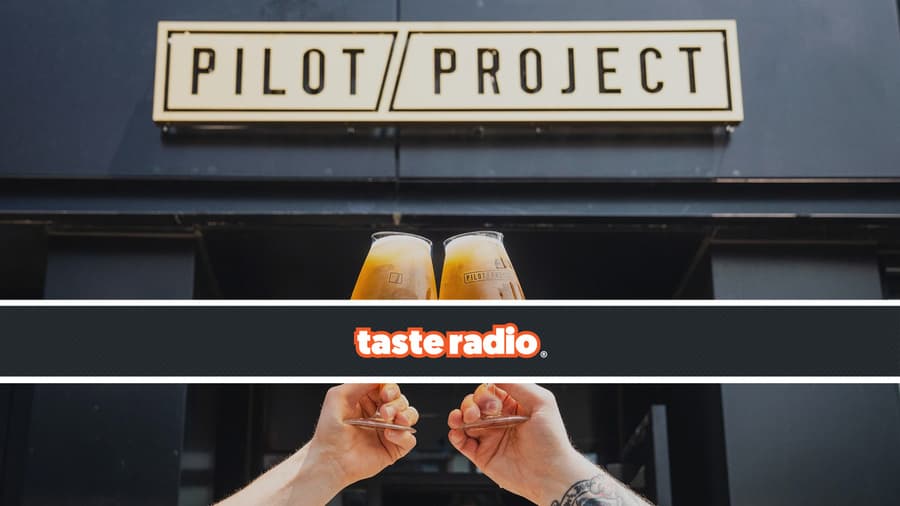
In this Taste Radio interview, Ray sits down with Jordan Radke and Dan Abel, co-founders of Pilot Project Brewing, shortly after the duo hosted a Taste Radio Chicago Meetup at their Logan Square location. Radke and Abel, childhood friends from Minnesota who later reunited after college, built Pilot Project into a portfolio business that extends well beyond its brewing roots — working with hard kombucha, non-alcoholic beer, alcoholic and non-alcoholic RTDs, and, more recently, hemp-based beverages.
The conversation centers on how Pilot Project functions less like a traditional co-packer and more like a "record label and recording studio" for beverage brands, evaluating founders on product quality, brand vision, and execution ability before taking an equity stake and backing them with production, tasting-room validation, and retail distribution in major markets like LA, New York, and Chicago. Radke and Abel also unpack the consumer trends shaping their portfolio decisions, from data-driven drinking habits and functional ingredient innovation to the uncertainty surrounding hemp regulation. Beverage founders interested in partnering with Pilot Project can apply directly at pilotprojectbrewing.com or reach the team at [email protected].
Transcript
Note: Transcripts are automatically generated and may contain inaccuracies and spelling errors.
Speaker 1 [00:03] Hey folks, it's Ray with Taste Radio. Right now, I'm supremely honored to be sitting down with Jordan Radke and Dan Abel, the co-founders of Pilot Project Brewing. Jordan, it's great to see you again.
Speaker 2 [00:16] Yeah, likewise, right.
Speaker 1 [00:17] Dan, how are you?
Speaker 3 [00:19] I'm great. Thanks for having
Speaker 1 [00:20] us. Yeah, thanks so much for being with me and thank you so much again for hosting our Taste Radio Chicago meetup last month. A fantastic event that you guys hosted at your location in the Logan Square neighborhood of Chicago. Really well attended and just heard a lot of really good feedback from folks about the networking and of course, your amazing space, which was so welcoming to our guests. Thank you again.
Speaker 3 [00:47] We always have fun with those types of events. The fact that you guys were able to bring so many people from the industry is, is massive for us too, so, thank you.
Speaker 1 [00:55] Yeah, and I think listeners probably identify Pilot Project Brewing with beer, and you do make beer, and you sell a lot of beer, and you work with beer companies, but Pilot Project itself is a concept that goes well beyond beer. And I'd love to start from the beginning. Jordan, just talk a bit about the origins of Pilot Project. And how you got started.
Speaker 2 [01:20] Yeah, I think part of the origin is understanding where uh Dan and I came from. So Dan and I have known each other since we were 5 years old, uh, growing up in the same town in, in Minnesota. Uh, we went to the same college in, uh, Wisconsin, UW Madison. Um, and then after graduation, kind of split ways into our different career paths, and, um, it was, it was, it was really, you know, nice and, and And interesting to kind of get a phone call late one night with, with Dan, uh, proposing this idea of essentially a co-packer that is just adding additional services in terms of building brands, but also accelerating brands growth. Um, and so that's Kind of where it started in terms of working with with startups or breweries at the time that that had, you know, small goals and just helping them achieve those goals and throughout that time, the business model has changed, it's grown. Uh, we've worked with hard kombucha. We've worked with, um, obviously beer, but now really delving into NA beer, NARTDs, um, alcoholic RTDs, and, and now even into the, um, hemp space as well, at least, uh, through the rest of this year.
Speaker 1 [02:35] It's pretty remarkable, given that there is so much interest in differentiated concepts in the beverage industry. You meet founders and I meet founders every day who are coming to market with really innovative ideas. But how does pilot projects support these founders, especially when you're considering the breadth. Of ideas that are out there.
Speaker 3 [02:59] I think about the analog that we often draw to the music industry. So back to the Jordan's, you know, origin story after we split apart and Uh, following college, I went, I moved to Los Angeles to pursue a career playing music. And to the, you know, the question that you're asking, one of the things that I came to, you know, LA with at that point in time was a brand that was my name or the band I was playing in, and then a selection of ideas, i.e. songs and performance and all that stuff. But then I had all of this infrastructure. Built around me in the music industry to then take those concepts and, and bring them to light, right? I didn't, you know, build my own recording studio. I, I went to one. I didn't uh go around the country knocking on the doors of radio stations. I work with a record label. So when you think about a brand coming to us at Pilot Project, which is effectively a record label and recording studio for the beverage industry, You know, what we want to come, what we want to see you come with is a great, a great idea. Like, what is the next idea? What's the next, the next trend that hasn't been established? But then further is that you have to have the, the vision. You have to be the entrepreneur that can actually deliver on what you're bringing forward. So, you know, we really look for three different things. We want to make sure that you got a product that's good, right? We, we try it right there beside you when you come in and audition. We want to make sure that you have brand vision for what direction you can take this, this organization or this beverage, and then we want to make sure that you're the person to do it. We're a portfolio business. So when the brands are coming to us, pitching us this, the next great idea, we're taking an equity stake in these businesses, like we're putting our name on the line. We're taking the risk with you. We're we're literally jumping in with you. And so, yes, can we technically produce your product? Absolutely. We can produce it 100 cases at a time or a million cases at a time. But then to what Jordan was getting at, we have the distribution team. We can validate your products in all of our different tasting rooms with comparative data besides 50 other unique SKUs, unique products. And then when we go out to market, it's not just about brokering a deal with the, with the next distributor. We have retail, we have big box retail partnerships across the country. We have independent Uh, uh, retail partner relationships in major cities like LA, New York, and Chicago. So we're, we're a flywheel well beyond just production, and that's where what Jordan's saying is like the flexibility that's required of our system, of our network is, is paramount.
Speaker 1 [05:37] Part of building a great brand means understanding what that consumer wants, not just today but tomorrow. And as we've touched on, there's a lot of things going on in beverage that can be pretty Enticing to modern consumers that feel innovative, that feel different. But, you know, based on what you've seen over the past, say, 5 years or so, what's really sticking? What's really resonating with modern consumers?
Speaker 2 [06:04] You know, we're on top of, of a lot of the different studies and, and data that, that kind of comes through, um. I, I think we've, we've all seen some of the recent studies that are kind of comparing some of the younger generation drinking with, you know, different occasions. So I think for us it's always been a variety, you know, we're we kind of came in as this brewery incubator, but the idea wasn't to, to help 5 different clients that did 5, you know, branded IPAs. The idea is to fill our portfolio with pockets of, of new and interesting trends, um, so that's. Why we've worked with the NA beer. We've worked with the NA RTDs and the and the hemp drinks, um, but I think in terms of, of what consumers are looking for is, is a lot of what we kind of consider as well. Um, data is a huge factor. So, you know, are they able to kind of compare their Data, their drinking habits to anyone else online whether that's apps, um, or, or just, you know, using, uh, online databases and with the influx of AI nowadays, who's who's to know what that's gonna look like in a year or even by the end of this year, um, we also focus a lot of on, on innovation, so being able to utilize, you know, new hot varietals, um, that are, are new to the market, um, anything that's, that's kind of on a technological, um. Advancement, um, uh, one of the fun things that we've been able to do with NA beer recently is working with, um, uh, Negao, so which is a mushroom-based, um, product that kind of helps, um, with, with the stability of, of NA. And so we can kind of reach out to our vendor list and, and our, our, you know, nice, um, welcoming community to kind of see what the next sort of ingredients. are and, and then that can kind of help push what the new trends are as well.
Speaker 3 [08:01] The approach that I generally have with any brand that's coming to us, if they say all of a sudden that they're a protein company, well, great, that's a good way to enter the market because we know that there's a market for it. But how are you building your brand in a way that can actually translate across the spectrum of beverage because we know how fickle consumers and time are. Um, but to be more direct to your answer, I mean, we are seeing a ton in the protein space. We're seeing a ton in the mushroom, um, you know, uh, viability space. Um, and then I'm also, as people are starting to think about the, the what ifs, you know, post the, the hemp, uh, laws that, you know, that currently got in question is like how do those brands pivot based off of whatever decisions there are, and what are tangential ingredients to that, um, type of product. And I think all of those things are, are, you know, what we're seeing more than anything else.
Speaker 1 [09:00] Yeah, the uncertainty around he makes it even more important to have a partner like Pilot Project that can work with you on not just production, but innovation and new product development as well. So, guys, uh, I can't thank you enough again for hosting us in Chicago and for this fantastic conversation today. Really appreciate it. Just for our listeners, uh, if someone wants to reach out to you, what's the best way to start a conversation?
Speaker 3 [09:30] Um, please reach out to, well, there's a few different ways. One, if you're interested in applying, visit our website www.pilotprojectbrewing.com, and just, uh, there's an application there. Um, otherwise, if you just have interest in other ways, feel free to reach out to hello@ pilotprojectbrewing.com via email. Um, lastly, we have a very active social team. So if there are ever things that you want to do collaboratively online, uh, we're at Pilot Project Brewing and at Pilot Project MKE on social media.
Speaker 1 [10:02] That was very thorough, Dan. Thank you so much. Usually, someone just, someone just mention the website. No, but I like that. You've got a lot of different ways to reach out and connect. So thank you so much. Uh, once again, Jordan, Dan, really appreciate the time and let's definitely stay in touch.
Speaker 3 [10:17] Thanks, Ray. See you soon.