Search across the BevNET CPG Media network including BevNET, Nosh, Brewbound, Taste Radio, Nombase and CPG Jobs.

Exotic Ingredients and Bold Claims Avoiding Legal Pitfalls in Beverage Innovation
Transcript
Note: Transcripts are automatically generated and may contain inaccuracies and spelling errors.
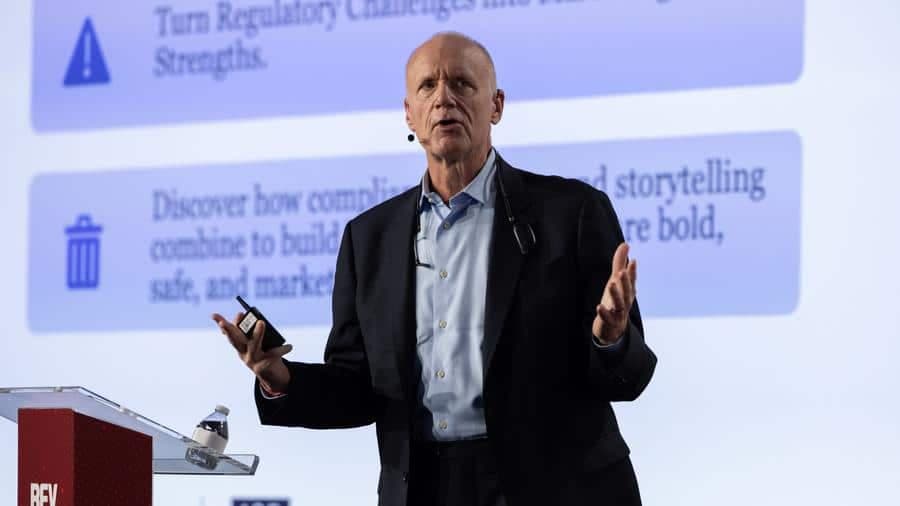
Jeff Kleinman [00:40] Hello, everybody. Uh, I hope you're all nicely caffeinated and gradually making your way back into the room. Um, we got a lot, another hour plus of great, highly informative content for you. Uh, I'm Jeff Kleinman. I'm the editor in chief of BevNet. Um, I hope that you've all gotten the chance to shake hands with some of our amazing experts and your fellow entrepreneurs. I love seeing these conversations happen, and I do hate to interrupt them with our program. Uh, but let's get started on the second half of our presentations. One quick note before that though, after this, we have, uh, 30 minutes of round tables, Q&A. Um, and you are welcome to sort of continue those. Uh, but we have 4 more really interesting sessions that are going to follow from 3 to 5 that cover changes in the cannabis beverage business and the ready to drink cocktail business, and these are going to be some really high quality specialized sessions in areas that really aren't involved in any kind of controversy right now. So you're of course welcome to attend. So we've covered branding, distribution, and some real world examples of being an innovator and beverage industry founder, and now we get to some of the really sticky stuff like avoiding legal pitfalls, structuring investment rounds, and managing your supply chains. The first speaker in that regard is Todd Harrison. Uh, from Venable LLP. He's here to talk about the evolving landscape of food safety oversight and regulation. Uh, Todd's the co-chair of Venable's FDA group, and he's got years of experience defending clients in court. You actually go to court? Yeah. Um, and advising founders on how to protect their brands from expensive legal complaints and staying out of court. Um, he'll walk us through the complicated world of product labeling and advertising and the ways to turn challenges into marketing strengths. Todd, come on up. Thank you. Yep, green means
Speaker 2 [03:22] go. Green means go, OK. Thank you. Well, I'm glad to be here today. Uh, my name of my person is Exotic Ingredients and Bold Claims Devoting the Legal Pitfalls and beverage innovations. We got to turn regulatory challenges into marketing strengths. The beverage industry in particular, we're seeing a lot of innovation, we're seeing a lot of new ingredients come into the beverage industry. We're seeing a melting of dietary supplements and the beverage industry, dietary ingredients infiltrating the beverage industry. But how do we avoid the issues that Those are two separate categories. They have different regulatory standards. How do we avoid what just happened to the hemp industry, who got way ahead of themselves and Congress just slapped them down? And just this last week, we now know that FDA has finally decided that we think that GRAS notification should be mandatory. So your Ashwagandha products out there may be in problem, may have problems if FDA does indeed try to assert regulatory authority that those GRAS notifications need to be mandatory. I don't think they have that authority, quite frankly, but FDA seems to think they do. So we have consumers who want these things. They want novelty. They want functionality. They want their adaptogens. They want their mushrooms. They want their nootropics. They want all these things, and they want them not just in pills. They want them in gummies. They want them in beverages. They want them in bars. They want them in everything. It's a great place to do it. They like to have their sip of something. They like to have their cocktail or their mock cocktail, and they want to have a benefit with them. But I said, this line is now blurred. Food supplement drug is thinner than ever. Everything has a health benefit. Every, every new ingredient must be safe, and every new benefit claim requires substantiation. Opportunity and risk often grows in tandem, mastering both is a big thing. How many people understand what GRAS means in here? Do you know what GRAS is? OK, let me ask you this question. To be GRAS, does all your safety data has to be public? Yes, it does. All your pivotal safety studies must be public, otherwise, how can you be generally recognized as safe? By definition, To be generally recognized as safe. By experts Your your pivotal safety studies have to be public. You know, I've seen these studies, I've seen self, I've seen good self-affirmed GRAS, I've seen really bad self-affirmed GRAS. Some that I would say, yeah, if I had to file with the FDA tomorrow, not a problem. I've seen others like, oh my God, if FDA came knocking on the door, they'd laugh, laugh me out of their office. You know, I, I like to apply what I call the straight face test and I'm not gonna be laughed out of their office like Todd, really? And so you have to do due diligence. So as we start getting these, this new thing called peptides, by the way, peptides are coming. And that's becoming a bigger, bigger thing. But most of them don't have GRAS. They'll tell you they have GRAS, but they don't. So for beverages you to be GRAS. And FDA approved ingredients, food additive, and your label has bureaucracy, but then we also have the FTC. So every claim you make on your label, Gives you more energy, makes you calm. Gives you more functionality and makes you smarter. It's a nootropic. Just drink this and you'll be smarter. You got to be able to substantiate that claim. If you can't substantiate that claim, well, then you have something called plaintiff attorneys in the state of California health task force. And then they'll sue you because you can't substantiate your claim. So you have to navigate all this. You can have all the greatest marketing in the world. But I can tell you one thing from plaintiff attorney's perspective. If you can't substantiate it, the bigger you get, the more likely they're gonna come knocking on the door. Now we have the idea that is your ingredient actually safe and that if that plaintiff of attorney actually figures out whether that's actually GRAS or not, then they might just add a violation of UCL in California and say that you're marking an unlawful product on top of it all. So there's two ways. Generally a safe for a pathway to commercials for food innovators. They suffer from GRAS or the FDA notified GRAS. The FDA wants to change that. They want to make all ingredients to be notified. I don't believe they have the regulatory authority to do that. They're going to try it. It's coming. It's that OMB right now. We don't know what it says. But that's the FDA's position. The problem is, and just like the hemp industry got way ahead of themselves. With delta 8 delta 10. Congress may step in. And if a court strikes this down, the court, the congress may come in and make it mandatory, and they may not allow for grandfathering, so we have to be careful here. So when you're doing this, be responsible. Do your homework. Because what I would tell you, you should tell your supplier is, who's coming up with the ingredients very simple. Well, if you're GRAS and you have all the pivotal safety studies, well, why don't you just file the notification. I've so I've worked with many clients over the years and many good toxicology places and there, you know, FDA it takes time, it takes like 270 days, the FDA is not unreasonable. They actually, most draft notifications, they're well done, get through. There's no real reason not to file it if you can. So you build your safety story, peer-reviewed, expert consensus, again, all this is required. Peer reviewed, you can't get peer reviewed unless it is actually published. Don't rely solely on supplier letters or traditional use. Suppliers will tell you anything. And there are some good ingredients out there. Look, if you ask me, do I think Ashwagandha is perfectly safe? I do. I don't have any issue with it. However, is there a GRAS dossier on there? What type of toxicology has been done on it? I think 90% of mushrooms out there that are that corps, I think they're probably perfectly safe, but the problem is if you haven't done the homework. Then it's a problem, especially if FDA makes it mandatory. A strong GRAS file is essential, even if you, even if we keep the voluntary system and you can self-determine, make sure you ask for it. If all they give you is this back page. That says a bunch of people have expert report that signed it and they won't give you the actual GRAS notification, the actual GRAS dossier again, that's a red flag. And you should be asking them why. Again and again, with the peptides that are coming out, there are some perfectly Natural peptides, but you know, when you take a peptide out of a protein, you start increasing the value you're giving to somebody. We don't know whether that's safe or not. This is part of a protein doesn't necessarily mean it's safe at high at 50 mg or 100 mg. We don't know when you biosynthesize these things, but we're seeing this more and more in the marketplace. So we confirm the ingredient identity purity. Define intended use levels and safety margin, review the toxic, toxicology, document expert panel review, validate archives supplier data, keep all evidence traceable and updated. If you can't prove it's GRAS, assume it's not. Now there is an alternative method to all this madness. You can go out as a liquid supplement. Man, we can, that's a whole different story and FDA is wrong that you can only be 6 ounces or less. There's no law that says that you can't be a liquid supplement be 12 ounces, and I, I would be happy to, to argue with the FDA because the FDA will never sue my client over that. They would never go to court over it. Part of the problem here too, to be honest with y'all, I had this conversation with a client the other day. Well, Todd, what's the risk? They go, well, we have a feckless agency that doesn't do anything. So what you see out there and you see in the world, well, FD is not doing anything. And you're right. But go in with your eyes open, judge your risk, because when you're getting investments and everything, and I'm, you know, I deal with private equity and due diligence and everything, and they're all looking at these documents. So understand and go wide-eyed when you're going into these things what you're actually dealing with. Vet your botanicals, are they good botanicals? You know, why weren't in Delta 8 and delta 10. Well vetted. That law was not necessary that Congress just passed, by the way, if the FDA had done their job. It was an unnecessary law. Just do, you know, the agency should have just done its job in the first place. The farm bill never legalized hemp for use of food. The farm bill just said 0.3% hemp is legal. The farm bill also said FDA still retained regulatory authority over food. But everybody kind of just ignored it and do what they want, and they got way too far ahead of themselves. Involve people in the whole process. Structure, keep your claims, structure function claims and understand structure function claims don't have to be based on neutral value. That's another misinformation that FDA says everybody, they lost that case back in the 1980s, but they keep on telling people the same thing over and over and over. They lost that case in the 1980s. That case never said ever. Starch programs never said that a certain approach had to be based on a nutritive value, never said that. In fact, the court specifically warned FDA that that's not the case. They said that coffee can make an energy claim and it's based on the caffeine content and not the nutriative value. So the FDA takes that position, but you don't say treats anxiety, but you can say occasional anxiousness, things like that. But you have to have confident and reliable scientific evidence that your product does what it says it does. So if you're marking a product and let's say you put something in there, it's a nootropic, for instance, but you have to, that person would have to drink it every single day. Then you better put it on your label, drink every single day. And it better be at the right substantiated level. If it's something for sports recovery, it's creatine, creatine, you know, it's a creatine drink, well, putting aside whether creatine is actually grass or not. It should be a minimum of 5 mg, I mean 5 g, minimum. In there. Every day. You should probably for kidney purposes, you should probably cycle it. You're responsible for your influencers, your social posts, and everything, everybody part of your brand. Your influencers go out there and make wild craws about your product. Guess what? You're responsible for it. If you go out there and you have a review site, you like a post that is not and the person said something they shouldn't have said, you like that post, you now own that post. You're responsible for testimonials that you, you, you people make for your product. If they, if it's on your web page and you're making testimonials and you say, people are saying all these things about our product. There's no personal use exception to substantiation. Every word shapes consumers' trust in legal exposure. So testimonies are really great because I think it does build trust, but it also has legal exposure. So just remember you've got to balance the two, pay attention. Because I get a lot of demand letters from plaintiff attorneys, and the first thing they do is they, if you keep it in the review part and you don't move those reviews, but people like to take those reviews, pluck them out and put it in their website somewhere or put them on their social media. The minute you pluck it out of the review site and you put them on your, your uh on your website somewhere else, it becomes, it goes from a review to a testimonial. And you're now responsible for that testimonial. Claims identified, claims, structure function claims, nutri nutrient content claims, align claims wording to evidence and ingredient levels. If you've got pixie dust in your in your product, don't make claims for it. I get that all the time. I get that on functional foods. I get that in dietary supplements. I get that in cosmetic products. Your product has to have more than pixie dust in there. Maintain a substantiation dossier. Make sure you have a dossier. Make sure you have a good dossier. Audit your influencers, your ad your web content regularly. Anything can be a claim by the way. Oh, that's a statement of fact, yeah, it's a statement of fact, it's a claim. Anything you say that you say is a claim under and it's, here's the most important thing, it's not what you think you said, it's what the reasonable consumer thinks you said. You want to know who, what's the reasonable consumer? Any 20% of Americans. Any 20% of Americans. So basically when I review copy, I view it as I'm the dumbest 20% of Americans. And we thought, and this is really the biggest lesson. This really this. was the biggest mistake. There was an argument to be made that you could do it from the farm bill perspective, but it was, nobody ever, ever, excuse the language, nobody could, nobody showed that it was grass for use in food. No, it was legal marijuana. Well, you didn't make the cannabis industry in the individual states very happy. Um, and you, at some point, you're going to get lost. And it finally happened. In the dead of night, It's not a good law because all they really should have just said was delta 8, delta 10A intoxicating product, but at 0.3%, I could get 25 mg of, of THC in a bottle of water. You get high off that. It just makes me sleepy, but you can get high off of it. So, again, this is the situation where this industry in particular, decided to push the limits of the law. Go over the limits of the law, you had an agency for whatever reason, did not want to do anything, so the rest of the world said, oh, we could do this. But yet in the end, the state started doing something and Congress in the middle of the night screwed the whole industry. Last thoughts, mushroom mycelium extracts, psychoactive scrutiny, you know, your general mushrooms like vines, mains, things like that, no real issues there. Hemp 2.0 changing the landscape. Peptides are the biggest thing right now, and then kratom out there, don't think kratom is gonna be, don't think kratom is just 708 that's gonna get up is on FDA's radar screen. FDA is gonna go after kratom after they're done with 708. Innovative products and beverages are built on thoughtful planning and science. Do your homework, make sure they're substantiated and make sure you have the safety. And if you do all those things and you work with good regulatory consultants who know what they're talking about, you'll be fine. But just go in it with your eyes wide open if you want to take the risk, you know, it's like I've told many people, you know, my son just graduated Duke and my daughter is now in law school. I, I've got bills to pay. Pay me a little now or a whole lot more later, and you know, when a lawyer says that to you all, you should listen. Thank you.
Jeff Kleinman [21:31] Todd, I would hire you any day. I would hire you any day.
Speaker 2 [21:37] Oh, thank you.
Jeff Kleinman [21:38] I appreciate that. That was terrific. Um, remember, vet your botanicals and maintain your dossier.