Search across the BevNET CPG Media network including BevNET, Nosh, Brewbound, Taste Radio, Nombase and CPG Jobs.

Sponsored Workshop: Risk, Reward & Regulation: THC Beverages in 2026 and Beyond
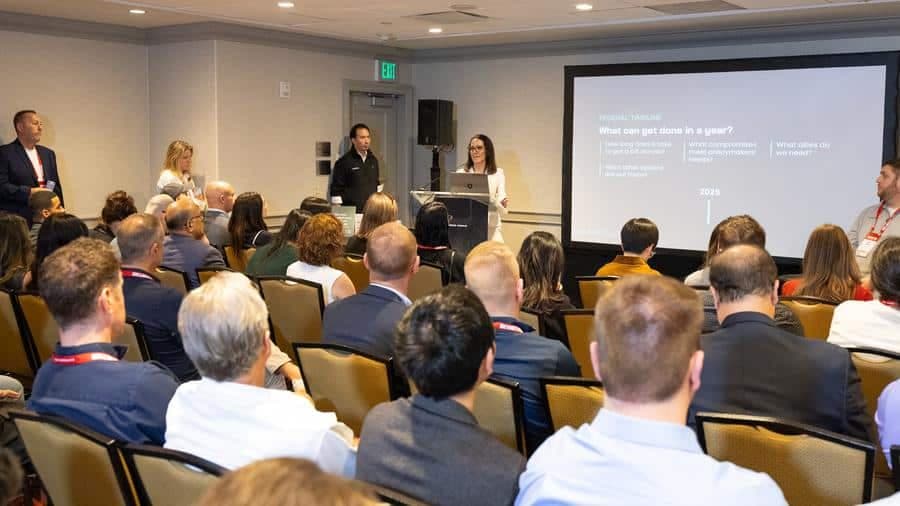
THC beverages are redefining how and why consumers drink, introducing new dimensions of function, ritual, and experience. This fast-paced session explores the science, policy, and market forces driving this emerging category and how it is reshaping the broader beverage landscape.
Ben Larson, Chief Executive Officer, Vertosa
Theo Terris, Chief Executive Officer, Uncle Arnie's
Diana Eberlein, Chief External Affairs Officer + Chair CABA, Vertosa
Samantha Catalina, Fractional Chief Marketing Officer, CounterMeasures
Ryan Pinsky, Vice President of Sales, Vertosa
Transcript
Note: Transcripts are automatically generated and may contain inaccuracies and spelling errors.
Speaker 1 [00:09] Good afternoon, everyone. The last session of the day. Thank you for making it. Good to see a packed room. Um, Raise your hand if you're in the last session. All right, we'll try not to double up content. It was a great panel. If that was what we call the battle plans, then I guess this is the war room. It kind of feels like a war room. We're underground. Churchill would be proud. So we're going to get started. We'll actually try to get to the content relatively quickly. You guys have seen a lot of content today. You've been walking around and we'll do it a little different, try to get this engaging, get your questions. Uh, my esteemed colleagues up here receive a lot of questions every day about what our take is, what's happening, how do we get this done, and what's, uh, Ahead of us in the future and yes, we have all the answers. Right? Or Diana does. OK. Yeah, yeah. All right, well, where we're at today is feeling strangely familiar to what has happened in the past. Prohibition. We've been here before, and not just alcohol, but we've seen it with other categories as well in smaller effects, but This is history repeating itself. And we have an opportunity to experience prohibition and repeal hopefully in the same cycle. That is the goal. So in 1920, overnight, It was like a snap of a finger and we lost a category. Not me, I wasn't there. I wasn't alive, but Mitch McConnell probably was. Um, so. Anyways, we can imagine what it was like, and This is what we've been feeling for the last month as a category as an industry, and it's a little bit reeling, especially because some of us were having the best months in business we've ever had. Talk about living on two completely different planes. And then within that last month, you have people saying, oh, business as usual, we're selling more than ever, and yet we still have this looming existential threat that's what, 340-ish days away. OK. Yeah, fun times. Yeah, well, it wasn't that long ago where this happened, right? And people were pouring fluid into drains and You had people confiscating cases of products off of shelves. In fact, we actually experienced this not too, too long ago in California. No booze sold here. Signs going up in retailers. We're not seeing that yet, um, but it is a threat. Every day that passes, you know, we do hear that things are continuing to move forward. We have until May to see traction, all this kind of stuff, but. Anything can happen at any point. Everything is a signal that we are tracking every day. But something else was starting to happen around this time. Brands like Jim Beam. And Jack Daniel's, they were quickly adapting. They were innovating and they were preparing to weather a storm with the confidence that they would get their industry back. And these are names that exist today, that are more powerful today and probably more powerful than we want them to be in certain cases. I don't know if we're allowed to talk about that. Sorry. Uh, I'll, I'll leave that to them. Um, but they survived long enough to actually see the real category come back and explode and benefit from that in the century that follows. And that was all triggered by 1933. And like I said, what we're trying to accomplish in the next 340 days or somewhere thereabouts, maybe even half of that is to witness our own 1933. Disruption didn't kill the opportunity. Disruption happened And then the opportunity was created. And so that's what we as a group are continuously trying to map, like, how do we create that foundation to create the real opportunity? We've gotten a taste of it. We know that people want it, but how do we create the foundation to create a long-lasting, successful industry? And so I have my esteemed colleagues up here. We're going to have Sam talk first, talk about the perspective of the consumer, and we'll kind of go through the various lenses. We also have Theoterras from Uncle Arnie's, very popular brand both in cannabis and hemp. Our VP of sales, Ryan Pinski. Well, most of you know Ryan, but if you don't, Ryan knows just about everything about the supply chain and every operator. And then there's our woman on the hill, Diana Eberlein, uh, also the chair of the Coalition of Adult Beverage Alternatives. But Sam, CounterMeasures Corp, take it away.
Speaker 2 [04:58] Yeah, so I want to talk a little bit about the consumers in this space and so you know my background, I've worked in alcohol for a long time, about 15 years at Pabst, Anheuser-Busch, most recently Fusion. So for Loco is the main brand there, and I got into this space in April doing fractional consulting work, essentially in marketing. And where consumers are sitting, I think this category, especially in beverage, is the easiest entry point for a consumer to come into hemp or THC. It's a very quick onset. It's a very quick offset. I've worked with quite a few brands in this room and saw activations such as big music festivals that consumers come in, they try the beverage for the first time, they're able to understand what it feels like to be slightly. You know, high if you want to say that, um, and then understand how it feels to not be and you know they're able to consume in the way they want to versus taking, you know, not saying it's wrong, but edible or a joint or whatever that might be and the onset and offsets a little bit different. So I think beverage and this overall hemp category gives consumers and everyone opportunity to experience, you know, the high in a different way. Having worked in categories such as or with brands such as the 4 Loco, that was a brand that went through a lot of regulatory work, you know, every state senator essentially sued it. It had to take caffeine. If you don't know, 4 Loko had caffeinated product and alcohol. It was 14% in 2011. They had to take the caffeine out of the product and then relaunched it about a year later. That brand's now bigger than it's ever been. It's a 14% alcoholic product in a can. Whenever you look at what's happening right now in terms of the biggest acquisition or one of the largest acquisitions in alcohol probably in the last few years is Beatbox. Beatbox is an 11.1% alcoholic product and a resalable pack that probably wouldn't have happened if it weren't for what happened for Loco in the past. So I think what that taught us is from a regulatory standpoint, yes, it was hard. Just like this category is going through right now, but the output of it actually became a lot of brands and products and companies that are now very profitable. A lot of consumers are wanting that. So in this category, I think there's an opportunity for that like Ben talked about in prohibition. There were a lot of brands that were coming out like a Jack or Jim, but it was. Product that they were trying to get through. I think here if you look at in Diana we'll talk more about regulations, but a specific dose or specific in carve outs whether it be beverage or edibles, depending on what we're looking for, I think there's a lot of ways that there is a path forward and I think consumers very much want that path forward based on what we saw or what I've seen in the past year or two. And then beverages are the next wave. So basically, like I said, in beverage you need a lot more one capital, a lot more lead time in terms of launch, whether it be, you know, package innovation or what you're trying to put in product or putting it in market. Here there's a way that you can test this out fairly quickly whether it be in market, whether right now you know there's. Commerce opportunities to do so. There's different types to do so, um, so I think there's a big opportunity just like we saw again during alcohol and prohibition that this category can go into and basically create a next wave of beverage into that and I think that's where this regulatory framework, while hard right now, will lead us into a better point because of all of this. I'm going to tie this over to Diana, but just before I go off, I think the other thing in this category is education and whatever brands, whoever you're working with in this room, I think consumer education, whether it be in retail, online, wherever that's at, is extremely important and should be front and center, especially as this regu regulation, you know, hopefully happens.
Speaker 3 [08:42] Everyone's favorite topic is regulatory, right? Everyone loves it. It's really fun to deal with on a regular basis, particularly when you have an existential threat, um, in the 340 some odd days. Um, however, this wasn't the outcome that we wanted, but it did come with a lifeline. There's opportunity here for us to create that regulatory structure that gives adults. The ability to make adult decisions and decide what products they want on the shelves and what they consume, um, but we have to work within the regulatory structure that exists today to make that happen. So let's talk a little bit about what did happen. So, the appropriations bill that was passed for the uh budget, basically included a dosage cap that basically completely eliminates the low dose THC category, um, not just, I should say the THC, the hemp derived THC category, not just beverage, Not just THC, it actually also really impacts the CBD categories and the therapeutic products that are non-intoxicating. This was significantly lower than anyone expected to see, and it impacts more than just us. This impacts farmers. This impacts the entire supply chain. But it came with that lifeline. It came with a one year implementation, and that's the reason for that is for a couple of reasons. But until then, we can sell these products business as usual. However, as Ben kind of alluded to, things change as that year goes on. While we are fighting to get legislation in place, businesses are going to change how they operate. Brands aren't going to make as much, they don't want to sit on inventory. And if we don't show immediate progress from a regulatory standpoint, wholesalers and retailers will also start to pull back as well. On top of that, there are farmers, and farmers have to plan what they are growing long in advance. So we need more time. There was also no carve-outs. A lot of people were like, there's a beverage carve out. There were, there were no carve-outs. This impacts everything. We have to remember this vote was about reopening the government. This wasn't just about shutting down hemp. Yes, we were, you know, a focal point, which I don't think anyone thought we would be a focal point when it came to reopening the government. But this was about reopening the government after one of the longest shutdowns they've ever had. So what can we get done in a year? That's the biggest threat we have. Ever see a bill get introduced and put through within a year? No, the government doesn't work that way. They also like deadlines that create urgency. Until then, they have other things that they generally tackle. So what are the options that we have out there? And what are the compromises that meet policymakers' needs? What allies do we need? So these are all questions that we have to get together very, we have to answer and then figure out our strategy very quickly. And I'm happy to say that's happened extremely fast. I've never seen the hemp industry more aligned, more collaborative, sharing information with each other, and, and groups are compromising. The number one thing we got on the hill for the last 2 years has been everyone's asking for something different. Some people don't want dosage caps. Beverage was OK with the dosage cap. Uh, some people were OK with synthetics. Others wanted naturally derived. Cannabis is a complicated plant in comparison to a lot of other things that they regulate, and they have a lot of other issues. You know, the government's got some stuff going on that are very important that they need to get done. This is an, an additional thing. The more confusing we make it, the harder it is for us to get anything across. So we need to simplify our ask, and we need to focus on addressing their concerns, which almost always include, what about the children is the absolute number one thing we hear. What about the children and what about these high-dose products, and what about the copycat products? So, the ones that get held up in, in Mitch McConnell's press conferences or Lieutenant Governor Dan Patrick. A lot of those like Skittles, you know, THC Skittles, there's not a single good actor that wants to see those products out there, not a single one. But it's so easy to turn everyone against intoxicating hemp when you hold up one of those products. And that's what drives the opposition against us generally. So the allies that we need. We represent low dose THC beverages. Ultimately, we need to be working alongside our alcohol and other beverage allies. We also need to be working with the hemp industry, not just, uh, particularly because the alcohol industry is still bifurcated. Do they want this? Do they not? There are alcohol suppliers or brands that see this, uh, category as encroaching on their territory. Um, meanwhile, wholesalers and retailers have seen sales decline over the years. They're looking for something else to fill their shelves. This is filling that. So you have wholesalers and retailers advocating on behalf of hemp, and then you have alcohol suppliers that are still very torn as to whether or not they want to see these products on these shelves or directly in the dispensary. And what I can tell you from our experience because we work on both sides of the plant and have been around for 7 years now. It feels like 25, so you've got to give us a little bit of a break there. Um, we've been around seven years. We know that the low dose THC beverages do not sell well in the Dispensary Channel because we are targeting generally the 30 to 45 year old soccer mom who's getting groceries and picking up her wine and, and maybe her liquor at the liquor store. They're going to Buy adult beverages. They're not necessarily cannabis consumers. They're adult beverage consumers. And that's why these beverages sell more in a month than they sold for the 1st 3 years when they were in the dispensary channel. So we're now collecting everyone to try to have a unified front as possible with one simple ask. Well, one ask at least. I already touched on that. So we're presenting a united front. We can't move the goalposts. This is the number, I would say the 2nd thing that comes up is people say they want regulation, and then regulation comes out at the state at the state level, and we see a lawsuit come out. That says the opposite of wanting regulation. And we need to be consistent. So we need to focus and develop the strategy and the foundation now, so that come the beginning of 2026, we know exactly what we are asking for, and we are all repeating the same message. It's the only way to get as many members of Congress to support our, our, uh, goals on a regular basis. Bless you. What's been great is to see a lot of our supporters and partners lean in versus leaning out. Now there are some that have gotten cold feet. I know, you know, the other panel probably talked a little bit about investors and different supply chain partners that may be changing a little bit of how they operate. But we've gotten an incredible amount of support coming from our wholesalers and our retailers, and they are incredibly powerful at the state and federal level. Some of our largest allies are the Wine and Spirits wholesalers of America who've been lobbying on this issue for 2 years and have a ton of political capital. Those partners are critical for us to work with right now. Also, we have the states. Anyone who's worked in this space knows that the states states have definitely had a patchwork situation. Right now, the states that have regulation and are continuing to push regulation across are some of our biggest allies and opportunities to prove to the federal government that we can safely regulate this category and create a safe opportunity for consumers. Tennessee, in particular, which is a state that never would have legalized marijuana, or they probably would have been last, has a robust intoxicating hemp category. They are so proactive about regulating this space, and they don't want to see it go away. Ironically, McConnell's, uh, backyard in Kentucky also has great regulation that allows for low-dose THC beverages, and 87% of the hemp grown in Kentucky is used for CBD and intoxicating hemp products. Um, these examples allow us to prove that this can be done, and it should be done, because if it's banned, the only people that benefit are the illicit market. We've seen that, we see that in California, that hemp was banned in California. The dispensaries aren't thriving now because of that. The illicit market is 70% of the market here in California. And it's because when, when product that you want, you can't regulate away demand. People will find these products regardless. I'm highlighting these three states in particular, because what they implemented is very similar to how other adult beverages are regulated. This is essentially how we've been asking to be regulated as a low dose THC beverage category. And the reason for that is because it's an infrastructure that already exists, and it does a great job of keeping counterfeit product out of the illicit or, um, counterfeit products out of the alcohol channels, which is a big problem in international markets. The other reason I'm highlighting it is because the three-tier system, while not a perfect system for those that work in alcohol, I know it's not perfect, neither is the TTB for that matter. But it allows for the products that we are talking about to get where we want them to be, where other adult beverages are sold and served. And that is our ultimate goal at the end of the day. And this one year timeline that we've gotten, you know, through the appropriations bill, while not ideal, this is our opportunity to get that and using states like Alabama, Kentucky, and Tennessee that have put ABC overseeing the regulation, they made it 21 plus, they taxed it. The states are filling holes that they had from various issues and, uh, decreases in multiple markets. So, this is ultimately an opportunity, and using markets like this is what we need to focus on and get uh more attention to. So, what you will see over the next few months, and you've probably already started to see is more awareness campaigns, more campaigns that are talking about why these products. Long at retail where adult beverages are sold and served, you will also start seeing consumer focused campaigns that are getting them involved because consumers now had a taste of this. They don't want to see this go away, and it's going to be very confusing for them when it does go away, if it does go away, because they were used to getting them. So we've created the demand and now we need to take the momentum that we currently have because the sales have spiked, the awareness of our category has never been higher. A weird silver lining of getting a ban is that the media covered it and we now everyone knows these products exist and they're flying off the shelves. We need to take that momentum and continue that into the next session, and we are already identifying our partners. So the last thing I just want to call out is if you are a partner to an alcohol or to a THC beverage brand. Um, thank you. And please continue to support our category and feel free to always, uh, ask me questions about what the next steps may be for you to get involved and keep it alive and on your shelves. And with that, I will hand it over to Ryan Pinsky.
Speaker 4 [20:26] There is. Hello. They always put the sales guy after regulatory talk to get everyone a little more positive. Um, I love to talk about the positive side. I mean, you know, we just talked about the heavy regulations and a lot of changes coming, but what a lot of people don't hear is what's happening on the ground. We're talking to liquor stores that tell us 10 to 15% of their sales now are hemp THC beverages. We're talking to, uh, distributors across the nation who tell us the velocity on some of these products, some of the brands. In this room are 30 to 60%. Those are extremely high numbers. We're hearing distributors and retailers are making more money per case to fill the shelf space that's kind of held the void from the new consumer trends that are really coming from drinking. And so for me this has been really interesting to see the largest disruption in beverage. And so the things that I just wanted to kind of highlight here. are really to talk about a lot of the brands that have been on display. I mean, we heard from Justin Tidwell, I'm not sure how many of you were in that room earlier, but, you know, Justin said this national campaign around the hemp band increases D2C sales by 40%. His brand is the number 2 selling product in Total Wine and more by volume and revenue. Number one is Tito's vodka. Their brand didn't exist two years ago. There are brands in this room who are on 40, 50, 60 million run rate that didn't exist two years ago. This is the largest disruption we've ever seen, and the one thing that we go back to is consumers actually want these products. We want these products. Our parents want these products, and it's not just. Because they're looking for an alternative choice, it's not eating at alcohol sales. It's just, it's a new form factor for people to enjoy. And you know, the last thing that I'd like to leave you with is the coolest thing for me is watching brands that are in this room on display at F1 in Miami doing music festivals, taking over legendary music venues, and seeing these beverages aren't just something you hide away in your fridge and drink when no one's looking. It's on the main stage. People are enjoying it and they're using it as a new use case. To fuel the fun that they want to have. And so we'd love to bring on, uh, one of the leaders in this space, Theo Terras from Uncle Arnie's, uh, Legacy cannabis brand that has transitioned to the hemp space, and let's give it up for Theo.
Speaker 5 [22:37] Thank, thank you, Ryan. Yeah, so for me in high school, college, uh, post-college, cannabis was never really my thing, to be honest. I was playing soccer competitively, so I really didn't like the idea of smoking. And my experience with other form factors was really subpar, to say the least. I really didn't feel like I was in control. Um, but almost exactly 6 years ago, I tried a cannabis beverage for the first time, and That, that really changed my perspective on everything. It tasted really good. The onset time was great. Thank you to the, the team over at Vertosa. They, they didn't pay me for saying that. Um, and I felt under control and not really knowing a thing about CPG or cannabis or beverage for that matter, uh, my partners and I dove headfirst into the category. And we just had this gut feeling, this intuition. Uh, that this could be a major category, not just for cannabis, but for the overall, uh, beverage sector as a whole. Um, and it's been an absolute roller coaster since launching Uncle Arnie's, uh, almost 6 years ago. And as Diana touched on, we faced incredible and continue to face uh incredible hurdles from a regulatory perspective, um, but also from Uh, a distribution perspective, a retail perspective, an investor perspective, and everything in between, for that matter. Um, however, if there's really been one thing that's been, uh, kind of constant throughout the last 6 years and loyal to us, to Uncle Arnie's, to the brand, to our products, it's been the consumer. Um, you may ask who these consumers are, and it's not just the Gen Z that's cutting back on alcohol, or the millennial that's drinking a little bit less beer. or the senior citizen that's drinking at the old age home, these beverages are really for everyone. They're for people that have sleep issues. They're for people that have anxiety, for people that have back pain, or simply just for fun, which is really where, where we fit into the mix. We're kind of uniquely positioned in the sense that we're operating both on the recreational side, selling in dispensaries here in California. Uh, as well as on the hemp side selling in bars and restaurants, wine and liquor stores, and whatnot. Um, but no matter where we sell, we're trying to sell the same experience. We're providing the same experience, which is providing extremely tasty beverages that are consistent and that are affordable. On the rec side, we focus more so on that daily cannabis consumer, so it's more potent products. We've more recently leaned into. Uh, full spectrum drinks, so live resin and live rosin. Ask Ryan how his, his day yesterday was tasting our, uh, some of the new products in the, in the pipeline that we're launching in early Q1. Uh, and then on the hemp side, we focused more on lower dose drinks, 3 mg 5 mg, and 10 mg. And so despite all the regulatory hurdles that we're facing and we're going to continue to face, we're going to get through this as we always have and we always will, and I have no doubt that we're going to come out the other side even stronger. Thanks.
Speaker 1 [25:52] All right. Thank you, Theo. All right. We are going to fix it. So I've been in this industry now for 10 years, 7 of the last, uh, being with Vertosa, and When I zoom out, we are further along in the legalization effort and the ubiquitous nature of of these products than we've ever been. And the one thing that we know throughout history is that this chaos, this disruption is what creates the opportunity. It forces our hand to create change. And the one thing I know is that last year here at Bevnet it was Steve Jabbo on stage telling people that this was the most exciting beverage category that has ever existed. And if you think they're gonna take that away, you got another thing coming. We will be successful, and I know because This is the future. And this is history being made and you're all witnessing it. You're all participating in it. One of my favorite books of all time is The History of the World in 6 Classes. And it talks about how society has gone through these eras of communing over over beverage and creating supply chains and industry, innovation, agriculture, all-round beverage, wine, spirits, beer, tea, coffee, Coca-Cola. Like it just maps you through history. We always have a beverage in our hand. We're at a beverage conference. And so collectively I do truly believe that we are creating the 7th class together. This is it. And so for the next 100 years, we get to build that and we get to be a part of history. So thank you for coming. That's the content, but we're here to fill the rest of your time until they start serving drinks upstairs to answer your questions. So, any brave takers, and I am going to actually pass the mic so we don't have to repeat you. Diana, you mentioned that. It's tough to get a bill written and passed in a year. What is realistically possible if it's not a brand new bill that's written and passed between now and when the farmers need to plant their next crop?
Speaker 3 [28:17] Most likely the request will be about an extension, um, more time to get a bill across, and there are multiple bills. Whether it's Morgan Griffith who is currently circulating a bill, Ron Wyden has circulated a bill a couple of times now, there's interest on the Hill to regulate intoxicating hemp, but we're going to need more time. And so I believe that if we are committed, and again we keep our ask really finite and specific, that we can get them to also say, hey. These groups are willing to compromise. They're willing to work on regulation, but in order for us to do it and get it right, we need more time and ask for an additional extension. So whether that is a year, but it has to come with something like dedicated to a specific bill that we want to push across or a study. Because there's a lot of questions and a lack of data in this space, particularly because cannabis is still Schedule One, so it's a little bit more difficult to do research, um, but those are the types of asks that need to be paired with an extension for something like that to get support from Congress.
Speaker 1 [29:24] Follow up, is there a precedent for, um. Getting an extension like this in that short of a period of time,
Speaker 3 [29:32] it's very rare.
Speaker 1 [29:36] Other questions? Mr. Provost. Um Talk about Copycat kid advertising products. Seems like safety profile is. And more or less So where does What you guys are doing or what. safety
Speaker 3 [30:30] I have to repeat your question for the audience. So basically the question is about real world data and how that impacts what we are currently doing from a federal perspective, but also at the state level in terms of the regulation we want to put in place. Yes, data is very important and there's a huge hole in that area. One of the hardest things is that if you fund your own research study, you can utilize that data for your marketing efforts, let's say, but it is not something that Congress will consider. If you've funded it, it needs to be an unbiased study, and typically those studies are done by universities that are funded by the government, and they, you know, it's a very defined and typically a long process with a very specific ask, but unfortunately it is not something that individual brands can necessarily fund and then. That accepted by them to analyze and then put towards regulation so it's a little bit more complicated than doing your own data collection and safety studies because there are so many brands that have done that and have years of data from sampling their products to working with different consumers, but it does need to go through a specific channel for Congress to take that data and apply it. Obviously sales data and stuff like that is a little different. So an IRB Yes, I mean, I think it has to be approved, but yes. Hi sorry.
Speaker 1 [32:06] Where did you get them?
Speaker 2 [32:08] Quick question for Samantha, and just to switch a little bit, yeah, um, what do you attribute the ability of For Loco to kind of pivot and be an even stronger brand nowadays after kind of an intensive disruption and any advice for, um, appropriating that beyond the caffeine? Yeah, I'm gonna answer this question and talk about overall beverage and where I think there's opportunities for this category, category. I think 4 Loco saw where there was an opportunity outside of caffeine. They saw that a high ABV product in a large can at a convenience store format was something that wasn't available, and consumers clearly wanted based on what they saw with the overall market. They had a really strong brand. They used that brand. They use the, you know, no press is bad press theme on it, similar to what this category, I think can do as well, and they pushed that into the market and they haven't had to spend a lot of marketing because of it. Um, if you look at overall beverage, right, we started my career, at least I started beer, started Pabst. I went into a different format of beer which was craft beer, went through 9 acquis acquisitions at AB and saw a bunch of craft beer, then went into FNB and then went into RTD, um, you know, there's so many formats in this category that haven't been touched yet. You're seeing a lot in seltzer, you know, some in large format bottles, some in small shots, but You're not seeing beer, you're not seeing wine. You're not seeing like there's a ton that I think can be done in this category. I remember Jim Cook, and I don't know if Jason, our old CEO of Fusion will love this story or not, but Jim Cook looked at him at a BBD conference about, I think it was 12 years ago and said, You don't belong here. You're not a beer product. You shouldn't be at a beer conference. I think anyone in this room that's touched. In this category could say the same thing or be said the same thing. Boston beer sales are now, I think 65% RTD FMB, 30% beer, something like that, 35% beer. So, um, in terms of that, I think pivots in category and then expansion is a way that, you know, THC and hemp can get into and have opportunity for.
Speaker 1 [34:10] I'll just add From a tactical perspective, if you are a brain in the space that Um, you know, I, I spoke very confidently about this being a 100 year, you know, adventure. That doesn't mean there won't be more disruption. There's a non-zero chance that we run out that clock and we're still fighting to get something done. So, if you are a brand in the space, I mean, hear about these conversations that are happening at this conference about functional beverage and leveraging different ingredients. At the end of the day you're building brands and experiences. So if you can get that experience and drive something else for your consumer using other ingredients, by all means, like start to diversify.
Speaker 3 [34:51] The brands that are most successful, I believe right now are the ones that really focused on truly building a brand and a lifestyle around their product, and those brands that diversify and expand into other formats that they can do direct to consumer very freely or they can put on Amazon. They they'll maintain that storyline. So if we do end up with a lull where things have shifted and we're still fighting to open up this category, you still have that story that you're able to drive for the consumer and maintain your client base so that when these products, if that happens, and these products have to come back, if you will. You, you still have your consumer base. You still have that storyline, and you can reintroduce these products and you know it's one of those things where you can be like backed by popular demand.
Speaker 6 [35:44] Just to go back to legislation for a second, um, you know, we're here talking about beverages, but there's a huge part of this industry that's gummies, cookies, you know, there's drops, there's a lot more here, and there's been a lot of pushback within the space itself. How detrimental do you think the argument is, um, as far as an inclusive? Industry versus a beverage carve out.
Speaker 3 [36:11] What does that look like? Yeah, I think right now. Because we don't have necessarily all of alcohol united and behind this category, it's imperative that hemp is united and working together. Right now, the hemp groups are working very closely with the beverage groups and to advocate for a solution and a compromise that works for ingestibles and topicals primarily. And the reason that is because some of the other form factors are not palatable at the federal level right now. And we are at a 0.4 mg per package. We need to compromise and get something versus nothing and work towards normalization of the plan. So that is why we are collaborating as closely as we are now. Um, and I think that's really important. Now, as the conversations continue to take place. We might have pushback on different categories, and we will have to see how this all shakes out at the end of the day, but right now the hemp industry, the beverage industry are all working together to push a, I guess, a unified solution where other categories can also exist.
Speaker 1 [37:31] So I'm, I'm curious what your advice is to pre-revenue brands. So at our advertising agency Lucid, we haven't had a single post revenue client pullback. Like they're doubling down on advertising. But what about that pre-revenue brand that, you know, they were ready to start, but they're, they're not in it yet? Like what's your advice to them?
Speaker 4 [37:51] It's tough. The reason it's tough, it's not really about us. It's about their route to market, their access to distribution, and their access to retail. Unfortunately distributors are not looking to bring on any more brands. You talk to most distributors, they have 1520, 30 brands. It doesn't really make sense considering most of the same they're selling the same products. They're just packaged differently with a different flavor profile, but it's ultimately the same type of product category like Sam touched on. There's not much innovation happening in our space, and so innovation typically comes when markets end up saturated and you need to drive innovation. We've seen a lot of canned cocktails, canned RTDs try and make a move into the space, but the and kind of the zero sugar products are the really ones leading the wave. And so what I would say to that because I deal with a tremendous amount of those folks is unless you have access to distribution or retail, it's going to be very difficult. And in your line of work specifically it's the cost to acquire a client is they're never going to be able to make their money back and that's just a sad reality we're in right now. If you're a top selling brown velocity, you're going to cannibalize the smaller part of the market and it's, it's, it's unfortunate and it's terrible, but We've also never seen the disruption of beverage. I mean, you, you can't launch 800 brands in alcohol right now and see the velocity that we're seeing, right? And so it's been a very interesting time for a lot of brands to go out and grab market share and drive meaningful sales where there's no other industry you could do that. You can't watch a seltzer. You can't bring out a new White Claw. You can't launch a new RTD. And if 800 beatboxes showed up, how many do you think would be around tomorrow? Probably 0 is the honest answer. So I think we're now starting to get a taste of what The the beverage world really is, and it's cutthroat and it's extremely difficult and it's very costly to enter that space and, and unfortunate, this sounds very negative, but my advice would be unless you have access to any of these means to sell your product, it's probably not a great investment. That sounded really harsh. I'm sorry.
Speaker 1 [39:47] Anyone else? All right. Well, really appreciate everyone coming down for your attention, your engagement, um. This is Dare I say, an exciting time. Uh, but it is challenging, but the opportunity is there, the desire is there, and everything that we can do to get behind the, the right players. We have the coalition of Adult Beverage Alternatives really leading the charge from, from the hemp angle, building the relationships with alcohol. We work right alongside the wine and spirits wholesalers, and we're trying to bring in everyone else that we can and so. If you have any more questions, please reach out to Diana, join Kaba, and then the rest of us are here, but she knows more
Speaker 3 [40:35] than
Speaker 1 [40:35] us.
Speaker 3 [40:35] No one pivots better than the cannabis industry. We have done this before. We will do it again, and we will, we will be back here next year talking about this category.
Speaker 1 [40:45] All right, that's it.