Search across the BevNET CPG Media network including BevNET, Nosh, Brewbound, Taste Radio, Nombase and CPG Jobs.

Sponsored Workshop: The Functional Beverage Playbook: From Idea to Scale
Transcript
Note: Transcripts are automatically generated and may contain inaccuracies and spelling errors.
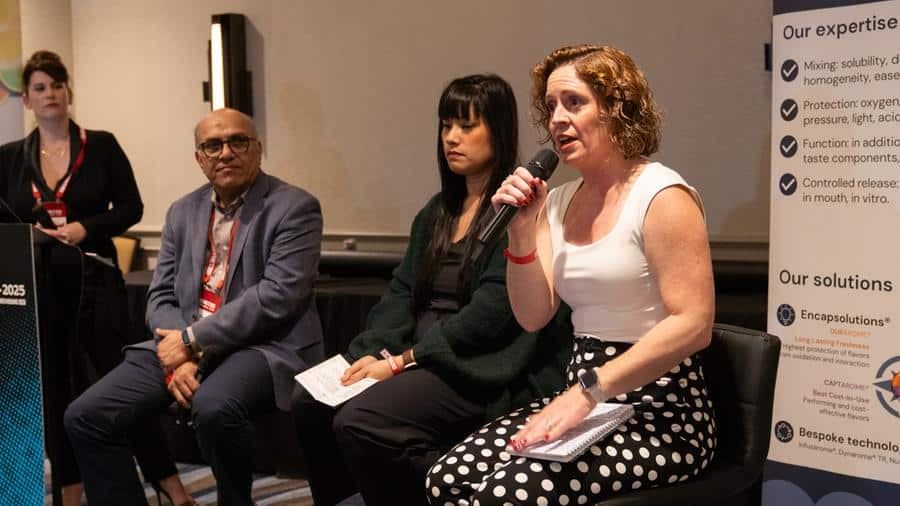
Tess Dansbury [00:10] Welcome, welcome everyone to the Functional beverage playbook, uh, a panel hosted by DSM Firmanish. My name is Tess Dansbury, and I lead our marketing and consumer insights team, and it's my pleasure to moderate and introduce this panel. We took the approach of bringing together a team of experts who have worked in this field for decades, um, to bring and share their experience and insights on what it takes to take an idea. From just a really great idea to scale into a brand that can be really successful. With that, I'm going to introduce our team. I'm going to start on our left, Ms. Natalie Tacky, our director of marketing for beverage. Um, next, Nicole Wong. She leads up our Anaheim facility, um, and helps with product development along the way. Srini is our sugar expert, our senior scientist who is responsible for the magic, making stevia and other sweetened beverages taste wonderful. Cam Paris, who is our senior Health Benefit Solutions Manager, and he helps uh guide on those functional ingredient choices that you need to make along the way when you're going from idea to brand. And finally, Will McCormick, who leads up our beverage business development. We're going to have, uh, uh, basically a path along the new product development pathway that we're going to follow. So we're going to start at idea and go all the way up through scaling, and we're going to share our tips along the way, but please, if you have questions, feel free to raise your hand. We want this to be more of a conversation. So if you're wondering something, we'll stop, we'll take a question. And then of course when we get to the end we will also take questions to start out with. We wanted to give you a little bit of pep for going into this presentation. So everybody should have our welcome beverage which is called Chilled Vibe. It has a non-caffeinated mood support functional energy blend. It's a B vitamin blend with magnesium, L-theanine, and it's sweetened. Sorry, what was that ashwagandha, sorry, thank you. And is sweetened with succralose. It's still but could also be carbonated as well and has some of our natural color in it. And we're going to serve another beverage at the end that's going to show you the difference in sweetener solutions that you can use when doing these beverages. So we're going to start with stage one. You've got a really great idea or you've got a client that's got a really great idea and you've got to figure out, is it worth investing? That's question number one, right, because our time is one of our most precious investments and you have to make these decisions on how much time you dedicate to a really great idea. So I want to start with Natalie, our director of marketing. She has a background in private label, consumer and sensory insights, and flavor development. So she has a really unique perspective on having to choose where to invest her time, um, especially her most recent role at private label Development, where she was literally responsible for launching thousands of products and had to be very choiceful. So how do you make decisions on where to invest your time?
Speaker 2 [03:42] Well, I think the first thing is that having just a great idea or a great story is never enough if it's not meeting a true white space need in the market. So following a trend doesn't mean anything if you can't find room in a unique niche within that trend. Um, I think there's some really great examples of companies that we're even hearing talk today that did this so well. Celsius did this really well. Poppy did this really well, and, um, White Claw, I think, is one that did it really well. You know, in White Claw's example, there were consumers who wanted to be a part of that beer drinking occasion that didn't like the taste of beer. Um, those of us that were around in development during the not your father's root beer days or the Henry's hard soda days, man, we were so close to figuring out that gap, and that gap was the low calorie version of those beverages, um, you know, they're in cans, so you can have them tailgating. You're in that beer occasion, but like half of consumers didn't like the taste of beer, you know, there was a gold mine there sitting that was untapped for a long time. In Celsius, the example I'll use next, they did such a good job of realizing that there was an energy drink consumer that was being really underserved. In the business we saw so much example and data and insights that we were getting that was saying that there was an energy crisis and what's really embarrassing is it was like us actual people were the energy crisis. It was like older millennial, young Gen X parents who were like, OK, I'm not a gamer. I don't do extreme sports. I'm not putting vodka. My energy drink, like I just need to get through the day with my kids and
Tess Dansbury [05:28] Celsius chasing toddlers is counts.
Speaker 2 [05:32] Yes, uh, and so Celsius did such a good job. I would say Ilani was right there as well of saying how do we make an energy drink that tastes great, um, that just tastes nice and refreshing, doesn't have those functional. Beverage notes in it that is something that a different consumer can feel good about carrying around. It feels more natural even though it is not all natural. You don't have to overengineer um the products, but they did such a good job finding that gap in the market. So it's really easy to be a startup right now and be in that beginning phase to have a great idea to make a drink in your garage, and, but if you're really gonna be sticky, like it's got to be something that there's a legitimate white space demand in the market.
Tess Dansbury [06:15] Yeah, I want to go to Will next. So, you know, Will, when the hype is super high, maybe a really cool idea or something that seems like it's got some weight behind it, you know, how do you weigh commercial viability from your perspective?
Speaker 3 [06:30] Yeah, like I think sometimes what Natalie described there is maybe the easiest part of the process, right, in terms of identifying that maybe that white space piece. I think where we look at it from that point then is How can we support that with a functional and ingredient bundle? Is that bundle scalable? Is it affordable? Is it something that is going to be stable during processing? Is it going to survive shelf life? Um, so those are some of the things that we take into consideration when we're making these types of evaluations on, on brands. Um, I think the second point I would make in relation to that is around The thought of minimally effective dose within your product as well. So are you, are you delivering a minimally effective dose of whatever active if we're talking around functional beverages, because Increasingly as we walk around with AI in our pockets, it's very, very easy for a consumer to figure out, well, you know, if a minimally effective dose of an ingredient or an active is 2 g and I've got 20 mg in a beverage here, your credibility is going to be gone very, very quickly. So those are the kind of things that we're looking at, I think when we're trying to make decisions around bets that we're placing. Um, when it comes to in a functional beverage formulation, yeah,
Tess Dansbury [07:38] you want to hang on to those ideas that are going to be viable at the shelf when people pull out their good friend Chat GBT and try to figure out whether this claim is going to stand up, right, whether it's a claim that's got weight. Natalie mentioned the word sticky. This is one of my favorite words when you're talking about concepts because there are so many cool ideas, good ideas, unique ideas when it comes to beverage, and we walk in. The shelf is so crowded, right? How do you stand out and how do you become truly sticky? I'm not talking sweeteners here, right? I'm talking about how do you become the thing that consumers want to pick up over and over again. And so, you know, Natalie, I want to come back to you and just ask, you know, give us that marketing lens on the, the functionality and how do you really What lens do you look through to say, is this one sticky because every founder believes that their functional beverage, their unique blend, their unique idea is sticky, but there's a gap there between, you know, idea and actually realizing that stickiness. So how do you think about that?
Speaker 2 [08:47] I've had opportunities to kind of be the shark, if you will, in the shark tank sometimes and I, I always remember three P's pain point, product, process. So the pain point, what need are you trying to solve for the consumer and are you marketing to that pain point? Because if you don't have good marketing, one of two terrible things is going to happen. No one's going to pick up your product or the wrong person is going to pick up your product. So you've got to have a really solid marketing plan. You've got to have something that tastes great. The days of being able to have functional ingredients that didn't taste good are gone. I've, I've worked in this industry a long time and I can remember working on product development where we were trying to make a functional beverage taste worse. So that consumers would believe it was giving them function and I remember sitting there going, this just feels like really bad marketing and sales. Like I feel like we could sell this, but I mean we've now seen that the consumer doesn't need that, you know, those off notes. In fact, they're, they're just not acceptable anymore. So does the product really taste good? Functional ingredients have a lot of baggage, sweeteners, zero calorie sweeteners have a lot of baggage, so you got to really have a product that tastes great. And the process I think is a part that gets overlooked that when you're really trying to scale, when you're ready to go national at a Walmart, at a Kroger, and you don't have a supply chain in process, you don't have a staff that can run autonomously, um, the second that you go out of, out of stock, you will lose that spot forever. So you've got to be working with partners right from the beginning who can grow with you and support that growth so that you can stay in stock.
Tess Dansbury [10:32] Absolutely, I think that's a really great point. Nicole, you're often working with startup brands, you know, who are coming to you with an idea that they hold dear, maybe like a little child, right? And they're asking you. And your team of product developers in our Anaheim office to bring it to life, right? They're like, here's my idea, it's awesome. Help me develop a recipe and how to bring this to life in a liquid form. Like when you're going from this raw concept that has not lived in liquid or powder or any kind of tasteable form, what are those first like technical reality checks that you go through? To say, like, is this even going to be able to get from idea into a packable format, you know, to, to even make it to the point where it can become sticky.
Speaker 4 [11:20] So the first thing first, you need to figure out if it's going to be a stick pack or a liquid. That format is very important because depending on what that function is, some will perform better in dry stick pack powder form and some will perform better in a liquid. And even in the liquid space there's so much. There's, you know, there's the technical part of it like the acidity and the sweetness and all of that. So that would be the first step is understanding what are the. Parameters that we're working with and that kind of feeds into what needs what's needed for the process. So your process would be another thing that's super important because depending on how you develop the product it's got to fit the process and so if you can determine that process early on that will help with the development because one thing I've run into is we make a really great tasting product we bring it to the brand owner and they're like, oh yeah, so we're actually going to I don't know, retort this and you're like, wait, what? So now we start all over again because we have to accommodate for that process and so knowing the type of format and the process is super important in the beginning because then you can successfully develop something for that vision that you have and make it taste great because I think taste is king and if it doesn't taste great, then it's not going to stick,
Tess Dansbury [12:47] yeah, absolutely. So once you've gone from idea to this concept and you've started working on this development, one of the key pieces of the formula becomes how do you take this vision of delivering on an unmet functional need that you've identified in the market and actually pair. Right and efficacious blends of naturals against it. So Kim, help us understand, you know, with the shelf so full of all these different claims, how do you decide around the right functionals to help bring those concepts to life?
Speaker 5 [13:26] So you guys will make this a little easy for me because I mean, when we think about function, we've been talking very general, right? Just functional ingredients, obviously it depends on packaging format and whatnot or which segment, which health platform you want to go. But ultimately. The point of functional ingredients is to make you, you want a front of pack claim, right? What's the point otherwise? Why are you adding money, cost to your product, right? So what you want to do, you would like to have a front of pack claim. Um, I can be very conservative, immunity, supporting immunity is something that's very conservative today because it's been around for a few years or something a little more riskier. Like supports mood, right? You're going to need some sort of clinical, some sort of nutrition science, right, at whatever doses that holds the claim. So, the way I look at this and how you funnel down, first we need to understand what you're looking for, what that white space opportunity is, what's that health platform you're looking to do, right? And then from that vantage point, we know now. The, the toolbox of functional ingredients, vitamins, minerals, the blends, nutritional lipids, whatever that is that can deliver that, that is grass approved, that is backed by science. That's where you want to go, right? And then ultimately at the end. Not only does it have to, you want it to fulfill a white space opportunity, it has to also be validated in nutritional science, right, regulatory approved because no one wants to be sued, right? And then at the end of the day, the throughput of it is it tasting good. You want that product to taste good, right? So that is kind of like the whole, I would say process leveraging your functional ingredients, making sure at the end of the day. You know, functional ingredients like nano, like you said, it has to taste good at the end of the day.
Tess Dansbury [15:35] And when you're looking at functionals, Kim, you can, you can think of these as like singular ingredients, but what's more common today is taking these functional aspirations and creating blends, right? Almost more like going to the, to the tailor, your bow ties, remember, reminding me of like kind of getting a bespoke suit, right?
Speaker 5 [15:54] Like, no, no, for sure. I mean, because today's day. I mean, yes, the now is energy, right? OK, we get that. We know it's hydration. What's next? You know, people are looking for that plus up opportunity, and what'll give you that plus up opportunity is going to be some blend of premix of some sort that will permit for that. Um, and you know, ultimately that, that's gonna help differentiate. I mean it's extremely crowded. I think one other point is, you know, where do you want to shoot in the supermarket, you know, because there are a lot of, there's a lot of crowding, but there's a lot of opportunity too, right? And I, that's the one thing that really gets me is. There's so much opportunity in categories that might be lagging a little bit for functional ingredients, but I, I know, yeah, I can
Tess Dansbury [16:46] go. We're going to do a big bet later, Kim. Kim's already decided where his is. What I want to switch over to is a little bit more of the technical piece, right? Which is Shrini, talk to me about the science behind palatability because Natalie mentioned some of the baggage and the challenges that exist when you're working with some of the functionals and the actives, and even the sweeteners, which is your specialty, so talk to me about the science behind palatability.
Speaker 6 [17:14] Very good. Um, when it comes to functional beverages, the type of functional ingredient you use will give you a challenge based on the, you know, bitterness or off taste that comes with these functional ingredients. As Natalie said initially, maybe you want the taste to be bad, so people are getting something good, but this is not medicine. This is, you know, it's a beverage, so palatability is essential, otherwise you don't get repeat customers, right? So having said that, what we have done is looked at the science behind the taste perception. How do we perceive taste, all of us, yeah, now I think in the year 2000, the scientists who discovered the green fluorescent protein. That led to the understanding of the basic taste receptors on our tongue, the sweet, bitter, um, umami, etc. Gotten a Nobel Peace Prize, Peace Prize, Nobel Prize in Chemistry, so that enabled the scientists to really screen molecules that you all find serendipitously. Many times. How do we find good things in nature? I mix this and I mix that. Oh, that tastes really good. That's how most of the work was done in the past, but today we can discover a molecule that works on the sweet receptor, that works on the bitter receptor. So think about it, Ashwagandha. Very bitter, so we know where it reacts on which bitter receptor so we can look for a blocker that goes and blocks it or we can take the good stuff, sugar. We all love sugar, the sweetness, right? So how do we enhance the perception of sweet by Activating the sweet receptor, that's the science that enables us today to deliver flavor-based solutions that makes your product better tasting because we are enhancing the positive attributes in the formulation and minimizing the negative attributes in your formulation whether it's masking the bitterness or astringency, any other off taste. So that's on the flavor side of science. On the other aspect is the sweeteners. How many of you recall, I don't know, 1015 years ago, first stevia sweetened beverage? Oh my God, people are scarred. I know a lot of people have nightmares. So if you have stevia, I don't want to have the product. Please, I don't want stevia. So that's a bad image because in the beginning we didn't have the great purified, highly unique stevia glycoside in the leaf. We had an extract of the entire leaf. And it came with a lot of baggage that didn't really help the cost, but today we have highly purified, very specific stevia glycoside that is present in minute quantity in the stevia leaf that we can manufacture very efficiently, sustainably and without any supply chain constraints, what we call biotechnological process, for example, precision fermentation. You could manufacture right here in the US without growing thousands and thousands of acres somewhere else in another country, bringing all the way back here carbon footprint. Oh my goodness, can you imagine making it over there, shipping all the way back here, and then shipping everywhere else, etc. we could minimize those. So the technology on the stevia side and also on the other sweeteners like moroides, etc. enables us today. To produce sweetened product that is in nature. So if you don't want that artificial on your product, if your halo of your product requires to be all natural, we have solutions, both sweeteners and flavors. These are the two main components that helped Nicole and her team to develop the rest of the formulation put together, whether it's acidity or a mouthfeel and of course the tonality flavor, etc. to fill that white space.
Tess Dansbury [21:17] Yeah, I think that's really great. Natalie talked earlier about like knowing who your market is, and one of the things you were sharing with me earlier was just about the same thing applies to your sweetener. Can you talk a little bit about your knowing your target market when it comes to your sweetener systems?
Speaker 6 [21:33] Excellent. That's a good point actually. One of the things I take myself, I'm a baby boomer, right, so I like everything sweet. I like everything sweet, right? And if you look at Gen Z, Alpha. They don't like as much sweet as we liked, so. The question is, what is your target audience, target market, or maybe I'll take most hottest subjects, GLP-1 subjects. What do they like? What kind of sweetness they like? What kind of taste? OK, or if you're targeting even elderly population, they require a lot more too because their taste buds are not as active as when they were in their twenties. So depending on the target and also the product type, what functionality are you delivering? Is it for the mood or is it for the immunity? Based on that, it could be very little sweetness or it could be highly sweetened. So depending on the sweetness level that you need, that's the first thing. Secondly, do you want natural or artificial? That's the second question. Third, do you want this to be in the US market only or North America? Are you thinking future? Oh, I want this to be globally compliant today if it's successful, tomorrow I want to sell it in the UK and Europe. Global compliance. So based on that and of course cost, you can never forget the cost at the end of the day, you know people love this. I love this natural, etc. how much it costs? Oh, I think I'm gonna go with artificial because it's. So much cheaper at the end of the day, cost is important. Does that work well with your brand, with the product, everything you are delivering? Make the decision natural, artificial, cost sustainable. Do you want your supply chain to be easy to manage and compliance? Is it just one country? And finally, the sweetness level, who is your target audience? Do they want really, I think you've seen now we have really sweet products. Flavored waters and we have what we call mid-cal in between, right about 5% sugar level. That's the hottest trend I think right now because it is somewhere in the middle when it comes to sweetness, so you're not hitting any of the extremes. So that's a possibility as well.
Tess Dansbury [23:47] So tons of choices when you're just thinking about how to deal with the baggage that might come from the functionals that help bring your functional beverages vision to life, but we haven't even touched the full formulation, which Nicole and her team. lead. So Nicole, consumers, they want the benefits, but they don't want to give anything up. They don't want to compromise, right? They want it to taste great. We're not in the days where we're being asked to, you know, drive an off note so people believe it's functional, right? They They want things that taste really great. It's the throughput, as Cam said. So talk to us about, you know, the, the decisions and the things that you look at when you're trying to make the vision come to life for a founder, but also taste really, really great, not sacrifice in that area.
Speaker 4 [24:37] So I think the first thing you should really focus on is flavor pairing. So what, so depending on your function, what flavors do either the consumer look for or pairs well with that if there's you know like a bitter astringent function, what fruits or veggie flavors or you know whatever flavor tonality you're looking for pairs well with that. So I think that's really important because you don't want to. Accentuate the off notes of the function if you can avoid it as much as possible. So being able to talk to clients about what flavors go well with what function, I think that is super important. And then obviously, especially if we're talking about sugar reduction and things like ashwagandha, um, texture and mouth feel is really important as well. When you remove a lot of the sugars, you lose a lot of that mouthfeel and things start to become watery and Sometimes even your functions, your functional ingredients will fall out of solution because it's not stable, and so making sure that your texture, mouth feel, viscosity, all of that is very important as well. And then of course everyone eats with their eats and drinks with their eyes. So the appearance, right, so what color are we targeting, you know, how do we want it to appear in the bottle? Is it going to be in a can or in glass or things like that is very important, which is why, especially with the whole movement of moving away from Unnatural colors, we, you know, like to use more naturally derived colors to help us with appearance, as well as um just me picking the right ingredients.
Tess Dansbury [26:26] Sorry, we have a sweetness emergency here. He's very important, very important man. We're always an OK
Speaker 2 [26:32] boomer moment.
Tess Dansbury [26:36] OK, throw that to Bruno. Um, so I was going to just pick up on something you said about flavor tonality because I think that sometimes choosing the flavor you're going to work with is sometimes put as like maybe more of a backend choice where you're like, well, I want to have, you know, an energy drink, but we'll get to flavors later. Let's work on the base, but the flavors you're going to go with. Actually can like drive from a couple of different directions. One is like from perceptions, and Natalie had a comment on this earlier. I don't know if you want to share it about, you know, kind of the use of flavor tonality in your pairing. Yeah,
Speaker 2 [27:14] so to build on Nicole's statement, you know, it. The taste is going to be impacted by the flavor that you choose, and you might choose a certain flavor because of the ingredients, but also there's perceived benefits of flavors. So we have data that shows, you know, obviously lavender is linked to calming and tropical and dragon fruit kind of flavors are linked to energy. So you can also enhance the real benefits of your product by using flavor tonalities that have those perceived benefits. Its to just make that positioning even stronger
Tess Dansbury [27:48] and you can link this. So this is an emotional study that we did on the link between emotions, functions, ingredients and flavors and you can use this data actually to, you know, if you look at your brand positioning statement, you can say what are the emotions we want consumers to feel when they're consuming our product and you can use flavor choice. You can say, We want specifically a range of 7 flavors, but we want things that drive excitement, energy, youthfulness, right? And you can specifically look at, OK, well here's a range that would subconsciously drive those emotions during consumption and help reinforce not just the functional positioning, but the brand positioning too. Sorry, Kim, were you going to
Speaker 5 [28:38] that's a great point that you make about the The flavor pairing as well. I mean, all I would add to that is that the, from the functional ingredient standpoint, we make sure like we have the premix that will help to actually prove, you know, maybe the, you know, halo effect. It's there's actual science to that. Now I'm trained quite well because of the nutrition scientists that I work with have plenty of ideas and then they're always the ones that say, no, you, here's your borders, here's your structure in which you can make those decisions. So, um. Having the two together is such a powerful like delivery for the consumer. So that's all I just wanted to add.
Speaker 4 [29:15] Yeah, I think, I think the last point I wanted to bring up with all of that. So once you have your flavor, you have, you know, your formula kind of figured out. A big thing that people forget is that functional ingredients have off notes and so being able to mask those off notes is really important, I think, um. There's enough believability on the label. I don't think it needs to taste like it's functional all the time too, especially when you start to get into the astringency and bitterness. So I think that's important,
Tess Dansbury [29:46] and I think we're seeing this play out in the market where the brands that are thriving are leaning into great taste, right, not quote unquote functional taste. So now that you've made a really delicious product, hopefully from a really great idea that's meeting an unmet need in the market, hopefully your brand has gotten traction and now you're facing a very different problem, which is scale up, right? And this is kind of the The heart drop moment when you're so excited you've got this great big order or you've landed on the shelf of a major retailer, but you're, you're really shifting gears, right? You're, you're leveling up in terms of the manufacture and production that you need to make and the quantities that you need access to. And so, you know, Nicole, I think this is another area where I'm going to stay with you if you don't mind about, you know, when you think about scale up and going from, you know, pilot to production or, or, or small form production to large form production, what are the things that are the pain points that really are, you know, if you're thinking about this as a, as a playbook to walk away with, what are the things people need to walk away and remember when they get to that point?
Speaker 4 [31:00] Biggest thing is Making sure that you, you know, understand that what you make on the bench or in your kitchen or in a small lab when you run it in a larger scale, it will have variability in flavor and texture, in function, in color. It's, it's not the same, and I think grounding, you know, clients on what to expect, that expectation of the difference between the bench to scale up. I that's big because you can make something really great in the lab and it's perfect and then as soon as you run 500 gallons of it it's like wait, why is this now wrong it's not mixing well your ingredients are fish eyeing and that never happened in the lab or you know my pH is off like I thought we added the right amount of acid and so you have to give yourself some time to scale up and do some feasibility tests because many brands have delayed timelines. Like really long timelines because of you know missing that step of feasibility and scale up. So in our Anaheim location we actually have a pilot plant which kind of helps with that. So when we work with clients and you know we do tastings with them, we want to replicate as close as possible, which is why earlier saying that you know process is important at the front end is because when we do tastings with You know the brand, you want to make sure you replicate it as close as possible to the true process and having a pilot plant really helps with that because it's the closest thing you could really do on a small scale to really replicate that same interactions. And you know it's quicker turnaround as well. The other thing I want to bring up is just ingredient interactions. Sometimes certain ingredients in a small scale, you know, you can't really pick up on like how it's going to react over time. And when you leave it on the shelf, will it change color? Will it settle? Will it, you know, will it stain the rim of your plastic box? Like things like that, I think, um, you know, you really have to kind of watch out for that, and that's where shelf life testing is really important. And if you can run at a full scale, um, you know, plant and do your stability that way, that would be ideal because sometimes when you put benchtop samples in stability, then it doesn't, you know, it won't give you the, the accurate, um, shelf life representation. So. I would say get with someone who's really, you know, Has worked in commercializing. I think that's those are the, the three big things to watch out
Tess Dansbury [33:46] for. Yeah, Partnership, you know, is really key, it sounds like. And then will, I think that, you know, I wanna ask you like from your perspective, you've watched many brands and companies come into this space and, and try to capture opportunities here. So what have you seen from a partnership perspective that has helped scale up, be smoother, right, to help like just smooth that road.
Speaker 3 [34:10] So I think if you look at the B2B flavor ingredients space over the last decade, I think You know, one of the big changes to my mind is the, the level of resource that most B2B ingredient flavor houses are actually willing to put into emerging brands has changed quite a lot over the time. So, to me, when we're talking about scale-up, Utilizing their experience is super important. Um, we all, right, Nicole I'm sure has many, many horror stories. So when she's making a suggestion to someone about how to, you know, how to approach scale up and that they're doing it from a real place of knowledge. So utilize that willingness, I would say, of your flavor and your ingredient partners to support your brand development and your scale up, I would say utilize them, please don't abuse them. Um, is, is one part. The other thing I would just say on the scale of peace, there's a couple of just practical considerations I would share with you guys maybe like my wife works at a what will remain an unnamed co-packer and just simple things like ingredient timelines, flavor timelines, packaging timelines as well. Like regulatory documentation timelines, like I would say within our organization, one of the groups that has the strongest job security at the currently is our regulatory team. So just the amount of red docs that we have to process and that and thinking that. Thinking of that through the eyes of your coalman partner like you might not think of it as a beverage entrepreneur because all you see is opportunity, but your coalman partner, you're risk, right? You're just a walking ball of risk to them. So just having all of those things lined up in terms of your regulatory documentation, getting that to them in advance so they have time to upload that into systems, getting through their SOPs, because otherwise like if you can't get that, you're just losing your spot in their lineup and they're just moving on.
Tess Dansbury [35:51] I think the regulatory dynamic is one of those things that is so important in the functional space, and it's a space where things are shifting, you know, instead of timelines in weeks, we're seeing things shift by days or hours or, you know, I had a regulatory professional tell me I never thought I would have to download Twitter to get my regulatory updates, right? She used Twitter, you know. And it's it's just, it's an interesting space where having a partner who has the resources dedicated to support your regulatory needs is, is, I think, one of those difference makers, and it's often, you know, a space where you're like, you're running so fast against the idea that you kind of forget about, you're like, oh well, we'll deal with the regulatory later, but like getting that, getting that going on a parallel path can often save you a lot of time and headaches down the road. One of the other things that you mentioned about partnerships that I just want to see if, if Nicole or Natalie will weigh in on. Is the idea of getting product in front of consumers. So we do a lot of testing, right, with products, but one of the things that uh that you highlighted was just how helpful it is to get product in front of consumers. So tell me about how you integrate that into the process of, you know, not just product development, but also that scale up part too as you're making changes to the formulation.
Speaker 4 [37:11] I would say when when I work with clients and we're at the end of cuttings, right, like, OK, we've got a product down maybe like 90-95% down. You know, it's now becoming everyone on the team is really close to the product, so it's like, oh no, it's too sweet. No, I think it needs more acid and then like everyone's kind of like having their own opinion about this product we've been working on for the last few months. I think that's, you know, it's important to actually get the product in front of the consumer that you want to buy this product. I think people tend to miss this step, but you know. I don't know sometimes I know, but like I don't always know if the target consumer is going to consume this because sometimes I'm not the target consumer and being able to put it up front to this audience, that's the most important information you're going to need because you can come up with something great, but if your consumers that you're targeting do not think that it's great, then You, you know, you, you might have wasted a lot more time and so being able to get that consumer data and pivot where, where it needs to be pivoted, that, that's really important. And so our team, we do a lot of consumer testing for our, um, clients and it's, you know, a few weeks we get product in, in, we make them in our lab, we bring them to the consumer. We have uh in-house, you know, trained panel that tests it. And it's really easy to kind of just look at data and then it's not about opinions and feelings and emotions, it's really data driven and you can make tweaks on what needs to be made in the lab, whether it's sweetness or acid, and I think that is really the step that people should try not to skip. I think that's extremely important.
Tess Dansbury [39:00] Yeah, Natalie, can you speak to kind of the difference maker this can be because you have the background of running, you know, external focus groups and knowing the time and the money that it takes to do that. I don't know if you can shed some light on, you know what it takes to do this with an external agency versus being able to use this as a part of the perks of choosing the right partner.
Speaker 2 [39:20] Yeah, it's definitely a value-added service that's a true value if you as a smaller brand can get access to that because I'm guessing that it's not in the budget to pull out, you know, 60,000 for a three-city test with consumers or that you don't want to sit and have to plan for 3 months. You want to be able to work with Nicole and in a few weeks, get your product in front of some consumers and get some feedback.
Tess Dansbury [39:46] Yeah, really a very different timeline and budget and leads to that important piece of partnership and choosing that partner that can really help you both develop your idea and scale your idea but keep central, be that consumer of. partner's going to help you deliver on the vision that consumers will love.
Speaker 2 [40:08] And like I would think just from, for our entire organization we're one of the larger players in this flavor and ingredient color business, you know, sugar sweetener replacement business. If you know who we are already, you may think you don't have access to that if you're a smaller brand, and if you don't know who we are, well, hello, but that's why we're here. These, we want to be a partner for all of those brands in the beverage space and help make good bets in the brands that are in this room that we think we have the potential to grow with.
Tess Dansbury [40:43] Yeah, absolutely. So one question I'm going to turn to Will first is after years of following all of these, What is your observation, you know, when you're watching, you know, these projects go from an idea to an actual brand on the shelf, you know, what is something that you have noticed is consistently a factor in the brands that go from idea to successful brand?
Speaker 3 [41:12] So yeah, listen, I don't think any of this is necessarily rocket science, but I think the brands that have been successful have really doubled down on a specific consumer group, right? They identify a target customer, they doubled down on that consistently, right? They have a very tangible benefit that they're offering to them within that, and they don't try and go too wide too early. So you know you can drive adoption to a really, really targeted set of consumers like. Over dinner we were chatting last night, right, like your, your grandmother drinks poppy, right? But I mean she's, it was more of like she wasn't the
Tess Dansbury [41:45] target. Absolutely she's very hip.
Speaker 2 [41:47] I think we were talking about THC drinks. Yeah,
Tess Dansbury [41:51] but the point is my grandma doesn't drink those, but my mother does. Yeah,
Speaker 3 [41:54] but the point being that like that, you know, someone like that probably hears from her from their grandmother or their granddaughter who's a collegiate athlete or someone attending college because that was the group that they really doubled down on, etc. So that to me. You can look at across most of the successful brands to my mind in the functional space and, and, you know, that they have a really strong idea about who their consumer group is and they are just relentless in terms of targeting them, and the adoption is driven from there. The second point I will make though, I think, is that a lot of those brands that have been successful, they're not afraid to pivot, um, and I think as brand owners that can be one of the hardest things to let go because this is your idea. You've probably invested. You know, 235 years of your life maybe to try and bring this to life and if the market doesn't respond positively to it, it can be very, very challenging just to let that go and maybe pivot but you would be amazed and we've seen examples of this whereby A tweak in packaging, a tweak in positioning, a tweak in the messaging, or even the formulation itself can make a huge difference to the product if it's not resonating on an initial launch with a client. So it's, listen, I'm not a founder. I'm not brave enough to be in that space, but I think if you can be brave enough to pivot, I think that that's a superpower as well to have in this space.
Tess Dansbury [43:07] Fully agree. I think that's one of the superpowers for anyone working in the retail space, right? The one thing that we all can count on is that the space is going to continue to change and evolve, right? It's different today than it was 5 years ago, it's going to be different 5 years from now than it is today, and the brands that pivot across the board are going to be the brands that thrive and the brands that, that struggle to find a way to evolve along with the consumer demands will, will struggle in the marketplace. Natalie, is there anything you would add about what you've seen that helps drive that success for a brand, um, going from idea to, you know, successful brand?
Speaker 2 [43:46] Yeah, I think you should be constantly trying to cannibalize your own product because if you're not, someone else will. Will was talking about this before too, about just not being in the middle, and I think that's one of the reasons that the market has such a long tail now and so many smaller newer brands have been able to disrupt is that the major CPGs are stuck in this big middle space where they're trying to make everybody happy and they're not making anybody happy. So, like, you know, just to reiterate Will's point, like really understanding your niche, um, you should talk about price.
Speaker 3 [44:25] All right. Uh, yeah, I forgot to mention this in mine. And actually, I should shout out to Josh Hall. I don't know if any of you are, if you're not following Josh Hall on his socials, you really, really should. He's great in CPG space, but Josh Hall talks about this an awful lot about not being in that middle ground and, like, a very simple example, like if you have a product in your category that's 4 bucks, and there's a product in your category that's 2 bucks, and you're at 3 bucks, you're in trouble, right? Because you're not premium and you're not value. You're middle of the road and you're done.
Tess Dansbury [44:51] Yeah, you become the comparison point for people to either trade up or trade down rather than, you know, finding the, the success in the middle. Absolutely, absolutely. So what we're going to do is we're going to shift into a future forecast. So we're going to ask the panel lightning round. I want everybody to think of one big bold bet that you would make, you know, this is A gaming table, you've got to put all your chips down on one thing, where you're going to put them kind of thing. So it could be an ingredient, a format, a consumer behavior, a market dynamic or shift, you know, what is it that is going to be here five years from now for the functional beverage space that we all need to be talking about. And I'm going to give you just like 60 90 seconds to respond so we can get through everyone and then we have some more things for you to taste at the end. I know this is, this is really, really going to be like a lightning round, I promise. So Will, you're up first. OK,
Speaker 3 [45:50] so I, I'm going to go with encapsulation and
Tess Dansbury [45:54] first you have to tell everybody what encapsulate. For those of you who are not in the flavor industry, we want to make sure everybody knows what that means.
Speaker 3 [46:03] Encapsules, think of an M&M, right? And M&M is is encapsulated, right? So you've got your chocolate and you've got a coating on the outside of that. So that that's the basic most. does that work? Yes, that's perfect. I love it. So M&Ms are encapsulated, but if you think about it, you can also do micro encapsulation. So that's a program that we invest heavily in and I think not just us but across the industry, I think that's going to be interesting because there are a lot of really great actors out there. And Nicole spoke earlier about the, you know, some of the decisions around format going with powder versus RTD. Sometimes that's informed by the fact that you can't get an active into solution, right? So you're challenged with solubility, you've challenges with stability during processing and over shelf life. So I think one of the areas that I think we can make a lot of advances in is with things like micro encapsulation of some of those actives so that we can get them into solution and we can keep them in solution. Some of the other benefits of encapsulation as well is actually the ability to deliver the active to the target organ. So again we can
Tess Dansbury [46:59] not just target audience, target organ,
Speaker 3 [47:02] so be that the intestine, be that the brain, etc. so you can actually encapsulate an active in order to protect it over processing during shelf life and also during the digestive process as well. So for me that's one of the areas that I love talking to the team at DS Infirmity that are working on those encapsulation technologies because it's just really exciting where we might be able to take some of those functionals that are challenging to work with today but hopefully. Where we will have the solutions in the future to make them really easy to incorporate into kind of that next generation of functional beverage.
Tess Dansbury [47:35] It could really maybe a little bit, you know, I was trying not to count, but it could really, you know, I think the point there is that it could really make functions and benefits that we can't deliver today possible in the future. So it really is something that's about, you know, looking beyond today and what we can deliver. Natalie, I'm going to go to you next. What is your big bet?
Speaker 2 [47:58] It's not very sexy, but I think coffee is ripe for disruption. Say more.
Tess Dansbury [48:03] Say more.
Speaker 2 [48:05] I mean we've seen beer, energy, soda, like huge categories, you know, powdered soft drinks get disrupted, and I think coffee's next on the list. It's a legal drug. I mean, you get addicted to coffee. It's the OG functional ingredient caffeine from coffee, and we're definitely entering that 4th wave of coffee culture. Um, and I think there's so much room in retail to innovate in the RTD space, in instant coffee, in, uh, you know, coffee delivery systems beyond what's out there right now, um, to, to really capitalize on. The shift that consumers have made towards iced coffee, either making that at home or buying that in food service.
Tess Dansbury [48:52] I was just going to say that shift towards consuming coffee at home is growing, and you know it's something that we can meet consumers there or we can let them figure out how to work with what's on the shelf already, right?
Speaker 3 [49:04] It's like just this is being recorded, so just for, you're all in on freeze dried coffee.
Speaker 2 [49:09] Yes, I am an instant coffee user. Yes, yes, yes. It's come a long way, folks.
Tess Dansbury [49:19] Oh goodness. All right, so I'm gonna come back over to you, Cam. So what is your big bet?
Speaker 5 [49:24] OK, you, you said what copies and wave 4. OK, so I'm gonna use that kind of wave thing, so. My, I'm taking a little different direction. I'm looking at GLP one and The reason why I'm looking at it is not because of the way I think we're all thinking of it today. We know the drug. We know the trendiness of it right now, but at some point, what we're not thinking about right now, that's wave 1, so I got nervous and I did, I did it, OK. So that's wave 1, wave 2. Will be in many cases a lot of the graduates, if you say are alumni base of GLP one users, people who for whatever reason, maybe it's cost, maybe they're no longer, they want to do the journey, chart the journey by themselves that to me, I think there's an emerging. Consumer base that's growing, it's going to be larger than the active users of GLP-1 users. That's coming, that's wave two. And to see how people's consumer consumption habits have evolved and how maybe they're inspired from the effectiveness of taking the drug. How will that shape their, you know, dietary day to days every day. I think that's wave 2, so look out for wave 2.
Tess Dansbury [50:49] Yeah, wave 2. How is it going to change, you know, people's desire for protein when they're not actively on GLP-1? How is it going to change their desire for smaller serving sizes, for, you know, increased fiber, for gut health supplements? Like are these? Things that they're going to carry forward with them when they're off. Yes,
Speaker 5 [51:08] I mean, I think there are, and this is what I was talking about earlier. I see so many opportunities in categories that are flat or maybe are not as sexy as energy drinks right now. But when you think of what at the moment is driving, so you, what do you say, is it, is it, is it coffee? But you know, you, you look at what's, what's driving, um, uh, uh, what are foods that are GLP-1 users using or get are going toward, you know, for example, smoothies, smoothies, look at the Nielsen data on a kegger for the last 4 years. It's not great, but they're gravitating toward it. It's a very nutrient dense. Format you can definitely fortify, you know, put it in shots, for instance. So there's
Tess Dansbury [51:54] opportun shots. There's it now.
Speaker 5 [51:56] There's opportunities, and that's what I, that's what I was trying to say earlier. I said, oh, I'm gonna cut myself off here, but just look at that. As being one potential next wave.
Tess Dansbury [52:08] Yeah, look at those stale categories that might have unmet needs and then think about how that might layer into the alumni of GLP1.
Speaker 5 [52:16] Absolutely. I mean, I, I can't emphasize enough how much opportunity that there are there. I mean, don't get me wrong, if you want to go and fight the space that's the now and maybe the next year. That's, I mean, of course, for sure, go for it, but just think about also, you know, there is an emerging growing base of people who were on GLP one or maybe are not using it as much. That's going to be a, that's going to be bigger than active users. That's all I'm saying.
Tess Dansbury [52:47] Yeah, it might be a space where you can go into a retailer and get space on the shelf a little more easily as well if you have a unique position in one of those, one of those unmet need areas. So on the, on to the next, Nicole, what is your big bet?
Speaker 4 [53:03] So, you know, based, um, based off of what you were saying where, you know, with GLP1 users, they, you know, they have protein, hydration and all the things, so we've seen a rise in like customized nutrition, so I suspect that there will be an acceleration on customized nutrition and That single function type of beverage, bar or smoothie. I, I don't think that that's going to be a lot of traction in that anymore unless it's a very niche group like those who work out or you know, who are specifically looking for that, but I think, you know, people want. Something else. So I want my protein drink to not just be protein, I want it to have, you know, fiber or hydration or immunity, yeah, like a plus up, so it'll be a blend of different multifunctional. I think need is going to be out there customized. Maybe we'll have, you know, we're talking about it at one point your Apple Watch will tell you that you will need, you need hydration today and You know, and you need more B vitamins, you know, AI will start telling you what vitamins you need every time of the day. So I think
Tess Dansbury [54:15] based on like a biofeedback circle, like we're not really that far off from that, right? We've got biofeedback coming from different. Devices and like the idea of a holistic integrated feedback loop for, you know, concentrated feedback could lead to those multifunctional demands. Yep,
Speaker 4 [54:32] so I see a huge, I think there's going to be a rise in multifunctional. Beverage,
Tess Dansbury [54:40] anything, yeah, yeah, absolutely. Shrini, we're ending with our sweetness superstar. OK. Tell us what's next.
Speaker 6 [54:49] Well, you know, I'm a technology geek, so I'm, I'm gonna go with, um, I think the biotransformation or the precision fermentation is the future, um, in order for us as a global population, about 8 billion, crossing 8 billion. I think and the supply chain constraints considering some of these and also all the transition towards natural stuff, right? So we are moving away from artificial. Remember artificial colors are already marked for end of it similarly artificial maybe sweeteners down the line and so anything in nature. Plundering the nature, growing on a large scale is just not sustainable. So with that in mind, with the technology where it has matured today, biotechnology enables us to manufacture ingredients that are like sweeteners, colors, even proteins in a more sustainable, cost effective. Yeah, pollution-free, politics-free, meaning, you know, you can make it in one country, you're not worried about supply chain constraints, and lowest carbon footprint compared to nature. You're not, I mean, all of this, so you can really check lots of boxes, cost effective. That's a really important piece, yeah, that checks most of our boxes, but finding, yeah, the solutions that are in nature in a more sustainable fashion, I think that's the future.
Tess Dansbury [56:20] I think the precision fermentation is so inspiring because it really brings in to mind this idea of like how are we going to feed the future, you know, the, the idea of taking sustainability as a core tenet of product development is, I think, really interesting and, and looking at that across the, the perspective like we already have things in our portfolio today. That are using this technology and so seeing it as a future forecast. Can you talk a little bit about the couple of things in our portfolio that already use precision fermentation?
Speaker 6 [56:52] Yeah, I mean, as I mentioned before, through precision fermentation, what it does allow, it's not like we make something that's already abundantly available in nature. No, that's not the idea. It's available in very, very, very minute quantities in nature. So if you want to grow like 1000 acres to get a few kilos, that's not a very sustainable. So what I'm talking about is material like sweeteners that are present in small quantities in nature we manufacture on a larger scale in a very stainless steel fermenters, etc. just like age-old fermentation. Fermentation has been there for the longest time. We've been consuming products made of fermentation, all of our favorites, yeah, be it cheese or beer or. Yogurt,
Tess Dansbury [57:36] beer, beer, cheese.
Speaker 6 [57:38] Um, so it's a process that we all love, baker's yeast, for example. Um, having said that, so the sweetness today and natural colors, yeah, it's commercially available today and proteins,
Tess Dansbury [57:52] yeah, and colors are so, you know, top of mind with the Maha movement and just that shift in the demands that something else that I think is not going to slow down, right? Like the, the shift is already happening now, but it's. Going to be even more accelerated into the future.
Speaker 6 [58:07] Colors, I think, is the first catalyst in this whole movement towards moving away from artificial to natural. I think more in the area of sweeteners. Actually, many of you remember, if you're in the beverage industry. Last year there was a scare about aspartame and there was also really a scare from sucralose, but it kind of died down but we never know. Maybe this next wave when it comes, you want to be prepared with something that's sustainably cost effective manufacture. That technology is precision fermentation. Yeah,
Tess Dansbury [58:43] that could really be transformational for the industry to have those two ingredients become. Right, yeah, yeah, absolutely. So that wraps up our future forecast and our, our playbook workshop today. We really thank you for attending and giving us your time and attention. We've got a couple of minutes for questions. If anybody has some questions, we'll take them. And we also have a closing energy drink to share with you just to leave you a little hopped up as you walk out, a little bit of prepping your step for the next thing that you're going to. So this is our hopped up energy beverage, and it is caffeinated, so it's got 200 mg of caffeine per full serving. We're giving you a smaller serving so you're not getting an entire, you know, nobody's going to walk out kind of, you know, too, too tweaked out. It's sweetened with stevia and monk fruit and carbonated. It's got some of our uh encapsulation and modulation technologies in it, so some of our taste modulation technologies, as well as a technical tool that we use called a carbonation booster. So this is actually an ingredient that just won Ingredient of the Year
Speaker 6 [59:50] in Best innovation award at the Gulf Food Show in Dubai just a couple of months ago. So it's a very unique carbonation booster where you can have the same amount of carbonation. But perceived lasts much longer. Think about it. You open a fresh can of soda, right? You take a first sip. Oh, it's so refreshing, right? By the time you get to the half of the can, uh, it's already, you're losing the, you know, the same effervescence, but this booster really enhances for a longer time, almost 5 to 8 minutes of the time. It is still as good as the freshly opened. Can think of it also in a packaging in a plastic container you lose carbonation. How often do you have this 2 L Coke sitting in your fridge after a few, you know, you lose it. This enhances the perception. It's only perception of the effervescence in your mouth.
Tess Dansbury [1:00:41] And it's interesting because it can kind of be used to drive the sensorial experience even aside from carbonation. So We invite you to enjoy our hopped up energy drink as you leave and head to your next workshop, and then the panel will hang around, and if there's any questions that anybody wants to ask one on one, we're certainly here to help. If you're working on a brand or an idea and you want to talk about partnering of how to bring that to scale, please feel free to grab any one of us, and we'll be happy to talk to you. Thank you so much.