Search across the BevNET CPG Media network including BevNET, Nosh, Brewbound, Taste Radio, Nombase and CPG Jobs.

Livestream Interview with Joe Santaiti of ZoomEssence
Transcript
Note: Transcripts are automatically generated and may contain inaccuracies and spelling errors.
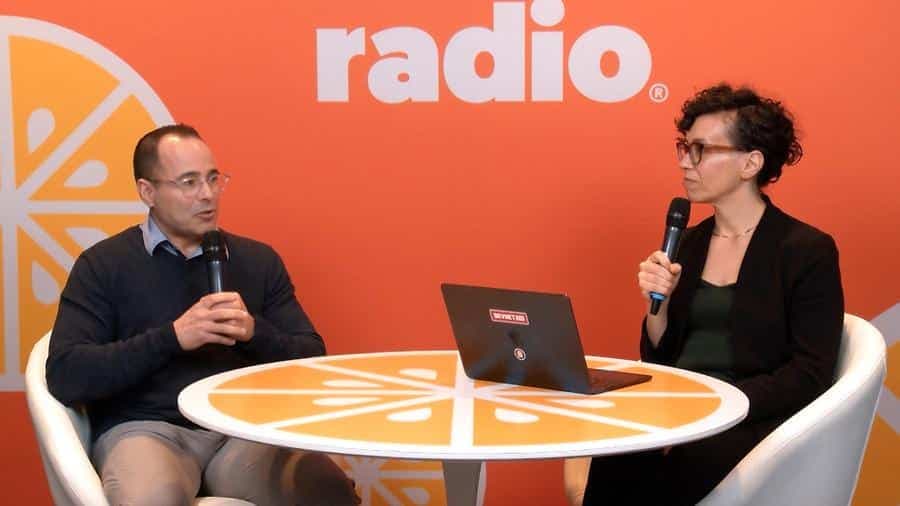
Melissa Travers [00:10] Hello everybody, I am Melissa Travers, director of community here at BevNET. I am also the host and producer of the Non-Base podcast, and I am here today in the Taste Radio live stream studio with Joe Santaiti, SVP of sales and marketing at ZoomEssence. It is so great to have you back here again. I think the last time we did this was at last BevNET Live.
Speaker 2 [00:33] Yeah, it was last year this time. It was great. It's thank you for having me. It's great to
Melissa Travers [00:36] be back. Well, I'm glad we're making this a tradition. Um, so ZoomEssence, you guys design and manufacture flavors, and I was looking around on your website and I see zooming technology that sounds very futuresque, like a little bit of the Jeffersons, um, or the Jetsons, the Jetsons. Can you, can you tell us all about, uh, what is zooming technology?
Speaker 2 [00:58] So zooming technology is patent and proprietary drying process. Um, I, I think the vast majority of the flavors you see in the marketplace today. Um, in powder format, use traditional high temperature spray dry systems.
Melissa Travers [01:12] Can you explain that?
Speaker 2 [01:14] Um, yeah, I mean, if you want to take a liquid and convert it into a powder for purposes of doing a ready to mix product or any type of powder-based, uh, maybe a topical for a chip or something like that, you would typically create a slurry, spray it into a tank, heat it at close to 400 degrees, suck out the moisture, and at the bottom of the tank you typically would have your flavor powders, um. Anything that you expose to high temperatures like that are going to have an impact. There's a lot of volatile materials, um, highly aromatic materials that are in flavors that when you expose them to high temperatures, they're going to flash off. And so what our zooming technology does is it enables us to convert a liquid to a powder using a low temperature spraying system. So essentially what we're able to do is dry at ambient temperatures, which is closer to 90 to 110 °F at the inlet temperature, which means the temperature in the tank never even really gets to that level. So, with that, the benefits are you typically are not going to see all of those volatiles flash off. So a lot of the starting liquid materials you're Gonna see in powder form. So I'd say even here at BevNET, right, we have a lot of ready to drink beverages and that's what a lot of the market is, is launching now in in quick formats and I'd say the vast majority of them are probably using liquid flavors in that because liquid flavors traditionally over time has always been superior to powder flavors in large part because they're exposed to high temperatures, they flash off the volatiles and so. You're not gonna have nearly the quality and, and, and, and, and also because they're not soluble, they'll tend to raft, um, that drying process itself creates, uh, something within the particle structure that creates a lot of surface soil and a lot of fissures within the particle. And so when we dry, we're able to actually able to dry from the outside in, so the particles look like a shrunken golf ball and solubilize instantaneously. So we actually use our flavor delivery format and our zooming technology. In ready to drink beverages as well as ready to mix, which creates a lot of other benefits for beverage brands who like to go back and forth between a ready to mix format or a ready to drink format.
Melissa Travers [03:23] You explained that so perfectly well that's fantastic. I'm picturing the golf ball. So, and so for the folks in our audience, if they're wondering if it would make sense for them to reach out to ZoomEssence, are there particular kinds of formulations or beverages that make the most sense? How would someone know if it would make sense to reach out?
Speaker 2 [03:44] Well, I mean, if they're doing a ready to drink at all, it, it would make sense. I mean what we do covers and we have a full beverage team. Um, that does turnkey beverage development so we can do anything from we have a microthermics unit which if you don't know what that is, um, it's a piece of equipment that you can do, um, uh, high protein types of ready to drink applications. So it's, it's indirect steam, um, type of process that you would need, um, in order to, to actually stabilize and to actually. Um, make that type of product in the market. So we can do tunnel pasteurization, flash pasteurization, any type of retour coffees. Um, our team has the ability to do all of it, and we use powder flavors in both types of applications. Um, I mean, the hardest part for us when we're talking to other brands, is to get them through that change management of switching from using what they've always used, which is liquid flavors in lieu of powders, because they always perceive them to be inferior. When you start to walk them through the science behind it, and they start to play around at the bench, they start to recognize the significant value and benefits. And I'll give you some, right? The 11 of the downfalls of, of liquid flavors are they're heavily solvent-based. Solvents are what they use in flavors to get them to solubilize in a, in a, in a beverage. Well, if you're 80 to 85+% solvent, that's a lot of water to ship all over. Your flavors all over the country. So from a sustainability perspective, from a shipping cost perspective, from a storage and material handling, there's a lot of benefits if you could switch to powder. So the, the argument would be, well, but I'm not gonna take my high quality product and go with an inferior product. So what if you could literally switch to powders and not affect quality and get all those other benefits and I think as we've worked with more and more brands and you know we started here at BevNET 10 years ago plus and um as we start to work with brands as they mature and they start to get their own development teams and they start to play around with it, they start to see the true value in it and I think that transformation is really starting to take shape faster. Um, because some of the bigger players are talking about wanting to use powders instead of liquids, which is pretty remarkable. Yeah,
Melissa Travers [05:59] I mean, just for the shipping from the shipping perspective alone, that's certainly not getting any cheaper. And if you can achieve just the same or an even better quality flavor as you can with a liquid, then that makes it a no-brainer. So whether you're an RTD beverage. Fridge or maybe you're in a stick pack if you're a powder it makes sense. You and I were talking a little bit about clean labor, clean label flavors, and, and especially with the current administration and with what everybody's talking about seeing come down the pike, what you know, whether it happens or not the way that we think it is, um, I think that there's a lot of confusion around. What clean label flavors really are. What makes it clean? Like what's the line between clean and not clean?
Speaker 2 [06:43] So that's, that's such a, I'm not gonna say a rabbit hole, but it's such a good question, I mean, I think consumers always look at flavors and think that natural flavors because they come with all of these chemical compounds that are hard to pronounce. Um, make them not real or make them bad for you, and they're all extracted from natural materials. So, so from, uh, an impact on the consumer, there's nothing wrong with using a natural flavor, and, and, and that's unfortunate. I think the clean label is your carriers and some of the others and how you formulate, and that is dictated by the brands and what their definition of clean label should be. I mean if you asked our regulatory team, they would probably say anything you could find in your cupboard is defined as clean label, right? If you can eat it and it's something that would be in your cupboard at home, that should be clean label maltodextrin, it's commonly used, you know, it's quite so those are things um that I think are defined by the brand. Uh, our team will design to whatever their requirements of the brand are, and if they want clean label, we ask them what their definition of clean label is, and then we create around that because that's the important thing. It's, you know, I think there's this movement of sometimes I don't want flavor on my label, and it's like, you can go with extracts and oils and oleoresins, um, and they'll be fine, or just juices, and they'll be fine, but the beauty of flavors is a natural flavors in particular. Is that it creates so much more tonality and complexity in the flavors that you really need to drive consumer preference that I think if you go with a single dimensional oil or oilo resin, while it could taste, uh, make a nice tasting product, I think there's a lot to be said about what you can do across the broader spectrum to create these, these pretty specific and. Incredible flavors
Melissa Travers [08:26] and you know, especially if you're using functional ingredients, you're trying to minimize sugar, the flavor is gonna take you a really, really long way. Last question for you. So here at BevNET Live, are there any beverages or any presentations that struck you as, uh, particularly meaningful or interesting?
Speaker 2 [08:46] I, I, you know, I love the beverage showdown and everybody giving their pitches. I think that there was some. Uh, good innovation, uh, you know, but we, and we just had this conversation last night with a few of the people who were attending, um, the vast majority of the market is starting to, to trend towards wanting functional beverages across the board, right? I think the days of buying something that don't provide some level of benefit or value to you, are, you're probably not gonna see a heck of a lot of them, and whether it's adaptogens or, or mushrooms or gut health or I think there was a lot of that. The, the other thing that I saw. Here is the non-AC movement still continues to kind of to to move forward, um, mocktails and things like that that I've I've seen upstairs that while we're nice executions and, and, and you know I think something that continues as I think this generation is just not drinking as much alcohol you have to find ways to, to reinvent and still resonate with the consumers.
Melissa Travers [09:43] Well, Joe Santaiti, thank you so much for joining me from ZoomEssence in the Taste Radio live stream studio. It is always such a pleasure to have you here and we always learn something. So thank
Speaker 2 [09:53] you so much. Thank you for having me. It's my pleasure.