Search across the BevNET CPG Media network including BevNET, Nosh, Brewbound, Taste Radio, Nombase and CPG Jobs.

New Beverage Showdown Summer 2023 - Semifinals
Transcript
Note: Transcripts are automatically generated and may contain inaccuracies and spelling errors.
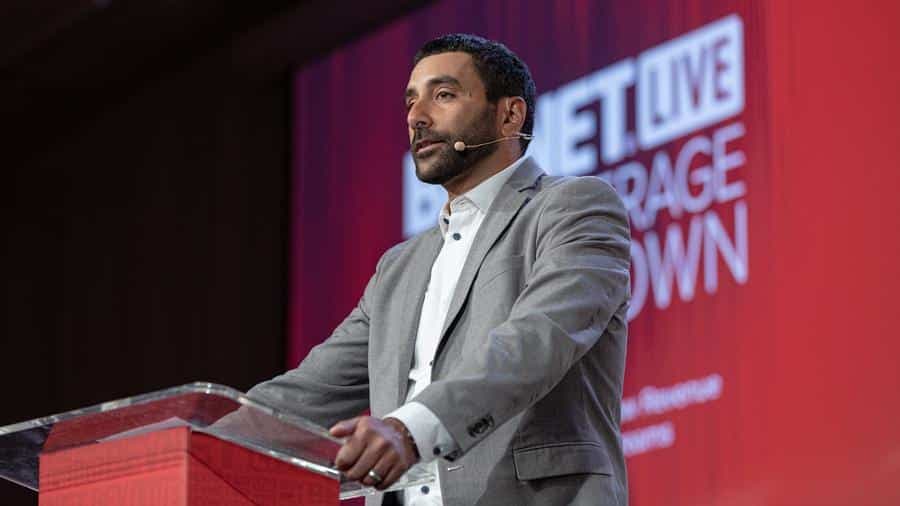
Ray Latif [00:18] Good afternoon. My name is Ray Latif. I'm the editor and producer of BevNET's Taste Radio podcast, the number one podcast for the food and beverage industry. I'm also the host of the New Beverage Showdown, which is BevNET Live's signature beverage brand competition. We're gonna kick things off with the semi-final round of the showdown, which is sponsored by the new revenue stream unit of Coca-Cola North America. The competition gives 12 early-stage and promising brands the opportunity to present their business plans and products to a panel of expert judges and the audience here at BevNET Live. The winner of the two-day competition will receive $10,000 in prizes and join a shortlist of brands that have triumphed in the showdown, including Health Aid Kombucha, Can, Hop Lark, Rice Brewing Company, and Malk. Let's talk about the rules for the semi-final round. Each of the 12 brands presenting will have 2 minutes to present and receive 2 minutes of immediate feedback from the judging panel. The judges have already sampled the beverages. If the contestants attempt to go longer than the 2 minutes, they'll hear the dreaded gong. Uh Jeez, that's still going, isn't it? All right, you don't wanna hear that. So good. Um, after all the brands are presented, the judges will pick 5 brands to move on to the final round, which takes place tomorrow. The 6th finalists will be chosen by audience vote at the end of today's semi-final round. We're going to show a list of the participants and a number next to the brand name. Audience members in attendance and watching at home on the live stream can vote by texting the number corresponding with their favorite brand to a phone number that we'll provide. We're going to show that phone number at the end of the semi-final round, and you'll have until 4:30 p.m. Eastern time to vote. Now let's meet our panel of esteemed judges, beginning with Mike Schneider, who is BevNET's CMO and the co-host of the Taste Radio podcast. Mike has over 20 years of experience building products and brands. He loves soccer and we'll talk your ear off about the Arsenal. His favorite holidays are Saint Tottingerham's Day and Michael Thomas Day. So if you want any clarification on Mike's credentials for this panel, please take it up with him. Next, next up we have Janie Gambier, who is the senior director of new revenue streams for beverages at the Coca-Cola Company in North America. Janie most recently led CCNA's Smartwater business where she redesigned the brand's growth strategy, architecture, innovation pipeline, and crafted the brand's first ever sustainability plan. Welcome, Janie. Up next we have Andrew Gard, who is the founder and CEO of Ricoast Brands, a launchpad solution center for emerging beverage brands, and a co-founder of the soda brand Culture Pop. Previously, Andrew has served in various operational and executive roles for several successful, excuse me, several successful beverage brands and also as a former Bevnet employee. Welcome, Andrew. Correct. Finally made it to the main stage. Uh, last but not least, we have Kim Coffin, who is the senior vice president and chief forager for Sprouts. Kim joined Sprouts in 2012 and brings over 30 years of experience in the grocery space, strengthening product categories and building strong partnerships with our vendors. Well, Sprouts vendors. Prior to her current role, Kim served as vice president of grocery at Sprouts, a role she held for 8 years. Big round of applause to all of our amazing judges. Thank you for joining us today. And let's get to it. Our first semi-finalist for New River Chewdown 25 is Elise Eilerman, the co-founder of the Bad Tea Company. Elise. How are you? Good to see you. Thanks. You can use the microphone. Please keep an eye on your timer. All right,
Speaker 2 [04:11] what's up, Bevpe? My name is Elise, and today I want to show you how some bad can do you some good. I'm the co-founder of the Bad Tea Company along with my wonderful fiance Rohan, who's in the audience. We actually kind of got married in Vegas last week after meeting with a 3PL, so I guess he's my husband now. The bad tea story starts during the pandemic when we both began to experience really high levels of stress and anxiety, which was exacerbated by stressful jobs and way too many espressos, and we were not alone. Nearly half of Gen Zs and millennials report anxiety, insomnia, or, you know, racing heartbeat after drinking coffee. So this is a huge problem and opportunity that a ton of brands are trying to solve. So how are we different? Three reasons. One, we're rooted in tea and boosted like coffee. Tea is actually the 2nd most consumed beverage on Earth, but it hasn't traditionally been used as a caffeine source in the US, despite its many health benefits and L-theanine. Yerba mate has really shaken up the energy category, but there's also a huge opportunity to appeal to dissatisfied coffee drinkers. So all of our products have as much caffeine as a cup of coffee and 80 mg of L-theanine. 2, Rohan and I both have really deep connections to tea culture, with Rohan growing up the son of two Indian immigrants and me growing up in the iced tea culture of Tennessee. Our relationship is a really beautiful fusion of two cultures, and so our products feature East meets West flavors. 3, we're a new way to tea time. Bad tea is bringing a playfully irreverent persona to the tea aisle. We're encouraging. Consumers to buck convention, not take themselves too seriously, and express themselves. We launched our matcha last year in a market test where it drove the highest unit velocity of any matcha in the natural channel nationally, and we're stoked to launch our rebranded and expanded portfolio later this year. Thank you so much. Oh, and it stands for bold and delicious. Duh. Can I get a gong?
Speaker 3 [06:13] No, OK. Well done.
Ray Latif [06:19] Thank you. I think we can give, I think we can give Elise a gong. No, can we not give her a gong? Gong. No, I just don't have to. Oh, there it is. Well done. Uh, that was a great start to the showdown. And uh let's start with Mike in terms of feedback. The Bad Tea Company, B standing for bold and delicious, what do you think of the packaging, the label? The name. Yeah, I mean, I, I, just the word bad on a label, it doesn't quite sit right with me. I just wonder if bad is good, you know, in the long run, like some of those words like that didn't, didn't really work for ugly, but then there's liquid death, seems to be working for them. So, um, I love the concept. I think it's, you know, even the most organized, uh, like Gen Z kids who do all their homework, go to swim at pom, blah, blah, blah. Everyone wants to be a baddie, and Elise is a baddie, so I think it's great. Jackie, your thoughts on the Bad Sea Company as sort of straddling or at least pushing into that space of energy with their coffee, their caffeine content, making it as bold as they are on the front of the pack. Yeah, I think, I think it's actually a beautiful story, and I think it's, um, I'm really excited to see the way that you tell the story to make sure it's clear about why it's called that and really challenging coffee in a disruptive way. So I think it's got a lot of potential. Andrew, you tasted these products backstage. Uh, what are your thoughts on the flavor? I tasted the matcha flavor. I thought it was really good. I think matcha's an interesting component of the tea category because it's definitely much more focused towards the coffee drinker than a casual iced tea or tea drinker. The product does have some ingredients in it that keep the matcha more suspended in the liquid, so it's not going to fall out like typical matcha drinks do, so you have like a consistent matcha sweetened agave sip each time. Um, which was something very nice and, and, and new and tasting, and I'm ready to drink matcha. Great. And Kim, your thoughts on the bad tea company within this competitive set of iced teas? Yeah, I think it's, uh, I love the energy, uh, for sure, and I think that's a niche within what we're seeing, uh, especially as it relates to just coffee fatigue. That category is still doing well, but I think There's a lot of folks that have struggles, um, you know, with ingestion and other, um, issues with coffee, so I think it's definitely leveraging the matcha side of it, and I thought the taste was smooth, uh, given the fact that, you know, matcha sometimes can be a little overpowering. Um, so I think it's got a, a, you know, nice differentiation within what they're trying to do. All right, great feedback, great presentation. Well done. Next up we have Jason McAlpin, who's the founder and CEO of Dao. Jason, come on up. How are you? Good to see you. You can use either mic. Please keep an eye on your timer. Sounds good. Good afternoon. My name is Jason McAlpin. I'm the founder and CEO of Dale, and Dale is simply an unsweetened, full-flavored, sparkling water with some added good stuff so you can keep doing you. And it's meant for people like me, maybe some of you who I'll call healthy. I, right, so people who want to live a healthy lifestyle, but we struggle, always on the go, we never have enough time. We kind of hate the health trade-offs of taste and inconvenience and in my healthy-ish ambitions I've moved away from the sweetened and sugary beverages in favor of sparkling water, but I want something more, more flavor, more functionality that seamlessly helps my body and mind, and that's what Dale's meant to do elevate those diverse existing sparkling water occasions with more to help me throughout my. And so here's the full lineup that we'll launch with later this year. We have Wellness with 200% vitamin C and 50% zinc in a strawberry elderflower flavor. You have Balance with 2 billion shelf stable probiotics and 2 billion postbiotics and a citrus hibiscus flavor. You have Mind with 80 mg of natural caffeine and 160 mg of L-theanine help you focus without the jitters, right? And it's white peach yuzu flavor. And then lastly, hydrate, sports drink level electrolytes and a melon lemongrass flavor. Then finally, the name Dale comes from an Aristotle phrase eudaimonia, which means human flourishing, and one of the things that we do is the unfortunate reality is that 33% of all black children, 25% of all Hispanic children are born into poverty. And so to pay that off, we're going to be donating and partnering with charities that help provide quality early grade school education for those living in disadvantaged neighborhoods across the country, particularly black and brown communities as well. So thank you very much for the time and the consideration. Look forward to the feedback. Thanks everybody. Well done, Jason. I like your outfit a lot, by the way. Uh Junkie, uh, a better sparkling water. Do you think there's a consumer demand for this type of product? Absolutely. I mean, coming from, from Smartwater as well, I think there's a huge opportunity in the space. Uh, with that, it's really saturated. So I think having, um, a distinct proposition here will be key to success. It's a stunning package. Um, Glass is obviously a very challenging material to have a package in, but I think the overall story is really, really interesting, and it has a space in, in the segment. Andrew, in terms of the ingredients and the for skews, you know, a lot of functionality there. Are you tasting that in the water or is it sort of blended in well with the drink? Uh, I didn't taste any of the functionality, and that's a good thing. Um, you know, my initial feedback is always like, now I'm stuck choosing between function or flavor, and that's always, you know, somewhat of a challenging potential turnoff for consumers. If you don't like strawberry or you don't like clementine or something like that, then you might be out for that functional component. And when you look at, you know, brands that are not as premium as this is positioned, but look at, you know, Smartwater, Essentia, they're not driven by various flavors, they're driven by like the functionality of the product, and it's really core to that. Seeing this package, seeing the glass, the custom closure, it's painted glass. This is an extremely expensive thing. So to have 4 differentiated skews skews is going to be very challenging to scale all of these across the platform. And Kim, on that note, I mean, is this a product that needs to evolve slightly before it gets into larger natural chains like the Sprouts? Uh, I think, um, I, I love the, to your point, it's stunning packaging. I could see people wanting to walk around, uh, holding this, and, you know, um, but I think, uh, the, depending on what the price point is within the category, that would be the only thing, um, as, as far as how that fits into, uh, you know, a customer's accessibility. Um, I think social media could play a really big piece of, um, You know, this brand just due to the fact that the packaging is so beautiful, but um, you know, again, I think it's more what the value prop is overall would probably be the biggest opportunity. Mike, get the last word. Am I the only one who was hoping for a Dale? Maybe, maybe it's just me. So I think this is interesting for me. I think the functionality is confusing. Like I crush this stuff. It tastes so good, but I, I'd be limited by the, by the caffeine, so that, that would slow me down. I also think, um, it feels like this has been done in the UK by Dash Drinks. They looked at like big bottle premium formats like this, and I'm not exactly sure where it went, but I think we should, uh, you might want to talk with Alex Wright, uh, about where they went there with their wonky fruit beverage and big bottle formats. I think they went away from it, so. Not sure where this goes. Different market. All right, good feedback. Next up we have Shadi Atassi, who is the co-founder of Malonga Yerba Ma. Shadi, did you want that? All right, yeah, yeah. Mike.
Speaker 3 [13:55] Hey
Ray Latif [13:56] everyone. How are you?
Speaker 3 [13:57] How's everything? My name is Shadi and I'm the co-founder of Milonga Gerbamate and former professional soccer player. I was born in the US to Argentine parents, so the concept of yerba mate was well engraved into my DNA. I moved back from Argentina to the US and I realized my dad and I wanted to create a very disruptive and different brand and push the envelope on the experience of consuming caffeine. So for the first time we realized that we wanted to mix cannabis and have it be a perfect complement to the functionality that yerba mate offers. Although there's a huge misconception that cannabis creates a lethargic and unmotivated individual, we were beginning to realize that the general public wasn't exactly agreeing. So this motivated us even more to create the world's first functional cannabis beverage powered by yerba mate by adding adaptogens like L-theanine, as well as low sugar content and organic ingredients. This beverage looks more like it should be in the health and wellness aisle than in a cannabis store. In less than 2 months of existence, we've seen exponential growth in some of the key dispensaries in California, as well as about to service over 800 different stores with our hemp derived version. We're looking into doing a non-infused as well. Some of our early adopters range from the active individual who picks this over an energy drink, as well as the nightlife scene who picks this up over a vodka Red Bull. Uh, in a world where we seek balance and well-being, functional elevated energy has never come at a better time. Thank you, with the gong.
Ray Latif [15:39] Well done. And congratulations on the World Cup. Well done. Well done. Uh, Andrew, I believe you tasted both leaded and unleaded versions. I did this, yeah. What are your thoughts? Um, well, the reason is I, the one sample that did not have THC in it, uh, I was very curious how that flavor profile works with the drink itself, and I'm glad I tasted both versions because when I had the one with THC in it. The flavor profiles are really built to support and enhance that key component of it. I mean, you really know it's there. You really taste it, and it makes sense in that beverage. Without it, it definitely felt overpowering and a little bit too flavorful. In general, I think, you know, marrying a naturally functional energy product with something in the THC ready to drink space is really a really cool idea. Kim, Shawny had mentioned that he can see this product more in the health and wellness aisle than in a cannabis store. What are your thoughts on that statement? Yeah, I think it's interesting because, uh, you know, I agree with him, although, you know, I think for it to have the best success, it would probably be in functional beverage in the energy, uh, section. Um, we do see a lot of trends that come from the wellness side of our business, uh, but that sometimes that customers don't know where to go if that's where you, um, basically you're starting out. So I wouldn't suggest that's, uh, a place to start. Um, I think it could hold its own in the energy category based off what Andrew said about just the differentiation in what's happening with the, the CBD infused energy yerba mate space. Mike, in terms of the positioning, the label design, uh, what are your initial thoughts on Malonga? I'm scared, um, because I'm scared of cannabis, obviously, you know, we all know why I'm scared of cannabis, but, um, uh, and yerba mate for me is like a super potent caffeine. So putting these two things together, I think there's a lot of .edu that has to go into just explaining what strain of cannabis this is and what the effect is going to be. For me, this feels a little bit like a new 4 loco, more than a wellness, health and wellness beverage, so. Positioning it that way, like for somebody who really wants to take a, take a ride, that, that's for me what this feels like and Janie, uh, Shadi talked about sort of the versa the versatility of Malonga and being able to replace other beverages and day part use. It's versatility in terms of day part use as well. Uh, what are your thoughts there? Yeah, I think just that to your point, the flavor profile is very heavy, and what we're used to seeing in beverage, a lot of beverage is occasions against refreshment and hydration. And and so this seems like a very sippable proposition. So I think maybe something to keep in mind is that it would taste really good cold, but also probably ambient since it might take a long time to drink. So outstanding. Well done. I did try the cannabis, by the way, and the turfine's tasty, super tasty. You OK? Yeah, you sure so far, but I did sing, so we don't know. Mike has a very high sensitivity to THC. Listen to TAFE Radio if you don't believe me. All right. Uh, next up, we have Jean-Pierre Francia, who is the founder and CEO of Lifecier. Come on up. You can use either mic and please keep an eye on your timer. Hello, my name is Jean-Pierre Francia. I'm the founder and CEO of Life Scider. Eight years ago I was 48 years old and I was about 40 pounds heavier. I had severe acid reflux, heartburn, swollen joints, back issues. I was a mess, so I decided to take charge of my health. The first thing I did was start walking an hour a day and drinking apple cider vinegar. I was amazed at the benefits. Among all the benefits of cider vinegar, taste is not one of them. So I decided with my culinary background to make it taste a little bit better. Um, By 2018, I had made it taste amazing, so much so that my wife and kids wouldn't leave Dad's drink alone, and it was kind of pissing me off because they didn't want to make it every day. So I made a version for them and I put a ton of vitamins into it because like most people, my wife and kids won't take their vitamins. And you couldn't taste them at all. You couldn't taste the vitamins at all. And November 2018, Life cider was actually born, a sparkling apple cider vinegar, lemonade infused with a ton of immune system vitamins. Um I really had supercharged the superfood, and it transformed my health, and I wanted to share it with the world, but I had no idea how to start a beverage, so I set it on the shelf. And then a little over a year ago, a friend of mine in Arizona told me to send some Lice setter to his distribution friend in Arizona, and he tried it and he said, JP I can sell the hell out of this. So I made my first batch of test cans in November. And almost overnight we find ourselves partnering with some beverage and food industry veterans, and the response from the market has been absolutely incredible. I don't think there's another drink on the market like life cider with the perfect combination of cider vinegar, craveable taste, vitamins and minerals. I think we're really unique in that way. I didn't set out to make a product. But the product I made, I believe it changed my life. So I'm on a mission, a mission to reduce diabetes and obesity with the best tool I know of. Well done. Uh, Kim, let's start with you. We've seen a number of ACB beverages come to market. Uh, do you think Life Cider can sort of fit into that space where maybe some others have stumbled? Absolutely. I think um I think he nailed it in terms of uh apple cider vinegar. You know, I think people have a tendency to, they know the benefits of it and are willing to, you know, kind of get over the fact that it's not the best thing to drink. This is the best probably tasting apple cider vinegar that actually has functionality that you can't taste. Really any of the kind of vitamin side of it. Little bit of, uh, you can tell it's apple cider vinegar, but it's actually a really good taste profile. So, and I love the name of the product and um the packaging is great too, so. Yeah, yeah, let's talk about the packaging for a sec. Uh, Mike, light cider, what do you think of the name and the label hierarchy? Um, I like, I mean, for me, the label, it is, it says what it is and it is what it says, and it pays off. So like when you drink it, you're surprised in a good way because the flavor just punches really heavy and there's a lot of black cherry and a lot of pina colada. I'm confused by the caffeine. I don't think it needs the caffeine, but that's just one person. Um, I think, you know, there, there's people out there that have figured out how to make ACV taste great, and one thing that this is kind of lacking for me is the, is the positioning, and they're, I mean Kelly Criswell's got to be just like, oh, I want to talk to Life Cider because, um, it, it, it could be uh one of the probiotic sodas out there like poppy or Ola Pop and, and it could, you know, benefit from a lot of the education that's already happened there because it certainly fits in with, with those, and it, it's one of the better tasting of those too, like I, I think it's, I think this is a really good product. Jackie, what do you think about the scalability of this brand? Yeah, I think, look, I think you have to be living under a rock to not know anything about apple cider vinegar right now, so the timing is perfect. Um, it is a polarizing flavor profile, right? So I think the challenge will be is how do you overcome scale and, and the challenges with scale when it, especially with children who aren't used to the palette of that. So, um, I think to his point, you know, positioning wise, making sure you tell the story around great tasting liquid is probably the opportunity for this, for this brand. And Andrew, do you agree that it's a great tasting liquid? Yeah, I mean it's definitely one of the better apple cider vinegar drinks I've had. I like that they lean into the cider, the apple cider piece of it. I mean, it's, it's intrinsic to what the product is, so why pretend that it's not there. You know, flavor profile wise, I think it's a really great introduction to consuming apple cider vinegar on a daily basis or like a like a truly functional healthy drink. I liked the one that had caffeine in it because it's just another alternative to, you know, an afternoon pick me up that has, you know, the additional, you know, added benefits of just having the ACV and the nutrients in there as well too. All right, good stuff. All right, up next we have Isla Byrne who is the co-founder of Parch. Why not? How are you? Hi everyone, thank you, Ray. My name is Isla Burn and along with my co-founder Rodolfo Aldana, we have created Parch. Parch is a range of non-alcoholic agave cocktails. Infused with desert botanicals and active adaptogens. We're very inspired by the rich diversity of the Sonoran Desert that traverses the southwestern US and northern Mexico, but we wanted to make a drink for modern drinkers today. Drinking is changing, especially amongst adults. Over 40% of US adults choose not to drink alcohol. Amongst those who do drink, millennials and Gen Z, aged 21 to 34, 65% are claiming they want to cut back on their alcohol consumption. We've seen the emergence every year of more participants in Dry January, sober October, and Dry July. A new cohort called sober, curious Consumers is emerging, people re-evaluating their relationship with alcohol. And 3 years ago, non-alcoholic bottle shops did not exist. They're now opening everywhere from Arkansas to Wisconsin. There's change coming for adult beverages, but most of the beverages that people have as alternatives are soda, seltzer, or artificial mocktails. With Porsche, we wanted to change that. We wanted to bring our experience in the spirits industry. Myself and my co-founder both worked for the largest spirit company in the world. He ran a a brand you might know called Don Julio, um, and we wanted to bring. Same taste experience to the NA non-alk category. Parch is a well-crafted, credible cocktail with delicious flavors. It's all about complex taste with none of the harmfulness of ethanol. We use a proprietary stack of adaptogens to help you get the calm and stress relief that people seek from alcohol, but without doing anything harmful to your body. We launched two flavors, spice pinarita, spicy margarita with roasted pineapple, mole bitters, and prickly paloma. That's done. Thank you. Mike is someone who's an avowed, sober, curious person. Uh, what are your thoughts on parch? I, I like, I miss mezcal so much and parch came along, and it is so good. I mean, it's, it's smoky, it's complex. It's non-alk. It's like you could crush it, but why would you? Cause it's so thoughtful and I just want to sip it, and it tastes good warm, and it also tastes good cold and it's got a little burn. It's got everything you'd want it to be if you just crave a cocktail and you want to be sober, curious. I like it. I don't even know what's in it. I, I, I just drank it and I didn't even bother to look at the other side of the can cause it just hid out all the spots for me. This is how you got into trouble with THC. You didn't read the label. Yeah, there's no THC in this, uh, Jackie, we're starting to see a lot more types of products like parts come to market. Um, I guess the question is also about scale. Um, do you see this as being a leader within this emerging space, and do you see the size of the category as significant? Yeah, I think, I think it has a lot of viability there. What's the line that they wrote? What grows together goes together. And I think that was just very simply put in the way that they designed, designed the liquid. It's a very specific heritage and background, so when it comes to scale, I'm not sure what the horizontal or expansiveness of the range looks like, but it's a really interesting product. It's very, very heavy and complex, so it might not be for everybody, but probably goes after a very sober, curious consumer. For sure. Andrew, does uh parch hold up as an analog to these types of mescal-based drinks? It does. I mean, it's, it is very dense and in its liquid profile. I think that's intentional. Um, you can just tell by how they are presenting the, you know, the product to the consumer. It's meant to be, you know, poured over ice, drank, you know, consumed as a cocktail. Um, I do think the packaging is very nice. Looks like something you would have on a bar cart that's, you know, displayed like you would with other really nicer higher end spirits. I am curious about where the ready to drink non-alcoholic cocktail alternative space is going to be in terms of comparison to actual spirits and the cocktail world, and some blend in there is going to be, I think, the winning success. And Kim, you get the last word. I'd love to hear your thoughts on sort of the merchandizing of this product with a retailer. Yeah, it's interesting. We're seeing a lot of success with brands positioned to the sober, curious audience, and you know for us we're still trying to figure out where's the best place to merchandise. We've launched quite a few brands off of our innovation center, and we're seeing good success there. And now we're starting to, you know, transition those into the beer and wine. Uh, area of the store and so that we're starting to get a better understanding of where is a customer going to look for these products, but they're they're definitely driving traffic in our stores because there is a good subset of of uh customers looking for these types of beverages. All right. Up next, we have Ari Susswine, who is the founder and CEO of Lemonbach. Ari, great to see you. How are you? Please just keep an eye on your timing. Hello, everyone. Who is ready to ignite their taste buds? My name is Ari, and I'm the CEO and founder of Lemonbach Spicy Lemonade. As we all know, Justin Timberlake has brought sexy back, but I'm about to tell you how I'm bringing lemons back. It all started one night when I was in grad school when I wanted a drink with a kick that did not have any caffeine, so I did something a little crazy. I put some hot sauce in my lemonade, and bam, liquid history was made. I started making lemonback for all my friends, and they loved it as well, so I went from store to store to see if there was anything like it, and there was nothing out there that was just to simply spice up my day. So I squeezed this opportunity and I worked with a formulator to find the right balance of spice, not too hot and not too weak. We wanted to live up to the name spicy lemonade. We have three amazing flavors spicy original, spicy blueberry, and spicy pineapple. And while we are asking consumers to try something new and different, our ingredients are simple and classic. Our branding was very important and we wanted to convey that nostalgic lemonade stand feeling while also representing the flavors across the brand. So we created the characters of Mr. Lemon and Mrs. Chili, the two main flavor profiles. Baby blues for blueberry and the pineapple pugs. You can also have some fun with lemonbach using it as a mixer of their favorite alcohol for a quick and consistent cocktail or even cook and bake with it. Throw it on some chicken wings and spice up your barbecue. We officially launched sales about 3 months ago and we, we have been selling online with great feedback. And today, we sent our first shipment to our distributor who covers the whole Northeast from Virginia to Maine. Thank you so much and remember, when life throws you lemmings, give it a kick. All right, Jackie, let's start with you. We often hear about the seasonality of lemonade as a beverage. Does the spice element give it more of a runway as a year-round brand or a beverage? I mean, it definitely could. Lemonade's really interesting in how much it peaks and valleys throughout the year. Um, I actually think this could be a really interesting opportunity for market. It's that are seasonless and then you can really extend the shoulders of those seasons for a product like this. I think the spiciness is, it's a, it's a package that looks a little bit young, so spicy kind of counterintuitive to that, but I think it's a, it's a really cool idea and definitely would have a have a following. Andrew, I'm sure you know mixing up beverages, you put some hot sauce and lemonade once and you know I've never put hot sauce and lemonade, but I'm curious to try it, so I will. But yeah, I'm familiar with incorporating spice to, you know, a bunch of different fruit flavors, and there's something compelling about the tartness of lemons and like a heat that comes with it. Um, I do think, you know, in particular to Lemonback that the execution of that flavor could be a bit more refined and the, the spice and lemon drivers can be a bit more holistic in what they are, um, and same with the package too, I think just be more refined and, and define, you know, who this product is for. Um, it'd be kind of like my two initial pieces of feedback. Mhm. And Kim, um, it seems like lemonade would do really do well if specifically if it's in the cold case. Um, is this the, is this the kind of product that would do well in that cold case? Oh, absolutely. I think that helps to drive trial. I think people would be super curious to see what that, I mean, obviously in, in our world, a spicy lemonade would be more of a functional, uh, you know, when people were doing cayenne pepper with lemon and apple cider vinegar, which is very, this is a fun version um of that. So I think, um, I think, uh, I, I love the idea and I love the characters, um, and you can have a lot of fun with that from a social media standpoint, so super interesting. Yeah, on that note, Mike, uh, what do you think about sort of that lemonback mascot as sort of leading the communication for the brand? I can't get away from that. I think it's like kind of like the, uh, the lemonheads guy joined the cast of Grease, like the John Travolta of lemons or something, but um. I think it's an interesting positioning for this because it tastes for me more like a cocktail alternative and I think it's a little uh, a tad juvenile for the positioning, um, and I guess that's where I would, I would position this if it, if it was my beverage. So, uh, I just, I really like the liquid and I really like the kick that it has. I'm just, I'm just not sure like with this positioning these characters that it, it, it goes exactly where, where they want it to go, but I think it's like, again, the, the liquids. Really great and I think it's a good start. I also think about like other lemon beverages out there. Like if you, if you think about Lemon Perfect, for instance, it's, you know, super simple. It's meant to be drank cold. It's a crusher, and this is a little different than that. So if you're like used to Lemon Perfect and go to Lemon back, you're like, Whoa, where's that spice come from? That's, and I think if you had this next to parts, you'd be like, Ah, there's the spice, you know, I was expecting that. So maybe, maybe this is more of a, a sober, curious beverage for me, OK. You're always guaranteed to hear one new interesting phrase on the stage here. John Travolta of lemons is this year's. So, all right, we're halfway through uh the semifinals. Let's keep it going with Alicia Eason, who is the co-founder and CEO of Oodles of Doodles. Come on up. You can use either microphone and just please keep an eye on your timer. Thanks. Gosh, you guys are scary. OK, hi everyone. My name is Alicia and I'd love to stand here today and introduce myself as the founder and creator of this magical, colorful, delicious brand, but I'm just going to introduce myself as cheap mama to these cuties behind me who are the real founders of Oodles of Doodles. Now Doodles. As a drink made by kids for kids. It all started while taking a family dinner out when my children questioned to why as adults have an actual beverage menu and kids are a second thought. The restaurant of choice on that evening also had no coloring sheets or activity packs to keep the children occupied, and parents in the audience here till today know that'll turn normally into a disaster. Anyway, fast forward a couple of months, our family had got to work with creating a beverage slash a potential activity. And my daughter is doing all the illustrations and sending panel packs out to 10,000 families to grow our doodlers. Each can is not only beautifully designed and illustrating on the first color and beverage can, which can actually tell a story to let our kids' imaginations run free. We're a healthier, fun hydration, and we launch into retailers here in the US later this month after. Success in the UK and Europe. Doodles was created by our Children for yours as a healthier, fun alternative. We have a range of delicious, still and sparkling flavors with 1 g of natural sugar and 10 calories. We're so excited to get your kids doodling or even you adults out there in a world that is crazy just like my kids. Please be kind and doodle with love. Thank you. Well done. Andrew, the kids' beverage category, uh, relatively challenging. Uh, what do you think of Oodles of Doodles within that space? Um, I mean, I, I love to see new ways of approaching innovation, in the category, and, and this is certainly, you know, a way to do that. Um, some challenges is that, you know, from a, a taste perspective, I'd say it's kind of like a, like a, it's a sparkling juice, so it's familiar, reminds me of like an Izzy or a product like that. Um, and then just the functionality of the package is where I get a little tripped up as someone who has a 7 and a 2 year old. Um, what do they use to color with it? Does it come with it? Are they doing it in the car? Are they going to spill it? Like, I feel like I have some apprehension about that, um, but I, I love pushing boundaries and creating new things and thinking things in new ways, so I'd love to find a way to see how this could work. And Kim, do you think that kids are going to be asking their parents to be buying oodles of noodles? Let's say they see it once? Are they like, do you think the kids will be demanding it again? I think they, they would recognize it, um, and I think, um, I think moms are always looking for better, healthier alternatives. So I really liked the low sugar calorie piece of it, and I thought the taste was good. I kind of questioned. Is it sweet enough maybe, uh, for kids, but I do think it would stand out on the shelf. Um, I'm with Andrew on, I love the, the innovative thought of it, but the functionality of how a kid would actually use it. Um, I'm still trying to, you know, get my head around that, but I think I love the idea of the product itself and the functionality of the, uh, ingredients. Mike, you're a kid at heart. Did you start doodling when you, uh, saw the label? Oh yeah, you know, um, well, there weren't any. Andrew found the crayons late, so I was already in the restroom at that point. Um, sorry. Hey, raise your hand if when you think when someone says oodles of, the first thing you think of is noodles. Anyone raise your hand? Yeah, lots. There you go. So when, even when you said oodles of doodles, I heard you say oodles of noodles. So I thought that was what it was. Maybe, maybe the answer here is that you, you. You have a contest and you have kids' color and, and they send in their colors and that ends up being the can or something like that because I think one of the things here is like kids love a bright and colorful can and you're asking them to make the can bright and colorful before they kind of have a sense of what's in it and that sort of thing so um. Maybe if the can was already colored and then you kind of went to this, it, it, I, I love the flavor. The, the grape for me was really good. It took me back to like the grape crush days, a less sweet version of that, and I, I would, I would crush that stuff and I think my kids would, but they like things that are less sweet. So, um, that's another thing is like some kids really like sweet and this isn't super sweet, but I think kids are moving. I think they're moving less towards sweet, but uh, I think so too. Uh, John, can you get the last word, and I'd love to hear your thoughts on food service opportunities for a brand like this. Yeah, I look, I think it's a really interesting idea. I think it almost undersells how good the liquid is too. I mean, it was meant for children by design with the no preservatives, all natural, no sugar added. Um, there's something really here in the potential of the innovation idea to your point where it could be linked to sparking creativity, and maybe that's the, that's the hook and the interesting way in on an idea like this. I think the fact that all of us are brainstorming it probably means that it has definitely some potential in it, and we're just, but really excited about a new idea like this and packaging it. Yeah, I want to see where this could go for sure. Yeah. All right, great feedback. Up next, we have a peerage. Oh yes, we can clap for the feedback. Yeah. It makes Mike happy when people do that, so continue to do that, please. All right. All right, Ken, that's enough out of you. All right. And next up is Pierre Picard, who is the co-founder of Gutsy. Come on up. So please keep an eye on your timing. Thank you, everyone. Um, hello, I'm Pierre Rich, uh, co-founder of Gutsy, and uh, let's start this gut-tastic, uh, presentation with a little pop quiz. What does depression, gut issue, and cardiovascular disease have in common? If you said stress, well, you nailed it. Did you know that since the pandemic, 2 out of 3 Americans have experienced an increase in stress and are actively looking for alternatives to help them cope with it? That's when gutsy comes to the rescue. We combine our two passions for fermentation and power of plants to create a unique drink. Adapttu is the first beverage made from fermented adaptogen plant on the market today. Addaptogen are like the superhero of plants. They're known to help the body adapt to stress, but they're also known to help boost your immune system, your energy, your focus, and your mood. Who doesn't want those superpowers? But at Gutsy, we take it up a notch. We actually ferment our plants 3 to 4 months. This fermentation process makes it easier for your body to absorb the benefit and the power of those plants in a much larger quantity than a simple infusion. But that's not all. It's also packed with pre-pro and postbiotics, who are like the cool kids that makes your gut feel good and happy. We have another superpower at Gatsi. We're super clean. We don't use any. We're not pasteurized. We don't use any additives, and we don't have any caffeine in there. We like, we use really organic and whole fruit and ingredients only. And our last superpower were Super delicious. Yes, we're fermented, but we taste nothing like kombucha. So who's ready to adapt their stress, do their gut a favor, and drink adapt to with us. Thank you. Well done. All right, Kim, we know there's demand for gut health beverages. Is there a demand for super gut health beverages like gutsy? Well, gut health is obviously still trending, uh, very well, uh, with our customers in particular, um. I think it would be interesting to try to educate on what the differentiation is with the fermented adaptogen plant, like how is that different than other products that are on the market. That's what we kind of struggle with is how do you really, you know, tell the customer what it is that's different and why. But I think all, all of the functionality that goes with this beverage is right on. Uh, right on trend. I love the name, gutsy and, you know, that definitely plays in, uh, and we all know stress is still top of mind for a lot of people, so, um, and I thought the taste was pretty good. Mike Kim talked about the importance of communicating the benefits of this product to the end consumer. Does the package help you do that? Adapt to is definitely a speed bump for me to get to what this thing actually does for you. I think gutsy is like the right track because it's gut health beverage. I just don't think gutsy is very gutsy. I think gutsy is more fancy than gutsy, so for me I would definitely change that. But I've got to say this stuff is. Delicious. My son visits me like every day before he goes to school, and he likes to raid the Bevnet fridge, and this is one that he took home a few of and then came back and got more. So like, I, I don't know. This is, this is a very tasty beverage that I think with a little tweaking could, could, uh, really, um, communicate what it, what it's all about. Functionality is definitely important in beverages these days. There's a lot of functionality in this junkie. Um, are the functional benefits that consumers are looking for? Yeah, I think here's the good news with this one is there's so much to work with, right? And I think even after one or two minutes of being able to explain it all, it's almost like what are the biggest things that consumers care about? What, what will they, what do they need? What do they believe, uh, underscored by this like super evocative emotional name. I think it has such potential for batch value, so and just a little bit of clarity of concept. Andrew, you get the last word on gutsy. First thoughts is that, I mean, I think this is kind of like the seedling of like a subcategory of alternative fermentation beverages, which I'm curious to see expand and get more creative. Um, that said, it does have a familiar fermented beverage taste to it. So if you were to describe this product to someone who hasn't tasted it, you would say, it has like a fermented taste profile to it. Someone would ask if it's a kombucha, you'd say, well, no, not really. So you kind of start getting down this rabbit hole a little bit of explaining it. Um, but otherwise, I think the, the blend of flavors is very nice, you know, the functionality is clearly there, um, and, you know, there is a good opportunity for, you know, gut health beverages. I mean, one thing with the name Gutsy, that is the incorporation name of Culture Pop, so like I would say, you know, a lot of our vendors, suppliers refer to us as that too in some ways, so there is, could be some miscommunication there. OK, good feedback. Let's keep it going with Michelle Cordero Grant, who is the founder and CEO of Gorgi. Come on up. Can use either microphone, please just keep an eye on your timer. Good afternoon, everyone. I'm Michelle Cordero Grant, founder and CEO of Gorgi. Why is there a girl that used to be in apparel and selling bras on the stage of Bevnet, you may ask. Well, I saw a disconnect out in the world. I live for brand building and social media, and I saw energy drinks everywhere, all around me. Everyone's talking about the category. I wasn't drinking them. And so I went to the shelf. And I went to look and I was like, where is the drink for me? Where's the label that's speaking to me? Where are the benefits? And where's the one that I want to post? And so I was like, is it just me? Is it just, you know, something that I'm missing? So naturally, what did I do? I went to TikTok. I posted this concept on TikTok and we said, what if we created an energy drink. With benefits that actually evoked all of the ideas and what we see on social media. What if it had the benefits that we're talking about TikTok after TikTok after TikTok, gut health, skin, hair, beauty, all of those different things. We got 100,000 likes, 100,000 likes in two weeks, and that's when the light bulb went off. It's time to rebuild this brand backwards. We still didn't have a can. We didn't really even have a brand, but we started hitting up social media and we asked them everything. What should the can look like? What should the logo be? What are the benefits? They actually tell you everything. Turns out they don't want 200 mg. They want 150. It turns out BCAA and magnesium, they didn't care about it. They want biotin, B12, hair, nail, and skin. And most importantly, they wanted to be a part of every facet of this brand. And so we went from TikTok, we finally got our can in December, and we started hitting. Well done. Thank you. Let's do that. Can I give you? We'll keep it here. All right, Mike Gorgie, does the name represent what's inside the can? I think so. And, um, I mean, it's super great. It's got functionality. I mean, they're a social media machine. It's working really well on TikTok. The only thing I'd say is like I've had way more than my fair share, and I still look like this, so I don't know if it works. Sorry to hear that, Mike. I couldn't help it, Jacky. It's interesting. We heard the benefits were sort of crowdsourced in some ways, but are they on par based on the research that you've seen, based on the data that you've seen for what people are looking for in energy drinks? Yeah, I think so, and I think it's actually really smart. in the way that you've kind of learned from consumers in a different way and in an easy, simple way. So I also think that the branding, the tonality, the personality is super crisp and clear, and I think it will definitely have a cut through voice whether it's in social or the like. So it's really well done. Andrew, how many energy drinks have you tasted in your life? Thousands. Thousands. OK, so I mean, energy drinks need to taste good these days. What are your thoughts on Gorgi? Uh, gorgi is a, a great tasting product. Um, it is stevia sweetened, and, and my, you know, experience with stevia sweetened products is they tend to blend together from a taste perspective. Um, they pull the flavor with it as opposed to let the flavor stand alone. Um, that said, I think the flavor profile, the sweetness level is for a more younger, engaging audience, which is exactly who this product is for. I think it's, you know, a really interesting way to crowdsource the, the best way to build a beverage for a consumer, and clearly there is a consumer there because there's concise feedback that was congruent to build this product as opposed to a big mess of things that you couldn't really decipher. So I think it makes a lot of sense and you're, you know, building a brand and a business around something that you're clearly communicating and there's someone there to buy it. So it's a good way to start. Kim energy, huge category, limited players, but people seem to be looking for better for you energy, you know, what are your thoughts on Gorgi as Sort of standing out within the category. It's super interesting to I've, I've been really interested in brands that launch product on TikTok or that's where it starts. So just the approach, it's kind of a customer first mentality. You're building, developing a product with the, with the customer right alongside you. I think that has a lot of leverage, but then really being able to deliver on the beverage, um, and really nail it to your target audience, uh, to me, I mean, you, it's, it, that's got to be one of the stickiest things from a marketing standpoint. Um, so I think there's a lot more to learn, um, from this way of, uh, developing brands, but, uh, kudos to the innovation and the, the leveraging the whole social platform because It's uh it's working, yeah, I'd say so. Well done. All right, up next we have Mario. Did we people want to clap? OK, go ahead. Great job, judges. Keep it up. All right. Up next we have Mario Rodriguez Garcia, the founder and CEO of Soldadera. Come on up. Please just keep an eye on your tongue.
Speaker 4 [51:45] Hello everyone. uh Riva. My name is Mario Rodriguez, CEO or C Energy officer of Sodadera Coffee. Uh, Soledad Coffee is an, uh, Mexican style cold brew nitro infused Mexican coffee. Now what is Mexican style cold brew? It's coffee and tea mix. My story begins when I took a trip to Mexico City and at night I went to a coffee shop or a cup of coffee, and in that moment. I had that ratatouille effect remembering my 8 year old being 8 years old and helping my grandmother bring coffee corrupts to the community on Sunday mornings. It was a drag, but the smell of cinnamon was just there in the air. Once I got back to Michigan, I'm from the Midwest and started looking around for coffee. There was black coffee, overly caffeinated coffee, coffee with a bunch of additives. What happened to coffee? Coffee. What happened to that perfect cup of coffee in the and and a breakfast morning and a cold breakfast morning? So then I was like, you know what, I'm a mechanical engineer. I'm working on Chrysler for your, the Jeep Wrangler. I can make this. And so I started looking at this and I'm like, Huh, huh, cafe de Oya, what is this? And I looked at my grandmother's recipe, and it turns out that the coffee dates back to 1910. The Mexican revolution where women named sodaderas, which translates to female soldiers, threw herbs and spices into clay pots to develop the first energy drink, yeah, in 1910, and they helped win that war and get our rights in Mexico. So then I was like that is the name that goes with my grandmother's community supporting and what she did and then we named our company Sodera Coffee. We came up with Different skews cafe de oya, which translates to coffee of the clay pot, or canalita, which is inspired by winter festivities and hibiscus, cold brew tea for people who want a little bit taste of coffee, the smell of coffee, but don't want to taste it. And so what we did is, is half a caffeine, half a cup of coffee in each can so you can have two, according to my doctor.
Ray Latif [53:47] Yeah,
Speaker 4 [53:48] thank you. Taste the revolution,
Ray Latif [53:50] gracias. I love it.
Speaker 4 [53:54] 379
Ray Latif [53:54] guys. Myers, well done. Wait on the stage. Uh, all right, junkie, um. What do you think about the differentiation sort of of Mexican style cold brew versus what we currently see in that space? Yeah, I think it's a great idea and it definitely, there's room in the category for um an interesting proposition with edge like this. I think after reading the can and hearing him speak, the storytelling of this brand is brilliant. It's got a brilliant heritage, so I think bringing that to life will probably really, really help the, the viability and success of the proposition. Andrew, uh, I haven't really asked you about, uh, the label and package design of some of these brands that we've been seeing. You know, what are your initial thoughts? And did you get to try all three SKUs? Uh, I tried two. I did not try the hibiscus one, which I actually wish I did. Um. I, I really like the visual content of this. I think it, it matches the fun, energetic authenticity of the story. I do wish the brand name and brand icon were a much more larger part of the packaging identity, uh, along with the story as well too, because authenticity always is going to be a, a, a key piece in developing a, a beverage brand with a story, and it clearly exists here, and I think there's a lot that can be conveyed there. And Kim, can Soldadera stand out within that coffee space? I mean, do you think this is something that consumers are looking for right now? Yeah, I'm not sure they necessarily are looking for it, but I think they'd be interested in something different, and I think the storytelling, to Andrew's point, is something that would be super compelling, and it would be differentiated in today it's a pretty crowded space, and the packaging. I love the, you know, how vibrant it is. I don't know that I would. I don't, I don't know that it would, it would take me a minute to kind of figure out exactly what it is, um, but I think, uh, there's a lot to work with here, and I think there's definitely room for something that's innovative. Mike, uh, as a coffee geek, uh, I'm sure you have some thoughts on the, uh, taste and viscosity of this beverage. What are they? A geek, all right, OK, I'll take that nerd. Sure, OK, geek or nerd, whatever. All right, so, um. Just like, where's the word coffee? It, it, it, this, the can looks psychedelic and in this, in this, uh, um, you know, photo here. I almost thought it was a THC beverage because the word coffee is so small on this that it's just doing itself a disservice because this stuff tastes so good and, and it's like from an innovation perspective, you just want to be a little bit different than your competitors. You want people to know, hey, this is a coffee, but it's Mexican style coffee and maybe it's lower sugar and And it's got these great flavors and it, it's not, it's doing so many good things here that are going to draw somebody in except for saying like it says the cold brew is so small on this should say coffee bigger, please say coffee because you're then you're going to get people to see, oh my God, this is a different coffee. I got to try this stuff and if they do, they're going to be so happy. All right, good stuff. Next. Next up, we have Humayun Urshadi, who is the founder of Javan Beverage Company. Come on up. Hello, good to see you. Please just keep an eye on your teller. Good afternoon. My name is Homayoun, and I'm the founder and CEO of Javan Beverage Company, where we're focused on bringing super refreshing, highly functional Persian beverages to the market here. Like all great stories, mine started the summer after college. I moved back home to live in my parents' basement. I was applying to jobs, and I was also racing bikes, like bicycles. I would go out for these 345, 6-hour long bike rides in the peak summer heat of North Carolina. And I would come home and sometimes what I would drink after these rides is what my mom would make for us in pitchers. This was her take on a traditional Persian beverage that dated back centuries. Her version was not as sweet, had a lot more cucumbers in it and a pinch of salt. What I didn't know at the time is that the drink made me feel so good and it stopped any crampings because it had the perfect balance of carbohydrates and electrolytes. So I went and I started paying attention to what me and my friends at Group rides would be grabbing when we stopped at gas stations, convenience stores, conventional store channels, and co-ops. And if we were at the conventional stores or gas stations, the options were the junk-filled, you know, legacy sports drinks or their 2.0 version. And if we were at co-ops or natural natural channel stores, we'd have to choose between chocolate milk or coconut waters, which aren't always that great. So I wanted to tackle this white space with a product that's specifically formulated for hydration and recovery and has been proven for centuries, and that's why I'm bringing Java to market. Thank you. Well done. All right, Andrew, um, just looking at the package, I'm thinking to myself, uh, functional spa water, but is that what you're getting from the uh taste? Um, it's, it, it's not far from that, from a taste perspective. What's interesting is to learn kind of the intended positioning of this to be somewhat of like a, a much healthier, more straightforward sports drink alternative. I don't get that from the taste profile or the package as much. Um, that's. I get, you know, when you're launching these products you're kind of somewhat limited to what form factors you have and your ability to grow, but I think to really marry this with its true core consumer, you know, repositioning it in a way that is truly deriven for that sports drink category would make more sense. And Kim, along those lines, I mean, is merchandizing something that you think would be relatively challenging for this type of brand, or is it something that is a little bit more intuitive? I, I think it would be, um, you'd have to really work on the packaging to, to, uh, really go after your target audience in this category so that they understood like who it was competing with. So I don't know that I would get that off the packaging. When I tried the product, I, that's the first thing I thought of, but I think it would be tough positioning it within that category today and getting, you know, getting your point across to that consumer. Mike, what are your thoughts on the, uh, the vessel, that glass package? I mean, I mean, I told Hui, you know, a little bit that I thought it looks like a salad dressing bottle, but I, I, I guess that's kind of what it is, and I, I would put this in a can. It's, I feel like it's super crushable and so refreshing, especially when you have it cold and that it's just asking to be put in a can like. The the design on the canon, well, the design on the bottle in this case is beautiful and I love just how heroic cucumber mint is because that just that pulled me right in to make me want to try it when I first tried it and I think it's really tasty. Some of my colleagues had an interesting take on what the flavor was, but it wasn't, I didn't have the same take. Did Jackie, did you have those interesting thoughts on the flavor? Yeah, I, yeah, the flavor is really unique, I think hearing the story of the emanation of the Persian recipe, and I think it left me wanting so much more now, now that I've tried it. So I think there's a really great opportunity to make sure it's clear to consumers whether on the package or in the narration of the brand and storytelling around what makes it Persian, what makes it so unique, and I think that will really drive its edge in the market. All right, outstanding. All right, it was edging toward pickle juice is what they've said. So, but it's like a very refreshing. It's, and I love pickle juice, so maybe that, maybe it's for me. All right. All right. Our final semi-finalist for this round of New Beverage showdown 25 is Jacoba Gundel, who's the co-founder of Tatsu Protein Water. Jacoba, how are you? Either one, and please just keep an eye on your timer.
Speaker 5 [1:02:06] Hello everybody. How are we doing? Last
Ray Latif [1:02:09] one today.
Speaker 5 [1:02:11] Do me a favor. Raise your hand if your health is important to you. Of course, right? Everyone, thank you. How about we raise our hand if you would prefer to pronounce the ingredients and the products you consume and know they're safe and better for you. Yeah, thank you. Um, did you know that 2/3 of Americans are seeking additional levels of protein in their diet? The problem is there are limited natural and healthy sources of protein available in the $130 billion functional beverage market, right? Tatu protein water is an easy and convenient source of high quality protein to keep you healthy and strong. Each 12 ounce can has 15 g of protein. 60 calories and 0 g of sugar. Tatu comes in two flavors zesty lemon ginger, which is light and refreshing, and juicy orange mango, which has just a hint of sweetness. Now the science behind protein is solid. If you ingest protein after you workout, your muscles recover faster, they grow faster, and you're actually less fatigued during your following workouts. Tatu has 15 g of that much needed high quality source of protein that makes it the perfect post-workout recovery drink. Now, there are 2 reasons why we stand out in the protein market, 2 main reasons. Number 1, In a blind taste test against the three leading protein waters, Tatu outranked each competitor hands down in taste, in ingredients, and in mouthfeel. And reason number 20 g of sugar, no hormones, no colors, nothing in there that shouldn't be in there. Tatu was named after my co-founder's mother, a renowned African artist. Tatu means the number 3 in Swahili, and for us that means finding balance in your mind, your body, and your soul.
Ray Latif [1:03:52] Well done. Uh, Kim, we're seeing protein pop up in various beverage categories. Uh, what are your thoughts on tatsu is protein infused water? Yeah, I like the idea. I think, um, customers are looking for. Any way to get more protein in their diet. It's all over social media in terms of different ideas of how to do that. I can see. You know, drinking this after you go work out and getting the benefits of the protein as you're getting hydrated hydrated at the same time. So I like the fact that it's in a can, so I think it's interesting and on trend. Yeah, it also seems to be pretty clear as to what it is. Mike, would you agree? Me, yeah, no, I definitely agree. Uh, it, it reminds me a bit of, um, another, uh, sort of spent way or, you know, milk isolate product, good sport in the taste, and I like that a lot, so like it felt familiar when I tasted it. It wasn't like super surprising and it's, it's highly crushable. I liked both flavors that I tried. I wanted a little more ginger in the ginger, but we, we always want that, right, right? And then always the orange mango, um, I don't know. I almost thought it tasted peachy, but I, I really liked it. So, uh, maybe it was the sort of milky after whatever that was making it a little peachier. Uh, I just, I think it's a strong product. Janie, what do you think about the versatility of this product in that it could reach a number of different consumers? Yeah, I think the occasion is really clear. Obviously there's some market development to do around the segment in general. It does, it's probably the best tasting protein water I think I've had so far, which is really great. Um, I would probably just stay really clear around just the, um, the core benefit of just why protein water, and then it would expand on occasions even beyond just post-workout. It could be, you know, just making sure you get the protein intake that you need every day since there's such a strong momentum and trend around protein in general in diet. Yeah, it does seem like 15 g is quite a bit. Do you taste that, Andrew, or is that something that's just sort of blends in well? I mean, it definitely leads the taste profile when you drink these. It's, it's whey protein first and it's flavor second. Um, from my point of view, I think that's OK because you're not, you know, kind of, you know. Having some sort of nondescript amount of functionality added to the drink post flavor, I mean the functionality is being delivered right there. It is a very clean tasting product. I think 60 calories at 15 g of protein makes a lot of sense for someone who is actively looking for something like this post workout. Um, one challenge I see is, you know, I'd say traditionally whey-based proteins are married with chocolate and vanilla or they're powder-based, so there's something that more leans into the natural taste profile of it, where these are much more citrus and like acidified forward which um. I think it is an interesting white space to kind of figure out and solve for, and this is definitely for a consumer who probably is not an active protein powder consumer, but someone who is aware that they would like to increase their protein intake post-workout. Outstanding. Uh, you know, all 12 semi-finalists I thought did an amazing job today. Round of applause for all of them. Congratulations. Before we show the leaderboard, I just want to do a very, very quick debrief with the judges, um, and see if there are any kind of pointers or advice you can offer to the 6 semi-finalists that are going to be presenting tomorrow. Mike, let's start with you. Yeah, first of all, it's gonna be a hard choice to pick 6. everybody did a, a phenomenal job. I think more, you know, you're talking about price point market opportunity and why I think you can, why you can think you can take your, your niche in the market and beyond. Junkie, I would just say I think all of them are amazing and making sure as you speak about them you understand why they're different and therefore why they'll win, I think is really important. So, but they're all great. Thank you. It's really good. And I mean, I think the theme of today has been about conservative, smart, innovative. Innovation and understanding cash flow and running a proper business, I think, you know, products here, you know, need to be able to solve all of those things while also solving consumer problems, and the businesses that are best set up to do both of those things are going to be the ones that are going to most likely succeed. And Kim, yeah, I mean, everybody did a phenomenal job for 2 minutes. Um, it's hard to, it's hard to get it all in in 2 minutes, but really just, um, you know. Going back to what is your differentiation within the category, what, how you're gonna stand out and who your target audience is, um, is, uh, and, and have a lot of energy, you know, have fun with it cause, uh, It's this is fun to be able to do this type of stuff, and I think all the brands have a lot of opportunity. Absolutely. And just a quick word of advice to all the semifinalists, even if you don't make it to the finals, even if you don't win this competition, just remember there are brands that have not won this competition and gone on to do some amazing things, including the Diseco brothers who were just on stage, and of course Liquid Death, so. Keep at it. Stay strong, stay motivated, and you'll continue to do well. And I just want to say congratulations and thank you so much to our amazing judging panel. Fantastic job today. Thank you so much. Yeah.
Related Videos
From Finance to Fizz: Yoni Schwartz's Refreshing Journey
Taste Radio Studio interview with Yoni Schwartz, Founder of Fresh Fizz Sodas - a journey from finance to crafting unique, clean-label beverages.
Refreshing Origins: Hal's Journey to Seltzer Stardom
Taste Radio Studio interview with Stephanie Reda, Director of Brand Development at Hal's New York. Discover the story behind their iconic seltzer and snack brand.
Taste Radio Studio interview with Ryan Lewendon
Taste Radio Studio interview with Ryan Lewendon, partner at Giannuzzi Lewendon, discussing their expertise in consumer goods and beverage brands.
Taste Radio Studio Interview with Dino Sarti
Join Taste Radio Studio for an exciting interview with Dino Sarti, Co-Founder of L.A. Libations, discussing their portfolio and partnership strategy.
Chamberlain Coffee: CEO Talks Brand Growth and Retail Expansion
Chamberlain Coffee CEO discusses brand growth, RTD line, DTC strategy, Gen Z focus, and retail expansion in Taste Radio interview.