Search across the BevNET CPG Media network including BevNET, Nosh, Brewbound, Taste Radio, Nombase and CPG Jobs.

Talking Shop With Sprouts Sr. Category Manager Brian Albert
Transcript
Note: Transcripts are automatically generated and may contain inaccuracies and spelling errors.
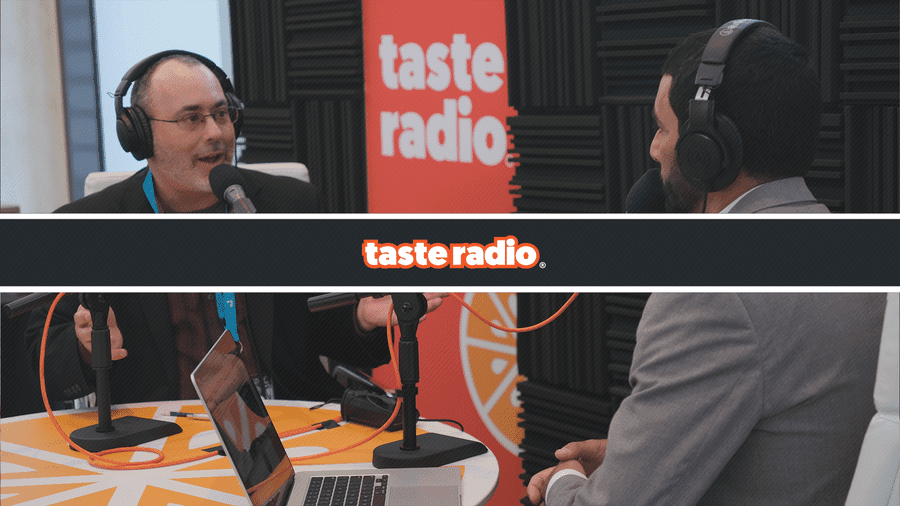
Speaker 1 [00:03] Hey folks, it's Ray with Taste Radio. Right now I'm honored to be sitting down with Brian Albert, who is a senior category manager with Sprouts. Brian, great to see you. Ray,
Speaker 2 [00:12] thanks for having me. I'm honored to
Speaker 1 [00:13] be
Speaker 2 [00:13] here.
Speaker 1 [00:14] I would think anytime you're out in public, you're getting swarmed.
Speaker 2 [00:18] Not anytime I'm out in public.
Speaker 1 [00:19] Well, I mean, if you're at a beverage slash food trade show, convention, whatever you want to call it, I mean, you're the guy that people want to meet.
Speaker 2 [00:26] I feel very fortunate to be in the role that I am. I get to meet a lot of great people. And taste a lot of great products. Some of them have opportunities. How about that?
Speaker 1 [00:36] I like the way you put that. You know, I've got to tell you, I have a ton of respect for Sprouts because we work with and interact with a lot of early stage founders and a lot of emerging brands, and I feel like Sprouts has become that retailer where brands can get national presence, attention, awareness, sales. Have you thought about incorporating emerging brands into your stores, has that strategy evolved or changed in recent years? It just again it just definitely feels like Sprouts has become that major national retailer where we're seeing a lot more early stage brands than we had in the past.
Speaker 2 [01:14] Well, I think for us we have a true passion for innovation and wanting to find those great brands that are new and Sprouts is, we started as a farmer's market, right? And so bringing those new items that you can only find there, but then today, in today's day and age, getting brands into our stores to bring to our customers, it's, it's really a point of difference for us, and I think our customers love it.
Speaker 1 [01:42] What does it take for an emerging brand to go chain widen Sprouts, especially ones that are relatively new to the market, because I'm seeing brands that are like 8 months in and they have national deals with Sprouts.
Speaker 2 [01:53] Yeah, so for us, what are we looking for? We're looking for brands that are innovative. We're looking for brands that are differentiated.
Speaker 1 [01:59] Can I pause you right there and ask you to expound on what innovation means for you, how you would define it, how you would define differentiation.
Speaker 2 [02:06] When we talk about innovation, especially for Sprouts, it's about ingredients, product, packaging, anything that is truly new. And stands a part that may not be out in the wide market today, and we have something called innovation centers or discovery centers in our stores. And we are trying to bring that uniqueness, something cool, something exciting, something that our customers may not have seen before to get them to come into Sprouts and find these products and get them to keep coming back because there's always something new that we're bringing out
Speaker 1 [02:39] there in differentiation. Let's just throw out a category like better for you soda, right? OK. So for example there's a brand called Good Dirt. Which is on all of your stores. I sat down with the founders for an episode of our Elevator Talk series which highlights emerging brands in the food and beverage industry. Love it. Love that brand. Love their approach to the industry. Love the approach to the category, um, but how do you see them as being differentiated from, say, the lollipops and poppies of the world?
Speaker 2 [03:08] Well, it's for us, the innovation is the ingredients in that specific, so, so good dirt with the mushrooms and that they have in their product, it's not like any other carbonated beverage you would find in our stores. So for us to bring them onto our innovation centers, there's nothing else like it. So brands that Where they can go, hey, there's nothing else like us out there. We want to see them. And what we'll do is we will review those brands. We look at the how does the liquid taste, what does the packaging look like? Is it easy for the consumer to understand what makes you different? Is there a component of sustainability's that's truly important. And looking at those factors and going, OK. We'll give any brand that we see, we'll score them on all those attributes, and then at the end of the day we go, OK, is this something we're really excited about? or what feedback can we give a brand to help them improve and eventually get into Sprouts? When
Speaker 1 [04:04] you say sustainability is important, yeah, is that something that Sprouts has incorporated as part of its mission, or are you sort of just following the consumer along their journey and finding out what's important to them? And making sure that you're stocking products that reflect that importance.
Speaker 2 [04:22] Well, I think sustainability is important to sprouts. It's part of who we are. It's part of our DNA. What makes sustainability or what makes a brand sustainable, it can be a number of things. For example, we're seeing a lot of regenerative agriculture out there, and I think that's really critical. And I think it's really critical for This world that we live in to have sustainable and long term as part of Sprout's DNA.
Speaker 1 [04:53] What else when you talk about hierarchy of importance for a beverage and your primary focus is beverages, beverage, yeah, um, talk about that hierarchy of importance. I mean, taste, yes, but I've also talked to retailers, now, not every retailer, but I've talked to retailers in the past who have said taste isn't necessarily the most important thing. There are other attributes that Our customers are looking for, but how would you rank I guess the most important factors for a brand that wants to be in sprouts.
Speaker 2 [05:22] Well, I think You've got packaging. Is your packaging both attractive and tells your story that it gets a consumer to actually pick it up, pick your package up off the shelf? That's objective number 1. Number 2, once they actually drink it, are they going to want to drink another one and come back and buy another?
Speaker 1 [05:44] How do you know that though? I mean, because it's subjective, right? But you've tasted a lot of beverages, so I would know. I mean I assume you would know.
Speaker 2 [05:52] So one of the things that we do is we have a distinct panel. It's not just me who makes a decision. distinct panel. We get a number of people to actually try the product independently who have different tastes because I may not like a certain ingredient, but there are plenty of people who get to try the product and say, Yeah, this is really good for what it is. And so. By having different points of view, especially with taste as it is very subjective, I think it puts us in a great position to offer something to the customer. So packaging, taste, packaging, taste, innovation, you know, it the, you talked about good dirt are the ingredients. Ingredients matter, right? They really do. Um, I want, I do want to back up on one thing, and that's sustainability. If you think about natural, this natural retail and, and where we started, it was about organic is really one of the things that started this industry. So organic is really about sustainability. And so we are just taking that to the next level.
Speaker 1 [06:52] It's funny you bring up organic actually because I was at a leadership conference in January I think it was January yeah and um there was a representative from Spins there and they were talking about. What consumers want, what's important to them as it relates to natural foods and beverages, and I was shocked that organic was actually at the bottom of the list. Um, sustainability was pretty high up. Um, uh, functionality was kind of high up, obviously taste, but organic became one of the least important factors for consumers as it relates to natural foods and beverages.
Speaker 2 [07:27] I, I think it's a table stake at this point. Right, I think consumers automatically assume when they go into a natural retailer that oh, it's automatically going to be good for the earth, or, or it's possibly, and I haven't read that specific study that you're referring to, but I think it's a table steak. That's why people come in. Oh, I already know it's, it's going to have something like organic or natural or or or sustainable as part of it. That's why I come to Sprouts. So I'm not looking for that because I know it's already here. Let me find something else that's appealing to me.
Speaker 1 [07:58] You know, we're here at a beverage conference, the beverage forum, and you just were on a panel evaluating. Uh, brands in a, in a, it was called a ones to watch lightning pitch and each brand that presented had 30 seconds,
Speaker 2 [08:13] 30 seconds.
Speaker 1 [08:14] That's not a lot of time.
Speaker 2 [08:15] It is lightning, literally to go through and say, here's what, here's what we stand for. Here's why we're different. Oh, by the way, go downstairs and try it. But you
Speaker 1 [08:24] know, I actually like the 32nd pitch because it actually resembles real life, right? I mean, if you're at an Expo West, and I'm sure you're again, you're getting swarmed and someone's like. I've got 30 seconds. Can I have 30 seconds of your time, Brian? You're OK, OK, I have 30 seconds. How do they wow you in 30 seconds? And I know you're going to say, well, OK, they've got great taste, innovation, uh, sustainability, all these things, but I mean, what's the X factor for you?
Speaker 2 [08:46] I, I will tell you that it's not about those 30 seconds for me. It is about, I like to put, I like to think like a consumer. You're not going to have a sales pitch. You're not going to be able to tell your story with the spoken word to that consumer when they are at the shelf. So what I like to do is, let me see your actual package. Let me see, does it? Can I read it? Does it tell me what you stand for and give me a reason to want to pick it up and want to drink it in this case for a beverage? The 32nd pitch. It's exciting. It tells me what they stand for. It can get my attention. But I want to see more and I actually want to take it away and actually try it on my own. So I think that's what, well, that's what customers do.
Speaker 1 [09:28] So I would think maybe you're going to follow up with some of these folks that presented on stage. Oh,
Speaker 2 [09:32] everyone that presented on stage. I'm actually going to go down and actually try their products, take a look at it, say, OK, in my own scorecard scorecard in my mind, I'm going to look at the packaging, I'm going to look at the drink, I'm going to look at how is it different from what I know is currently in our stores, and I'm going to, I'm going to score them.
Speaker 1 [09:50] When someone has that extra meeting with you, when someone has the meeting beyond the first initial pitch, yeah, um, what should they be including in that meeting? What are some of the things you feel like, I wish you hadn't said that.
Speaker 2 [10:05] What's most important for these brands. You are getting a platform. You are getting an opportunity in Sprouts. Tell me what makes you different. Tell me, how are you going to achieve not only success today, but success in 4 months from now? What are you doing in this remarkable digital channel that's just exploded in terms of what's going on to actually drive consumers to your brand and to Sprouts to try it? Love seeing that.
Speaker 1 [10:32] What's going to bring incremental value to Sprouts? What's going to drive store traffic into Sprouts?
Speaker 2 [10:37] That's important and that's part of why we have the innovation centers, because it does, it is appealing. It is why customers come into our stores.
Speaker 1 [10:44] The a reason why the innovation centers you're talking about, they're very specific parts of the store is what you're saying.
Speaker 2 [10:48] Yes, it is a centralized island, so to speak, of products that are new, unique, different. Fresh finds, those kinds of things right there that a consumer can walk right up to and peruse the entire table, whether it's 4 ft or 8 ft all the way around. All sides have product on them. That we are bringing to them for them to try is
Speaker 1 [11:07] it in all 400 stores or 400 plus stores?
Speaker 2 [11:10] Just about all
Speaker 1 [11:10] of them. What's the lead time to get into the innovation center?
Speaker 2 [11:13] Well, we sometimes we can act so quickly it's about anywhere from 6 weeks to 34 months. And
Speaker 1 [11:21] how long do brands stay on the as part of the study?
Speaker 2 [11:24] Usually 60 to 90 days. OK. OK, so it's a good, good opportunity for consumers to discover them.
Speaker 1 [11:30] And how do they stay in Sprouts stores beyond that?
Speaker 2 [11:32] They perform,
Speaker 1 [11:33] they perform. What, I don't know if you can share any specific metrics in terms of sales volume or velocity that would get you to say this needs to be in all of our stores all the time. Well,
Speaker 2 [11:44] it's category specific and one of the things that we look at is really what's the units per store per week per variety. So if you've got, let's say 5 different flavors. But they're only doing a a unit per store. Versus a category average that may not be enough. So what we want to see is I'll give a great example. There's a brand called Juni Adaptogenic tea, Jay Shetty Jay Shetty, um, we brought that in onto our innovation centers, and I was blown away by just the amount of consumers that were buying them week on week, and every single variety was outperforming the category average. And to me I look at that and go that's a home run. And so kudos to Jay and Kim and that team for creating this brand, but also getting people to try this phenomenal product.
Speaker 1 [12:35] I just want to back up for a second again. I asked about and I, I interrupted you, so I asked about, you know, something that might turn you off in an interview or I'm not an interview, but a pitch or, you know, an initial meeting beyond that first introduction.
Speaker 2 [12:51] I would tell you that one of the things we've talked about innovation and differentiation here, if you come in and tell me, Brian, we are in every single retailer except for Sprouts. That There may be a reason for that, but more importantly, it makes me think and go, OK, if I were to bring you in. Not saying, by the way, I have brought in brands that have been in every single retailer, and I was pleasantly surprised with the results. But if I bring you in, how is that differentiating? How is that truly helping us as Sprouts stand apart? Because remember about these innovation centers, we're trying to bring people in, give them a sense of discovery. If your brand is in every retailer and they see it on the shelves at Sprouts, are they really discovering something new?
Speaker 1 [13:36] That's a really good point. I mean, I love the idea of Sprouts being a retailer for discovery, especially a retailer for discovery at scale, because there's a lot of small retail chains, the pop-up grocers of the world and whatnot, where you can go and find new products every, in some cases every 2 weeks if you think about like an Aon and every 2 weeks they're rotating brands in and out, but sort of having Sprouts as that national retailer of discovery. I mean that that's a powerful statement.
Speaker 2 [14:05] It's wonderful. And let's not forget that discovery, that innovation center is only one component of who we are. We have this entire store of good for you or better for you products that are in there every day that consumers know, OK, I can find great things on our shelves and in our deli in our fresh departments that they may not find anywhere else.
Speaker 1 [14:25] We hear all the time about The relationship between supplier, brand, founder, and retailer, and I want to talk about the human relationship because the human relationship is really the glue. I mean, And what are the best relationships? What have been your best relationships with founders and why have they been so good?
Speaker 2 [14:49] I think it comes down to authenticity. There's always passion if you're a founder, you're an entrepreneur, you're, you're, you're founding your brand. You're going to care a lot, but more importantly, it's Do you have the wherewithal to go? Is a retailer sharing something with me that I can actually learn from, get better? How can I improve my product? And those relationships where they grow over time. Um, also brands that. I would say that are serious about what they do but don't take themselves too seriously, right? It's about relationships. We're all humans. We're we're all in this world together in my humble opinion. So to be able to connect with someone on a personal level about who they are, what they do, what drives them, why are they here, to me that's fascinating. That's what creates the best relationships for me.
Speaker 1 [15:39] I would say that's very true and you know, having met you for the first time and actually I don't know we we may have met in the past, but having sat down with you for the first time and had a conversation like this, I already feel like we're in a good. Pathway to a more, a deeper relationship
Speaker 2 [15:53] as it were. Yeah. Yeah, no, I completely agree. Yeah, but also being friendly. Yeah, right. No, go ahead, yeah, no, no, I, I, I'm just thinking about, uh, the opportunity to sit here at this show and listen, and, uh, the people from Happy, Happy Coffee were on stage earlier,
Speaker 1 [16:13] including Robert
Speaker 2 [16:14] Robert Downey Junior, just, and to hear them speak, one of the things they said is. Happiness is a byproduct of doing good. OK, so in general about being good, being, being nice to each other, to me that
Speaker 1 [16:31] matters. If you're gonna name your brand, I mean. Brian, thank you so much for taking the time. This
Speaker 2 [16:37] has been awesome. I appreciate you.