Search across the BevNET CPG Media network including BevNET, Nosh, Brewbound, Taste Radio, Nombase and CPG Jobs.

Pouring Purpose: How Granny Squibb’s Blends Heritage, Flavor & Impact
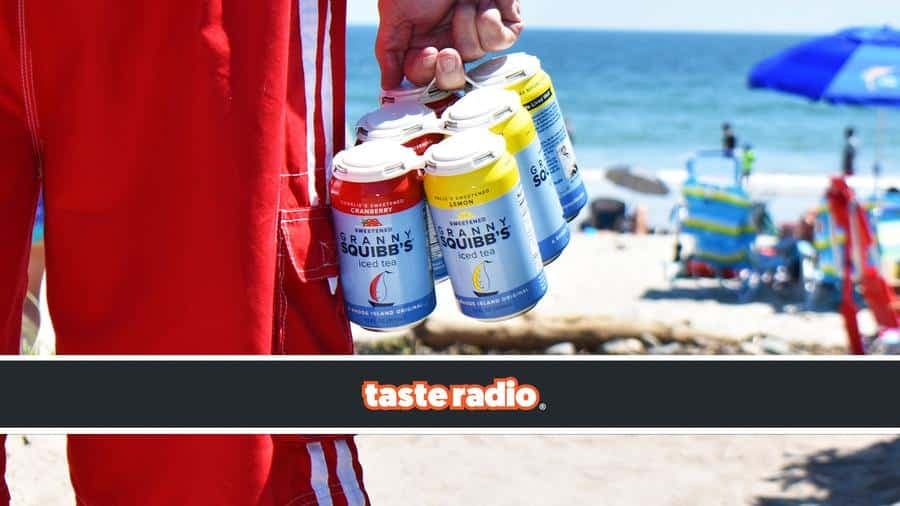
Kelley McShane, the co-owner of nostalgic iced tea brand Granny Squibb’s, discusses her journey into the beverage industry and her role in reviving and growing Granny Squibb’s. She discusses the New England-based iced tea brand’s mission-driven approach and how it emphasizes a grassroots growth strategy focused on the region before national expansion. Kelley also explains how the brand’s nostalgic packaging and premium ingredients help it stand out and her commitment to building a sustainable, socially impactful beverage company.
Transcript
Note: Transcripts are automatically generated and may contain inaccuracies and spelling errors.
Speaker 1 [00:02] Hey folks, it's Ray with Taste Radio. Right now I'm honored to be sitting down with Kelley McShane, who is the owner of Granny Squibb's. Kelley, great to see
Speaker 2 [00:10] you. Great to see you. Thanks for having me.
Speaker 1 [00:12] Yeah, the last time, uh, you and I were chatting was on the roof or on our, our deck at Bevnet headquarters in Newton, Mass. That was a great event. It really was. Yeah, this is a great event that we're at as well, which is the Naturally New England naturally rising pitch competition. That's a mouthful, but essentially it's a pitch slam, but
Speaker 2 [00:30] it's at the. Beautiful Farm Fre Rhode Island in Providence so you know it's our hometown.
Speaker 1 [00:35] This is a great space. I didn't know. I, I've never, I don't, I don't spend too much time in Providence. You guys are based here?
Speaker 2 [00:41] We are we're like a half mile from here. We're in downtown Providence, uh, right now we're on the west side of Providence and um I'm actually on the board of Farm Fresh as well, so I spend a lot of time here. What is Farm Fresh Farm Fresh is the leading, uh, food access, uh, organization, so they help people, um. Who are, uh, they, they address food insecurity in our state.
Speaker 1 [01:04] Awesome. That's a, a very honorable thing to do and you're on the board. Thank you. Um, so I tea, Granny Squibb's, you guys, yeah, I, I, I'm. Just imagining you as a child thinking I want to start an iced tea company or at least I want to own one at some point in your life, and here you are.
Speaker 2 [01:20] Actually, it's kind of funny you say that because when I was like 10 years old, my parents gave my sister and I like $50 to invest in stocks, whatever we wanted. My sister picked Disney and I picked Arizona iced tea. I mean, I, I'm tea.
Speaker 1 [01:44] I've always loved it. Arizona they're publicly traded, you might have some
Speaker 2 [01:46] money. I might have made some money. I have
Speaker 1 [01:48] money, I interviewed, the co-founder of that company and Voltaggio and um. He, yeah, he's,
Speaker 2 [01:54] he's, that must have been a fascinating interview.
Speaker 1 [01:56] So just quickly, when I, I went to New York, this was like the day before Thanksgiving, like 6 years ago, weird time to drive, um, and I went to his office. His office is the size of like a large hotel suite. He has a commercial, yeah, he has a commercial kitchen. In one part of the office, you know, in case he wants, I don't know, to,
Speaker 2 [02:19] to make some iced
Speaker 1 [02:20] tea. Well, I would assume it's if he's hungry for anything, his chef is going to make it for him. So at one point you'll get there too,
Speaker 2 [02:28] Granny Squibb's, I'll, we'll definitely get there. Arizona, we're coming for
Speaker 1 [02:31] you. There you go, Granny Squibb's. I love this brand. Um, you see it, uh, pretty often in the New England area. Um, you're not the founder, but you're, you're running the show now.
Speaker 2 [02:41] I'm running the show now with my team. Obviously we're a tiny team. There's 4 of us, so we're all running the show. Um, but yeah, so the founder, um, started the company in 2009. And she, it's based on her grandmother's recipe. So Sally Squibb is granny Squibb who developed our sweet lemon recipe in the 1930s in Saunderstown back when like drinking tea cold wasn't a thing. So it became this, you know, Narragansett staple, and Robin, our founder, her granddaughter, after a long career in the film industry, ended up retiring and moving back to Saunderstown. And started seeing, you know, granny Squibbs iced tea just like in pitchers, you know, the recipe in pitchers in restaurants and in friends' fridges, you know, so she saw a business opportunity and decided to start bottling it, which is like wild like there's entrepreneurs and then there. There's people that start beverage CPG beverage companies in their 70s. It's like so badass.
Speaker 1 [03:43] Anyone who starts a beverage company is a badass person. I mean, it's not easy. It's not easy. The failure rate is very high. This is all well known, but it's really exciting. It's uh. I remember when I was in college, I thought about beverages as a potential career career path and uh, yeah, it's um what were you gonna I was gonna make better for you sodas if you can believe it. Yeah, which is how I would have been way ahead of your time. I really would have been actually but uh wait, what are you saying about my age? Kelly, come on, I thought we were friends. No, it's, it's amazing because this industry has seen such a roller coaster of trends, you know, at one point, it's, you know, this is hot. At another point, this is hot. And I think throughout taste has always been the most consistently important thing, even if people kind of forgot about it a few years ago. And it's, it's really come back to the forefront. And Granny Scribbs, you guys make amazing taste tasting products
Speaker 2 [04:36] and the, the recipe is. Lasted for 100
Speaker 1 [04:39] years. Yeah, but when you are introducing this product to a retailer, when you're talking to consumers, what really stands out? What are you talking about specifically?
Speaker 2 [04:47] Well, the integrity of the tea. So we're the only company that makes solely New England style iced tea. So we use all of our, our, the basis for all of our skews are the same. It's black tea, mint, and then juice, whether that's lemon, lime, peach, or cranberry. Um, all of our teas are organic. They're vegan, they're gluten-free, which like a lot of people are like, it's iced tea, of course it's vegan, but, you know, a lot of people don't realize that sometimes sugar is, um, like bleached with bone char. So we make sure that all of, I know, isn't that bananas? I know, and you don't have to say that on the label. So we make sure we use organic vegan, uh, cane sugar, um, but we really, you know, that. It's important to us that our iced tea is for everybody, um, so that's one thing we're also B corporation, we're B Corp certified, and then, um, we also have a, uh, philanthropic, uh, part of the company which we're by far the most proud of. Every new flavor we come out with, we. It with a different New England state and then a nonprofit from that state and we donate a portion of the proceeds to those nonprofits. So our peach is matched with Massachusetts and we donate to Dana-Farber Cancer Institute. Our cranberries matched with Rhode Island and we donate to Save the Bay and then we're coming out with a raspberry and a blueberry. Our raspberry will be matched with Connecticut and our blueberry will be matched with Maine. And then the lemon and the mojito line will be Vermont and, uh, New Hampshire.
Speaker 1 [06:17] Awesome, very, very cool stuff. I kind of skipped a part. When did you, why did you want to buy this company? Why, why, why did you want to take the, take the reins?
Speaker 2 [06:26] Well, So I, I have a background in, uh, social services and actually I taught math for years, linear algebra, calculus and number theory. I can't
Speaker 1 [06:34] see you as a math teacher. I don't know. I'm sorry. I'm,
Speaker 2 [06:36] I'm a, I'm a mathematician at heart. That's
Speaker 1 [06:39] what
Speaker 2 [06:39] I
Speaker 1 [06:39] am,
Speaker 2 [06:40] um, so that's my major in college. That's what I, you know, I, I love it. I still do it all the time, but, um, so I had a math tutoring business, but I also worked for a social services organization called Amos House. They're based right here in Providence and they. Um, they help people help themselves out of homelessness. So anyway, so I was working there, um, and you know, uh, mostly as like a volunteer, and volunteers, they're all well and good, but what do these organizations need? They need money. So I was looking for a for-profit business like this where we could kind of channel a portion of the proceeds into nonprofits. So I was already trying to do that with my partner Nick Carr. And then at the time we lived in an apartment building in Providence and the founder of Granny Squibb's lived in that same building, so we used to help her carry cases in we became really good friends with her we got to, you know. Learn about the company, um, and then one day we were helping her and bringing cases inside and we're like, oh Robin, how was your day? and she was like uh she's like I'm burned out. Do you know anyone that wants to buy an iced tea company and we, we're like, oh my God, that's so funny that she said that walked upstairs and then. We walked into the apartment and we're like oh my gosh this might be the exact opportunity we were looking for so we literally just walked downstairs, knocked on her door, asked if she was serious she said yes and 30 days later we had quit our jobs and we were doing this full time, so it happened like so quickly, um, which like most entrepreneurial stories do, but um if I had, you know, she, we didn't really know anything about the beverage industry
Speaker 1 [08:20] was gonna be my,
Speaker 2 [08:21] yeah I mean I if. I, I don't know if we would have made the same decision if we knew what we're getting ourselves into, but she agreed to stay on for a year to help mentor us and facilitate relationships, so, um, so it was great, and then COVID hit, which was Bananagrams, and, uh, that was a big learning opportunity. So I think, you know, I think, I think at this point we really, we have a. We have a good grasp on what we're doing.
Speaker 1 [08:47] You know what the most, the most common phrase is on radio. If you look at all our 750 episodes, it's If I had known what I was getting into, I don't know if I would have done it, but that's
Speaker 2 [09:01] how you know an entrepreneur.
Speaker 1 [09:02] Yes, but,
Speaker 2 [09:04] but jump in.
Speaker 1 [09:05] I'm glad you're doing it because you saved an amazing company and, and one that I think really has a ton of resonance in this region. But the question is how do you, where do you go from here? Are you looking to expand? I mean, are you looking to become more of a national brand? We are,
Speaker 2 [09:20] we're actually set up with national distribution right now, so we're it's essentially turnkey when we're ready, but we are right now focused on the, uh, North Atlantic region, uh, which is obviously New England. Um, because we, we, we practice what's called the bull's eye method. Our company just made it up, me and my team, but we wanna make sure we nail it here and we have the volume we need to sustain this growth, you know, we see so many brands that get so excited when they have an opportunity and. Chicago or DC or, you know, Texas and they grow way too fast. So we want to make sure that this is extremely sustainable.
Speaker 1 [09:56] Well, you know what they call that? They call that 1 inch wide mile deep, even though it's sort of a region versus a city or a state. Um, one other thing I think that really differentiates you is this, um, old school bottle. You have a 16 ounce glass bottle. It's a wide, wide body. It's very reminiscent of some famous brands out there.
Speaker 2 [10:13] Thank you for not saying the brand name.
Speaker 1 [10:16] Um, but is this something that still resonates with customers? I mean, it
Speaker 2 [10:22] is, it is actually, so we, we've talked about changing, uh, the shape of the glass bottle. We've also have
Speaker 1 [10:27] a, by the way, on your bottle. You have a picture of a can on your bottle, which is interesting.
Speaker 2 [10:32] So, so that's, so Ray is looking for those who can't see, looking at our peach label, and, uh, that is actually a whole story that Bevnet did, uh, did a piece on a couple of years ago. Uh, Porter's peach is the flavor and And we won't go into that because it's quite a story, but if anyone wants to reach out to me and hear it or look at old, uh, Bevnet articles, please look it up. There you go. But, um, and we've talked about going into cans too, and cans are amazing for places that glass can't go, you know, beaches, stadiums, schools, um, but I think right now with the retailers we're in the Whole Foods, you know, the Market Basket, the Stop and Shops, they, you know, it, it because everyone's going to cans right now, it does differentiate us,
Speaker 1 [11:13] yeah, and I. I think it's, it says one word that a lot of brands are missing these days, which is premium. Premium, premium. What were you gonna say? Timeless, timeless as well. Yeah, for, for sure. premium. No, for premium, and you can typically charge a premium price point. Um, is that, is that, what is your price point or
Speaker 2 [11:30] typical, um, about 250 to 350.
Speaker 1 [11:33] OK, so I think that's appropriate. I mean, you know, it's, it's, we, we talked about Arizona and they're really famous for 99 cents for those large cans, but they're also well known for. Not necessarily the most healthy ingredients, and I think when you're looking for something that's a bit healthier, which a lot of people seem to be doing nowadays, when you're looking for something that's not a sugar bomb and looking for something that's maybe a little bit more mature, I think this is something that a lot of folks would reach for. Um, thank you. At the same time, when you're trying to get younger consumers, how much does that granny play into their minds as being Maybe this is more of an adult. I guess the question really I think it's
Speaker 2 [12:09] more of a charming. People are like, oh, you know, people associate iced tea and lemonade with like, you know, being at home, being around a table, having it in a pitcher, you know, with your grandmother. So I think it, it resonates the same with Gen Z as it does millennials as it does with, you know, Gen X, Gen Y.
Speaker 1 [12:28] Very cool. Oh, I, I gotta say this to folks who are not familiar with Granny Squibb's. You should definitely check it out. I mean, it's not only a delicious product, but they make the coolest swag. I mean, your hat, I need a Granny Squibb's hat. That is OK. Thank you very much. I, I'll pay for it. You know, don't worry. I'm not asking.
Speaker 2 [12:44] We'll send the whole team.
Speaker 1 [12:44] No, no, see, that's
Speaker 2 [12:45] not marketing for us.
Speaker 1 [12:47] It kind of is actually look good.
Speaker 2 [12:49] Are you kidding me? Representatives from Bevnet wearing our gear. That's amazing, I
Speaker 1 [12:53] guess that's true. Yeah. Well, Kelley, um, like I said, you know, we first met, uh, on our deck a couple of years ago, and we talked about maybe sitting down one day and I'm today is that day. I'm so happy that we had this opportunity. Thank you so much. We need to check in again soon, maybe in a few months, maybe next year. We'll see how we're doing. Maybe you'll be national by then.
Speaker 2 [13:13] Maybe we will.
Speaker 1 [13:14] Maybe we will. In the meantime, thank you again. Thank you
Speaker 2 [13:16] so much, Ray.