Search across the BevNET CPG Media network including BevNET, Nosh, Brewbound, Taste Radio, Nombase and CPG Jobs.

He’s Leading A ‘Green’ Revolution… And Slurping His Way To Victory
Transcript
Note: Transcripts are automatically generated and may contain inaccuracies and spelling errors.
Speaker 1 [00:04] Hey folks, it's Ray with Taste Radio. Right now I am honored to be sitting down with Mac Villarreal, who is the founder and CEO of I Eat My Greens. Mac, great to see you. Hey, great to see you, Ray. How are you? I'm doing well. This is an interview that I've been wanting to do for a while because as you know, I am in love with your brand. The first time I tried your soups, I was just absolutely blown away at how good they were and how delicious you could make plant-based soups. Uh, and in that convenient pouch that you sell your products in, I just felt like when I saw your brand and I tasted it, everything that you did was a home run. You just knocked it out of the park, and I wasn't the only one because, as folks might recall, I have hosted the Naturally San Diego pitch slam. In the last couple of years and we're here at the Naturally San Diego pre-party for the UNFI show out here and uh I, I, I, I'm bummed out because I didn't get to do the year the year prior when you won the pitch slam. So I'm not the only one who thinks highly of your brand and I know we're going to get into how many more people think highly of your brand, but you know, what was that experience like?
Speaker 2 [01:13] Oh, that was great. Um, it was during COVID times, so really grateful for Naturally San Diego and, and, and, and the whole organization here in San Diego has been amazing. It just, it was something that was really, really needed, uh, getting that community together and yeah, the icing on the cake was winning the pit slam. Um, that was a pivotal moment for Right My Greens for sure. It, it got us into more stores, got us out there, and, and from there on it's been an amazing journey.
Speaker 1 [01:42] I didn't know this about you until I did a little bit of research prior to this interview. You participated in the 2000 Olympics in Sydney as a sailor. Uh, that must have been pretty amazing. How do you go from sailing to CPG?
Speaker 2 [01:58] Yeah. Determination, uh, setting goals, you know, setting big goals. I learned that when I was started sailing when I was 11, went to the Olympics when I was 19. the journey, it was about the journey, but it teaches you so much. I think athletes have that, and I love, you know, watching all those athletes or sports documentaries and stuff because I really get inspired and that inspired me to set a big goal of building my own company and well here we are. This is my second company actually.
Speaker 1 [02:32] What was your
Speaker 2 [02:32] first juice,
Speaker 1 [02:33] juice, yeah,
Speaker 2 [02:34] fresh juice.
Speaker 1 [02:35] OK. What was it? What was the brand?
Speaker 2 [02:37] It's in Mexico. Everything was in Mexico. It's called Frutos de Vida, Fruits of Life, the first refrigerated in the produce section, refrigerated juice in the market back then. And I just loved the experience of building my own company CPG, and so that's why I did it again.
Speaker 1 [02:53] Did you have a successful exit? Yeah, very cool. Why soup?
Speaker 2 [02:58] I say that I went from fruits in the juice to vegetables. I've Always been a firm believer in wholesome. Real food nutrition. I learned that from sports, how good it made me feel. Uh, the importance of it. I had luckily enough my mom cooked for me, you know, my grandma great recipes, so I just lived around homemade. Ah, food. And that really fueled my, I call it my fuel for, for my athlete days and It's something I just crave, I need, um, and I saw a big, uh, opportunity in soup here in the
Speaker 1 [03:39] US. Good nutrition, becoming more important to a lot of Americans, but taste, and I'll say it again for the 15,000th time on this podcast, taste is king. And again, when I, yeah, I'm, I'm sorry, go ahead.
Speaker 2 [03:52] No, I'm, I'm kind of a freak there, right, um, I'm a foodie, uh, so taste has to be number one, and I was not going to make a product if it didn't taste good. I mean, why kid myself and work hard for that, you know, and I have fun. I have a lot of fun getting into the kitchen and, and getting with chefs and playing around and, and trying to find the right recipe and the right way to do it and And go from there.
Speaker 1 [04:20] You have a lot of amazing products that all taste incredible, and I think this was again the thing that I When you first see your package, It's so different. It's so differentiated from a lot of other things that you see super otherwise, and the big bold name I eat my greens, you just want to learn more, especially if you're a natural foods consumer. But then when you taste the product, you're even doubly sold. You're just like, OK. Uh, I'm drawn in by the package design. I'm completely sold on the flavor, but what came first, you know, how did you think about creating a brand that would be attractive to consumers because again you have that differentiated package, the pouch, you have great branding, and then you have the soup itself. But you know, when you were thinking about creating a brand, which came first?
Speaker 2 [05:10] Good question. I mean it's a mixture, but the name I had time to think about it uh it was after I exited my first company and and then I had some years to think about what was next and. And I wanted to have fun. I wanted to enjoy the journey like the first one I did on the Olympic journey and the name I eat my greens just my mom was like eat your greens, eat your greens. So that just came up as a fun, I know it's a long name and I know it goes against, uh, branding and marketing um theory, but yeah, I love breaking rules too, so I went for it, um. And that got me excited and I knew soup, well, it built up and I knew soup was something I was passionate about and it was, I saw a big opportunity so it just it all made sense. It all came together bit by bit. And like you say, it's, it's something that gets people's attention, and but I have, we have to deliver on taste. And we're doing it. Hopefully,
Speaker 1 [06:24] where did you come up with the idea for a pouch because when you think about fresh soups, you know, you go to a Whole Foods and, you know, you see them in the little plastic containers and, you know, easy to merchandise and, you know. It's just a very common, commonly known vessel for soup. But why were pouches your first, were they your first choice?
Speaker 2 [06:45] Yep, uh, goes back to my dad. He worked at food packaging. So we actually did some juices in pouches back in the day, sort of like the Capri Sun. Um, and I always had pouches in my mind and it made sense, it made sense that it would be, uh, most convenient, easy to understand, practical for soup, and I, yeah, I, I, I've always loved packaging. Uh, I've always been very interested in, in, as in my sailing days I had the chance to travel to a lot of countries and I was, I was always in the, in the retail stores there and looking around and learning and checking different cultures and, and, you know, Asia is a big package uh pouch. A continent and then we saw some in Europe, etc. so I always had that in the back of my mind.
Speaker 1 [07:37] Did retail buyers, distributors when they first saw that pouch and they were thinking multi-serve soup? OK, how is this going to be merchandis? How is this going to be distributed? How's this, how is the consumer going to, is it going to be intuitive to the consumer? Was there some pushback there?
Speaker 2 [07:54] Yeah, there was some pushback as all innovation has pushback. Uh, so it's, you know, the, the, the, the normal innovation pushback, but fortunately the category was built. Uh, I didn't build the category, the refrigerated soup category, so that helps, and we just someone, well, Jimbo's here locally, the local stores here in San Diego gave us a chance and we proved with the numbers that that it worked.
Speaker 1 [08:21] You have to think about and you have to advocate for a certain part of that soup aisle, that soup section, because again, I think. Traditionally you have kind of short squat. shelves for soup because that's the container. I think maybe I eat my greens would be on that bottom shelf which is a little bit more space or I guess how did you talk to people about the best way to sell your product even though it has that billboard effect you could read it from across the room, your front label that is just getting it on the shelf and the logistics of Um, you know, making it such that it fit on shelves. How did you talk to folks about that?
Speaker 2 [08:58] Yeah, I, I went and measured the shelves, and I knew that that was a, um, Something that was going to be hard to do, challenging challenge, but there was enough space in the height. The height is a big issue in the shelf, and we, yeah, we normally are either in the bottom or the top shelf, you know, you can't have it all, so we do need to. It is what it is, uh, but, you know, with, with the results we're having and, and we, we get better and better placements every day, so happy with that.
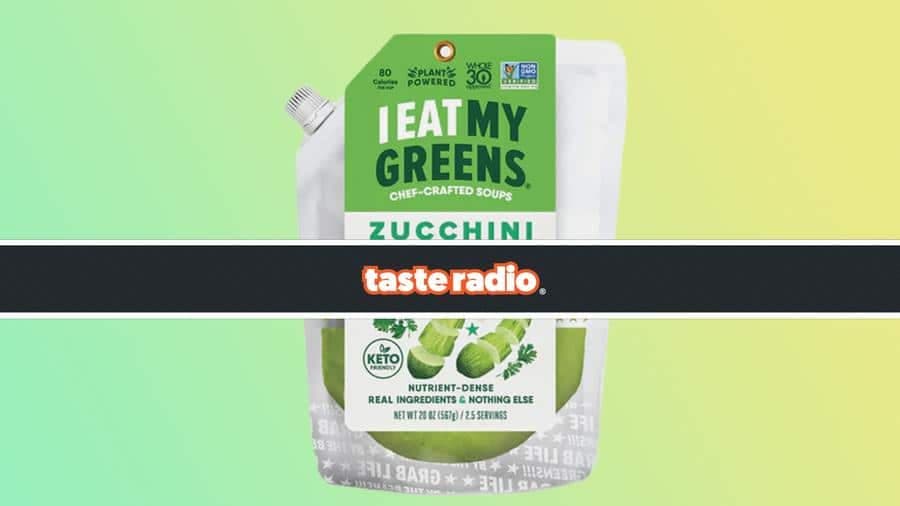
Speaker 1 [09:36] As you mentioned, you work with chefs to create these recipes. I think the word chef craft is actually on your, your front label as well, and not only can you see all the ingredients, um, displayed, uh, on the front of pack, you can actually see the soup itself. You can see it's a clear package. Um, did what really sells. Your product though, like, is it the fact that people can see it? Is it the fact that it says greens? Is it chef crafted? What's really the key selling point for consumers, at least at trial? Yeah.
Speaker 2 [10:09] The whole package, it's, it's that that jumps out on the shelf and our transparency with our ingredients, that's why we have the transparent packaging. It will be easier to just have a non-transparent package. It's a challenge to have it because we don't have any gums in the binders, so that's, you know, it's a challenge, but same thing, taking risks and um speaking directly to the consumer. That we're not hiding anything behind our packaging and so it's a combination of the name, the pouch, the transparency. I can actually feel, see, see the consistency and and the and the little seeds and the and the pieces of vegetable that we use a ton of vegetables for every soup, so that's something that was very important for me to communicate.
Speaker 1 [11:01] There's also An alignment with cultural food trends that you've embraced, the brand has embraced, um, you point out you're plant-based, obviously, uh, keto, Whole30. How much does that factor into consumer interest in your products?
Speaker 2 [11:20] I think it's a plus. Uh, it's not the main. Um, oh wow, it happens to be hole 30 or or somebody that's looking for hole 30 you see and then non-GMO, you know, checks those boxes that are important for the quality. Um, call it certification or or approval, um. It speaks it speaks well about our product because it checks all the boxes naturally, right? Um, being a, uh, all vegetable, we, we Gladly check, you know, the gluten-free, the dairy-free, plant-based, etc. etc. etc. it's just It's vegetables, spices, sea salt, olive oil, and we're very proud of it and the trends are in our favor because at the end of the day eating more vegetables is something that has been proven to be a really good thing to do by every single Pretty much a nutritionist doctor for for many, many years, so I knew that I was not going into a trendy, risky. Um, product, uh, but this is, this is, we're talking about vegetables. We'll be here forever. So happy with that
Speaker 1 [12:35] too. I would love to see I eat my greens in every grocery store in America. Obviously, you're not there yet. Hopefully you will be one day. But when you hear no, or when you pitch a retail store or a retail chain and they say it's not for us right now, what are the reasons they're saying no and what might be Your approach to getting them to say yes.
Speaker 2 [13:02] Innovation is something that's hard for people to Say yes to all the time, uh, especially if they know their consumers well. Some, some retailers, I, I, I agree with them, maybe they're not ready for For such innovation takes time, um, but eventually we will get there. Um, so, you know, sometimes it's a little bit of the price point like we were talking about the pouch might seem a little too strange, but I know that eventually we'll, we'll, we'll, we'll cross that line. It takes time and I think it's important to be patient and to have a solid business to be able to be patient. Uh, So it's just keep at it, trust in our product, make efficiencies in our in our supply chain.
Speaker 1 [13:58] To bring the price point down,
Speaker 2 [13:59] bring the price point down, um. And one step at a time.
Speaker 1 [14:06] Is there a, is there a selling point that has worked when you're pitching a retailer and you say, OK, this is a bit of a long shot for us, maybe it was one of the first big retailers that you get into, um, was it kind of a leap of faith that the retail fire was taking on you or was it something where you were able to present. Key data about, you know, sales at a Jimbo's per se or uh trends as it relates to the soup category. What what were the key selling points that helped you overcome that, I guess, potential no?
Speaker 2 [14:46] Key data, yes, that helps. Um, but I think the buyers, category merchants are, they really know their, their consumer base, their shopper base, and We, we, we just click. They know, they understand and that's why we are very focused right now on the natural channel because that's the place we, we thrive. They just get it, they get it, um, and it's going to take time for the ones that don't, but, but, but it is not easy when you bring innovation to the table for sure, but, uh, but I love disrupting and making changes.
Speaker 1 [15:25] How much does, I guess the shelf life of your soups because soup soups obviously have Chilled and refrigerator soups have a relatively short shelf life. I mean, how much does that factor into Your ability to be in a particular retailer.
Speaker 2 [15:40] No, that hasn't, that hasn't been a factor, fortunately. So it's, it's the velocities are, are, we haven't had that issue with spoilage, so. Yeah, crossed fingers, that won't happen, but we're good now.
Speaker 1 [15:52] If I were, and I haven't done this yet and I'm, I, I should probably be doing this, but then again, I should probably be more objective about how much I love certain brands and products, but I, I should go into some of my local retailers and be like, hey, you know, you should really carry this suit because it's really good. I would buy it all the time. It's just easier for me to do that than to say, to come out to San Diego and go to a Jimbo's and then bring it across country in my luggage. Um, how you, how do you get the consumer excited enough to be, um, advocates for your brand?
Speaker 2 [16:23] We, we work hard to have the closest and the best communication with every single consumer that, that we get in touch with, right? We have a small D2C program, um, but any, any inbound we get, it's like hands-on. Consumer, um. Love fans, you know, there's a, there's a great book called Raving Fans that I'm a fan of, uh, that we want to have every person that communicates with us turn them into, if they were not a big, big fan, then our challenge is to convert them into a big fan and then, um, yeah, good old word of mouth and slowly but surely the, the good word spreads.
Speaker 1 [17:06] The challenge is to get them to be a raving fan. How do you do it?
Speaker 2 [17:11] the combination of everything, right? The product, the, the, the customer service when they communicate with us, the way we approach, uh, the fun, having a fun, healthy lifestyle is, it's, you know, it doesn't have to be boring, it doesn't have to taste bad, it's about enjoying what we eat as much as we enjoy eating a cake, uh, it's enjoying eating healthy food as well. Uh, so it's a combination of everything because it solves something and it Changes, we had some great, you know, emails from people like, oh, you, you know, I was sick or I had this or I just started eating your soup and I feel so good, so that really gets us going, um, and yeah, we turned Every person into a fan one by one,
Speaker 1 [18:00] you know, it didn't take much for me to become a fan because I think I'm just looking at your website right now and You know, yes, I think most of our listeners eat healthy or try to eat healthy as much as possible, but You look at some of these flavors. You have a zucchini, cilantro, and cauliflower soup. You have a broccoli, sunflower seed soup. You have a carrot, sweet potato, and turmeric. You have a roasted tomato. I can't read what's the roasted basil and coconut basil. Oh my gosh, OK, so just like just right then and there those ingredients just sound amazing again, maybe not necessarily for mainstream mainstream consumers yet, but When you're thinking about making that next leap, you kind of have to, you have to almost dumb down the flavors for or create one that's a bit more like training wheels soup for everyday Americans.
Speaker 2 [18:49] Um, I mean, I think the roasted tomato one, that's the one that's more, you know, everybody's pretty familiar with the tomato basil soup. So I know we add coconut, we have our own little signature touch to it. But so yeah, we, it's important to have one like you say that's the, the, the beginner one, but eventually when they try one, then they like oh let's see what the other one tastes like and, and then it's all good and it goes from there. Um, we'll come out with a new flavor this year. I can't say right now which one it is, but uh we're coming up with a new one. And I know that, you know, it's, it's that leap of faith and, and of course our efforts with marketing of people, you know, taking the risk, quote unquote, uh, to try something new and hopefully become a fan.
Speaker 1 [19:42] It doesn't take much, folks. As soon as you get that one spoonful, you'll be, uh, that raving fan evangelist that, uh, Mac was talking about. Mac, thank you so much for taking the time. I really appreciate it. Um, I don't know how many times I've said I really love your brand, I really love your products, but obviously you know that and it. It really was that first sip at an Expo East a couple of years ago and I'm like, man, these guys have something. So congratulations on everything that you've accomplished to this point. Excited to try the new flavor whenever you have it when you're in the Boston, happen to be in the Boston area, let's let's share a soup bowl of soup.
Speaker 2 [20:16] That sounds amazing for sure. I will.
Speaker 1 [20:18] Thank you again.