Search across the BevNET CPG Media network including BevNET, Nosh, Brewbound, Taste Radio, Nombase and CPG Jobs.

Using Walmart As a Launchpad for Food and Beverage Brands

Transcript
Note: Transcripts are automatically generated and may contain inaccuracies and spelling errors.
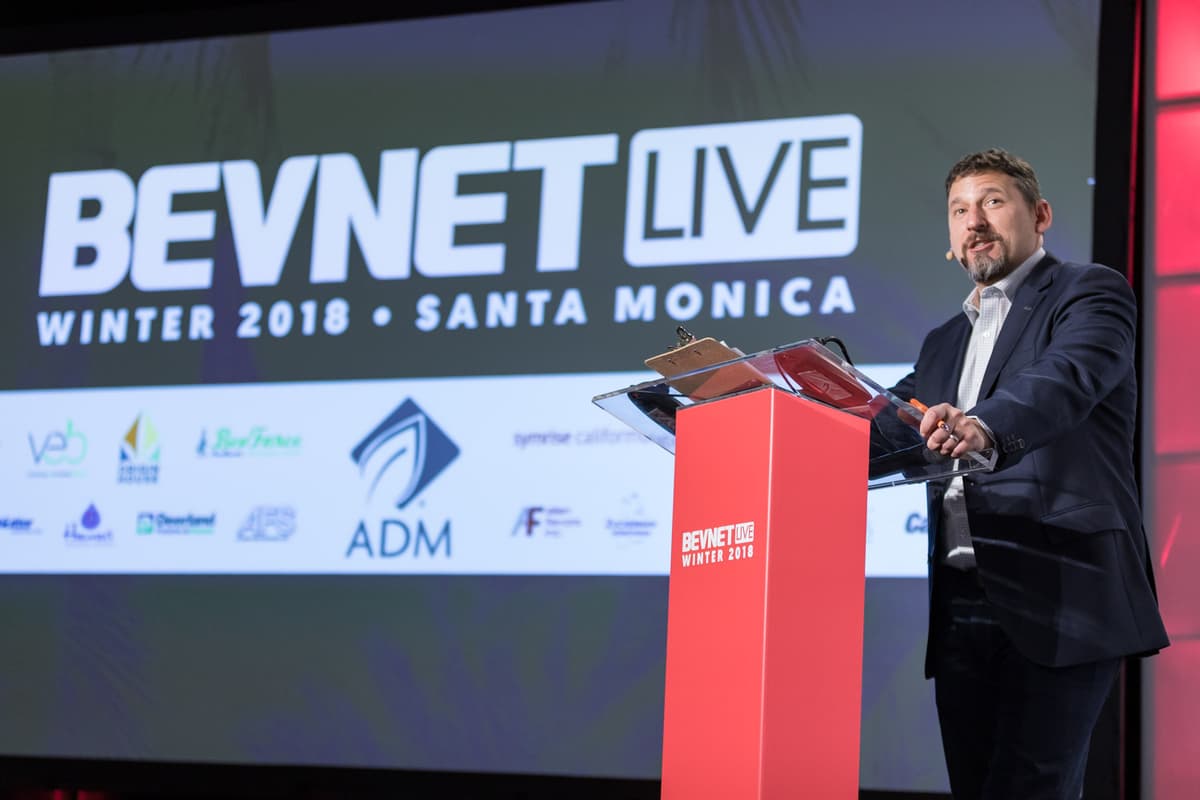
Speaker 1 [00:17] We're gonna move from brands that are searching for avenues for scale to a retailer long considered the thoroughfare for massive growth. Um, but the country's largest retailer isn't just aiming for broad acceleration anymore. It wants to help you launch and grow bespoke brands as well. Now if that sounds a little counterintuitive, you really haven't been watching Walmart. The company has had representatives at trade shows and has been putting together partnerships with incubators, and our next speaker, Sarah Alderson, has been on the ground trying to reach new brands and create new categories that can use Walmart as their launch pad. So please welcome Walmart's Sarah Alderson to tell us a little bit about this huge retailer's grand strategy. Thanks very much.
Sarah Alderson [01:35] So, thanks so much, Jeff, and thank you, Bevnet for having me. I'm super excited to be here. Um, I'm Sarah and I work for Walmart. I'm the DMM of chilled packaged goods. So, myself along with my counterpart Seth Malley on the ambient side, lead the beverage buying teams for Walmart. Um, I wanted to start just by saying congratulations, congratulations to this industry. You know, I have the privilege of overseeing a lot of different industries within food in my role, and the beverage industry is definitely setting the bar in terms of accelerated innovation, really, um, catalyzing American entrepreneurship and getting really close to the customer. From my vantage point, some of the things that are making you successful are your agile approach. Your willingness to take risks and like I said, most importantly, your continued obsession with getting close to your customer and really understanding your customer. Now, if you know Walmart at all, you know, we're really obsessed with the customer as well, and our mission to save people money so that they can live better really guides and is a filter for everything we work on. I've been at Walmart for 10 years all in and around food, and it's been a really great privilege to work for a company with this mission. I truly go into work every day trying to figure out how can I save the customer money, how can I help them live better, whether that be through saving money or accelerating live better type assortment. Um The customer is changing, and I think you all know that the customer is changing rapidly. The last two years we've really seen this accelerated change within our customer and it's caused us to think about what we need to do different, and I hope you've seen some of the things that we're doing different at Walmart, whether it be our new online grocery pickup business. We're really bullish about online grocery. Um, whether it be store space and how we're rethinking store space to better serve the customer, or product assortment. Um, we're really rethinking and stretching the limits of the product assortment that we carry at Walmart. So the title of this talk was Think about Walmart as your Launchpad, and I wanted to just address the elephant in the room that I know many of you are sitting there because I hear it all the time. Why would I consider Walmart to be my first go to market strategy? Why would I go to Walmart? I'm not, I'm either not or Walmart's too big for me. I hear all of the different reasons why brands potentially aren't considering Walmart. So I wanted to take a minute and talk about two of the largest things I hear from all of you, whether it be big suppliers, entrepreneurs, but what I hear from suppliers on why they may not be considering Walmart today. And the first is my product won't resonate with the Walmart customer. I hear that a lot. And actually, the Walmart customer is every customer. We service 90% of America across our 4500 stores in the US. And we've spent a lot of time really getting to know our customers over the last 2 years and have changed the way we're thinking about our stores and what role each store needs to play in terms of product assortment. Store segmentation is critical, and you all know getting your product in the right store in front of the right customers is critically important for you to get learnings and really see the limits of how much your brand can grow within any retailer. So the last two years we've spent a lot of time looking at store segmentation, looking at emerging brands, and we're really proud of the discipline we've put against getting the products in the right stores. So what I mean by that, we have a list of what I'd say are emerging brand stores. I know very confidently when I'm looking at a new product where that product should be placed across the country in order to be successful. And just some myth busting. A lot of people will come into Walmart and say either I have a high brand index or my customer's really located on the coasts. And what we find at Walmart is actually some of our best stores for emerging brands are in the heartland of the country, and Some products that I wanted to talk about just to potentially change some, some perceptions on what we can sell with this new store segmentation really focusing on getting products in the right stores, we've stretched the bounds of what we think that we can offer our customers. So here's just three examples that I've been excited about. We're selling a $34 manuka honey within our honey set right next to the little bear honey, um, and we've been really excited about the performance. And it's again really stretched our limits. If you get the right product in the right store, our customers responding. We're seeing that the Walmart customer wants these products, and the Walmart customer is looking for that expanded assortment. The next product, this probiotic, this is in my area. We launched a $17 probiotic in the yogurt section. So this product exists next to $1 Cup yogurt. We put it in about 300 stores, no marketing whatsoever, no launch. We didn't talk about it. We just wanted to learn. We put the product, it's pretty low risk, it's a really long shelf life, but we put it in the stores next to $1 cup yogurt, and again, it's really changed our thinking on what we think we can sell within our stores. Soylent is another great example where originally I think this supplier came to us and said the same thing. I don't think our products would resonate with your customers. We crawled before we ran. We started in small store counts. We iterated together and again, this product, I can't specifically talk about performance, but we're really excited. Um, Incubating innovation is really important. So, the second big thing I hear from suppliers all the time in terms of why they don't necessarily want to go to Walmart as their launch pad is we hear, um, we're not ready for Walmart. And I think there's two facets of that that I wanted to talk about. Um, if you know Walmart, you know our philosophy on being EDLP, or everyday low price, and what everyday low price is is a promise to our customers that we're going to sell brands for less. What it's not is an effort to devalue the brand equity that you have all created within your brands. It's really important that we share in the value of the brand equity. It is not our intention to come up with a strategy that doesn't maximize the value of your brand, and we're really open to working together on strategies of how you go to market to make sure that you are maximizing that value. The other thing, the other sort of facet of we're not ready for Walmart. It's a huge misconception that to sell to Walmart you have to be ready for massive distribution. Despite our size, we can be pretty nimble, and over the last two years I've worked really hard with my buying team on rethinking a lot of their processes and rethinking a lot of the structure that they had put in place with working with suppliers that were limiting. Our ability to be nimble. So what I mean by that is, you know, I have spent a lot of time at shows over the last two years, and last year I walked Expo West. And I went to a lot of suppliers, I was really excited about their product, and I would say, OK, I'm ready for you when my modular cycle hits at this time and this is what I think I can do for you. Let's talk. And we went back as a team and said that's probably not the best way that we can really encourage iterative innovation, which is what we want. We want to lower the cost of learning. We want to be iterative like Neil talked about. We want to test and learn and fail quickly. So we went back and changed some of our processes. And what I can say now for the beverage buying team is we're ready when you are, and I can do as few as 10 stores. I can be very nimble. And Neil talked about this, and exit strategy is equally important because again, we're trying to facilitate learnings. We want to be the retailer that um is low risk. We want to be the retailer that you can come to. Test in market, get learnings, fail quickly, iterate, and ultimately deliver a really great product for your customer. So, we love having conversations about new products and if any of you have interacted with a Walmart buyer, you know we're not short of opinions. We love to share our thoughts on new products. We just really love to innovate. We love to talk about what's new. We love to talk about how to make a good idea better. We'd really encourage you all to reach out to us. We, um, created this inbox. This isn't like a generic inbox. It truly just goes to my 4 buyers on my team. They're the only ones that have access to this inbox. We'd love to have a conversation with you. I want to continue to interact with more people across the industry and understand what challenges you're up against, and then we as a retailer, how do we potentially partner to lower those challenges. So again, we can continue to accelerate the innovation that the beverage industry is bringing. So, thank you.
Speaker 1 [10:47] It's great Come sit down with me. Let's get this, this for off the stage, man. That's uh Pretty tricky, Neil.
Sarah Alderson [10:59] Can I see that?
Speaker 1 [11:01] Oh, you want it. I just look at it. Um, Jesus, what is this hold that Fordo has on people, um. So, terrific presentation. Um, thank you for telling people how to interact with you. Thank you for even revealing the number of buyers on your team. Uh, another number that I think people are interested in, how many of the 4500 stores are sort of included in the entrepreneurial pattern?
Sarah Alderson [11:32] Um, Jeff did not give me these questions ahead of time for me to prep, if you're wondering. Um. So we have about, we have about, um, 800 stores that I'd say are, are sort of high emerging brand stores. But if you think about store segmentation, sort of like this giant Venn diagram. We would overlay a lot of different filters to again get very specific on where your product would do the best. So we look at things like where do emerging brands overindex really well, where are their big families, where is organic an important factor, where is OPP more of an important factor. And so within these 800 stores, which I know that I could very quickly scale and try, there's a lot of subsegments within that so that we can get ultra focused on again putting your product in the right stores.
Speaker 1 [12:28] A lot of times when we talk about a sort of Retailing pattern we talk about the synergies between one channel and the other. So what's your policy on exclusives? Do you like to see brands kind of working outward from the Walmarts that you're in that they're in?
Sarah Alderson [12:48] I wouldn't say that we have a specific policy on exclusives. Every category has its own specific strategy. What I'd like to say is that partnering with Walmart, I would hope that Walmart would have a competitive advantage in the marketplace for helping you grow your brands. And so I wouldn't want to limit. Anyone into thinking that exclusivity is a mandate. We love exclusivities. We love when we can get products that are exclusive to our customers, but we also understand brand brand challenges when it comes to either minimum runs or scale. And if our goal really is to reduce risk and accelerate innovation, sometimes exclusives aren't necessarily the right thing. Um, so we do love exclusives, but we don't have a policy on mandating those things.
Speaker 1 [13:33] Similarly to Spur innovation, will you work to sort of co-innovate with brands? Is there, is there anyone on your team?
Sarah Alderson [13:42] My favorite part of my job? Yeah, we love to co-innovate. There's a lot of times where we might have a, uh, product, um, void or we might have a customer need that just currently isn't being solved with innovation. Um, you know, I've, I've worked with Danny in the past saying, I've spent a lot of time with my customers and I'm getting requests for this type of product. It doesn't exist in the marketplace today. Is there a provider out there that would be willing to innovate with us in order to solve that need? On the flip side, when you all have an idea, when there are entrepreneurs with ideas, we love being able to sort of pile on and provide more feedback and provide more insight into how to make that idea really successful within the stores.
Speaker 1 [14:26] Can you help on costing as well?
Sarah Alderson [14:29] Yes, so we can get very creative on costing. Um, there's a lot of, whether it be transportation challenges that we have an entire team that can help work to lower transportation barriers, whether it be product ingredient costs. We've gotten really creative in the past on sort of third party sourcing ingredients on behalf of brands to help lower the cost, whether it be packaging challenges. We absolutely want to help.
Speaker 1 [14:56] What, uh, what about, uh, the areas of the industry? Now that, now we've talked about the way that you'll innovate with brands. What are the areas you wanna, you wanna see more products come in with?
Sarah Alderson [15:08] Um, with, so Neil talked about it, but really just as a baseline, anything incremental. So it is very important that we're not continuing to duplicate needs within any type of segment. I think that's a very quick way to commoditize unintentionally sometimes, um, unless it's something that Walmart has asked for where it's, I need to offer this product at a value. We try really hard. To allow a lot of players within one segment, we try to reward first movers and really protect the innovators. So first and foremost, it's anything that's super incremental from a trend perspective across beverages. We're going to continue to look at energy, functionality. I think there's still a lot of growth within sort of what we'd call fresh pharmacy or people sort of using food as medicine.
Speaker 1 [15:58] Now, Fresh Pharmacy, probably a lot of that falls under chilled. Um, is, are you as open to innovation in Ambien?
Sarah Alderson [16:07] Absolutely. So Seth is my counterpart. He would have actually been here with me today except that he had knee surgery. Um, so we're very much taking a customer first lens versus a P&L lens and really looking at the customer wants to buy a beverage. What's the best place in the store to offer that beverage, where does the customer expect to find that beverage, and then we're coordinating across the whole
Speaker 1 [16:26] box. What are some of the other trends that your customers want to see expressed in beverage? I mean, we've heard you guys are setting up sort of a keto set and a paleo set. What else, what else should we expect? Low
Sarah Alderson [16:39] sugar. I think the concern on sugar is going to, um, I think that's a staying trend that has lasting power, and I don't know that we have the right variety assortment across the whole sort of beverage spectrum. You know, sparkling waters really sort of led the trend, but if you just look at the low sugar need, I think that there's still a lot of upside across different segments.
Speaker 1 [17:01] So you said you try and hit an EDLP. How can our brands incorporate anticipating hitting that EDLP into their margin structure and yours?
Sarah Alderson [17:15] Mm. So what the advice I give everybody is, um, like I said, we want all the brands to get the most value for the brand equity that's been created. Walmart wants to sell the brand for less. So, we want to have the lowest price that a product is available in the market. And so, starting your strategy with how does Walmart um offer that brand for less and how does Walmart have the lowest price in the market is what I'd recommend. Um, What was the second part of your question?
Speaker 1 [17:45] Um, what's the margin structure that you guys look for?
Sarah Alderson [17:48] Yeah, so I get asked this on probably every single vendor meeting, and the thing that I tell everyone. Give us your best cost and we'll retail the product for where we think the maximum sort of value share is going to be at, and we don't say that because we're just really trying to like nickel and dime suppliers. It's truly give us the best cost so that we have a baseline understanding of what is the potential for different retail thresholds. We can try to again maximize that value.
Speaker 1 [18:18] So I I've been in Walmart. I've done well, and now I'm starting to scale. How do I go from those 800 or those 10 stores to 4500? How do I support myself in your system?
Sarah Alderson [18:34] So we have the ability to scale very quickly. I mean, I can turn on up to 4500 stores with a click of a button. What we ask is that we have a very transparent conversation about Where are you at as a company? What are your needs? You know, we like to have conversations. We, we talk a lot about store counts because it's just easy to conceptualize, but make sure we're talking in your language. Sometimes minimum runs or sometimes just cases or truckloads are actually the conversation we should be talking about, because again, we're trying to make sure that we're being as economical as possible. So we're sort of ready when you are. It's easy for us to scale from the 800 stores to the 4500. What we just ask for is a really transparent conversation of is that the right thing to do for your brand at that time.
Speaker 1 [19:22] All right, well thank you for this really transparent conversation. Thank you. Thank
Sarah Alderson [19:27] you.