

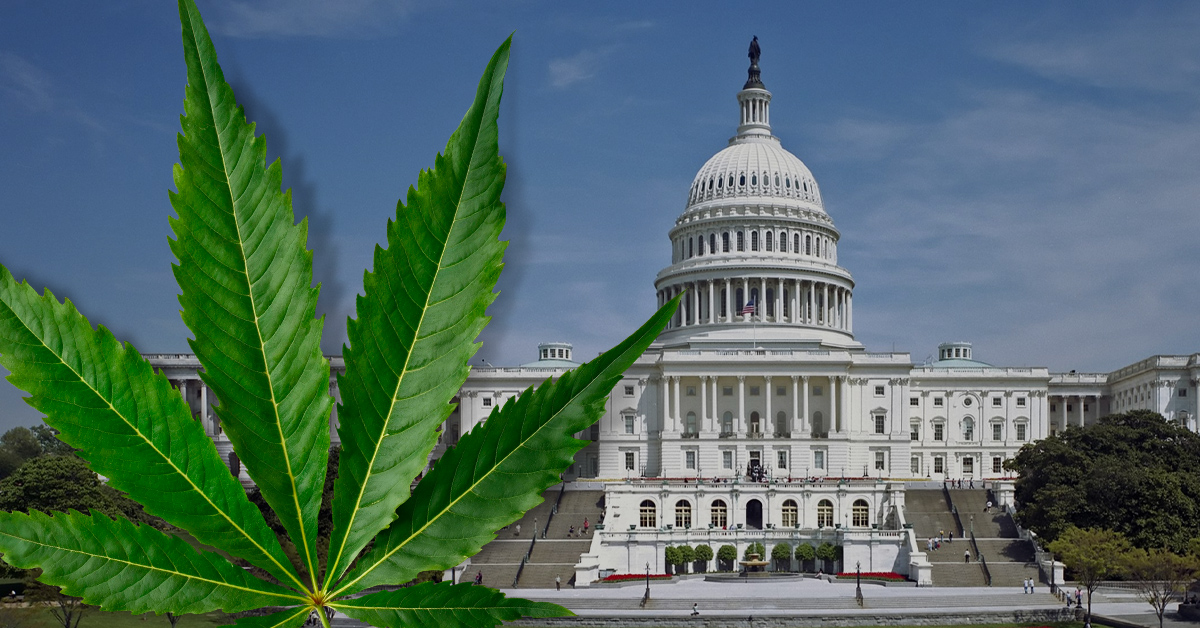
Hemp beverages could be sacrificed in a deal to reopen the federal government, as spending legislation moves through Congress that includes language effectively prohibiting intoxicating hemp-derived THC products.
As political factions in DC spar over how to reopen the longest-ever federal government shutdown in U.S. history, legislators – led by Sen. Mitch McConnell (R-KY) and Rep. Andy Harris (R-MD) – are attempting to use the situation to shape the future of hemp and intoxicating THC products and restrict the market created by the 2018 Farm Bill, which defined legal hemp-based products as containing under 0.3% Delta-9 THC on a dry weight basis.
A full-year appropriations bill to fund the US Department of Agriculture (USDA) and the U.S. Food & Drug Administration (FDA) currently in front of the Senate Appropriations Committee changes that metric to cap all finished products at .4 milligrams of total THC per container (no more than 0.3% total combined THC isomers), a change that would functionally eliminate the hemp beverage market in its current state.
Under language included in Section 781 of the appropriations act, the definition of “hemp” would now exclude all “intermediate hemp-derived cannabinoid products” that are “marketed or sold as a final product or directly to an end consumer for personal or household use.”
That includes products containing both non-naturally occurring and synthesized cannabinoids (such as Delta-8 THC, converted from CBD), as well as powders, drops and other products that require mixing.
Moreover, the bill would prohibit “all other cannabinoids with similar effects, or marketed to have similar effects” to THC.
Though the language excludes “non-intoxicating CBD and industrial hemp products” from prohibition, full or broad-spectrum CBD products that contain some trace amounts of naturally occurring THC (or any cannabinoid determined to have a similar effect) would also be outlawed.
The proposed changes would go into effect one year from the bill’s passing.
The proposal arrives as pro-hemp advocates and their opponents face a critical moment in the nascent industry’s development, with independent brands leading a grassroots call to action. Last week, over 50 major alcohol distributors from across the country called on Congress to protect the emerging market by creating regulations to govern THC sales by creating “comprehensive rules that protect communities,” including age-gating products and requiring third-party testing.
Meanwhile, alcohol industry groups – including the Beer Institute (BI), the American Distilled Spirits Alliance (ADSA), Distilled Spirits Council of the U.S. (DISCUS), Wine America and the Wine Institute – have publicly backed a ban on hemp-derived THC beverage sales until “a robust federal regulatory framework is established.”
They were joined by a group of attorney generals from 39 states, who wrote to Congress last month asking for legislators to impose restrictions on a legal hemp industry that has been “wrongly exploited by bad actors.”
Each party has found backers on Capitol Hill, with Kentucky Sen. Rand Paul vowing to slow down a vote to reopen the government if any funding bill includes a hemp ban. Paul introduced an amendment this morning striking Section 781 from the funding bill, though it is unclear if that will be voted on.
“The idea that that shouldn’t be allowed to happen in every state is really patronizing to people—it’s treating people like they’re idiots,” said actor/producer Seth Rogen, a cannabis advocate and co-founder of Houseplant, in an interview with Bon Appetit magazine last month. “We’re not stupid. We know what this does. We know it’s not more dangerous than alcohol.”
Go Deeper: Cannabis Drinks Could Become Key Alcohol Replacement, Per Report