

Hemp beverage manufacturers are rallying grassroots support to help defeat a potentially industry-killing ban on intoxicating hemp products currently working through the U.S. Congress.
Even as major retailers like Target and Circle K open their shelves to hemp-derived THC drinks, as allowed under the 2018 Farm Bill, the nascent industry is facing an existential challenge from Sen. Mitch McConnell (R-KY) and Rep. Andy Harris (R-MD), who are advocating to criminalize sales of all intoxicating hemp products. Those efforts gained more momentum this week when attorneys general from 37 states and two U.S. territories signed a letter to Congress backing the ban and asking regulators to “shut down this industry before it metastasizes further.”
While industry organizations have been doing their own lobbying, over the past week several hemp THC beverage brands have jumped directly into the fray themselves with campaigns calling for supporters to pressure lawmakers to reject the measure.
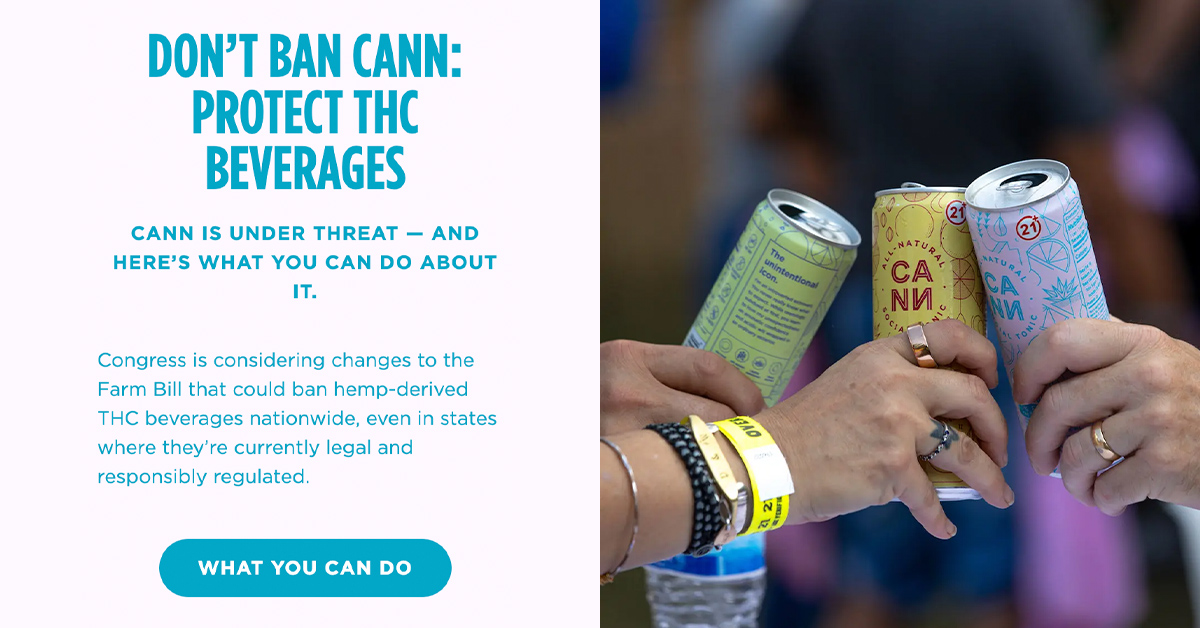
Cann, a low-dose THC hemp beverage pioneer and founding member of the Coalition for Adult Beverages (CABA), has launched the website dontbancann.com as a central hub for resistance efforts. Along with an explanation of Cann’s pro-hemp position, the site includes a pre-written note that users can copy and paste into a letter to their individual representatives in Congress. There’s also a portal for fans to submit stories to “let the world know how these drinks have impacted your life.”
“We know that bans do not work (see Juul),” wrote Cann co-founder Jake Bullock in a LinkedIn post this week. “Instead, these lawmakers will ensure illegally imported Chinese, synthetic, untested and highly potent hemp will run rampant, funded by cartels and will be more dangerous than ever. The safe, low risk, low potency hemp products will disappear.”
Cheech and Chong Global Holdings Co. is putting a personal touch on its messaging, imploring supporters with the call of “TOMMY AND CHEECH NEED YOUR HELP!” But on a corporate level, CEO Johnathan Black has been in direct contact with Sen. Rand Paul, one of the staunchest antagonists of McConnell’s and Harris’ bill. On Tuesday, he posted a picture of himself playing golf with Paul, during which he wrote that the Senator from Kentucky made a “direct request” for individuals to contact the appropriations committee and register their opposition.
Also on Tuesday, Florida-based BREZ sent an email notice to customers with the subject line “ACTION NEEDED: Your access to BREZ is at RISK.” The email contained a link that automatically sends a message urging Congress to vote against the proposed ban, with BREZ stating its goal of sending out 100,000 messages just this week.
“Powerful voices in Congress are pushing a hemp-killing ban that could remove your access to hemp-infused products you love, including BREZ,” the message read. “This is real. And it’s happening fast.”
Speaking on Tuesday at a Zoom conference hosted by the Hemp Industry & Farmers of America (HIFA), Sen. Paul threatened a long-shot bid to block any effort to reopen the federal government, now in its fourth week of shutdown, if Congress advances the hemp ban bill. He’s advocating instead for a multi-year study and report examining state regulatory structures that could subsequently be used as the basis for federal law.
“I’ve also told them—and I think they believe me—that we can do this the easy way or the hard way. The easy way is I give my consent, and the hard way is I don’t,” said Paul on the call, as reported by Marijuana Moment.
Opponents of a ban in Congress have sought to replace it with a legal framework for sales that includes age-gating products to 21+, standardizing packaging, prohibiting synthetics and requiring third-party lab testing.
“Many states are already demonstrating that thoughtful regulation can strike the right balance: ensuring safety, transparency, and accountability while preserving access for responsible adult consumers,” Diana Eberlein, Coalition of Adult Beverage Alternatives chair, told BevNET’s sister site Brewbound. “The responsible path forward isn’t prohibition, it’s sensible regulation that protects public health while supporting a safe, legal marketplace that meets consumer demand.”
In lieu of new federal laws, states have continued to develop and implement rules individually, creating a patchwork of legal and illegal markets. This week, the U.S. District Court for Wyoming rejected arguments from several businesses that sold legal THC products prior to a state ban in 2024, shooting down claims by the group that Wyoming’s rules are preempted by federal law.