


Video: BevNET’s Mid-Year Report, Part 1
As emerging categories continue to evolve, BevNET CEO John Craven and Editor-in-Chief Jeff Klineman discuss notable developments in the beverage industry during the first half of 2014.

As Editor-in-Chief of BevNET, Jeff Klineman oversees the organization's reporting across all of its web sites, as well as BevNET Magazine. Jeff also plans, curates, and hosts the BevNET Live and NOSH Live conferences. Jeff previously worked as a newspaper reporter for the Lawrence Eagle-Tribune, the Boston TAB and the Metrowest Daily News, and has freelanced for publications like Slate, Boston Magazine, Self, George, Commonwealth, and the Chronicle of Philanthropy. He is a graduate of Yale University and Columbia University’s Graduate School of Journalism. A frequently-cited expert on the beverage industry, Jeff has also twice been named in Forbes as one of the 25 Most Influential when it comes to Consumer and Retail Companies.
As emerging categories continue to evolve, BevNET CEO John Craven and Editor-in-Chief Jeff Klineman discuss notable developments in the beverage industry during the first half of 2014.
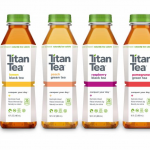
Gagliardi's previous to ventures were as a co-founder of pet food company Blue Buffalo (started by Bill Bishop, one of SoBe’s founders), as well as the founder of Maverik, a lacrosse equipment and apparel company, which was sold to Bauer Hockey.

Herzog was bullish on Monster’s recent performance – up nearly 15 percent over the four weeks ending June 7 – but that doesn’t include C-stores. For Mohsenian, the brand kept up with the category.

“The challenge for food and beverage companies is that we want to know what’s going on in the field," said Tom First, Managing Partner of First Beverage Ventures.

He endured a massive crop failure, redesigned the entire line, and in the end, felt he’d had a good four years, but Brian Ross has left Cheribundi.

In less than two years, the venture capital firm TSG has exited its much-discussed investment in functional beverage line Neuro, and with the departure much of Neuro’s senior staff has left the company.

After a remarkable stretch in-house – one that culminated in Suja being named supplier of the year at Whole Foods – Fleishman is returning to his consultancy, Purely Righteous Brands, one that partner and longtime friend Andrew Aussie incubated during his absence.

Remarkably, the percentage of organic as part of the overall food basket remains less than 10 percent – much as the share of craft beer isn’t much more than 10 percent as well, but the indications are clear: better-crafted, innovative products that have a conscious component are at a tipping point.

In a move that ties Coke’s Venturing and Emerging Brands group tightly to one of its most valuable service providers, the brand incubation unit today purchased a minority stake in L.A. Libations, which has handled much of the go-to-market and channel expansion strategies for many of VEB’s products.

Who are the most powerful people in the beverage business? What are the trends, concepts, companies that wield it most effectively? We’ve given it quite a bit of thought lately. While we have trouble with rankings – we’re a bunch of writers, after all – we’ve decided to put them in an order we can all understand.

The new network comprises 252 distributors and allows the brand the luxury of having distributors actively selling the product in channels beyond grocery and drug, trying to gain shelf space in the "up and down the street" markets that establish the brand.

Alliance Consumer Growth Fund, which has become a well-known quantity on the beverage circuit because of its constant hunt for rapidly-growing, well-defined consumer brands, has raised a second fund of $90 million -- double the amount of its original, $44 million ACG Fund I.
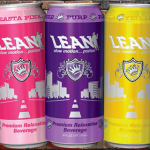
The FDA has sent a warning letter to yet another relaxation drink company, Lean Slow Motion… Potion, over confusing label claims that indicate the brand is a dietary supplement despite its being marketed largely as a beverage.

A second investment round by fast-growing Runa, an organic Amazonian guayusa tea brand, has landed an interesting mix of folks.