

BevNET Best Of Awards 2024
Each year bestows upon the beverage industry a unique set of challenges and obstacles, presenting brands and entrepreneurs a delicate puzzle rife with opportunities and pitfalls. The scope and the complexity of this endeavor is enough to intimidate – or worse, defeat – even the most experienced of hands and deepest of pockets, so it’s only right that each year we honor those who have run the gauntlet and emerged from the struggle with tangible gains intact.
As we enter 2025, all semblance of so-called normality feels under threat. The prodigious rise of GLP-1 drugs is exerting its own gravitational force on various categories and sections of the store, while a new White House administration promises to be anything but predictable with regards to health and commerce policies. At a state level, some governors are pulling the reins on hemp-derived THC, and others are clearing its path. Even things that feel timeless – the sweet indulgence of a fizzy soda, the subtle elegance of a perfect cocktail – are being carefully reimagined in ways that both fit modern tastes and harken back to simpler times.
This year’s Best of Award winners exemplify the bravery, ingenuity and persistence required to pass through these uncertain times, a group boldly moving into the future and illuminating the way for others to follow in their footsteps.
PERSON OF THE YEAR
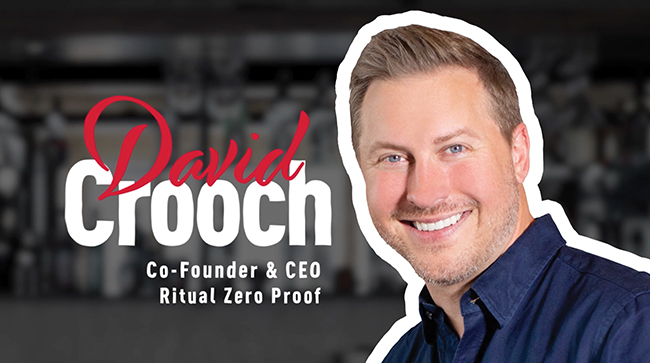
David Crooch, General Manager, Non-Alcoholic Beverages, Diageo; CEO & Co-Founder, Ritual Beverage Co.
David Crooch is the Person of the Year for 2024 because he’s going to be playing the role of Designated Driver for the Non-Alcoholic Spirits Category.
The brand he co-founded and still leads, Ritual Beverage Co., is already the NA spirits category leader by a wide margin, and it was recently purchased by spirits giant Diageo. The beverage giant then put Crooch in charge of the company’s entire NA Spirits portfolio, including previous purchase Seedlip, one of the category’s pioneers.
Crooch, a repeat entrepreneur, now finds himself with the responsibility of fulfilling the widespread expectation taking root among spirits companies, bars, and restaurants that consumers are thirsty for non-alcoholic analogs of their most popular cocktails. That he’s doing it at one of the largest spirits companies in the world makes the task extra daunting – but also confers resources to him that no one else in his category has had to date.
The normalization of any new category concept has to happen from a brand standpoint. For non-alcoholic beer, that movement has been established by Athletic Brewing. In the realm of non-alcoholic spirits, Diageo has added NA versions of category leaders like Captain Morgan’s, Gordon’s, and Tanqueray to its portfolio, but it has put its biggest stack of chips on Ritual, and on David Crooch.
BRAND(S) OF THE YEAR
Olipop & Poppi
When we’ve spoken with entrepreneurs about the brands that inspire them, about the marketing strategies they admire, they just can’t decide: is it Poppi, or is it Olipop?
We’ve decided for them. It’s Olipop. And it’s Poppi.
Right now, the spotlight on both far outshines any daylight between them, and they’ve captured the collective imagination of retailers, entrepreneurs, and consumers alike. Together, these brands have busted through the long-held notion that soda is on the way out, that craft soda would always be a bit player, that gut health would never live up to its promise, or that premium pricing was never coming back to CSDs. And in doing so, the competitors have found close to $1 billion in revenue between them.
Olipop is the creation of a pair of entrepreneurs who had been burned before, only to come back stronger, with a better plan and an easier-to-understand product in classic soda flavors. Poppi is the result of a pivot, with investor Rohan Oza and founders Allison and Stephen Ellsworth rebooting Mother, an apple cider vinegar-based health drink as the wildly flirtatious, fruit-forward and TikTok-friendly Poppi.
Together, these brands have finally legitimized alternative sodas as a category, initially flying under the aegis of gut health but gradually forming brand identities of their own. Poppi has made it clear that it’s angling for the mainstream, while Olipop continues to hew more closely to its prebiotic roots. Regardless, both brands are trending up sharply: around 300% year-over-year, according to a recent analysis of Nielsen IQ data by Goldman Sachs. Both brands hold steady price points well in excess of $2 per can, and have solid conventional runways, eyeing multipacks in grocery, single serve convenience, and heavier food service presence as ways to build share. Their respective dives into pro sports partnerships this year signals they still have plenty of new venues and audiences to capture, as well.
Who will sell first? Who will sell the highest? Right now, that question doesn’t matter – the only thing that matters is that they’re in lockstep as they share the title of BevNET’s Best Brand of 2024.
BEST MARKETING
Poppi
Three years ago, we gave the 2021 Best Marketing award to Poppi in recognition of the next gen soda’s mastery over the young medium of TikTok, after it turned an inadvertent viral post into a social media machine that’s still chugging along at full power. At the time, Poppi was a fresh brand, full of promise, establishing its name on a new marketing frontier. But in 2024, it found time to shine on one of advertising’s oldest and boldest stages.
Poppi’s 60-second Super Bowl LVIII ad in February became, according to at least one analytics firm, the most watched commercial out of this year’s game – no small feat for a multi-million dollar introduction declaring loudly and proudly that “soda is not a dirty word.” Titled “The Future of Soda is Now,” versions of the commercial have continued to play on TV throughout 2024, including during the World Series for another big eyeball-grabbing sports event. Fittingly, like Poppi’s TikTok phenomenon before it, the success was also somewhat unexpected; the commercial wasn’t originally intended to premiere during the Super Bowl, but a last minute opening thrust the brand into prime time and it’s a testament to the company that it was prepared to meet the moment.
That the spot would turn into one of the most successful campaigns from the entire event is all the more evidence that our Co-Brand of the Year has its thumb on the pulse of the market, and that is easily worth our recognition.
RISING STARS
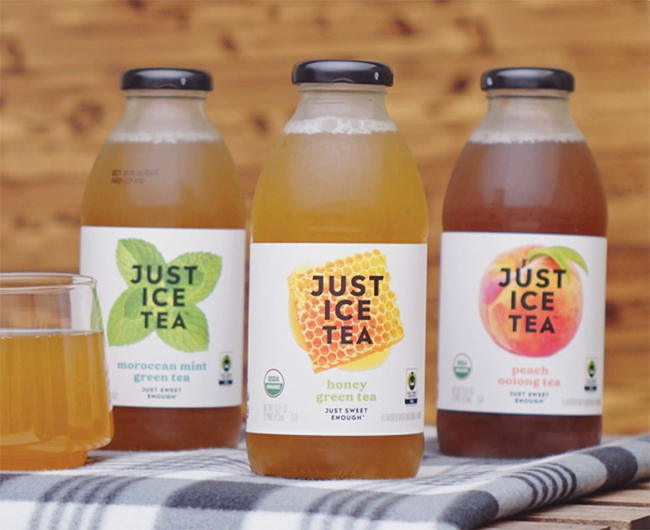 Just Ice Tea
Just Ice Tea has been an astounding business story since it launched in the wake of Coca-Cola’s discontinuation of Honest Tea in May 2022. Honest co-founder Seth Goldman – dismayed to see his life’s work ended so abruptly – created Just Ice Tea to fill the coming void for an organic RTD tea brand, and moved with such speed that consumers could still find stray bottles of Honest in stores when it first hit shelves. This year, as Just became the core focus of its parent company Eat the Change, it continued writing a powerful growth story that’s just as impressive as its founding.
Goldman often likes to measure Just’s development in terms of his experience building Honest Tea, and by his estimations the brand has grown about as big in two years as Honest was after 10. Sales were up triple-digits in 2024 and the business is projecting a footprint of 10,000 doors over the next year, with the brand just beginning to broach mainstream outlets in a serious manner. In one sense, Just is the reborn phoenix that rose from the ashes of an iconic brand, but as it racks up sales this is clearly a company that’s swiftly making its own name known.
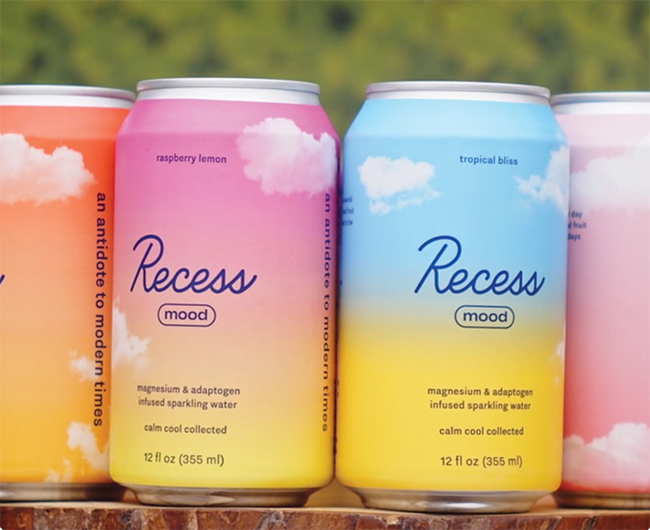
Recess
Recess was crowned the “LaCroix of CBD” when it debuted in 2019 as part of a wave of trendy cannabinoid brands that rushed into the market at the turn of the decade, bolstered by an “It Factor” hype that surrounded its modern branding and function-forward product. But like hipster-fave LaCroix, CBD’s time in the media limelight was very 2010s, and Recess wasn’t about to be left behind as last decade’s fad.
Over the last five years, Recess has embraced the pivot, seeking to become – as CEO Ben Witte calls it – “the Red Bull of relaxation.” There’s now the Recess Mood functional sparkling water line, powder mixes and its canned mocktails that are striking the Adult NA trend while it’s hot. Now in over 18,000 retailers with a robust ecomm business as well, the company is reporting that it’s doubling its revenue annually, and it’s now scaling with eyes set on crossing the coveted $100M threshold. The beverage industry, and the world at large, has constantly shifted under this brand’s feet but Recess has proven time and again it’s able to move fast, innovate and stay on top of the trends. For a brand encouraging consumers to take a break and chill, Recess doesn’t appear to be slowing down for a minute.
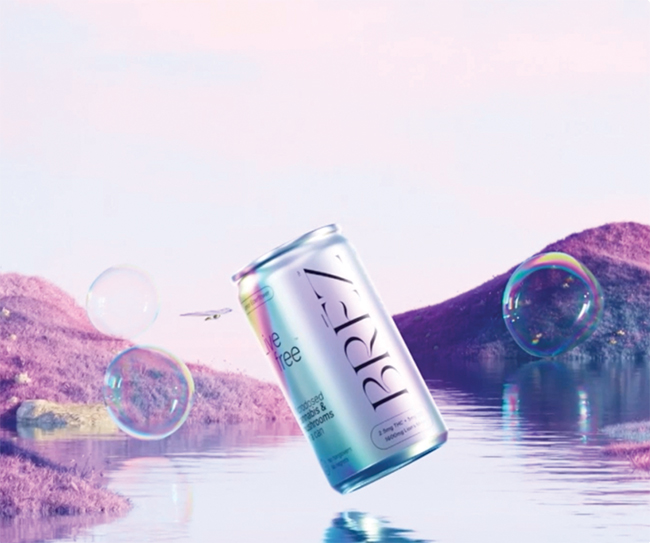
Brēz
Some brands succeed by confirming accepted notions of how the beverage market works – and some succeed by doing the total opposite. Consider Brēz a leader within the latter group, as evidenced by its inventive and disruptive approach to slanging cans of low-dose, cannabis-and-mushroom-infused sparkling drinks. Under the auspicious guidance of its outspoken founder Aaron Nosbisch, Brēz has done more than put up around $25 million in sales (per Nosbisch) since formally launching in summer 2023; Brēz’s D2C sales focus, slick branding, creative social media presence and clear identity as a true alternative to alcohol has given it a distinctive edge amongst a rising competitive field, proving it a vital force in normalizing cannabis drinks. Its ability to, so far, effectively realize even some of the enormous potential in next-gen functional beverages – wellness-minded products with real appeal across demographics and need states, that can look the part at a corner store or in Miami for Art Basel, and that, most importantly, taste damn good – is worth celebrating.
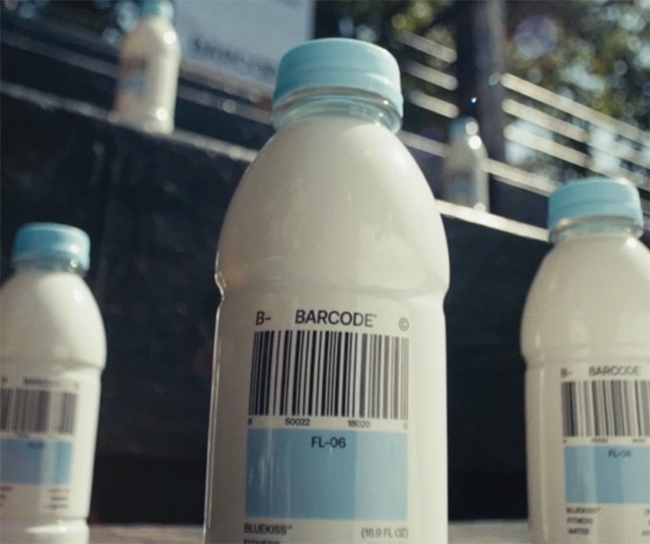
Barcode
It’s still early, but after just four years in the game, Barcode is shooting with a hot hand. The upstart brand — created by Bar Malik, an experienced sports trainer and former head of player performance with the NBA’s New York Knicks — got off the blocks strong in 2021, profiting from Malik’s formidable combination of sports nutrition expertise and deep connections in the league (Kyle Kuzma of the Washington Wizards is a co-founder). Its novel approach won over scouts from top retailers and DSDs eager for innovative hydration products capable of taking share from Gatorade and BodyArmor.
Barcode has been doing exactly that, and in 2024 its momentum accelerated. Continuing to work from its winning playbook, Barcode has gone deeper with its NBA partners; after scoring a deal with the Brooklyn Nets at the end of 2023, this year saw Barcode team up with the Miami Heat and San Antonio Spurs — home to Barcode investor/partner Victor Wembanyama — as both teams’ official performance drink, and as a concession in Miami’s Kaseya Arena. Former NBA star Metta World Peace (née Ron Artest) has backed the company with investment through his wellness-focused fund, True Skye Ventures.
That traction has attracted authentic partnerships taking the brand outside of sports and into broader lifestyle and culture: see the arrival of hip hop legend Jadakiss as an investor and ambassador this summer (complete with his own signature flavor, Blue Kiss) or its Erehwon smoothie collab with Winnie Harlow.
Blending a science-driven approach with a growing constellation of the NBA’s most promising young stars, Barcode has set a course to become the hydration drink of choice for a new generation of athletes and fans.
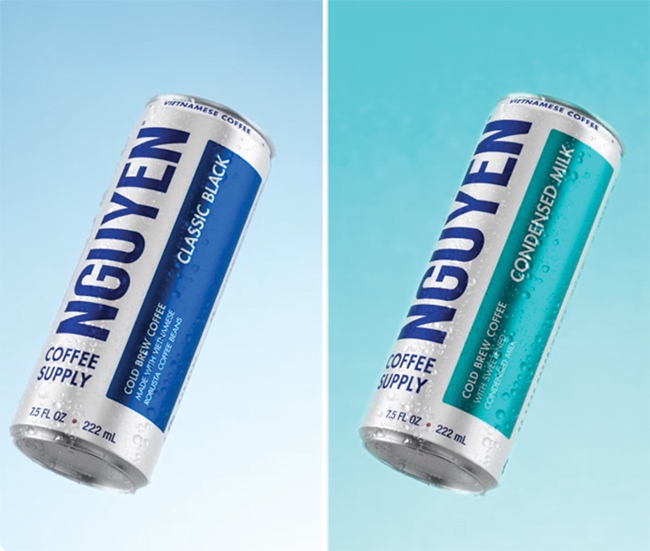
Nguyen Coffee Supply
Innovation within ready-to-drink coffee has been hit-or-miss in recent years, though not for lack of trying to dazzle consumers with wacky flavors, added functional ingredients or plant-based milks of seemingly every kind. Since launching in 2018, Sahra Nguyen and her Brooklyn-born company, Nguyen Coffee Supply, have followed a deeper, more personal strategy for disrupting the stagnant category; this year, the buzz has been palpable.
Led by their inspirational eponymous entrepreneur, Nguyen Coffee Supply has emerged as a torch-bearer for robusta beans, specifically those grown in prodigious quantities on the gentle slopes of Vietnam, the world’s second-largest coffee producer. With robusta advocacy at its core, the brand has elegantly highlighted Vietnamese styles (its take on the traditional *cà phê sữa đá*) in its RTDs — think condensed milk and coconut flavors — that pack more caffeine than their 100% arabica counterparts. This year saw Nguyen make inroads with mainstream shoppers in Target, Sprouts and gopuff, yet fast growth has been tempered by a sharp focus on efficiency and sustainable gains, efforts that have helped maintain healthy COGs and reasonable price points.
Standing at the crossroads of modernity and tradition, Nguyen is forging a new path through the middle, taking inspiration from both Vietnam’s centuries-old coffee culture and Brooklyn’s in-the-moment hustle vibes.
BEST PACKAGE DESIGN
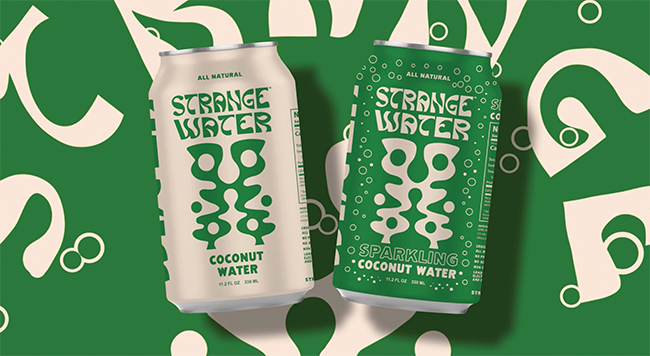
Strange Water
Every ad executive would tell you not to call your product “strange” — but they must never have seen packaging like this. Strange Water flips accepted convention on its head, serving up its mildly sweet coconut water in 12 oz cans wrapped in a matte finish shrink-sleeve label emblazoned with retro-inspired typography and abstract patterns in green and cream colors, with nary a coconut image in sight. Rather than “strange,” the aesthetic is refreshing, modern, unexpected and wholly welcome to the category.
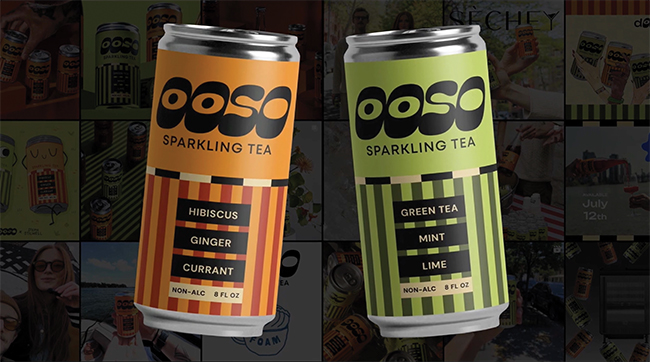
OOSO Tea
What is it about sparkling tea that captures the imagination of designers? We’re not totally sure, but keep ‘em coming. Following past honorees like Sound and Sarilla, this year sees OOSO Sparkling Tea pick up the award thanks to a bold-yet-minimalist design on its 8 oz cans. Against a green (Green Tea) or orange (Hibiscus) backdrop, it’s all black bars, straight lines and clear callouts to its three main ingredients. The simple four-letter name is a slick design choice in itself: short, sweet and memorable.
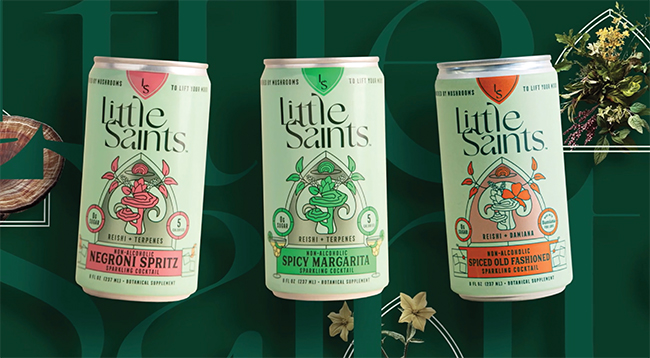
Little Saints
As many brands have found, just making a drink that consumers feel good holding — let alone sipping — is an achievement in itself. That’s particularly true for a disruptive space like adult non-alcoholic drinks, and Little Saints has risen to the occasion. A tasteful combination of art and science, the label centers your attention with an “altar” for “plant magic,” adorned on either side by understated callouts for ingredients and sugar, along with the tagline “taste the magic.” It’s the perfect combination of mystery and seduction.
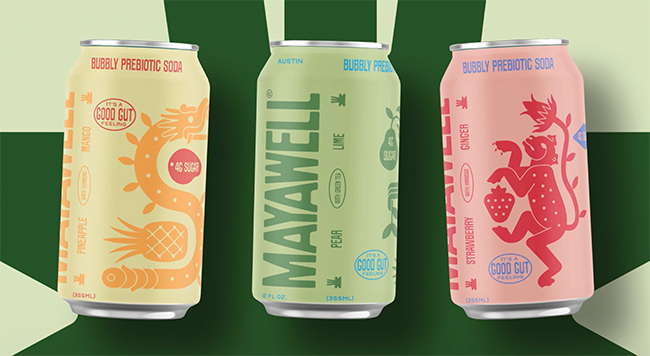
Mayawell
Soda’s comeback has been well-documented on this site, but as consumers increasingly embrace a new crop of gut-friendly CSDs, there’s plenty to love outside the can as well. Case-in-point: Mayawell, the Austin-based brand fresh off a shiny new makeover this year. Leaning into both classic soda fountain aesthetics and iconography inspired by its founders’ Mexican heritage, the result is something truly captivating and different within the resurgent category.
BEST NEW PRODUCTS
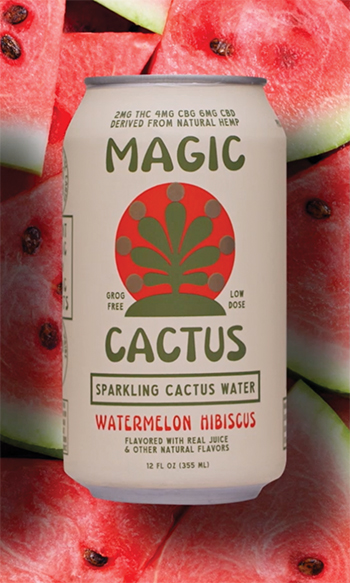
Magic Cactus
Cactus waters have been a plant-based beverage mainstay for years, but it took Magic Cactus to pair the replenishing refreshment of cacti with a sessionable low-dose symphony of hemp-derived THC, CBG and CBD. Sweet to the taste with a mild lift in each can, Magic Cactus has made a stylish, highly drinkable and balanced line of mood-enhancing beverages that ought to provide newcomers to the cannabis category with an easy entry point while also giving those with a little more experience a flavorful Southwestern buzz.
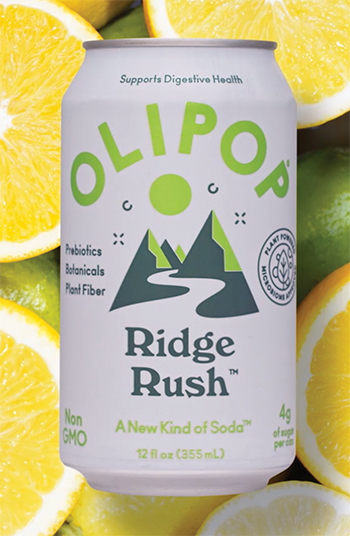
Olipop Ridge Rush
Olipop has been in the midst of a veritable innovation onslaught for several years now, releasing new flavors with impressive regularity to fill out its portfolio with all the major soda fountain favorites in order to firmly establish itself as a modern CSD with a BFY version of whatever flavor may desire. We were particularly taken with this year’s Ridge Rush, a crisp citrus soda flavor that one might say ‘Does the Dew’ in a way that fully satisfies the palate, though what gamer cred it may earn is still TBD.
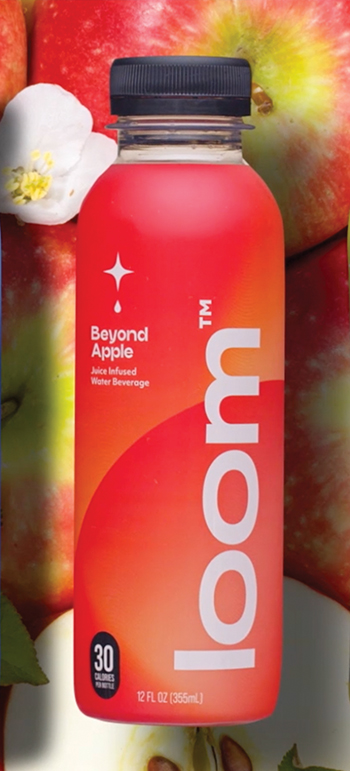
Loom Juice
If Loom is indeed “Juice from the Future” as its slogan proclaims, then we’re happy to declare that the future is now. On its “Space Disco” visuals alone Loom Juice is eyegrabbing, sleek and simply cool, but it’s the crisp flavor of its product line that elevates this brand to Best Of the Year status. With offerings like Cosmic Candy Grape, Aurora Orange and Moon Punch, Loom offers a refreshing beverage that in texture is halfway between juice (15% per bottle) and enhanced water, but full of flavor that in our opinion fully lives up to the bottle it fills.
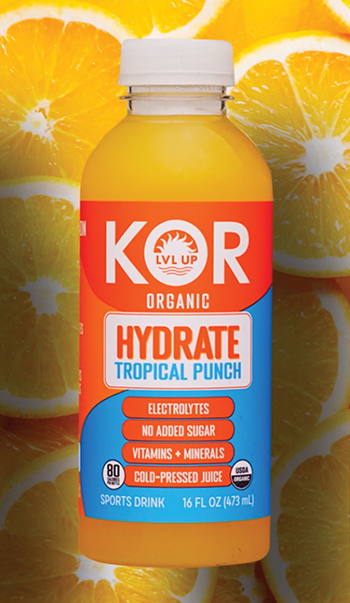
KOR Hydrate
KOR Shots is growing up. The juice shot brand rolled out its full-size, 16 oz. Hydrate sports drink line this year and we personally couldn’t be happier with how they’ve turned out. In a category that has been disrupted by upstarts over the past few years, KOR’s move into sports drink makes sense from the strategic lens, but it also works beautifully from the product perspective as well. With flavors such as Tropical Punch and Superfood Quench (made with blue spirulina providing natural color) KOR Hydrate lives up to the quality standard this brand established in its mini-sized OG format.
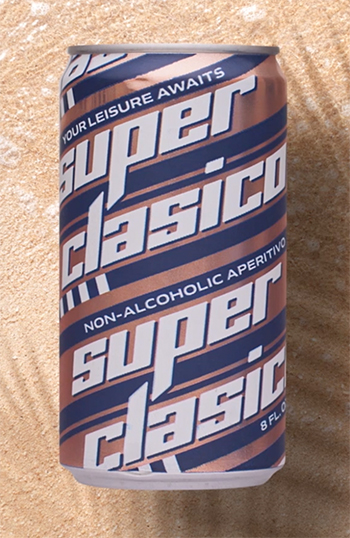
Casamara Club Superclasico
Is it a soda? A mocktail? Neither – it’s a “superclasico,” and we’re in love. Casamara Club’s first “cocktail-strength” non-alc beverage drinks like a bittersweet aperitivo, balancing earthy botanicals and Italian chinotto with bright sweetness of berries and Demerara cane sugar. It’s unique, attractive, and ultimately its own thing.
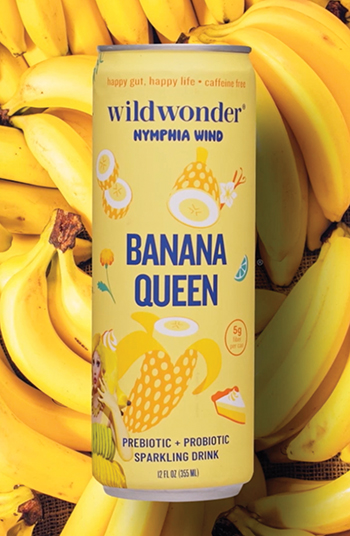
Wildwonder Banana Queen
We’ve long enjoyed Wildwonder’s sparkling gut health beverage portfolio, but their collaboration with RuPaul’s Drag Race champ Nymphia Wind does something extra special – it’s a banana flavored beverage you want to go back to again and again. Made with banana puree, vanilla bean and “fresh brewed” marigold flowers, the drink is decadent, clean and worth celebrating.
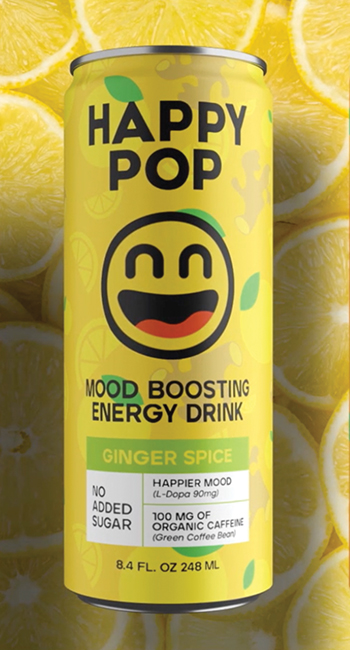
HappyPop
HappyPop is the latest venture from Koia co-founders Maya French and Dustin Baker, and we feel by now we can say that they know a thing or two about formulating a quality beverage. Their functional, better-for-you energy drink brand is readily approachable with fruit-forward flavor and a 100mg organic caffeine kick to boot. With strong branding, a tasty liquid and an energy-positioning that sets it apart from other “Pop” brands, we’re quite happy with this lineup and overjoyed to see what else this brand has in store for us.
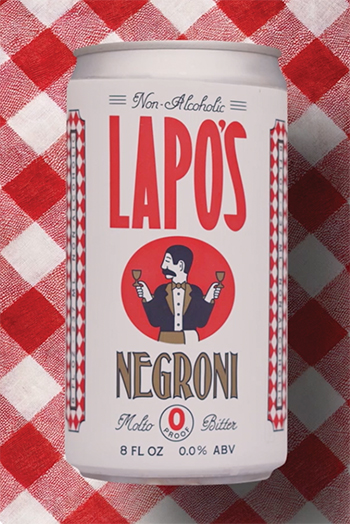
Lapo’s NA Negroni
Did someone say Negroni? The BevNET team takes its bitter cocktails quite seriously, if you were wondering, so believe us when we say that Lapo’s non-alcoholic canned riff on the classic meets the moment. Made with orange, juniper and bitters, this is a zero-proof drink fit for a Count (or a Craven).
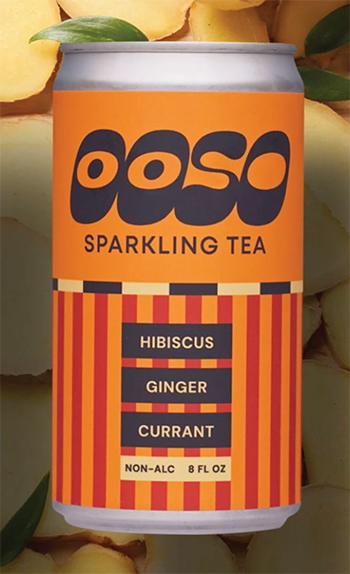
OOSO Tea
What is it about sparkling tea that captures the imagination of designers? We’re not totally sure, but keep ‘em coming. Following past honorees like Sound and Sarilla, this year sees OOSO Sparkling Tea pick up the award thanks to a bold-yet-minimalist design on its 8 oz cans. Against a green (Green Tea) or orange (Hibiscus) backdrop, it’s all black bars, straight lines and clear callouts to its three main ingredients. The simple four-letter name is a slick design choice in itself: short, sweet and memorable.
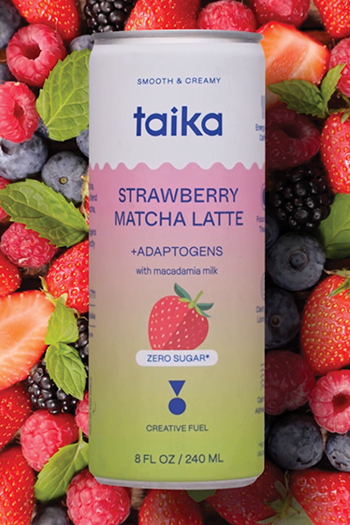
Taika Strawberry Matcha Latte
Matcha in a can has been a notoriously tough ask for even skilled formulators; if that was all that Taika managed to do here, we’d be pretty happy. But matcha is just the start: Taika’s bold, adaptogen-boosted take on “creative fuel” balances the gentle sweetness of strawberry essence with creamy macadamia milk and organic ceremonial grade matcha. It’s a reach into functionality and flavor that would be easy to get wrong, and we’re so glad they didn’t.


Receive your free magazine!
Join thousands of other food and beverage professionals who utilize BevNET Magazine to stay up-to-date on current trends and news within the food and beverage world.
Receive your free copy of the magazine 6x per year in digital or print and utilize insights on consumer behavior, brand growth, category volume, and trend forecasting.
Subscribe