

Bevscape: The Latest Beverage Brand News
Keurig Dr Pepper Invests $7B Behind Coffee, Refreshment Bevs Revamp
Keurig Dr Pepper (KDP) announced $7 billion in new investment and offered nervous investors a confident appraisal of its much-scruitinized plan to separate its coffee and refreshment beverage businesses, while acknowledging and addressing market concerns.
Since it was revealed via its $18 billion acquisition of JDE Peet’s in August, KDP’s forthcoming breakup has sparked a stock decline while drawing questions over the two new companies’ financial structure, leadership and future timeline. Speaking at NASDAQ headquarters in New York City in October, KDP’s executive team, headed by board chair Bob Gamgort took turns addressing an audience of investors and analysts before hosting a Q&A session.
“We heard your feedback, we certainly noted the market reaction, and that made it really clear to us that we needed a day like today to better explain the strategy and thought process behind it,” Gamgort said.
Per KDP execs, cutting its coffee business loose via the Peet’s acquisition isn’t a rejection of the core strategic philosophy, but rather a voluntary strategic choice to improve the overall company.
Gamgort noted the initial combination, dating back to 2018, intended to “take two sub-scale beverage companies who were solely focused on North America… to create a beverage challenger at scale.”
Since then, explained CEO Tim Cofer, the refreshment beverage segment has strengthened considerably, but coffee has not, particularly “relative to our global competitors that can leverage broader advantages in technology and sourcing” that “can participate across the entire global category.”
The two companies could still function under one roof, Gamgort claimed, but the “global opportunity” in coffee “requires a very different management mindset.” JDE Peet’s represented one of the few potentially acquirable coffee companies with the kind of global reach KDP was searching for: it’s already large and profitable, bringing in $11 billion in net sales and nearly $2 billion in adjusted EBITDA. It also sports a robust portfolio of regional brands across Europe and in Brazil, including names that over-index with younger consumers.
“This is a good business,” said Cofer. “Its got iconic brands. Its got significant capabilities. Yet it’s also true that it’s a business with significant value creation potential that has yet to be fully realized.”
As the revamped Keurig business gets underway, strategy will center around four pillars: driving household penetration, growing premium coffee, scaling cold coffee solutions and the future of Keurig’s at-home brewer systems. In terms of innovation, the company is planning to launch its first owned premium brand, the Keurig Coffee Collective, which will boast “distinctively delicious blends” in “elevated packaging,” along with 30% more coffee per K-Cup. There’s also high hopes for the Keurig Alta brewer, powered by new aluminum-free, plastic-free round pods.
Once completed, the deal will see coffee net sales more than triple to $16 billion annually, making it the second largest coffee company on the planet and the top coffee buyer worldwide.
The acquisition plan is also targeting 500 million Euros in savings through 2032, with around half being reinvested in the business. There will also be plant closures, two of which have been confirmed thus far.
Speaking during the Q&A session, an exec said that a recent visit to JDE Peet’s headquarters in the Netherlands helped “improve confidence in our synergies, both on a revenue basis in terms of the growth opportunities,” particularly brewer system innovation, cost structure and economics.
The company has established a Transformation Management Office — led by a newly appointed Chief Transformation and Supply Chain Officer, Roger Johnson — to guide teams on both sides of the business with the aim of closing the deal in mid-2026 and being “ready to separate” by the end of that year. He’ll be tasked with establishing optimal operating models, executing integration, and driving cost synergy capture.
That includes maintenance of capital for each company upon going independent, itself a point of concern for some investors when the deal was first revealed, execs acknowledged on the call. In response, KDP is making a $4 billion investment in a newly created coffee manufacturing joint venture co-led by Apollo and KKR, of which it will retain a controlling interest and operational control. KDP is also investing $3 billion in convertible stock in the Beverage Co., also co-led by Apollo and KKR.
Both companies are projected to generate cash, with Beverage coming in at $6 billion over the next three years, and Coffee set to produce more than $5 billion. The exact dividend at each company will be determined closer to separation.
With those transactions, management will nominate Brian Driscoll, chairman of Acosta Group, for election to its Board of Directors at its next annual meeting.
The separation process will be “milestone-based,” and while there is a time frame in mind, the deal will also depend on certain factors including synergies, balance sheet readiness, favorable market conditions and the appointment of an independent board of directors and “experienced leadership team” for each standalone company, with recruitment being led by a third-party firm.
It’s a subtle but pointed shift from the August announcement, which stated the separation would be complete by the end of 2026.
The leadership piece is of special note in coffee: on the call, KDP confirmed that CFO Sudhanshu Priyadarshi will not be stepping in to lead the Global Coffee Co. as CEO, as previously announced. Instead, KDP’s board is running an internal and external search for the role. Cofer, meanwhile, is still on track to be the Beverage Co.’s next CEO.
Once separated from the coffee business, KDP’s Beverage division is expected to benefit from a singular focus, said Eric Gorli, President of US Refreshment Beverages.
“There is definitely a different culture for a fast-moving, soft drink-centric, DSD-centric organization versus warehouse model. I think the amplification of that and just how we go about creating the company’s culture coupled with the management team’s focus will probably be the biggest underpinnings. That said, we’ve got a playbook that’s working, and you know, I would expect to see more of the same.”
The company also left the door open for “future optionality” as it matures independently.
“As you continue to advance a scaled brand portfolio, with many different categories of participation to strengthen that DSD muscle, there could be options down the road that present themselves around ownership in different levers of the business: brands, distribution, etc.,” said Gorli. “So we’ll take a step at a time, but I do think an option like that longer term is enhanced.”
The company has been aggressive in revamping its DSD system over the last six years, during which it made 30 acquisitions. Portfolio expansion has been motivated in part by generating additional scale for DSD operations, according to Cofer. The company is also plotting growth around liquid beverage enhancers and powders through its acquisition of Dyla Brands earlier this year.
“We do have a consistent and proven track record of creating value in beverages,” said Cofer. “We create vibrant businesses through a playbook that works, we have deep insights that underpin our conviction in this deal, and we have a clear plan to deliver on its promise.
At the same time, we’re listening and we are adjusting as and when needed, and this leadership team has the confidence, it has the experience to successfully carry out this transaction, but we also have the wisdom. We have the willingness to stay flexible in our approach.”
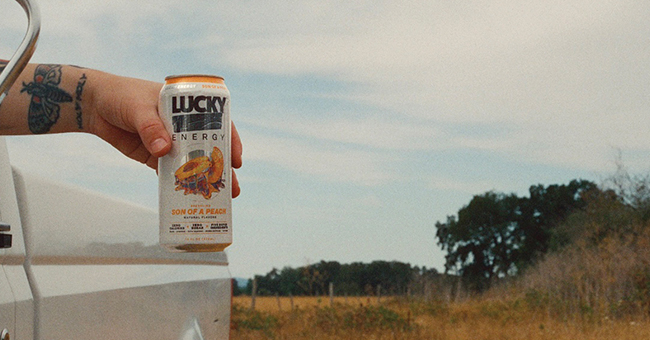
Lucky Energy Closes $25M Round, Prepares For Innovation
It takes more than luck to raise over $65 million in two years.
In November, Lucky Energy landed $25 million in a Series B round led by Paine Schwartz Partners, with former leaders from Suja Juice, James Brennan and Bob DeBorde, joining Lucky’s board. The round included follow-on investment from existing investors as well as new backers North Fifth Services, LLC, Sequel, and Joyance Partners, among others.
William Ford, CEO of global PE firm General Atlantic, and Florida Panthers owner and Virtu Financial founder Vincent J. Viola also contributed to the round.
“The idea was that we wanted to build the team with power and authority, the best we could get in the business,” Lucky Energy founder and CEO Richard Laver told BevNET.
The new capital comes after Lucky closed a $14.2 million Series A1 round in March and brings its funding total to $63 million. Already, the energy drink maker is planning a follow-on Series B1 in early 2026, driven by the “$50 million demand” for this new fundraising opportunity, the company reported.
Along with former Red Bull North America CEO Dan Ginsberg, Brennan and DeBorde bring veteran brand-building experience and the ability to “execute, build onto additional rounds and move companies to profitability,” Laver said.
Lucky is targeting the third quarter of 2027 to hit profitability.
In just two years, Lucky has moved quickly to fill a void in independent distributor portfolios as emerging brands like C4 and GHOST have moved into strategic distribution, Laver said. “There was an opening in DSD for a differentiated product that has fewer ingredients and storytelling that resonated with consumers.”
Now available in over 15,000 retail locations, including Albertsons, Circle K and QuikTrip, Lucky is preparing to go national with Walmart, Sheetz and Cumberland Farms in December.
“From day one, almost everything about this business was engineered,” Laver said, referencing the company’s ability to raise multiple eight-figure investment rounds in short succession. “The only thing that was not engineered was I thought retailers would come on quicker than they did.”
After an April 2024 rebrand, Lucky has seen an uptick in consumer and retailer demand as the brand’s identity has shifted to emphasize Laver’s personal story of survival and resilience.
Laver reported that 40% of Lucky’s consumers are women. The brand is leaning into social media discussions around jitter-free “energy soda,” while also looking to the future with new flavor and format innovation to broaden its appeal among more demographics.
The brand is preparing to launch a “low-weight, energy product” that is expected to disrupt the category further, Laver said.
Monster Touts Female-Focused Energy Innovation As Q3 Sales Pass $2B
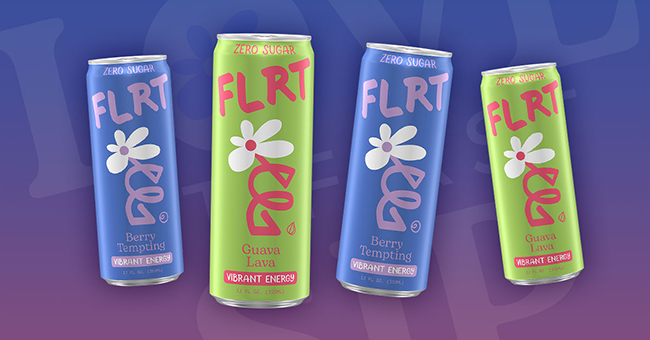
Monster Beverage Corp. continued to gain ground in Q3, and plans to use that momentum to release a slate of new innovation – including female-oriented brand FLRT – early next year.
Net sales were up 16.8% in the quarter to $2.2 billion, with Monster Energy enoying a 17.7% sales spike. Year-to-date net sales rose 8.5% to $6.16 billion.
Monster CEO Hilton Schlosberg used the occasion in November to tee up next year’s new releases, headlined by a late Q1 launch for FLRT in select channels. Complementing Monster’s Reign Storm line, FLRT is positioned as a zero-sugar, female-focused brand debuting in four flavors: Strawberry Fling, Guava Lava, Berry Tempting and Sunset Squeeze.
“Innovation remains central to our long-term growth strategy,” said Monster CEO Hilton Schlosberg in a statement. “We are excited about our 2025 fall new product offerings and our robust slate of planned new product offerings for 2026, including the upcoming launch of FLRT, our female-focused brand, late in the first quarter, which we plan to initially debut in four flavors.”
Female-centric energy drinks have been a rising trend over the last three years, highlighted by significant growth for brands like Celsius-owned Alani Nu, Gorgie and Bloom.
Other releases on the calendar include Monster Energy Ultra Punk Punch in March, and Full Throttle Red Apple and NOS Grand Prix Guava in April.
The brand’s presence continued to grow internationally in Q3: net sales to customers outside the U.S. increased 23.3% in the quarter to $937.1 million, up from $760 million in the same period last year.
Schlosberg cited internal consumer research in Western Europe that indicated 25% of Monster consumers over the last 12 months are new to the category, with rising coffee prices sparking a shift in caffeine preferences.
Monster’s Alcohol Brands segment – comprising various craft beers, flavored malt beverages and hard seltzers – suffered a 17% drop to $33 million for the quarter, down from $39.8 million for the same period last year. However more innovation is on the way, including the first subline for The Beast, a spirit-based RTD and two new beer brands.
The impact of tariffs was mixed: while fees on imported flavors and concentrates had a “modest impact,” tariffs had a “significant” influence on Midwest premium for aluminum cans.
The company confirmed it is increasing prices, but declined to specify how much. That comes after a 5% increase last year.

Recess Raises $30 Million in CAVU-led B Round, Adds Kyle Thomas From C4
Recess Drinks closed a $30 million series B round led by CAVU and other repeat investors in late October.
Kyle Thomas, who joined C4 in 2021 and has led the growth of its sales team in beverage as Chief Commercial Officer, will be joining Witte as Recess’ co-CEO and President.
Witte cited Thomas’ leadership and development of platform brands, a long-time argument the founder has made around Recess, as one of the main reasons for the hire. Thomas has helped build both Nutrabolt – which went from a fitness supplement company to a leader in the energy drink space with C4 – and sparkling beverage maker Topo Chico at Coca-Cola Co. into brands with successful extensions into a variety of formats and categories.
Similarly, Recess has expanded in both the mocktail space and “mood” functionality, as well as its earlier hemp-based, CBD and adaptogen drinks. It’s now in about 15,000 stores, according to the company, with 95% of sales in its mocktail and mood varieties, according to Witte.
“I’ve been looking at Recess as a platform for about 7 years,” said Recess CEO and founder Ben Witte. ”Early trouble that the brand faced when it went to market as a CBD brand – the overall category faced massive setbacks in the face of regulatory inconsistencies – “turned out to be the best possible thing that could have happened to us” as it led to development of the Mood and mocktail varieties, he said.
Now, Thomas will be in position to lead a brand with recent Mocktails approvals in Albertson’s and Target as a national brand, as well as some Trader Joe’s stores. Mood has also received strong consideration in many of those accounts.
“Recess is at the forefront of what I believe will become one of the next major beverage spaces — functional relaxation beverages and alcohol alternatives” Thomas said. “I am incredibly excited to partner with Ben to help fulfill the incredible potential that the Recess brand and business has.”
Witte stressed that the next six months will let the brand build “infrastructure” in sales and marketing to grow much more quickly; current velocities have been supported in retail with very little marketing or trade spend – just 9% to date, he said.
“I’ve always taken a long term view here,” he added. “This is working, it’s a big idea, there’s a lot more places we can extend into from a channel view.”
To bolster the team, several other new sales hires have come on board, including DSD specialist Ryan McAulay as SVP of field sales and distribution, a role similar to the one he held at Liquid Death.
The investment is CAVU’s first beverage placement since Poppi, Witte noted. Other existing investors taking part in the round include Midnight Ventures, Rocana, Torch Capital and Doehler Ventures, as well as Atlantic Records CEO Craig Kallman, KAS Venture Partners and Vanquish.
The CAVU team lauded Witte for building a “counterweight” to “the $25 billion-plus energy drink market in the U.S. built on stimulation.”
“Recess isn’t about powering through the day — it’s about being more mindful within it,” said Jared Jacobs, a partner at CAVU. “We’re thrilled to partner with Ben and the team to help scale Recess from category pioneer to the definitive household name in modern relaxation.”


Receive your free magazine!
Join thousands of other food and beverage professionals who utilize BevNET Magazine to stay up-to-date on current trends and news within the food and beverage world.
Receive your free copy of the magazine 6x per year in digital or print and utilize insights on consumer behavior, brand growth, category volume, and trend forecasting.
Subscribe