

Bevscape: The Latest Beverage Brand News
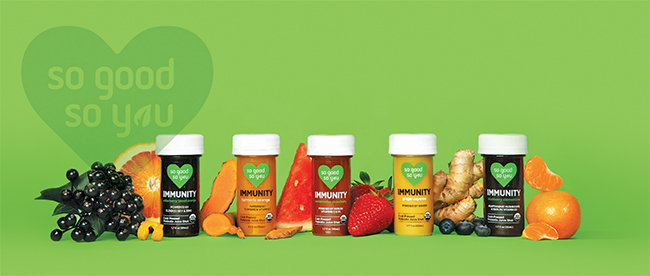
So Good So You Acquired By Private Investment Firm Bansk Group
So Good So You is soon to be under new ownership, as the Minnesota-based wellness shot maker agreed in March to be acquired by consumer-focused private investment firm Bansk Group. Terms of the transaction were not disclosed.
So Good So You chief brand officer Rita Katona and CEO Eric Hall, who together co-founded the company in 2014, will maintain equity in the company and a seat on the board of directors.
In a statement, Hall praised Bansk as “deeply aligned with our core values around sustainability and investment in people,” as well as its record of “scaling purpose‑driven consumer brands.”
Producing its shots from its own manufacturing facility powered by 100% renewable energy, So Good So You emerged as a category leader in refrigerated, cold-pressed juice-based wellness shots alongside names like Suja, Vive Organic and Sol-ti. Earlier this year, So Good So You introduced a line of naturally caffeinated sparkling energy drinks in 8.4 oz. slim cans at Target.
The brand showed sales in excess of $90 million for the trailing 52-week period ending on March 13, according to data compiled from Circana across an index of major retail channels including convenience, grocery, club, military, and online retailers.
“I couldn’t be more proud of the talented and dedicated So Good So You team members who have made this growth possible, and I am excited for our continued success with the support of the Bansk team, as we expand the brand mission and reach even more consumers,” Katona added.
New York-based Bansk Group holds over $5 billion in assets under management in consumer segments like personal care, health and household products, as well as food and beverage with brands like Red’s and No Man’s Land Beef Jerky.
“So Good So You is a category‑leading brand with a powerful combination of functional efficacy, great taste, and an authentic, purpose‑driven mission,” said Brian O’Connor, Senior Partner and Chief Investment Officer at Bansk Group. “Consumers are increasingly seeking convenient, food-as-medicine solutions that fit seamlessly into their daily routines. So Good So You has been instrumental in developing the category through its high-quality products, continued sales and marketing investments, and exciting innovation across function, flavor, and format.
He continued: “Equally as important, the company has built a differentiated brand grounded in responsible business practices and with a clear commitment to people and the planet – values that fully align with our long‑term approach to value creation and sustainability. We are excited to partner with the entire So Good So You team to support the category and the brand’s next phase of growth.”
The transaction marks an exit for So Good So You’s existing institutional investor, Prelude Growth Partners, whom Hall cited as “an exceptional partner.”
“It has been a privilege to support So Good So You to become the leader in its category,” said Neda Daneshzadeh, Co-Founder and Managing Partner at Prelude Growth. “Born from a clear mission to make wellness accessible and delicious to all, the Company today delivers exceptional, efficacious products to an ever-growing set of passionate consumers. We are proud to have played an integral role in the Company’s growth story over the past several years and we look forward to seeing all they will accomplish.”
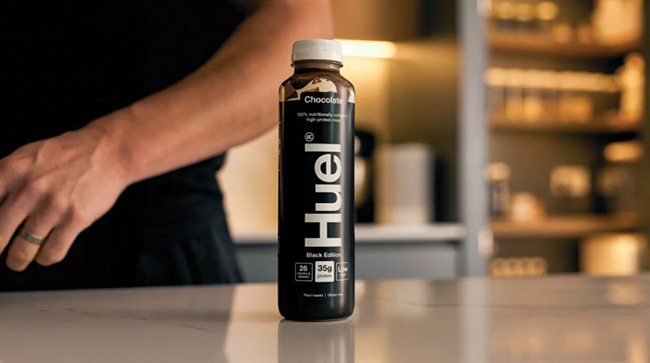
Huel Acquired by Danone SA In $1.1 Billion Deal
maker Huel has joined Danone SA after it was acquired in March for a reported fee of over $1.1 billion.
The acquisition deepens Danone’s roster of functional nutrition brands, with Huel’s product portfolio spanning from its flagship powder-based shakes to ready-to-drink beverages and snack bars.
Created by Julian Hearn and James Collier, Huel launched as a digital-native brand in the U.K. in 2015 and is now available in over 250,000 stores worldwide, with estimated revenues of more than 250 million ($333 million) in 2025. The company raised $24 million in 2022 at a valuation of $560 million, backed by notable names such as actor Idris Elba and entrepreneur Grace Beverly.
The brand has slowly pushed into U.S. retail over the last several years, starting with the launch of its Black Edition High-Protein Complete Meal in GNC stores last May. In ready-to-drink, Huel introduced its 12 oz. Daily Greens line last fall at Sprouts, Target and LifeTime Fitness.
Reflecting on his company’s work of “ten years building a brand with a positive impact on people’s health,” Huel CEO James McMaster called the acquisition “the next step” for the brand.
“With Danone, we will now have the infrastructure, distribution and R&D capability to go further, into new markets and to more people, as demand for convenient, complete nutrition continues to grow,” McMaster said in a statement. “We’re so proud of what the team has built, and excited about what comes next.”
Danone described the acquisition as in line with its “Renew Danone” strategy, designed to “enhance Danone’s presence in functional nutrition and extend its portfolio into the gast-growing Complete Nurtition space.” Danone’s support will allow Huel to “accelerate growth, innovation and international expansion,” the company said.
“What they have achieved in the fast-growing Complete Nutrition space fully resonates with Danone’s mission of delivering health through food,” said Antoine de Saint-Affrique, CEO of Danone SA. “Combining their range and best-in-class digital capabilities with Danone’s global reach and deep nutritional expertise offers exciting opportunities into the new and fast-growing nutritionally complete space, in line with our Renew Danone strategy. We look forward to learning from one another and unlocking new opportunities and growth for both businesses.”
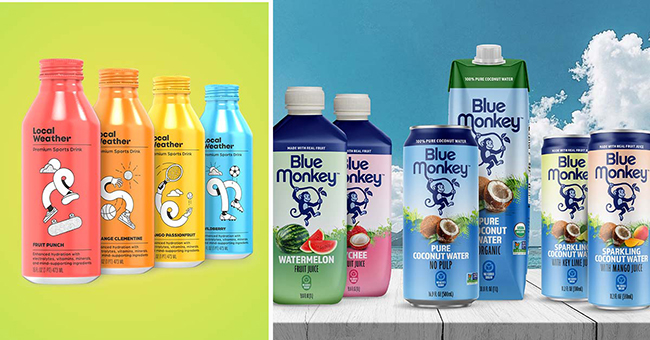
Blue Monkey Acquires Local Weather, Updates Branding
One year after private equity firms Fifth Ocean Capital and Boyne Capital Partners came together on a deal to acquire Canadian brand Blue Monkey Beverage, the partnership has added next-generation sports drink Local Weather as it seeks to build a functional drink platform.
“There are three big beverage ecosystems – Coke, Pepsi, Keurig Dr Pepper – and then a bunch of entrepreneurs who have great ideas and great brands trying to go it alone,” said Stephen Beck, co-founder of Fifth Ocean and CEO of Blue Monkey, in an interview in March. “The whole thought was to find the right platform in the healthy space and build a portfolio. We felt like Blue Monkey had leverageable assets.”
Founded in 2009 by husband-and-wife team Simon and Mary-Jane Ginsberg, Blue Monkey sources and produces its coconut water, including sparkling varieties, and its various juice-based drink lines in Vietnam.
When Beck took over the Blue Monkey in January 2025, the brand was “a little all over the map from a product standpoint,” he said.
Beck’s team did some SKU rationalization, bringing the offerings down to six flavors of sparkling juice, four flavored coconut waters, four 100% juices and one Tetrapak carton of 100% coconut water.
The team also began the process of redesigning Blue Monkey’s packaging, which began with feedback from buyers centered on the brand’s hero drinks, its sparkling juices. These products sit between the competitive flavored seltzer set and 100% juices, Beck said.
The packaging refresh simplified the fruit imagery and reworked the brand label into a horizontal format to be more legible on-shelf. Across the portfolio, the brand highlighted its blue identity complete with a new monkey mascot on the front-of-pack.
The revamped drinks were set to hit stores in late March and early April with a more unified brand identity that makes Blue Monkey recognizable across categories.
Blue Monkey is in roughly 5,000 doors across North America and has commitments for 2,000 new doors in the U.S. for the new packaging.
Backed by NFL quarterback Russell Wilson and digital media founder AJ Vaynerchuk, Local Weather is a relative newcomer to the sports hydration category. It launched in 2022 and has been steadily building in the growing functional hydration set in specialty and natural channel stores.
Beck and his team were first introduced to the modern sports drink brand at Expo West last year. Local Weather’s ingredient deck and identity as a better-for-you sports drink with functional benefits “felt complementary” to how the team was restructuring Blue Monkey, Beck said.
The deal closed in early February for Blue Monkey to acquire Local Weather; the terms of the deal were not disclosed. Local Weather co-founder and former CEO Jon Alagem will remain with the brand as a consultant.
The two brands will now sit “side-by-side” in the Blue Monkey portfolio, where they can play off each other in the U.S. and Canada to scale together, Beck said.
Natural grocery retail is the largest channel for both Blue Monkey and Local Weather in their respective home markets, he said. “There are obvious synergies with how the brands can live together in retail, and we certainly would consolidate our distribution path.”
While Blue Monkey integrates Local Weather into its portfolio, the team is open to pursuing other opportunities to build a functional drinks platform, whether it’s an energy beverage, a mocktail or a modern soda.
“If I had to sort of throw a dart at it, there’s probably one or two [acquisitions] that would fill out our portfolio, depending on the size, scope and category,” Beck said. “I don’t think we’re done yet.”
Pepsi Ventures Group Chief Daniel Grubbs Exits
PepsiCo is entering a new phase as longtime executive Daniel Grubbs announced his departure in early March after a decade spent managing the company’s venture portfolio.
Grubbs joined Pepsi in 2013 as part of the company’s Premium Beverage/Emerging Brands division, where he worked with acquired and incubated brands like Naked Juice, IZZE, O.N.E. Coconut Water and KeVita. In 2016, he was appointed to lead the newly created PepsiCo Ventures Group with the remit to identify, secure and nurture Pepsi’s relationships with emerging CPG companies.
During his time at the helm, Pepsi executed several nine-figure deals across food and beverage, including snack maker Siete and prebiotic soda Poppi. Grubbs also oversaw the launch of the Nutrition Greenhouse accelerator program in Europe and North America, tasked with discovering and mentoring emerging food and beverage startups.
“After an incredible chapter with PepsiCo, I’m filled with gratitude for the experiences, partnerships, and leadership lessons that shaped my journey,” Grubbs wrote on LinkedIn. “It’s been a remarkable period of growth—working alongside talented teams, building strong brands, and driving meaningful impact across the food and beverage industry. I’m especially thankful for the colleagues and mentors who challenged me to think bigger and lead better every day.”
Grubbs’ new employer is New York-based private investment bank William Hood & Company, where he is set to lead the group’s Food & Beverage division as Managing Director.
“This new role brings an exciting opportunity to partner with innovative companies, founders, and investors across the sector at a pivotal time of growth and transformation,” he wrote. “I look forward to leveraging my industry experience to help clients navigate strategy, scale, and long-term value creation.”
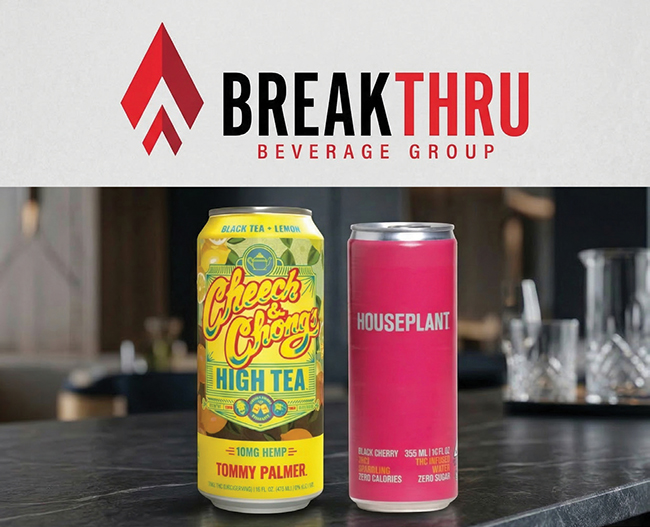
Breakthru Beverage Enters Hemp Distribution
Breakthru Beverage Group, one of the largest beverage distributors in the U.S., is jumping into the intoxicating hemp drink set.
The move, announced in March, comes as the category actively lobbies federal lawmakers for a solution after Congress passed a spending bill in late 2025 that would ban hemp-derived cannabinoid products on November 12.
The Chicago-based beverage wholesaler will exclusively distribute hemp-derived delta-9 THC beverages with a maximum potency of 10 mg per serving. The company announced it will carry Quirk THC Seltzer, Seth Rogan’s Houseplant and Cheech & Chong brands in neighboring Minnesota, with additional markets to follow.
“We are approaching this space with intention, leveraging our meaningful experience from our business in Canada, where we have developed capabilities and insights within emerging regulated beverage categories,” said Drew Levinson, Breakthru VP of New Business Development, in a statement. “That experience positions us to enter the U.S. hemp-derived THC market with confidence, structure and clarity. Our goal is not simply to participate in this category, but to help shape its future.”
Breakthru operates in 16 states (plus Canada) and has a portfolio spanning beer, wine, liquor and non-alcoholic beverages.
While Breakthru is not the first major distributor to throw its weight behind intoxicating hemp drinks, it stands as another vote of confidence from beverage-alcohol stakeholders.
Also in March, hemp drink maker Woodstock Goods partnered with Florida-based Craft & Art Wine and Spirits to consult on distribution strategies and manage sales.
Adult beverage distributors and retailers have seen low-dose THC drinks as a way to bring revenue back as beer, wine and spirits sales have trended downward in recent years.
In January, a new industry group, the Beverage Alcohol Merchants Coalition (BAMCO), was launched with backing from Total Wine & More, BevMo! by Gopuff, ABC Fine Wine & Spirits and Spec’s. BAMCO’s establishment came after several bev-alc industry groups had taken a variety of stances on whether hemp drinks should be regulated like other adult drinks.
In February, Breakthru Beverage told employees in an internal memo that it would be cutting jobs after a “thoughtful, strategic review” of the company’s operations.
Spindrift Enters Iced Tea Category with First Non-Carbonated Innovations
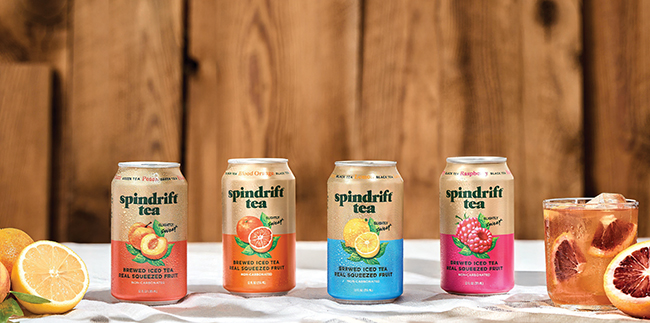
As it stretches its innovation capabilities, Spindrift has introduced its first non-carbonated beverage line: Spindrift Iced Tea.
The line features four flavors in 12 oz. cans: Lemon Black Tea (made with lemon and apple juice), Blood Orange Black Tea, Raspberry Black Tea and Peach Green Tea. They contain no added sugars. The drinks launched online in 6-packs via Amazon and direct-to-consumer and began rolling out to select retailers in March.
The brand is the first iced tea in the U.S. to bear the Non-Ultra Processed Food verified emblem on its cans.
According to Jon Silverman, SVP, Business Development & Innovation, Spindrift has already dabbled in the tea category via its Half & Half tea and lemonade flavor and previously explored sparkling iced tea varieties.
However, the new iced tea line reflects a full embrace of the tea category – opting for non-carbonated formulations that put Spindrift in direct competition with established RTD tea brands rather than the alternative, category-blurring tea drinks it had previously attempted.
The aim with iced tea is to bring Spindrift’s proposition of real squeezed fruit and low sugar to the category, where Silverman said there’s been little innovation and many competitors are “just leveraging a lot of sugar or non-sugar sweeteners” rather than focusing on real ingredients.
“We felt that the category kind of lost its way a little bit, that we could bring some real newness to it and be really differentiated,” he said.
According to Circana, canned and bottled tea drinks declined 1.9% in the 52-week period ending December 28, 2025 to $4.8 billion. Although leading brands like AriZona (-1.8%) and Pure Leaf (-3.5%) provided top-heavy drag on the set, smaller emerging brands – largely taking similar better-for-you and real ingredient approaches as Spindrift – have been gaining momentum.
Liquid Death, which introduced iced teas in 2022, was up 16.5% to over $93.6 million in dollar sales during the period. Other startup brands also fared well: The Ryl Co. rose 170.5% ($17.7 million), Just Ice Tea was up 65.2% ($13.7 million) and Saint James climbed 77.6% ($10.1 million).
Though it’s not alone in offering fruity flavors in the tea set, Silverman said Spindrift will lean hard on its real fruit juice position as its key differentiation.
“Consumers enjoy fruit tea, they like to pair tea with a bunch of different foods,” he said. “So, we knew that fruit could bring a real benefit.”
For Spindrift, tea is also an important expansion of its platform into a multifaceted beverage brand. Even before its acquisition by Gryphon Investors last year, Spindrift had begun looking to categories outside of sparkling water for innovation. While its hard seltzer line Spindrift Spiked has since been discontinued, last year the company launched a line of better-for-you sodas; iced tea is only the latest development in a long history of the brand seeking to grow in new categories.
“We’ll continue to look for opportunities that allow us to have differentiation and bring real innovation,” Silverman said. “We like the fact that a lot of beverage categories are somewhere in the journey towards healthfulness, some far along than others. We think we can bring real heft and a point of view to that.”
He noted that it’s still early for Spindrift Soda and the company is eager to see how tea performs, and the company is eager to see how these innovations “play against one another and how they bolster what we do in sparkling.”
“We’re excited about the fact that we can put our name on cans that live in other parts of the store, that hit other dayparts or need states for consumers,” he said. “And we can win some mind-share from our existing consumers.”
Lifeway Closed 2025 With Q4 Growth; +18% Sales in FY
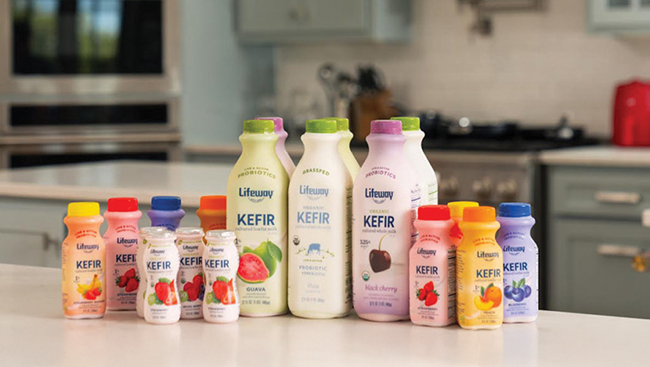
Lifeway continues to enjoy revenue growth from increased volume, recording double-digit jumps in sales and net income after a year in which the company batted down a mooted acquisition by stakeholder Danone.
The Chicago-based kefir brand reported a 13.7% year-over-year increase in net sales (+18% on a comparable basis) to over $212 million during FY 2025, closing the year with 18% growth in net sales in Q4. The company’s profile has risen, it noted in a press release, as new U.S. dietary guidelines and the rise of GLP-1 drugs have increased focus on protein-rich and fermented foods like kefir.
Net income was up 54% for the year, with gross margin expanding by 140 basis points.
Lifeway plans to meet consumer demand through innovation. Lifeway Kefir Butter recently launched in three varieties, while Muscle Mates — a new 8 oz. line of drinkable kefir made with 20 grams of protein and 5 grams of creatine — was showcased in March at Natural Products Expo West.
That expansion is being supported by marketing campaigns with Chicago Bears players Colston Loveland and D’Andre Swift, as well as the launch of the Lifeway Power Play shake at Barry’s Fuel Bar at Barry’s fitness centers.
The company reiterated its long-term target of $45 million to $50 million in adjusted EBITDA for FY 2027.
The earnings report turned the page on an eventful 2025 for Lifeway, during which an on-again, off-again acquisition by Danone finally collapsed after the French dairy giant withdrew its interest in September. That came against the backdrop of efforts by Lifeway board members Edward and Ludmila Smolyansky to unseat Julie Smolyansky from control of the company.
After threatening legal action against each other, both companies are back in good standing after entering a cooperation agreement that included an “orderly refreshment” of Lifeway’s board of directors.
The agreement did not explicitly state whether or not Danone may still be interested in restarting acquisition talks, but Lifeway agreed to facilitate the public registration of Danone’s shares for sale, meaning that if Danone were to sell some or all of its shares of Lifeway common stock it would “consider in good faith a potential marketed offering of all or a portion of its shares”.


Receive your free magazine!
Join thousands of other food and beverage professionals who utilize BevNET Magazine to stay up-to-date on current trends and news within the food and beverage world.
Receive your free copy of the magazine 6x per year in digital or print and utilize insights on consumer behavior, brand growth, category volume, and trend forecasting.
Subscribe