

Bevscape: The Latest Beverage Brand News
Hemp Beverages Grew 133% Last Year, HBA Reports
Despite a looming regulatory ban, hemp beverages are booming.
The category grew 133% year-over-year between 2024 and 2025, according to a report released in July by the Hemp Beverage Alliance (HBA).
The Future of Drinking Report found that the total case equivalent volume for intoxicating hemp-derived drinks grew from 692,435 in 2024 to over 1.6 million in 2025, while points of distribution rose 129% from 133,465 to 305,653 in the same period.
Retail accounts sold went from 25,279 to 43,496. Average monthly volume increased from 57,703 case equivalents in 2024 to 134,673 case equivalents in 2025, the report states.
According to the numbers, consumer behavior is mirroring alcoholic beverage occasions, including seasonality.
Month-by-month data shows peaks in the summer and at the end of the year, “consistent with how beer and spirits move through the calendar,” suggesting hemp drinks are becoming an established category, “not a novelty.”
Low-dose drinks are also gaining market share, with the 6-10 mg THC segment overtaking the higher 10 mg and above segment.
“What this demonstrates is that at a time when almost every adult beverage category is in decline, hemp
beverages are on a tremendous upswing,” said HBA founder and president Christopher Lackner in a call with BevNET. “Whether it’s a liquor store or a distributor or a supplier of these products, this is a driver of economic success and the potential is far larger than what this report indicates.”
This “colossal growth,” as Lackner called it, comes in the face of a looming federal ban on intoxicating hemp drinks this November. While the HBA and other industry players are still holding out hope for a reprieve from this deadline, the category continues to thrive as consumers increasingly demand non-alcoholic alternatives.
In turn, mainstream retailers are continuing to embrace the category even if they may have to drop them in several months time. Target began selling hemp drinks in its Texas stores in May, while Albertsons began testing them at three Jewel stores in Chicago in July.
“Retailers are stocking these because consumers are demanding them,” Lackner said. “Responsible adults want this product, and it is the obligation of the retailer to provide products that their consumers want.
HBA director of operations Anna Edgren noted that the impact of state regulations can also be seen in real time in the data. California, she said, has trailed much of the rest of the country since it cracked down on the sale of hemp beverages – becoming the only state to report declines in sales – while Southeastern states and others that have been open and amenable to the category are outperforming stricter markets.
“The South was absolutely booming and nearly tripled from 2024 to 2025,” Edgren said. Lackner said the HBA hopes the strong performance of the hemp category will “spur action” in Washington, D.C. to prevent a ban from going into effect.
“At a time when our economy overall is struggling, and very specifically the adult beverage category is struggling, this is a very easy solution waiting to be employed, waiting to be engaged,” he said. “This is adult consumers enjoying a new adult beverage in a responsible manner, buying it from responsible retailers that are receiving it from responsible distributors who are buying it from responsible suppliers.”
Nestlé Enters Joint Venture For Premium Water, Beverage Brands
Nestlé plans to spin off its water and premium beverage portfolio in a joint venture with Platinum Equity, valuing the transaction at roughly $5.5 billion.
Peranel will be a 50-50 joint venture between the multinational food and beverage conglomerate and the L.A.-based private equity business. The new business entity will be headquartered in Paris, where it will continue to be led by Nestlé Waters & Premium Beverages CEO Muriel Lienau, according to the company.
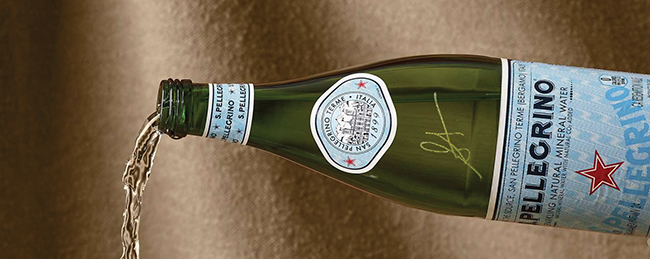
The portfolio includes more than 30 brands across 120 countries, including bottled water brands S.Pellegrino, Source Perrier, Acqua Panna and Nestlé Pure Life, as well as premium and functional hydration beverages.
Operating as an independent company, Peranel will focus exclusively on water and premium beverages with the financial support to invest in its brands and pursue new growth opportunities.
The business will continue to operate an in-house R&D team that oversees new product development.
“By partnering with Platinum Equity, Peranel will be better positioned to execute its strategy with enhanced
agility,” Nestlé CEO Philipp Navratil said in a statement. “Through additional focus, it will be well equipped to drive its long-term growth ambitions by strengthening this unique portfolio of international and local brands, with continued investments in innovation, premiumization, operational excellence and sustainability.”
The news is the latest example of Nestlé’s process of reworking its beverage portfolio. For years, Nestlé has been
actively seeking a buyer for its remaining bottled water brands after offloading its Nestlé Waters North America division – Poland Spring, Deer Park, Ozarka, Ice Mountain, Arrowhead, Nestlé Pure Life and others – for $4.3 billion in 2021.
In April, the Swiss multinational offloaded Blue Bottle Coffee to Luckin Coffee’s majority stakeholder, Centurium Capital.
In June, Nestlé acquired a controlling stake in meal replacement beverage brand YFood in a reported $523 million buyout.
“We bring unique energy and focus as well as business and operational expertise to the table,” said Platinum Equity co-president Louis Samson in a press release statement. “Combined with Nestlé’s and Peranel’s world-class product development, execution and marketing capabilities, our joint venture creates a powerful partnership and a very strong team.”

The FDA Sets Sights On Caffeine Content Labeling
The Food and Drug Administration (FDA) believes caffeine content should be jumping off the food and beverage packaging.
The FDA published its 2026 Human Foods Program Guidance Agenda, listing new and revised suggestions for preventing
foodborne illnesses, reducing diet-related chronic disease and ensuring food is safe for consumption.
Top of the agenda was the “labeling caffeine content in foods and beverages.” The federal agency has not elaborated on what that guidance might be.
Still, it comes at a time when caffeine is finding its way into more products, all while consumers increasingly adjust how they
caffeinate. Even in long-time caffeinated spaces (read: energy drinks and soda) – those products are quickly being stacked with additional functions, meaning it’ll become imperative for the jitter-inducing element not to get lost in a jumble of creatine and L-theanine callouts.
While it has become increasingly common to find a milligram dosage on drink packages, the dosage of a standard 8 oz. coffee – between 75 mg and 140 mg – is not fixed and depends on the bean, roast, and brewing method.
Still authorities believe, guidance for energy drinks, ready-to-drink coffees and caffeinated food products to list caffeine content
on-pack could be beneficial for consumers seeking more information on their respective tolerance.
Consumers are prioritizing the fairly nebulous term “energy” in food or drink choices. Companies have taken notice and added caffeine to new categories – everything from fitness supplements to powdered drinks and snack foods are getting an extra kick.
With caffeine no longer relegated to a narrow set of products, clearer efforts to indicate where it’s showing up may become necessary.
Shots have already been fired in a potential war on caffeine.
Texas Attorney General Ken Paxton launched an investigation into Celsius’ marketing practices related to a 17-year-old’s death. In Delaware, state lawmakers are discussing a potential ban on the sale of energy drinks to consumers under 18.
All this comes on the heels of Panera’s legal woes related to its caffeinated Charged Lemonade, which has led to a pair of wrongful death lawsuits.
Though the U.S. Department of Health and Human Services’ battles in food (think: sugar content, ultra-processed foods and artificial food dyes) have not yet yielded formal, federal regulation, mandating a callout that’s already fairly commonplace could be an easy win for the administration.
Yerba Madre Names New CEO, YESLY Co-Founder Joins Board
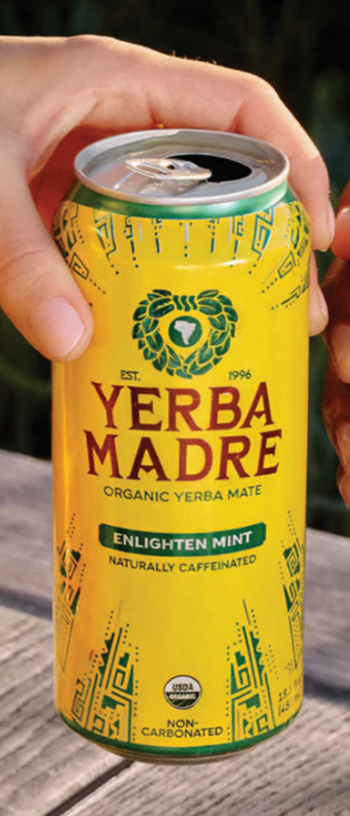
Yerba Madre is entering its next phase of growth with the appointment of board member Steve Lesnard as CEO, as it focuses on expanding its consumer reach amid growing demand for functional beverages.
Lesnard succeeds Ben Mand, who has led the ready-to-drink yerba mate brand through a period of significant transformation, including its rebranding from Guayaki to Yerba Madre roughly one year ago. He will remain involved in the business as an advisor to the board.
The leadership change comes as Yerba Madre positions itself to capitalize on rising consumer interest in functional
beverages and naturally caffeinated products. The brand is shifting its attention from strengthening internal operations to accelerating brand awareness, expanding retail distribution and introducing more consumers to yerba mate, according to a press release.
During Mand’s tenure, the brand overhauled its supply chain and co-manufacturing network, transitioned from predominantly self-distribution to regional distribution partnerships and strengthened its social impact initiatives.
Lesnard assumes the role of CEO after serving on Yerba Madre’s board of directors. His career spans more than two decades in brand strategy, innovation and consumer marketing across several global consumer companies, including Nike, The North Face and Godiva.
In the release, Lesnard said Yerba Madre’s longstanding commitment to purpose-driven business was a key factor in his decision to lead the business.
“For over three decades, it has proven that a brand can deliver a superior product – made with purposefully sourced ingredients,
including yerba mate harvested in harmony with nature – while simultaneously restoring ecosystems and supporting communities. That is an extraordinary foundation to build from,” he said.
Alongside the CEO announcement, Yerba Madre also expanded its board of directors with the appointment of Scott Miller,
co-founder and CEO of YESLY Water. Miller brings decades of beverage industry experience, including positions with Essentia, Keurig Dr Pepper and Tampico.
The new appointments come less than three months after Yerba Madre named Super Coffee co-founder Jimmy DeCicco as SVP of Revenue Growth. In an email to BevNET, DeCicco called the brand “the best kept secret in the beverage industry,” noting it has “lots of distribution upside.”
According to Circana, retail dollar sales of Yerba Madre’s RTD line for the U.S. MULO and c-store channels climbed 15.3% to $254.7 million in the 52-week period ending June 14.
Speaking with BevNET at Natural Products Expo West in March, then-CEO Mand said Yerba Madre’s priorities for 2026 included increasing consumer awareness, refining the brand’s identity and product portfolio and building on its business beyond its
longtime West Coast base.
Nutrabolt Recruits Banks to Lead IPO
One of the biggest players in energy is planning to go public.
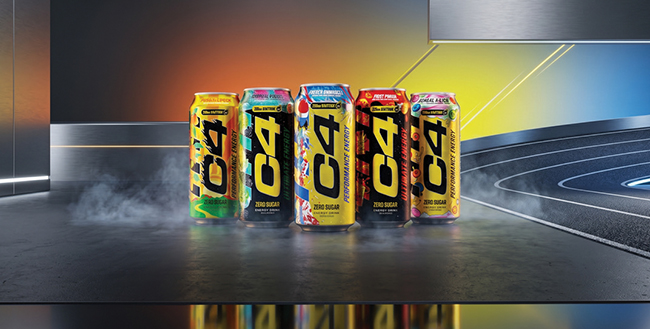
According to media reports in July, Nutrabolt, whose C4 and Bloom energy drinks have over $1 billion in combined sales, has enlisted JP Morgan, Goldman Sachs and Bank of America to lead its initial public offering.
The IPO could raise up to $1 billion, per Reuters, citing sources close to the matter. Nutrabolt said it does not comment on rumors. JP Morgan, Goldman Sachs and Bank of America declined to comment.
From its roots in fitness retailers and DTC, Austin, Texas-based Nutrabolt has emerged as a significant force in mainstream RTD energy drinks sold across channels, led by C4 and Bloom. Both those lines are distributed by Keurig Dr Pepper (KDP), which spent $838 million to take a 30% stake in Nutrabolt in 2022 as part of a strategic partnership.
KDP also distributes for several energy category competitors, including Ghost, which it has owned since 2024.
Sales of C4 rose 6.6% YoY to just over $848 million, according to Circana sales data through May 12. Female-
oriented nutrition brand Bloom, which Nutrabolt acquired in September 2025, did over $423 million in sales for its energy drink, soaring over 600% from a small base.
In going public, Nutrabolt will join two other energy drink giants – Monster Energy and Celsius – on the exchange.
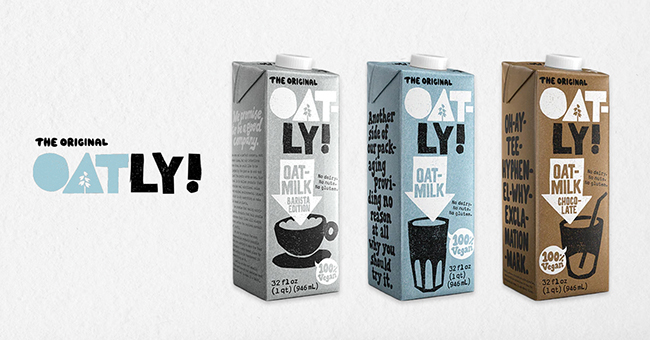
Oatly Raises 2026 Outlook as Growth Playbook Gains Momentum in North America
Oatly raised its full-year guidance after another quarter of double-digit growth, underscoring the company’s
strategic repositioning as a broader beverage platform rather than strictly a dairy alternative.
In the second quarter ended June 30, revenue climbed 15.2% to $240.1 million, while gross margin improved 140 basis points to 33.9%. Adjusted EBITDA turned positive at $0.4 million, compared with a net loss of $3.6 million in the prior year period, as supply chain efficiencies and favorable product and channel mix offset higher logistics and packaging costs tied to the conflict in the Middle East.
“Our second quarter capped a very successful first half with strong volume growth and positive mix driving our revenue momentum,” said Jean-Christophe Flatin, CEO of Oatly, during the earnings call with analysts and investors. “The results reinforce the success of our growth playbook and notably innovation that solidifies our identity and appeal as a full beverage company.”
Based on its second-quarter performance, Oatly increased its full-year constant-currency revenue growth
outlook to 8% to 10% (up from its previous forecast of 3% to 5%), while maintaining adjusted EBITDA guidance of $25 million to $35 million despite continued inflationary pressures.
Daniel Ordoñez, global president and COO of Oatly, attributed the stronger outlook to the company’s revamped growth playbook, which emphasizes expanding beyond traditional plant-based consumers by centering on taste, health, and lifestyle trends. The strategy combines new product innovation, stronger retail execution and food service partnerships aimed at creating additional consumption occasions, particularly among younger consumers.
Against that backdrop, the company is doubling down on coffee culture, refreshment and bold flavors, including Churro and Popcorn Barista milks – previewed at Natural Products Expo West in March – and cold foam products designed to move from cafes into retail.
“We are steadily evolving our strategic choices, on channels and portfolio, to be decisively accretive to our profit margin
and volume,” said Ordoñez during prepared remarks, adding that retailers are increasingly taking on Oatly products outside of traditional reset windows as the brand gains momentum.
The brand’s Europe & International remains the biggest growth driver, with second-quarter revenue increasing 21% to $143.1 million, fueled by nearly 17% volume growth. Ordoñez said the region is benefiting from expanding household penetration, accelerating growth in newer markets and continued strength in Oatly’s Barista portfolio. The brand claims oat milk is currently outperforming other plant-based milk segments.
Meanwhile, North America posted its second consecutive quarter of volume growth after declines throughout much of 2025. Revenue climbed 5.9% to $66.9 million, primarily supported by retail gains and an improving customer mix. Oatly said momentum in foodservice has also strengthened as the company diversifies its customer base after the loss of what was previously its largest away-from-home account.
In North America, penetration is being driven by younger consumers, with Gen Z representing the fastest-growing generation for Oatly. That demographic has been spending 16% more on the brand’s products over the past 5 years, and is expected to be the largest and richest generation by 2035, Oatly claims.
“Some relevant brands are losing significant [market] share […] and we expect to take share. Taking share is good because it means the brand is up there, and the velocities are there. We’re here to grow this category, and I would like to get back to 22% penetration of oat milk in the U.S.,” said Flatin. “There is an ocean [of opportunity] for us to grow this category and multiply growth and value creation.”
Despite raising its outlook, Oatly acknowledged that geopolitical uncertainty will remain a key variable in the back half of the year. The company said higher fuel, logistics and packaging costs related to the Middle East conflict are reflected in its full-year guidance.
“We remain focused on execution and are committed to building on this momentum to deliver consistent, sustainable and profitable growth over time,” said Flatin.
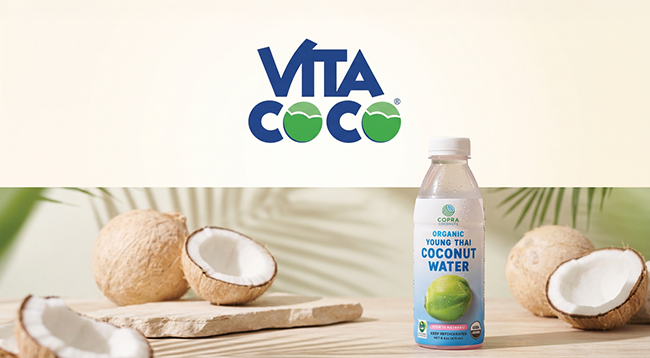
Vita Coco Takes Aim at Super Premium, Buys Copra for $175M
Seeking to strengthen its leadership position in the global coconut beverage market, Vita Coco announced a deal to buy Copra Coconuts, a Thailand-based producer of super premium organic coconut water.
The transaction includes an upfront purchase price of $175 million, subject to customary closing adjustments, with an additional earnout of between $45 million and $100 million tied to Copra’s 2028 financial performance. The initial consideration was funded with approximately 80% cash on hand and 20% Vita Coco common stock.
Founded in 2013, Copra produces coconut water and coconut meat at its manufacturing facility in Ratchaburi, Thailand, a region known for Thai Nam Hom coconuts. The company has established a strong foothold in the cold-chain coconut water market through its sourcing expertise, extract-and-fill production model, branded products, and private-label business, per a press release, and achieved a 48% compound annual growth rate (CAGR) in net sales over the past three years.
According to Vita Coco co-founder and executive chairman Michael Kirban, the acquisition will expand Vita Coco’s addressable market and provide another avenue for long-term growth.
“Copra brings specialized capabilities, deep sourcing expertise and a super-premium offering that can help us serve more consumers and expand our market share while continuing to help shape and lead the category’s continued global growth,” said Kirban in the release. “We are excited to leverage Vita Coco’s expertise in sales and marketing to accelerate what Copra has built.”
Following the acquisition, Vita Coco plans to increase Copra’s production capacity, improve operating efficiencies, support existing customer demand, develop new customer relationships and invest in building up the brand. The company expects the deal to be accretive to adjusted EBITDA margins after full integration.
In a statement, Copra co-founder and CEO Ben Minges said Vita Coco is “the perfect partner to help achieve our vision of being a leading player in this segment.”
Whipstitch Capital served as financial advisor to Copra on the transaction, while Cooley acted as the company’s legal advisor. Vita Coco was advised financially by Evercore Group LLC, with Ballard Spahr LLP serving as legal counsel.
The transaction comes on the heels of strong first-quarter performance by Vita Coco. In the quarter ended March 31, the company posted 37% net sales growth fueled by retail growth, improved pricing and positive private label shipments.
Coconut water dollar sales were up 26.6% in the two-week period ended July 11, according to Nielsen data; Volume rose 20.3%, and pricing was up 5.2%. Vita Coco led all brands, growing sales +28.9%.
“The coconut water category continues to be one of the fastest-growing beverage categories in both the United States and our core international markets, which we believe is due to consumers choosing coconut water for more of their hydration needs,” said Kirban in a statement.


Receive your free magazine!
Join thousands of other food and beverage professionals who utilize BevNET Magazine to stay up-to-date on current trends and news within the food and beverage world.
Receive your free copy of the magazine 6x per year in digital or print and utilize insights on consumer behavior, brand growth, category volume, and trend forecasting.
Subscribe