

Brewscape: The Latest Craft Beer Brand News
Stone Brewing Sold to Firestone Walker and Duvel USA
Firestone Walker and Duvel USA have inked a “definitive agreement” to acquire the Stone Brewing brand from Sapporo USA.
Financial terms of the deal were not made public. The transaction is expected to close in Q2 2026, pending customary closing conditions.
“Stone is one of the most iconic brands in American craft beer and a pioneer of the West Coast IPA,” Firestone Walker CEO Nick Firestone said in the announcement. “For 30 years they’ve built something legendary, a brand known for its commitment to quality, drive for innovation and a true fighting spirit. We will honor what’s been built and carry it forward with the same authenticity and conviction that we love them for. The Stone heart keeps beating.”
Duvel USA president Seraf De Smedt added: “We inherit Stone’s storied reputation, and we’re committed to maintaining and further building its national relevance.”
The deal unites two of California’s largest legacy craft breweries, both founded in 1996. It also comes fewer than four years after San Diego-founded Stone’s $165 million sale to Sapporo.
Speaking to Brewbound, Nick Firestone said the planned addition of Stone and Trumer Pils – the latter of which Firestone Walker inked a deal in March to acquire from Gambrinus and is expected to close this summer – will “drastically” increase the company’s share of craft beer in Southern California.
“We become the dominant craft player in L.A., San Diego, Orange County, which is part of the rationale for this in the first place,” he said.
The additions of Stone and Trumer Pils will add around 250,000 barrels and 30,000 barrels, respectively, to Duvel USA’s overall business. This would boost the company’s overall output to close to 900,000 barrels, as Firestone Walker produced an estimated 480,000 barrels in 2024 and Boulevard and Brewery Ommegang produced a combined 167,000 barrels. The addition would mark a massive jump in volume but still place it as the No. 4 Brewers Association-defined craft brewery, leaping Tilray Brands.
The acquisition also “underlines” Duvel Moortgat’s “commitment to the U.S. market and to U.S. craft,” De Smedt told Brewbound.
“This is a space that we understand,” Firestone added. “It’s a brand that we know well – we’re both celebrating our 30th birthdays this year. It’s a strong IPA brand that fits like a glove into the Firestone Walker portfolio and partners well with Duvel USA. There’s a lot that really just makes good sense here.”
Under Firestone Walker’s stewardship, Stone will maintain “its distinct voice,” the companies said. The plan moving forward is to continue Stone’s existing “sales strategy and portfolio strategy” this year.
Firestone Walker will assume responsibility for the Stone brand in California, the Western U.S. and Texas, along with taking the lead on national accounts, while Duvel USA will take over distribution responsibilities for Stone east of the Rocky Mountains.
Firestone Walker brewmaster Matt Brynildson will oversee production of Stone’s beers in Paso Robles as well as Kansas City, which Firestone called “a huge strength of this transition.”
Following the close of the transaction, the Richmond, Virginia, which Stone opened in 2016, will become Sapporo’s primary U.S. production hub.
During the transition, Sapporo will continue to produce Stone’s offerings at its facilities in Richmond and Escondido, California. Stone’s Escondido taproom will also continue to operate through that time.
Beyond the Stone brand, Firestone Walker and Duvel will acquire four Stone taprooms in California:
Stone Brewing World Bistro & Gardens at Liberty Station in San Diego; Stone Brewing Tap Room in San Diego’s Little Italy neighborhood; Stone Brewing Tap Room Oceanside; Stone Brewing Tap Room Pasadena.
“Liberty Station will remain the heartbeat of Stone Brewing Company in Southern California,” Firestone said of the taproom, which will continue producing specialty beers and one-off brews. “It’s over 30,000 sq. ft. It’s the crown jewel brewpub location.
Brewers Association: Craft 2025 Production Volume -5.1%; 1,072 Brewery Closures in Last 2 Years
Craft brewers’ production volume fell a collective 5.1% in 2025, according to the Brewers Association’s (BA) annual
Industry Production Report.
Two-thirds of craft breweries recorded production declines last year, while 39% reported growth and 1% were flat, according to the BA’s survey of members.
The latest year-over-year (YoY) loss marks an acceleration from 2024, when industry volume fell 4%, to 23.1 million barrels. Note: numbers are preliminary and could change as the BA collects more data. Additionally, production data does not include breweries’ volume for beyond beer products, including flavored malt beverages (FMBs), cider or ready-to-drink cocktails (RTDs).
The latest figures are in line with data shared in the BA’s mid-year report, despite warnings from the trade group that full-year declines could be steeper than projected.
Despite declines, craft was able to “slightly” gain market share of total beer in 2025 – from 13.2%, to 13.3% – as its declines were smaller than those of the overall category (volume -5.7%), “highlighting relative resilience within a contracting market,” the BA wrote.
Microbreweries recorded the largest production volume declines (-8.9%), followed by regional breweries (-5.9%), taprooms (-3.9%) and brewpubs (-1.7%).
Craft beer dollar sales declined 3.6% in 2025, to $27.8 billion, according to the BA. The segment’s share of beer dollars was flat YoY, at 24.6%.
“While reduced sales volume contributed to the drop, the impact on dollar sales was less pronounced due to higher average beer prices and a continued shift toward on-site consumption models such as taprooms and brewpubs where there is a higher unit price,” the trade group wrote. “As a result, retail value proved more resilient than volume trends alone might suggest.”
The total number of craft breweries operating in the U.S. declined 2.9% YoY, to 9,579, down from 9,680 in 2024
and 9,747 in 2023. Microbreweries recorded the largest percentage decline in number of businesses (-4.4%, to 1,994), followed by taprooms (-2.7%, to 3,784), brewpubs (-2.5%, to 3,525) and regionals (-0.4%, to 275).
Brewery openings fell from 517 in 2024, to 300 in 2025 and were outpaced by closures (481, down from 591 in 2024). The latest numbers for both openings and closings are greater than initial figures reported in December (268 openings, 434 closings).
2025 marked the second year closings outpaced openings, with the first occurrence happening in 2024 (501 closings, 434 openings). Over the last two years, 1,072 breweries have closed.
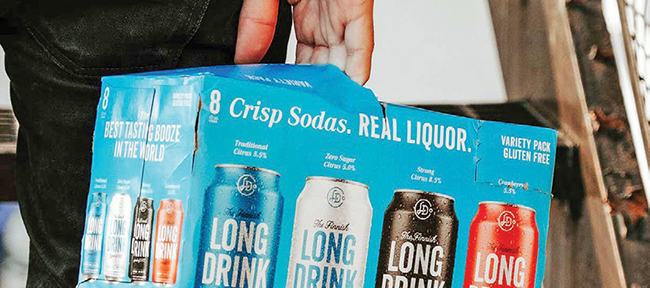
Mark Anthony Brands to Acquire Finnish Long Drink
Mark Anthony Brands announced it has struck a deal to acquire the Finnish Long Drink, the popular gin-based, RTD canned cocktail.
The deal marks a major jump forward for Mark Anthony’s spirits-based portfolio, which is dwarfed in size by its malt-based offerings, including White Claw, Mike’s Hard Lemonade and Cayman Jack.
“The Finnish Long Drink is a distinctive, premium brand with an outstanding growth opportunity in the United States,” Mark Anthony U.S. president David Barnett said in a press release. “Leveraging Mark Anthony’s scale, executional strength, and deep experience building category‑defining brands, we see the opportunity to elevate Long Drink’s presence and influence within the spirits RTD category.”
Long Drink CEO Evan Burns, an American, started the brand in 2018 with Finnish co-founders CFO Mikael Taipale, Sakari Manninen and Ere Partanen. The Long Drink, a gin-based, citrus-flavored cocktail, traces its history back to the 1952 Summer
Olympics, hosted in Helsinki, Finland.
“We’ve got an incredible fanbase and team that has propelled The Finnish Long Drink to be one of the breakout RTD brands, but many consumers are still yet to try it,” Burns said in the release. “Joining the Mark Anthony Group to leverage their track record of scaling iconic RTD brands gives us a huge opportunity to accelerate growth and introduce Long Drink to a much broader audience.
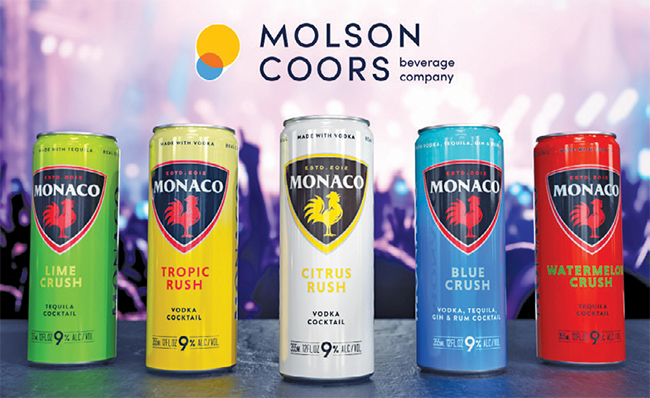
Molson Coors Acquires Monaco Maker Atomic Brands for $275M
Molson Coors acquired RTD cocktail pioneer Atomic Brands, whose Monaco Cocktails entered the then-nascent space in 2012, for $275 million.
The deal should come as no surprise, as it aligns with Molson Coors’ goals to expand its beyond beer portfolio, part of the Horizon 2030 plan CEO Rahul Goyal outlined earlier this year.
The acquisition will give Molson Coors a significant toehold in the spirits-based RTD segment. Monaco is the fifth-largest RTD brand by dollar sales year-to-date (YTD) through January 24, according to NIQ off-premise scan data provided by 3 Tier Beverages (total U.S. xAOC + liquor open state + convenience).


Receive your free magazine!
Join thousands of other food and beverage professionals who utilize BevNET Magazine to stay up-to-date on current trends and news within the food and beverage world.
Receive your free copy of the magazine 6x per year in digital or print and utilize insights on consumer behavior, brand growth, category volume, and trend forecasting.
Subscribe