

Hemp Hopes: THC Drinks Prepare For Uncertain Future Amid Regulatory Fight
With about seven months to go before a Congressionally-mandated deadline that effectively bans intoxicating hemp products in November, it might be expected that industry stakeholders would be looking for an offramp from the boom-or-bust drink category.
Yet, the existential threat presented to hemp-derived THC drinks has actually increased sales and brought new awareness to the category. Instead of hand-wringing, optimism has been the drug of choice for many hemp beverage stakeholders. They are cautiously expanding their retail footprints and doubling down on distribution partnerships – while also hedging with hemp-free innovations in case it all comes crashing down on November 12.
Delta-9 THC drink sales were up 148% year-over-year in the 52 weeks ending February 22, according to SPINS natural channel tracking.
While this is strong growth, it doesn’t give the full scope of where this category is drawing much of its sales. Many brands have established stable revenue through ecommerce and
According to NielsenIQ, retail sales were about $250 million, predominantly occurring in liquor (about $150 million) and convenience (roughly $56 million) stores. Breaking it down by dosage, roughly 32% of retail sales are of 10 mg of THC and about 27% are 5 mg.
Ambient shelf 4-packs are the primary format that retailers are carrying intoxicating hemp brands but “singles are on fire and growing fast,” said NielsenIQ VP of Convenience and Growth Accounts Jason Zelinski.
“Four-packs that are $30 is a really tough pill to swallow for an entrance price point for something consumers don’t understand yet,” he said. “Retailers are quickly moving singles into coolers, especially in c-stores, where that is how people shop [in that channel].”
Despite the positive sales data, the storm clouds have not blown away, and most eyes (and dollars) remain fixed on Capitol Hill to forecast blue skies for hemp beverage operators.
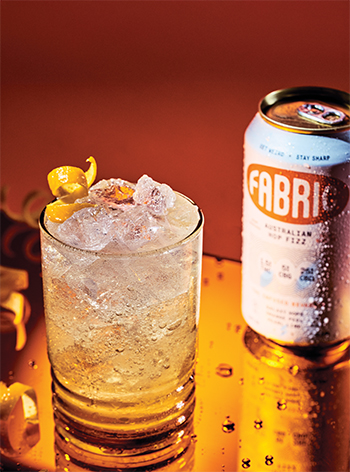
They are hedging, though: “Optimism alone is not a strategy,” Tom Eddleston, the founder of Fabric, a THC-infused hop water.
Retailers Push For Beverage-Only Regulation
The newly formed Beverage Alcohol Merchants Coalition (BAMCO), backed by Total Wine and More, BevMo! by Gopuff, ABC Fine Wine & Spirits and Spec’s, is using its pull to lobby for a beverage-only carve-out. The coalition believes the most viable solution for intoxicating hemp drinks is to be placed within each state’s three-tier system of adult beverage regulation, according to BAMCO spokesperson Jonathan Grella.
BAMCO has not released its regulatory framework, but the coalition believes that “consumer power can be translated to political power,” Grella said. “We want to make clear to policymakers that this category exists, it’s in demand, it’s earning shelf space and it needs to be preserved.”
While the entrance of a few stores owned by major retailers Target, Sprouts and Circle K signal tentative steps toward the mainstreaming of the category in grocery retail, most of the movement is happening at the independent level. Some of those retailers that have already staked their future on intoxicating hemp, and are more wary that a satisfactory resolution will come from lobbying Congress.
Top Ten Liquors is a leader in Minnesota’s hemp beverage movement. Last year, about 15% of total sales were hemp products and nearly 25% of Top Ten’s consumers purchased from the category, said Top Ten founder Jon Halper. Halper hopes to raise that 25% to 50% in 2026, depending on news out of Washington.
“We are all in today and are not taking any steps back as far as our strategy. We’re investing in the category and doing everything we can to grow it,” he said. “What I’m hearing from wholesalers is: ‘We’re in, but come June, we’re gonna start restricting it because we got to make sure that we’re safe’.”
Halper believes all retailers currently carrying hemp beverages will continue to do so right up to the November deadline, whether new regulations are passed, a last-minute extension is implemented or the ban goes into effect.
“At the end of the day, if a product is not legal in our stores and we purchased it from a wholesaler, our complete expectation is that they will take it back and reimburse us for the product that we’re not legally allowed to sell,” he said. “No different than defectives.”
DISTRIBUTORS
Despite the uncertain position the category finds itself in, most of the category is “staying positive,” said 3-Tier Beverages analyst Devon Hevener.
Positivity can be gleaned from the $15 million Series A investment Willie’s Remedy+ received in February from VC firm Left Lane Capital, with additional participation from Second Sight Ventures.
Another recent vote of confidence came from Breakthru Beverage Group, which announced it would start distributing Cheech & Chong, Seth Rogen’s Houseplant and Quirk THC Seltzer in Minnesota.
“Wholesalers are cautious, but they are finding that there are still windows of opportunity,” Hevener said.
Still, while celebrity-backed brands and established category contenders like Uncle Arnie’s and Cann might be
investing resources in fast-growing popular retail markets like Minnesota, Texas and Florida, some newer entrants are facing an uphill battle to win over distributors. Heading into the summer, wholesalers are starting to make inventory
decisions based on warehouse space and the tenor of conversations happening in Congress.
“You’re gonna see some of the more prominent brands get through it and weather the storm,” said Kevin Arn, owner of Florida-based EBG Distribution. “In the short term, you’re gonna see a tightening on the supply side. [EBG] will continue to sell it, but with caution. I’m not out there looking for other brands or to grow my portfolio right now.”
As distributors like EBG de-risk, brands are taking various approaches to prepare for the worst while hoping for the best.
BRANDS
At Fabric, Eddleston is taking a more proactive and conventional approach: Diversifying out of THC.
The Colorado-based brand has formulated a functional Fabric Zero hop water using L-theanine instead of cannabinoids. The brand already makes Clarity, with 10mg of nonintoxicating CBG (Cannabigerol), but Fabric Zero is a way to get onto more retail shelves and introduce consumers to Fabric.
In the last year, BRĒZ and Hippie Water have taken similar approaches, launching uninfused line extensions that build brand awareness and open new distribution partnerships.
A 4-pack of Fabric Zero will be under $10, providing an accessible option that has “mass-market” appeal, Eddleston said. Zero is also structured as a separate business entity, so it was siloed from Fabric’s infused products, which will remain in the portfolio until regulations are imposed or the category is shut down.
“We’ve isolated the risk into a single entity that doesn’t impact the overall business,” he said. “If for some reason THC does blow up or is reclassified, we’re not selling a federally illegal product.”
Other entrepreneurs are taking a more aggressive approach.
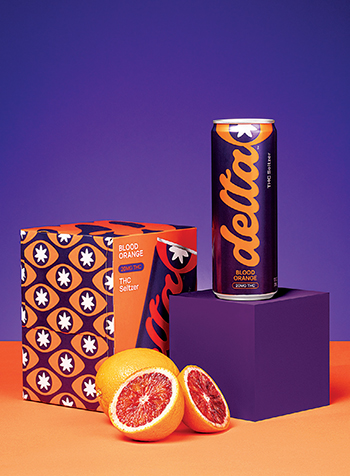
Intoxicating hemp RTD and spirit alternative brand Delta is seizing on the opportunity to increase its respective market share.
Founded in 2020, the brand has seen a sales lift since going into Sprouts Farmers Market in January and will be part of a hemp beverage endcap in some of the retailer’s stores. According to founder and CEO Jack Sherrie, this moment is an “opportunity to grow the brand while everybody else is on pause.
“We’re actually hitting the gas pedal,” he said. Delta plans to hire between 12 to 15 new team members and is building on its ambassador program.
Yet, to protect itself if November does bring bad news, Delta is “diligently exploring” a Plan B, he said, that would allow the brand to continue to operate within the three-tier system of adult beverage distribution.
Without divulging too much, Sherrie conceded that the brand is working on a potential pivot that would include “other components of the plant that have mood-altering effects that you could use as an ingredient.”
With all the uncertainty about mainstream retail channels being closed to beverage makers, why wouldn’t they turn to the regulated-but-legal dispensary channel, the most obvious refuge for THC drinks in some states?
Stakeholders point to a history of low-dose drinks selling poorly in dispensaries. Recreational marijuana consumers seek higher-THC products, and most dispensaries are not equipped with the space to merchandise refrigerated drinks, let alone the warehouse space for beverage inventory.
There’s an argument to be made that the growth of the intoxicating hemp has opened up more demand in dispensaries for the beverages as multistate operators like Tilray, Curaleaf or Trulieve have expanded into intoxicating hemp beverages.
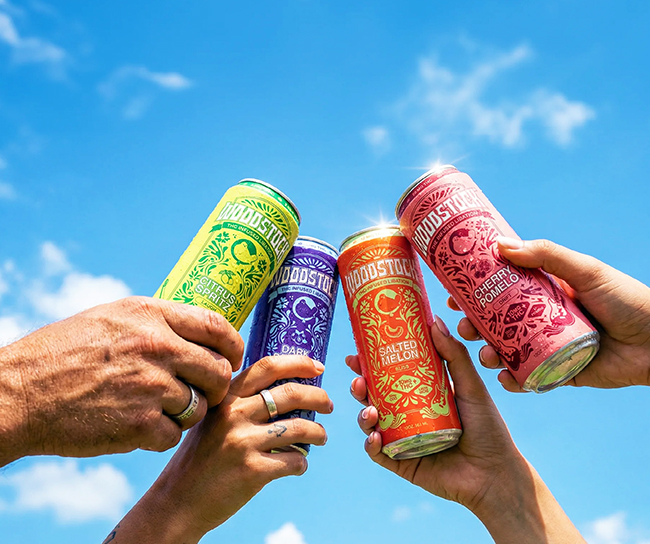
But cannabis and hemp industry CEO Richard Lee is skeptical that dispensaries will ever be the best option for THC drinks. Although Lee launched Woodstock Goods hemp beverages as a separate business offshoot from the regulated cannabis brand Woodstock Goods, he said the real opportunity lies within the existing three-tier beer, wine, and spirits structure.
Woodstock Goods recently inked a strategic partnership with sales and operations business Craft & Art Wine & Spirits.
Similar to Delta, Woodstock is not pulling back but investing deeper because “if anything, consumer demand is spiking right now,” Lee said. “Some of the biggest distributors who aren’t yet in the game are all circling.”
Led by former Southern Glazer’s Wine and Spirits executive Kevin Fennessey, Craft & Art will allow Woodstock to get conversations going quicker with beverage alcohol distributors and navigate the three-tier system.
As many brands “tread carefully” right now, Lee expects sales to continue through the summer and up to the November deadline. Woodstock is embracing that opportunity by continuing to pursue distributors.
“This happens in markets where there is a boom of too many brands and then a correction to see who the winners will be,” he said. “There is still a lot of momentum in the space.”


Receive your free magazine!
Join thousands of other food and beverage professionals who utilize BevNET Magazine to stay up-to-date on current trends and news within the food and beverage world.
Receive your free copy of the magazine 6x per year in digital or print and utilize insights on consumer behavior, brand growth, category volume, and trend forecasting.
Subscribe