

Last year wasn’t the easiest for founders seeking growth capital. Both the number and value of transactions were the lowest since at least 2020, and even the number of investors willing to back consumer products seemed to bottom out.
But even in a tough year, beverage brands that were able to show organic growth were also able to find investors willing to back expansion. Investors remained interested in the energy drink and modern soda categories, as well as protein-enhanced drinks and NA Beer.
Nevertheless, the scarcity of big beverage transactions made it pretty easy to pick out the year’s most significant transactions – there wasn’t a lot of reading between the lines here, although the repercussions of these deals echoed in the early part of 2025 and may very well encourage further excitement throughout the year. Already, we’ve seen a significant deal close at least partially due to the competitive environment created by our Strategic-level deal of the year (see Strategic, below) and, as with our Private Equity-level deal of the year (see Private Equity, below), there are some brands that are far enough along on their journeys that it won’t be a surprise to see them involved in some new financial action.
Meanwhile, recent interviews haven’t done much to change the current contours of the market: uncertainty, inflation, and a higher cost of capital mean that investors don’t love risk right now – so the best way to show you are worth the growth investment is – say hello, O. Henry – to show that you don’t need their money to grow.
A quick note on timing: We know. It’s February – why are we doing this kind of analysis now? Particularly when you’re dealing with private companies and private funding sources, it often takes a little while for all the deals to emerge. Such was the case with our PE deal of the year. Reports on the deal started to come out in early December, but the close didn’t come until right before the end of the year, and the announcement wasn’t until later in January.
We take a similar approach with our frequent quarterly look-backs at the financing market for CPG, because we want the record to be as complete as possible when we’re pulling our analysis together.
Strategic: KDP Buys Ghost
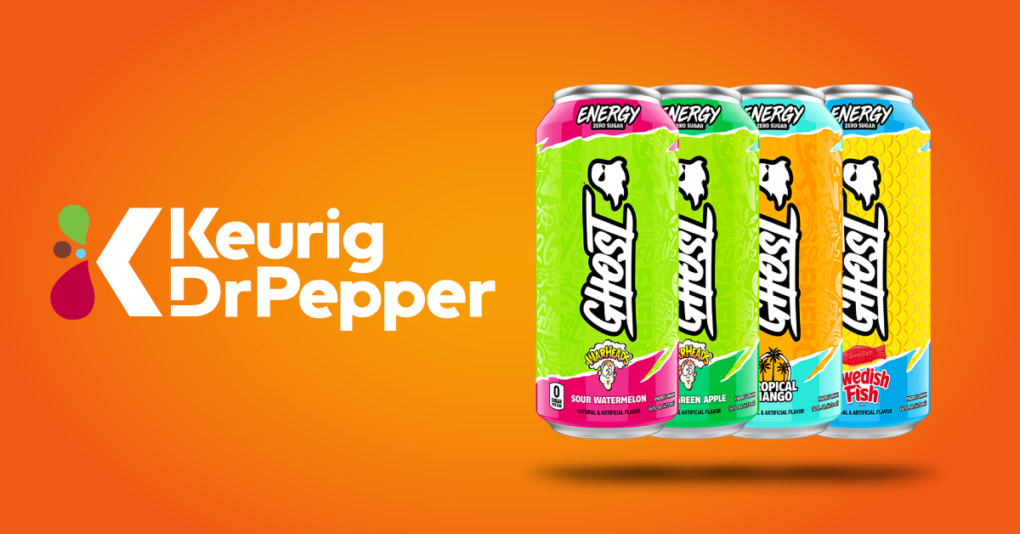
As 2024 has turned over to the new year and to one huge new deal – the $1.8 billion that Celsius is paying to buy energy competitor Alani Nu – let’s not forget that in the fall KDP forked over just shy of $1 billion – and is on the hook for at least $1.6 billion total – to pick up ownership of Ghost, another fast-rising energy drink and supplement company.
Financial analyst/substacker Drew Fallon pointed out that Ghost went from startup to sale in just eight years.
“This is an outlier for a transaction of this size. HUGE time to value,” Fallon wrote, comparing it to La Colombe, which sold to Chobani for $900 million – after being in business for 29 years (although its RTD products debuted about a decade ago).
Of course, Ghost had an incredible advantage early on in that it went from a fitness brand to the pet energy drink in Anheuser-Busch’s distribution network in 2020, encouraged by Anheuser Busch CEO Brandon Whitworth, who discovered and advocated for the brand. It proved to be a great boost for a startup in terms of revenue and visibility – sales more than doubled between 2022 and 2023, and it was on track for about $530 million in revenue by the end of 2024. It was valued at $1.6 billion, or 3X revenue
As a result of the pickup, KDP gained another weapon for the company’s multi-part attack on the energy category, one that already involved its 30% stake in C4-maker Nutrabolt. That was enough to cause a realignment at KDP itself, with strategy chief Justin Whitmore sliding over to be president of the newly formed Energy Drinks division, where he’s also running a portfolio that includes an energy drink from Black Rifle Coffee Co. and Bloom, an emerging energy and nutrition brand that’s partially owned by Nutrabolt.
While Ghost’s valuation is actually a couple of billion dollars less than its new stablemate, it capped off a remarkable journey for the company.
A few months later, the deal was still reverberating on the same trucks that were carrying Ghost to market. Alani Nu was also riding along with Bud-affiliated distributors, and that brand, started by fitness influencer Katie Hearn and fostered by creator brand machine Congo Brands, was on a similar growth trajectory, coming in at about $600 million in revenue last year. That figure became widely known because a similar valuation was used in the announcement of the purchase of Alani Nu by Celsius on Feb. 20, for $1.8 billion.
That deal would serve to scramble the ownership deck even more than the Ghost pickup, taking the last of the current generation of high-growth “fitness energy” brands off the board (don’t worry, there’s a new generation on the way).
After the Ghost dust settled, it still wasn’t easy to understand how all of the energy brands will be able to play together in the KDP system. KDP has tried the gang-of-brands approach before, with the coffee category, to spectacular confusion and mismanagement.
Still, KDP has been buying and dealing its way to growth and power at a rapid clip under board chair Bob Gamgort, and with Whitmore in charge, there’s clearly confidence in an organization that, between C4, Electrolit, Vita Coco and more, has had a lot more reps when it comes to integrating new brands.
Did the Ghost pickup spur the later realignment within the energy category that we just witnessed with Alani Nu? What does KDP’s outright ownership of one brand mean for its minority stake in Nutrabolt? Who goes on the Bud trucks now, especially since KDP is on the hook for about $250 million in compensation to Ghost’s former wholesalers – the same ones who might be about to lose Alani Nu to Celsius-distributor PepsiCo?
For all of the parties involved, those are huge questions – ones set off by the Ghost sale to KDP.
Private Equity: Spindrift Docks with Gryphon
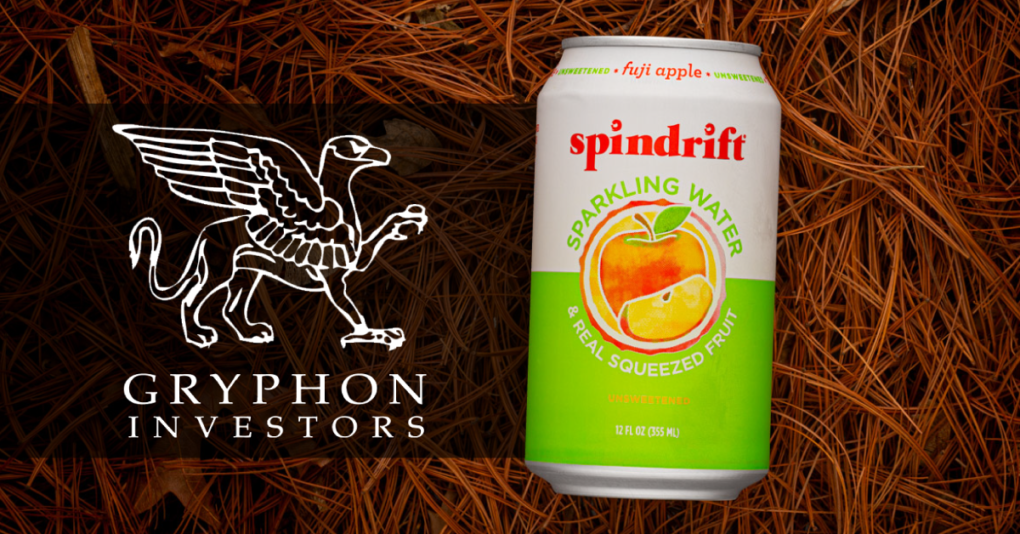
The purchase of a majority share of Spindrift by Gryphon Investments, agreed to at the end of 2024 but not announced until January, 2025, won’t solve all of the premium sparkling water brand’s challenges, but it does offer the company and the investor the advantage of time to figure them out.
The $640 million deal is not an insignificant number, even considering the $73.5 million already invested into Spindrift (according to Crunchbase). After 15 years, it’s not surprising to see company founder Bill Creelman wanting to get a return on his hard work without necessarily having to reach a final exit.
Particularly at a time when, outside of energy drinks (see above), strategic buyers seem scarce and hard to satisfy, and Coke and Pepsi have their own category entries in Topo Chico and Bubly, taking money off the table and retrenching for the long haul seems like a fine decision. Creelman, who remains as Board Chair with what has been termed “a significant stake” in Spindrift, ceded the CEO seat to former Boston Beer CEO Dave Burwick, a corporate veteran who has worked with both private equity and public companies in the past.
Spindrift isn’t the only brand that has taken this route, in this or in contiguous categories – look at Waterloo, which has been able to play the pricing battle from early on due to its stores of capital. For years, Spindrift’s high ingredient quality allowed it to serve as the craft alternative to the rest of the seltzer category – that let it stretch the category on price, creating a premium, independent product that was clearly superior to nearly all of its rivals. Spindrift inspired competition in the form of premium alternatives like Aura Bora, Sanzo, Wildwonder and more, but to date none of those brands have come close to matching Spindrift’s scale and success.
What happens to the stock options and hard work of the Spindrift team and ownership when Gryphon takes the next step? Chances are the faster the company hits growth targets, the more likely there is to be an outcome imagined within the optimistic minds of Gryphon’s financial engineers.
When you play with PE, of course, there’s a non-zero chance that those engineers find a way to put themselves at the front of the line, ahead of the team that built the brand. But a veteran steward like Creelman had to have carefully weighed the benefit to his organization, as well as himself, when it came to assessing those risks.
And there are challenges despite the brand’s strong, steady growth. Although Spindrift has done a great job of establishing itself as a premium product, it’s proven to have a harder time extending into convenience, the channel that takes many beverage brands across the billion-dollar threshold. Spindrift still hasn’t established routes into that channel, and it’s not clear that it can reach that next level of scale without completely rewiring its distribution system. But it’s clear that’s not the first choice, either: Spindrift’s hot-off-the-presses announcement of a low-sugar soda may be a sign that it instead plans to push deeper into its existing channels to see if it can find incremental growth.
If it can’t find growth through innovation however, its new owners may start whittling away at operating expenses in order to create the returns they’d like to see. They might seek to purchase brands that complement or augment Spindrift’s approach, or they might gamble that an IPO will help raise enough money to handle an expensive buildout into convenience. No matter what, though, ownership by Gryphon puts Spindrift into a financial operating environment that’s very different from most of its peers.

Growth Capital: Just Enough Energy
As noted above, when it came to investment, 2024 was a year where investors doubled down on the good students in their portfolios but weren’t looking to help get the problem children the growth help they needed.
So the biggest outlays were to NA brands that had already hit decent scale and market penetration. In March, Liquid Death raised nearly $68 million, while Olipop raised $50 million – and then another $40 million in August. Athletic Brewing pulled in $50 million in July.
Beyond that, energy drinks were the leaders when it came to attracting capital, with Recover 180 ($22 million), Gorgie (just under $20 million), Lucky Energy ($11.7 and $8 million) and Odyssey ($6.3 million) each able to raise during the past year.
Here’s at least a partial list of last year’s beverage VC raises of $5 million or more, courtesy of the FABID database and augmented with information from other sources like media reports, financial services companies and information gathered from providers like Pitchbook and Crunchbase.
- Liquid Death: $67.6 million, March
- Zoa: $53 Million, November
- Recover 180: $51 million, September
- Athletic Brewing: $50 million, July
- Olipop: $50 million, March
- Olipop: $40 million, August
- ZBiotics: $22.4 million, April
- Culture Pop: $21 million, February
- Blue Stripes, $20 million, October
- Gorgie: $19.8 million, December
- Athletic Brewing: $18 million, August
- Best Day Brewing: $12.5 million, October
- Lucky Energy: $11.8 million, September
- Ripple: $10.8 million, March
- Don’t Quit: $10 million, June
- Best Day Brewing: $10 million, March
- Roar: $10 million, April
- Slate: $9.6 million, September
- Zico Rising: $9.1 million, December
- My Muse: $8.6 million, January
- Lucky Energy: $8 million, April
- Throne: $8 million, September
- Nirvana: $6 million, February
- Reed’s: $6 million, September
- Jones Soda: $5.9 million, August
- Tecton Life: $5.5 million, February
- Sanzo: $5 million, January

The 2025 deals we’d love to see (or cover, at least):
We aren’t I-Bankers and we don’t get the fees, but we do get our jollies from “financial imagineering” in the Magic Kingdom of the beverage space. So here are a few ideas for some of you to consider. Got one of your own? Let us know!
New Strategics Join the Fray
One thing that the new year has already shown via the Alani Nu deal is that Celsius is willing to act as a strategic acquirer. Other highly-capitalized beverage companies, like Chobani, publicly-traded Vita Coco and Butterfly Equity-backed rollup play Generous Brands, have also shown a willingness to either acquire or explore acquisition or investment in other companies. With established retail relationships and strong leadership in place, we’d love to see them each look at fostering the growth of some of the available brands that are out there. It could also have the effect of getting Big Food and Big Soda to understand that they aren’t the only exit play around, and get them to once again start looking to get into deals earlier.
IPO: Independent Pop Offering
Both Poppi and Olipop are growing in an area that the big brands can’t seem to touch, and now’s the time to consolidate category momentum through a public offering (or two). These brands have the name recognition of a new generation that has long steered away from Coke and Pepsi – for many Millennials, those products aren’t even on the menu. New consumer habits create billions of dollars in runway: Celsius and LaCroix have each had rocketship responses generated by the investment banks’ gradual catchup to what the consumers have already discovered. While quarterlies and public filings aren’t any fun, these brands are in line with the next-gen set of offerings that powered Boston Beer in the early days of craft.
Going… Going… Still Going…
There are brands on the market that have been available for years for the right bidder, and it’s time someone made an honest offer for them. Brands like Hint, Health Ade, Calypso, and Califia all have strategic value in a portfolio, and a good outcome would free up their investors and operators to put their energy into creating new businesses. What about AriZona buying Calypso? Windpoint Partners finding enough leverage to roll Hint into its portfolio alongside Good2Grow? Could Califia – or the fast-growing high-end nut milks made by Malk – be a good pickup for Coke to keep building on its momentum in the dairy case? And who wouldn’t want to buy the growth at Health Ade, which is now the only other credible national brand in kombucha besides GT’s?
If any of these happen, we wouldn’t even charge a finder’s fee. Just call us first, let us break the story, and offer a polite thanks. That, some samples, and we’re all square.