

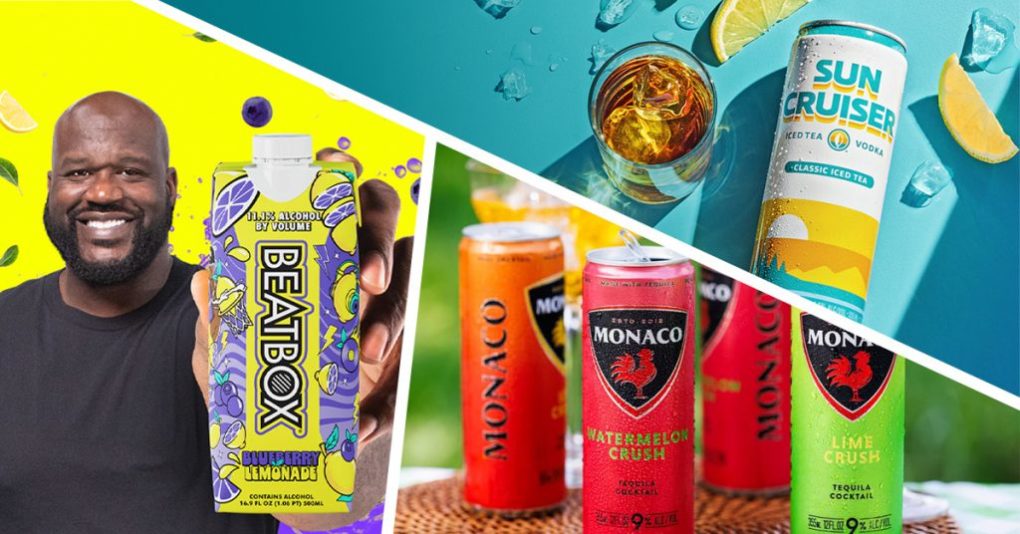
 Beverage-alcohol’s embrace of flavor and craft beer’s shifting distribution trends were among spotlighted issues during last week’s Beer Marketer’s Insights Spring Conference in Chicago.
Leaders from BeatBox Beverages, Boston Beer Company, Atomic Brands, and Columbia Distributing shared where their business is heading. Here are a few soundbites from the conference.
BeatBox on Pace to Generate $260M in 2025
Party punch maker BeatBox has grown from a $2 million business in 2018, to $176 million in 2024, co-founder and CEO Justin Fenchel shared. In 2025, the company is expected to reach $260 million after an “outstanding” start to the year.
“The world is really waking up to this fourth category,” Fenchel said. “It’s flavor-forward, it’s high ABV, it’s convenient, it’s fun.”
Later, he declared: “Flavor is forever.”
BeatBox’s distribution is handled by 85% to 95% A-B houses, working with 3,300 distributors nationwide. On a 90-day basis, BeatBox has around 130,000 off-premise accounts purchasing its products and 110,000 of those accounts are purchasing each month.
“84% of our account universe is buying every single month,” Fenchel said. “And there’s good news: Our accounts are up 30% year-over-year in terms of accounts buying, but our flavors per door are up 75%. So the accounts that have been with us continue to expand.”
BeatBox is now sold in about 54% chain retailers after being all independent until 2021, Fenchel said. The brand is sold in nearly 60% of the independent retailers in the U.S. with an average of around five flavors in those accounts.
However, BeatBox still has challenges as a primarily wine-based offering sold by beer distributors “in a world of large-format retail stores” such as Target, Walmart and Publix, where each bev-alc mega category typically has its own buyer.
“I really believe retail sales would be significantly higher if retailers would move faster to catch up with where the customer wants the shop,” Fenchel said. He argued that modern drinkers care more about whether a product tastes good, is priced right and fits authentically into their lifestyles than category designation.
“To this day, we have zero distribution in Publix. We’re in 100 Targets. We’re not in Costco. We have two flavors in Walmart. When we get really going with multiple pack sizes and multiple flavors sold in these retailers, game fucking on,” Fenchel said.
Until retailers catch up with the changing bev-alc landscape, they’re leaving “10s of millions of dollars on the table,” Fenchel said.
“It’s not like the speed of culture is going to slow down,” he added. “It’s only going to get faster.”
BeatBox had been fighting to get in Dollar General for five years and the company is getting in those doors with four flavors.
“It’s all new business,” Fenchel said. “It can happen fast when they get behind it.”
Asked about taking on investors, Fenchel said BeatBox’s cap table has grown to around 200 investors over the last 13 years and he and the company’s co-founders are “always thinking about how to get returns to everybody.” For now, their focus is on building the best company possible.
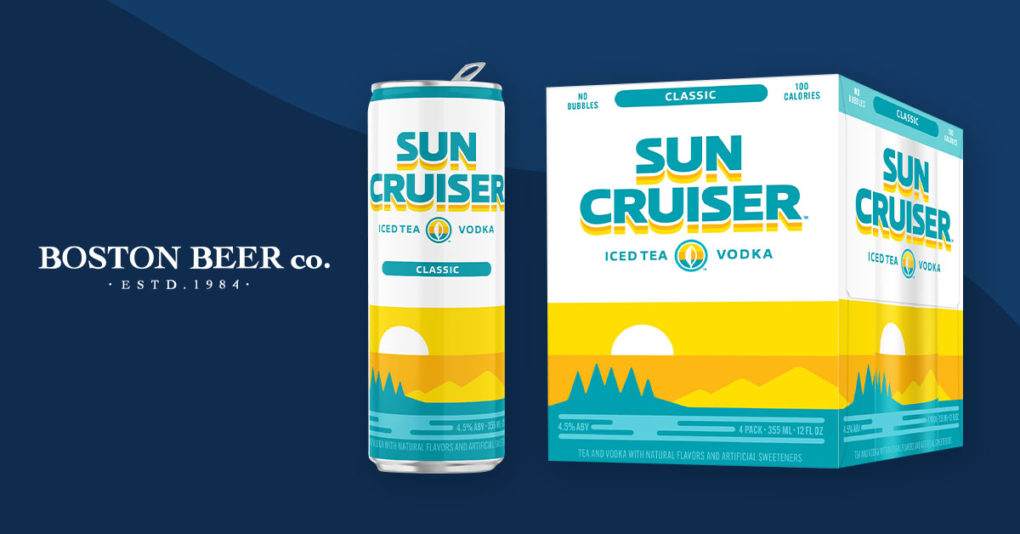
Sun Cruiser Selling ‘By the Pallet’
Scott Hempstead, Boston Beer’s Sun Cruiser national sales director, discussed the strong 15-month start for the vodka-based iced tea brand, including surprising success in the on-premise.
“People are buying it by the pallet, not by the case,” he said. “I don’t believe Boston Beer’s ever really had anything like that in the portfolio.”
Even in a crowded segment, Sun Cruiser has “found a way to break through” and the path forward is “fine-tuning” and growing the brand, Hempstead said.
Sun Cruiser has near national distribution, finding success in Boston Beer’s New England stronghold with independent off-premise retailers and on-premise accounts.
Those channel successes set Sun Cruiser apart from Boston Beer’s other hard tea brand, Twisted Tea, which is primarily sold in convenience and grocery stores, Hempstead explained. The two products also have different bases, spirits for Sun Cruiser and malt for Twisted Tea, allowing the former to sell at a higher price point.
“They kind of have their own lanes and their own drinkers,” he said.
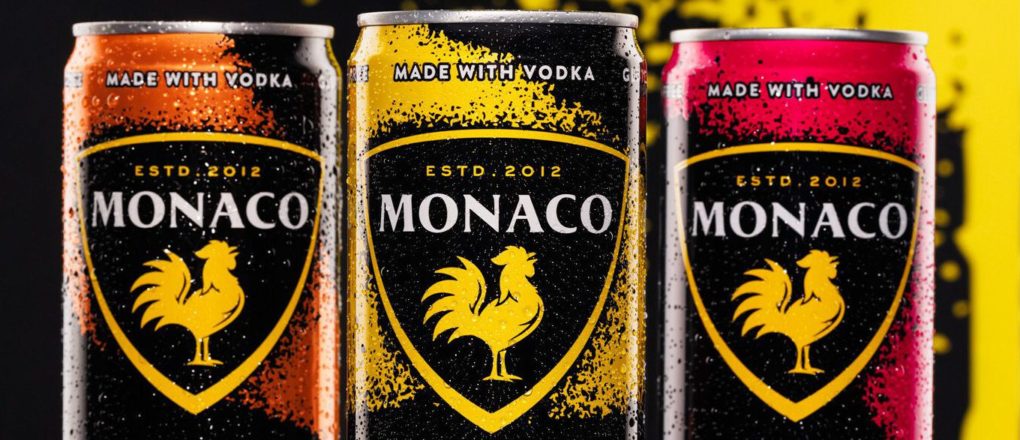
Atomic Brands Pacing Toward 3.5M CEs in 2025
Atomic Brands founder and CEO Don Deubler said the maker of Monaco canned cocktails is trending toward as many as 3.5 million case equivalents by the end of 2025.
Atomic has around 65,000 accounts purchasing its brands across the country, with sales where around “60% of the population lives today.”
“The upside for us is just huge in expanding that retail footprint,” Deubler said. “We did recently launch a wine-base in order to be able to get into a lot of those accounts and be able to sell through a lot of those outlets. When you slice through our footprint, we’re about 80%-20% on independent c-store, 20% chain. We’ll grow on that about 25% to 30% annually.”
Deubler added that brands aren’t built in chain retailers. Brand building is done by cutting your teeth in independent retailers, finding consumers and proving yourself, he said. He shared that the company didn’t have “a chain guy” until around 18 months ago. Now, the company is segmenting between small format, c-store and large format with programming in Walmart, 7-Eleven and Casey’s, among others.
“We’re growing at about 20% to 30% a year on that, but it’s a lot more education,” he said. “That’s where a lot of the opportunity and the upside really is for us at this point with our split.”
Atomic has transitioned its brands to around 60% beer distributors (Molson Coors network) in the last year. “Serviceability” was among the main drivers for the move, giving the company more touchpoints with store managers and the ability to refresh store shelves more frequently.
As Atomic looks ahead to the next decade, Deubler shared that the company’s leaders look at both what’s next and what’s unlikely to change. On the latter, he pointed to flavor, convenience and everyday value as trends he expects to hold for the next 10 years.
Columbia Seeing Craft Trends Turn Positive
Columbia – whose portfolio includes Molson Coors, Constellation Brands, craft beer, NA offerings including Red Bull, and wine and spirits – is among the largest distributors in the U.S., moving around 81 million cases annually and generating more than $2.1 billion in revenue, Steffanci shared.
The company’s total beverage shift has fortified the business, with a mix of 65% beer, 25% NA and 10% spirits, he added. In Washington and Oregon, Columbia holds approximately 70% market share of beer “almost equally split” between the states.
Red Bull is a key part of Columbia’s NA mix, with the 7.5 million cases distributed annually, making it the energy drink’s largest independent distributor in the U.S. The addition of new sugar-free Red Bull flavors has also led to around 21% growth year-to-date (YTD).
Franchise law protection was another hot topic, with Steffanci saying he’s expecting a call from PepsiCo and prebiotic soda brand Poppi, which Colubmia distributes. PepsiCo acquired the brand for $1.95 billion earlier this year and will likely move it to its network.
“If you look at the last 12 months, a million and a half cases, we made $5 million in gross profit, and we have a really great contract that we’re going to get paid a multiple of gross profit,” he said. “So though it sucks that we’re going to lose it … we’re already in the mode now of going out and finding another prebiotic soda to fill that space.”
Steffanci added that there’s no “animosity” on Columbia’s said as he understands many of these companies’ dreams is to sell to Coca-Cola, PepsiCo or Keurig Dr Pepper.
Asked about Columbia’s wine-and-spirits business, Steffanci stressed that the company has no interest in becoming Southern Glazer’s.
“I don’t want to be 11,000 SKUs, and I don’t want to be 800 suppliers,” he said. “But we can actually provide service to big scale wine-and-spirits suppliers” and make them “a massive priority.”