

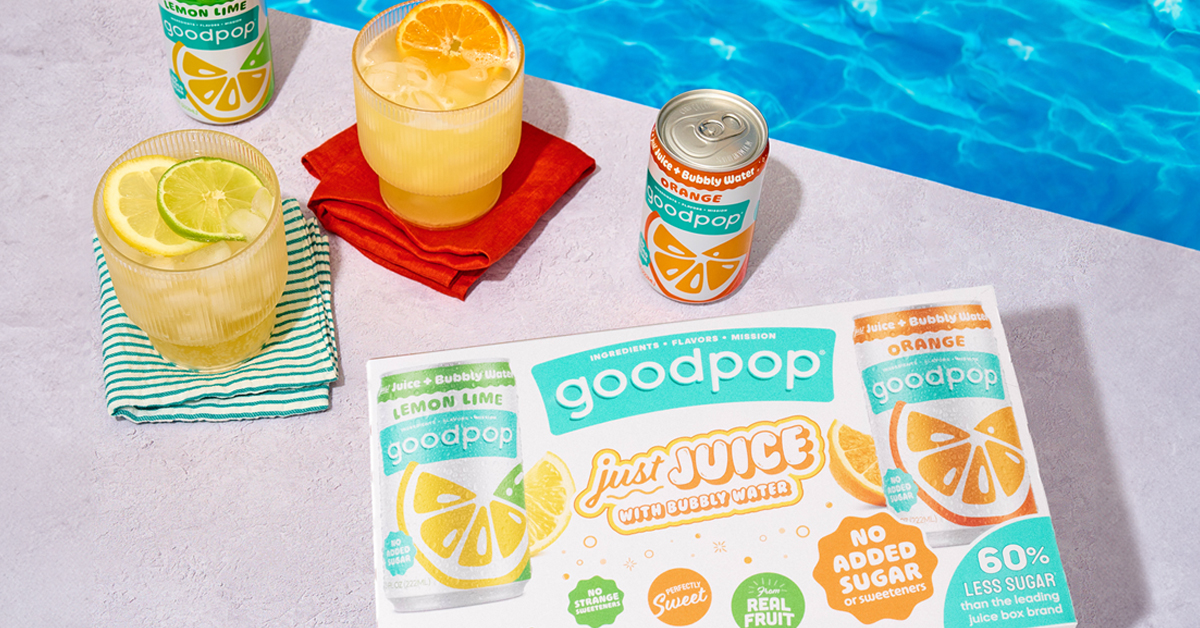
Sometimes the juice is not worth the squeeze – or in this case – not worth the mini-can.
This month, GoodPop announced it was discontinuing its sparkling juice minicans after two years in order to shift focus back on its core offerings in frozen confections and popsicles.
When GoodPop launched the three-SKU line of 7.5 oz. sparkling juice drinks in July 2023, the brand envisioned that the supply chain for fruit juices used in popsicles would align nicely with a kid-positioned drink, but soon found it was “really different,” said GoodPop founder and CEO Daniel Goetz.
When added to the challenges of navigating bottle deposit laws, a differing distribution approach, freight charges and elevated aluminum prices, Goetz said the format “started to stretch our team and pulled them in different directions.” The brand reformulated last August, adding more fruit juice for flavor and bringing a revamped design to the cans and multipack boxes, but has now decided to pull the plug.
“It took us years to recalibrate taste buds in frozen novelties,” he said. “In beverages, we underestimated how long that takes. We couldn’t jump to the front of the line.”
GoodPop’s juice drinks were profitable from the beginning, Goetz said, lining up distribution partnerships from Costco to Whole Foods Market to Walmart.
“It wasn’t a very difficult sell,” he added. “Retailers really wanted this to work because a lot of those big retailers see sugary beverages as a problem and they want a solution.”
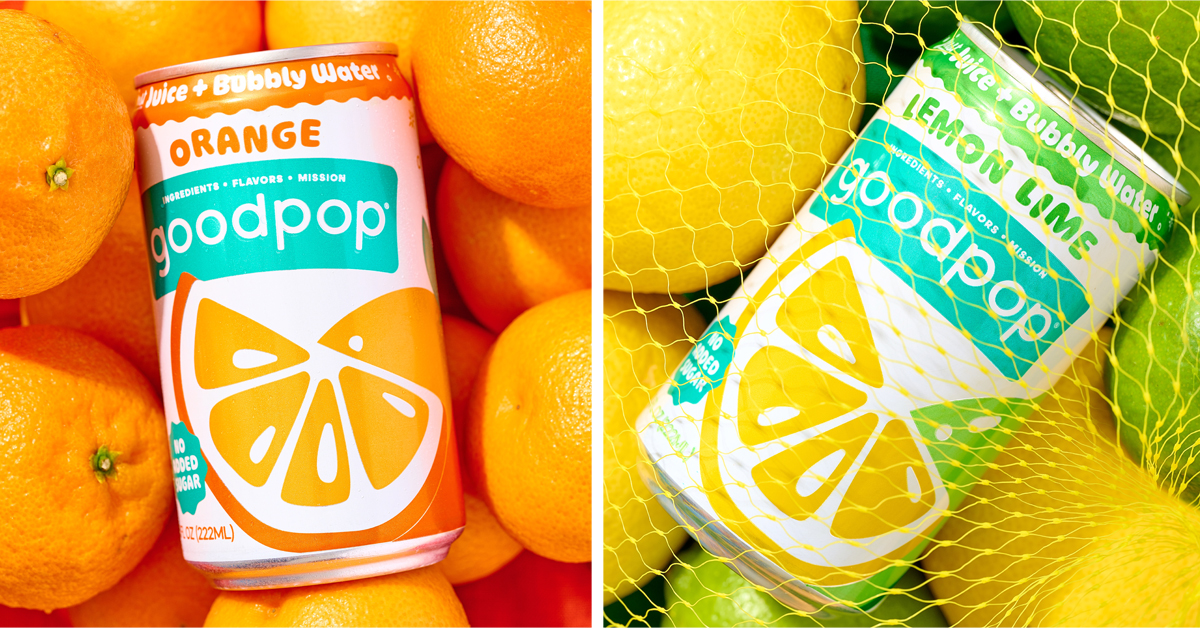
GoodPop was not alone in trying to corner the market for little hands grabbing adult-sized beverages. In sparkling water alone, larger brands like Talking Rain’s Sparkling Ice and Polar have launched minican to target kid consumers. There are numerous examples of startups with catchy names attempting to satisfy children’s thirst in new ways, but insurgent brands have been slow to catch on.
Even with celebrity backing, better-for-you juices have had a difficult time muscling out incumbent boxed or pouched varieties, and that’s not even getting into the more niche categories like kid kombucha or coffee.
“The difference between us and a lot of the other players that you’ve seen come and go in the kids’ beverage space is: We didn’t have to do it, we wanted to do it,” Goetz said.
Though the product is phasing out, the founder is still walking away with valuable lessons from the experience, including one he’s already been applying to frozen treats.
“It has to be clear what your product is, why it exists, what problem is being solved and you’re not going to get that done by writing a novel on the packaging. It has to deliver on that promise when someone tastes it.”