

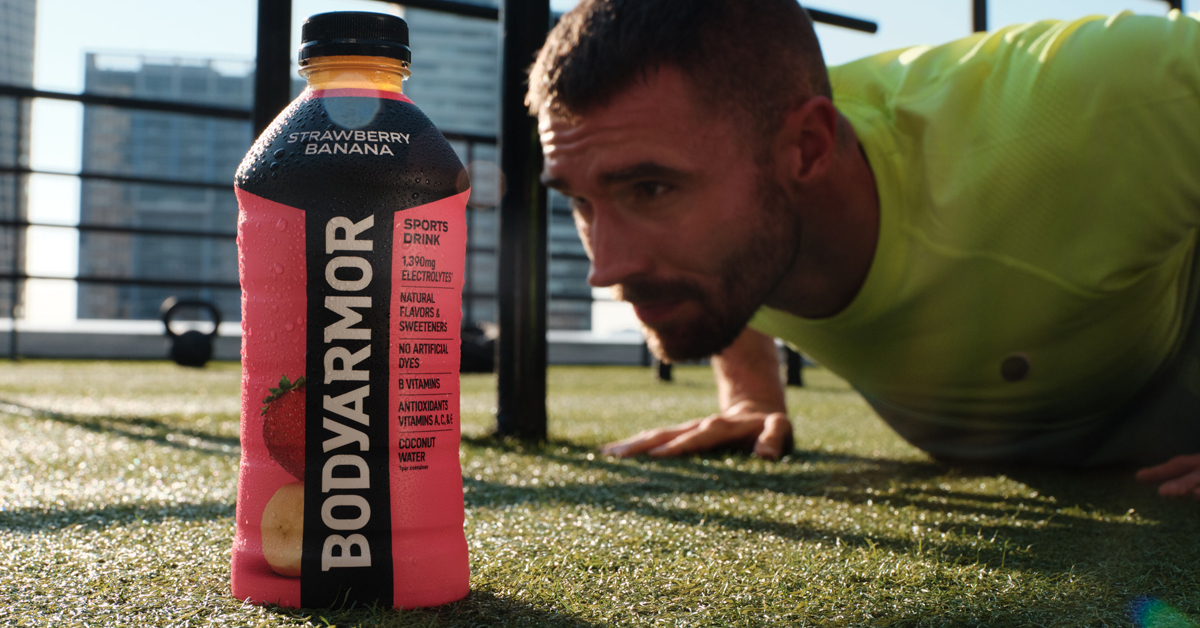
BodyArmor is suiting up with a revamped look and a new ad campaign to reinvigorate itself amid an increasingly competitive sports drink set.
The Coca-Cola Company-owned sports drink today unveiled “modernized” packaging, emphasizing BodyArmor’s core as a “challenger brand,” said BodyArmor VP of innovation Sabrina Niland.
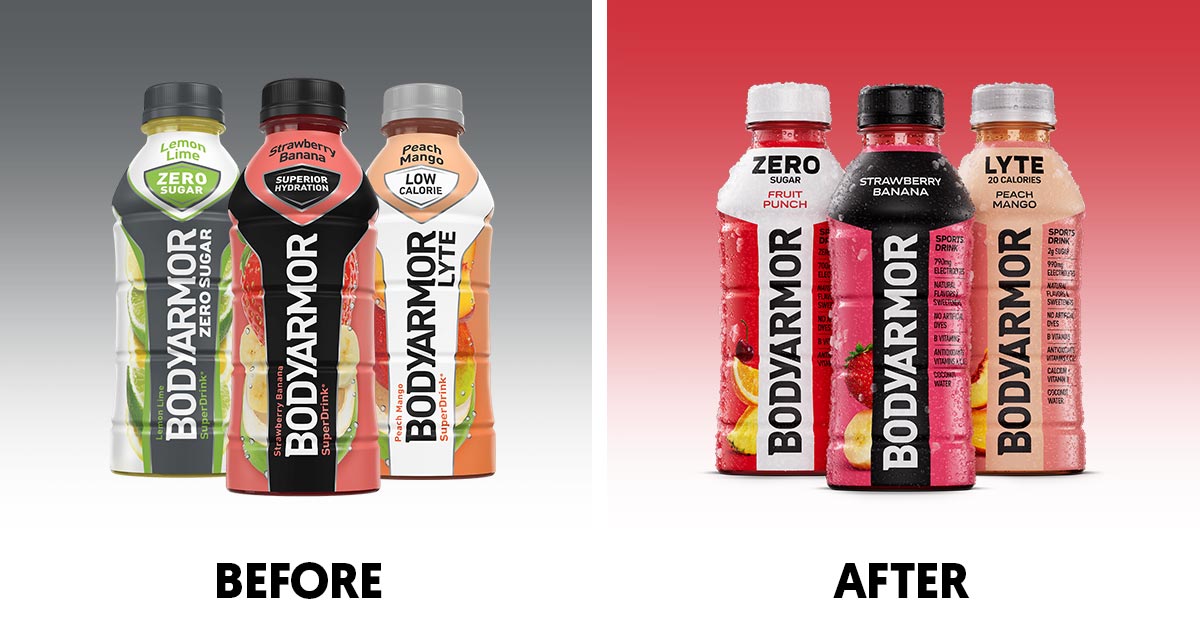
The rebranded packaging features a new gladiator-themed icon to the cap, a fresh label design and an updated wordmark. The “Super Drink” moniker has been replaced on the label with callouts for electrolyte load, sugar content and key ingredients.
Since entering sports drinks in 2011, “a lot has changed, including shifting consumer preferences and habits – as well as a market that is very crowded,” Niland said. “Given evolving trends and consumer needs, we recognize that now is the time to reintroduce ourselves with a visual identity that showcases who we’ve always been and where we’re going.”
Along with a packaging refresh, BodyArmor tweaked some of its formulations. In the core line, it reduced the sugar content. It also “upgraded” the sweetener system and added vitamin D and calcium to the low-calorie LYTE line.
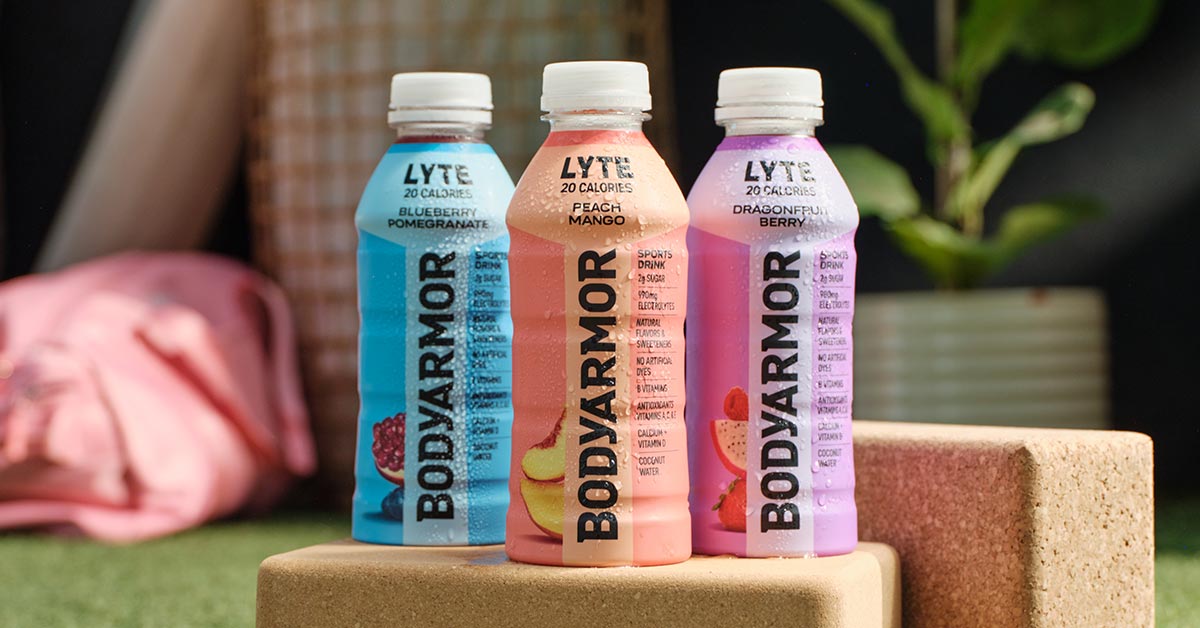
Differentiation across product sublines was another area targeted for improvement, accomplished through color-coding: black for BodyArmor Base, white for Zero and a multicolored, matte look for LYTE.
“Consumers are demanding more transparency and functionality from the brands they trust. Our approach was to simplify how we communicate while being intentional,” Niland said. “We knew we had to make it easier for them to quickly understand our products at a glance.”
The new visual identity is being launched with a “Choose Better” advertising campaign. The first ad spotlights BodyArmor’s professional athlete sponsors NHL’s Connor McDavid, WNBA forward Sabrina Ionescu, NFL quarterback Joe Burrow and wide receiver CeeDee Lamb.
Consumers are choosing products with functional benefits and prioritizing convenience, Niland said.
Over the years, BodyArmor has tried to adapt to these trends by initiating portfolio extensions. It dipped into its alkaline water with SportWater, went deeper in hydration with Flash I.V. and catered to demand for on-the-go products with stick packs.
Despite Coke’s attempts to vie for the sports drink trophy, the beverage strategic has relied on the duo of BodyArmor and Powerade, which underwent a rebrand in 2023, to remain in the race with PepsiCo’s Gatorade.
Gatorade represents about 65% of dollar sales in sports drink category, according to Circana MULO+ tracking for the 52-weeks ending February 25. The combination of BodyArmor and Powerade makes up about 23% of dollar sales.
In recent years, several other challengers have emerged beyond the top three sports drinks. Grupo PiSA’s Electrolit has established itself as the fourth biggest brand in the category, partially aided by a long-term distribution contract with Keurig Dr Pepper.
Early on, BodyArmor’s “iterative approach” to strategy and marketing “was a larger jump at the time than it is now perceived,” said CPG consultant Joshua Schall. “It’s probably much tougher to differentiate themselves today when there are so many more competitors out there talking loudly.”
In many ways, BodyArmor’s embrace of athlete endorsers turned investors paved the way for what we have seen recently. Just these last few years, PRIME’s meteoric rise (and return to Earth) was driven by its celebrity backers and full tilt sponsorships of many professional sports franchises. Emerging brands like Mas + by Messi, Barcode under Victor Wembanyama and Steph Curry with PLEZi have all seen a boost under their various athlete-investors.
Now, BodyArmor is not just trying to pull share from Gatorade or Powerade but fending off insurgents coming from behind. A rebrand allows it to sharpen its value proposition and adapt to a different category and industry from 10 or 15 years ago, when there were only two or three options.
“Now there are substantially more players, or at least smaller players, that have access to all the storytelling tools that lower the barriers of entry,” Schall said. “It’s tough for [BodyArmor] to carve out that unique, distinctive brand identity or voice.”