

 With President Trump’s sweeping tariffs in limbo again, a fresh wave of uncertainty has hit the market – and the spirits industry.
Last week, a ruling by the U.S. Court of International Trade blocked the majority of Trump’s sweeping “Liberation Day” tariffs. A day later a U.S. appeals court temporarily reinstated the tariffs while legal proceedings play out.
As the tariff roller coaster continues, the volatility is making spirits companies reevaluate everything from pricing to supply chain to expansion.
Bev-alc companies are operating with some room on pricing, but still need to tread carefully. More than half (61%) of consumers would stop buying their favorite alcohol brands by the time prices rose 10%, according to data released this month from consumer insights platform Zappi. Only 15% would stick around at any price.
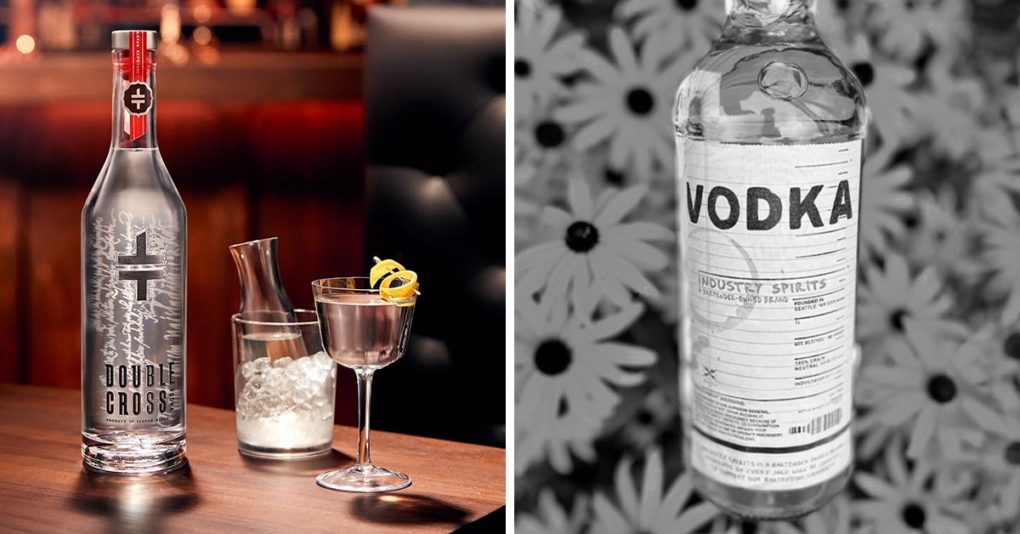
That means spirits brands are grappling with how to keep their prices steady – or if they raise them, to see how many dollars they can go up before seeing negative returns. We spoke with the leaders of two independent vodka companies on the opposite end of the price spectrum to hear how they’ve attempted to navigate the fluid situation.
A High End Vodka Tightens Its Belt
Double Cross Vodka, an U.S.-based ultra premium vodka company importing from Slovakia, has endured President Trump’s 10% tariff, and that’s not the only pressing global economic issue for the company.
The compounding effects of freight rates, European VAT taxes, the exchange rate, and the weakening of the dollar are long-term concerns for CEO Harry McKaig. To improve cash flow, the company has extended terms with its distillery.
McKaig took over the company last year with the aim of reviving the brand, which was founded in 2008 at the height of vodka’s luxury ascension. Playing in a higher-priced segment (Double Cross runs $35 and over) gives the brand a little more wiggle room as its consumers are less price sensitive. But on the back of inflation, Double Cross isn’t planning to raise prices. Still, McKaig is watching out to see what major brands do – if Grey Goose, for example, goes up 10%, Double Cross “could be leaving money on the table” by not going slightly higher too.
But McKaig is certain that it’s time for the company to be “incredibly patient” and “tighten the belt.” With established distribution, business is driven through velocity, which means the marketing budget can be throttled up and down.
“Because it’s tied to revenue, if we throttle it down, revenue might come down a little bit, but we’re actually not losing money in between – the margins are the same – but when it comes to people, it’s a different story.”
Adding sales teams to open adjacent markets is going to slow, and likely on hold until next year.
Tariffs Squeeze Value Spirits
Before the truce on Chinese tariffs, pressure was on Andrew Friedman, CEO of Industry Spirits, to keep his value-priced products affordable while dealing with higher glass and packaging costs.
“Most of our craft spirits in America operate on a very small profit – what we’ll see this year is how many of them will be able to take on this new pricing and find customers, because they will have to raise their prices,” he said.
Friedman, a former bar owner, launched Washington-based Industry Spirits in 2020 to offer on-premise locations a bartender-conceived line of value gin, vodka and rum, as well as white label products for retailers.
Importing cheap glass has been a key component of the company’s business strategy to this point. But that changed when Trump imposed multiple rounds of tariffs on Chinese imports, adding up to a rate of 145%. The tariffs have been on a two-week pause so far, but tensions are escalating after Trump accused China of violating the agreement last week.
“A 50% increase in simply the cost of glass could be a large element in reducing, if not getting rid of, any profits that are built into how we price our product,” Friedman said.
When the tariffs were in place, Friedman planned to raise the price of his one liter bottles from $10 to $12 – a hit to bars and restaurants already operating on thin margins, and that’s still minimizing profit for the distiller.
Friedman has been preparing for tariffs and has aimed to be a resource to other distillers. But the uncertainty over the final tariff numbers make suppliers unwilling to guarantee prices and therefore challenging for spirits companies to strategize. As for American-made glass? Most American or Mexican distributors offer glass from Europe, and that glass is usually priced at 50% to 100% more than the products from overseas partners, said Friedman. The tops of bottles, which usually cost five to eight cents, also doubled or tripled in price. Label blanks went up as well.
Industry Spirits has glass and packaging in stock and was better positioned than others who waited “to see where the chips would fall,” said Friedman. He added that despite the temporary relief on Chinese tariffs, many of his proactive peers have taken the opportunity to look at new bottle markets.
“Throughout the supply chain, there are so many abilities that companies have used for so long to get us a really good product at a really good price,” he said. “And now that the reality is that America is not designed to be able to get us these products, the prices go up.”