Search across the BevNET CPG Media network including BevNET, Nosh, Brewbound, Taste Radio, Nombase and CPG Jobs.

An Interview with Jack Scott of Dash Water
Transcript
Note: Transcripts are automatically generated and may contain inaccuracies and spelling errors.
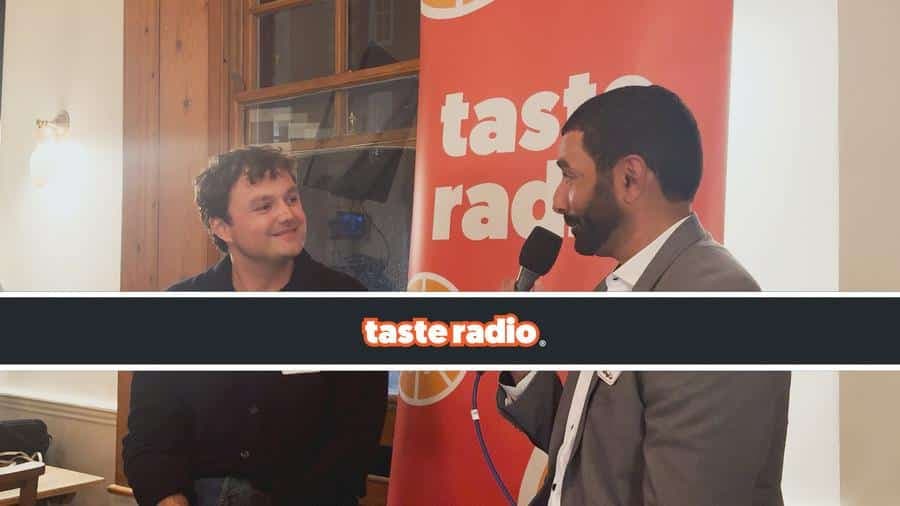
Speaker 1 [00:03] The gentleman right next to me, that's Jack Scott, who is the co-founder of a brand called Dash. Jack, great to see you. Great to
Speaker 2 [00:11] see you, Ray, and uh Taste Radio has definitely been a, a source of, of much knowledge of uh Alex and I over the years, so it's great to be here and thanks for, for inviting me.
Speaker 1 [00:21] Yeah, absolutely. I feel like Dash is a brand that's been on our radar for some time. Mike and John, John Craven, our founder and CEO came out here in 2019, and I believe that's when they first met you. Pretty enamored with the product and brand as you should be. Uh, for, I'm sure most folks here are familiar with the brand, but for those who are not, tell us all about it.
Speaker 2 [00:42] Yeah, so we, we started the brand 7.5 years ago now. Um, it's a very simple product. It's water, bubbles, and wonky fruit. It has no sugar or no sugar sweetener or calories. And it comes in a 330 mil sleek aluminum can and we've got 9 different flavors. We've just launched a big dash, uh, which is a 500 mL. Um, product, but yeah, very, very simple. Um, we started it for 22 reasons. So I come from, uh, an arable farm in, in Shropshire. Um, and Alex is also from, from farming backgrounds, and we saw that there was an issue with food waste at farm level. So all of the fruit that we use to infuse our waters, um, others have said no to. Um, we also, um, met at work at a larger soft drinks company and saw a gap in the market in the UK for a great tasting drink that didn't have any sugar or or sweetener. So there's a coup a couple of the, the reasons why we started it. And just
Speaker 1 [01:41] for context, where are you retail distribution wise and please project, you should be proud of what you're doing.
Speaker 2 [01:49] Yeah, no, absolutely. Um, so yeah, we, we started it in quite a traditional way. Uh, we focused heavily on. On, uh, Beacon accounts in London, your Whole Foods, your Planet Organic, um, the trendiest coffee shops around town. Um, we really wanted people to be first introduced to Dash, um, perhaps in a trendy coffee shop in Shoreditch rather than a meal deal, um, in, in Boots, and we got people to talk about the product alongside that, so. Instagram stories had just started and we were getting all of the right people to talk about our product online. Meanwhile, building out that sort of premium distribution. And fast forwards 7.5 years where. Uh, stocks in approximately 15,000 stores, uh, in the UK, um, all of the big supermarkets. Um, we're very proud, we have a strong direct to consumer business which is still about 30%, uh, of our business and we'll sell approximately 45 to 50 million cans this year. So it's starting to get some good scale.
Speaker 1 [02:52] Incredible. Now us crazy Americans from across the pond as it were, we're like, well, can you get any bigger, you know, or you, where else are you gonna go from here? Yeah, cause you're always gonna get bigger. Um, but you know, one of the themes for our visit, uh, here in London is to talk to folks about making their way internationally, whether it's the US or otherwise, and Dash is already sold in other countries. Talk about how you assess the opportunity to sell in places like France and Australia.
Speaker 2 [03:18] Yeah, so I think firstly we're, we're no experts and we've certainly had to kiss a few frocks along the way, um, in terms of our and we'll talk about that momentarily, yeah, um. But I think we, Alex and I have always thought that international expansion would be a valuable thing for, for us to do, to show that the brand can travel and work outside of your core market. The UK is our focus and where we put the majority of our time and is, you know, a large percentage of sales. But we wanted to, yeah, focus on some other key markets and show um that the brand could, could work cos I think that's, you know, really valuable um for, for, for the business going forward. Um, so how would we look at a new market? So, um, take Australia where we do have an end to end supply chain, um, and we have a team on the ground. Um, that was for a number of reasons. So the climate, um, Sydney and Melbourne tends to be warmer during the summer which works for our refreshing beverage. Um, they're big into sustainability in Australia, so hence why we needed to make it locally, um. So, and then they're big into health. So you know those sort of key things were were drive those macro trends were driving our decision. Like all things, relationships is really important. We, we have an investor who's the largest uh stakeholder and remedy kombucha, which is a very big soft drinks business, and that meant um that we were able to have conversations with manufacturers and wholesalers very easily. So for those reasons we thought Australia was a good idea. It's certainly not plain, plain sailing. Um, our category is dominated by large Coke, Pepsi, Schweppes, all have seltzer type products in the market, so it's not, it's not straightforward. So that, that's sort of Australia, um, and then for us, France is, is really interesting because it's the size of the market's really exciting. So it's a similar size market to the UK. Um, with a similar sort of demographic of, of, of people, um, and there's many fantastic retailers, um, that, that we think that we can, where we started to, to get into. Um, we're very early days. Again, it's about our, our chairman, um, has built successful UK. Uh, brands in France. So again, had a, a very good distributor who we were able to, to speak with, which has been, you know, fundamental for us getting off to a good start in, in France.
Speaker 1 [05:51] I, I feel like it's probably an easier, uh, transition is the wrong word, but an easier time getting into. European countries, other European countries versus getting into the United States, but you did make your way into the United States for a cup of coffee, so to speak, in 2020. Uh, you were aligned dash that is with a, a company called Iris Nova which had a pretty innovative business model and go to market strategy. Unfortunately, Iris Nova, uh, went underwater or, uh, was a defunct company after about a year, uh, and. So is your US distribution defunct, that is, and I'm curious as to, you know, what you learned from that experience and why the US market hasn't been a priority for you since.
Speaker 2 [06:40] Yeah, good question. So yeah, we definitely dip dipped our toe in the US market. Um, and that was our intention for, from the start. I think what was attractive to us, it was a very mature. Um, seltzer category. So we might have a, a, a, a place with within that mature market being a premium, unique, uh, story with the wonky fruit. So that's sort of perhaps why we wanted to dip our toe and Iris Nova did a great job. We got into Erawan, we got into Foxtrot, maybe 250 independents in New York, LA, Chicago. Um, but then I, it, it was that sort of classic sort of thing where. They took on far too many products as a, as a wholesaler. Iris know what that is. Yes, um, and sort of perhaps sort of lost sort of focus. We went in there thinking we would be one of 6, but it turned out there was a, a lot of, a lot more more brands. Um, so why has it not been a focus since, I think. Because it's so established our category, um, I think it would be extremely hard for us to make any waves without er raising a lot more money, um, or, um, actually moving over to the US um as a sort of founding team. Um, So that's, you know, that becomes very risky as a small business, um, because you're raising a load more money's going into a market that might, it may not work. Um, so that's sort of one of the main reasons. We have 12 perhaps competitors in the US that are all turning over $100 million plus within our category. And the price point is, is very low. Um, so from a margin perspective you'd be taking a big, big risk, um, and it, you know, it wouldn't be, uh, profitable, uh, that's for sure, so you'd have to be raising lots of capital. So some of the sort of the reasons why perhaps we don't feel it's the right time for us yet, but I hope the brand will go there one day.
Speaker 1 [08:48] Well, it is a very mature category, um, and typically you do have to raise a ton of money to be successful in the United States in beverage, but you know, raising money can sometimes lead to more problems than opportunities. Um, what have you learned about raising money and, and where best to deploy that money?
Speaker 2 [09:09] Yeah, great question. Um, we, we've now, you know, raised a significant amount of money, um. We felt it's um our strategy with that is always bring on people that would add value. Um, so James from Brewdog, the Sip Smith founders, um, Beaver To Beavertown founder, we've always sort of thought if we're gonna get people in, um, who are gonna invest our money, we would want them to be able to help us go through those levels of, of growth and have been there themselves, I think. That is an important thing that that we got right. We didn't just sort of take um any money. um we wanted people who are gonna be with us for the long run and understood that it's gonna take time and money to to get there.
Speaker 1 [09:58] I think sometimes investors do wanna see you tackle other markets, they do wanna see that big. Uh, you know, that big opportunity to tackle places like the United States, um, how do you talk to investors who are asking you about that international expansion and encouraging you to do so? I mean, is it just a a simple matter of saying no, that's not what we're gonna do right now, or you have to explain it to them, or do you have to talk about a long term vision?
Speaker 2 [10:26] Definitely, and that was really helpful getting people on who know the industry and understand that the US for instance, would be a risky move for us at our stage of of. Of, of business, but it's all around focus. So as a small team, you know, we, we've still got a lot of work to do to make sure that we become, you know, a household brand that's loved in the UK um and that's sort of where our focus is at the moment. Um, and that takes a lot of skill and hard work and money in itself. So to go off into a very competitive, um, You know, it's just about sort of explaining the situation, um, and perhaps you go into countries where the seltzer category doesn't exist, um, where the white space is for us as a brand to grow and be perhaps the category leader rather than coming 15th or 16th down the pecking order.
Speaker 1 [11:22] You never want to be 15th or 16th. You, you might as well be out of the market at that point. But you don't wanna be dead. Um, I'm gonna bring this, this is gonna sound like a weird transition, but it's, uh, it's something that Jack brought up in our pre-interview. Now you said this, I'm not sure if this is something that has been said throughout the industry, but, uh, you described the US and I don't wanna freak anyone out as being the graveyard of so many British brands. Don't freak out. He, I'm sure there's a valid reason why he said such a thing. Why did you say that, Jack?
Speaker 2 [11:55] I think for all of the reasons that I've, I've just mentioned, so the, the amount of capital that you would need in beverage to make it a success and get on, on the shelves and then ultimately get the consumers to, to pick it off shelf is going to be extremely expensive and you think about all of that private equity and VC money in the beverage space in the US who're all plying into the market to get onto the shelf, so. Um, you just have to go over to Expo West, which we were over in March and saw you guys to see that. You know, if you're gonna take on that market, you've got to make sure that you've got, you know, a laser tight strategy, something really unique and in a category perhaps that is growing and you're able to sort of get a foothold in. But you know there are some success stories like Fever Tree, which, you know, when I spoke with one of the Fever Tree founders about their US expansion. He started in 2008 and he went and moved there himself for three months, um, and started seeding properly in the market, in all of the right restaurants and bars and basically did what he did in the UK and that's, you know, a good sort of 15 years ago, so. Um, they started off small and then sort of grew, so there are obviously ways of doing it. Um, Fever Tree would be a good example of now having great success. Um, and you know, Brew Brewdog would be another drinks company, um, from the UK that are having some success, but. Um, I would say that that there would be many, many a brand that perhaps focusing on the US, um, has been the, the death of them.
Speaker 1 [13:42] And maybe it's just a simple matter of category. I mean, the sparkling water category, as you mentioned, is quite competitive and loaded with established brands and new brands that are trying to break into that space that are domestic and that are, uh, they already have a leg up because they're already there. Um, I mean, would you, let's say you're in a different category. Is it, I mean, would it, would you think it would be a different story?
Speaker 2 [14:08] Yeah, I, I think, I, I think so, um. As you said, seltzer is made and aided in the US. It's a category that was formed in the US and we, you know, almost took that idea from the US and brought it here. Um, and hopefully we can go and play your own game at some point in the future. Um, but other categories, I mean, I always think if you've got this sort of British heritage part, that, that goes somewhere in, in the US, um, so. If you want to dial that up as part of your brand, then I'm sure that there's a space within the specialty um channel which is so big in the US for a great British, you know, crafted soft drink. Um, I'm sure there, you know, would, would, would be space, um, so. You know, I'm interested to hear what you think in terms of the drink space.
Speaker 1 [15:04] Well, it's interesting when you think about the opportunities that international brands have in the United States and I think it is very category dependent. uh, it also might be a matter of, you know, beverages are tough, the food's a little bit easier and I think that's uh. Catherine's cue here. But, uh, Jack, I wanna say thank you so, so much for being with us. I really appreciate it. Round of applause for this fine gentleman. Thank you.