Search across the BevNET CPG Media network including BevNET, Nosh, Brewbound, Taste Radio, Nombase and CPG Jobs.

Elevator Talk: Advice That Could Be Integral To Your Brand's Success
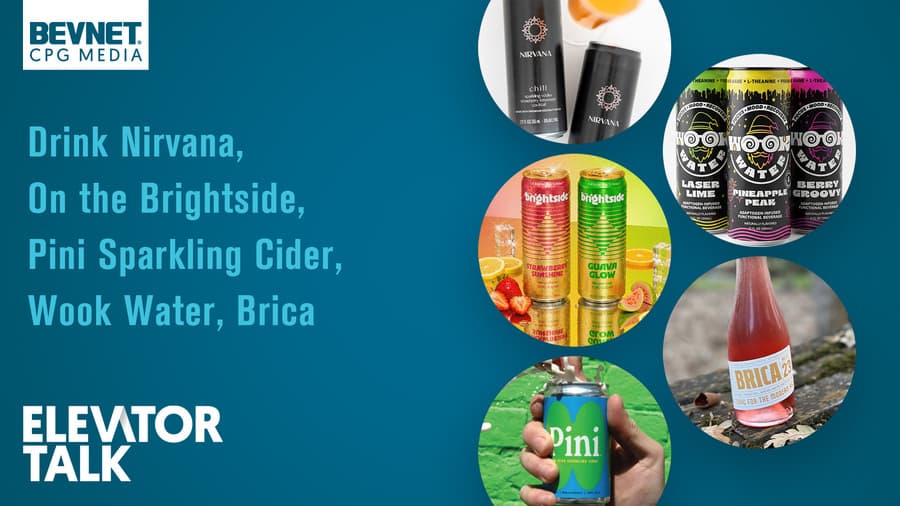
In the latest episode of Taste Radio's Elevator Talk, leaders from five emerging CPG brands -- Nirvana, On the Brightside, Pini Sparkling Cider, Wook Water, and Brica -- introduce their businesses, share what’s changed since launch and offer a look at where they’re headed next.
Joining regular host Ray Latif, editor and producer of Taste Radio, is Rifle Highes, the co-founder of Integral CPG, who brings sharp questions, candid feedback and an investor’s perspective to each pitch.
Want to put your brand in front of experienced CPG operators and investors? Applications are open for future episodes of Elevator Talk. Participation is free, interviews are conducted remotely, and founders get the chance to pitch their products, share company news and get unfiltered feedback from industry leaders.
Transcript
Note: Transcripts are automatically generated and may contain inaccuracies and spelling errors.
Ray Latif [00:06] Hey folks, I'm Ray Latif, the editor and producer of Bevnet's Taste Radio podcast. And you're tuning in to the latest episode of Elevator Talk, the series that profiles early-stage and disruptive brands from across the food and beverage industry. Today's episode focuses on 5 beverage brands whose entrepreneurs will have an opportunity to hear feedback and advice from our co-host for this episode. That's Rifle Hughes, a co-founder with Integral CPG. Rifle, it's great to see you again. Hey,
Speaker 2 [00:36] Ray, nice to see you. I think the last time we caught up was Fancy Foods back in New York, so it's been a few months. Nice to, nice to see you.
Ray Latif [00:44] You are, as I mentioned, the co-founder of Integral CPG, which works with a lot of brands at a lot of different stages to build and scale your businesses. Um, I'm not letting the entire cat out of the bag, so please tell us about your experience and your work with Integral.
Speaker 2 [01:01] Yeah, so as you mentioned, I'm the co-founder at Integral. We are a food and beverage innovation team focused on helping. Brands identify what their next hit product is, but what's unique about us is not only do we find that special idea for what the product can be, but we can give you a clear vision of how to bring it to life, everything from formulation to finding the right manufacturer, as well as how to make it sing in the sales channel, because all of that's what's necessary to bring a great new product idea to life and Uh, yeah, excited for today. I think the last couple of times I've been on have been, uh, snacks and beverage, as you mentioned, especially from back in my design days. Beverage is an amazing category, one of my favorites, uh, just because it's so competitive, uh, you know, a lot of great solutions. It's one of the few products that people are seeing out in public consuming, you know, they, you walk down the street with a beverage in your hand and That means that who they are, what they look like, what they stand for has to, has to work harder than like the, you know, your, your oats you're buying and putting in your smoothie.
Ray Latif [02:06] Innovation, as you mentioned, is such an important part of building a beverage brand today. You always want to stay on top of trends. People are always looking for the next big thing. You know, we know the big macro trends out there protein, fiber. What's on the cutting edge right now for you? What do you think is going to emerge as some of the next big ingredient trends in particular? And beyond that, are we looking at packaging trends, formulation? What's really hitting the sweet spot for not just consumers today, but those tomorrow?
Speaker 2 [02:40] I think especially in beverage we're seeing a lot of like crossing of the category norms. There's a little bit of column A, a little bit of column B, and I think that's a great way to experiment, learn from what's happening in other categories. We're seeing like right now we're seeing a lot of the, or coming out of expo at least, we saw a lot of like clear protein was everywhere. Is there a true case for that? I don't know, we'll see, but it's, it's taking An ingredient that was well seeded in like the RTD shake, you know, your muscle milks and core and all of those spaces, and then taking it to different formats. We're starting to see protein even show up in things like dirty soda, and now we've got Protein that's carbonated and sweetened, like, it's, you know, it's, it's cats and dogs, you know, getting together all over the place. So, I feel like we're in this time of experimentation and using innovation to borrow ideas from other places. I feel like over the next couple of years, some of that stuff is going to shake out. We'll see what consumers really think, pricing, you may be aware of this, there's like an affordability issue going on out in the world. Um, and so consumers maybe aren't willing to try new things as much as they, they were in the past couple of years, so we've got that coming along at the same time. So, I don't know about ingredients that are driving things as much as brands are paying attention to different need states, different categories, and then borrowing those ideas. It's a great way to start. Um, we'll see, we'll see ultimately what sticks.
Ray Latif [04:14] Was that a Stripes reference before when you mentioned cats and dogs living together? That's a, that's a great, wasn't
Speaker 2 [04:19] it Ghostbusters? I want to say.
Ray Latif [04:21] I thought it was, I thought it was Bill
Speaker 2 [04:23] Murray for sure, right?
Ray Latif [04:24] It was definitely Bill Murray.
Speaker 2 [04:25] Yeah, some dogs living together, yeah.
Ray Latif [04:28] Uh, rifle, we've got 5 fantastic brands and 5 fabulous founders to feature on this episode of Elevator Talk. Are you ready to meet the first?
Speaker 2 [04:38] Oh, I'm so excited. Bring on the beverages. Bring
Ray Latif [04:41] it on indeed. All right, our first guest is Ingrid Smith. She's the founder and president of Drink Nirvana. Ingrid, it's great to see you.
Speaker 3 [04:50] Hi Rifle. Hi Ray. Nice to meet you. Happy to be here. First time, longtime listener, first time caller.
Ray Latif [04:56] I love it. I love it. Thank you so much for joining us on this episode. You know, Rifle had just mentioned some crossover happening in beverage, and I think that's a, a perfect segue to what you do with Drink Nirvana. Tell us all about the brand.
Speaker 3 [05:12] Yeah, so thank you. Nirvana is a premium sparkling coconut water cocktail. So first to the market, our first flagship flavor, chill, combined strawberry lemonade, coconut water, and premium vodka. We're low ABV, only 5%. Um, and I created it because I saw a white space between, you know, the traditional hard seltzers and the heavier canned cocktails. So what we call that space is functional indulgence, which really just means a cocktail experience that still feels elevated, refreshing, intentional. Um, and, you know, since launching, we've built traction across retail and hospitality, um, earned retail authorizations in Total Wine, for example. We received some rewards in the industry and now the focus is really taking that early proof and, you know, scaling it.
Ray Latif [06:02] It feels like we've known that RTD cocktails have been on the rise and would be a category or a set that would supplant things like hard seltzer and some of the other beverage alcohol products that we've seen coming to market. Coconut water actually kind of threw me for a loop because coconut water has definitely had a bit of a renaissance. Why did you focus on coconut water as a key ingredient in your products?
Speaker 3 [06:30] Yeah, I think coconut water. Well, first of all, um, that's my background and my culture. I have from the Caribbean culture. Coconut water is a staple in our household for hydration and electrolytes and all the health benefits, and we're seeing the growth of functional beverages across multiple spaces, whether it's THC or, uh, uh, you know, riflevent protein. Um, folks want those kind of adaptogens during their beverage sessions, and we're the first to bring it into an alcoholic beverage.
Ray Latif [06:56] I love a good canned cocktail, and I love when it feels like it's an actual better for you um offering than what we've seen in the past. Now you can't call alcoholic beverages better for you. The, uh, now, there's a lot of agencies that will, will give you some grief about that. But, you know, in terms of differentiation, I feel like Nirvana has something that's not currently out there. What are your thoughts?
Speaker 2 [07:23] Well, I, I, I, as soon as you stole my question actually, cause as soon as I was doing a little bit of background reading on this and, and saw coconut water, Ingrid, I was like, oh, amazing idea, like using coconut water as, as the base for a cocktail. Everything you mentioned, the lectures, but I'm just thinking like a little bit more mouthfeel and that natural little bit of like brining it, like all the things that you wanna do to build up a great, um, you know, drinking experience in a cocktail, it's, it's, it's all there, so, an amazing foundation, so kudos on, on that, I'm glad it makes sense. I think what I'm curious of is like, how do you I love, love the whole canned cocktail space and even the mocktails. I think the challenge that I always see is like, how do you, how do you stand out? There's, there's one, there's so many of them now, it's all around flavor, there's seasonality, so you've got, I, I think you've got something that's pretty novel and unique, and I could see it running along, but how do you, how do you break through?
Speaker 3 [08:24] Yeah, I think that's a fantastic question, and, and that's really what makes us unique. Um, so, realistically, guys, you know, the RTD category doesn't need another flavor, right? It really needs differentiation, as you mentioned. So, you know, consumers already understand, you know, convenience in a can, and the opportunity with differentiation with um Nirvana is having this distinctive liquid, premium positioning, and a reason for the Consumer to choose Nirvana and an increasingly crowded cooler, so the coconut water gives Nirvana a recognition point of difference that lets us kind of build a platform rather than just a one-off skew or another, you know, slew of skews of various, various flavors, right? So we're building a platform that's not chasing the seltzer sets. We're not chasing the malt sets. We're really positioning ourselves in our own lane and then I, I coined it functional indulgence, but really we're here to complement those existing sets and actually bring a premiumization to the category. So you know, we respect all of our seltzer pioneers, but you know we're playing in a different lane here. We're talking sparkling versus seltzer and malt. We're talking pure ingredients, meaning, you know, purees, the coconut water, which, as you mentioned, gives a really full mouth feel. Combined with, you know, premium ingredients, premium uh vodka, um, chili is a vodka-based one, that all, all together just provides a different canned cocktail experience than the consumer has seen to date. So again, we're not, we're not chasing the seltzer sets or the malt sets. We're really playing in our own lane and looking to complement those sets by premium, by adding a more premium position to the category.
Ray Latif [10:00] And you've had some traction with retailers. According to my notes here. You recently expanded to Total Wine locations across Florida. How many stores are we talking about?
Speaker 3 [10:08] So we have authorizations across the state. We're chopping it up bit by bit right now. We're about 10 total wine locations across Florida. We've got about 48 cumulative buying doors across the state right now, averaging about 3 to 5 cases per week velocity. So you know we're seeing a lot of strong traction. We're actually at a pivotal point right now where we're doing a lot of celebrating. We launched October of last year. We've already sold 16,000 cans, which is an amazing. Milestone and in October we'll be celebrating our one year anniversary. Um, in addition to retail, we're also selling our product online, BTC, and what we're seeing on BTC is about, um, from January to date, about 150 DTC orders, um, 80% repeat rate. So that tells us that the consumer is a, the price elasticity is within the right space for them, giving it and recognizing that premium nature of the beverage that we are not. price with a traditional seltzer, so that price elasticity has proven itself through the repeat purchases. Um, we've also received a lot of really great awards in the industry. Um, so the spirit business named us number 25 out of 50 global brands for the most innovative. Um, we also received a gold medal for taste and innovation from RTD magazine, and recently we were voted the best ready to drink out of the ECRM adult beverage seminar. So, I mean, we're We're seeing a lot of traction in both ways, from both from recognition from the industry, recognition from retail, and another unique space that we're positioning Nirvana, which is very different than traditional RTD sets, is that we're focusing on hospitality and on-premise. RTDs have a space in on-premise and hospitality accounts which traditionally they have not. It's not really been considered, you know, putting an RTD in a bar in a setting. But what we're changing. Nirvana is that we're actually going and going directly to those customers and addressing that on-premise premium on-premise and premium hospitality spaces. So if you think about golf courses, private clubs and lounges, boutique hotels, pool bars, places where people want to have more of an elevated luxury experience, it's we're really resonating with those buyers as well as those consumers. And also, in addition to entering Different channels or categories within RTD and introducing them. We also are looking at mixology. So Nirvana is a fantastic, refreshing beverage in the canon itself, but position ourselves in the on-premise and the hospitality space is, hey, use it as a base for mixology with bottles you already have on the shelf, and we've seen a tremendous success and really fantastic feedback from our buyers, a lot of creativity at the bar with Nirvana, and we really think we're carving out something new here.
Ray Latif [12:51] Right, you brought up a really good point earlier about how people who hold beverages and walk around in public, it says something about them, and I think with the canned Nirvana. If you're at a pool, if you're at a bar, if you're at, you know, a backyard barbecue, there's something that says, oh, I'm kind of a chill, cool individual. But if there's something, you know, as we know, your package isn't necessarily going to be the same throughout your brand's lifespan. So how would you, if, if you were advising Ingrid, think about how to enhance some of the parts of her packaging, especially when you've got such a great brand name in Nirvana?
Speaker 2 [13:31] Yeah, no, I agree. It's the, everything you've spoken about, Ingrid is, is, is more premium experience, and it's definitely on that spectrum, right? It's black, it's simple, it's got some basic graphics, you know, it's probably borrowing more in look and feel from premium spirits labels or, you know, a wine label, something simple like a vouvelico, right, like the orange label that you can see across the room, so. I think it's ultimately down to how you're trying to position it. I mean, my head goes to with the coconut water, with the electrolytes, it could be like a healthier drinking experience, and you're putting it in those situations with like golf clubs and poolside and things like that, so you're not, you know, wearing yourself out. I think it's continuing to dial into that and ask like is premium the right way, which I think it can be, and then how do you continue to dial up the cues on, on Pack to. Make sure that it's, it's simple. It feels like a bottle of Chanel 5 versus something where there's stuff spewed all over it, which would feel less premium. So
Speaker 3 [14:34] just to piggyback off that thought, absolutely. And you know we have Nirvana chill as our flagship, but we also have two other flavors coming into the brand family. And what you'll see is that they have that same sleek, clean feel, you know, when you, when you Look into a coal vault and you see all their array of cans. It's a lot of bright colors. It's a lot of shimmery, so it can be a lot of sens sensory, um, you know, experiences for some people. So I'm exactly with you, Rifle. I was definitely inspired by the champagne bottles and premium, premium bottled spirits. I'm a sparkling champagne girlie myself, so, so yes, you're spot on with the inspiration.
Ray Latif [15:10] Great feedback, uh, great introduction to Nirvana. Thank you so much, Ingrid. Uh, I don't believe we've had a chance to try your products, so if you have an opportunity to send us some samples to our office, please do. We'd love to highlight them. Um, and also just understand that this is not a one-time conversation. We want to keep this going. So if you have any questions, if you have any thoughts about the next iteration, new flavors, reach out any time, and I think Rifle would appreciate that as well. Rifle, after every episode, he's so great about staying in touch with founders, so definitely reach out anytime.
Speaker 3 [15:46] Absolutely, will do. Thanks so much for having me, guys, and to learn about the Nirvana story and Nirvana moments. I'll get those samples out to you ASAP.
Ray Latif [15:53] Great stuff. I'm thirsty even though it's a little early in the day for a cocktail. I feel like I could have Nirvana right now, but we got to keep going. Our next guest is Adam Terry. He's the co-founder and CEO of On the Bright Side. Adam, it's great to see you.
Speaker 4 [16:09] Hey, Ray, it's great to see you. Great to meet you too, Rifle. How are you guys doing?
Ray Latif [16:13] On the bright side all morning, I've been thinking about your brand because the Killer song, Mr. Bright Side is one of my favorites, and I have to ask, were you inspired by the song?
Speaker 4 [16:26] You know, it wasn't necessarily the song that drove the name. I have a fabulous VP of marketing who drove the name. We actually had about 3 days to pick a name for this based on the timeline in which we were developing branding for this product, which is A whole other story, probably too long for 10 minutes, but I do remember the first wedding I went to after creating this product, and you know, this song inevitably came on and everybody was jamming out to it and I was like, yeah, this is the energy that I do want for this beverage brand.
Ray Latif [16:54] Nice, nice. And what do you sell? What kind of beverage do you make?
Speaker 4 [16:58] So this is an infused calming drink, so it is infused with a little bit of something called kana, which is a succulent from South Africa. There is a specific extract of that plant that is standardized, tracked and traced from the plant, so we know what the uh the specific amount of active functionals are in it, but the short version of that is it is a relaxing drink. It's for calming down, it is for chilling out without losing control. The marketing speak that we've put together for this is for calm, clarity, and social ease, which is really based on what this plant has been used for traditionally in South Africa, which is that, you know, it's, it's for calming down, it's for being able to focus on things, and it's used in social situations for improving social interactions.
Ray Latif [17:41] Rifle, I've been hearing more and more about ka. Is this an ingredient you're familiar with?
Speaker 2 [17:45] Uh, barely, a little bit. And so I did, did some additional reading on it and of, of a little bit of understanding in some of the more calming spectrum things, even cava and some of the other ones that are, you know, it's your website talks about these, like they're not the same, but like people, people deploy them for the same job, so, uh, arguably they, they can live in the same space, so. Yeah, super fascinated, I think this whole. Chill space is one that continues to build momentum in its calm way, in the way that, um, you know, energizing uh solutions that feel like they've been with us for, for decades or centuries with, with tea and then coffee and then colas and then energy beverages and beyond. So, there's a real space here. People are, people are getting jacked up. We, we need to find a way to wind back a little bit.
Ray Latif [18:40] It, it's a good point. You know, everyone seems to be on edge these days. I wonder why, but it feels like you definitely need a break, and I would assume the day part use for something like on the bright side would be in the evening. But when would people typically, when do people typically drink your products, Adam?
Speaker 4 [18:59] Yeah, the category breaks down into two things primarily. One is sort of a midday mood boost. So the effects of kana are essentially two. It's one is one side of it is a little bit euphoric, one side of it's a little more calming. This specific kana extract, which is why it's standardized and been studied in clinical settings, is that it's more on the calming side than it is necessarily on the euphoric. So it gives you a little mood boost, but mostly it's relaxing. So it's a great follow up to coffee for a lot of people. It gives them sort of like that mellow out when they've hit the jitters or, you know, the post lunch sort of blues that comes in on most days. But the other occasion that people are fighting for is mostly in that relaxation setting that targets, you know, where alcohol alternatives live. You know, the specific alkaloids that are involved here creating that calming don't create a sed a sedating effect. And so they're really effective for sort of creating this, you know, less social inhibition that alcohol provides without losing that control. And so people find it ideal in having one or two in the evening, sort of as an alcohol alternative, and it's got that, that sort of flexibility. So, you know, you can't own every occasion. So those are the two that we'll be focusing on. And as we, you're a very new brand, so as we learn more about where the audience is and, you know, how they're actually using the product, we'll be able to learn a lot more about where we should go more aggressively in our marketing.
Ray Latif [20:23] Yeah, I mean, I think that's the $100 million question is how do you get the consumer to be educated and excited about what you're doing and You know, education, consumer education could be the most expensive part of what you do. Rifle, in your experience, is it, is it easier or is it more effective to lean into the ingredient or the effect, and how would you advise Adam and his team to, you know, to promote what they're doing either or in their marketing?
Speaker 2 [20:56] It's, it's a fact. So I'm a big believer in, if anyone's heard of the jobs to be done theory, so it's the short version is that as consumers, the products we buy, we're technically hiring them to do jobs, and if you start thinking about it that way, you find that You start thinking beyond categories. So, you, you're, you're competing, if you start thinking about a beverage like this, it competes with, you know, a nap or a walk or a cannabis gummy, or like if you're just thinking. In your category, you kind of get fixated and lost. So the way you anchor with consumers is leaning into that. Hey, you need this, you're missing this, you're trying to solve for this. It's not about an ingredient. Consumers don't go to the store and say, Other than maybe protein, which, let's debate that later. Um, they're not looking for like, where's the L-theanine section? or, you know, can I get some sunflower less lecithin over here somewhere, like they, they need products, they need jobs, so, lean into, and that's where you are, I think for the most part. I know you're, uh, you're, you're doing a lot of explaining as I read through this site on like the background cause it's, it's unknown. I think you've got freedom to lean more into where and why and what for, and then the ingredient is the reason to believe as people start to understand.
Speaker 4 [22:18] Yeah, I think that is really great feedback right F and I completely agree. I mean, ultimately where you end up on a shelf in a retailer for example, right? That is definitely defined by what you are trying to do and so we see this as somewhere on the shelf near like a trip or a recess, things that are growing really effectively in this common category, although for those brands there was nowhere to end up in the store, right? A lot of category buyers are still figuring that out, but say you do have a comics section in a store, it's once you get to that section, you start picking up the cans, that is when you start to get more interested, I think, in the ingredients, in particular when you are deciding inside that effect. But you have to get people there on the effect, which is why a lot of our early marketing is really focused on building a brand vibe, communicating through tones, through visual language, what this product is supposed to do, what it's supposed to be for. And then there is a lot of testing that just has to happen, right? We need to test more of the, you know, which of those things are communicating accurately to consumers. As I look at conversion data through our heat mapping on direct to consumer, I can see most of the people that convert do spend more time looking through our FAQs, but they don't get there by showing up to the FAQ. They get there through a landing page that is more emotionally led. And so you know we have a lot of work to do. We are founders that come from the THC drinks industry, so we are very familiar with building a category and educating consumers basically from scratch. So it's hard work, but it is more rewarding work at the end of the day because we are building a category which gives us a better chance of being a category leader. Ray, if
Speaker 2 [23:45] I can jump in with a follow up, Adam, so how are you, how are you finding like if I think independent grocers might have a calming or independent retailers might have a calm set, right? But if I think about walking into more mainstream, your Walmarts, your Targets, your Kroger's, 7-Eleven, it's, you know, they're, I think they, they're nascent at best, you know, there's nothing there. So how, how are you navigating that because consumers do shop by placement as well as retailers organized
Ray Latif [24:16] by.
Speaker 4 [24:17] Yeah, no, I mean it is a very valid question and ultimately it is something that we are working out with those retailers as we go, right? We have done our applications for a lot of these resets. A lot of those are still in process. We were at Utopia a few weeks ago, big show for natural emerging brands and the interest is there by buyers. I think what it comes down to is like the buyers, they see the innovation, they understand it, they get it. They need to figure out how does that fit. to the existing system at their retail location. How does it work in terms of like plain categorization when it comes into it and a lot of it is we are a little bit drafting off of the category leaders that are there, right? Tripp is doing a lot of work opening these shelves. Recess has been doing work on this for years. More retailers than ever do understand some amount of effects based drinks, you know, for example, Target sells THC drinks in 6 states as far as I am aware now and so they are starting to get it more at a corporate level, but this is new, so it is not just educating consumers, it is also educating retailers. Independents are simply the first people to jump on. It was, you know, the Kava thing really resonated with me earlier because I was talking to one of our best accounts so far, you know, we're new so that does not mean a lot, but they are outselling our THC brand to 10 to One, and they say we are pulling a lot of share from Cava because Cava has better familiarity in the marketplace, but the people who are trying our product are preferring the effect of it and while obviously they all sit in that same chill zone, it gives people options to figure out what is going to work best for them in that effects space. So again, leading with the emotion, the effects and then going for the ingredient afterwards and that is how we are going to try to build this business.
Ray Latif [25:49] Adam, we're almost out of time. Uh, price point for Ken.
Speaker 4 [25:53] 399 is MSRP, so on the high side, although still within the realm of the category, that retailer I just mentioned, that's our best retailer so far, 799 per can on the shelf.
Ray Latif [26:04] Did you say 7.99?
Speaker 4 [26:06] I did. They're selling it for twice the MSRP and apparently our most successful retailer doing it, so we've got to work that one out. Well,
Ray Latif [26:12] it's interesting. It might, I mean, people might think that because it's a replacement for alcohol, it should be priced at that level. I wonder if that's why it's happening, but who knows? You could, you might be able to raise the price without blinking an eye, or the customer blinking an eye, so. Uh, thank you so much for taking the time. I think you've really got something here, honestly. It's, it's a great looking product. I was looking at some of the reviews. People were talking about the taste and the different use occasions for it, so keep at it, and I know you're, you're local to the Boston area here, so stop by the office anytime. We'd love to talk to
Speaker 4 [26:46] you. Will do, Ray. Thank you.
Ray Latif [26:49] All right, great stuff. Let's move on to our next guest. That person is Alejandro Del Perel, who is the owner of Pini Sparkling Cider. Alejandro, it's great to see you again.
Speaker 5 [26:59] Great to see you too. Thanks for having me.
Ray Latif [27:02] I was introduced to Pini, I believe, at the summer fancy food show in New York City, and man, I enjoyed what I was drinking. Tell us all about what you do.
Speaker 5 [27:13] Sure, yeah. I mean, we, uh, Pini is a, is a, a sub-brand, you can call it of uh Ninepin Hartcier, which was a company we started, uh, in 2013 and, uh, still, uh, you know, operating and growing, uh, today. Um, in 2018, we started working with uh Orchard Partner on, uh, developing a process for producing sparkling apple cider in a can that was shelf stable. And it took us a few years to sort of refine the process, but we came up with what was at the, we didn't know at the time, but what we realized about a year and a half ago was a completely new method for creating shelf stable sparkling cider, and the process was in fact patentable. We could have applied for the process patent on it, but we missed the boat because we started. Uh, a private label, uh, business around producing it and, um, and once you start selling the product into the market, whether it's a private label, your own brand or whatever, apparently that eliminates your ability to secure the patent. So, uh. Nevertheless, fine, we're OK with that. We still, it's still a unique, uh, a new, a, a unique technique, but the result, and, and Ray, what you're, what you're, what you responded to at Fancy Food is essentially a, a sparkling apple cider can that's, um, that still tastes like it's fresh pressed and right from the orchard. Um, it's Phenomenal to drink and we've seen a huge, uh, our business now is predominantly a private label manufacturing of sparkling apple cider. We do it for uh brands all across the United States and, and also for some major grocery store uh uh chains and, um, and that resulted in 2022. We put in a new canning line to increase our capacity and uh we realized, well, we did a good job, you know, launching a hard cider brand and, you know, why don't we launch our own sparkling cider brand. So that led us to develop Rand Pinney, and that's, and uh and that's that's really the story.
Ray Latif [29:20] You know, I think me and Rifle were both nodding our heads at the same time talking about how much we enjoyed what we drank at the summer fancy food show. I assume by nodding Rifle you got to try some of this.
Speaker 2 [29:32] I did a couple, several of these, right? So yeah, Alejandro, like, first I applaud you. I don't know how you have a tinpin this and a private label, you know, contract manufacturing business, so. Kudos, and I want, I want some tips on how to manage so much stuff super well after the show here, but uh, yeah, really great stuff, um, I, you know, it's, it's dead simple. It's, it's apple, we've, we've been consuming, I mean, maybe one of the first fruit juices that, that humans consumed over time and, and have been enjoying forever, so, uh, beloved by just about everyone, like hard to reject or reject. So, I think that's, that's kind of my question, when it's, when it's, it seems so simple, when we have access to it, I know, I love the, the, uh, the orchard fresh experience, but ultimately, like, how do you, how do you break out with, with something that feels obvious and ubiquitous, and it, part of it's like once you taste it, like you get it, but how do, how do you get that first sip?
Speaker 5 [30:40] Yeah, I mean, that is the ultimate question and, and honestly, I, I don't know if I can fully answer it at this point. Um, I do know that it performs super well at its price point and its packaging, uh, you know, on the private label side. So, um, we believe that by putting our energy behind the marketing and the branding piece of it with the Pini brand, that it's, you know, it's going to basically perform equally well. Um, and, you know, flavor obviously is, is the, uh, is the, is, you know, a winner once you get someone to taste it, you know, they're, they're hooked. And, and that's been our experience, you know, and everything we've done so far. Um, uh, the other, you know, sort of thing that we've gone with, with the branding was to try to pull apple cider out of like the seasonal space. Um, you know, if you look at the branding, it doesn't really scream fall. It doesn't scream orchard necessarily. It's got sort of a modern look to it, and the colors don't, you know, necessarily scream apple. So, that, that is we feel could be the way to get the consumer to consider it to be a drink that they'll be interested in consuming year-round as opposed to during that fall season when really apple cider thrives.
Ray Latif [32:02] We had some Pini in the office, keyword being had. It went quickly, and I was drinking it with my lunch. I assume that there's a lot of different parts of the day that you can drink Pini. You could have as a non-alcoholic option in the evening. You could have it just as a refreshment beverage. But if you were to put it on the shelf next to other beverages, where would you put it on the shelf, Alejandro? Where do you think this is best merchandise?
Speaker 5 [32:30] But, um, believe it or not, that we've seen the success we've seen with in, in chain retail has been, uh, they put it in produce, actually near the apples, um, or in the better for you, uh, set, you know, and refrigerated beverage. Uh, you know, it's a challenging, uh, space to break into, especially as a beverage brand. Um. One of the things that is that produce buyers are, are unfamiliar with is the notion that it's shelf stable, you know, that it could, it doesn't need to be in that little refrigerator. So we've, uh, we've helped on the private label side, we've helped sort of break that barrier by providing displays that are designed to fit right next to the apples, believe it or not.
Ray Latif [33:13] I almost thought that you were going to say that Pini is merchandise next to soda because people are looking for better for you options of soda. Better for you soda as a set or as a category has been blowing up, and I wonder how many people might want to swap their high sugar soda with something like this. I mean, if you're talking about natural, this it's essentially one ingredient, is that right?
Speaker 5 [33:37] That's one ingredient,
Ray Latif [33:38] correct, yeah, Rifle, this is my idea. I don't know. I mean, but do you think Pini could fit into this burgeoning better for you soda set?
Speaker 2 [33:48] Yeah, no, I think you're, I hadn't thought about it before, but as soon as you said it, it makes, makes total sense because it's, it's got the effervescence, it has a little bit of sweetness, it's got enough flavor behind it. It even has, you know, I didn't even think about this before, but apple has some of those natural caramel kind of notes built into it too, so you're right, it fits in somewhere between. You know, your Sprites and 7-Ups and then your more caramel colored colas, so yeah, that, that, I think you might be onto something that's interesting. I love the, I didn't even thought about the shelf stable side as soon as Alejandro, as soon as you said produce, it's one of the reasons why a lot of the, like, if you think back Naked, Odwalla, they won because they were able to merchandise in a new set, and the produce buyers were looking for higher ring and beverages being, you know, adding a lot more to their department. Uh, sales than apples, and, uh, so I, I think produce buyers are on the retail from the retailer hungry for products like this, and if it's shelf stable and you can merchandise it, you know, on the floor or on the shelf or something like that's a win, that's super cool.
Ray Latif [34:57] Yeah, the other part about this that I love is the pack size 7.5 ounce can. You know, portion control is also trending among consumers trying to reduce as much calories and sugar. Why'd you land on that size? Why this size can, Alejandro?
Speaker 5 [35:11] Uh, that, that, that's a twofold answer there. The first was the new canning line we put in in 2022 suddenly opened the door for us to be able to package in a 7.5 ounce sleep can, which we never had the means to do prior. So we were kind of thinking of products. I have been for years been wanting to put hard cider in a 7.5 ounce can, but I can't get distributors to buy them in that for some reason. But on the sparkling side, it's just the perfect serving size. You know, we do a lot in 12 ounce sleek cans too, and when you do sparkling cider and 12 ounce sleek, the last 4 ounces of that drink are, you know, the carbonation wears out, the, the, the liquid temp comes up. It's just not as enjoyable as the 1st 7.5. So by by keeping it at 7.5 ounces, you're really getting like a great experience beginning that.
Ray Latif [35:57] Yeah, I would, I would say so. Um, do you sell in 4 packs or is it in single, uh, cans?
Speaker 5 [36:03] Yeah, we do both. We, uh, we run 24 loose pack, uh, trays and also, uh, we 4 pack it as well. The, the retail on the 4 packs are, uh, is, uh, we see 6.99, 799 4 pack for 7.5 ounce cans.
Ray Latif [36:18] There's something really fun about Pini, and I think fun and simplicity go hand in hand and just make it easier for the consumer to want to pick it up and know more. What is it about this, this, this can, Rifle, that immediately stands out to you? I could say a number of things, but there's a lot going on here. But what really draws your eye,
Speaker 2 [36:39] Alejandro, you nailed it. I love the vibrant colors. It's simple. It's geometric. It's, you know, alluding to the hemispheric shape of the apples without, without being, uh, an apple, so it's a little bit of, you know, geometric art, uh, I'd love to see it eventually graduate up to a decorated, you know, fully decorated can instead of, you know, I don't know why you're putting a label on a can right now, but, uh, yeah, and then the name, like a four, four-letter name is, is gold, so, Kudos all around. If we had more time, I'd want the uh the background on the Penny name too, but yeah, I, well done. It's super sharp.
Ray Latif [37:17] I think the name comes from your parent company, right? 10pinin, excuse me, 99pin. Yes, it's
Speaker 5 [37:23] like 9pin but many, you know, Pini, yeah, there you go, yeah,
Speaker 2 [37:27] love it. That's simple.
Ray Latif [37:29] Alejandro. We can continue this conversation for sure, uh, offline, and I feel like I would love to make that happen. You got something that's fantastic. I love your product and wife and I are clearly big fans of your branding. Um, please stay in touch. Let us know if we can help in any way.
Speaker 5 [37:46] Will do. Thank you.
Ray Latif [37:48] More great stuff. Let's, let's keep it going with even more great stuff. Brittany Calderon is our next guest. She is the executive vice president and co-founder of Woolk Water. Brittany, it's great to see you.
Speaker 3 [38:01] Great to see you too, Ray. Thank you for having me.
Ray Latif [38:04] Thanks so much for joining us. Wook Water, W O O K Water. What do you do?
Speaker 3 [38:10] So we are a uh functional hydration beverage. We were kind of born outside of the boardroom and more in the heart and soul of music festival culture. As longtime patrons, we saw that it was a very underserved community. Um, there was nothing really kind of bridging the gap between alcoholic beverages, energy drinks, and then just plain water at any of the events that we were going to, so we decided let's. Let's build one. we were pretty intentional though with what went into the can. It's a very lightly carbonated coconut water powder base, and then it has some lion's Maine mushroom and L-theanine, great for that mood and focus, uh, some, uh, electrolytes. So we've got potassium, um, magnesium, you name it, for, for all of the hydration aspects. And then, There is a great deal of recovery aspects. There's some beta-alanine, again with the magnesium. Um, there's some prebiotics in there, some vitamins. It's, uh, yeah, I, I think it was just really over well, well, very well built for our community specifically and and the very fast lifestyle that we live.
Ray Latif [39:15] Rifle, did you know, I mean, I mean, did you know that this was going to be the key theme, because when I asked you about trends and innovation, you're like, there's just a lot of blurring of the lines going on right now and it's good for the industry because consumers, you know, want things that are going to do a lot for them, and it seems like Wookkwater does a lot for consumers.
Speaker 2 [39:33] Yeah, I, I think you asked me this question, I said it before. It's, it's about the occasion, it's about the purpose, uh, ingredients, you know, the structure, the form, flavors, how you put it all together is they're Lego bricks, and you, you combine them in whatever ways that you can to solve the problem. So, Brittany loved the focus on Like an underserved niche, you know, you're, you're at a festival, not my life, but I, you know, I know people that are into that, and so I've, you know, I understand it. The people are out there for hours in the elements, you know, they're, they're dancing, they're excited, they're getting into the moment. You're hot, you're sweaty, you're, you know, you're losing all your electrolytes and everything, and you're, you're maybe even consuming some other things where a little bit of extra hydration can, can be beneficial to keep you. In the zone, let's say. So, like, we've got products for sports that do this. Why don't we have something that's tailored for these consumers, that, that plays the part that, that fits right in. So, and then, yeah, so coconut water is a base, as I said this before, like coconut water, I feel like is an amazing ingredient that broke out a little bit on its own, but arguably it's better when it's the foundation you build other beverages on. So, Love that, all the adaptogens, mushrooms, everything else going like, yes, throw it all in there, let it, it makes a ton of sense for what you're building, so kudos on the product, love it. Thank you, thank you.
Ray Latif [41:07] Yeah, I haven't seen Rifle at a Martin Garrix concert, but I expect that you would have fun maybe with a can of Wook Water in your hand, but who knows? You know, what's really interesting, Brittany, is that this has an audience that, as Rifle mentioned, seems to be underserved. This is a product for a particular group of consumers. But when you think about the broad opportunity, In beverages, do you see a point at which Wook Water can have less of a specific focus and be more for that everyday? Uh, consumer.
Speaker 3 [41:48] Yeah, so we, we were actually, we're, we know how exactly how to market to our EDM community, right? We've been active participants in it for years and years, so we're really trying to reach out and figure out where we fit into a lot of other, a lot of other outlets. Um, we're finding that lifestyle or I'm sorry, um, like health and wellness, just given the ingredients of the can itself, it's really great, you know, after you get done with the workout or, um, it's also a. A sober friendly beverage, but it's, it's an alternative to alcohol as well, um, and we're finding some pretty great success with the 18 to 20 year old demographic. A lot of times when you're at any sort of on-premise location, there's an option for an energy drink or for water, but they do still want to feel like they're participating in some way, shape or form. The fact that it's a cool can and the fact that it is a very tasty beverage makes them feel that way.
Ray Latif [42:41] All right, I'm gonna do uh an exercise here that uh I do occasionally. I'm gonna throw at the rifle. Rifle, what do you, uh, what would you imagine that the price per can of Wook water would be?
Speaker 2 [42:54] I'll, I'll try to be uninformed, but let's, let's go for that 499 price point.
Ray Latif [43:01] Brittany, is he
Speaker 3 [43:01] close? He's, he's very close. Um, it really depends on location, right? So we're in, we're in several, several convenience stores, and our price point has been roughly around $399. Um, we could probably creep into $4409 as, as, as we're getting our feet wet, but any sort of on-prem location, we're sold anywhere from $8 to $10.
Ray Latif [43:23] OK, wow. OK, so on-prem that makes sense and off-prem 399. Rifle, in your experience, is there a particular sweet spot for a functional beverage, um, like a woke water? Is, is it price sensitive given that they do have such a specific audience?
Speaker 2 [43:40] Well, I, I, I think it's, it starts with that on-premise. Like if you're going to be a member of the community, you're where the community is. So I, I think it's, I don't know that it's bound into the functional space as much as start with what works in the context of where you are. You need to stay as high as you can for as long as you can because once you start seeding price, you can't ever get it back. So I, I think it's good for you to stay within your world, build that context. And I love the question, Ray, like how do you, how does this go mainstream, but I think that's what the best functional beverages do and I'll point back to the electrolytes. Gatorade was developed back in the 60s for college athletes at the University of Florida by scientists and doctors. It was serious stuff that The normal people weren't allowed to use because it was, it was too powerful. Now it's little kids at soccer games, right? So it, it, the power of the brand gets devalued over time. So starting with your community, being about that, and then people will adopt it for other occasions, but they want to project the, hey, this is, I'm a lively person, and I, you know, this is the lifestyle that I, that I want to project whether or not I'm at the festival or not, so. Um, I think it's great to start in a niche and then radiate out.
Ray Latif [44:59] Yeah, and no matter what, you want people to engage with your brand, and engagement on social media has become such a critical part of a marketing strategy. I'm on your Instagram page right now, Brittany, and it looks very engaging. It does. It's not just a couple of photos here and there. You've got a bunch of videos. You do a series called Behind the Brand. Tell us all about that.
Speaker 3 [45:22] Yeah, so that was um through our marketing director. She had come up and, and realistically people don't just want to purchase the the can, right? They want to purchase the brand and authenticity for us is one of the biggest things that we really wanted to portray. We are, you know, not this, this massive company creating something for an underserved market that we don't truly understand. We're immersed. So it was something that we started filming and really just kind of opening up and just showing, you know, our, our, our, our community that we are exactly like them, that we are normal people, that we have favorite DJs along with them that, and it really just creates all of that buy-in uh within the brand itself and and of course then it roll rolls over into the beverage.
Ray Latif [46:06] Yeah, what's that? Uh, oh, head banger. That's, is that a, is that a necklace that you're wearing?
Speaker 3 [46:12] Yeah, it, it is. It's called a curler. Uh, we could get you guys one specifically made so that way you guys can start wearing those in, in some of your future episodes. But, uh, but yeah, it's, it's something that we kind of gift throughout our community at different events.
Ray Latif [46:27] OK, I promise you if you send us 11 of us on the team will wear it, probably, but, uh, yeah, I, I'd be proud to wear a head banger. What do you call it? What is it? I mean, I cult. Necklace. It's not called a necklace.
Speaker 3 [46:38] It's called a pearler, so I cannot make one. It was gifted to me, so that is, I can be crafty in a lot of different ways, but that is not one of them.
Ray Latif [46:49] OK, fair enough. You know, one thing we didn't talk about is flavor and taste, taste, taste, taste is the most important thing when it comes to beverages. You don't have taste, you don't have anything. Um, how did you go about crafting a taste that would resonate with your audience in one that Um, could be a good base, I think, for all of your flavors.
Speaker 3 [47:10] Yeah, so we wanted to get as close to all natural as we possibly could, but of course we wanted it to taste very refreshing. Um, but again, the lightly carbonation is, is helpful that you could drink it relatively fast, um, but it also helps to mask some of that, that saltiness from the electrolytes themselves for people that may not drink. Drink them all the time. So we did some, some research and found um berry and lime were probably going to be our best foot forward. So we went ahead with our first production run with those two skews, and then we just recently introduced pineapple, which has been just blowing the other 22 flavors out, out of the water, so.
Ray Latif [47:47] Brittany, did you, do you have your MBA or do you have a background in beverage? You sound like you have a really good solid foundation in business.
Speaker 3 [47:55] Um, nope, it's been about 1 year. So, quick learner, quick learner. I come from the construction industry, so I have zero and quality of this, you have. It's new.
Ray Latif [48:04] OK, yeah, I'm trying to think of the similarities, parallels between the two industries. I can't, nothing's coming to mind just yet, but, uh, you are, you're clearly you're off to a great start, and I think you've got a fantastic brand in Wook Water. Thank you so much for taking the time. Uh, whenever you have an opportunity to send us some samples, please do. I'd love to try some.
Speaker 3 [48:22] Absolutely, I'll get them out this week for you guys.
Ray Latif [48:24] Thank you. On to our final guest for this episode of Elevator Talk. That person is Jim Neal. He is the founder of BRICA. Jim, great to see you again.
Speaker 6 [48:37] Hi, Ray, thanks a lot. Thanks for including me in this group of smart entrepreneurs. It's, I've really learned a lot just listening.
Ray Latif [48:44] I'm really happy to hear that. I mean, that is a big part of why we do this series is to not just inform and bring awareness to the brands, but to help educate uh anyone who's listening, whether you're pre-launch or 10 years in. So I think this A lot to learn from folks who are building innovative businesses, especially like yours, man. I fell in love with Brica when I tried it at the summer fancy food show. I may sound like a broken record here, but there was a lot of really good stuff there. That's a fantastic, that was a particularly fantastic trade show. Brica, please tell our audience all about what you do. Well,
Speaker 6 [49:19] Brica is a sparkling non-alcoholic dry beverage made with verjo, and we use verjo as the base, and then we make a, a bitter extract with gentin root, a lot of orange peel, dandelion root. Um, the BRICA 23 has cardamom. And clove and um uh BRICA 23 is orange, BRICA 15 is tart cherry. So I've been making Verjo for most of my life. It's a brand called Fusion and um I wanted to expand the line and It seemed like a logical expansion to, to become a non-alcoholic beverage.
Ray Latif [50:08] Verjo, V E R J U S. for folks who are not familiar with Verjo, what is it?
Speaker 6 [50:15] Verjo is made from, we make ours with Chardonnay grapes picked about halfway through the ripening, so the juice is left unfermented and it's real acidic. It hasn't ripened completely, so the sugar level is lower and the acidity is quite high, and you get really bright flavors with also a mouthfeel similar to wine, and it's basically tart. Sweet tart grape juice made from wine grapes.
Ray Latif [50:45] And Brica, the tagline on the bottle is a tonic for the modern age. This is not a tonic like a gin and tonic type of product. This is a refreshment beverage that you can, I would, I would assume you have. Instead of a glass of wine or a beer or something like that, right? Yeah,
Speaker 6 [51:04] yeah, exactly. Um, it's an option with some complexity and interesting aromatics and a great mouthfeel and just I think a delicious beverage.
Ray Latif [51:17] It is a delicious beverage, both of your products. Uh, again, Rifle, you were at the show. Um, this was almost front and center in the new product section upstairs, and it was hard to miss, and I really hope a lot of people didn't miss it. Did you get to try some?
Speaker 2 [51:35] I did, and Jim, and I think we may have even met there. It's, it's beautiful, like both visually and and consuming it. So, um, the confession, I'm I have the one kid in college, and college was a while ago for me, that the, my local bartender kept a bottle of Campari down on the bottom shelf before amaros were fun and cool, so not to brag, but you know, I was, I was dialed into these flavor profiles, like sweet stuff is not enjoyable for me. I like bitter, um, and Your products just nailed that, uh, love the virtue base, like you said, a little bit more mouthfeel, that acidity does a lot, uh, from, from what I recall. So amazing, amazing two products, they taste fantastic, just they were, they're light and easy, very refreshing, I could, could enjoy them quite a bit, so, and then visually, they nailed it, right? It looks the part. Uh, love the glass bottle, so many people are, for good reason, are, are in cans or, or some other plastic bottle today, but this being in glass and, and tying into that more of a laid-back European uh experience and even the pack size, like all, all the things check boxes for me, so, super interesting and yeah, just curious to see, Like I'm weird. I'm, I'm not normal. Are, are people out there responding to it? Or, or do they, do they get it? I'm sure once they taste it, they're, they're enjoying it, but how do you get people to have that, that first sip?
Speaker 6 [53:08] Well, we rolled out at the fancy food show this summer, and I would say 98% of the people that tasted it really liked it, and You know, we're trying to differentiate from being a soft drink. And You know, the bitterness plays a big role in that. The acidity elevates the aromatics, and Getting people to try it is more about distribution and getting it out into the market further. Um, we started out with on-premise with a couple of great restaurants in Napa Valley, French Laundry and Bochon are, have been pouring it and uh they're doing real well with it. I'm just starting to roll out in retail. That's been a little slower, but I'm connected with, um, I'm working with the Uh, uh, trying to get a relationship going with the distributor here in Texas, where I live, and, uh, although I lived most of my life in Napa Valley, I've got some, you know, some sales going out there, but we're gonna start retail here in Texas
Ray Latif [54:17] Jim, again, the tagline on the, on the package and on the bottles is a tonic for the modern age, but would you compare yourself more to a non-alcoholic cocktail? Obviously, obviously we've seen a lot of traction in that space. Um, Saint Augustus with their Fli Negroni, Curious Elixirs, Desois, uh, Gia. Uh, do you want to be in the same space as those brands?
Speaker 6 [54:39] I think it's fitting. But I do want to differentiate from a mocktail or I'm not a wine, not really a mocktail or copying a cocktail, just trying to make something interesting that tastes good and has some complexity where you can sniff it in a glass and kind of wonder what's in there. And I want to appeal to both nondrinkers and drinkers, and people that that are wine drinkers. They look for complexity in a glass and the different sensations on the palate, so we're trying to hit all those things, and yeah, I'd love to be grouped in with those other guys. They're killing it.
Ray Latif [55:19] They are, but sometimes there can be a glut of products in a fast growing space like that. Rifle, I mean, is this something you would advise? Would you advise, if, you know, Jim were to be able to speak to a retail buyer or a merchandiser about where this would best sell in store, and typically, you know, the store will make that decision. But do you think this is best suited in that non-alcoholic cocktail set?
Speaker 2 [55:44] I'm, I'm gonna go a little bit different and I, I like the way you started in, in, you know, uh, White Table, premium dining, food service at a place where it's You know, the chef, like a Thomas Keller or something, they're, they're crafting an experience for their diners, and they've got, they've got wine nailed, you know, a little bit of beer, you know, you usually have multiple types of water and things like that, but to have something in a bottle that's refreshing, and can be fast and easy to serve, and fits the environment, like Brica I believe would do, and I could totally see it at, at Busan, um, and so, I would keep leaning into that world. You're not going to be fighting, duking it out on the shelf with, with all of the others that are going to be competitive and try to drive the price down, go to where they can't, and you've you've built something that's appropriate for those environments. Survey of what, uh, you know, keep, keep getting a lot of, a lot of other, other advice, but as soon as you said that, it just, it clicked. I get it, and yes, and close to where you are in Texas, I'm sure there's lots of fine dining in appropriate places, and it's hot down there, and having something like this to sit out underneath an umbrella with, with, you know, over some ice or not, yeah, it's, it's relaxing and It is the tonic for the, the world we live in today. I, I, I understand the tagline. It's, it's, gets you relaxed and uh your mind off of all your other troubles.
Ray Latif [57:13] Uh, I'm going to trademark what you just said there. Go where they can't. I love that, or where they won't, where they won't. That's good advice. The question though in the beverage game though is volume. Typically it's about volume. So how do you go from specialty to volume is always going to be a big question, but it's really up to the founder too. I mean, you know, not every brand has to be a billion dollar brand. So Jim, I mean, I guess for you, what is your goal for this brand? What, you know, what do you, I, I, what do you call success for Brica?
Speaker 6 [57:47] National distribution starting. Emphasizing fine dining, I think, and then carry that over into retail. Um, volume-wise, there's really no limitation. I, I make, I just got back from California last week for making verjo, and this is the 33rd year we did about 35,000 gallons of verju, and there's so many grapes available right now. That's the main ingredient. I control the whole manufacture process. And I'm not buying it from a third party, so my, my costs are pretty good. So yeah, I'd like to, I'd like to get a become a national brand.
Ray Latif [58:32] Right, I think, uh, you're singing to the investors right now and the investors are liking what you're singing. So, uh, outstanding stuff. Jim, thank you so much for taking the time. I'm so happy I got to meet you and be introduced to your brand now for a second time. Um, please stay in touch. Uh, if you have an opportunity to, I think you may have sent samples to our office, but they disappeared like in 3 seconds. Um, but if you have an opportunity to send more samples, we'd always welcome them. Absolutely,
Speaker 6 [58:58] thanks a lot, Ray. Thanks, Rifle.
Ray Latif [59:00] Action-packed episode of Elevator Talk with some phenomenal founders and some fantastic brands. I think, uh, you were the perfect man for the job, the perfect person for the job, Rifle, uh, because you knew going into it, uh, what the consumer is looking for and how innovation, what innovation really means today in the beverage industry. Thank you so much again for joining us.
Speaker 2 [59:23] Uh, thanks, Ray. It's, it's always fun and yeah, this one was great, but like I've always enjoyed this, but uh, Founders are getting so good and their products are, are really awesome and all on point. It's like hard to Uh, I love it. I'm, I'm learning so much just from seeing what they're doing. It's amazing. I really appreciate it.
Ray Latif [59:44] Well, I, I know folks who are on this show or featured on this show want to get in touch with you. For folks watching and listening, I'm sure they want to talk to you as well. What is the best way to connect with you and the team?
Speaker 2 [59:56] Same answer every time. Go on to LinkedIn, search Rifle, look for the one with the beard.
Ray Latif [1:00:01] OK, that is the easiest way to do it. There are very few people in this. Do you know anybody else named Rifle?
Speaker 2 [1:00:07] I do not. I've, my great aunt was an admissions, an admissions officer at a university, and she said one came through there, but that's, that's all I've ever heard of.
Ray Latif [1:00:18] OK,
Speaker 2 [1:00:18] I've patented it. You can't do it now, so it's, it's done.
Ray Latif [1:00:22] Got it. No matter what, even if there is another one out there, you're a one of one rifle. I might
Speaker 2 [1:00:25] franchise maybe.
Ray Latif [1:00:29] Oh, always the best. I can't wait to see you again in person. But in the meantime, once again, thank you so much for joining us on the show. Thanks, Ray. Let's get together soon. Absolutely. And thank you so much to all the entrepreneurs who joined us in this episode. Thanks to everyone watching and listening, and thanks to our incredible team at Bevnet, Nash and Taste Radio, the best in the business. Signing off for everyone. I'm Ray Latif, and we'll talk to you next time.