Search across the BevNET CPG Media network including BevNET, Nosh, Brewbound, Taste Radio, Nombase and CPG Jobs.

Elevator Talk: Going Up? What These Pitches Reveal About Breakout Potential.
Transcript
Note: Transcripts are automatically generated and may contain inaccuracies and spelling errors.
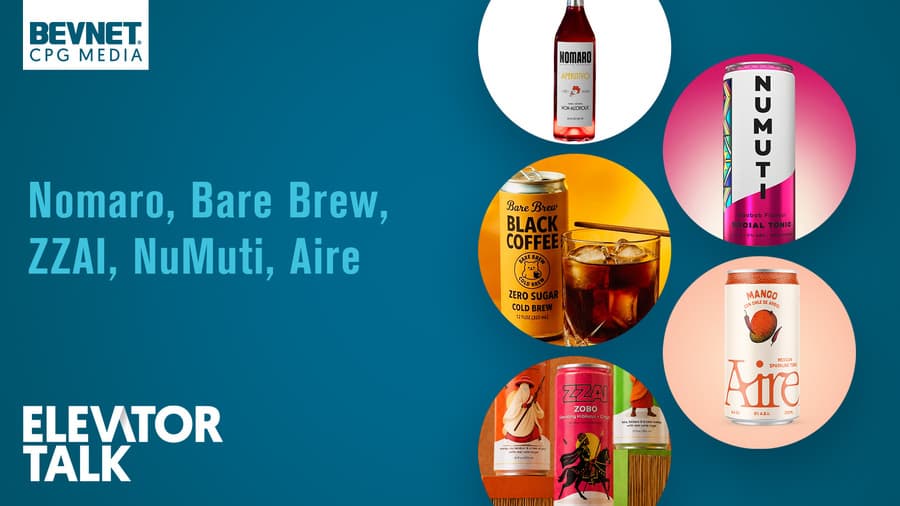
Ray Lateef [00:05] Hey, folks, I'm Ray Lateef, the editor and producer of Bevnet's Taste Radio podcast, and you're tuning in to the latest episode of Elevator Talk, the series that profiles early-stage and disruptive brands from across the food and beverage industry. Today's episode will focus on 5 beverage brands whose entrepreneurs will have an opportunity to hear feedback and advice from our co-host for this episode. That's Claire Ridge, the founder of Ridge Consulting and co-founder of Luna Bay. Claire, it's great to see you again.
Speaker 2 [00:36] Great to see you too. Thank you so much for having me.
Ray Lateef [00:38] We met at Taste Radio Chicago meetup and it was so fortuitous because I had an opportunity to chat with you and thought, my goodness, Claire would be a fantastic host for, for a future episode of Elevator Talk, and here you are.
Speaker 2 [00:53] Well, I'm so happy to be here. So I'm looking forward to the episode today.
Ray Lateef [00:58] Yeah, for sure. I mentioned that you are the founder of Ridge Consulting and co-founder of Luna Bay. Tell us a bit about your background and your work as a beverage entrepreneur.
Speaker 2 [01:08] For sure, I've always kind of been an entrepreneur throughout my life, um, doing different things throughout college and after college, and then In 2018, started Luna Bay with another woman named Bridget and started as a hard kombucha brand. We eventually moved into hard tea and mocktails and scaled the brand across the nation. So really excited to get the products into people's hands and sips the lips and spread the love of Luna
Ray Lateef [01:37] Bay. Absolutely. And as a consultant you're working with early stage brands on their scaling strategies. When you meet entrepreneurs like the folks you met at Taste Radio Chicago meet up and they're asking you, Claire, if there's one thing I need to watch out for in 2027, what might that thing be, especially when people are crafting their strategies, sales and otherwise, for next year.
Speaker 2 [02:02] There are so many different nuances that are coming into play in the beverage world today. I think that the beverage world has really gotten a shake-up over the last few years. I mean, when we first started Luna Bay, we were in a pond with a lot of seltzers, but now there's hard seltzer, hard tea, there's mocktails, there's um THC drinks, the List goes on with all of those different types of beverages. So how do you identify your brand as like something that's different than what's already on the shelf? And how do you get the mindshare of the retailers to give your brand a chance and put your product on the shelf? And then once you're on the shelf, how do you stay on the shelf is kind of the hardest part about the brand.
Ray Lateef [02:45] Well, you want to stay on shelf, but you want your products to come off shelf, and I, the best advice I ever heard or the best comment I ever heard from an entrepreneur was getting on shelf is the easy part. Getting off shelf is really where the work is, and I think that's so true because yes, you can get into 2000 retail doors, but can you sell products in all those retail drawers and This is, this is at the heart of Elevator Talk is trying to figure out which scaling strategies are most effective for brands, which parts of your business are the most important for you to focus on as you continue to scale, and we'll talk about all these things in today's episode. As I mentioned, we have 5 fantastic entrepreneurs, and I'm so excited for you to meet them. I think you've met a couple of them already, Claire, but for an in-depth conversation, this will be fun.
Speaker 2 [03:37] I'm excited. Thank you.
Ray Lateef [03:39] All
Speaker 2 [03:39] right,
Ray Lateef [03:39] let's get to it. Our first guest for this episode of Elevator Talk is Josh Small. He's the founder and CEO of Nomaro. Josh, it's great to see you again. Hey, Ray, great to see you again. I know we saw each other at Fancy Food over the summer, but it's great to be on the podcast and see you again. And Claire, it's nice to meet you.
Speaker 2 [04:00] Nice to meet you as well. Thank you for the samples.
Ray Lateef [04:03] I was going to interrupt and say Nomaro was one of my favorite brands at the Summer fancy food show. What a fantastic product that you make. Tell us all about it. Thank you so much. So Nomaro is a premium non-alcoholic Aritivo. It's designed to be a 1 to 1 substitute for a traditional Italian apparitti like a Campari. Um, we were analyzing the non-alcoholic market, and what we found time and time again is that 93% of buyers of adult non-alcoholic beverages still drink alcohol, so they know the flavor and the complexity and the taste of these, you know, full alcoholic Pri, but currently on the non-alcoholic market, no, um, no substitute product actually works in classic cocktails, and by its uh, like a true full alcohol version. So I set out to formulate one that could drop in seamlessly into, you know, a negronia spritz or other traditional, um, cocktails, and we've been in the market as of today, exactly 90 days actually, across New York, California, and we're starting to expand our distribution with wine and spirit distributors in a few other states. All right, well, I have 1000 questions. I'm sure Claire does as well, but I, I can't, I can't skip over this. Uh, Josh, how old are you? So I'm 17. I know, I know, I actually didn't say that. Um, I'm 17 and I grew up in France, and between France and New York. Um, I was born in France and I moved here to New York when I was young. So, you know, food and beverage have always been, um, you know, a central part of my life just because, you know, French culture and French, um, you know, even wine culture in France and in Europe in general, is, you know, a very important aspect. So, um, you know, food has always been an interest of mine, leading me to doing this. OK, well, congratulations on starting a company. It doesn't even matter if it's a beverage company at your age. Fantastic stuff, and what a start out of the gate. Amaro is, I feel like you nailed the liquid. I feel like you nailed the branding. Obviously there's a lot more a lot more room to grow and a long way to go before you're considered quote unquote successful. But Claire, you know, coming from someone who Uh, I was trying to find a way to differentiate in a very crowded, very complicated category like beverage alcohol. I wonder what your thoughts are on a product like this, uh, which I assume you've tasted as well.
Speaker 2 [06:41] Yeah, it's delicious. Congratulations, Josh. It's really a great thing to keep going after, and I'm excited to see where you go moving forward. But, um, I guess like, Differentiating yourself between all the different brands that are out there. I feel like you do a really great job of posting about different cocktails, and that was something that we tried to do with Luna Bay early on is how do we make this brand something that people are aware of. I mean, when we started the brand, people don't even know how to say kombucha, so, let alone telling them how it tastes. I'm sure that you've run into a ton of different, um, challenges as well with trying to get the brand out there and how do you explain that it's non-alcoholic. and substituting it with all of the different brands, but I think that your social media does a great job of posting about different cocktails that you can make and how you can use this as a substitute for your common products out there, and I think that you're doing a really great job with it so far.
Ray Lateef [07:37] Along those lines when you're talking to consumers, you're talking to new consumers, if you have to have that point of reference of Compari, if you actually have to say this is a non-alcoholic version of a product like this, or if you're able to talk about the product in a different way, what's been the most effective approach to introducing the brand to consumers? So, so far, I mean, it's only been 90 days, but the most sort of successful way to, you know, get someone interested in it and for them to know what it is, is to give, you know, this is a non-alcoholic Campari or this is a non-alcoholic apparel, um, you know, I think. A lot of people do realize it's that even if I don't say it and they try it, they're like, oh, this is like, you know, Campari, and that was a fancy food. Something I discovered is I wouldn't sort of introduce what the product was and they would, you know, by themselves, sort of determine what it was. Um, and, you know, it's really been saying that it is a 1 to 1 substitute, um, in cocktails as well. When you say you're a 1 to 1 substitute, people will expect to pay the same price as that substitute. So your price point, I would assume, is pretty much in line with other Amaros out there, is it not? Uh, it's similar to American Amaros. So, you know, there are a couple like, you know, Fare Bruto or For Ave, for example, here in New York, um, so we're in line with, with those. So that's around $40 per 750 mL bottle. OK, so I think that especially in non-elk has been a little bit of a barrier, right, Claire? I think sometimes people are a little surprised at the cost of non-elk spirits in particular. Any suggestions on how to talk to people about price if you were in Josh's shoes?
Speaker 2 [09:30] Yeah, that's a great question. I think that that was something that we had a challenge with early on. We were priced as a premium product, so how do you convey that to your consumers and let them know like this is a drink that you can consume that might be a little bit of a higher price point, but why is it that higher price point? What are the ingredients that you use? How do you utilize it? Where do you foresee this product on the shelf or in different? Bars, restaurants, hotels, and so forth. And I think that um not only communicating that with your consumers, but also your retailers, your distributor partners, because they have so many other brands that they're considering that you have to just try to break through the ice and get your product in front of their faces.
Ray Lateef [10:14] So also, Josh, I'm curious about distribution. You mentioned that you're in New York, California, where else? Uh, so in New York and California, we currently self-distribute, but with actual distributors we're in New Jersey, Pennsylvania, North Carolina, uh, DC, Maryland, Delaware. OK, and these are all beverage alcohol distributors. They're usually wine, yeah, wine, spirit.
Speaker 2 [10:39] OK,
Ray Lateef [10:39] I was
Speaker 2 [10:39] going to
Ray Lateef [10:40] ask
Speaker 2 [10:40] the same thing. Nice.
Ray Lateef [10:41] Yeah, we're, we're on the same wavelength, Claire, which is why I felt like you would be perfect for elevator talk. Along those lines, um, do you know, I mean, how much does the distributor have influence over where the brand is merchandis? So for example, if I were Nomara, I would love to be sitting next to Campari, but do you end up being sold with other non-Ak spirits or analogs to analogs to spirits? Mostly it's um we're with the the analogs uh to the analogs of spirits, so with other like non-Ak spirits, so we're alongside, you know, usually a Gia or other, you know, sort of competitors we have in the space. I love that, but I also wonder if that, I guess, how much of an impact you would have versus, you know, in one part of the store versus the other. I know it's difficult to ask a retail store to merchandise your products in one part of the store or the other, but Claire, have you had any experience or any suggestions on, on merchandizing strategies and where products could best be sold, perhaps even in different parts of the store?
Speaker 2 [11:48] Yeah. Most definitely. I think that that was something that we had to navigate very early on is where we wanting to be next to seltzers or ciders or next to the beer. And I think that when we targeted our consumer, we had to figure out where were they going. And if, for example, Nemaro is next to the canned beverages, are your consumers going to these canned beverages and also picking up your product, or would you Find that these consumers are going to the spirit section, finding a Campari, and then also findingma next to it and grabbing a bottle of your stuff, I think is just kind of the questions that you have to ask. And then tell your retailer, like, I think that the velocities will increase if we move our product to this section. Like, do you think that we can try to move it over here and see how it does? And You know, if you do move it over there and all of a sudden velocity increased, like that's a win for you and it's also a very great win for your retailer as well.
Ray Lateef [12:45] Yeah, I mean, in an ideal world, I think, you know, we want to be next to like the Campari, next to the, you know, alcohol version, but, uh, you know, we're still like so new that it's, it's hard, you know, to have so much uh to have power over the retailer or work with them, um, but I definitely as we grow, that's like, you know, the goal. Yeah, we're making it sound easy, like, yeah, just tell the retailer to put put your product here or there. Obviously it doesn't work like that, but I think Claire brings up a good point, which is talk to them, inform them of the fact that at the outset of your of your of this conversation, Josh, you mentioned that a lot of people who consume non-Ak spirits also continue to consume spirits. So if I'm shopping in a store and I see a bottle of Campari that I wanted to buy and I see an Amaro and I'm trying to moderate my alcohol, Consumption. I'm like, 01 of each. There you go. But again, easier said than done, man. Are we out of time? This is ridiculous. We need at least half an hour with Josh. This is such a great story. Well, it's not the end of this conversation for sure, as I say in every episode of Elevator Talk. Please, please stay in touch. We want to continue this conversation. We wanna see you succeed. We want to help in any way we can. I'm sure Claire would love to talk to you after the show as well. So, uh, if you have any questions about anything, Josh, if you want an introduction to anyone, you wanna feel someone out and say, hey, do you know anything about this partner, this, this potential partner, and so on and so forth. Reach out anytime. We will try to help in, in any way we can. Thank you, Ray. Great start to the show. I wish I had some tomorrow right now. I could go for a little bit on ice. That would be fantastic actually. You lucky duck, Claire. Well done. Well done. All right, on to our next guest for this episode of Elevator Talk. We have Miles Schwartz, who is the founder of Bear Brew. Miles, it's great to see you.
Speaker 3 [14:39] Hey guys, great to see you. Great to meet you.
Ray Lateef [14:42] Bear Brew, my dear colleague and the founder and CEO of Bevnet introduced me to Bear Brew, a fantastic product that you make. Tell us all about it.
Speaker 3 [14:51] Amazing, amazing. I'm glad you like it. You know, so basically, I was going out there, didn't really see like a healthy, clean caffeine. Everything out there pretty much had tons of sugar, tons of additives, was the synthetic caffeine. So, you know, we kind of settled on the coffee and it's like, hey, it's just coffee and water. We've got more caffeine in here than Red Bull. We've got more caffeine than Celsius and All natural from coffee. So I mean, why, why aren't more people aware of this? Why are we drinking energy drinks and full of garbage, full of sugar, when we can just get back to coffee and water? So it's something I wanted out there. And as people are reading more labels, getting more health conscious, I think more people are going to look for it and want it too.
Ray Lateef [15:34] I love it. That Midwest, Midwest straightforwardness. I love it. It's just like, hey, don't give me any BS. Just tell me what this is. I know what I want and give it to me. And I think that's at the heart of Bear Brew. Um, Claire, you're based in Chicago as well. Have you seen this out in the, uh, in the city?
Speaker 2 [15:52] I haven't seen it in the wild yet, but I noticed that you were in Chicago, and, you know, I love a fellow Chicago brand. So congrats on everything that you've done so far, and I love that your ingredients are so clean. I'm really big on just making sure that products don't have all the fillers and additives and artificial flavors, colors, whatever it might be. So I really love that yours is two ingredients, water and the coffee, and can't wait to see where you guys go from here.
Speaker 3 [16:18] Absolutely appreciate it. Yeah, I mean we're available basically, you know, in some local retailers, but we've mostly been pushing the direct to consumer online sales. So you know, go online, drink beerbrew.com. You can get it anywhere in the US right now.
Ray Lateef [16:31] Yeah, so you're selling mostly direct to consumer at this point, Miles, but if you were to target a particular retailer in Chicago or otherwise, who would be your ideal consumer, I wonder.
Speaker 3 [16:42] Yeah, so I mean we've got some good traction with like independent places that are like the fresh market, like the Whole Foods, but you know they're independent places. So if we can get into somewhere like that, I think that's our customer. Someone who cares about the ingredients, wants something that they can trust, they're willing to pay a little bit more for it. They like the convenience aspect of it, that it's ready to go, so they're paying the premium,
Ray Lateef [17:03] yeah. Have you considered convenience stores? You know, you talked about this being a good alternative to energy drinks, and there's 320 mg of caffeine per 12 ounce can. I feel like this would be a natural fit for C stores.
Speaker 3 [17:19] Mhm. Yeah, we've been targeting some gas stations, independent stuff like that, but in terms of the Walgreens, we've got to go through the bigger distributors, so hopefully as we grow, we'll be able to get in there, but that is the dream is to be in that section with Red Bull, with Celsius, and this is the clean option.
Ray Lateef [17:34] Yeah, and getting to trial is really important as well, you know, black coffee, I mean this is, if you folks, if you can see the can, it's a yellow label that has maybe 10 words on it. Beer brew, black coffee, cold brew, zero sugar, and then it says cold brew again. Um, it's pretty straightforward. You don't need much education as to know what this is, um, but you still got to get people to try it. In your experience, Claire, um, sometimes the most obvious beverages, the most obvious food, is the one that's easiest to get people to try, but is there a particular part of this product or brand that you think you would lean on to get people to trial?
Speaker 2 [18:15] I think that to your point of like zero sugar, zero additives, zero chemicals, I think that's such a good call out for all the other coffee brands that are out there. And um I feel like your product to raise comments would do really well in a foxtrot in Chicago. I feel like those accounts are really good discoverable type places. I go there probably once a week just to see what's new on the shelf, and I feel like your product would fit right in. Um, and I think tastings are probably going to be some of your best drivers of sales. If you can get sips to lifts, like that's such a good way to convert your customer into actually picking up a can or a six pack or whatever it might be, and, uh, going after those types of events would be a really good way to just continue building.
Speaker 3 [19:05] Yeah, I appreciate the advice. We've been doing some pop-ups here and there like yoga stands and stuff like that. If you're ever on the ritual hot yoga, you gotta pull up. We, we have events there, so follow our Instagram, so you can see the next event. You come and do some yoga, get some coffee.
Speaker 2 [19:18] I love that. I actually have a background in teaching yoga. I've been teaching since 2012, I think. So, um, I feel like, yeah, the the yogis would be a great fit for you
Speaker 3 [19:31] at their location. So the reaction's been great though, you know, just getting it out there, get the feedback, you know, the reaction to the brand's been pretty good so far. People like the coffee. They like the cute little bear, so just gonna keep getting it out there.
Speaker 2 [19:41] I love that too.
Ray Lateef [19:43] It's kind of interesting to me. I wouldn't peg Bear Brew as a fit for yogis and for yoga studios, but clearly you have a connection with folks who go to those yoga studios. What's resonating with them? This is, this has got a lot of caffeine, and is it, is it the energy component of what you're doing? Is it the, is it the clean factor? What's really resonating with folks like those?
Speaker 3 [20:10] Yeah, I think there's a couple different You know, things that we solve, we are higher caffeine than most of those drinks, so you don't need more than one. You can have this all day. We're ready to go for you, so it's convenient, especially if you just want black coffee. You don't have to wait in line, that big line at Starbucks or any other coffee shop. Just grab Bebrew ready to go. And you know, it's the clean ingredients too. People want clean fuel to power themselves, something that they can trust. So I think with all those factors we've gotten a pretty good reaction.
Ray Lateef [20:42] You know, it's, it's interesting you bring that up, Miles, because there aren't a lot of just plain black cold brew coffees out there. I can probably think of maybe 3 or 4 skews that that are out and about, but is, is flavor the next evolution? Are you thinking about adding a particular flavor?
Speaker 3 [21:00] We want to add some products down to the, you know, add them to the roadmap down the line, you know, as people say, but we're just really getting the brand out there, seeing how the reactions with the one little one brand here. Uh, 11 product, and I'm thinking, you know, as we expand, we wanna keep with that all natural. Aims, so we want something that's still gonna be natural, while keeping the simplicity, so some stuff we're considering. I don't want to give anything away yet, but along those lines.
Ray Lateef [21:31] I hear you. Keep it, uh, keep it under wraps until you're ready to tell.
Speaker 3 [21:35] That's also gonna come with feedback, I think, too, as we hear what our customers want, that's probably what we're going to do next. I've got some ideas, but, you know, once we hear a bunch of people want the same thing, I think that's what's next.
Ray Lateef [21:47] Absolutely. You know, one of the other difficult parts about getting to trial is you want to as often as possible be in the cold case, and you want to be that grab and go option that is readily available and readily cold. Not always easy. There's a limited amount of space in the cold case. Claire, any suggestions or any advice on how Miles can make sure that Bearbrew is in that cold case and consistently in there?
Speaker 2 [22:16] Yeah, I think that, um, again, kind of going back to what we talked about with Nomaro, like asking your retailers if that is a possibility, especially as you build those relationships, but I think that um some of the convenience type places have a little bit more real estate in terms of that cold grab and go section than your big box stores that have tons of shelves of just dry ambient. Storage for your products. So, trying to find those places where you're going to win first and then building on that, I feel like that's such a key driver for growing a brand is if, if you're gonna like show up in a store that maybe you move one can every 3 weeks, like, your chances of expanding in that store probably aren't as great as if you go to a place like, I don't know, Foxtrot where you're able to Get that product moving 20 cans in 20 minutes or whatever it might be. I mean, that's a fast velocity, but that would be a great win for you guys. So, um, and then using those case studies to say, hey, we're doing this at this store. Like, what do you think about us trying this in another store that's kind of got similar, um, vibes as the store that you were doing really well in.
Ray Lateef [23:34] Miles, what's the price point per can?
Speaker 3 [23:37] Oh yeah, I mean it depends, but usually it's like 399 to 599, you know, depending on the channel.
Ray Lateef [23:44] Do people understand the value of what you're giving them in, in terms of the caffeine count and the clean cold brew at for that price point?
Speaker 3 [23:52] I hope, I hope so. You know, it's pretty competitive with other, you know, energy drinks and especially like these Starbucks Frappuccinos that are loaded with sugar, loaded with all that crap. It's like, I think it's a pretty good, pretty good price point.
Ray Lateef [24:06] Yeah, I mean, especially I would think if you want a couple cups of coffee throughout the day, you could split this, you know, some in the morning, some in the afternoon.
Speaker 3 [24:15] That was another one of my problems with what was out there. I was drinking, you know, multiple of these cans a day, you know, so I was like, what's going on here, you know, I wanted something that could fuel me all day, good for me, we could trust it. So I think more people need to know about this and, you know, get powered by just beer brew, coffee and water.
Ray Lateef [24:32] So on that note, have you considered moving, say, to a bottle format, one that's resealable?
Speaker 3 [24:38] Um, OK, so I did want to be shelf stable. You guys were talking about the fridge a little bit. So we are shelf stable using like pasteurization. So the only FDA approved way to pasteurize just black coffee, I'm pretty sure is these cans. So I think those bottles are a bit of a logistical hurdle. So right now we're just sticking to these cans, and I like how it feels in my hand, the 12 ounce le can, convenient, carried around with me all day. So I think we're sticking with the cans for now.
Ray Lateef [25:02] Yeah, well, a lot to consider as you continue to grow, but I think you're off to a great start, Miles. Thank you so much for joining us on Elevator Talk today. Please stay in touch. If you have any questions about this business, any thoughts, uh, any, anything at all, really, just reach out anytime. I always talk about this. Bevnet CPG Media as an organization isn't just about journalism, isn't just about podcasting, it's about community. We're here to help in any way we can, so reach out anytime.
Speaker 3 [25:30] I appreciate it. We'll stay in touch and appreciate the opportunity. Claire, maybe we'll connect up in Chicago
Speaker 2 [25:34] as well. Yeah, I would love that. That would be great.
Ray Lateef [25:37] Awesome. Thanks again, Miles. On to our next guest for this episode of Elevator Talk, we have Zainab Fashola, who is the founder and CEO of Zai. Zainab, it's great to see you again. Yeah, hello, Ray, and nice to meet you, Claire.
Speaker 2 [25:52] Nice to meet you as well. Thanks so much.
Ray Lateef [25:54] I was introduced to Zai at the Summer Fancy food show in New York City, and I'm so glad that I stopped by your booth because you make some really delicious products. Tell us all about your brand. Thank you, Ray. Um, so Zai is a West African craft soda brand. Um, I wanted to highlight things I grew up with in Nigeria and while traveling across West Africa, I noticed that our flavors are quite pretty much, um, almost the same. And so when I moved back to the states about 3 years ago, I was surprised to not find things I just find everywhere, um, on the shelves where I've been to a few parties and I, well, over here in America, and they actually import our flavors to have them because we really love, like they're amazing drinks. And so I thought, well, there's a gap here and let's, you know, see if I could make um things that are known across West Africa into shelf stable, better for you versions. Of what we drink back at home. And so Zai was born a few months ago, and at the fancy food was where I launched actually. And so I have the zobo, which is hibiscus with ginger and clove, and it's known as sorrel in the West Indies, but it's from West Africa where we call it zobo back in Nigeria, Sobolo in Ghana, it's called bissap across the West, um, the the Francophone African countries, and I have tamarind. Mango tamarind that's called tam tam. So tamarind is also from Africa and it's quite popular across Southeast Asia and Latin America, but it was like candy growing up, you know. And then um we also have Chapman. It's like a mocktail drink that was made at a country club in Lagos in the 50s and became a party mocktail where it became so big that Coke actually made its own Chapman for Nigeria's market also. And then we have OB, which is kola nuts in my language, Yoruba. And that's um a cola nut forward with blood orange and a bit of bitters in there. It's probably a bittersweet drink, and that there is something that in Nigeria, whenever you go into anyone's, you know, home for an event, the leader of the home will serve you kola nuts as like you know, a special guest offering. So you know how people break bread in America, we break kola nuts in Nigeria, and that's dai. And that's a fantastic introduction to the brand. Thank you so much. I'm so excited to talk about this. Uh, just quickly before we get to Claire, are you sold in any retail stores at this point? I know it's still early. Yeah, so, um, right off Fancy Food, I got into, um, uh, Park Slip Co op, and then they've been a pretty amazing, like fresh store to launch into, and then I then just knocked on some doors within the week of launch and got into about 10 stores and just held it at that. Because as a founder, you have to pretty much, you know, do demos, like figure out what's not working, what's working, test out pricing, and just adjust easily. And so my past three months I've just stayed very small and focused on what works and adjusts fast enough. So now we're doing um I mean within Park Slip Co op, we sold out about 84 cans within the weekend of launch, and then from there they pretty much died like they got more orders, I think about 3 orders within 3 weeks for their stores, and so Mike, but then because Other stores, I don't have, like, you know, a different kind of demographic. Um, we did more demos in those stores and we did about 48 cans sold out within 2 hours of in-store demos, but then we've been trying to figure out how to communicate the flavor profile without having to go pour cups in the stores. So now we're doing shelf talkers and seeing how that, you know, translates better in the stores.
Speaker 2 [29:38] I'm such a big proponent on doing fun flavors. I think that um when we started Luna Bay, I did all of the product development early on. So I was really involved in all of the different, like, what kind of ingredients should we use in this? And we started using a Palo Santo, which is like a piece of wood that typically you burn and it makes your house smell really nice, but we actually infuse that into the liquid. And I remember like people asking us, like, what is Palo Santo? And I would carry around a little Palo Santos stick, and I would show people, I'd tell them to smell it. If I got a little crazy, I'd sometimes burn it at the count, but I feel like getting people to really understand what these different flavors are, I mean, you have such a great list of different ingredients in your product and describing them in a way of like, What the general population will understand, I feel like is kind of the biggest challenge is how do you tell people, OK, Palo Santo, it's got this like oaky, woody, minty taste to it, or whatever your ingredients are, and how do you describe those to say, this is something that I think you would enjoy if you like X, Y, and Z. So, I definitely think that you have a great story to tell with all the fun flavors that you have.
Ray Lateef [30:53] Thank you. Do you feel like the easiest route to get people to know what you're doing and appreciate what you're doing is through the flavors themselves versus the story? Um, the flavor for sure. So like I know that, I mean like on the cans we state, OK, sparkling mango and tamarind, but then what I found during my demos is that people always presume that it's gonna be watered down, and they are things that they've been, I guess, what's the word for it, they've been Not abused, but they're just like they've had many trials of other drinks, and it states X, Y, Z, but then it just tastes like not what it states. And so what we've found has been, oh my gosh, it actually tastes like mango and tamarind, oh, it actually tastes like hibiscus and ginger, I'm like, well, I said that, but then, I like it says that, but then again, you know, many brands state that on their packaging, but it could be a bit more watered down or just a different, I don't know, but just overall we found that, you know, people need to actually taste to believe it has been the thing, but then now with our soft talkers, I'm hoping that when they read You know, the, you know, the story about the kind of more about the flavor story and what to experience when you taste it, that will help like let them know that, oh, for real, we actually are about the taste we say we're giving you in the cans. Yeah, and I, and I think in your next iteration of packaging, perhaps amplifying the flavors themselves would help people to understand, you know, what they're going to experience and would cut down on the, oh, this tastes like this. Well, I told you it tastes like this. It says it on the can, but perhaps not as prominently as people might expect. Um, price point, what, what, what's the price point per can, Zainab? Uh, so now it's 399 MSRP, um, but then that just changed about a, about a couple of weeks ago. Most stores have it for 499. And so we're trying to, um, you know, keep that at 399 because of the you know, The margins in New York I'd say. So I'm trying to work with like my costs, my cogs to make sure that 399 makes sense. And so we just did that in the past couple of weeks to make that become a reality. So in our next um distribution run, that will be 399 across the stores we're in. Claire, any, uh, ideas on how the most important ways to reduce cogs without reducing quality, um, and in a way that makes sense for your price point?
Speaker 2 [33:20] Yeah, I mean, I think finding the right co-packer that's going to, if you're, I'm assuming you probably are co-packing your product, but finding the right co-packer that's really going to partner with you, I think that. Just manufacturing in general can be such a challenge or a blessing and really trying to find how to work with those individual production facilities to scale your product in a way that allows you to hit that price point that you're really trying to go for. I think that also it's asking yourself like, these ingredients in the can, like, what is really Catching consumers' attention. And do you need to have, I mean, you're gonna make your products taste exactly the way that you want to, but do they need to have 10 ingredients, or could you get the same effect with 3 or 4? It's kind of the question that I would ask you. And as you scale, is it juices, or is it a concentrate that you're gonna use to kind of scale your product up rather than just um Trying to throw it at the wall and see what sticks.
Ray Lateef [34:26] Yeah, I think that's such great advice is, is, it's difficult to find a co-packer that is aligned with what you want to do with your brand, and sometimes it can be expensive to work with one versus the other, but I agree on, you know, looking at your ingredients and saying, you know, is there a way for us to maintain the quality and flavor with a shorter list of ingredients, and I think it's so important because in this business, The margins are razor thin and you need to be at 40% or higher to really make it. It's, it's, it's challenging, but you know we've seen the rewards as well, you know, it's, it's not every day that you see a brand sold for $2 billion but it happens, and I think, you know, that's that's motivated, that's very motivating, right? I, you know, in the beverage industry, it is difficult, but the rewards are pretty remarkable if you, if you hit big. So, uh, Zainab, I love speaking with you at the fancy food show. I love speaking with you now. I'd love to continue speaking with you. Please reach out anytime. I would love to see where you go from here with Zai. Uh, any new wins that you have on the retail front, any new products, please let us know. We'd love to highlight them on Bevnet. Thank you. I will see you in LA in December or so, so outstanding. Yes, that's right. Yes. Uh, we're, yes, Bevnet Live in Los Angeles. From December 6th through 8th, it is going to be the can't miss event for the beverage industry. If you are in this business, you want to be there, head to bevnetlive.com to learn more. Thanks for that shout out. Our marketing team thanks you. I thank you that I applied for the showdown, so hint hint. Anyway, yes, we're going to announce, we're going to announce all that very soon, but I think you've got a good shot. OK, I'm applying already, so let's see. Thank you. Thank you so much. Talk to
Speaker 2 [36:21] you soon what you all are doing.
Ray Lateef [36:23] Fantastic. That's fantastic. All right, on to our next guest, Dane Harvey. He's the co-founder and CEO of N Muti. Dane, it's great
Speaker 4 [36:31] to see you. Yeah, Ray, nice to see you, um, and Claire, lovely to meet you here, guys. It's, uh, it's good to be here. I'm excited for my African sister there, so that's awesome.
Ray Lateef [36:40] Yeah, absolutely. And you're right down the street, or at least close enough in the Boston area.
Speaker 4 [36:44] I'm in LA, but yeah, I'm right down the street from you here in Boston, so I'm I'm based in Boston. Yeah.
Ray Lateef [36:49] Fantastic. Ni, tell us all about what you do.
Speaker 4 [36:52] I'll show you first show and tell. So Ni is a true, better for you alcohol alternative. Um, it's the world's first can of social tonic. Um, and, and canna, as, as some people may know, is a South African succulent. This has been chewed for thousands of years by the Samkoi tribe in South Africa, and they've chewed it, uh, ceremonially, predominantly. There's a bunch of other, um, benefits, but, but, uh, chewed ceremonially, and so that's a bright, um, and uplifted feeling, um, and that's really why we've used canna and and packaged it into a 12 ounce sleek and selling it as a, as an alcohol alternative. Um, I said that we're the world's first social tonic because we've been selling in South Africa for about 5 years. Um, and so in that period between then and launching in the US 6 months ago, we've had the time to play around with flavor profile, try to dial that in, formulation, try to dial that in. And then the big one has just been packaging. So how do we bring this to the US? How do we package it? How do we make it relevant? And so all the great things. that have happened over the last 5 years, but then I took the plunge 6 months ago to leave my 20-year corporate finance life and and do this full time here. So I'm super excited. Look, in terms of what's news for us, uh, we'll talk about selling, I'm sure. Um, but we're trying to break into things that are socially relevant. And so we're starting here in LA, um, things like, uh, surf events, uh, for the African diaspora, right, a little micro. Communities that we're trying to really get behind our brand. Um, AI gym launches, again, crazy ideas, but that's kind of the sort of activations that we're doing to break in, uh, culturally, and that's really our focus. Um, and so yeah, there's a lot to tell you all about Nyamuti. Muti means traditional medicine in South Africa, from a, what does the name mean? So we really are focused on being a better for you alcohol alternative. I'm sure there's questions. Let's get into it.
Ray Lateef [38:41] I have a lot of questions, but I want to start with a comment. Your packaging is phenomenal, uh, outstanding packaging. You know, I think that my favorite part of it is that it's very small, a very small callout of kana, because I think kna at the bottom, at the very bottom you have 12 fluid ounces, 0% ABV, 30 mg of kana, because if you led with kana. You'd have to educate about Kna, and it's still in the very, very early days for that ingredient. So great job. One quick question before we get to Claire, did you start out As promoting Nuti as an alcohol alternative or as a non-alcoholic product.
Speaker 4 [39:22] No, no, I mean, we in South Africa, we, we started out as sort of more of a functional, little bit of like an unwind occasion. We were actually caffeinated when we started as well, and so we were playing in different spaces and that's Sort of the iterations over the last 5 years, um, where we now, you know, this whole non-arch acceleration started after we got into kind of. We've been known and using kind of for 89, 10 years. Um, and so as this gap emerged of oh people want something that they can feel. And that's an alcohol occasion. And so that's when we sort of positioned, we changed formula a bit to make it a little bit stronger to ensure some feelability. It's not overwhelming. It's not intoxicating. Um, but Ray, the answer is no, we did not start as an alcohol alternative. We were playing in a different, a few different spaces before really dialing this in.
Ray Lateef [40:12] Well, I feel like you nailed it in terms of the category to be in because non-AC is definitely a category that a lot of people are paying attention to, and it seems to be one of the fastest growing, if not the fastest growing segment of beverage alcohol, which is kind of ironic. Well, but not so much. I mean, clearly, clearly, you know, Luna Bay has found some traction with mocktails as well, and you know, not. You're competing but not really competing because I feel like this is a this is a product that might speak to a slightly different audience in that there is that functional benefit of kana or that functional ingredient that isn't necessarily seen in other non-alk products.
Speaker 2 [40:56] Yeah, I'm familiar with the Kna ingredient. I have another client that I've worked with in doing some consulting that's been using Kana and their products, and they phrase it as nature's happy plant, and I couldn't agree with that more. I think that it's definitely a trending ingredient that we're going to see. More and more as the category grows, and I think your stuff is really delicious. I liked both flavors. I, they, they were so good. So I'm really excited to just continue seeing you guys grow and get some mindshare out there and see your product on the shelves.
Speaker 4 [41:29] Great. I'll just, just make one quick comment. Um, Ray, you mentioned sort of small canna, and you're right, like we want to focus on a feeling as opposed to an ingredient or a benefit. Like we want people to, to buy into this from a social currency perspective. And then from a packaging standpoint, we're keeping everything true. To our roots of South Africa. So this is, uh, certain tribes, so this is the pattern that that belongs and exists in the tribe, the African packaging, etc. So we're trying to stay close to home and be authentic to who we are in this, but then bring people into us as a social currency. So
Ray Lateef [42:02] Well, Dane, the, the other interesting thing about uh Numuti, in my notes, it says that you've invested in co-packers or have co-packers invested in
Speaker 4 [42:14] us. Yeah, yeah, yeah. So, so our, our first investor was a was a co-packer. They're a functional co-packer doing a lot of work today with sort of the THC beverages. And I think from a strategic standpoint, perhaps just looking at the landscape there. This is a really unique time for Canada to come in as an alcohol alternative, maybe some win some retail space, um, but also just great people, uh, and, and a great individual that that I've now gotten to know personally. You know, he sees the value, he sees the value in a, a lifestyle type of brand and was like, hey, I love the product. I love the, the flavor. I think you guys are on the money I'm in. And that's really what like dragged me and I was like, OK, I got my first investor, so let's go. Um, so yes, we've got some, uh, co-packing. And then we're working with a larger CPAC on the East Coast. So that's the West Coast. We're working with a much larger 150 year family CPAC on the East Coast that does big beer co-packing, um, and they are open to investing through production. And so that will give us both kind of flexibility and hopefully we can come down the cost curve really quickly as well. Obviously, all based on the need for this, so like the demand, proving out the demand, but that's what we're talking about from a co-packer interest and investment perspective.
Ray Lateef [43:28] It's not common to hear of a co-packer investing in a brand, um, and it sounds like the co-packer on the West Coast is really bullish on the idea of a product like yours and I think Canada in general. Um, but did you lead with the idea? Did you approach them and say, hey, you know, would you consider investing in our brand, or did they come to you?
Speaker 4 [43:48] So it was, this was more about building up the network of advisors, learning the space. So I did a couple of, before jumping in here, I did a couple of years in UNFI, so like grocery distribution. Um, but I didn't really know the alcohol space. And so these folks have, you know, AB InBev experience and know the industry. And so it started with a, hey, can you help me understand advisory, etc. Uh, I didn't lead with the idea. But of course, raising cash is a is a big thing and we're, we're in the middle of that. And so, however you raise cash, half of what we need the cash for is to produce the product. And so, you know, it doesn't matter whether a co-packer, but there's just so many strategic benefits now of you having a co-packer come in. Um, as opposed to just bringing in cash, right? We'll, we'll get some flexibility. We'll get time on the, the production slots when we need it so we can be a little bit more agile. So we're thinking strategically about these things. Um, but, but of course, as you know, like, um, raising money is the hard part, and I think that's what led to these conversations.
Ray Lateef [44:43] I'd like to play a game with the time that we have left here, which is I always ask our co-host or occasionally I'll ask our co-host, how much would you pay or how much would you expect to pay for this product. I assume you don't know what the MSRP is, Claire, but how much would you expect to pay for a can of Nuti?
Speaker 2 [45:00] I feel like if I'm buying it at a grocery store, probably about $5 would be a good. Price point, and then if you're buying it on-premise, maybe you're sitting closer to a $9 drink. So, I'm curious to hear what you guys are pricing your products at.
Speaker 4 [45:18] Absolutely. So firstly, we're focused on, we're on about 50 stores in LA, uh, multi-channel, multi-discipline, independent grocery, some alcohol, uh, you know, alcohol shops, etc. So we're testing, right? Uh, 499 is the MSRP, right? So you're on there. Um, we see uh some stores selling for as much as 699 and product moving. So there is definitely a demand for canner. Um, we're not really yet testing on the on-premise space and I think what we want to uh work with is how do we go into that on-premise space? Is it just the can? Do we make a bit of a cocktail mix that is sort of pushing the canner, the feeling and so we we've got some testing feelers out there. I think you're spot on like a. $9 mixed drink could be the right place for on-premise, but the important part of our flavor profile is that it can do both. It can do the grocery store and sort of the at-home consumption, but it's not old and in your face that you can't have it at a bar or have it as a mixed drink. And so I think we've really focused on giving ourselves optionality as we figure out where this takes us.
Ray Lateef [46:21] Well, Dane, here's an invitation to test out mixed drinks. We have a bar in our office. It doesn't get used enough, but how about we have a Nuti happy hour on some Thursday. You come over, we'll test some things out. We'll drink some, some beverages, and we'll have a nice evening. How about that,
Speaker 4 [46:38] Ray? That is amazing. I'd love to be there. I'll obviously do this in person. With you, that would be awesome. We'll figure it out. I'd love it. And we'll get everybody vibing and flowing with the feel-good flow.
Ray Lateef [46:48] There you go. I love it. And I'm, you know, extending this invitation to you because you're in the Boston area. But anyone who's listening, who wants to visit Boston or is planning to visit the area, I would love to have you in the office as well. Dane, fantastic stuff. Uh, you've really built a brand that, uh, I, I, I, you know, even early on, I think you've got a really great runway for success, and I'm excited to see where it goes. Definitely stay in touch. And like I said, Let's talk. Let's talk after the show about, uh, having you over.
Speaker 4 [47:16] Cheers, Ray. Thank you very much, guys. Claire, thank you very much for your time, and we'll
Speaker 2 [47:19] speak as well. Yeah, thank you. Congratulations. It's really delicious.
Ray Lateef [47:23] Cheers, guys. Outstanding stuff. All right, our final guest for this episode of Elevator Talk is Hector Diaz, who's the founder and CEO of Aire. Hector, man, it's so good to see you again.
Speaker 5 [47:37] Likewise, Ray, great to see you again. Uh, thank you for having me, Claire. Great to connect with you as well and super excited to be here and talk about Aire. Um, so Aire is a Mexican sparkling tonic, uh, born right here in Chicago. Uh, it combines real fruit, Mexican flavors, functional botanicals to create a drink that we desire to be sophisticated, refreshing, and I think most importantly for us, delicious. A little bit of background about myself. My career actually was in the Bev Oc space. I spent a few years building brands in the spirits industry, both at a distributor and a supplier level. And then after a short battle with cancer in 2022, I really redirected my energy, my intentions, and I co-founded In Good Spirits, which is a non-alcoholic specialty bottle shop based here in Chicago. Back in 2023, and I think that's where the concept and the idea and the inspiration for Aire really started to form. And it was from our experience running In Good Spirits. We spent years watching and building our community really, but watching our customers, you know, see what they were buying, what they were asking for, and also what was missing from the category. And we saw just an amazing opportunity to create a sophisticated alcohol-free. Distinctly, uh, and really authentically Mexican that brought something new to, to the beverage space, right? We, we launched earlier this year with two flavors, uh, hibiscus conlimon, uh, which is bright, tart, refreshing, uh, and then mango conchila darbo, uh, really delivering that luscious mango flavor, uh, with that subtle, steady heat, and I think that was just really the heat was really important for us to deliver on, you know, um. But aside from that, you know, obviously delivering on bold, complex flavors, we were really intentional about having zero added sugars, just 40 to 60 calories per can. In addition to that, we layered them with functional botanicals. We were intentional about what we use, things like magnolia bark, sage, hyssop, drawing inspiration from Mexico's rich tradition of herbal medicine. And, you know, for us, again, just being intentional in terms of what they serve the functional right to support a state of calm. and you know, it kind of, if it ties to our name Aire, uh, think of the phrase coming up fair, coming up for A and supporting that, that calmness, right? And so, um, you know, about us, all our partners that, that, that started Aire are first generation Mexican-American. And so for us it's, it's just really important for us to be unapologetically Mexican, you know, and all shaped by the kitchens of our childhood, the rituals that we picked up in adulthood, um, and a little bit about us and where we're at now. Obviously, Chicago is our home base. That's what Started to grow our footprint. We've expanded into across all the Foxtrot locations here locally, alongside some really key restaurants and hospitality partners that have been amazing. And we more recently just started to grow our footprint in New York. So we're really excited about that, you know, and for Aire, it's, it's, it's not just a refreshment, you know, obviously it's for us it's about introducing just a new expression of Mexican cultura, you know, to a category that's ready for more flavor, more intention, and just a different perspective, a different point of view.
Ray Lateef [50:33] Oh wow, Hector, that was fantastic. Uh, I first met you at the Taste Radio Chicago meetup and I'm so glad I did. Um, hm, you know, I could spend the next 67 minutes just talking about how much I love your products. Claire, maybe you can start off and talk about the taste and flavor of these products.
Speaker 2 [50:52] I loved it. I thought they were so delicious. Your, um, the hibiscus flavor kind of reminded me of like one of our flavors that we did early on was a prickly pear, and it had just like a delicious, like chocolaty note to your flavor that, and I thought it was delicious. And then I tried your mango last night and I was like, this spice was on point. I love spice. I think it's just so interesting when you play with spice and drinks because you can either be A hit or a miss, and I feel like you guys hit it right on the head. So, great liquid in your cans and good branding as well. I saw you all at Foxtrot yesterday. So, love to see the distribution out there as well and just continue to keep growing.
Speaker 5 [51:38] Thank you so much. It means a lot.
Ray Lateef [51:41] I pronounce the brand name Ay like some dumb American, but it's Aire, as you pointed out, it's spelled A I R E, and your packaging is fantastic. It's, it's, um, it's relatively minimalist. Aire is the biggest part of the can on the lower part, and then you have the flavor name on top and some images of the ingredients. If I were a consumer, I'd say, OK, wow, the flavors look like they are going to be delicious and something that I could be interested in, but you don't also don't want to lose sight of the unapologetically, unapologetically Mexican aspect of what you are. So, you know, how do you talk to people about Aire from like if you have 10 seconds, what is the, what is the message you want to get across, because, you know, Claire and I are sold on the flavor, but if you don't have a chance to get someone to sip this product, what's the first thing you lead with?
Speaker 5 [52:35] Yeah, that's a great question. I think for us when we were, even when we were doing our packaging, I think we wanted it to be very intentional. There's obviously a lot of messaging, a lot of culture, and so I think for us leading with flavor was just really important for us, and it's just something that we've seen us allow us to stand out when we do. Liquid to lips, and I think, you know, especially in a crowded category with just so much to offer, I think flavor is what, what gets everyone hooked and interested, you know, I think the culture piece and the storytelling of, you know, our background, our store, our humble beginnings. Starting in good spirits is what keeps us memorable. And I think the, the, the, once they have the experience, that's what, that's what keeps bringing them back, you know, I think, um, being able to offer such, you know, we, we were even intentional about the color of the liquid, right? You get that bright red with the jamaica coming through. We get the bright orange coming through with the mango as well. I think it's unexpected, and I think it surprises folks, and I think it's all in a positive way as well. And so for us, that's That's something that we want to continue driving for, because we want to deliver, right? I think for us, you know, like you mentioned, obviously really, really appreciate the chili compliment. I think that was a prime example of how we were intentional about it. We were just seeing maybe chili flavors coming through and there's really not spice in delivering. And for us it's what we put forth is how customers come in and it delivers on the expectations. And so that's how we want to continue driving item moving forward.
Ray Lateef [54:01] Mexican sparkling tonic is how these products are described. They're primarily merchandised with other non-elk products. And so if you're a shopper, you're probably like, OK, I understand what this is, but how much do you lean into the non-elk aspect of Aire? I mean, how much do you think it's going to move the needle to tell people that they're going to have a cocktail-ish, social-ish experience with this product? How much does the day part use impact potential sales and trial?
Speaker 2 [54:36] Yeah, I think that um I love that your cans have the concept of rituals on it. I feel like using it as a, I think like when you indulge in any beverage, it becomes a ritual, whether it's your coffee in the morning or a glass of wine at night, and I think that You tapping into like an idea of this being a ritual, not only captures the rituals of, like, indulging in a beverage, but also the traditions and the culture of your Mexican heritage. And I think that that is like such a big opportunity for you all to really dive into and keep pushing that to your consumers because people will really resonate with the traditional ingredients, the traditional, um, Activities that go along with it, and you do a really good job of explaining why are you using sage or magnolia bark or whatever it might be. And I know that you use the sage, magnolia bark, and hyssop in all three or the two flavors. So I think that you've got a really good base of your liquid and then improvising on your flavors after that is a really awesome opportunity to keep the traditions going.
Ray Lateef [55:45] Hector, when you're introducing the product into new retail locations, if you're expanding to other markets like New York, How intentional or how careful do you have to be about making sure that you have the support and make sure those products have the support that you might have being as close as you are to Chicago, because you know the products sometimes can sell themselves, but for the most part, you know, you need a little bit more to make sure these, these beverages are going to sell off shelf.
Speaker 5 [56:17] You hit it on the head in terms of where we are in Chicago and the presence and how we want to use it as an opportunity to, you know, prove ourselves and where we are. And I think, you know, even being in New York the last couple of months, you know, having I think that's why we were so intentional with our packaging itself. I think that has worked and has done really well for us already, even in the early stages of being at Foxtrot, being not just being in the grab and go. Obviously where you are matters as well, but I think that's why we were very intentional in our 4 pack boxes at retail, um, to really allow the creative to show and work for us as well, you know, I think. We were very intentional about how much creative we wanted to show with the flavor profile. Appetite appeal was very important for us, and I think that was something we use. And, you know, we even looked at the size of the can, and a lot of times name is at the hierarchy, and we wanted to lead with flavor instead. And I think that was done intentionally, making it simple for our consumer to know and right away, grab and understand. Um, you know, what we are, what flavors we represent, was really important. I think the legwork that we'll continue to work on is, is, is the category, the, the category of blazing ourselves, right, the Mexican sparkling tonic piece. I think that will require education and, and understanding one, the cultural piece, the sparkling. A tonic, which is a wellness drink, right, and why we were intentional about our functional. So that'll require more of us in other layers, whether it's liquid to lips or digitally and being in events. But you know, for now we're really focusing and feel proud about where our packaging has landed and how it's going to continue driving us in the future.
Ray Lateef [57:49] I'm so glad that you made that point, Hector, because the packaging, even out of the gate, has to be strong and it has to tell the story as quickly as you might be able to if you were standing next to that customer in front of the aisle, in front of your products. Like the packaging does so much of the education, and I think you nailed it when you talked about that. So thank you.
Speaker 2 [58:10] Yeah, that 4 pack box really had all the sides utilized, so I think you did a really good job on that.
Ray Lateef [58:16] Yeah, thank you, absolutely. You've done a really good job with a lot of things, Hector. Thank you so much for taking the time. I think. Um, you know, frankly, I'm I'm really happy for a brand like yours because it shows that throughout all the, you know, chaos and complexity and differentiation that we've seen in non-AC there still can be innovative differentiated products like yours that can Speak to consumers who are considering the category or new to the category and give them an option that is really delicious and authentic to what you're trying to do as a founder. So I really appreciate the time. Definitely want to stay in touch.
Speaker 5 [58:59] Absolutely, thank you, Ray, and Claire would love to connect in Chicago at some point as well. Yeah,
Speaker 2 [59:03] you're in good spirits is only 8 minutes away from me, so I need to pop by and check it
Speaker 5 [59:07] out. That would be awesome. That'd be amazing. We'd love to have you. Claire's
Ray Lateef [59:10] on her way after, after we wrap up here. Claire's going to hop in her car and head
Speaker 5 [59:13] over. I'm here. I'm here with the blue, so I'm here. I
Ray Lateef [59:15] love it. Good stuff. Thanks so much again, Hector.
Speaker 5 [59:18] Thank you so much. Take care.
Ray Lateef [59:22] All right. Oh man, uh, what a fantastic show. What a fantastic group of entrepreneurs and brands. Claire, this is, uh, your first time cutting your teeth on Elevator Talk, but I hope, uh, you got a lot out of this episode. Yes,
Speaker 2 [59:35] it was wonderful. Thank you so much for including me in this.
Ray Lateef [59:38] Thank you so much for joining us. Uh, I know there's gonna be people, uh, in the Chicago area and beyond that want to get in touch with you, pick your brain. Uh, what's the best way to do so?
Speaker 2 [59:47] LinkedIn or my email is Claire Ridge [email protected]. So either one is great, and I'm happy to connect with any entrepreneur at any point, so. Thank you so much for having me.
Ray Lateef [1:00:00] Thanks so much again for joining us. We've got to have you back for another episode in 2027. You down for that?
Speaker 2 [1:00:05] I would love to come back anytime. Thank you.
Ray Lateef [1:00:08] Fantastic. All right, thank you again, Claire. Thanks to all of our amazing entrepreneurs who joined us today. Thanks for everyone watching or listening, and thanks to our incredible team at Bevnet Nosh and Taste Radio, the best in the business. Signing off for everyone. I'm Ray Latif, and we'll talk to you next time.