Search across the BevNET CPG Media network including BevNET, Nosh, Brewbound, Taste Radio, Nombase and CPG Jobs.

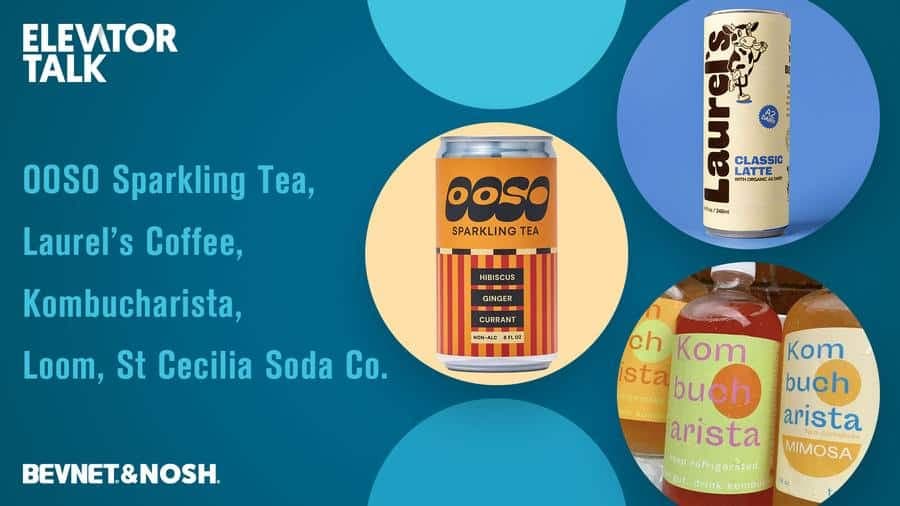
Elevator Talk Episode 101: OOSO Sparkling Tea, Laurel’s Coffee, Kombucharista, Loom, St. Cecilia Soda Co
Transcript
Note: Transcripts are automatically generated and may contain inaccuracies and spelling errors.
Ray Latif [00:05] Hey folks, I'm Ray Latif, the editor and producer of Bevnet's Taste Radio podcast. And you're tuning into the latest episode of Bevnet and Nash's Elevator Talk, the series that profiles early-stage and disruptive brands from across the food and beverage industry. Today's episode will focus on 5 beverage brands whose entrepreneurs will have an opportunity to hear feedback and advice from our co-host for this episode. That's Maxine Kovler Koin, who is the co-founder and co-managing director of LDR Ventures. Maxine, so great to see you.
Speaker 2 [00:40] Ray, always a pleasure. Glad to be back. I
Ray Latif [00:43] know it's been a minute, I probably more than a few minutes actually since we last spoke, but, uh, so good to see you. For folks who are not familiar with LDR Ventures or your experience as an investor in our industry, tell us all about what you do.
Speaker 2 [00:58] Sure, we, LDR Ventures started in 2010. Our first investment was in a restaurant chain now called Sweet Green. Um, we're invested in brands like Thrive Market, Choka tea, uh, Source, Moku, and many others. Um, we gravitated very quickly to healthy food, beverage, wellness, um, and anything to kind of do with the whole vertical around that delivery, restaurants themselves, or the end product. Um, but our team comes from an operator and entrepreneur background, so we come from having started and run these companies ourselves.
Ray Latif [01:41] Yeah, and one thing that's a little different about LDR Ventures and other firms is that you typically invest at the early stage and you take a pretty hands-on approach to investments or to your investments. Talk about why you look to fund earlier stage concepts and what you mean by or what the investment firm does in terms of its hands-on approach.
Speaker 2 [02:08] Absolutely, yes, we are early stage investors. Um, we come in, you know, just, just after friends and family, um, you know, we could be one of the first professional investors, um, and everything from just writing a small check and being there to answer questions to really getting hands on and helping out internally for a period of time. Because we've been in there starting and running companies like this, we feel it's that operational piece that is so key to getting people to that Series A. So we feel like what our specialty is, where there's a big opportunity, but also where our backgrounds lie, is that growth in a concept, a proven concept, to really becoming a true brand that is expanding.
Ray Latif [02:59] Now I know you've been looking at and evaluating a lot of the emerging brands that are coming onto the scene and onto the market. Um, just in general terms, what are some of the things that you are liking, that you are, uh, attracted to in terms of, you know, great brands and concepts and businesses that are currently out there, and what are some red flags that you see as an investor that might give you pause, uh, when it comes to uh potentially making an investment in a company?
Speaker 2 [03:35] Um, that's an excellent question, and I really feel like a lot has shaken out in the last 18 months. Um, valuations have changed and expectations have changed, and I think everyone's become a lot more realistic. Um, I, what we really look for is people who understand their business and they're not trying to take it all on at one time. We like really realistic founders and Setting up their milestones and then achieving them. So not trying to get into every channel all at once, like really picking they're going to own their backyard, or they're going to own their econ, um, or brands that are going straight into how do we get carried in a chain of restaurants, as opposed to trying to get into every retailer. Um, so looking for people who are very savvy in terms of how are we going to crawl, walk, run. Um, it is really good for, for when I see that, because those early stages, it's all about choices, and that's what I've really come to see. You've got a certain amount of money, certain amount of bandwidth with your team, what choice you're gonna make. I like to see that. Um, people who are still, you know, selling that billion dollar vision, um, it's not really about that right now. It's, you know, people are thrilled that a single and a double, and if you can, I just, that 25 million and under, um, you know, for an M&A possibility is really attractive.
Ray Latif [05:07] Yeah, that's such great advice for founders, you know, especially because I think you're totally right about the landscape changing and, you know, the fact that these billion dollar opportunities are so far and few between that just creating a great Brand and a profitable business is very attractive to all parties involved. So, and I, you know, I think there's a lot of potential in the brands that I'm looking at on my screen here and the founders who are behind them. I'm so excited for you to meet them. Uh, let's get to our first. Max, are you ready? All right, I'm ready. Let's do it. All right. Our first entrepreneurs for this episode of TSE Radio are Oliver Spring and Sophia Rosadi, who are the co-founders of UU. Olly, Sophia, great to see you.
Speaker 3 [06:01] Nice to meet you, Maxine. Thanks for having us today.
Speaker 2 [06:04] Great to meet you both.
Ray Latif [06:06] Yes, I have had the pleasure of meeting Ollie. Well, I met him at Expo West, then I saw him again at the New York or the Summer fancy food show in New York, and Uso is a fantastic brand. I really love what you guys are doing. Uh, please tell our audience all about what you do.
Speaker 3 [06:27] Yeah, absolutely. So we are, Sophie and Ollie were the founders of Uso sparkling tea. Uso is a sparkling tea inspired by natural wine, and it has adaptogens and vitamins for functional wellness. And we'll give a little bit of our backgrounds first before we dive into our process. So, I'm Sophia. I come from the wine and spirits industry, so I've spent my career working in sales, marketing, and brand management under the wine and spirits, um, tier. And then Ollie is the opposite side of the coin. Yeah, so I fill in the gaps where it comes to finance, strategy, and logistics. So I started my career in investment banking. I then after 3 years of that went back and got my MBA as well as, you know, have a little bit of experience in consulting. So we're really try and fill in each other's gaps and try and complement each other's skills as much as possible with a team of 2 that's been running this business. Yeah, exactly. And a big part of our business is Ali and I are a couple. We met in 2019 and spent All of COVID together. And as many people on here and throughout the country have experienced a time of great anxiety. And we were in New York City for most of that. So, in our tiny little 500 square foot apartments, and we really looked in the mirror and felt that we need to change something to really help our mental and physical well-being during this time. And so we cut back pretty significantly on our consumption of alcohol, and we saw a drastic change to our well-being, both mentally and physically. And then as COVID kind of wound down, we were able to travel a little bit and we went to Europe and we discovered sparkling tea where we haven't had before in the US and sparkling tea for us was an elevated way to enjoy a drink with a meal or just sip on something at the end of the night and we still had that ritualistic sense of tea and drinking, but we were really able to wind it back a bit without the alcohol. And when we came back to the US, we really, you know, didn't see that type of product in the market and thought that there was a key opportunity for it because I would have ordered it, you know, at dinner or at a store. I would have bought it. Yeah, exactly. And so when we got back, we immediately went to the store in New York City called Collutian's. It's a well-known um shop in Midtown Manhattan where a lot of chefs and mixologists go to find products that they're looking for. And so we went there, we picked a bunch of loose leaf teas, a bunch of different products to take home and experiment with, and that's kind of how we came to our first kitchen samples. Yeah, and I guess to round it off, really in creating those kitchen samples, and there are many things that I'm sure you'll ask about between then and now, but there are 3 main goals that we had in launching this brand. The first was creating really great liquid. Um, that people will enjoy all the time, anytime. The second was creating something that was better for you. So not just by choosing, by choosing to not drink alcohol, you're kind of coming to net zero. We wanted to make it net positive, something that would really make you feel better the next day. And then lastly, just top level branding and design, something that you know is going to catch your eye on the shelf and something that could fit into the ultra cure. lifestyle that our consumers, um, that our consumers live. Yeah, and for our sales strategy, we're being extremely choiceful. and so we're focusing on New York City as our core market and focusing on velocity, making sure that we're seeing really great turnover in our home market. We're based in, in Greenpoint and so, looking to go forward, we're really going to be focusing our efforts here in New York City.
Ray Latif [10:06] Outstanding. I'm sold. Uh, I, I, I, although I should ask about the price point before I say that.
Speaker 3 [10:14] Yeah, so we, we, in pricing the product, we took a couple of different, obviously some competitive based pricing, some margin-based pricing, but one of the things that we wanted to do was create an elevated product that was still, um, you know, attainable for the regular consumer. So in New York City, and nationwide, our MSRP for the can is 499, and then our MSRP for the bottle is 2199.
Ray Latif [10:42] All right, Maxine has been taking notes, uh, and listening very intently. I'm sure she has a lot of questions, uh, a lot of things. Yeah, Maxine, take it away.
Speaker 2 [10:55] No, absolutely, absolutely, great pleasure to meet the two of you, and I, I got to meet you via your website last night, awesome, which is very charming, and overall, your website is wonderful, and I mean in terms of look and feel and the brand, and you nailed it. You absolutely. It's gorgeous. It's a great experience. I like the little note about each other. That's very cool. One of my tips would be is I want to hear more. Um, hearing that this is something you discovered in Europe that's not here, um, I think would be really valuable. And I think it even adds to elevating this product because I'm, and I'm a, I'm a serious tea drinker. So this is like right up my alley. Um, but I was like, wait, sparkling tea, which, you know, we have the kind of the way you're doing it as an alcohol replacement. And kind of a bubbly that I was still trying to figure that out and kind of say like, hey, we tasted this in Europe and they don't have it here that kind of saying that um, and maybe because I'm coming from an investor standpoint, I did like hearing a little more about your background, like, um, Sophia, to hear that you come from wine. is credibility that I think is, um, that I would also add to it because that was the only thing from the website is I wanted to know more about that about us, agreed.
Speaker 3 [12:18] I think that I think one thing that exactly what you said, you know, coming from an investor's perspective, you know, you might be thinking of something that a consumer might not, so we want it to be like, like social choiceful in everything we're doing, you know, the markets that we're in. What we share where, so, but, but absolutely agree. I think, you know, the Europe piece, our backgrounds, all play into it.
Speaker 2 [12:41] Yeah, because you tell, you're already telling such a great story with the look and feel and, and the notes and things like that. So, that was a question for me about the cans and the bottle because I see on, I mean, on your website, you do have a direct to consumer for, but that's for the 8 pack, which is also, I, I think it's fair pricing, um. Um, but I saw these beautiful glass bottles, and I was like, oh, is that wholesale only, and that's if it's being served in a restaurant.
Speaker 3 [13:09] Yeah, so we have the reason that we have both is for different drinking opportunities, whether you're, you know, cracking one for yourself at the end of the night, a can might fit that opportunity. If you're going to a dinner party or you're hosting a dinner party and you're having many guests or getting a gift, the bottle would fit that. The reason we only ship the cans is for weight and fragility. It's much easier to do that, but we have a number of retailers that have the bottle, and they're moving, you know, very well as well.
Speaker 2 [13:38] So they're selling the bottle at retail.
Speaker 3 [13:41] Correct, correct, yeah, we're, we're wholesaling the bottle.
Speaker 2 [13:44] Do you have places that are like a restaurant serving your product?
Speaker 3 [13:50] Yes, we do. So we have um both of our flavors at Talaa in Williamsburg, and that is one of our uh best partners right now. It's doing really well. I think it's the setting where people are going, it's very lighthearted, it's very mellow, and a lot of people are choosing, um, to drink something other than alcohol. And so Uso's a really great fit for that occasion. Yeah, and then don't want to count our chickens before they hatch, but there are a number of restaurants in our, in our neighborhood and in Brooklyn that are all looking at the bottle, their, their wine bars and wine restaurants, um, and they're all looking at the bottle because, you know, if you're sitting at a table with, you know, your family and you for some reason don't want to drink that night. If someone comes over and pours out of a 750 bottle, there's some ritualistic part of that, and we want to be able to add to that ritual and fill in the gap that that wine bar is looking to fill and need.
Speaker 2 [14:50] Got it. I, I think that's a great way to go for this product, and I think, you know, going this, not just trying to get into the regular stores that everybody's trying to get into, I think you're being very smart with the influential places that you're getting into, um, and yeah, getting it on menus. I, I think, I think it's a natural, um, progression for it, but I, I, I like it as a slow, methodical way of really just getting known. Um, I, I like that idea very much, and I'm so bummed. I was in New York City all weekend. And I would absolutely love to change. We'll,
Speaker 3 [15:26] we'll get, we'll get your information from Ray. We'll send you a little bit to taste, of course, um, but I mean, I think a main thing that you're saying is, you know, building the awareness in the community and, and so coming from the marketing side, I mean that's been. Exactly. That's what she's kind of been yelling from the rooftops. I don't know if you wanna. Yeah, and, and to start, we, we've launched in June, so we're only about 3 months old now. So our focus right now is distribution and velocity, and then we're gonna ramp up marketing, um, this fall and winter. So we wanna make sure that people can find it within New York City before we really hit them with marketing. But that is our plan for the next couple of months.
Speaker 2 [16:03] Yeah, I would own your backyard and it's an influential backyard.
Speaker 3 [16:07] Absolutely. And we look at it as a as a tastemaker backyard, you know, it's where, where, where the trends start, you know, we wanna, you know, be in tastemaker accounts in the tastemaker backyard. That's our goal.
Speaker 2 [16:18] Yeah, you're well positioned.
Ray Latif [16:20] Absolutely. Uh, we're just about out of time, but I do have one question about the word tea. Like Maxie, I'm, I'm a big tea drinker. I love tea. Um, as a day part, uh, consumption opportunity, I'm thinking about tea in the evening, which I haven't really considered in the past. Um, but, you know, when I typically drink tea, it's in the morning or the afternoon. Um, you know, how are consumers thinking about tea as an evening occasion? You know, I mean, I think that, and, and are you ever, would you ever consider removing that word and just going with Uo as the brand itself?
Speaker 3 [16:56] So I, I love that you asked that because it's I think one of the main things about our brand that we weren't able to speak on just yet. And one of the reasons we chose tea is because, you know, Maxine, you love tea, Ray, you love tea. It, it lowers the barrier to entry and it's something that people are familiar with. Because of that. And because we have the word tea on the front of the can or the bottle, we wanted to make sure that we weren't hiding the tea. Both are very tea forward. Both taste like tea. But in addition to that, the two flavors that we have so far are really yin and yang. We have an up regulating green tea, as you'd guess, has a little bit of caffeine. It's what people, most people say is more of the kind of the daytime sipper, whereas the hibiscus ginger currant. It has adaptogens and vitamins that are calming in the flavor profile that we tried to create with that, like a sparkling red or lambrusco, are more evening flavors, maybe a little bit kind of warmer notes with the bitterness on the end, a little bit of cinnamon and cardamom flavors that we put in there that are trying to replicate and not necessarily dictate, but maybe even influence when people tend to grab that off the shelf or. flavor. Yeah, and I'll I'll, I'll also say to tea, there's quite a bit of complexity to tea, and it really reminds me a lot of wine and grapes and how different they are from each other and how it's a full experience. And it's also, it's a ritual. A lot of people think of tea as a ritual like they think of their wine. So we felt it was a really great 1 to 1 ratio and a great way for people to see it in an easy way which they already understand.
Ray Latif [18:32] We've got to change the format of elevator talk because we only give folks 10 minutes. We need, we need at least 2025 minutes because like I have so much more to talk about, but we're limited on time here. But perhaps in a future episode of Tas Radio, we're going to sit down with you guys and get an even longer story going because this is a, this is a really interesting brand. Congratulations on everything you've created to this point. Excited for Max to try this. Excited for folks who are traveling to New York City to try this as well. Um, if you have any questions about anything in the industry, please reach out to us. We, we will help in any way we can. We will connect you with people that we can connect you with and just try to answer any questions, um, that will help you, help you scale. So, but in the meantime, thank you so much, Ollie, thank you so much Sophia. We'll be talking soon I'm sure.
Speaker 3 [19:18] Tell us when you want to chat next and, and we'll be there. Nice to meet you, Maxine. Great to
Ray Latif [19:22] meet you. Thanks again. Up next on Elevator Talk, we have Isabel Washington, who is the founder of Laurel's Coffee. Isabel, great to see you. Great to see you, Ray. Nice to see you, Maxine.
Speaker 2 [19:34] Nice to meet
Ray Latif [19:35] you too. Laurel's Coffee, this is, this is a beautiful looking brand, uh, and something that's very different, uh, at least in terms of formulation than I think anything I've seen. Tell us all about what you do. Yeah, that's exactly right, Ray. So we're the first A2 dairy latte ready to drink. If you're not familiar with A2 dairy, it's a gut-friendly form of dairy. And it really is much creamier, indulgent, it's naturally sweeter, has more vitamin K, omega 3s, all the things that we love about dairy. Um, and I think it's part of what makes Laurel's so great, uh, and, and really incrementally better than a lot of the other coffee guard CDs. And you're pretty much brand new. You've been on the market for just over 1 month, 3 days, yeah, yeah. How's it going? It's going good. Um, I think especially I'm from LA and we're based in LA, so it's a great launch pad for brands, given the amount of natural retailers that exist here. We're launching Airwall next week actually, so really the, the kind of playbook it seems for a lot of brands in natural channel, but super exciting to be. I live within 15 minutes of 2, so in 30 minutes of 3, so it should, it should be a treat. Well, Maxie lives pretty close to a few air warrants too, I think, right, Maxie?
Speaker 2 [20:48] Oh definitely, yeah,
Ray Latif [20:50] yeah, so I'm sure you'll see laurels on your next visit. Um, you know what's interesting about this is that uh I don't immediately see a coffee even though it says latte. I, I think there's a lot of um milk. That's Ford. You have the cow on there. Um, you talk about milk, A2 milk as well. Um, are you trying, I mean, uh, uh, with the, with the branding, with the package design, are you trying to really make the milk part stand out more than the coffee, or, you know, what were you thinking on that front? Yeah, so to kind of get into how I thought about product formulation is I was in the coffee set, and, you know, a lot of the times you pour one into a cup or you're drinking it from the can and it's super thin, and then when you go to a coffee shop, it's very creamy and indulgent, and I hadn't felt that that kind of taste and experience really translated to a can. So I'm thinking through dairy, I actually grew up lactose intolerant, um, didn't consume dairy. I went from breast milk to soy milk for the most part, didn't really consume dairy for most of my life. So after being introduced to Alec's ice cream and seeing kind of the success that they had and trying a few pints of myself, meeting Alec, really, really great team over there, um, I thought that this could be the solution to what I felt was missing in the coffee set. So in formulation, I really wanted it to be milk forward. It kind of helps that I think generally people are moving back towards, you know, whole foods and natural foods and just away from alternative milks. So I really want that to be the forefront of the brand and a talking point, similar to, like you said, it doesn't look like anything else in the coffee aisle, and I think that that naturally kind of gravitates people to it,
Speaker 2 [22:25] uh,
Ray Latif [22:25] and leaves them wondering why, you know, why this looks different than what it is. Brilliant. I love it. Uh, Maxi, are you a latte consumer?
Speaker 2 [22:35] Um, more of a bacha latte or a chai latte, um, which I was also wondering if that's, you know, if you were gonna eventually go in that direction you're new, new, new, don't try and do too much. Um, but Ray, I like that point you brought up with the cow and, and sort of the milk forward. And, um, this A2, like, I wanted to learn way more about A2. Um, you know, I, I, you, you gave a really good explanation on your website. Sometimes it's so confusing, you know, when you're hitting this new information about nutrition. But I, I, I, I think you hit it nicely, but I would want to even learn more. Um, but I'm, I'm glad the way you said it because it, it is very milk forward in the way you're presenting.
Ray Latif [23:21] Yeah, that's exactly right. Even on the back, there's a little snippet, your new gut friendly best friend, and just kind of gives a little, you know, two or three line overview, explaining that for people who have dirty sensitivities, they're able to drink this comfortably, unless, of course,
Speaker 2 [23:35] they have an actual
Ray Latif [23:36] allergy, uh, but that wouldn't be the case.
Speaker 2 [23:39] Are there a lot of other brands using A2 or showcasing that they're using A2? So Alex
Ray Latif [23:45] is kind of the big one. Alex Ice Cream, they launched in 2020, and then Once Upon a Farm actually launched an A2 baby food line. Um, and there's a third one, I'm forgetting, kind of in the kids' space as well, that also uses A2 in their products. So it's, it's coming. I think that with the move back to Whole Foods, raw milk's obviously a super hot thing, but for people who aren't so experimental in what they consume, I think A2 dairy is kind of a nice way for to consume something that is still nutrient dense, is still Alexander Family Farms is kind of the big one on the West Coast, that's an A2 milk supplier, 4th generation dairy farmers, the only certified regenerative one. So I think it's a way for people to really consume and understand where their dairy is coming from without having to go to a small farm themselves.
Speaker 2 [24:34] Got it. Yeah, I think one of the hardest things for new beverage and for any beverage is it's, it's just such a competitive market and there's so much out there, and, um, you know, I think this is a key differentiator for you to lean into both VA2 and that you're milk forward. Exactly right.
Ray Latif [24:52] Isabella, I'm curious as to, uh, Ewan's placement in merchandizing of your product. Are they putting you in a set with other coffees? Are you with their milk products? I mean, would you, you know, in, in your, yeah, in your, in your best case scenario, would you want to be with the other coffees or do you feel like milk is kind of an an alternative place as well for these to sit? We could, so it's interesting, the category reviews we're going through are often routed to the dairy category reviewers, um, but in the coffee set is where I think we do best and actually kind of very easily kind of differentiate between coffee products there. Yeah, I would agree. I, you know, so many of the new coffee brands that we see that are doing well and scaling pretty quickly like a Chamberlain Coffee, which, you know, is known for their oat-based lattes, I think, you know, having milk as your key differentiating factor is interesting because a latte typically has milk in it, so sticking with that seems appropriate. Price point. I see on your website a 4 pack sells for 20. What's the price point in store? Uh, so, in some specialty retailers here in LA were 399 and a few other retailers at Ewan will be closer to 3, 439. OK, I think that's an appropriate price point. Um, you know, uh, Maxi, for a brand starting out. Uh, you expect the price point to be a little bit higher, um, but is there a sweet spot? You know, where you think Isabel will need to get uh to get to, to be able to attract a broader audience.
Speaker 2 [26:31] I think there's, there's two thoughts on it. One is, you know, what is the market bearing right now? You know, I'm sure you've done it because you have a consulting background, I believe, from your, that's right, yeah, I was at McKinsey before story. So I'm sure you've done a whole comp analysis of, you know, where is that sweet spot and what is your price analysis. Um, but it's not even just with the, the coffee products and even the dairy products. Um, someone had sent to us a long time ago. You know, you're not competing with just even the other coffee. You're just competing with someone choosing a beverage. And what is the market bear for when someone's going to grab a beverage, or even in this place, like, they need their caffeine, and what's the best way for them to get their caffeine at that time of day. I, um, but yeah, and even looking next to the other brands that are on today, I mean, she's she's kind of already in the sweet spot. Um, you know, it, it depends where you're going for and who you find out your customer is. I think doing a lot of customer surveys, um, as you go along is going to be key because I think the faster you see who your customer actually is, then you can start to really work with that.
Ray Latif [27:46] Yeah,
Speaker 2 [27:46] that makes a
Ray Latif [27:47] lot of
Speaker 2 [27:47] sense.
Ray Latif [27:48] Yeah, it does, and I hear consistently from founders who have built successful brands that listening to their consumers has been such a critical part of their brand's development, and a lot of it comes from social. It's one of the most cost effective ways to get feedback from your consumers. Isabel, how are you using social to help get the word out and learn about learn more about who's buying your brand? Yeah, I think learning about who's buying the brand has been what's been super helpful is not necessarily social but actually post-purchase surveys that we've been running. So it has been really interesting to find out where people are learning about the product and who they are, especially as we kind of move from it being friends and friends and family to strangers on LinkedIn or people who watched this episode and actually learning about what attracted them to the product and what eventually drove them to buy it. So I think there's the piece of social that we're using a lot of UGC, a lot of content, because I think people are interested and curious about seeing other people use the products and what they do with it. But I think what's been most helpful, at least in the early days, is really kind of solidifying those initial beliefs that it is the Gen Z or younger millennial female who is buying this product typically. Um, you have this on your website, but, um, calorie count, sugar count, um, you know, could you just briefly talk about those two things? Yeah, so it's 130, 130 calories, 15 g of sugar total, 10 added, 5 from the dairy, 5 g of protein, um, and 60 g of 60 mg of caffeine. So really, really perfect all day beverage, not anything too much, uh, but a perfect, you know, pick me up in the afternoon if that's what you're going for. Yeah, and this is per 8.4 ounce can, which I think is pretty much in line with what we're seeing from other dairy-based lattes on the market, um. We are out of time, but Isabel, I got to tell you, I think this is a fantastic brand that you've created. Um, I love, I mean, first of all, the design, I don't know um where you uh sourced your design partners from, but they did an amazing job with your um label. And I think you've got a ton of runway with this, with this brand with Laurel. So, uh, congratulations on the start. Um, I would encourage you, by the way, to look into applying to Bevnet's new Beverage showdown, uh, which is going to be taking place. Our next edition of the showdown is gonna be taking place at Bevnet Live in Marina del Rey in December. Uh, Maxie was a former judge of the showdown, so she can tell you a bit about the experience, but, um, it's a great way to Uh, build awareness for your brand and what you're doing, especially in the LA area, um, and get some great feedback from industry experts. So, uh, just a thought. I'll definitely do that. Thank you both. Thank you. All right, 2 for 2. Let's go 3 for 3. Up next we have Brenna Multala, who is the founder of Kombucharita. Brenna, great to see you.
Speaker 2 [30:53] See you. Pleasure meeting you both. Thank you for having me today. Yeah,
Ray Latif [30:56] thanks so much for joining us. Kombucharita. I was, uh, introduced to this brand at the Summer Fancy Food show, uh, and I really enjoyed what I tasted. Um, obviously, I obviously, there's, uh, there's, there's some kombucha in here, but, uh, please tell us all about what you do.
Speaker 2 [31:14] Yeah, of course. So my name's Brenna. I am the solo founder of Kombuchaista. This started about 3 years ago when I graduated college with an econ degree. I just loved exploring what was in the marketplace, and I had been a hobby brewer for about 2 years prior to getting the LLC and getting all the recipes solidified. I just love tinkering and experimenting with anything regarding fermentation. The summer fancy food show gave me a lot of really amazing insight. For example, I was going to start to add carbonation to the kombucha, and I had an overwhelming amount of people say that they really enjoyed how my kombucha didn't have any added carbonation. There's a slight amount of natural carbonation when it comes to kombucha, so I'm just going to stick with it. Turns out people really enjoy it, so I guess, you know, happy accidents turn into things that are going to stick with the brand. Um, really what I wanted to do with kombuchaista is create flavors that kind of represented cocktails. As a bartender, I noticed the lack of any options. There were just about 3 years ago when I started this, there really weren't any menus here in Rochester, New York at bars or restaurants. Really, what I was serving people was soda water with lime, splash of cranberry. And people deserve more, and I had this hobby. I wanted to create something with it, um, so you can use it as a pre-made and a probiotic beverage. You can also use it as a cocktail mixer, so that's something that really makes us stand out amongst other kombucha brands. I am the only person working for the company. I brew, I bottle, I label, seal. I bring all the deliveries to bars and restaurants, so it's been a really, really crazy experience for me for sure.
Ray Latif [33:02] Uh, I can imagine, especially given that, uh, kombucha as a category has been, um, kind of on this interesting journey where it was, you know, extremely hot about 10 or 11 years ago and then it kind of went through a phase of, um, it was a glut of brands on the market, not a ton of differentiation. I I think it's back on, back on its way up, especially for brands that differentiate like Euro's kombucharia and that you're cocktail flavor focused, um. Price point real quick.
Speaker 2 [33:34] Sure, yeah, it's a 16 ounce bottle. Hopefully we're changing to cans in the future, so hopefully bring down the price a bit, but for a 16 ounce bottle wholesale, it's about $375. Retail, I've seen people sell it for $550 all the way up to 650 dollars.
Ray Latif [33:48] $375 is quite affordable these days for kombucha. I'm seeing, you know, some of the most well known brands like a Health Aid or GT's go for $5 on a pretty, pretty regular basis. So
Speaker 2 [34:01] for sure, yeah.
Ray Latif [34:03] Um, Maxie, as I mentioned, you know, the kombucha category, I feel like has been on this, um, bit of a roller coaster where, you know, I think there were folks who saw kombucha as that, um, holy grail to replace soda. Uh, now we're seeing, you know, better for you gut-friendly sodas come to market and sort of inherit that space or inherit that space, excuse me, um, you know, but what do you think of the potential for kombucharisa and really attracting A new consumer to the category and those who are already buyers of kombucha.
Speaker 2 [34:36] Got it. Great to meet you, Brenna. You as well. Um, yeah, and I, I would love, I, I love that you were a bartender because that sort of speaks it. Um, and yeah, I think, you know, Ray, you nailed it. That was the one thing I saw here, and I'm a big kombucha drinker for decades and decades. Um, and yeah, this, there's a clear distinction because how do you set yourself apart in the kombucha market? And I, I feel like Did. And unless I've missed something, I haven't seen something so straightforward in a kombucha drink replacement. So I think concept wise, you've hit on something that's new and fresh, and I would definitely see people gravitating to this. Thank you so much. Yeah, I, I was hoping the point would come across, you know, very loud. We are Going through a little bit of a brand refresh. We're going to make things a bit bolder on the bottle labels, add a bit more of like an illustrative aspect to it, but I wanted something fun. I wanted something colorful, inviting. People who don't drink alcohol deserve a bit more, and I think it's awesome to hear about everybody else who's also offering those options, because gone are the days of just getting pineapple juice at the bar. I think people need a bit more than that.
Ray Latif [35:52] For sure. I, I think the, the question though is, are people ready for kombucha? Um, that's, you know, going from, say, a wine, and I'm not talking about an orange wine, but for going from a wine to a kombucha, um, could be a pretty dramatic leap for some folks. Um, but I remember what I tasted at the fancy food show wasn't that, um, it felt like a much more approachable flavor. I mean, is that what you're going for as well? I mean, is it, is it trying to be something that You know, can it appeal to a broader audience versus say something like, uh, and, and I love GTs, but like a GTS which is very, very kombucha forward.
Speaker 2 [36:30] Yeah, for sure. So I think what did really set us apart was the fact that we don't add carbonation. Where I make up for that is adding a little bit more cane sugar to create more natural carbonation. For me personally, and what I've always considered with the kombucha is even as somebody who has drank kombucha more than half my life, sometimes the carbonation just kind of hits me outside the face, and the flavors just amplified extremely. Just a lot more with that carbonation and the vinegary taste is also amplified a bit more. So what I tend to find is people who come up to my booth at like a farmer's market or I'm sampling at a bar I'm offered at, and they're like very hesitant on trying, and it's because they've typically tried the kombuchas that have carbonation added. That much carbonation typically doesn't exist in kombucha. Naturally, unless you keep a bottle for weeks, and at that point it's going to explode when you open it. Um, so the way that I have found, the thing that I have found is that people do actually really enjoy the way that this is not as carbonated, and I think that alone makes it a bit more approachable and just makes the flavor a bit more mild and a little bit more palatable for people.
Ray Latif [37:45] Yeah, I would say so. Um, and, and the interesting thing about Kombucharista as well is that I feel like just the way you've presented the brand feels fresh and different, even though it has kombucha in the name. It just, it just feels like a different approach to the category than what we've seen in the past. Um, I do love, like Maxie, I do love to hear more about the story behind the brand. Maxie, did you feel like Um, you know, you want more of Brenna's, uh, story and the reason for being for Kombucharista. Do you, are you getting enough of that from the bottle, from the website, from social, or do you feel like there needs to be more there?
Speaker 2 [38:28] Yeah, definitely. I'm, I'm, I'm assuming the website's a work in progress, um, yeah, totally understand. Um, because also I was gonna say, the one thing is there's no nutritional information that I could find on the website, um, so that's always helpful, um, especially in the kombucha industry, like labeling and And those information is very desired. Um, but yes, the fact that you're a bartender or have been a bartender, that's the thing that's coming out for me in this conversation, that, you know, you, you have your own expertise of, you can stand there and say night after night, this is what people are ordering, or what they're looking for, or, and I know for years I'd go somewhere and I'd be like, oh, they have kombucha. I can just like have a kombucha for dinner, and they're like, oh, it's hard. And it's like people, restaurants and bars don't serve non-alcoholic kombuchas, which is what I would drink at dinner. Um, so that's, that is a, a missing place in the market, I do believe. So I, I think you've definitely got onto that. But yeah, I'd like to hear more of your story because it, it shows that you know what people drink and what people are asking for. Mhm. Yeah, definitely. Uh, regarding the nutrition label, I actually am sending off samples, uh, to a food lab here soon. Trying to get that on the bottle, I think it's a key part of what could be missing from the brand, um, just so I can kind of back up what I'm saying, it's made with all fresh fruits, citrus, um, all the juices are fresh, everything like that. So yeah, it was a. been a bartender since I was 19 years old, um, you know, it's been almost 8 years, still, still bartending some nights. Um, I've started out in like a country club, noticed back then, especially not a lot of people ordering NA, but the past few years they have been, and people will consistently ask for something NA, and I know as a kombucha hobby brewer, I'm like, well, I could make something that is You know, in this realm, it's not going to be zero proof, but it will be under that 0.5% that people are looking for. And then to keep the integrity of the kombucha as well. I don't want to add stevia. I don't want to add aspartame, and I've been seeing those in a lot of kombuchas lately. And with kombucharia, it's like I said, fresh fruit, fresh herbs, fresh citrus. So also appealing to people who want to keep things very simple, and that also helps the flavor stay pretty mild and not as intense as other kombuchas that you may find on the market. Got it. Yeah, I, I feel like you can even determine your own, you know, MVP for this product, just through your experience. Yeah. Yeah, yeah, no, it's, it's been an awesome journey, and I've been loving every minute of it. Brewing kombucha is like my favorite thing to do, so.
Ray Latif [41:16] You're good at it. Yeah, you're really good at it, Brenna. Uh, I,
Speaker 2 [41:19] I really appreciate it.
Ray Latif [41:20] Yeah, I recall I, I took a photo of kombucharia at the fancy food show and I told our CMO Mike. Who was coming the next day, I was like, You got to run to this booth first because I know he's a big kombucha drinker and I thought what you were doing was pretty amazing on a taste standpoint and a packaging standpoint. So, uh, congrats, yeah, congrats on everything that you've done to this point. Um, please stay in touch. Let us know, um, you know, some of the things that you're doing to refine and enhance the brand, um, and of course if there's anything we can do to help you as you continue to scale.
Speaker 2 [41:58] Yeah, I appreciate both of your time and thank you so much for saying that about the fancy food show. I packed my Prius and drove down from Rochester and stayed at a family's apartment, so I'm really happy it worked out well. So thank you both for your time.
Ray Latif [42:10] Yeah, just make sure to make the one in Las Vegas and then come back next year as well. Oh
Speaker 2 [42:16] yeah, don't know about the drive there, but we'll see.
Ray Latif [42:19] OK, sounds good. Thank you so much again, Brenna.
Speaker 2 [42:22] Thank
Ray Latif [42:23] you
Speaker 2 [42:23] both.
Ray Latif [42:24] Up next on Elevator Talk, we have Bill Buttromovich, who is the CEO of Loom. Bill, great to see you. Ray,
Speaker 2 [42:33] how
Ray Latif [42:33] are you, buddy? I'm doing well. Maxine, it's a pleasure to meet you.
Speaker 2 [42:38] Pleasure to meet you, Bill. I have a lot of questions for you.
Ray Latif [42:41] Good. All right, ready to answer them. So I'm going to try to keep this brief. I will say I was drinking a bottle of Loom yesterday and we did feature the brand, uh, in a recent episode of Taste Radio. Ken Sadowski, the beverage whisperer, and I were sipping right here at this table. We're sipping on some loom. Uh, great product, great brand. Uh, Tell us all about what you do. Yeah, so I'm in a little bit of a different situation than most, most beverage startup brands. Um, I, I've grown up in the beverage industry my entire life, so my father started a beverage distribution company that was introducing and building brands throughout New Jersey and the Jersey Shore since I was 7. So, um, we have the exclusive distribution rights to legacy brands like Snapple and Polar Seltzer, Stewart's root beer, and, um, I'm the vice president of Seaview. I have had the opportunity and been fortunate enough to sit across the table and talk to a lot of founders, uh, a lot of, uh, you know, whether it's VP of sales, um, of different brands and, and try to figure out what works and what doesn't work. So, um, And what I would do is I would typically invest in brands and and be the exclusive distributor of it, so we're, you know, Liquid Death, Poppy, Lemon Perfect, etc. um, and I knew that one day I was going to want to potentially put my own brand out, but, you know, as a distributor, I'm part of the NIA distribution Network which is best in class independent distributors that cover from Maine down to Philadelphia. And you know we work off of volume and like that was very important to me if I was going to launch my own brand, so I looked at the different categories and to me I saw a huge white space in the juice category. So juice is pretty boring. It's been very stale. There's not much innovation. But also there's 40+ grams of sugar in a 12 ounce serving of apple juice or orange juice, and I know that people's palates have changed dramatically over the past, you know, 1015 years as people have the exodus of CSDs. People aren't drinking 2 L bottles of soda in their refrigerators anymore, and I think that the sugar content, there's going to be 700 million people that have diabetes by 2027. I feel like giving them a healthier alternative. Um, but also creating a product that is all natural and has all the checkmarks, you know, um, gluten-free, vegan-free, we're plastic neutral. So loom is short for heirloom, a gift passed down through generations because I've grown up in the industry and I've had mentors and it's kind of a nod to my father. But it's a 25% of the sugar and it's 25% of the calories of a of a juice brand. It's 100% natural and um and it's fun. We're bringing fun back to the juice category and I and it's a juice water beverage. It's very easy for people to understand mainstream flavor profiles. You don't have to have me in your ear explaining what the brand is to you when you're looking at a cooler door, when you walk into a convenience store or a grocery store, so we feel like there's an opportunity to do some serious volume. Maxie, I want to get to you. I just want to note that your moon punch is the variety I was drinking yesterday. Everyone who listens to Tas Radio knows I'm a fiend for fruit punch. We need more good fruit punch out there. You did an excellent job with that beverage. Very well done. Thank you. Yeah, Maxie, your million questions, you can begin now.
Speaker 2 [46:35] OK, thank you. First and foremost, Bill, I'm from New Jersey originally and the whole family is there, so, you know, I definitely know that. And my mom also, um, was the head of sales for the largest distributor of gourmet foods in America. So I realized also kind of growing up as like an industry kid in a way. And then going into parts of it. So, as you said, you're, you're a light and day ahead in so many of the areas, just everything the way you've nailed down. It's juice water. Like, you nailed it. That's what it is. And I do think you're solving a very real problem. Like, I would never order my 11 year old an apple juice or an orange juice, just like when we go out to breakfast. No way, there's too much sugar. I would never do this. This, I would definitely, you know, consider for him. Um, and your website, I felt like you nailed the brand, the look, like everything. Nobody has to try to figure out who you are, what you are, what you're doing. Um, the names match the, you know, the look and the feel, like, you just nailed it from top to bottom. And the plastic neutral, you know, nobody else is talking about that. Um, so I think you hit on these things because you know, you have, you have the background, and it gives you a great advantage. Um, I was curious about pricing, because I know on the website, it was $30 for 12 bottles. So, do you know about pricing. Tell me about what your thoughts were behind that.
Ray Latif [48:03] Sure, so, um, You know, direct to consumer beverages is just not very, it's, it's, it's tough. It's very tough because of the weight, obviously. Um, we are going to retail between 249 and 279 in conventional, um. We're, we're already, you know, we're already getting into Shoprite in New Jersey, which is king out here. Um, we have, we're gonna be, uh, launching QuickCheck, which is a pretty influential convenience retailer in New Jersey in February. Hudson News. Um, so, uh, convenience is going to be between, it's probably 279 in grocery chains we're going to be 2, it would be 249, but then we would do um 2 for 4s and 3 for 5s promotional activity.
Speaker 2 [49:00] OK. Yeah. Um, how are, when did you officially launch this?
Ray Latif [49:06] Well, uh, we launched, um, it's also, it's bottled aseptically, which is kind of important to me. That was one of the hardest parts of the entire process. So we have very strong, the flavor profile is very strong and it's very clean. Um, so we launched about 40 days ago. We're in over 1000 doors. We've sold over 5000 cases. Um, and we've already signed 6 distributors from the NIA Group, uh, including the Philadelphia metro area, the Hudson Valley, uh, Southern Connecticut, North Jersey, and Northwest Jersey. Um, so we produced 20,000 cases, which is kind of a lot for a startup beverage company, um, and we're producing 60,000 more at the end of October.
Speaker 2 [49:58] So we know that distribution, you've, you've got a leg up on that. What are you gonna do for sell through?
Ray Latif [50:06] So, um, you know,
Speaker 2 [50:08] part of
Ray Latif [50:09] the, part of the most important thing to me really was if I'm going to do this, I want it to be unapologetically authentic to who I am, and I feel like there's a level of attraction to authenticity that runs very deep and, you know, through people, and we thought that juice from the future was a fun tagline to play off of because the future could mean a lot of different things to people and because In the future, people aren't going to be drinking juice with 40 g of sugar in a 12 ounce serving. So, um, we started working with, uh, independent artists that we've commissioned from around the world, 40 different artists who have, uh, done artwork for us, and we're gonna run off of, um, we're talking to Bowery Presents to be, um, because we want to be involved in the music, fashion, and art scene pretty much because that's what I'm personally into, so. We're trying to have representatives and build a community of people organically that makes sense to what the brand stands for.
Speaker 2 [51:11] I like the bandana.
Ray Latif [51:13] Yeah, yeah, the bandanas are cool, yeah, yeah. I feel like one of the interesting things about Loom is that it's also touching on a current trend that of, and, and Max you touched on this and, and Bill, you briefly talked about this. This sort of like affinity with space, right? It feels like the affinity with space is a very Gen Z, Gen alpha kind of thing, um, but is that something that's going to be inherent to the brand going forward or is that just, you know, something that's going to help you get off the ground? Yeah, no, I mean, um, I like the thought of, you know, one of the, one of the reasons that I wanted to do my own brand was because as a distributor, you're, you're like landlocked to your territory. So like there was only a, there's only a maximum amount of we can sign all the best brands in the world, but I like the thought of unlimited opportunity and to take myself as far as I could go, and I feel like space and, and all of that is It embodies basically what I'm trying to do with see where, you know, my dad was a truck driver for Pepsi out of South Carney, and he was able to create this amazing distribution business, and I, and I feel like with the opportunities that I've had and the knowledge and the mentors that I've had in this industry, there's no reason that I shouldn't be able to create a brand with connections and relationships that I have and do something really special with it. So it was just finding the right opportunity really. Well, Bill, uh, you know, it's funny how many brands come to market and are seemingly already ready for prime time, um, by their package design, their formulation, but it's another thing also to have the kind of experience that you've had in the beverage industry as well. Um, clearly you're off to a great start, and I think there's a lot more room for Loom to grow, uh, excited to see where it all goes from here. Um, thank you so much for joining us on Elevator Talk. Uh, obviously we've been in touch on Instagram. Let's continue to stay in touch.
Speaker 2 [53:14] Yeah, absolutely,
Ray Latif [53:15] guys.
Speaker 2 [53:15] It
Ray Latif [53:15] was a pleasure meeting you,
Speaker 2 [53:17] Maxine. Great to meet you, Bill. I'm excited to see what you're doing. I appreciate it.
Ray Latif [53:22] All right, let's get to our final guest for this episode of Elevator Talk. That's Tania DiGregorio. Who is the founder of Saint Cecilia Soda Company. Tania, great to see you.
Speaker 2 [53:35] Great to see you too. Thank you for having me. Thanks
Ray Latif [53:38] so much for joining us, joining us all the way from the great city of Austin, Texas. I understand you have been involved in the music scene in Austin for some time.
Speaker 2 [53:51] Yes, both, uh, my partner and I come from the Austin music world. We've been working behind the bars, uh, in the venues, behind the scenes, uh, in probably at least 10 of the music venues here in Austin. The music festivals you know and love like South by Southwest and Austin City Limits Festival. We've been there since almost the beginning. Uh, our roots are kind of steeped in about 25 to 30 years here.
Ray Latif [54:19] Amazing. Amazing. So music, uh, a tough business but a fun business. Beverage, a tough business but a fun business as well, I would say, um, and Saint Cecilia, a really interesting brand. Tell us all about what you do.
Speaker 2 [54:34] Well, as you know, we come from uh music and um we had our own events and music company. Until about March of 2020, which we all know of or we know of in the South by Southwest world is like the bad month. And we lost our music business. Both my partner Michelle and I had to do some homeschooling. And we kind of segued over to the beverage business because we love it also. Both of us have been bar managers as well throughout the past 2025 years, also in various restaurants, music venues. And um we just love it. We love creating. We have created many a bar menu, many a cocktail with all of our favorites, but we kind of were looking for something that was healthier, um, that was fun, um, that could be used as a as a mixer, but also for someone who'd be happy walking around with it as a non-alcoholic beverage and doesn't feel like it's just like a cup of water or something like that. We wanted it to be more fun. And so um we got in our kitchen and while we were homeschooling and you know, just trying to kind of survive at the time, uh, we took a little bit of our savings and our PPP money and um created Saint Cecilia's Soda Company. We umbrellaed it under our current LLC at the time. And we just kind of made it happen. We We have a lot of kind of roots here in Austin in the bar and beverages, so that helped us a lot. Our village has entirely Just lifted us up and were there for us whenever we were first getting started and then still to this day.
Ray Latif [56:24] Outstanding, uh, such an, such an inspirational and great story behind the brand. Um, to be clear, it is called Saint Cecilia's Soda Company, but you described the products as sparkling water. Um, could you, could you talk a bit about that?
Speaker 2 [56:42] Well, Saint Cecilia's soda is more fun to say. It is a sparkling water. Correct, correct. You got us on it. Um, we just like the sound of it. Um, a lot of times they can go interchangeable, so we're hoping that it's OK.
Ray Latif [56:57] Uh, is it, is, is talk about the nutritional facts here because I mean, is it a sparkling water with calories, with sugar, or is it just a zero calorie, zero sugar, sparkling water with flavor?
Speaker 2 [57:08] No, we like to say it just has no bad stuff, only good stuff. There's no sugar, no added sugar, GMOs, um, none of the bad stuff. Uh, we're only 100% natural, 100% organic, natural flavoring, um. That were not made in a chemical lab, you know, that that was kind of what we're trying to push. You're made, it's made by two people in their kitchen and our friends came over and of course social distancing, trying out the flavors and trying things.
Ray Latif [57:41] Um, just before we get to Maxie, I want to go over one quick thing. Um, you recently introduced new flavors, and is that the brand sold throughout Texas at Central Market, is that correct?
Speaker 2 [57:53] Yes, yes, we got into central market, I want to say 4 months ago or something, which is very exciting for us. Um, we're carried in all 10 across Texas as well as the Tom's Markets we have here, um, Royal Blue Groceries, and we're available in about 80+ places just here in Austin right now among restaurants, retail outlets, music venues, of course, and um we actually even got picked up, um. From Netflix, they, they reached out to us last year to see if uh we would be interested in, you know, coming by and showcasing, and that was when we just had our first flavor, which is called Day Tripper, and um they took us on, which was exciting and fun and hopefully you'll be able to bring the next two flavors in this year.
Ray Latif [58:44] Very cool, very cool. I, um, I, I think this is a really cool brand and that the labels are, are so. I, I just, I don't know, I'm just drawn to them. I feel like they would stand out nicely on a shelf, but Maxie, as you know, soda, uh, you know, better for you soda, a fast growing category, sparkling water, a tough category, um, in that the player, the larger players are dominating. Um, you know, how are you evaluating, uh, Saint Cecilia Soda Company?
Speaker 2 [59:16] Um, thanks, so great to meet you, Tanya. Um, and, and I kind of had that same question between, it's a soda company, but it's a sparkling water, so, you know, that is definitely, um, a, a marketing and communication, uh, to work on, but also to play off of, because then after you said it and I'm looking at it, I'm like, so it's sort of like club soda. Um, that's how more I'm, I'm like, OK, I'm reframing it. It's like a fun club soda, um, is how I'm starting to like lock onto the concept, cause your website and your marketing and your branding is so joyful. And it really conveys this incredible spirit and like you feel the music and you feel like you're in Austin, which is absolutely one of my favorite places on this planet. Um, and I love South by Southwest, and I came before when it was only music, um. So, it's, it's an incredible place, and you really convey this joy, and then I want this drink because I want that joy and this lightness to it. Um, but yeah, that is a question, is, is it sold as a, as a soda, as a sparkling water? Because in some ways, I feel like you have more of an opening in soda. Because it's, it's like a new way of, of club soda kind of thing. The sparkling water category is pretty packed, so it's sort of what, what new are you bringing there. So, in some ways it's confusing, but in some ways it's an opportunity. I think that you can play off of it. Well thank you, yeah, and you know we're usually placed in the sparkling water categories anywhere we are. Um, I'm glad that it comes across that we're trying to be joyful because that's really at the end of the day all we really want to put out into the world is something that is healthy, enjoyed, uh, we want to kind of celebrate life and. Hope that people feel that same way whenever they do enjoy the product out um on a hike or tubing, you know, normal things we do here in Austin, Texas, um, or at a music venue, you know, um, we're, we're kind of just trying to show all the joyful things of life, and I'm happy that came across in the website because we're still, still kind of tweaking the website, um, since we just had the two new flavors come out. Not even 2 months ago, and we've already sold out of the Revelation, which is my favorite. It has the hibiscus and the serrano notes with a little bit of lavender, and so that's had a really, really good response both at Central Market and all of our venues so far. We had to kind of quickly do a new run when we weren't seeing it coming, so we were excited about that. Um, on your website, it's, you're, you're selling 989 for a 4 pack. Uh, actually, in retail it's 6.99. like in central market, it's 6.99 for a four pack, and then Yeah, it usually sells for anywhere between $1.69 and $1.89 if it's singles, and we're working on the 12 packs, but again, we're Bootstraps, grassroots, um, you know, we don't have a lot of money to put into it at a time, so the singles and the 4 packs we're at right now, and we are currently trying to design our 12 packs, and so that'll be up next. Um, so that to me is, is, you know, you're comping against other sparkling waters, cause that's a lower price, and it's, so to me selling it as you're making a beverage choice, and there's a lot of other beverage choices you could make at $3.04 $5. And yours is very reasonable. So compared to other sparkling waters, price point, you're kind of in the middle, but if if experienced as like another kind of beverage, it's actually less, a lot less expensive. Um, and you know, that to me again is an opportunity, um, that could really be there for you. Yeah, thank you. Um, we're, we didn't want to just be one simple flavor, you know, we wanted to um play around with. Unique flavor combinations, um, things that weren't out there. Something you can just, if, you know, if you are drinking alcohol, you can just add it to a vodka or in my opinion, a gin or a tequila, and you and you have a drink, you know, and we're actually available in a lot of restaurants and bars as a specialty cocktail combined with uh some of them are NA and some of them do have, um, you know, gin or tequila in them. And so we're happy it's a little bit different. There's no other flavor profiles like ours, and we love them, and we have a few more in the barrel as long as just time and money if it would come along. So
Ray Latif [1:04:14] we're trying. Time and money, things that every beverage entrepreneur needs. Yes, absolutely. Well, I'll tell you, Tanya, I would pay a good amount of money for your hibiscus, lime, serrano, and lavender variety. It looks incredible. Well done. Well done. Thank you so much for being on Elevator Talk with us. Uh, I'm so glad uh your team reached out and introduced us to you. Um, please let us know how things are going when the new flavors come out. If you can ever send us samples, that would be amazing. Thank you.
Speaker 2 [1:04:44] I would love to send some samples. Yes, I'll send them right away.
Ray Latif [1:04:47] All right, really appreciate it. Thank you so much again, and I'm sure we'll be talking soon. Maxie, this was a fantastic episode. Uh, you know, I, I always say this. I mean, I love all of our episodes of Elevator Talk. Um, this one in particular was really interesting because there were so many, um, relatively new brands, um, and differentiated concepts and, you know, a lot of women-owned brands on this show as well, which was fantastic to see. Um, I'm just really excited for these brands, just, you know, just very briefly, if you can just talk about some of the things that you saw, um, you know, In a general sense about things that they're all doing pretty well and then, you know, a couple of things that they need to watch out for as they continue to grow.
Speaker 2 [1:05:30] Absolutely, and I want to, I agree this was a really great group of founders and products, um, and my hats off to Bevnet for, you know, being on the frontline discovering. I couldn't believe how many of these brands have launched within the last 30 to 60 days. I mean, it's pretty incredible, and they've really got their acts together, so I was definitely impressed. Um, I, I think, you know, the ones who are already in crowded categories, you know, they're, they're finding their niche, they're finding where they're going to differentiate themselves, and that, that's going to be key, um, because it's the first thing we think of, you know, another this, another that. So, you know, they've really got to move forward with that. Um, and I think this is kind of what we started off at the top of the episode is, I think for the most part, these are the smaller play. This is if they can get to 2025 million in revenue, that's gonna be a huge hit for them. Um, and also what we touched on is own your backyard, and that's really what we see here. I mean, they're early stage, so that makes sense, but I think that's the key of what we have here, whether it's Brooklyn or Austin, um, and even the alternative ways of getting distribution. I heard a lot of restaurants. A lot of, you know, places where they're just going to infiltrate, you know, where people are in a casual way and not hitting them over the head like buy my product, incorporating it into lifestyle.
Ray Latif [1:07:02] Absolutely, having a reason to purchase the product versus having to say, well, it's here, you know, why don't you buy it? I think, you know, just giving people an opportunity to see your brand in a light that they can easily incorporate into their lives is such a great idea and such a great point. Maxie, I know there are people watching that are going to be like, hey, I really want to talk to Maxie. I want to get in touch with her and her team at LDR. What's the best way to do so?
Speaker 2 [1:07:27] Absolutely. Um, you can just email me, and it's Maxi, M, I'm sorry, M A X I. At LDR Ventures.com and you can also email my co-managing director Drew Coven at drew at LDRventures.com.
Ray Latif [1:07:47] Very easy, fantastic. Maxie, I can't thank you enough. You are always so helpful, so engaging, so insightful. Anytime we speak with you. Thank you so much for joining us on this episode of Elevator Talk.
Speaker 2 [1:08:02] My pleasure, Ray. It's always so much fun.
Ray Latif [1:08:05] Indeed it is and thank you so much to all of our entrepreneurs who joined us, to everyone watching, to our fantastic team at Bevnet Nosh and Taste Radio, the best in the business. Signing off for everyone. I'm Ray Latif and we will talk to you next time.