Search across the BevNET CPG Media network including BevNET, Nosh, Brewbound, Taste Radio, Nombase and CPG Jobs.

Elevator Talk Episode 41: Be Gud Beverages, Blind Tiger, For Bitter For Worse, Pivot Coldbrew and URBL
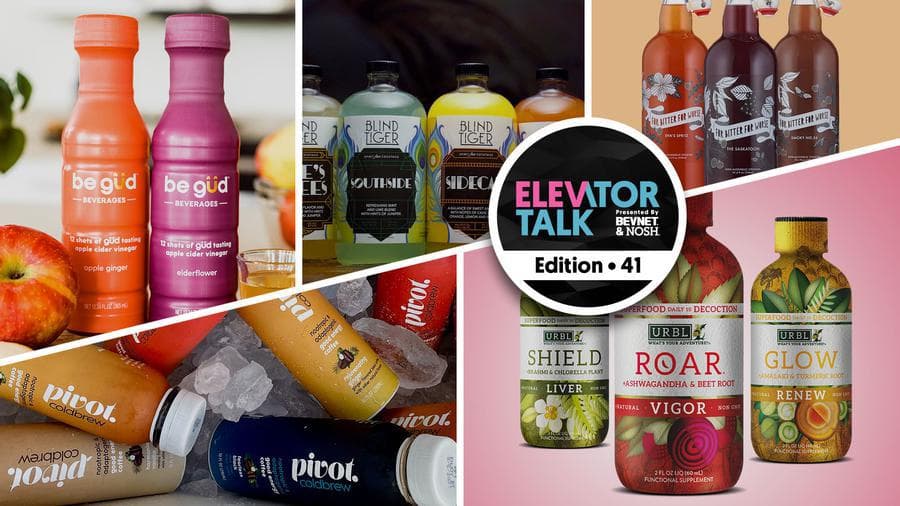
Episode 41 of Elevator Talk features leaders from Be Gud Beverages, Blind Tiger, For Bitter For Worse, Pivot Coldbrew and URBL. Watch founders and CEOs introduce their brands and provide a recap of recent news and updates. This week’s special co-host is Nick Mindel, a partner with Amberstone Ventures, who will share his thoughts, questions and feedback with the participants.
Transcript
Note: Transcripts are automatically generated and may contain inaccuracies and spelling errors.
Ray Latif [00:05] Hey folks, I'm Ray Latif, the editor and producer of Bevnet's Taste Radio podcast, and you're tuning to the latest episode of Bevnet and Nash's Elevator Talk series, the show that profiles early stage and disruptive brands from across the food and beverage industry. Today's episode will focus on 5 beverage brands whose entrepreneurs will have the opportunity to hear feedback and advice from our co-host for this episode, that's Nick Mindell, who is a partner with Amberstone Ventures. Nick, welcome back to the show.
Speaker 2 [00:34] Hey, thanks for having me, Ray. Always good to be back.
Ray Latif [00:37] And it's always good to have you. Thank you so much. Uh, I said, uh, you know, you joined us, what was that, in a few months ago, and I was like, as soon as we're done with the episode, I'm like, we've got to have Nick back because you offered tremendous feedback and advice, you know what you're talking about, you're interested in early stage brands, it's a win, win, win across the board. So thank you again. Uh, for folks who might have missed that episode or are not familiar with Amberstone Ventures, talk about, uh, yourself and the firm itself.
Speaker 2 [01:04] Sure, um, so Amberstone Ventures is a $50 million fund, uh, focused almost exclusively on food and beverage. I really kind of parked ourselves as Series A investors. We will dabble in seed from time to time, but you know, enjoy writing kind of 3 to $5 million checks and really see ourselves as that that middle point between friends and family capital and that first kind of 1.5 $million million that you might get in the door and kind of once you've scaled up to that point where you're ready for maybe $200 to $30 million checks from people like a VMG or an ACG. Um, you know, we, we kind of fill in that, that middle ground, really help professionalize organizations and get them prepared either for, you know, maybe fingers crossed on the strategic exit or um one of those larger growth equity rounds from some of the aforementioned funds. Um, so I think that that's kind of who we are in a nutshell.
Ray Latif [01:52] Yeah, for context, uh, can you talk about some of the brands that you're involved with?
Speaker 2 [01:56] Sure, um, you know, so on a pre-fund basis, uh, I've been involved with people like Chameleon Col Brew, Nut Pods, um, and, and Daily Harvest, to name kind of three, and then, um, currently, Within the fund we have Juneshine, a hard kombucha brand based out of San Diego, and Honey Mama's, a refrigerated cocoa truffle bar based out of Portland, Oregon that recently just went national with Whole Foods. So very exciting times with with both those brands.
Ray Latif [02:23] Yeah, I see you're repping one of those brands on your shirt there, Juneshine. Indeed.
Speaker 2 [02:27] 99 times out of 100, I put myself together a little bit more for this, but I have an 8 week old at home, and between trying to get some work done and taking care of him, my, my, my attire has suffered.
Ray Latif [02:41] No, your attire is perfect for the, again, I mean like if you're, if you're invested in a brand and repping its, uh, it's logo on your shirt, I think that means more than anything you could be wearing otherwise. It means you're, you're all in. So good stuff.
Speaker 2 [02:54] I'm 100%. So
Ray Latif [02:55] there you go, there you go. All right, um, you know the deal, Nick. Uh, we've got 5 beverage brands that we're gonna be speaking with, or 5 entrepreneurs representing beverage brands we're gonna be speaking with. Are you ready to get to the first one? Let's do it. Indeed, let's do it. Our entrepreneur, our first entrepreneur for this episode is Josh Ludden, who's the co-founder of Be Good Beverages. Josh, how are you?
Speaker 3 [03:15] Good. Nice to meet you both.
Ray Latif [03:18] Nice to meet you as well. I am very interested to hear about Be Gud, G U D is how you spell good. How do you talk about and describe your brand?
Speaker 3 [03:29] Yeah, for sure. So Be Good Beverages produces two flavors of apple cider vinegar shots with our mission to make apple cider vinegar easier for people to take in the morning. Apple cider vinegar has been used for centuries to help people maintain weight, boost immunity, balance blood sugar, and most commonly to improve gut health. And there's a few ways to take apple cider vinegar pills, gummies, which you're probably familiar with, that have become increasingly popular, and then drinking it, which is the most common way, and this is a space that we're looking to disrupt. If you've ever tried to create your own apple cider vinegar shot at home in the morning, you know it can be pretty messy, uh, time consuming, and oftentimes still taste pretty gross. And after about a decade of personally messing around in my kitchen, I just kind of gave up and was looking for a better option and had trouble finding something that really tasted good, and that's why it led me to start Be Good. Be good. It helps you reap all the benefits of apple cider vinegar in two delicious flavors. We have an elderflower and an apple ginger. So to make it taste good, what we did was we diluted the raw, unfiltered apple cider vinegar with water, monk fruit, agave, and then we have a ginger flavor and an elderflower flavor. And so each of these bottles has 12 servings of apple cider vinegar, so about 2 weeks' worth per bottle, and you can see on the back we marked each ounce, so you can easily measure a shot in the morning. Just take it out of your fridge, pour a shot, and you're good to go with your day, and you've taken your morning detox shot.
Ray Latif [05:00] Well, it's really, ah, you know, timely, apple cider vinegar, in that everyone's looking to boost their immunity, boost gut health. Um, where are you selling these products right now? Where can consumers buy them?
Speaker 3 [05:13] Yeah, so we launched in February of this year. We launched direct to consumer on our website and on Amazon Prime. And additionally, uh, partially because we're in Florida, um, but also because the COVID restrictions around sampling in Florida were a little bit more lenient, we hired team members around the state. So in the fall, we were running about 10 markets. Just a week in different parts of the Southeast where we were sampling products and that's about to pick back up again in September, uh, the summer heat kind of kills that. So we're in retailers, about a few dozen small independent retailers in the state of Florida and a couple other places around the Southeast currently. If you're not in that region, on our website and on Amazon Prime at the moment.
Ray Latif [05:55] Nick, I'm sure you're familiar with ACV as a beverage, um, you know, what's interesting about Be Good is when I initially saw the bottle, I thought it was just a ready to drink, apple cider vinegar beverage, this is more of a multi-serve product. Ah, what are your initial thoughts on the packaging in terms of how they're communicating, what they are, and what they do to end consumers?
Speaker 2 [06:14] Yeah, I mean, listen, I think, I think the packaging, it certainly stands out. Most HPV products that I've seen and come across have taken a little bit more of a crunchy approach to the market, and so, you know, your, your, your branding and your product looks a little bit more mainstream and probably helps and aids in that that opportunity to kind of overcome with the consumer hesitance on ACV. Um, I think it's just a tough. Tough consumer education to have and so by bringing your brand a little bit more mainstream and a little bit more approachable, you're probably making that conversation a little bit easier to have so. Um, yeah, I think that's really good, and I, I think it's, it's very creative to have the, uh, sort of measuring tape on the back of the bottle as well. Um, it's something certainly that I haven't seen and, and that, that can help differentiate and, and make the consumer experience of ATV easier. So, um, definitely commend you on, on some of the decisions you've made thus far, um, from a branding perspective.
Speaker 3 [07:14] Yeah, and, and to, to your point, Ray, about the bottle initially looking like a single serve, the way that we've been having these conversations with potential retailers about placement of this product, and personally, like where I want this to succeed is right in the apple cider vinegar section where a lot of our retailers currently have shelf space. That's where I went like every week when I would do my groceries, and the options at that spot in the store is like pretty much rags, like that's kind of it. Maybe one other company is there. And so when this product sits on the shelf in the apple cider vinegar section next to a brag, maybe one other detox type option, it really does stick out to Nick's point. It, it, it literally sticks off the shelf because the branding is so different. It gives people a very enticing option when it comes to apple cider vinegar.
Ray Latif [08:01] Yeah, and you know, a lot of apple cider vinegar drinks that we see are actually in shot form. I mean, you are selling 12 shots in a single bottle. What's the price point on Be Good?
Speaker 3 [08:11] Yeah, so the price point for one of these bottles is $9 and the idea at that price is that the shot price, the, the, the, the price per serving is about 90 some cents. And so we're also looking at launching in the 2 ounce shooter as well, but you know, like the price of consumers there goes up to like $2.5. And so our thought is like if this is gonna become part of your uh supplement routine in the morning where you just like take your shot in the morning out of your fridge. In a month this would cost you about $18 as opposed to like $75 if we sold them in just the single shooters so that's one of our thought processes behind this initial launch in the 12 ounce bottle and also we wanted to look at cutting down on waste and so just less packaging overall. Mhm.
Ray Latif [08:57] Nick, as an investor, do you think that there's greater opportunity in this multi-serve, ah, type bottle, or, you know, would they be better served, would be good be better served in a shot format, um, you know, Josh articulated, and I thought pretty well the reasons why it's in a multi-serve bottle, but, you know, what are your thoughts?
Speaker 2 [09:17] Yeah, I mean, listen, you're not going to have the velocity that a shot would have if you go with this format. That being said, I might push back a little bit on store placement. A lot of people, when they're going to search for ACV and they go to get rags, it's in more or less the cooking section, and I think that that's one of those aisles that just, you know, isn't getting a ton of foot traffic, maybe a little bit elevated due to some of the COVID trends that we're seeing around home cooking, but Um, but I think, you know, if there is an opportunity to kind of put your product on the edges of the supermarket, you're going to end up getting, you know, a couple of tailwinds behind you. Number 1, it's where there's more foot traffic. Number 2, you've differentiated your product against the, you know, 3 or 4 different shots that are out there that are ACV-based shots. And, and I think number 3, you have a tailwind going for you like. And I think for good that people are actively looking to reduce their footprint from a plastics perspective, that if you can tie those three together, you might actually end up with slightly higher velocity for a larger format product in that part of the store than you would otherwise. And, and that's kind of the advice I would give from, from an investor's perspective is kind of be mindful of where you're trying to get placement and why you're trying to get that placement. And where your consumer is going to end up going down the aisle the most.
Speaker 3 [10:41] Yeah, that makes a lot of sense to me, and, and some of the retailers that we're talking to at this time actually have like in their kind of like supplement section of their store they actually have like a gut health aisle, and so we're experimenting to see how it moves there, um, but what what you're saying makes a lot of sense to me, and I appreciate that feedback.
Speaker 2 [10:56] And there could be an opportunity for multi placements here as well, places that support each other, and, and ultimately at the end of the day you just want to put together a data story that's going to best position yourself that when you go to have these conversations with. You know, with the public, let's say out of Florida, you could say, hey, we are in these independent channels. We've been placed in both the cooking aisle next to Bragg's, but we've also been on the edge. When we're on the edge, we actually move about half a unit per store per week more than we do when we're in the cooking aisle, and we add incrementally, you know, $5 to the category every week. So I think we should be placed here versus there. But just making sure that you have that information in your back pocket's only going to help you when you go to to pitch these stores on getting placement.
Speaker 3 [11:38] Yeah, makes a ton of sense. I appreciate that.
Ray Latif [11:40] Yeah, and, and part of that data story includes who your consumer is, I would assume, who is your target consumer, Josh?
Speaker 3 [11:49] Our target consumer are people that are health conscious or looking to make their way towards that trend, but we, what we see, and we've been able to over the course of the last 6 months sell again at like probably several 100 markets now, it's actually giving us the opportunity to converse with our buyer like right when they take a sample and buy a bottle. And what we're learning is that the. The graphic here is mostly people that are leaning towards becoming more healthy or have this already as something that they take every morning and make their own cocktail or tried pills or gummies and it hasn't worked. And so what we've learned is that like with all of these gummies that are on the market right now, so much money is being pumped into. Informing and educating people about the benefits of apple cider vinegar, that it kind of takes a little bit of that pressure off our shoulders. Like, it's very rare to come across people now who are like, ACV, what's that? For the most part, people are like, yeah, I've been hearing about this, really wanna try it, let me have a shot. Um, and so it's becoming more of a mainstream supplement from what we're seeing, particularly over the last like 3 to 4 years.
Ray Latif [12:51] Nick, we've got about 30 seconds left. Um, I just want to get your opinion or your, your, I guess, assessment of how Josh uh described that target consumer. As an investor, do you want to see, do you want to hear more details about who they're targeting? Um, do you need to know gender, age, etc. or did Josh provide you with a good sense of where they're going?
Speaker 2 [13:12] I think 9 times out of 10 I would, but given ACV's demographics, I've seen people anywhere from, you know, 75-year-olds to 15-year-olds having ACV. So I think in general, yes, I like specificity and I like the opportunity to really understand who and why this product is being bought. But at the same time there are certain categories and certain products within categories. I think probiotics and prebiotics being one of them that Have a general mass appeal to multiple age groups, multiple socioeconomic brackets, and so, you know, I think it'd be good, Josh, for you to really understand kind of what your maybe core consumer is and really define, you know, is it 25 to 35 skews female and has a higher, you know, higher per capita GDP, let's say, or is it Is it 75 to, you know, 55 and going after that older crowd, whatever it is, define who that is and then be willing to understand that that. That's your core, but there's concentric circles that go out from there that can give you a larger adjustable market. Yeah, makes perfect sense.
Ray Latif [14:22] Great. Well, Josh, I really appreciate you joining us today. Thank you so much for sharing your story with us. Uh, please stay in touch and let us know how we can help, uh, in any way along your journey.
Speaker 3 [14:34] Yeah, thank you guys both for your time, and I used to live in Southern California and Juneshine was my go to, so I appreciate you.
Speaker 2 [14:40] Take care. I love it, love it. Have a good one, Josh. Thank you.
Ray Latif [14:43] Thanks, Josh. All right, on to our next guest of this episode of Elevator Talk. That's Rebecca Stein, who's the founder and managing partner of Blind Tiger. Rebecca, how are you? Good. How are you doing? Doing great, doing great. Great to see you again, Blind Tiger. Uh, you know, I thought this brand, uh, well, you know, it's interesting when you see these brands for the first time and then you, and then they they return on elevator talk. Um, I, I feel. Like we're going to get a little bit more information about who you are and what you're about, but for folks who may not have seen your first appearance, uh, on our new beverage showdown, talk a bit about Blind Tiger. Sure, absolutely. So Blind Tiger Spirit Free produces iconic prohibition era NA cocktails. Our premium beverages are mixologist crafted. They're all natural, organic, pasteurized, gluten-free, and shelf stable. Currently we have 4 varietals that are now available in 16 ounce and 32 ounce, uh, glass bottles. The Bee's Knees, which is a bright lemon flavor with notes of honey and juniper, the Ward 8, which is a smoky citrus drink with notes of apple, orange, and cherry, the sidecar, which we just recently updated, and it's a sweet and sour blend with orange, lemon bitters and more of a brandy profile, and the South Side, which is a refreshing mint and lime combination with hints of juniper. So our RT our RTV beverages afford a refreshing and sophisticated alternative to other any options, but because we utilize the original flavors of the spirit, if a consumer chooses to add the original spirit, it only enhances the flavor profile. In addition, and this is my favorite part, each of them has a story to tell, and, um, the, the history is, is on the bottle as well. Outstanding Uh, Nick, all I'm hearing from cocktail influencers is, well, maybe not all, but a lot of what I'm hearing from cocktail influencers is the rise of no, no and low elk, uh, cocktails, uh, and in RTD form or otherwise, and, you know, I don't know if you've really kept an eye on this growing space, um, but if you have, you know, what are your general thoughts on Blind Tiger and what they're bringing to market?
Speaker 2 [16:50] Yeah, I mean, it is a very, very popular category right now. Um, I would say, you know, from Gen Z being the least alcohol-driven generation we've ever seen in the United States to, you know, general health and wellness trends that I think were only accelerated by COVID, um, you, you're really riding an incredible I, I think incredibly powerful and incredibly long duration trend in the United States of a reduction in alcohol. I, I think what you're doing, you know, number one, your branding is just stunningly beautiful. Um, you have, you've taken a, a, a, a non-alcoholic beverage, and you've given it an alcoholic nostalgia and a, a look and feel that transports you right back to 1920s, like I should be in a tuxedo. A drinking of BD's. So I think, you know, number one, you're going to stand out on brand, which, you know, it's going to be tough to win in general in this category, but standing out on brand is going to be, you know, first and foremost. And then secondly, I think what you're doing is very smart in that you're not creating new beverages that you're going to have to educate the consumer on what these are. You are taking very well known, very popular. Cocktails and bottling them without the alcohol, and I think taking that consumer education out of this is going to put you, you know, at least a couple of steps ahead of people that are, you know, trying to come up with something new, something different, something that is cocktail-like, but, you know, have to educate the consumer on what it tastes like.
Ray Latif [18:23] Yeah, I mean, what do you think about educating the consumer not only or not having to educate the consumer on maybe what the cocktail is, what the beverage should taste like. But in the form it's in, as in a ready to drink product, uh, again, ready to drink cocktails, alcohol or otherwise, are, uh, a growing, uh, segment of the entire spirit space, a small but growing part of it. Um, Nick, do you think that there's going to be a little bit of a disconnect in that people expect to drink a sidecar or a bee's knees out of a cocktail glass, or, um, is this intuitive enough that people won't need to, it won't be hard for people to make that leap?
Speaker 2 [19:01] We don't, I guess that's actually one of the questions I would have for Rebecca. I mean, just going through your website earlier today, all of your products are demonstrated on the website in their respective cocktail glasses. So is the intent that the consumer will pick this up and drink it straight from the bottle, or is the intent that this is going to be a compliment or a centerpiece to their their bar cart or, or, or, you know, pantry items that they'll subsequently pour into a glass and replace the alcohol drinking occasion?
Ray Latif [19:29] Yeah, you know, what's interesting is I've been working with a couple of consultants across the country, and there's been a variation in, um, both, in both of those arenas, right? So I've done about 1000 different, we've had 1000 different people taste our product, and it's been really well received as a refreshing, nice drink. But if you don't know what award aid is, or what a bee's kneesze is, or a South Side, you know, people don't really know what to come to expect. So as long as it's pleasant, it, it's well received. Now, there are those That have the very refined cocktail culture background and do understand that the cocktail culture. So we're still kind of working, as I had like mentioned previously, the sidecar was probably not my most favorite of all the ones that we originally put out there because it was missing that cognac sort of feel to it, but we've been adding and enhancing the flavor profile, but so that you can just pour from, from the bottle if you want to. But I do think it's still an educational journey for a lot of consumers.
Speaker 2 [20:26] Then I mean, with that in mind, you know, I I think a product like yours, I think RTD, non-alk cocktails can work. I think yours almost to me as an investor looking at the brand and the product, it lends itself to being strictly, or not strictly, but very much a replacement for the classic cocktails that would sit on a bar cart. I think your branding, the bottle, etc. stands out nicely and would be a centerpiece to anybody's kitchen. And the opportunity for people that aren't drinking alcohol to, you know, still feel socially involved and a part of what's happening on dinner parties or, you know, even just kind of a, a, you know, a nightcap, so to speak. I think your, your product definitely lends itself to that. Um, you know, I'd be a little bit interested in just seeing how it plays on just grab and go, um, but it seems to me that this fits much more with the alcohol section and, and the product that that. You know, sells itself that way just a little bit better.
Ray Latif [21:28] Oh great, yeah. Rebecca, I'm curious as to why, and I don't know if you addressed this during the New Baverwood showdown, um, why you call it spirit-free cocktails as opposed to alcohol-free cocktails. So, originally, I, I had done a lot of research into the product, and I had come across an influencer whose name I'm, unfortunately, uh, can't remember at this time, but she was very intent on not having the mocktail name out in cocktail culture because she felt it undermined the drink. So, I just looked for different alternative. Alternatives, um, and it just kind of came as a spirit-free name. Like, I just wanted to enhance the actual drink without kind of taking away from, um, the conceptualization and the sophistication of it. So, it was really just more of like a strategy, but not necessarily, uh, there wasn't a particular point except for that. And are consumers understanding that? I mean, are, are they understanding that spirit free is equitable to alcohol-free? Yes, yeah, at least the ones that I've encountered to date, they've not, you know, when I'm talking to them, I'm telling them it's they're non-alcoholic cocktails essentially, and so they have this going in, at least the ones I'm, I'm working with one on one or having tastings with, um, but I haven't had any kind of feedback otherwise, you know, even from an e-commerce or retail standpoint. Yeah. Yeah, and let's talk about ecom because uh you can ship these unlike Uh, products made with alcohol, you don't need to go through the three-tier system, you can ship these direct to consumer. Um, has that been, uh, has that been a strong channel for you to date? Uh, not yet, and I'll tell you, I have to, honestly, I have to say that I think it's still, uh, a barrier to access for a lot of people is, is e-commerce when it comes to the, to the gins and all the different NA things because of the cost of shipping. So we went ahead and made a smaller version, the 16 ounce version, so that you didn't have to have the commitment of purchasing the 32 ounce, and that way you could try it and if you like it, then you could turn around and buy the bigger bottles. Those have done really well for us, but that, that was secondary to when we launched, so. Nick, does Ecom have to be a big part of this brand to succeed? Uh, I mean, do you see it as the channel where consumers are going to learn most about and become more aware about this, this brand and their products?
Speaker 2 [23:42] You know, I, I was wondering about the channels for a brand like this, and, and to me, Ecom, Ecom will always. An important role when you don't have to be a part of the three-tiered system. So I think eventually this will be an area that you can grow into, but it doesn't necessarily have to be important now. From my perspective though, I mean, the, the opportunity here in food service and on-prem, um, on-prem service is, is far and away kind of one of the most interesting aspects here. I mean, again, you know, most bars pride themselves on what What the product display looks like, they proudly display the expensive gins and tequilas that they have, and the bottles all complement each other. Your bottle can complement any bottle of gin or any bottle of tequila out there and can provide an opportunity for purchase that, you know, maybe they would have served a Pepsi or a Coke or whatever it might have been, and now you can have, you know, something that adds significant margin to a restaurant's bar business, and I think To me that that would probably be the first place I would go, and then secondly, start to fill an econ behind that.
Ray Latif [24:44] Yeah, and that's actually what we have been doing. Uh, the consultants that I'm working with are looking to get us into distribution through to different bars and restaurants in different cities, um, throughout, because I think there's a good placement for it there because it does create a consistent cocktail. It's less effort, less spillage, less prep, and it's all natural.
Speaker 2 [25:01] So, and are you talking with, I, I, I would honestly, if I were you, I would be talking with the alcohol distributors and try and get in with them as the NA opportunity for them to, to put your product on shelf.
Ray Latif [25:13] Thank you. Outstanding. Rebecca, so great seeing you again. Uh, I really appreciate, uh, everything you do and, and really helping to grow this, uh, this emerging category of RTD cocktails. Uh, please stay in touch and let us know if we can help in any way. I will, thank you very much for having me and thanks, Nick.
Speaker 2 [25:31] Nice to
Ray Latif [25:31] meet
Speaker 2 [25:31] you. Nice to meet you.
Ray Latif [25:34] All right, on to our third guest for this episode of Elevator Talk, that's Shelly Elkovich, who is the co-founder and Taste maven of for bitter or for worse. Shelly, how are you?
Speaker 4 [25:45] Doing great. How are you, Ray?
Ray Latif [25:47] Doing fantastic. Uh, love the name of your brand. Uh, saw it in our office. I think it was, uh, June of last year. It, it was right smack dab in the beginnings or the early stages of the pandemic, and I was like, wow, this is great. I'm, I'm really looking forward to trying this, and I did. You have a great product on your hands, folks who aren't familiar, and since you're an early stage brand, I bet there's a lot of folks who aren't familiar. Tell us all about for better or for worse.
Speaker 4 [26:13] Sure, and uh, well, Nick, thanks for being here. Congratulations on the birth of your son, and it's kind of a heroic effort that you're here.
Speaker 2 [26:21] Thank you, thank you. I appreciate it. You, uh, you all make it fun to be here.
Speaker 4 [26:25] Oh, that's great. So yeah, I'm co-founder of For Bitter for Worse, and we make complex cocktails with love, not alcohol. And so, uh, for better or for Worse is for sophisticated drinkers who seek bold flavor and high integrity ingredients. We don't take lab need shortcuts or use preservatives. Our patent pending reverse bootlegging. Method yields uniquely robust flavor. Um, we have 3 varietals right now. Um, they're each designed for distinct occasions. Eva's Spritz is our sparkling aperitif. The Saskatoon is red wine's mysterious wiser friend, and smoky number 56 is our potent nightcap. So we make our drinks ourselves using real botanicals, creating a premium product that also places a premium on inclusion and sustainability for people and for the land. Um, despite pandemic challenges, we grew ourselves 500% of revenue, 500% from Q120 to Q121, and, uh, in the last six months, or six, first six months of this year, uh, website visits increased 83%. So our main challenge so far is constrained production. Uh, after our first New York Times story, we resorted to a password protected Speakeasy page to manage demand. And then after the 2nd New York Times story, we started to build out of our new facility. So we have a lot of exciting stuff coming, uh, but the news that I can share today is that we won a bronze at the San Francisco International Spirits Competition. So thanks for having me.
Ray Latif [27:53] Well, thanks for joining us and don't go anywhere because I'm sure Nick has a lot to, uh, ask of you and your brand. Before we get into Nick's thoughts, Shelly, how did you come into this business? Were you in the, in the spirits business, in the cocktail industry prior to launching this brand?
Speaker 4 [28:08] No, I was a writer and a food security community organizer, so not in the beverage space at all. Uh, we have sort of a double whammy story. Uh, my husband, Jeff is my partner in life and in the business, and, uh, we had sort of two catalyzing events, uh, job loss. He He was an environmental consultant with a long career, and we heard that the company that he would be that he was working with would be shutting down, uh, with only 28 days' notice. And so after we picked our jaws up off the floor, we thought about what we might do together in this next phase of revision our lives and. Uh, while we are not beverage industry veterans, we are lifelong flavor tasters, and we're the kind of people that always had, you know, our fridge just jammed with experiments from wine to homemade vermouths, liqueurs, bitters, you name it, you're hearing a lot of alcohol. We have cocktail palettes. We had a Nick and Nora vibe, uh, so we went up to the San Juan Islands. We took a 6 month deep dive thinking about what we might do with beverages. And I contracted a strange neurological illness after a whale watching trip where I could no longer consume alcohol. And that is, that was the catalyst because there was nothing that met my standards for ingredients and my, please my palate. So we just dove in and experimented like crazy. And here we are.
Ray Latif [29:31] Well, I'm really glad I asked that question because it's such an amazing story. I'm sorry to hear that you can't consume alcohol anymore, but ah you've got some great products where you can consume the next best thing, or maybe even a better thing, um. Nick, we heard a lot about uh from Shelly, the amount of demand that they're seeing of late, and, you know, based on her story and based on the brand positioning as it is, for better or for worse, you know, and, and the, the varieties that they have, excuse me, the skews that they have, it feels like this is for a little bit more of an experienced elevated cocktail consumer, um, you know, back to back non RTD, non-alcoholic beverages and brands. I, I, I mean, are you seeing a bigger market for products like these for cocktail consumers that are already there in terms of what they're, what they know about what they're looking for, or, you know, is there a bigger opportunity for the, the mainstream, I guess, consumer?
Speaker 2 [30:23] I mean, I think there's always going to be a bigger opportunity for the mainstream consumer. It just goes without saying that's why they are the mainstream consumer. With that being said, I think that the adult consumer that has been within cocktails since they were, you know, 21 or maybe a little bit earlier, but have grown into, into that palette and have grown their palate from 21 to 31 to maybe even 41 now. And are dabbling in this sober lifestyle. I, while it might be a smaller addressable market, I believe that the value each one of those consumers may bring to the table, I think they're probably willing to spend a little bit more money, and you'll be able to create a more valuable consumer with that demographic than with the mainstream demographic. So, you know, it might not be as large, but I still think that there's a significant opportunity there to build a very nice business.
Ray Latif [31:19] Yeah, and I mean I think that's been the, the sort of message that we're hearing across CPG is that you can build a great business, you don't have to build a billion dollar brand or $100 million dollar brand to create a strong company. Um, that being said, you know, as an investor, is that sort of more niche opportunity, something that, um, takes a certain type of investor, or is it just, you know, if you can be a profitable company and be good at what you're doing, is that also Um, interesting to you is that, uh, is that, uh, Is that wetting your palate, so to speak?
Speaker 2 [31:54] You know, it's really the first conversation we have with every one of our entrepreneurs is what's their end goal? What, what do they ultimately want this business to be? And I think, you know, there's a certain group of individuals that want to build this into a sustainable business that can provide them a lifestyle for the next 25 to 30 years, and they never want to see it sold. They never want to be not a part of it. It's their baby, and that is absolutely a great way to go. And there's a certain set of investors that'll support that. I think family offices probably being the best example. They have a much longer term horizon for where their dollars will go and how long those dollars can be put to work for. Investors like us, it just isn't necessarily within our wheelhouse. We oftentimes will partner with companies, you know, for as little as, as, you know, I sold a company after 12 months because they scaled so quickly and had an opportunity to leave, and I've been involved with companies over, you know, 7 or 8 years, um, but really kind of over that 10 year time horizon, um, it, it starts to get a little long on our end and we're looking for brands and companies that can, can scale to a point where they become exitable, um, and so, you know. That's my way of saying it's probably not the type of company that that would be, you know, for us, but I think that there are certainly investors that would have interest, would want to support it, and would want, would want to become long term partners here.
Ray Latif [33:15] Well, let's ask Shelly, I mean, what is your end goal for this brand? I know it's hard to, it may be kind of hard for you to say at this point as an early stage brand, but you know, what are you looking to do with this business and, um, you know, what do you see as really the addressable market, um, for, for better or for worse?
Speaker 4 [33:32] Well, I mean, we're building intimacy at scale, so we are, we are starting with our brand equity, uh, but I do believe, I mean, if you look at some of, you know, the partners that Distill Ventures and Diageo has made with, with smaller. Premium brands, I, I think there's still a place for us to talk about exit, frankly, um, we have, we have a few things that uh we have some, some interesting people that we're speaking with, and, uh, I, I think, you know, we're, we're gonna work toward national and uh beyond.
Ray Latif [34:06] I mean that's so great to hear it. And as, as you scale, I'm sorry, Nick, did you, were you, did you, did you want us to jump in and say something? No,
Speaker 2 [34:10] I was just gonna say I love it. I mean, I always, always love to hear kind of the answers to that initial question. So, um, more than anything, wish you the best of luck and hope to see this nationally.
Ray Latif [34:21] Absolutely, and you know, again, going back to demand and as you scale, and, you know, that we can hear you in your bottling facility right now for, for our listeners, that's all, all that banging going on. Shelly's, you know, knee-deep in production at this point, so thank you again for joining us and giving us, uh, some of your time today. Um, uh, the demand part of what you do, how are you generating demand? Uh, how are you getting more people to buy your product? Are you seeing a lot of repeat purchase or, uh, is a lot of your growth coming from new consumers?
Speaker 4 [34:49] Um, well, I mean, of course, when you're growing it, it fluctuates if you're, uh, when you're looking at your numbers, but yeah, we have a very strong, um, repeat customer base, and we've just launched a subscription service that's doing well, um, in addition to our 750 mL sharing format, we have gift trios that are, are samplers, so they're 36 ounce bottles where people can sample the brand, and that's been really. key with D2C to get people to try and then love it and then subscribe, um, you know, our, our main, our main consumer is a woman 25 to 54 who's concerned about wellness, who's a label reader, you know, who doesn't want natural flavors, for example, we're almost the only brand in the alcohol non-alcoholic cocktail. Uh, space that makes our own product and doesn't rely on natural flavors, you know, we only use botanicals and so that's, that's pretty interesting to a lot of people. Again, it's niche, but it's, it's important to people, um, so you know, we've got the women, but then we also have, I mean, one of our, our best customers. 84-year-old retired professor from DC who orders Saskatoon by the case of 12, and he has me call him for his credit card number every month because stuff so, you know, it's, it can't be for everyone.
Ray Latif [36:04] Yeah, um, well, just amazing stuff. I wish we had more than 10 minutes to speak with you, Shelly, because this is, uh, it's so enlightening. It's so fun to speak with you and uh. Uh, I, I think there's a great future and a great runway for this brand, as, as there are for all the brands that we speak with, um, but it, it's, uh, it's exciting, and I, I can feel your excitement for the brand coming through the screen. So thank you so much for sharing, uh, that excitement with us, and, uh, please stay in touch. Let us know what's going on. I have a feeling you have news to share pretty soon, so send us an email to [email protected] when you do.
Speaker 4 [36:37] All right, sounds good. Thanks.
Ray Latif [36:38] Thanks so much. Bye now. All right, uh, on to our next guest of Elevator Talk is David Stroud, who is the president of Pivot Cold Brew. David, how are you?
Speaker 5 [36:49] I'm doing great. How are you guys?
Ray Latif [36:52] Doing fantastic, thank you so much for asking. Uh, I have seen Pivot, uh, in a number of places. Uh, I've had product, uh, shipped to my house. I've seen it in our office, and in both cases I've always reached for it because it's a really interesting brand to me amid. Ah, you know, a pretty competitive or at least, uh, crowded set for ready to drink coffee. Uh, Pivot Cold Brew, what makes you guys different? How do you separate yourselves from the rest of the category?
Speaker 5 [37:21] So it certainly is a, uh, a crowded set. So we're a functional cold brew, and we think we're the only nootropic forward uh ready to drink coffee that's designed specifically to support cognitive health and wellness. You know, when we looked at the space, and we looked at the consumer, people are more and more sort of, um, mentally and emotionally fatigued than ever, and that's what they look for, when they look for an energy replacement. But currently, sort of a lot of those different energy, energy drinks and coffees, uh, you know, are filled with lots of sugar and artificial ingredients, and uh tend to create actually give them extra anxiety and sort of result in a caffeine crash. So, what makes us really different is that we take premium coffee and we fuse it with plant-based nootropics and adaptogens, and there's a designed to work very specifically with the caffeine to deliver what we call a good energy experience. And that is energy that is sustained, uh, and smoothed out over a longer Portion of time with no crash and no jitters. Uh, you know, nootropics are things that work with our brains to enhance our concentration, our focus, our mental acuity, while adaptogens, you know, help our bodies respond to stress. So the combination of that all with the caffeine result in this good energy experience that we call it, which is sort of this great sort of sense of calm, alert, focus, that helps us to be a lot more productive over a longer period of time. And we worked really closely with an ethnobotanist to come up with a precise mix of ingredients, and a lot of these ingredients that we use are not commonly found in beverages today. You know, one thing that was really important to us is that we want to create a functional coffee that never, ever, ever sort of uh compromised on taste. So we had sort of two parallel lines of development, one was a long coffee, and one was long dysfunctional ingredients. And so, we spent a lot of Time on making sure that this was a very coffee forward, coffee pleasure bowl experience. And so, we have 5 different skews, uh, 5 different flavors, and all of them are crafted, uh, with this coffee forward experience in mind. So none of the sweeteners systems or flavor systems, uh, over, overpower the coffee, instead, they really complement the coffee. So we launched, uh, last year, uh, last fall, in, in Southern California, where we're located at Erwan, we're at Lazy Acres, we're Bristol Farms, and Independence, uh, throughout uh Southern California. And, you know, our next step is just continually to disband, uh, in California in the Southwest. Um, what I like most about the product is I feel like, you know, the idea of nootropics and, you know, biohacking feels a little inaccessible to people. So like we are kind of creating an opportunity to provide these functional benefits of nootropics and adaptogens in a really accessible, delicious, uh refreshing, ready to drink cold brew, and therefore sort of delivering great taste that people are demanding, and the good energy that they're looking for today.
Ray Latif [40:13] David, that was great, and, and you said a lot there, and I appreciate all the information you gave us. I'm gonna challenge you though, um, for someone who has no idea what the brand is and you're asking them to buy your product, and you have 10 seconds to talk about it. What is your 10 12th pitch?
Speaker 5 [40:29] You know, what people really respond to is the pitch is like, it's a coffee that provides you good energy, no crash, no, no jitters, and improves your focus and concentration, you know, um, you know, uh, that, that's it.
Ray Latif [40:41] OK, Nick, are you sold?
Speaker 2 [40:44] I mean, I'm sold on nootropics and I'm sold on adaptogens and I'm sold on cold brews, so you put them all together and I'm definitely sold on that.
Ray Latif [40:51] Well done. Um, you know, that I think that's, that's something we have seen. We have seen, I think, added functionality to coffee in a number of ways. Um, certainly, uh, the bulletproof style coffees, were a forerunner to a lot of what we're seeing today. Um, that being said, it is a crowded space, as I said at the outset. Um, you know, from top to bottom, outside and inside the bottle, um, would you be reaching for this, Nick, and, and not just from a consumer perspective, but from an investor perspective, like, is what you're seeing, um, Really, really enticing you.
Speaker 2 [41:29] From, from what I'm seeing on a brand and, and a general mix of of adaptogens and nootropics, yes, it does interest me. What, what I'm going to look at as an investor is, you know, number one, what's the price point here? I, I do think that there are a number of competitors that are introducing adaptogens and nootropics into their coffee. I can Think of two right now off the top of my head, um, but I think what's going to differentiate you is number 1, the flavor profile. I don't think, if I remember correctly, none of the brands that I'm thinking of right now have something like a harmonious vanilla that they're putting on the shelf. It's very much either oats or macadamia, and they're just using milk to change the flavor profile. And then number 2, you know, I would be very curious what your price point is and if you're differentiating yourself based on On price versus some of the competition, as I know the introduction of, of, of adaptogens and nootropics tends to drive up the price as well, which can alienate a certain set of consumers. And so um I think on the surface, yes, certainly would be interested in what you're doing from a brand and a product perspective, but I think that there's a number of questions below it about how you're differentiating yourself from the rest of the category that probably would need to get answered.
Speaker 5 [42:48] Yeah, I think it's a great question. We struggle with it every day. Um, you know, from our price point, we're priced with premium cold brew coffee, it's like a blue bottle or a tai or the other ones are new functional ones. You know, our differentiation is sort of the sophistication that we use in creating the ingredients mix and the focus on nootropics. Um, and, you know, that is a struggle to that that's a bit of a challenge to communicate to consumers. Um. But I do think, you know, that uh the, the feedback we're getting from consumers is there is a percept perceivable difference into the, to that energy, the good energy experience. There is definitely a sort of this perception of it. And for people who are really, you know, what we're finding is, you know, people are very sensitive about the, the coffee, you know, they drink, drink and consume in terms of the amount of it and the caffeine, and they're really responding to that idea. Um, I, I think, uh, the other part of it is, um, You know, we were very, like, again, we were very, very careful about maintaining a very coffee forward, uh, and pleasant taste profile with none of the ingredients are completely, uh, uh, you know, taste neutral and 100% soluble. Um, I think some of the, uh, brands that use adatogens, uh, in the form of, uh, mushrooms, you know, that kind of, uh, influences the actual flavor of the coffee, uh, which is not always a great experience, or, you know, pleasurable for everybody.
Ray Latif [44:14] So two things, David. Uh, one, what is the MSRP for, for Pivot?
Speaker 5 [44:19] So we're at 4.99 for a 10 ounce
Ray Latif [44:21] bottle, OK. And two, when I was shipped some product, it was shipped with cold packs, and I think it was, uh, I think I was asked to put it in the refrigerator as soon as it arrived. Does your product need to be refrigerated or is it shelf stable?
Speaker 5 [44:35] So right now it is, uh, uh, it's perishable. Uh, we are working uh with the FDA to get confirmation or certification to be able to ship shelf stable.
Ray Latif [44:44] How much of an advantage or disadvantage is that, uh, uh, for you, Nick, uh, do you see? You know, shelf stable coffee is having a significant advantage, or do you see more challenges with a perishable product?
Speaker 2 [44:59] You know, there, there's, there are their own associated modes with being shelf stable versus being refrigerated. I think being refrigerated does offer some, some protection and a little bit less crowded of a space. With that being said, I mean, the shipping costs alone with being cold chain distributed are are painful, um, for, for a number of different reasons. Um, I, I think the supply chain is getting better and stronger for cold chain, and it, it's only going to get better. Um, you know, I've been involved in products that have, have been cold chain, I've been involved in products that have been, um, You know, shelf stable, and I've been involved in a product that started cold chain with nut pods and then went to shelf stable, sorry, vice versa, started shelf stable and then went into the refrigerated set and actually found itself to amplify that type of of brand recognition within the store, so I think the way you're going and looking to be shelf stable, but maybe trying to find dual placement both in refrigerated and on the shelf stable area of the store is only going to help amplify the opportunity set of the consumer to grab your product. So I don't necessarily think it's a bad thing. I think it just takes the right investor to understand how cold chain works and to get comfortable with that distribution story.
Speaker 5 [46:18] And, you know, one of the other benefits to us that we're thinking about is you, you mentioned the direct to consumer and the online sales. Currently as a perishable product, it's, you know, it's very, it's a little bit more challenging from an economics point. Yeah,
Ray Latif [46:32] I can imagine it's very challenging from an economics point, but That being said, you are in some great retailers right now. Congratulations on getting into them, and congrats on a great start to your brand. Uh, David, I'd love it if you could stay in touch, uh, and keep us up to date on any new distribution or retail, uh, pickups that you, uh, achieve over the next year or so, well, over the next year and for the lifetime of the beverage and brand that is. Uh, once again, thanks so much for joining us on Elevator Talk today and I look forward to catching up again soon. Thank you guys. All right, on to our final guest for this episode of Elevator Talk, that's Suhas Verma, who is the founder and CEO of URBL. Suhas, how are you? OK, no problem. Great, great to see you. Um, URBL is spelled, or you spell it for your brand, that is U R B L, which is, uh, which is great. Tell us all about the brand and what you guys do. Yeah,
Speaker 6 [47:31] is a new plant-based, a new brand of plant-based functional botanical beverages, and uh our first product line is functional botanical shots. That is again plant-based. It has 24 different superfoods, uh, that includes herbs and roots and spices and condiments. And it offers the most sought out benefits like adaptogens for stress relief, new topics for memory and cognitive enhancement, hepat protection, which is liver protection, and collagen boost and antioxidants for cosmetic benefits, anti-inflammation, and digestive benefits. The most unique aspect of our brand is that it is the first and the only functional beverage in North America to be licensed by Health Canada as a natural health product. Now there's lots of functional beverages and shots in the market which add a few drops of certain ingredients and make all the claims of the benefits, but we wanted to take more of a scientific approach, so we chose the route of NHPs. It took us 11 months to get the licensing. And then also the product label claims approved. And the second unique aspect is that our three products are not just flavor variations of the same product line or the same product. It's actually 3 different, completely different products with different ingredients, different functionality, and different flavor profiles. And the first URBL Roar, has a very spicy kick to it, and it offers the adaptogenic benefits of increased energy and reduced stress. URBL Shield offers memory and cognitive enhancement and liver protection, and the taste leans towards kombucha or the greens. And the last one is URBL Glow, which has all the cosmetic benefits of natural collagen boosts and antioxidants, digestive support, and whatnot. And lastly, URBL, the entire product line is non-GMO, project verified. There is no added sugar. There is no caffeine, and even without any preservatives, it is shelf stable for over 24 months.
Ray Latif [49:18] Awesome. Um, you know, when I'm looking at your website, your, your tagline or the question at least you ask consumers or folks who visit your website is what's your adventure? Um, and you see some, uh, mountain range in, in the background. Uh, I wonder if that speaks to who this target consumer or who the consumer that you're targeting is, uh, who is your target consumer for this product and this brand?
Speaker 6 [49:39] Yeah, no, absolutely. The target customer is, I would say, early 20s to sort of early 40s or mid-40s, people who are looking to work hard but also enjoy on the weekends, those who are more into adventures and more into traveling and whatnot. Obviously COVID kind of changed that. But the idea behind adventure or what's your adventure is for us to ask consumers and to ask yourself, Hey, what's my adventure? What's my passion? And no matter what that is, whether you want to travel the world or you want to build a business or you want to raise a great family, or You know, just pursue a hobby or passion, you have to have a strong health, and that's the small part which in which we can contribute by providing you 24 different superfoods, and you take, you know, one of these, you get 10 different things or all three, and all the benefits of home cooked meal. And that was actually the inspiration behind the product actually. So I spent nearly a decade eating out, and even though I was able to handle a certain level of fitness and health, but I knew something important was missing, and that was the micronutrients. And I wanted to formulate a product which will give you the benefits of home cooked meals in the most convenient manner. And so we started with 14 different ingredients like the pantry regulars, the condiments and spices, and then added all these Ayurvedic and traditional herbal medicine ingredients like ashwagandha, bucopa monieri, milk thistle, and so on and so forth. So sorry to digress on the cushion, but I think I wanted to complete the story how adventure relates to health or no matter what you want to do, you need to be healthy, and that's where we are contributing.
Ray Latif [51:05] Now, if you could just get the flavor of a home cooked meal and not just the functional benefits and nutrients in that small bottle, you'd be a billionaire many times, that's Willy Wonka type stuff for sure. Um. Nick, we've, we, we've seen a lot of functional shots come to market, ah, some have fared better than others. Um, you know, as it stands, uh, do you like what Herbal is doing in terms of how they're trying to introduce this, the benefits of a home cooked meal, ah, and the micronutrients that are missing from other functional. Yeah, you
Speaker 2 [51:38] know, I, I, I do like what they're doing. I particularly like the sustainability aspect. I think you played that up very nicely on your website, and I, I, I would talk more about that in your pitch. I think it's certainly becoming front and center for a lot of investors and a lot of consumers. The one concern I would have with your product is, are you trying to do too much? Are you introducing too many different Variations of ingredients that people generally are familiar with, but when you put them all together, are you overwhelming the consumer, and are you creating a story that you have to explain too much? I think initially your consumer and your core consumer probably will understand it, but it's just something to keep in mind that as you begin to expand where your consumer is picking up your product, that you're going to have to try and expand how you tell that story as well.
Speaker 6 [52:22] Right now, I think that's a great feedback, and I debated with that myself, and the idea sort of when I leaned more towards including more ingredients was to make it more cost effective. And I think customers are educated in terms of adaptogens and new tropics and liver protection and especially the milk thistle. There's so many tablet forms, but one tablet, even though for a 30 day supply it will cost you $30 but that's just one ingredient. We provide the same dosage and 9 more ingredients, and it's still more cost effective. So but you're right, education has been something that we have had to
Speaker 2 [52:54] invest in. What, what is the cost per bottle?
Speaker 6 [52:57] Uh, in the US 399 per bottle.
Speaker 2 [53:00] OK. And that, that, that, that compares nicely to other shots, uh, yeah, premium shots in the category. Right, right,
Ray Latif [53:08] I think at 3, I'm sorry, go ahead. No,
Speaker 6 [53:12] I was just gonna say I don't think I've seen anything beyond 450, maybe some 499, but that's the, the limit of pricing on some of the products in the market,
Ray Latif [53:20] yeah. Educating the consumer is one part of this. Getting the consumer or getting the product in the consumer's hands is another part of it. What is your retail strategy? What is your, uh, go to market strategy, um, particularly within the United States?
Speaker 6 [53:35] Right, so in the US we're actually just brand new. I haven't even launched in retail yet. I'm just in the conversation. I've spoken to a couple of distributors and looking to reach out to retailers as well. So we are. Canada-based, and we launched the company in Feb in Canada with UNFI through their Up Next program, and our strategy there, and this is going to apply in the US as well, is to start with the national and specialty channels with, you know, some of the distributors like UNFI and Keys of the world, and, and especially Whole Foods. And once we get to that level, then we can go into the mass market. But starting with those. Channels is our strategy. And in terms of online, we are solely focused on Amazon, which we started just last month. And so we have started to see some traction, and there have been some surprises actually, uh, in terms of, you know, um, some of the SKU is doing better than others, which we did not expect. Um, but that just tells us a little bit more about what consumers are looking for. Um, but in retail, I think national and specialty channels are sort of strategy.
Ray Latif [54:34] Well, when I saw this product in our office, I saw the 3 skews, and the one I immediately reached for was the glow, and it wasn't because I felt like I needed glow or, you know, the renew function that you described on the bottle, but more because it had turmeric, and turmeric is probably one of the best known functional ingredients among consumers. Um, but what is your best selling SKU at this point? I mean, and, and. Um, are you seeing more and more consumers, you know, buy or lean toward that turmeric than the other, uh, varieties or the other functional ingredients in the other varieties? So
Speaker 6 [55:08] Glow has done slightly better in retail, but they're pretty close. All are pretty close. In retail, there's not much difference. I think Glow has done better because also our 70% of the market is women, and they tend to like something that glow and cosmetic benefits, and those, they get attracted to that, which is perfect for Glow. Uh, but in in online, And on Amazon, Shield has actually outperformed the rest of those, which was surprising, but Shield has just done much, much better than Glow and Roar and even the variety pack, because I was expecting people to try the variety pack first and then go for whatever they like, but Shield has done even better than the variety pack.
Ray Latif [55:44] That's really interesting, um, because just from a packaging standpoint, um, I feel like, again, the renew is something that or the glow is something that, you know, I wanted to try from a, from an ingredient standpoint. Nick, I mean, as you look at the packaging, as you're on the website, I mean, um, is this intuitive enough for you? Are they, is the packaging intuitive for you for a consumer uh to pretty quickly understand what they're looking for, or would you expect the consumer to do a little bit more research in what they're buying? I, I mean, I
Speaker 2 [56:13] think. I think a couple of things. I think, you know, probably the consumer, particularly for Roar and for Glow, is probably going to end up reading the label and just trying to figure out exactly what the functionality is, but I'm not actually shocked by Shield at all, particularly given when you launched and what the implications of a shield are. I think a lot of people are just looking for any functional benefit that they can find that will help their immune system. And so, you know, when I saw the bottle and I actually see Shield, I'm immediately like, great, I've got something to defend me against whatever else is out there. Um, that, that one was very easy to understand, but yeah, I think, you know, particularly with roar and Glow. You know, certainly good connotations and good words that that elicit a sort of emotional response that I think resonates with a lot of consumers, but at the same time, you know, truly understanding, you know, what does roar mean, what am I going to get from a roar, and what am I going to get from a from a glow, you know, might, might need a little bit of tweaking here and there.
Ray Latif [57:13] Well, I, I hope that Suhas can send you some shield, Nick, because, uh, you know, as a new dad amid, you know, the pandemic, I'm sure some shield would, would, uh, help you along the next few weeks or months of your life.
Speaker 2 [57:26] Give me the one that's designed for kids that makes them sleep through the night. That's the one I'm looking for.
Ray Latif [57:32] Suhas, do you have one of those?
Speaker 2 [57:34] Uh, kids love loaf. They actually do low. It's sweet,
Speaker 6 [57:38] right? So it's a slight touch of black pepper, so they tend to like that one.
Speaker 2 [57:42] Nice,
Ray Latif [57:42] nice, nice. Excellent. Well, it's so great speaking with you to us and uh thanks so much for sharing the story about herbal. Uh, please keep us in mind with any news about distribution or retail placement of the brand. We'd love to hear all about it.
Speaker 6 [57:56] No, thanks so much. Thanks for having me. Thanks, Ray. Thanks, Nick. Thank you.
Ray Latif [58:00] Thank you. All right, Nick, uh, 5 more entrepreneurs, I, I think the first time we did this with you was 5 food entrepreneurs, this time we're on the beverage side. Ah, as always, you know, I love to just get some general feedback or general thoughts in terms of, uh, what you saw in these pitches, ah, that you really appreciated as an investor, and, you know, what are some of the things that The folks that participated and then those watching at home or in their office need to consider as they start talking to folks like you. Yeah,
Speaker 2 [58:28] I mean, first and foremost, the overall level of polish that these, these companies brought to the table and these entrepreneurs brought to the table, it blows me away, um, you know, from starting to do this, you know, 4 years ago and being in the natural food and beverage world for, you know, the the last decade, um. It's just been amazing to see the, the professionalism of, of the industry. Um, so, you know, commend everybody for that. Um, you know, secondly, I, I, I would say, you know, just having a true understanding of your distribution strategy and, and really wanting to, to figure out how you're go to market, how you're going to interact with your consumer, where your brand is going to find the consumer, most importantly, is, is something that I think, you know, a few people hit on, but really understanding how you want to interact and how you want to To find your consumer on a day to day basis is incredibly important, you know, and then, and then I think the more that these ingredients, you know, are coming out, particularly around prebiotics, probiotics, nootropics, adaptogens, you know, the world of, of, of Ayurvedic health, of, of a more holistic approach to health and using food and beverage as that. It does take some consumer education and just being mindful about how your product speaks to the consumer, how it sits on the shelf, and how you, your product is going to interact with the consumer when they do come to find it. I think it's something that every brand going forward is really going to have to consider. And you know, the categories that a lot of these people are playing in are crowded. How are you going to stand out in those categories? And I think the brands that, you know, really think about how they look on the shelf coupled with How they speak and communicate their product and their product benefits to the consumer are the ones that are ultimately going to win.
Ray Latif [1:00:13] Well, I think that's outstanding feedback, uh, and thank you so much again for sharing it, Nick. Um, you know, there are people that are gonna wanna reach out to you and, and, and bend your ear. What's the best way to get in touch with you or your team from Amberstone?
Speaker 2 [1:00:27] Uh, uh, email, um, it's just Nick at Amberstone LP.com. Um, we are a very open and collaborative team, so. Um, if I don't respond, somebody else will, but you will usually get a quick hit back from us within, you know, 24 hours or so.
Ray Latif [1:00:44] That's amazing. Uh, thank you so much for sharing that with us, and, uh, thank you so much again for taking the time to be with us today. I know you're exhausted as a new dad, um, so that makes me doubly appreciative of this. Um, and I'll ask again, can we do this again sometime in the near future?
Speaker 2 [1:01:03] We'll make it, we'll make it a once a quarter thing, right?
Ray Latif [1:01:06] I love it, I love it. Thank you so much, Nick, and thank you so much to all our entrepreneurs who joined us today. Uh, as Nick mentioned, I'm gonna echo, you know, really professional, uh, really great to hear from everyone and wish you the best of luck on your journeys. Please keep us in mind as you continue to grow, we want to help in any way we can. And that goes for everyone in the audience as well. Um, if you ever want to, uh, speak to us about anything, you can do so by just sending us an email to [email protected] or if you want to reach us at TasRadio, [email protected]. In the meantime, uh, signing off for our amazing team at Bevnet Nosh and Taste Radio, signing off for our amazing co-host, Nick Mindell. I'm Ray Latif, and we'll talk to you next time.