Search across the BevNET CPG Media network including BevNET, Nosh, Brewbound, Taste Radio, Nombase and CPG Jobs.

Elevator Talk Episode 43: Zesty Beverages, Memore, Breinfuel, NXT LVL Hydrogen Water, Confidence
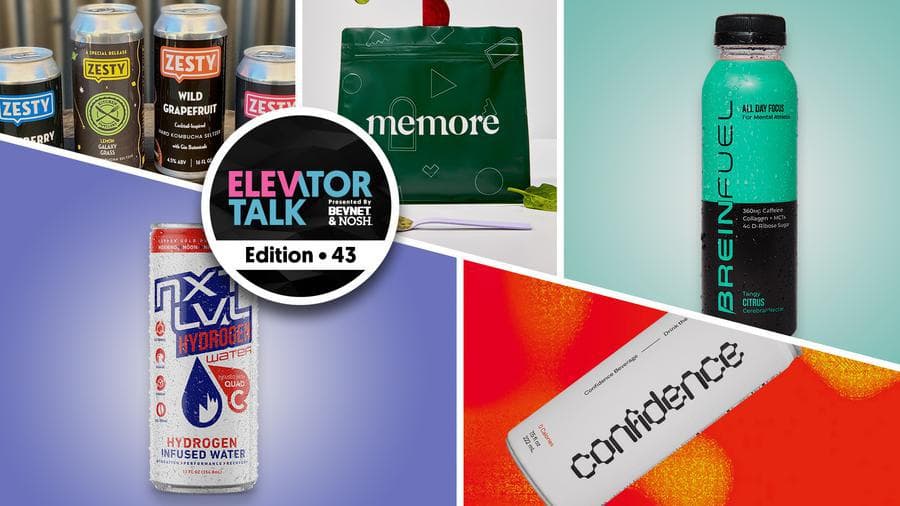
Episode 43 of Elevator Talk features leaders from Zesty Beverages, Memore, Breinfuel, NXT LVL Hydrogen Water and Confidence. Watch founders and CEOs introduce their brands and provide a recap of recent news and updates. This week’s special co-host is Sebastian Dreher, the managing director of Döhler Ventures US, who will share his thoughts, questions and feedback with the participants.
Transcript
Note: Transcripts are automatically generated and may contain inaccuracies and spelling errors.
Ray Latif [00:06] Hey folks, I'm Ray Latif, the editor and producer of Bevnet's Taste Radio podcast, and you're tuning into the latest episode of Bevnet and Nash's Elevator Talk series, a show that profiles early stage and disruptive brands from across the food and beverage industry. Today's episode will focus on 5 beverage brands whose entrepreneurs will have an opportunity to hear feedback and advice from our co-host for this episode, that's Sebastian Dreher, who's the managing director of Dollar Ventures US. Sebastian, so great to see you.
Speaker 2 [00:37] Ray, so great to see you as always. How are you?
Ray Latif [00:40] I'm doing great. I'm doing so much better cause I'm seeing your face now. It's been a while, uh, for, for many reasons, there's a really big reason why we haven't seen each other for a while, but, um, I'm just glad you're with us today. You are a veteran of co-hosting Elevator Talk. Uh, and for folks who may have missed your earlier appearances with us, uh, tell us a bit about yourself and your work with Doler.
Speaker 2 [01:06] Happy to do so. So we at Dollar Ventures, we invest in early-stage food and beverage companies with a strong focus on beverages. We right now have about 15 portfolio companies and uh our background is beverage development. So we develop beverages, we know what it takes, and we know about the functional ingredients side of things, and we're using that knowledge to support young um entrepreneurs and young founders, and, and that is at the heart of what we do.
Ray Latif [01:31] Well, we're definitely gonna see a few of those, um, some of them who are at no or little revenue, so I'm excited for you to meet, uh, one another. Um, you know, it's interesting, this past year has taught us a lot about how, uh, venture capital. how investors are thinking about this new generation of food and beverage brands. Um, what's changed for you as an investor, what's changed for you in terms of the investment landscape, uh, as it relates to the food and beverage industry?
Speaker 2 [02:02] It's, it's a good question, Ray. Um, so, first of all, you know, my heart goes out to every brand out there that tried to launch in the last 12 months or like 24 months even, which obviously has not been easy, right? Retailers have, have been, uh, really slow to accepting new brands in, so that made it a little bit more difficult. So for sure, that is a, a difficult time to go into retail. At the same time, what has changed is everything online, um, not just because of the iOS 14 changes, but also Because of the amount of competition that everyone is facing online, so it is really hard to, to make the numbers work. Um, so what that means pretty much right now, the road to market is difficult. So we're seeing a lot of creativity, a lot of things that are happening, uh, that, that are new right now. For example, I just got in my mailbox, I got, I got like, you know, like some advertising from a beverage brand, and I've, and I've, and I found that is actually quite interesting now, you know, going from online to offline. Um, so there are those changes in, in regards to go to market. On the other hand, we are seeing the big companies, the acquirers like a Coke, like a Pepsi, um, pulling a little bit back. We have seen this trend, um, you know, starting with, with Coke saying, you know what, we only want to have Billion dollar brands, so we're seeing some learnings there and overall, you know, it's a, it's a really interesting phase right now. So a lot of changes in the early stages, a lot of changes on the big companies and, you know, the verdict is out, how it's all gonna end and how it's all gonna progress.
Ray Latif [03:30] Yeah, well, I'm excited to see how it all progresses. In the meantime, I'm excited to hear your feedback and advice for entrepreneurs today. Are you ready to meet our first
Speaker 2 [03:39] one? Yes, I'm, I'm all ready, locked and loaded. Let's, let's do it.
Ray Latif [03:45] Outstanding. All right, that first entrepreneur is John Griffith, who is the CEO of Zesty Beverages. John, how are you?
Speaker 3 [03:52] Man, Peachy, Ray, how are you doing?
Ray Latif [03:54] You know, I'm doing great. That's the first time anyone has ever responded to my question about how they're doing with the word peachy, and I love it. Thank you so much.
Speaker 3 [04:04] Well, man, real quick aside, I've been, your, your voice has been a permanent fixture in my ears for a few years. So, um, I appreciate everything you've done for this industry and for our company. So I look forward to, uh, a long, fruitful relationship with you, hopefully.
Ray Latif [04:20] Absolutely, and thank you so much for listening. I'm glad my voice hasn't become grating just yet. Perhaps it will in the future. Um, enough of me. Let's hear about zesty beverages. Tell us about the brand.
Speaker 3 [04:31] Absolutely, yeah. So we started in 2016 as a small taproom just servicing the local Bozeman, Montana community, um, just doing glasses and growlers to go, um, you know, really getting, uh, A great idea of what it was that our customers were looking for, getting that immediate feedback right over the bar. And it was a pretty unheard of thing to have a kombucha bar in that, you know, in 2016 and especially in Montana where, you know, historically not the most culinarily adventurous folks, but a thriving beverage scene up here. And so we were able to really Kind of leverage the craft brewing scene in Montana to um really dig into what it was that our customers were looking for. And so in 2017, we began to see the rise of hard seltzers. And at this point, there were, you know, really one hard kombucha brand out there and we came back from KombuchaC after experiencing that and Um, thought that we could, you know, there's some room for improvement within that, that realm and came back and began R&Ding our process and um arrived at sort of this intersection between the hard seltzer and hard kombucha world. Um, we call it a postbiotic hard seltzer. Um, so, you know, we're looking to, uh, The things that probiotics create, you know, those are the reasons why we consume these bugs. So we wanted to, you know, kind of take this approach where, you know, if you're going to drink alcohol, why not have some sort of functional benefit associated with it. Um, so we arrived at our hard kombucha seltzers, um, and these really took off over the last 2.5 years. Um, we dug in and we had, we had basically scheduled our nationwide distributor outreach for March of 2020. We've been planning that for about 6 months. Um, and then, you know, this, this thing happened and We, uh, decided that we weren't gonna let that derail our plans last year. So we continued with it and we didn't get a ton of new distribution contracts throughout the country, but we did get a lot of good feedback, uh, in, in regards to what folks were, were wanting and it, it made us a more sophisticated outfit, really. And so through that, We, uh, we had the, the confidence to go ahead and pitch Whole Foods. Um, and, and this year, we, uh, we're authorized at Whole Foods Rocky Mountain, as well as Albertson Safeway Intermountain Region. So we've just launched, uh, in Colorado as our first state outside of Montana, um, and it's been going great so far.
Ray Latif [07:01] Wow, congratulations. That's really awesome news. Um, is your, is your brand or your products, um, shelf stable, or do they need to be refrigerated?
Speaker 3 [07:09] We're not shelf stable at the moment. Uh, we are working on that. That is, that is the goal. Um, again, you know, we don't feel this needs to be a live product to have the benefits. Um, we're a super small outfit at the moment, you know, there are 4 of us operating in about. 800 square feet. Um, so our, our tech is not quite where it needs to be to achieve that shelf stability, um, at a, you know, while maintaining the flavor profile that we're looking for. Um, we are working with a contract facility that's being built at the moment, um, that will address all those needs and we're hoping to be operating in that in 2022.
Ray Latif [07:45] Yeah, I see you got the old school, uh, way of recording your production schedule behind you. I love it. Uh, Sebastian, the convergence of two, beverage categories that have been on trend for some time, kombucha and hard seltzer. What are your initial thoughts on Zesty?
Speaker 2 [08:01] So, uh, so first of all, um, I have never been to Montana. Thank you for giving me even one more reason to go out there now and to, to do my diligence and to follow up on everything. Um, yeah, my, my first thought is, you know, as you mentioned, and I'm reading hard kombucha seltzer, right? Um, we're talking about categories. I'm just wondering, um, why did you decide to call it, I mean, there are hard kombuchas, right? There are hard seltzers. Why did you decide to call it hard kombucha seltzer? And is there Any confusion on, you know, in, in terms of the, of the consumer. If you just saw there's a new Bud Light or Bud Seltzer commercial where they actually, you know, have a footballer saying, oh, you know, don't be confused, it's a seltzer, even though it's called Bud. It seems there's something going on there. What's your thought on that? Oh,
Speaker 3 [08:43] absolutely, yeah, and that's an astute observation. And anytime I get asked that question, I know whoever's asking it has a good handle on what's going on out there. So, our approach. is, you know, kombucha can be, um, you know, it, it, it can be a very polarizing, uh, beverage. And a lot of the manufacturers out there who have helped create both the hard kombucha and the non-A segment, um, you know, there's, they've done as much good as, as harm in a lot of cases. You know, there's, there's a, a, uh, it can just be the kind of thing where people just see kombucha on a, on a label and Immediately don't like it without even trying it. And so, we wanted to, you know, essentially kind of uh exploit alcohol to bring people into the kombucha tribe. Um, and hard seltzer has, has such a deeper household penetration. Um, that we, we really wanted to dig into that. Um, and in addition, we do two separate but, but concurrent ferments. So through our R&D process, um, you know, we, we looked at kind of these more traditional methods of, uh, making alcohol in a kombucha ferment. And what we realized is that, um, you know, when a lot of the manufacturers are doing this open top traditional kombucha ferment, and then once it hits some certain metrics, they then add more yeast, more sugar, close the top up and produce alcohol in it. And that can cause some, you can certainly make alcohol that way, but it can cause some off flavors to develop. What we wound up realizing was that if we do these two separate ferments, where we're basically making an organic sugar brew on one side of our facility and then a traditional kombucha on the other, and we blend those together, that gives us a lot of control over the, the timing of the, of the um production, as well as the final um You know, the flavor profile. Um, so really, we, we felt that that's the, the most transparent and authentic way to present, um, our process and our product.
Speaker 2 [10:38] That's, that's interesting, and you know, for, for those who don't know, sugar brew is mainly the ingredient for hard seltzer. So there's actually a reason why you're calling it um hard kombucha seltzer because you're actually mimicking the way that, that a, a hard seltzer is being made just with a kombucha base. That's, that's very interesting. And, and if I, you know, I, I had a peek preparing for, for, uh, today, I had a peek at your homepage, and I also saw that you have a non-alcoholic one. So it's almost like we're turning the kombucha industry on its head, which started as a product with some alcohol level. Uh, now, like, how did you, how did you come up with that? What's the thinking behind that?
Speaker 3 [11:17] Well, you know, I think 5 years ago, 10 years ago, when you, you know, you didn't see um non-AC brands participating in alcohol and vice versa. Um and it might have, it might have been really frowned upon. Um, nowadays, you know, you can look no further than Topo Chico having a hard seltzer. Um, you know, at some point, I wouldn't be surprised if White Claw goes and makes a non-alk version, you know. So, uh, you know, we, we did start as a non-alk brand. Um, and through our trials and tribulations and realizing that this, this product, kombucha does naturally want to have some alcohol in it. Um, and also, I mean, my background is in the, um, is in microbiology. That's what I went to school for and, and uh did a lot of work in the beer industry in Colorado before I wound up here. Um, and so we, we saw that that was a white space that, um, you know, needed to be filled. And, uh, furthermore, I mean, we, you know, at the shop, we can't drink alcohol all day long and there's still um a large portion of our customer base that, that really does enjoy the non-out product. Um, and, and it's about half of our revenue, so it's not going anywhere. Uh, and it's, and it's, you know, it's, it's very, in terms of its flavor profile, it, it winds up, you know, similar to our hard kombucha products. Um, it does become a preferred brand for a lot of people, you know, we, we kind of, we joke internally that we're sort of the kombucha for people that don't like kombucha.
Ray Latif [12:43] You know, it's interesting, John, because I've talked to a number of uh entrepreneurs behind Better for You beverage alcohol brands, and it's, they're always walking a fine line in terms of how they're communicating these functional benefits or the, the, you know, the better ingredients as compared to, uh, their counterparts, and I wonder how are you guys talking about, Your products in a way that's not going to uh get under the uh under the skin of the TTP and folks who are, well, make it illegal for you to say you have a healthier beverage or that you're making a healthy beverage or alcoholic beverage that is.
Speaker 3 [13:24] Oh yeah, I mean it's, it's alcohol, so you know, we, and we're, we're certainly not doctors, so we, um, we shy away from offering any health advice. Um, you know, going back to To kind of the statement about, you know, looking at this as a, as a postbiotic beverage. Um, you know, our, our goal, we really are kind of a, despite the fact that we are an alcohol manufacturer, we, our, our mission is health centered to rescue the standard American diet by crafting beverages with fewer calories, more nutrients from real foods. So we don't say that, you know, this is going to be better for you than anything, but we do say, hey, if you're, if you're the kind of person that's out there and you're drinking, you know, 6 IPAs in a day. You know, double IPAs and, and maybe there's some other problems associated with that. But if you could replace, you know, even 20, if you could replace, you know, 20% of those calories, um, you know, on a large scale public health kind of initiative, that's a big deal. Um, you know, it may not necessarily translate to the individual, but, you know, if we were able to, to cut out people's alcohol consumption. Based on calories alone, um, by providing more nutrients from the real food ingredients, that could have major impacts. Um, you know, again, it's, it's like you said, we do have, uh, regulatory agencies that, that cover, um, they cover their bases and make sure that we don't overstep our boundaries. So, um, again, we're, we're, we more look at this as just a, um, a really tasty alcoholic beverage that you can feel a little better about consuming.
Ray Latif [14:54] Well said indeed. You know, John, uh, I've seen your products in our cooler at our office, and I'm so glad I get to meet the face behind the brand or one of the faces behind the brand because that's the whole purpose of elevator Talk is to really bring awareness and bring more, uh, information. Uh, about these amazing beverage brands that are coming into our industry that are already in our industry, uh, and share it with our community. So, thank you so much for sharing with us. Um, really excited to see how the brand scales from here. So please stay in touch and let us know, uh, how things are going from a retail and distribution standpoint. Investment otherwise, uh, we'd really love to know about it.
Speaker 3 [15:31] I absolutely will. Thank you, Ray. Thank you, Sebastian. Appreciate your time.
Ray Latif [15:34] Sebastian, are you a hard seltzer drinker? Are you a kombucha drinker? Are you both?
Speaker 2 [15:39] Funny enough, I don't drink either. Hilariously enough, uh, yeah, so, so with me personally, the kombucha, for whatever reason, it's supposed to be good for your gut, but my gut doesn't really like it much. And, uh, the hard seltzer, I'm just like, you know what, I, I'm a simple guy. I'd rather go for a beer or wine. And, um, you know, that it's kind of, it's kind of how I roll. Um, but obviously, listen, um, apparently, like looking at the numbers, I'm an exception in that. So, there are plenty of people who think differently than I.
Ray Latif [16:11] I, I would say so, yeah, yeah, and as an investor, you're not necessarily clouded by your personal preferences. You're not like moved by your personal preferences not to invest in a particular brand, right?
Speaker 2 [16:21] You're absolutely right. My, my job is to kind of try to understand, you know, try to get in the mindset of a consumer, but to be absolutely honest, it is not easy. Like, if there's a product that you don't personally drink and you don't personally like, particularly like, uh, you know, it's not easy to get emotionally over the hump, even though I have done it in the past and I continue doing it, but it's, you know, psychology is a tricky thing, and, and, you know, if you're not in love with the product yourself, sometimes it can be a little bit tricky.
Ray Latif [16:50] Indeed, one might call it an art and a science, or more of an art than a science.
Speaker 2 [16:55] Yeah, that, that sounds, sounds, sounds really smart. That sounds really smart. I like it.
Ray Latif [16:59] It's a little plug for our Tas Radio interview, uh, with Sebastian. Uh, look for it on TasRadio.com, Apple Podcast, wherever podcasts are streamed. It is a really, really good episode. Uh, in the meantime, let's get to our next entrepreneur for this episode of Elevator Talk. That's Erica Lepchk, who's the co-founder and CEO of Memore. Erica, how are you?
Speaker 4 [17:21] I'm doing well. How are you guys?
Ray Latif [17:24] Doing great. Thanks so much for joining us today.
Speaker 4 [17:27] Thanks for having me. I'm so stoked to be here.
Ray Latif [17:29] Me too, um, I am familiar with Memore, although I didn't know until recently that the name is pronounced memory. I, it's spelled memo as it was one word, M E M O R E, but it's memory. Um, and you have a really, yeah, you have a really unique uh brand and product that you're bringing to the market that you've brought to the market. Uh, please tell us all about it.
Speaker 4 [17:55] Yeah, um, actually touching on Memore, the name, it actually means mindful or remembrance in Italian, um, and so kind of getting into that, um, Memore is an innovative direct to consumer brand dedicated to raising awareness of the preventative measures people can take to sustain long-term cognitive health. So it's kind of a play on words as well. Um, our versatile whole food powdered beverage blends are the easiest way to get the highly absorbable nutrition your brain and body need to perform their best. Um, so as someone with a family history of Alzheimer's, I have always prioritized my brain health, and the turning point for me was recently learning that less than 2% of all dementia cases were attributed to hereditary factors. And this was a huge revelation for myself and so it really kick-started Memore and the production of Memore, the product itself. Um, the problem I found was that the market for cognitive health products is almost exclusively focused on short-term symptom relief. So like, You know, reduce brain fog, um, get attention fast, have high energy, etc. But these products tend to negatively impact your actual health because they are reinforcing the behaviors that cause those symptoms in the first place. And so, um, I mean, I'm no I'm not the exception. We all want miracles and quick fixes, right? Like, myself included, but when it comes to our health, there are, unfortunately, there's no shortcuts, um, fad diets and things, they're not so sustainable. So when really thinking about The key to better brain health is really highly absorbable, balanced, whole food nutrition. You're not, to any nutritionist, any registered dietitian, that's gonna be their prescription, quote unquote, like whole food nutrition. So we designed a product that makes it extremely easy for you to get more of these brain-healthy foods into your diet. And because eating for the brain, it's eating for the gut, your heart, your muscles, etc. Our functional blends are incredibly versatile. Um, 18 ounce glass of Memore delivers a full serving of leafy greens, natural derived cream probiotics, 10 g of plant-based protein, 6 g of fiber, omega-3s, antioxidants, and zero added sugars. And we have 3 flavors and they're all absolutely delicious. So, And they're all traceable, um, whole food ingredients. So there's a lot of non-credible powdered beverages on the market today that say it equates to A serving of greens or equates to X, you know, mineral or um supplement. Ours are actually a full serving of green derived from greens, spinach, and kale. Um, and then we also have the omega 3s that are derived from nuts and seeds and so there's, um, the whole food nutrition, it was the gap in the marketplace that we really were looking to fill and that's what, um, prompted Memore.
Ray Latif [21:05] Now, Erica, what, what kind of numbers are you seeing at this point? I mean, I know it's still early for the brand, but are you seeing much traction online from Memore?
Speaker 4 [21:12] Yes, thankfully. Um, we just launched in May of 2021, so back to Sebastian's initial comment, he has a bit of a soft spot for organizations or companies that have launched the last 12 months. Um, we were planned to go to market last July, but due to COVID, our lab and production facilities actually shut down due to COVID. Um, so we ended up formulating in our spare bedroom at our home and, uh, it helped us, um, prompt our launch for May of 2021. So, um, thankfully we have had great organic traffic, um, because of a lot of the press and some of the SEO that we've been seated in right now, um, and we're getting good traction from a numbers perspective, um, we're getting a lot of unique visitors, um, and we're really Basing our model around subscription-based um because it is a 30 serving bag that you'll receive, um, and so you monthly or bi-monthly depending on your consumption levels, but we are seeing good traction and um we're actually in our first round of funding right now to help with consumer and customer acquisition.
Speaker 2 [22:24] Thank you, Erica, for sharing, uh, you know, your story and, um, the, you know, obviously, the, the, the personal story there. Um, um, I guess it's time to give a plug to, to our, my fellow co-host, Patrick Schwarzenegger, uh, because he's very, he's very active with Alzheimer prevention together with his mother. And like, it's a, it's a really like a thing dear to his heart. Um, so, like, if, if I may, I just want to understand, I mean, obviously, it's It's great that you bring awareness to people that, you know, healthy nutrition is the best thing they can do also, you know, for their brain health. Beyond, you know, eating healthy and beyond having a lot of greens in your diet, are there any active compounds or anything that, that, that you're claiming that you're having in, in your products beyond, you know, like the, the, the greens and uh the, the normal, I wanna say, nutritional?
Speaker 4 [23:10] Yes, you know, uh, from a lot of the um target group and target audience feedback that we've received, um, GI tract and, um, just overall energy from eating whole food, you know, less or minimally processed diet, you're going to have those um key time frames where you really want to usually pick up a cup of coffee or some type of You know, boost around 3 p.m. we're seeing a lot of folks that con that consume our product on the daily, um, actually do not need that. So there's a lot of pros to a whole food diet. And then outside of that, um, I mean, there's all these longevity diets, the mind diet, the Mediterranean diet, the Blue zones diet. Um, and our product is directly derived to complement those diets, um, and lifestyles, and a lot of that is, um, multi-level socializations, um, you know, trying to get active, at least do some walking to like during the day and, um, less consumption of protein, more consumption in legumes and vegetables. Whole Foods and so our product really is more about the convenience of that and integrating that into your lifestyle easier than it would be to take the time to, you know, do a full meal or um something that where it's 90% whole foods, like 10% processed. This is really more of a supplement or a complement to your whole food lifestyle.
Ray Latif [24:44] How are you approaching outreach, Erica, um, you know, Sebastian mentioned that he got a piece of direct mail about a beverage brand, uh, recently. Um, you know, what's your outreach strategy been like?
Speaker 4 [24:56] Right now we're really utilizing social platforms and partnering with registered dietitians, um, and so we are, you know, building that trust and I guess, um, The, the, I guess resignation with those um registered dietitians and nutritionists um in their platforms that already has broad outreach, um whether it be their blog, their social platforms, or any um TV or on-air, you know, time slots that they may achieve. Um, we have been seeing Um, with our subscription and one-time purchase models, some flyers, I think eventually we're going to get to the point where we might be seeing some more in, um, quote-unquote snail mail, um, but you know, there is a sustainability factor that we want to keep in check as well from, um, a waste consumption, so that's really important to our organization as well.
Ray Latif [25:53] Sebastian, I mean, I, I wonder, you know, you've seen uh direct to consumer plays uh for food and beverage brands in the past. I mean, is Memore, um, excuse me, is Memore on the right track, uh, in terms of what their strategy is and how they're rolling out?
Speaker 2 [26:10] Yes, I think in general, you know, powder is a great format to have online, you know, the normal beverage brands that are selling in, you know, liquid, liquid format, having a much tougher time to make it work. Um, it's also, you know, great that you can give that piece of information and the background and the story you can tell online. That's great. Um, it's gonna be key to see if the subscription really is taking off, you know, experience shows it's really hard to make people really subscribe to something, um, that might, you know, like it might be a little bit more flexible and we target them, but the data and the time will tell how, what's the best for you, and, um, if you can really pull a real subscription model off. That's gonna be key to see.
Speaker 4 [26:48] Agreed. My background, I've been in e-commerce since 2007 and so direct consumer is the play for us right now. We are not seated in any retail, uh, But we are looking at certain platforms that are digitally favored and direct to con not direct to consumer but, um, mostly, um, I guess e-commerce consumption and so while utilizing our direct to consumer brand um website to look at subscription-based models, there are also models out there like Thrive Market, um, and, you know, many others now that we're going to be tapping into for partnerships, um, for that subscription-based. So We like time will see. Time will tell for sure.
Ray Latif [27:32] Congratulations on getting Memore off the ground. It sounds like you're off to a great start. Please let us know if we can help in any way as you continue to uh along your journey.
Speaker 4 [27:41] Much appreciated. Thank you both.
Ray Latif [27:43] Thank you very much, Erica. Thank you. All right, let's get to our next entrepreneur for this episode of Elevator Talk. That's Colton Horn, who's the co-founder and chief revenue Officer of Breinfuel. Colton, how are you?
Speaker 5 [27:58] Hello, Ray. It's, uh, it's great to be here. Thank you so much for having me on.
Ray Latif [28:02] Thank you so much for joining us. Uh, I've seen Breinfuel in our coolers at Bevnet headquarters, uh, really interesting brand. Can you tell our audience all about it?
Speaker 5 [28:13] I would love to. Um, so the story of Brain Fuel starts with my father, who's an eye surgeon and a pharma developer, um, and at that intersection is where Brain Fuel was born. So he has these 11 hour surgery days, and the challenge for him, especially as he's gotten older, is not so much staying sharp and alert through the day, because he has adrenaline and it's. He's in his groove, he's been doing it for decades, but more so when he comes home, and when the day is over, and he's just drained, and he, and he'll crash at the dinner table, and, you know, not be able to be social and have fun. And so we started thinking about how can I better prepare myself to get through these challenging days, these long grueling days. Um, and he started looking at different caffeinated products in the marketplace, uh, coffees and energy drinks mainly, and discovered that while some products are really good, there's definitely a common shortcoming with a lot of caffeinated beverages, um, which is basically a spike and crash effect. And that's That's a big challenge and risk when you're operating on people's eyes. Um, and so he started thinking about, and then experimenting with, how can I best source caffeine and then support caffeine, so that my brain and body can actually utilize it throughout the entire day in a much more stable fashion. Uh, and so he first started with 100 mg of caffeine powder and water, and when he mixed it, he got sick. And that was an incredible epiphany and realization that it's not necessarily the amount of caffeine that contributes to, you know, the stigma of being jittery or wired, it's much more so what you support the caffeine with. Um, and, and he, what he found is that if you can first Source caffeine naturally from sources like green coffee beans and green tea leaves, and reap the benefits of, of Mother Nature in that sense. But then also combine it with low glycemic fuels, uh, really potent antioxidants, and some other brain boosting ingredients. Uh, you can actually support caffeine really well, and your brain and body can use it all day long, and you're able to just lock in in the zone and grind. So that was why he created it, was to get himself through surgery days, and it took over a year, almost a year and a half, uh, for that to come together. And once he started getting really good results, um, for himself, he shared it with me while I was a junior at college at Northwestern University. So I started sharing it with my friends at school, um, and it was really, it was apparent very quickly that uh this was a product that could help a lot of people that had a lot on their plate. Um, to get through the day. So, from there, I was actually working at that time at a startup accelerator called the Founder Institute. And so I brought my dad into the cohort, and we co-founded the company in March 2020, which you might recall was uh a pretty memorable month. Um, so then we, we got ready to launch and really taught ourselves that, you know, the beverage industry the best we could, um, throughout the year of 2020, and launched in December online. Um, so we're about 9, 10 months in now. And it's been really a fun journey so far, and I think we've picked up some great momentum, but we still have a long way to go. Um, a lot of our early traction came through this organic community around the brand that we affectionately call the Brainwave, uh, and that consists of largely, uh, the college network has been huge for us. We have over 80 college student ambassador. about 20 of them are student athletes, and also the poker industry. Uh, it was, it was obvious to us very quickly that this product would be very helpful for a poker player, and we were fortunate to be introduced to Phil Hellmuth, who is, you know, by, by far the most decorated poker champion of all time. Um, and he's put brain fuel on his back and, and done a fantastic job of representing the brand and drinking it every single time he plays poker, uh, on TV or, or not on TV. Um, and through, through listening to our customers and to that community, we were able to discover what they liked, what they wanted more of, and what they wanted to see out of the brand as it evolved. And so we actually went through, um, a really amazing rebrand this summer, uh, with new packaging that is just much cleaner, um, than maybe the ones that we sent to the Bevnet cooler that you mentioned, uh, back in early 2020, but we're very excited about the new packaging, um, and we were also able to strengthen our Our team throughout the year with some industry heavyweights, um, and so it wasn't just me and my dad and and our team of about 10 people, but now we actually were able to bring in a CEO who spent almost 2 decades at Red Bull, um, and we were able to, um, actually launch a pilot with CVS first on a local level in about, uh, 10 stores, and then now on a national level in 3000 stores, which is ongoing, and it just started 2 weeks ago. Um, so we're very excited about our, our partnership with CVS and where that might be able to go, um. We're also really excited in October to, um, to activate a campaign around the World Series of Poker with Phil, with Jeff Gross, with Jonathan Little, and some of these other big names in poker. Um, we're partnering with a sports media company called Playmaker around World Series of Poker. Um, so that's something we're looking forward to. And also in October, uh, with the start of the NBA season, we're very excited to launch a partnership with an NBA star, uh, who very much, you know, not only fits the brand as far as using. The product to perform on the court, but also is known as one of the most cerebral intellectual guys in the NBA who's done a lot of really amazing things off the court in the business world, and, and actually came to us after using the product organically to get through his ACL recovery. Um, so, that's kind of a summary of where we're at to date. Um, and like I said, there's a lot of things we're still working through and a lot of challenges. We're also excited about the momentum that we think we have, uh, and we're also excited to be a part of the beverage industry and to be on, uh, be that elevator talk.
Ray Latif [33:30] Colton, that was incredible. Uh, so much information in a short amount of time. I have a lot of questions, um, but we only have about 5 minutes left and I wanna make sure Sebastian gets his due. Sebastian, uh, initial thoughts on Brain fuel?
Speaker 2 [33:43] So first of all, I gotta admit I'm Team Negranu. So, so Colton, we, we might have, we might have a challenge here, but you know, the fact that, that Phil Helmu's won 3 in a row against him, uh, speaks for your product, right? So, so that's, that's great. Um, my biggest question I have is, you know, when, when you're like in the, I always talk about categories. Uh, if I'm, if you're known as CVS, so you have coffee products, you have You have natural energy, you have the rock coming in with its energy. You have products that are meal replenishers. You have companies like Rebel, like Life Aid. Where do you, like, what are you? Like, like what is your briefing to the retailer? Where you want to be next at? Because it seems you're combining many different concepts in one, which is quite unique, which is good and bad at the same time.
Speaker 5 [34:27] Yes, you're right. I appreciate that question, and it's one that that we've discussed, you know, as a team since we launched, really, um, and it's challenging because I think Breinfuel is a very disruptive product when you look at the ingredient set, and that makes it challenging to fit into, you know, a category. Um, at first, when we, when we launched Breinfuel, we very much positioned it as a cerebral beverage, uh, with a focus on cognitive, on cerebral, on neurotropic, and things of that nature. But over time, Uh, when we've seen what's happened in particularly the energy sector, um, it's really interesting how Breinfuel might be able to fit into that space. Um, you know, obviously, with the, the dominant brands for many years, but also you have this new wave of better for you startup energy brands, um, with, with very different ingredient sets that have some more functional benefits. Uh, and we fit somewhere in that category. And so, one of the really important things about our pilots with CVS thus far is about the Opportunity to learn and test where we best fit into the store. And what we're experiencing already is we've tested, uh, you know, the skinny tower displays, we've tested warm, warm set on the shelf, and we've tested in the cooler with energy. Um, and that's where we're seeing the most velocity, and I think the most promise is in the cold set and cooler with the energy drinks, and specifically with this, you know, this new wave of, of better for you emerging, uh, functional energy drinks.
Speaker 2 [35:44] And, and as a follow up to that, you know, also questions that will always be placed at the New Beverage showdown, um. Why, why did you decide to choose the packaging that you, that you have chosen? Because I mean, you, you know that the packaging is always, uh, you know, putting, like putting you in some kind of category. Why did you decide to go with that, that sleek bottle that you're having and not a different one?
Speaker 5 [36:08] Yeah, so I, I can answer that first as far as the, you know, the vehicle, the bottle, and then also the design too, but, but both of them are really the same purpose, which is um clear and distinct differentiation when you look across the category, you know, you see many cans uh in the energy drink section, and you see a lot of them with, uh, I would say rather, um, you know, creative, but also sometimes chaotic design. Uh, and so that's why with our design, we really wanted to focus on how can it be very clean. How can it be very, very modern, almost techie, um, and also digestible and, and easy to understand, because, like I mentioned before, Breinfuel has a complex ingredient set, and there's a story to tell there, um, but our original version of the packaging was very overwhelming, and it was much more like a lot of the other energy drinks that you would see in the cooler. And so with this version, we really wanted to simplify, we wanted to clean up, um, and, and also, you know, we just thought it looked a lot better too, and the customers liked it a lot more.
Ray Latif [37:05] Colton, um, you know, you talked about this brand, Breinfuel being, uh, a brand for a lot of different consumers, yet, uh, on your website and on your packaging, you really focus on the term mental athletes. Um, something that specific almost seems niche. I mean, is that, is that, is that still the long term goal in terms of the target consumer, or do you see it really expanding beyond that?
Speaker 5 [37:28] Yeah, it's another, I, I love that you asked that question, cause it's true from the beginning, we thought that Breinfuel had an application to a lot of different use cases and types of people, but, but this term mental athlete sort of organically became the catch-all for types of people that would use Breinfuel. Um, and it's kind of a uniting term that can describe a surgeon like my dad, a student entrepreneur like myself or others in our ambassador program, a poker star, or anybody in between. Um, and it's a, it's an ownable term, it's a brandable term that has sort of united the, the brain wave that I mentioned before. Um, and the bottom line is, you know, Nike says that anybody with a body can be an athlete, and the way that we feel is anybody with a mind can choose to be a mental athlete if they push themselves, and they want to get the most out of their brain every single day. So that's Who Breinfuel is for, and I think we're figuring out, you know, more, more niche, like who, like who's really gravitating towards Breinfuel, and that's why we've had some traction in poker and chess, and some other spaces like that. But yeah, mental athletes is a term that, that we hope to, you know, not only continue to use, but also develop as a, as a, a really well-known and meaningful term.
Ray Latif [38:31] Yeah, interesting stuff. Uh, we're out of time, but I gotta ask, uh, what's the, uh, retail price on, on a bottle of Breinfuel? Yeah,
Speaker 5 [38:37] it's 399 or 2 for 7 right now.
Ray Latif [38:39] All right. Pretty affordable stuff, especially at, uh, CVS, and congratulations on getting into 3000 CVS stores. That's really amazing. Um, love to hear more about your journey as you continue to develop the brand. So please stay in touch. Let us know how we can help in any way.
Speaker 5 [38:54] Absolutely. We, we love Bevnet and we appreciate you guys and thank you again for having us on.
Ray Latif [38:59] Thank you, Colton. All right. Up next on this episode of Elevator Talk, we have Toby McBride and Mike Zenitanos, who are the founder and CEO and VP of sales respectively for Next Level Hydrogen Water. Gentlemen, how are you? Good, how are you? Doing great, Toby. Mike, great to hear from you as well. Next level, hydrogen water. I know what hydrogen water is, but uh next level sounds like it's a different kind of hydrogen water. Uh, Toby, Mike, tell us all about it.
Speaker 6 [39:31] So Takeover is the name of the company, Takeover Industries. So, um, next level is the brand. The brand actually came to me through Alex Guerrero, who's Tom Brady's trainer. That's how hydrogen water came to us. Um, our team is just under 100 years in the industry. I've built 4 major brands, Soby, Arizona, Zients, Ignite's brand with, uh, with my team. So, we all come together and just under 100, 115 years in the industry with the experience we have now, and I'm still adding to it now, but Hydrogen and water came through through Alex Guerre, who went there and sat with him and woke me up real quick as to, as to what it was doing and I was amazed by it. We took it to another level with our manufacturer that we have and have it at 4 parts per million. And the, the brand is just, is, is blowing up right now. And you know, Manny Pacquiao is one of our joint venture partners that we brought on 90 days ago. Manny trained with Next Level whole time. He was, he was training for his, he was doing his fight. So, and it, it made Manny go 12 rounds. So, the product is, I've never seen anything like it in my, my 30 years in this business, you know, I've never seen anything like it. We're almost at 1.2 million in sales in less than 120 days, all direct to consumer. We're not even in retail yet. So, Toby, thank you. So guys, I just wanted to share, you know, next level hydrogen water with quad C. Um, we added colloidals to the product. We ordered, uh, we, um, we added colloidal copper, gold, platinum, and zinc. It aids, uh, for recovery. So this is not just a, a, uh, water in a can. You're getting a functional beverage without all the additives and all that. We're giving you the actives. And that's the goal. So when you are drinking our product, we did partner up with Manny Pacquiao, did a Pacquiao edition can, which has flown off, um, I would say flown off the shelves, but flown off, uh, done, done very well in e-commerce. But overall, a lot of buyers want innovation. And when we were brought on to the company, me and my colleagues sat down and explained what we had. With the elevated levels of hydrogen water or hydro hydrogen in the can with the added colloidals, we have something that's, that's gonna add value to the set. And buyers are loving it. So 2022 is gonna be a year of getting on the shelves, doing big moves, but I'm, it's phenomenal how the direct to consumer um has played a big role in this driven sales, so we're excited to, uh, to share that.
Ray Latif [42:01] Now, within this group of folks that are, that are on uh this episode right now, we, we are, are probably all familiar with hydrogen water being in the beverage industry. I'm not so familiar with colloidals, um, but I, I know what they are now, um, but how do you communicate what you're selling to that end consumer and who is that end consumer, who is your target consumer?
Speaker 6 [42:22] Our demographics vary. I mean, we can, uh, from athletes to senior citizens. So really, anybody can drink the product. You know, when we tell people, you can take it for recovery, you can tell people you can take it if you wanted to boost your immune system, if you wanted to help for um boosting natural energy, it's, it's for everybody. So, when we're really marketing, we use our platform, our social media uh presence to really market the product and get people to drive to our sites to buy. And we all know that using social media and marketing is the best way to get converted sales. Athletes are, are definitely, cause that's I mean, we got hit up 2 weeks ago by the Kansas City Chiefs. I got 3 guys on there that are, that religiously, religiously drank hydrogen water. Now, the whole team is, now the whole team is, now we're sending cases. You know, we're trying to, we're gonna eventually put a cooler in there, but they're getting away from Gatorade and body armor and all this other stuff because it's, to me, it's all sugar water. You know, it's not, it's not what they need in their systems. Red Bull, all that stuff that has been fathered into these NFL teams, and you see them in their locker rooms, is now gonna come out. You know, these guys are, these all, when you look at NFL, Major League Baseball, NBA, they have water bottles. Their name is on it. They're not drinking Gatorade, they're not drinking, they're drinking their own mix, you know, and that's what you're seeing, you know, and I think when we come in with this, you know, this is, this is a game-changer for everything. There is no spot, we can go attack any door. There is no, I, we can go attack any space in the door. That's why, you know, that's why I say it's a relationship business. The beverage world, you have to break into it easily or you're gonna get wiped out. Um, we can go to the buyers and, and explain, hey, this can go in an energy door, this can go in a water door, this can go on in wherever we want it to go and we can prove it. So, it's just getting creative. You know, and, and, and sticking your guns, you know, believe in your brand. You know, I think we have something out here that now that's a game-changer. Like I said, I've been doing this a long time. I've never seen anything like this. Never. And I've been a part of some cool stuff.
Speaker 2 [44:25] Toby, Mike, you're obviously a veterans, you, you know your stuff, you did a very strategic thing in choosing a can, uh, to put your water in, you know, because as you said, you can go in every door. Uh, talk a little bit about the price point because obviously, you know, you said you can be in the water set and you can be in the energy set, completely different price points. How do you think about that? How do you price your product, uh, and, and how do you think about that?
Speaker 6 [44:47] When we're looking at pricing, our, our cans 299 on the shelf. We will fund with promotions like a 2 for 5 deal and work with um our buyers, but we're at, we're sitting at 299 on the shelves today.
Speaker 2 [45:02] And, and that is what that is what kind of outlet, uh, is that convenience or is that in a traditional supermarket or right
Speaker 6 [45:07] now so it's gonna be, we're gonna try to keep it the same. I mean, I, I wanna keep our pricing convenience and supermarket, um, at the 299 mark if it goes into a gym, if they would like to increase it a little more at a 349, that's fine, but I see that 299, anything 299 to 297 would be perfect. In a space. Anything over that $3 with our can, it's a 12 ounce can, so you gotta look at value. When you look at the set, you have a 16 ounce can of, of, you know, another product, people look at value. So, when we explained what we have, they relate to it. You can't put hydrogen into a PET because it's gonna leak out. It's either gotta be a tetra pack, which will not stand up on the shelf, and, and they did a great job at High Factor. I, I used to drink this stuff, so, um, but It's either that or, or the can, and when we got shown the can, that's when I was like, oh, this might work, because I would never touch a tetra pack.
Speaker 2 [46:02] Yeah, and, and the follow-up question on that, obviously, you know, you, you're, you're in the energy set, let's just make this an example, right? You're the energy set, people pick you up. How do you think about flavoring? Because I would assume that some people are surprised taking the product and, you know, because sometimes you're rushing, you know, you're sending. There. How do you, do you want to add flavoring at some point in time, or do you always want to be plain water and it's not gonna be any, any flavors? How do you think about that?
Speaker 6 [46:25] Down the road, we will. We're, we're looking at other licensing deals right now with some big players. So, down the road, we'll look at it, but you're getting all-natural spring water. You taste no hydrant, you taste nothing. You taste spring water. We, we're at the deepest source in the Blue Ridge Mountains of Atlanta, Georgia, where we bottle it at. So it's one of the purest sources on the planet. So, It, it's, you're getting what you get. Um, flavors are, are kind of easy to add to it, and I would love to do it down the road, most definitely. And well, we've talked about that, Sebastian, but flavoring will lower some of the PPM. We wanna keep our PPM higher. So if we have to sacrifice some of our hydrogen in there by flavoring it. We still can do that, but that's the reason why we have not flavored and we're still working on R&D to try to perfect that just to give our customers a higher PPM than the competition.
Ray Latif [47:15] We've quite a bit of information in a, in a really short amount of time, and, and Toby and Mike, it's, it's really interesting to hear about your approach to, uh, sort of next generation beverages. Um, you know, we've got about 10 seconds left, but I, I do wanna ask, you know, you're right now focused on direct to consumer, what's getting the most traction in terms of how you are, uh, reaching these, these consumers online, what's getting the most pull?
Speaker 6 [47:41] I mean, we've got a lot of affiliates involved, a lot of social media. We've got a gamer division that is blowing up right now. So, I mean, that's what's doing it. And it's, it's an avenue I've never gone down before. Like I said, I'm, I'm, I'm Kroger Publix, Budweiser Miller. That's our background, you know, and when these guys said, hey, we need to try it this way, and we're a public company. So, we had a lot of people on our side when we bought the company. So, they were loyal to the brand when we started it, so that helped too. So, But as far as you guys, uh, whenever I say something to anybody, it's like, go to Bevnet. You wanna, you wanna know something that's real? Go to Bevnet. You know, John and everybody over there, you guys have been amazing to us in the, the career I've, I've enjoyed here, and uh you guys are amazing over there. So, any credibility I can give you guys, you guys get it every day from me.
Ray Latif [48:30] Thank you so much for that as well, Toby, and I really appreciate the time. This has been very helpful for me to learn more about Next Level and I'm sure for our audience to learn about how you guys are approaching. Uh, the industry from a direct to consumer and then building into retail. It's really, uh, really eye-opening. So, uh, once again, thanks Toby and Mike, and, uh, please stay in touch with us know how things are going. All right, our last entrepreneurs of this episode of Elevator Talk are Brandon Oberfeld and Charles Goris, who are the co-founders of Confidence. Gentlemen, how are you? Hi Ray, happy to be here.
Speaker 3 [49:05] Thank
Ray Latif [49:05] you
Speaker 3 [49:05] for having
Ray Latif [49:05] us.
Speaker 3 [49:06] Thanks for having us. Excited to be on here. You know, we've heard great things about, about this, um, production, and we're excited to, um, give our brand story and everything about it. Well,
Ray Latif [49:15] thank you so much. I've heard, uh, quite a bit about confidence, uh, as I mentioned, uh, with some other brands. I've seen your products in our cooler. I've had the confidence to go in and open that door and reach for your drink. It's my one and only dad joke for this episode. Uh, I'll leave it alone after that. Um, I'm sure folks wanna hear more about what you guys do, so, please tell us, tell us all about your confidence in the brand. Sure. So, I mean, confidence, like the name says, you know, we're a drink that gives you confidence. So we're an adoption in nootropic-based drink, uh, zero calories, no sugar, um, tea-based drink, and, you know, kind of the idea is create a sense of mental confidence through beverage. So, you know, enhance your mood, um, kind of give a sense of relaxation, focus, give some natural energy. And kind of lower physical tension. Uh, those were kind of like the properties of the feeling of confidence that we kind of, uh, came up with. Uh, so based off those properties, you know, you drink the drink and it makes you feel good. So, you know, uh, we, we take confidence is kind of like a daily drinker for people, you know, whether it's, uh, you, you know, an athlete that's drinking this before a sporting event, uh, You know, they wake up a little bit out of it, and they kind of just need that extra kick of confidence, that extra feel good before a game, um, or, you know, just any regular person who wakes up on the wrong side of the bed and kind of needs that, you know, extra mood enhancer, um, you know, we're here for you. For sure.
Speaker 3 [50:43] And also, along with that, we feel like we've created a tool, at the end of the day, a tool for Someone to use and utilize in their own personal way, you know, we're not gonna go out and tell you how to be confident or in what ways should you, um, and what times and whatever it is, when you should drink this drink, um, that's really up to you at the end of the day, you know, we say, um, we're a brand with purpose, you know, and the purpose is to bring people this confidence, you know, um, And we, we saw beverage as possibly the best route to go, you know, Brandon and I both have been in the, the tech space, we've been in other industries, um, and we've also been, been students, and we've, we've noticed that there's not many spaces to promote confidence, and we really thought beverage is a really cool and unique way to do that. So I think moving forward, it's been, um, It's been pretty interesting and, and there's been a lot of challenges on how to build the beverage brand, especially as um first-time beverage entrepreneurs. So, as, as we've been moving forward and navigating this beverage space and trying to convince people of our beverage and really give, um, let's say the science behind it. Um, it, it, there's just been a lot of obstacles that we've had to overcome, but it's, it's been incredible. It's been, um, nothing but a blessing at being in this space.
Speaker 2 [52:01] It's always great to talk to first-time entrepreneurs. Welcome you to the space. You guys look like you're starting a TikTok video, like in this, in this live stream, like standing up and there's some dance coming. Not just all jokes aside, you're bringing in some heavy hitters. You're having Gaba and 5HTP in your product, if I see that correctly. Uh, those are heavy hitters which, uh, some customers have to be careful with, talking about pregnant women with the 5HTP. You have to be very careful. How do you educate people around it? I, I would assume that you guys are labeled as a dietary supplement. Can you talk a little? bit about, about that piece of your product.
Ray Latif [52:34] Sure. I mean, look, on the education end, when you make real innovation, you know, you have to do real education. And we didn't want to come in here and, you know, give another CBD drink or, you know, give the adaptions that don't really give you a real feeling. You know, we wanted to make a real drink, something that actually changes your mood, uh, which is very uncommon in the beverage space, like you said, to use GABA and 5-HTP. A, because they're premium and expensive ingredients, and two, because You know, those names are kind of um uncommon to put in liquid. Um, but, you know, coming up with our formula, we kind of teamed together with some of the top uh adaptogenic scientists in the country, and really kind of came up with a bunch of different blends, and we really wanted the drink to, like, fully enforce the feeling of confidence. And we thought kind of, you know, our blend was the right way of doing it, and, you know, we really just had to go full force and really give a real feeling.
Speaker 3 [53:32] And we, we've really done our research on it as well. The, uh, the amount of 5HGP and GI in it, it's, it's, it's safe, very safe use, you know, we, my Gran said, we got together with some of the top scientists in, um, in Los in Los Angeles, specifically homeopathic adaptogen. Um, experts who, uh, who know the space extremely well to make sure that we're covering every, um, it's, it's covering every angle as well as making sure that we're, we're, we're not liable on that end. So, um, so yeah, we're very confident what what we've created and made sure that it's very, um, bulletproof.
Ray Latif [54:07] Earlier Sebastian talked about categories and how categories are really big for him, um, at a, at a retail store, where does this sit, where does confidence sit on the retail shelf, where does, where should it be merchandis? Uh, we like to put it in the enhanced water section, um, kind of when you look at the grand scale of things. I'd say on the price point level, you know, we're, we're leaning towards an energy drink. Um, but we're really trying to take this like global, you know, we're not just trying to be in premium high-end markets, which, you know, when you see our positioning, like, you look at top tier kind of, uh, adaptogen. Or CBD based drinks, they're kind of in the um 6 to $7 range on average. But then you look at energy drinks, you know, priced usually around $150 to $250. Um, we're at a $350 price range. So we're a little higher than an energy drink, but a little bit lower than, or significantly lower than kind of these other premium products. Um, so, the reason we're kind of in the enhanced water section is we'd say, we're kind of competing with the price range of energy drinks, but when someone goes into a store and goes to the energy drinks, uh, section, it's because they're tired, and they want caffeine, and we have no caffeine in our drink. This is a feel-good drink, so we're not really looking to compete with that feeling. We're really trying to, you know, establish ourselves as our own kind of subcategory.
Speaker 2 [55:32] And you guys mentioned that you're coming from the tech industry, if I caught that right, uh, you're obviously young guys. Um, how do you feel about, how do you think about, you know, getting consumer awareness in terms of social channels? I mean, there are right now groups talking about using NFTs in some way, shape, or form for, for consumer brands. Do you like, do you have any unique angle there or anything you can bring from, you know, from your background, from experience to the better space to, to spice things up?
Ray Latif [55:57] I mean, I'd say bottom line, you have to be authentic. You know, I see so many brands, you know, trying to get influencers in just because they have, you know, one. 5, 10 million followers, but if that's not the right influencer for your brand, it's not gonna do anything for it. You know, if you launch an NFT that has nothing to do with the beverage, you know, simply because the NFT world's popping, doesn't mean that's gonna do anything for your beverage. So I'd say bottom line, you have to keep it authentic, you need to bring in the right people, the content has to be real, and you just gotta know, you, you gotta know your consumers and give them what they want to see.
Speaker 3 [56:33] Oh, I mean, also today in a, in a world where you can run ads to a very specific person and really understand who your consumer is, you know, we, Brandon and I have made it a point to go out and, and really understand who our target demographic is and who really is resonating. with the product and we're doing that primarily through using um a lot or using lots of social media and different social media um outlets. So, um, it's, it's really been actually something that Brandon and I wanted to move over to this beverage space was this, was this tech angle, you know, was really bringing around or bringing this idea. Of our like being architect or architects and really um and really creating a brand where we're constantly being innovative, um, as well as also um reinforcing the, um, the use of our products and the feeling of the product versus just creating a beverage that just tastes good and just a lifestyle drink. We really want to create something that's really useful and has a purpose for people, just like I think plenty of tech companies also, um, that's how they can approach their, their consumers.
Ray Latif [57:42] Along the lines of Sebastian's question, you know, on your website, uh, you're one of the few brands that I've seen that when you see, you look for the social media buttons. You know, typically you see Twitter or Instagram or Twitter and Facebook. You guys just have Instagram and TikTok, which, uh, which seems appropriate for your brand, seems appropriate for a lot of early stage brands these days. Um, but it's your Instagram account that I see, uh, is pretty impressive in that you have 54.7,000 followers. How did you achieve that much traction or had that many followers, uh, this early into your, into your career, into your business? Just authentic, you know, influencers who, you know, their brands resonate with ours, and therefore, you know, their followers want to follow us. Um, you know, we kind of reached out to some top celebrities who, you know, like the drink. They would post about it if they liked it. And, you know, by aligning yourself with people who are aligned with similar values as your brand, you know, you're gonna have consumers that kind of You know, connect. Um, yeah, and on the TikTok end, I'd say like, it goes back to that authenticity, you know. Um, TikTok is a very authentic platform. The content there isn't, uh, usually, like, very polished, it's very kind of rough, uh, content, and that's, that's what we're about, you know, we're about just expressing authenticity, being confident, and, you know, putting yourself out there. Well, we'll have to put this content out on TikTok, uh, I think for the next episode that we do, or at least, uh, you know, in conjunction with the publication of this episode, so thank you for inspiring me to, uh, to do something like that. I really appreciate it. Um, gentlemen, it's really been great speaking with you and learning more about your beverages. Again, I, I, I mentioned to one of our other entrepreneurs. I've seen your brand and it's so great to, to meet the faces and, and know the people now uh behind that brand. Um, so thank you so much for taking the time to be with us today. Uh, as always, if there's any way we can help, uh, as you continue to grow in scale, please let us know. Thank you so
Speaker 3 [59:49] much.
Ray Latif [59:49] Thank you, Ray and Sebastian,
Speaker 3 [59:50] for having
Ray Latif [59:51] us.
Speaker 3 [59:51] Um, it was a pleasure
Ray Latif [59:53] talking.
Speaker 3 [59:53] Really appreciate it guys.
Ray Latif [59:55] Really appreciate you guys as well. Thank you. All right, uh, just, you know, flying through this, I, I feel like we need at least another hour or two with you, Sebastian, but, uh, we only have the hour that we have right now. So, um, you know, meeting early stage entrepreneurs and their founders and talking about their brands is always amazing to me because You see these folks who are really, you know, sort of excited and all in about what they're doing. Um, there's certain realities about our industry that they may not have, uh, I guess adjusted to at this point, but I think there's a lot of, there's a lot of good stuff that we saw. What are some of the things that you really were drawn toward, uh, when you heard these presentations? What are some of the things that you think these entrepreneurs need a little bit of a reality check on?
Speaker 2 [1:00:45] Yeah, so, so first of all, you know, it was a great range, great range we have been seeing from different products, different packaging, different backgrounds, different level of experience. Um, that's great. The one thing, uh, all of the brands have in common is function, right? We, we, we're truly talking about some kind of functional, um, um, ingredient. And I think, you know, that is, that is always, um, everybody's looking for that next kind of function, and it's gonna be really interesting to see how Deceptive consumers are. And, and I always caution, you know, one of the things, even though I love beverage and obviously we're at Bayfinet here and, and it's all about beverages, you know, sometimes the question is, is a beverage the perfect form factor to, to delay some sort of function, right? Not every function works in a beverage because there are taste, there are taste problems, there are functional problems in terms of shelf life, there are problems in terms of efficacy and all of that stuff, right? So you always Gotta be careful and, and sometimes, you know, things don't work out on the long end and in the perception of the consumer. Uh, this is what I would say. Uh, the other thing I would say is that online is fantastic, but if there's something we truly learned during the course of the pandemic is that multi-channel is key, right? So it is always paying back if you have, and you know, you don't, don't have to have, you know, massive revenues in all channels, right? But truly build your brand multi-channel. In mind so that you're able to shift, that you're able to, you know, to tap into different tendencies and being able to, to really learn in those channels and then, you know, raise capital in order to, to use your learnings and to scale the company, right? Um, if you're focusing too long on online and you, you forget to build the retail, it's gonna be tough. Uh, so that's, that's something, you know, that I always wanna put out there that I'm learning personally with our investments, right? And then, and then lastly, it's really, you know, coming back to the category conversation, right, really see how are your people perceiving your product, what's the right packaging, what's the right price point, what's the right positioning, and, you know, obviously every founder has so many, understands 100% of the product, and everything seems obvious, but at the end of the day, only 1 or 5% is being, you know, uh, communicated or like it's arriving at the consumer. And, and they, you know, they might misjudge a product and don't understand it, that is always a challenge which has to be addressed and only, you know, time will tell and experimenting will tell you what's the best to do.
Ray Latif [1:03:06] Always amazing advice and feedback, Sebastian. Uh, this is, you know, it's just such a pleasure having you on the show. Thank you so much for sharing all of your insights with us today. Um, I'm excited cause I believe that we will see each other in the near future in person at Bevnet Live Winter 2021 in Santa Monica, right down the street from you in Venice, yes?
Speaker 2 [1:03:29] Yes, that is, that's absolutely correct. And, and Ray, we actually have our 4-year anniversary. I just actually, before I came, I came on, um, I just checked when is the first time we actually talked, and it was Expo East 2017. It was the 15th of September, so we're a little bit in now, uh, but I just wanted to bring it up because it seems Like the proper thing to do, you know, uh, so great to, you know, continue building the relationship, uh, again, great stuff that you guys are doing, that you are doing, that you guys are doing, um, at Bethnet, um, it's great to see, to see everything flourishing with you.
Ray Latif [1:04:01] Uh, thank you so much for saying that. And you know what? I was literally just thinking about that. Uh, 4 years ago when we went and had cocktails in Baltimore, uh, and that was the beginning of a beautiful relationship, and I thank you, my friend, uh, for that relationship, and I thank you for everything you're bringing to this industry, um, and to this show, Elevator Talk. Uh, you've really made it, um, such an important show for our platform and what we do and for our community as a whole, so thank you once again.
Speaker 2 [1:04:28] Thank you so much. Same to you, and thank you for having me on. Appreciate it. And
Ray Latif [1:04:31] thank you to all of our entrepreneurs who joined us today. It was amazing having you on the show. As I mentioned to all of you, uh, please stay in touch. We're here to help in any way we can. We would love to learn more about your brand as you guys continue to grow in scale. For folks watching. At home, if you'd like to join us for a future episode of Elevator Talk, just head to Bevnet or Nash.com. Look for our drop-down menu about Elevator Talk, fill out an application. You'll be on the show in no time. Until then, signing off for our amazing team at Bevnet, Nash and Taste Radio. I'm Ray Latif. We'll talk to you next time.