Search across the BevNET CPG Media network including BevNET, Nosh, Brewbound, Taste Radio, Nombase and CPG Jobs.

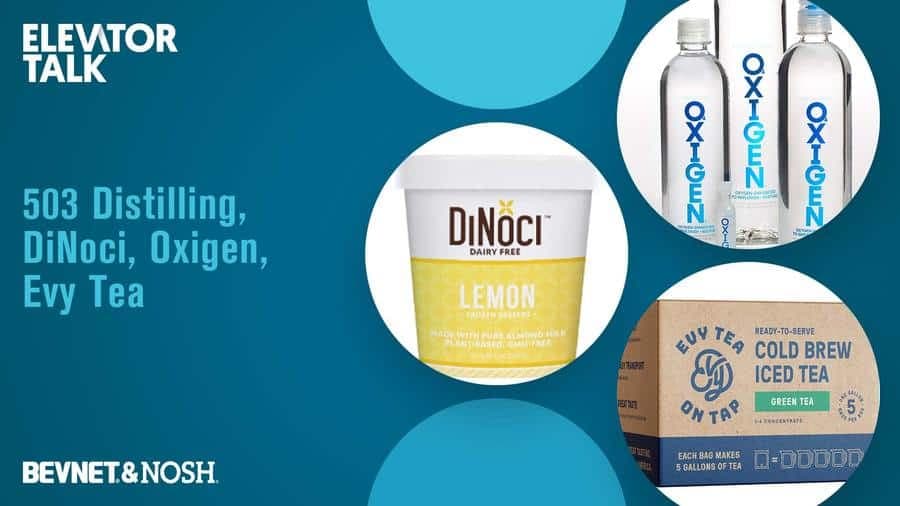
Elevator Talk Ep. 10: 503 Distilling, DiNoci, Oxigen, Evy Tea
Transcript
Note: Transcripts are automatically generated and may contain inaccuracies and spelling errors.
Ray Latif [00:19] Hey, folks, thanks for tuning in to Bevnet's Elevator Talk live stream. I'm Ray Latif, the editor and producer of Bevnet's Taste Radio podcast. Over the next 60 minutes, we're gonna be chatting with entrepreneurs from across the food and beverage industry. We're gonna be chatting about news related to their innovative brands and products. With me, co-hosting the episode is Megan Bent, the founder and managing partner of Harbinger Ventures. Megan, how are you?
Speaker 2 [00:42] I'm great. Nice to, nice to be here. Thanks for having me.
Ray Latif [00:45] Thank you so much for joining us. I'm glad that we kind of coordinated for this. You've got some gray, I've got some gray. I've got the thing behind me, this little frame picture. You've got the frame pic. Outstanding work, I think. Yes, it really is. Um, for loyal listeners of Taste Radio, you might have heard Megan, uh, on episode 64 of Taste Radio Insider. She was featured in an amazing interview about, uh, Harbinger Ventures and her investment philosophy. For those of you who are not familiar with Harbinger Ventures, Megan, could you tell us a little bit about the firm?
Speaker 2 [01:15] Sure. Harbinger is an early-stage growth equity firm focused on the consumer product space. Um, we have a bias towards working with really exceptional founding teams that take a really multi-dimensional approach to innovation. Um, they've identified a real pain. Point within their consumer segment that's emotional and functional and then translated all the way through their business model, their product, their go to market, and even their organization, um, we feel lucky to partner with really, really high quality founding teams and we work hard to be good partners, um, once we
Ray Latif [01:47] invest. What are some of the brands in your portfolio?
Speaker 2 [01:51] On the food side, we've invested in brands like Once Upon a Farm, Miss Jones Baking Co, Nona Lim. In personal care, we're invested in brands like Fresh Monster, Cora, and our most recent investment is in a home care brand called Vitruvi.
Ray Latif [02:06] Very cool. Well, I'm hoping that uh some of the brands that you see today can benefit from some advice and who knows, you might be investing in them down the line.
Speaker 2 [02:14] I'll try to be helpful. I'm looking forward to chatting with
Ray Latif [02:16] everyone. Outstanding. Once again, if you're just tuning in, my name is Ray Latif. I'm with Megan Bent. You're watching Bevnet's Elevator Talk live stream. We're gonna be chatting with 10 entrepreneurs from across the food and beverage spectrum about their new, about news related to their brands and products. All right, let's get to our first entrepreneur of the show. That's David Schlieff, who's the co-founder and president of 503 Distilling. David, how are you? Doing great. Thanks for having me on. Great to have you on. I didn't even know there was an Oregon City in Oregon. Yeah, it's actually the end of the Oregon Trail. The oldest, cool. Yeah, it's the oldest city on the, in Oregon and we have the charter for San Francisco is actually in Oregon City. We won't give it up, but very cool. I'm assuming that the 503 comes from the area code in which you're based. Uh, yep, that is correct. So we, uh, you know, wanted to make sure we had a, uh, strong connection to the Northwest and, uh, to Oregon cause that's where we started, uh, where we launched our products for the first time, so. Right on. So tell us a little about the brand and the history and uh some news that's related to your company. Yeah, so we started in 2017. We made our first canned cocktail. Uh, I kind of circled back a little bit. We, we want to get into the canned cocktail market because we felt like There, it didn't exist here in the Northwest. There, there wasn't a producer uh of canned cocktails. There were very few in the country at that time. And we felt like the liquor market was being underserved. Um, people were used to just buying vodka, rum, gin, and tequila at the liquor store. So we wanted to give them more options. We felt there's a lot more creative options, uh, you can do with a craft cocktail in a can. Um, that, that market segment was being underserved. So we started In 2017, our first product, which is the Moscow Mule, we positioned ourselves uh to have full-strength cocktails. So instead of having a, a 5% hard seltzer type of drink, we actually have a cocktail that you would make at home or buy in a bar. So it's kind of, it was our goal. So ours tend to be stronger. We have 2 drinks per can. Um, Uh, once we launched our mule, we launched our second product with a blood orange Greyhound several months afterwards, just in Oregon. And then, uh, fast forward to now, we just launched, uh, as part of Walmart's open call program, uh, this spring, we launched into Washington, Idaho, and California, and over 120 Walmart stores. And then we just launched into Kroger in Washington in 58 stores. So for doing our products. And you have a new tea-based product as well, yes? Yeah, we have our, our newest cocktail we have is called 50T. Uh, it's a It's similar to Arnold Palmer, I guess. We make, uh, we make the tea ourselves here in-house, brew it ourselves, and we add our vodka and uh real lemon juice to it, um, super refreshing, 10% alcohol, but you can't taste it, so. It's doing great. Uh, and it's kinda interesting how we developed 50T. Uh, we, part of what we do here is we don't have a co-packer. We make everything ourselves here at the distillery. We have a cocktail lounge as part of the distillery where we put cocktails on tap. And that allows us to try out our Our products on our consumers before we even launched. So 50T we created about a year ago when we started the cocktail lounge. We actually made a mojito at the same time. We thought the mojito is what everybody was going to want and 50T outsold everything 4 to 1 as a cocktail. So that became uh our next product. Threw it out to Walmart before it was even in a can, and they said, we want. So. Yeah, it's got a really, really unique path to market. So.
Speaker 2 [06:06] Yeah, it's really smart to use those consumer insights to get ahead of innovation. Uh, I'm curious, how, how are you finding sort of demand creation and, um, discovery in store right now? Are you, are you able to leverage your social channels or your authentic story really, really materially?
Ray Latif [06:22] Yeah, so we, in, in Oregon, the, the route to market is quite a bit different than it is in the other states since we're a control state for liquor, but in the new states we're going into, uh, we, we definitely leverage it through our Instagram feed, through our Facebook feed. Uh, we did have a lot of events scheduled, which have now been canceled. So. Um, but we, we do have a pretty strong following even outside of, even outside of Oregon that we were already developing through the social media that we've been doing, uh, the entire time. So, um, you know, we publish cocktail recipes, um, you know, we do some co-branding with, uh, another organization out there called The Gambler 500. So, Yeah, we've had to get creative with it. We haven't had a huge budget to spend on, on, uh, on marketing, right, so. Yeah, it's interesting, you know, you mentioned, David, uh the difference between your products and, say, hard seltzer. Megan, I'm curious what you think about, you know, the runway, the traction for craft cocktails in a can in particular and how it relates potentially to the interest in hard seltzers.
Speaker 2 [07:26] Yeah, it's really interesting. I think the spirit segment relative to beer or even wine has been relatively innovative over the past couple of years or so. It's been able to really, um, retain and grow that millennial user, whereas when you look at wine, for example, the adoption of the millennium into wine is far less than would be expected. Um, so I, I think the role of the can and driving convenience around cocktails, um, is, uh, is a long-term play. Here, um, both because of the convenience factor, also the ease and the confidence factor, um, seltzer, I think, have really gotten their lift driven by the low sugar craze. So sort of throwing it, throwing it back to 503 Distilling, I'd be interested to hear sort of how you think about long term product innovation and sort of, um, whether or not you ultimately see the brand serving sort of that lower alk, lower sugar type trend, or if you'll stay, um, really focused on a great cocktail.
Ray Latif [08:20] I think we're gonna, for now, we're gonna stay focused on a great cocktail. Uh, one of the things we've talked about doing is, um, you know, right now we use a 12 ounce can, uh, where we have two cocktails in a can cause we've got 10 to 14% ABV drinks here. It's going with a smaller can, so a single serve, uh, would be a way to get our calories down and still Um, and still offer a full-flavored cocktail. So, um, we, we'll never say never to doing a, say, a vodka soda or something like that. I mean, you know, you have to be down to 5% alcohol to get to 100 calories, and there's no, there's limited options you have on ingredients and flavors and everything else, and as well as making a shelf stable products, so. Well, David, uh, it sounds like you've got a great thing going. I hope to visit your distillery at some point in the near future. Um, and I love, I love the name of your, uh, your Arnold Palmer product. 5 OTC is a, that's a great name. Make sure we, uh, send some your way. Outstanding. David, thank you so much for joining us on the live stream. Uh, thank you guys. All right. That was David from 503 Distilling, and once again, we're on Bevnet's Elevator Talk live stream. I'm Ray Latif you're joined by Megan Bent of Harbinger Ventures. All right. Let's move on to our next entrepreneur for the show. That's Mark Samuel, who's the founder of IW Organics. Mark, how How are you? How are you doing, Ray? Thanks for having me. Great to see you. Uh, Mark, you know, you're quite prolific on LinkedIn. So I, I'm sure that, uh, a number of our viewers are familiar with I W Organics. But for those who are not, tell us about the brand. Prolific. I, I, that's a, that's gotta be a first. I don't know what, I don't know what we call it. Uh, I want Organics, uh, stands for I'm winning on nutrition. We are a salty snack. A brand that has two core products out in the market right now are protein sticks and our protein puffs. Uh, made from core ingredients like green peas, brown rice, and navy beans. They make up a balanced nutritional profile that's higher in protein, a little bit higher in fiber, healthy fats, uh, something that I, uh, I live by, and I have lived by for 20 years. All about balanced nutrition for a long-term, uh, sustainable way to, to eating. Uh, that's what, uh, the core values of our brand is, besides, uh, the big piece and the thing that brings customers back, an amazing, amazing taste. Uh, we're big and bold on flavor, and people know us for that. Uh, but the, uh, the fact that we are also organic certified, non-GMO verified, and all the free froms just makes it a really great opportunity for us in the, uh, category we're in. How would you define the category that you're in? Uh, it, it seems like you play in a sort of an interesting segment that doesn't really fit into one particular category. I mean, maybe the puffs, but, you know, how do you define your, that your competitors? How do you view yourself within that competitive landscape? It's, it's a good question. Uh, we, we talk about better for you, um, just because that's what a lot of people are talking about today, so it just makes a lot of sense. Um, but we're really, we're ready to compete with everybody. I mean, I, I'm going into this game to really take it over, uh, and so is our team. And what I mean by that is, we have figured out a way to innovate and put out snack foods that, uh, not only are nutritious, but they taste amazing. And that's been the hard piece to sort of cover in years past. Uh, so we are identifiable in the fact that our sticks may look like and feel like and taste like a Cheeto, and everybody knows what that is, right? So, uh, we just went, you know, our, our path here is really to create identifiable products in terms of, of taste and texture, but just make them really good for you. Uh, and that's, that's really, again, the foundation of our, of our products and, and will always be the foundation of our products.
Speaker 2 [12:27] How are you thinking about sort of breaking the mold outside of product and brand, and either how you go to market, or how you build relationships, um, to, to sort of build the, the brand platform. I always like to think about sort of where else you can break the mold outside of product and brand, cause that's where you really get some good efficiency in the business model. Yeah,
Ray Latif [12:47] that's a great point. Um. A lot of times, especially like how Ray sort of introed it, you know, this is a passion play for me, you know, I'm, I am a true founder in all ways, and it will be always, right? Um, and I think that I, um, I, I, I, I enjoy that. I enjoy putting out the message about what we are about, uh, regarding winning. I think people sometimes are like, well, what do you mean? Well, most people don't feel like they are winning when it comes to eating. When it comes to snacking. There are so many diets, and, and, you know, I'm the, you know, honest when I say it, it's a lot of fad stuff that's been going around for many, many years. And, um, you know, I'm a true health and fitness enthusiast, true and true. So when I talk balanced nutrition, I'm talking about sustainability, not just sustainability in terms of the core ingredients of our products. I'm talking about sustainability for life. And if I can push that message out and scream it from the mountaintop, you know, as the founder, and I have the engine to go forever, um, I think that that will be the separating point. You know, we're, like I said, I could call out a few names in our category, and I'm very respectful of them. I appreciate them. There's a couple that I, you know, that I believe still has true intent when it comes to healthier, better for you. But You know, we feel like we're going to win for all the right reasons, you know, for again, foundational points about who we are, why we believe in balanced nutrition, and why the makeup of our snacks are, are that way. So, I think it's personality, I think it's passion, and I think that that's going to be the separating drivers for us being successful in the category. Mark, um, we only have a little, a few more seconds left. Uh, tell us a little bit about where I Want Organics is distributed and sold. Uh, so we are national at supplement and nutrition shops like Vitamin Shop and GNC, but our big push and our big opportunity is where we're at now and where we're pushing hard on, which is going to be natural and conventional groceries. So we are in the SOPAC region of Whole Foods, which we absolutely love. Uh, we just launched. Launched, uh, Safeway NorCal. We are launching Sprouts National this week, and we launched Kroger East about a month ago. Uh, we have a lot of stuff in the pipeline. We have a lot of partnerships, you know, that we're, you know, excited about, specifically these ones that we're focused on now, and, you know, we're, we're ready to, you know, keep moving this shift forward. Outstanding, Mark, uh, always great talking to you. Always great hearing from you. Uh, good luck with everything going forward, and as always, please stay in touch. Appreciate you guys. All right. That's Mark Samuel, who is the founder and CEO of IW Organics. Megan, uh, are you familiar with the brand? Are you familiar with the, the, the, the two brands that we have listed so far, or you, you, I have to go check them out.
Speaker 2 [15:49] I, I like that I want is sold through nutrition supplement. I think that's a nice edge to identify and connect with your consumer really intimately as you're building the brand. It was a smart move.
Ray Latif [16:00] I agree. Uh, well done, Mark. All right. Up next is Blair Bentham, who is the founder and CEO of Oxigen Beverages USA. Blair, how are you?
Speaker 3 [16:08] Doing well, Ray. Thanks for having us.
Ray Latif [16:10] Great to see you. Oxigen Beverages, I'm familiar with the brand. Uh, you guys make pretty fantastic bottled waters and other hydration products, but I kinda gave away exactly what you were just gonna talk about, which is the brand itself. Tell us about the foundation of Oxigen, how you guys got started, and what do you sell?
Speaker 3 [16:29] Yeah, so Oxigen started in, uh, effectively January of 2016, so about a 4 year old company. Oxigen is a proprietary, uh, functional, uh, premium water in the space, uh, proprietary technology and that we're commit combining 2 02 molecules together to make an 04 molecule of oxygen that's completely stable in solutions, you're not going to lose it until you've consumed the product. Uh, we package it at roughly 100 times the amount of oxygen of regular water, bottled water or tap water. Um, the, uh, real story to our company is we undertook a double-blind placebo-controlled study at Indiana State University in, uh, 2015, uh, for post-exercise recovery, lactic acid clearance, uh, went through, attained statistical significance to that study, went through the peer review process, and were subsequently published in March of 2017 in the Journal of the International Society of Sports Nutrition. So, to be a beverage company, to have a real stuff, you know, uh, scientific study published in a major journals are really a standout for us. Um, in addition, um, when we started the company in 2016, we launched all of our packaging in 100% post-consumer recycled plastic. So, really being on the forefront. Of seeing that trend where the consumer is moving away from single-use plastic many years ago, and, uh, being the first national brand to be made from 100% post-consumer recycled plastic. Uh, we're very proud of that, and, you know, that will continue moving forward. So, we're really focused on the functional beverage market, um, you know, across, uh, all 50-state distribution in the United States. Uh, we made the transition, uh, mid-year, uh, 2019 from a wholesale distribution model to a DSD, uh, distribution model. Um, with partners like Big Geyser out of New York, Classic Beverage out of Los Angeles, Norman out of Chicago, just some, some very big partners that have allowed us to not just get, um, you know, increased space on shelf, uh, in, in traditional retail, grocery, natural specialty, convenience, drug, etc. etc. but also get secondary placement and really make the brand, uh, well-known and well presented within our retail partners.
Ray Latif [18:30] Megan, what do you think about the opportunity for Oxigen within the functional beverage market that Blair was referring to?
Speaker 2 [18:38] Yeah, I was really interested. It sounds like the scientific backing here is really rich and it's a clear point of differentiation. I think the real opportunity or or challenge, right, they're sort of equally balanced there is how you communicate that in the instant at point of purchase to a consumer that doesn't. Have the opportunity to read the full research. So if you sort of imagine that beverages a really promiscuous category with people shopping across brands and not exhibiting a ton of loyalty, I'm interested in sort of like how you've been able to distill the soundbite that really translates all that rich data into a single moment.
Speaker 3 [19:13] That's a great question, Megan. Uh, our challenge at, at, uh, retail in, in some places is, you know, clean store policies. So to your point where you can't have a ton of data to read. So, a combination of out of home campaigns with billboards, street-level, um, uh, uh, placard, uh, advertising, but also social media, social influencers. We work with a number of social influencers, micro and large scale right across the country, so that the messaging to the consumer isn't just that 23 seconds you have with them in, in, in the aisle at the grocery store, but multiple times per day or multiple times per week through different medium. So, it's really deducing it down to simple messaging, uh, about the power of the product, and it's oxygen boosted for faster recovery. So, we really stand behind the science of the product and make that messaging super clear to people, um, where, you know, oxygen doesn't typically fall into people's mindset on a daily basis, because we, we all use it every day, but this is a way to really boost yourself and get that benefit, um, throughout the day on an ongoing basis.
Ray Latif [20:13] Mm. Blair, who is your consumer? You talked about the uh study about related to sports beverages. I mean, are the people who drink your products, athletes or everyday folks who are just looking for an easy hydration, hydration solution?
Speaker 3 [20:29] Yeah, when we, when we first launched the market because of the study, we obviously had a focus on, uh, the healthy, active lifestyle consumer, the, the athlete, if you will, weekend warrior as well. But we've really migrated to being a, uh an everybody, uh, product. Uh, we're really focused as a lifestyle brand, not a sports hydration product. And so, as much as we are attracting the, uh, athletes and the healthy-minded, you know, healthy active consumers, also, every segment from, uh, teens to, you know, the soccer moms to the business executives and everybody in between. So, our base as we spend it out over the last 4 years from, you know, uh, West Coast to covering all 50-state distribution, really now targeting the product to, as an everyday use for everybody. I mean, we're water and we're oxygen, so we don't exclude anybody as a customer.
Ray Latif [21:18] Megan, I'm, I'm interested to hear what you think about that strategy.
Speaker 2 [21:21] Yeah, I was sort of, um, uh, you know, I, I have a real bias towards sort of focus, right, and, and, um, really partnering with your audience, and so one of the first things that comes to mind is, um, whether or not oxygen combined with water is is materially important for everyone. Or if the or if like the net benefits really are most beneficial to the athletes, just trying to kind of understand why go broad in lifestyle so soon. I think, um, some of the best brands are built for a core and then become aspirational lifestyles because they're so honest to that core.
Speaker 3 [21:57] Yeah, it's, it's great, uh, good point, Megan. Well, starting with the base of the consumer, of the healthy, active consumer and the athlete as we built on that foundation, expanded beyond that into all channels of retail, and a focus, because of the science behind this product, we have a, you know, 22 additional double-blind placebo-controlled studies underway, uh, for further benefit of this product, uh, through, through consumption. So, that is beyond just the active, uh, lifestyle or, or post-exercise recovery. So, having that additional data point, we're very careful on claims, obviously, as we move into market, uh, more markets, but be able to expand that, uh, reach beyond just lactic acid clearance is, uh, is in our future.
Ray Latif [22:38] Outstanding. Blair, thank you so much for joining us on the live stream. Uh, this was great, and, uh, please say hello to Bill for us.
Speaker 3 [22:43] Thanks, Ray. Appreciate it.
Ray Latif [22:45] Thanks. All right. That's Blair from Oxigen, uh, good stuff. Uh, you know, Megan, it's interesting, uh, you know, the beverage business is really competitive, really tough. Um, how often do you think about investing in a beverage, uh, brand or company?
Speaker 2 [22:59] You know, it's really competitive, it's really tough. Um, I think the risk reward profile is there, right? You know, when you, when you win big, you win really big, um, but it takes quite a bit of capital and, and grit to really, um, push through, and I, I think a lot of the competitive advantage is not only marketing and product differentiation, but it's logistics, right? It's, it's the margin to support sort of a really, um, robust go to market, so. We are cautious when we approach beverage. We're really looking for clear points of differentiation and, um, uh, clear alignment against the target audience so you can be really efficient in where you're placing and sequencing, um, or we're looking for bigger macro structural trends so we made a recent investment in wine, um, and, and that's because the wine industry hasn't really been innovated. In 500 years, you know, it's still 750 mL bottle. So, um, it feels like a lot of white space there. So I, I would say cautiously intrigued when it comes to, um, consumer beverages.
Ray Latif [23:55] Cautiously intrigued. I like that. All right, so, let's move on to our next entrepreneur for the show. That's Leonardo Cotter, who's the founder of Crazed Corn. Leonardo, how are you? Hi,
Speaker 4 [24:04] hi, Ray. Thank you for having me here and your on your show.
Ray Latif [24:07] Thank you so much for joining us. I love the name Leonardo. Do you go by the full name or do you go by Leo?
Speaker 4 [24:12] Uh, Leo, I think it is easier and fun for you to, to say, Leonardo is maybe not so famous here, maybe it's only for actors, not, not for myself.
Ray Latif [24:21] Uh, you're, you're famous enough or you will be after the show. Uh, Craz Corn, uh, you're a new brand, right?
Speaker 4 [24:27] Yes, actually, we started, uh, about 2 years ago here in Miami, Florida and the Sunny Isles here, and we started this business after 20 years of experience in South America where we have been working hard enough until a lot of crisis had, had come up in Venezuela specifically where I was born. And that great experience working with the ethnic products from South America bring us the idea to resolve all that experience into a unique product that can revive those ancestral flavors into a mainstream level that is not yet used to find those flavors, uh, and mostly on the natural business, so Uh, we took like 2 years just developing the idea and trying to make a product that would stand not only for authenticity and flavors but also even the, the, the people that was around that, that product, so Living in Venezuela, uh, we start with the most famous, uh, street food there, that is named arepa, uh, which actually is a cousin of the tortilla. I don't know if you know those, uh, products in South America, but I, I, I brought something like, like here to, to check how, how, how big it is, how thick it is, but we thought that this product was not good enough to go into the market here in USA. People, they don't need to know about super specific products or ethnic. So we, we developed a new way of cooking this product and transform those flavors and those uh values from ancestral flavors into a mainstream level with a snack. There actually is the same product that keeps the same recipe, uh, and have the same idea of, uh, authenticity, but developed into a mainstream level with, uh, different opportunities, different presentation, and actually limitless possibility of, of using. So this first, this product could be used either as a snack or as a cracker or as a cookie, whatever you wanna use, it depends on the flavor that you're gonna take it and because the, the, the, the The structure of the product, the way that it was cooked is that it's not dating near fried, so the way that it's cooked is to make a product super sturdy that can sustain anything on top, that can dip with it, or that can be eaten by itself with very good uh uh strength. So we start the business basically here in, in Florida originally, we want to understand the product, how we want, what's going in the Local markets and after 2 years developing the idea with great success locally, uh, yeah, having great partnership with Whole Foods and Fresh Market and Publix and many other great chains, we, we found that was, that was the right moment to, to go forward and trying to present this product out of the world and, and bring this uniqueness of, of grace uh for everybody.
Ray Latif [27:13] Leonardo, I'm sorry, go, please
Speaker 2 [27:15] go ahead. I was gonna say, you know, I think, I think what I, what I'm really attracted to is I, I love a good utilitarian product, right, where it's sort of multi-dimensional. It's a cracker, it's a chip, it, um, you know, that there's a lot of use cases for it. Uh, but, you know, the question that I have or that comes to mind when you're, when you're sort of inventing a new category of sorts or, or something that's a bit out of the box is, where does it sit in store, and how will someone understand what it is, and, and that's where The biggest challenges in developing new categories, so I'm just curious on that angle.
Speaker 4 [27:45] That's a great, that's a great question. And actually, those two years that we have been working locally have given us the opportunity to understand how to communicate those ideas, uh, to consumers. So packaging definitely makes a great, uh, an important, uh, communication with the consumer. So we developed. A product that definitely makes the, the consumer understanding they can use it in different ways, but also when you're going to backside, you're gonna see all the opportunities of consumption that the product may have. So that will make it easier for consumer, but definitely, when you, when you have a creative mind, you want to make some unique uh category, it will take some time for people to know about it, but social media goes very fast. And engaging with very important ambassadors would bring up the, uh, into the consumer the opportunity to see the values of the products. So, for example, having a sweet cracker is not yet known in the market. You, you, you may be used to have herbs, Parmesan, and that kind of crackers that may be very, maybe good for some products, but a little bit boring for the millennials and the new consumers. So when you're gonna have a Guava or a plantain or a coconut and you can share it with a cheese, a strong cheese, and that kind of, of sharings that you're gonna make uh pairings you're gonna make with the, with the product, that definitely will make the product to be very appealing for new consumers and the word of mouth of the product would definitely make the, the, the most important uh process of understanding the product, but definitely so far, uh. Uh, placing the products in the big supermarkets, sales have been super great, and that gave us opportunity to keep growing in some other regions. So it seems that people are, are very interested of, of trying these, uh, authentic flavors by itself.
Ray Latif [29:30] Megan, we have about a minute left. I'm curious about your thoughts on the packaging, you know, what do you think of the job that Leonardo and his team did?
Speaker 2 [29:36] You know, I'm really drawn to it. My first thought is it's like an upgraded modern food should taste good, sort of that black framing really creates a gorgeous bla brand block. The colors are really bright and attractive. It's a little too far away for me to get close to see the communication hierarchy, but it definitely draws you in, um, which is really important if you're sitting in. The, the salty snack aisle, which is really, really crowded and, um, you know, the packaging has a tendency to sort of fall over and get hidden. So, um, I, I think you did a really nice job. I'd, I'd make sure that from sort of like a base perspective, it's sturdy enough to continue to hold its position on shelf and it doesn't flop over, so you don't lose all the benefit of the, the beautiful front.
Speaker 4 [30:19] Agree. This is a great opportunity for deli crackers and snacks, so we have been placed in different areas and all of them have been really good for us, but definitely crackers and deli have been the top, the top category for us.
Ray Latif [30:31] Well, I almost jumped into my screen, Leonardo, when you were showing the, uh, chip or cracker itself. Uh, I can't wait to try them, and I know Megan wants to see the package a little bit up close, so a little bit closer, so hopefully you can send them to her as well. Thank you. All right. Thank you so much. Thank you so much. Thanks for joining us on the live stream. That was Leonardo Carter, who is the founder of Crazed Corn. Uh, really interesting stuff. I love the, uh, authentic kind of play with the, uh, salty snack category. It really makes it feel like you're actually paying for what Uh, you're paying a premium for something really tasty and, uh, fun, I think. Yeah, I think so.
Speaker 2 [31:09] I, I'm intrigued. We, we have an investment in the ethnic food space in Nona Lim, and, you know, I can say the modern consumer has this sense of wanderlust. They really are sick of, you know, mac and cheese or, or salty snacks. They're looking for new ways to upgrade those favorite habits, and so something crunchy, salty, sweet, but that feels more international might be a really great fit for a new generation of consumers.
Ray Latif [31:30] Totally. All right, folks, if you're just tuning in, this is Bevnet's Elevator Talk live stream. I'm Ray Latif and I'm joined by Megan Bent, who's the managing partner and founder of Harbinger Ventures. And we're chatting with about 6 more entrepreneurs about news related to their innovative brands and products. All right. Up next is Cathy Piccio, who's the seed queen behind Super Seeds. Cathy, how are you? I'm good. How are you? Thanks for having me. Thank you so much for joining us. Seed Queen, is that uh analogous to CEO? Well, I'm the founder. Um, I, I dabble in seeds. Um, pumpkin seeds has been my, my main focus. Um, so our brand Super Seeds is a no-shell dry roasted gourmet pumpkin seed that is peanut free, tree nut free, gluten-free, it's vegan, it's school safe, it's, it's all these great things. It's plant-based, which we were very excited to share, um, at Expo West what we. We've been doing, we made some, um, some packaging changes. So we went from our kind of plain blue sea salt, um, to a more glamorous, um, we call it the Andy Warhol package. Um, so we've upgraded our packaging. Um, and most importantly, last year actually at Expo West, um, we met some farmers from Austria. And they convinced me to, to start working with them and importing their seeds, which is very cool. It's, um, the seeds are 2 1/2 size, um, sizes larger. I don't know if you can see. That's a much more bigger more snackable seed. It's almost like a little pumpkin chip, if you will, um, I'm just the, the response has been great, but as I said, Expo West was really gonna be our, our launching pad for that. Um, we see that pumpkin seeds, um, well, most people don't realize that pumpkin seeds are the most nutritious of all nuts and seeds. Um, high protein, your complete amino acids, 42% protein than almonds, 258% more iron than peanuts, and 322% more magnesium than sunflower seeds, um, which has led pumpkin seeds, um, into some, you know, big players, some athlete teams that are using superseeds as a recovery snack because of that high magnesium, um, clean protein. Where are your products sold? Uh, cause I, I've seen them, uh, in various places in my area, but, uh, are you regional or national at this point? So we're a national company. So locally you're Boston, so, um, Big Y, Stop and Shop, uh, Wegman's, we're in Publix, so we're, we're national. Uh, Megan, you know, what do you think of the positioning of superseeds in terms of being a pumpkin seed for type product and the sort of communication that you just heard in terms of uh the benefits of the seeds?
Speaker 2 [34:24] Yeah, I think, I mean, that, you know, plant-based, nutrient dense, and really even sort of refining that further to the most nutrient dense, um, clearly is spot on with some consumer trends. One of the questions that I had is, you know, how do you really differentiate, it's, it's, uh, inherently Sort of a commodity-based product and so, you know, long term, how do you create some barriers to entry or, or a moat really around your offering, um, sort of the supply relationship with it in Austria to really um sort of develop a value add type product.
Ray Latif [34:56] Yeah, so I think when most people think of pumpkin seeds, they think of the ones out of the jack o lantern, um, the big white ones. Um, these are no shell and these Austrian ones are actually grown, born, born without shells is what we're calling them. Um, it's a really specific type of pumpkin seed and we're the first to market. With these guys, so we're right now currently I believe the number one gourmet pumpkin seed out there and you know we pride ourselves in small batches, um, and to have all those those qualifications of being allergen free, um, gluten free, vegan, I think really gives us a leg up on most brands. The name Supersedes, um, it's, it's a really good one. how long, how long was that in development? I'm curious because I, I have a feeling there are probably other people interested in using that kind of a brand, using that kind of a name. Um, how do you snag that? Well, I snagged it a long time ago. I trademarked it. Um, we, we did have a little pushback, um, on a couple of, um, fronts, but we, we've won. And right now with the brand Super Seeds, right now, we've only been pumpkin seeds, but we're really looking to launch into other seed products. We're super excited about it in different formats of seed proteins and flowers, and we have lots of stuff we're, we're cooking up. Megan, how important is that brand name to you as an investor? And, you know, I've heard some investors say, don't ever put the product in your brand name. How do you feel about that?
Speaker 2 [36:21] Yeah, it's a great question. So, I think, you know, getting your IP locked up is important to, um, to an investor, because as you really start to build equity into that brand name, you want to make sure you really own it, and snagging something that sort of has, um, some real value to it, I think is a plus. Uh, there's great examples though of brands that were built with. Names, but they're great products and so it's not the be all end all, but you've got a good name, you're sort of smart to really start to lock up that IP, um, I do think there's long term, there can be long term challenges or restraints when the product name is, um, or the ingredient is in your name. The concept of seeds is broad enough that you probably have quite a bit of room to run with it. Um, I think it's more challenging when it's really ingredient centric, um, because if the opportunity isn't large enough or the traction isn't there, um, it's harder to develop or pivot outside that category without really having to restructure a lot of the brand essence. So, um, I think Supersedes gives you enough, uh, enough to work with there.
Ray Latif [37:22] Yeah, I'm busy. Great stuff. All right, Cathy, thank you so much for joining us on the live stream. Good luck with everything going forward and, uh, great work on the rebrand. Appreciate it. Thank you guys. Outstanding. All right, uh, once again, you're watching Bevnet's Elevator Talk live stream. We're gonna keep going with our next entrepreneur. That's Eric Rievich, who's the CEO and co-founder of Denochi Natural Foods. Eric, how are you? I'm doing great. How are you? Very good. Did I pronounce your brand name correctly? Yes,
Speaker 5 [37:50] you did.
Ray Latif [37:51] Denochi. Denochi. So, uh, what do you guys do? What do you sell?
Speaker 5 [37:54] So, we've got a, uh, dairy-free ice cream, plant-based ice cream. Um, the genesis of that goes back to my co-founder, uh, Scott Emerson, who has been plant-based for many years, and he was, uh, pretty frustrated with the options available to him in the ice cream space. Um, figured he would, he could do a better one, and he set out to do that. It took him, uh, a little longer than he was expecting. It ended up being about a 3-year project, but it was really important to him that he, he used really premium, uh, high quality ingredients, and he wanted to skip a lot of the other stuff that gets put into ice creams to make them, uh, more scoopable or, or have different features. And so, uh, he did it without gums, without additives. It's a very clean ingredient list, very focused on, on the quality of the ingredients. He decided to use almond milk instead of Uh, coconut milk, like many others do, um. Uh, which is a little bit more expensive, but he really liked how neutral the flavor profile that was. So, that's what got us, got us going. I met Scott a couple of years ago, and, um, initially as an investment opportunity, actually, and, and I was pretty blown away by the product. I did a little market research and, uh, said, hey, why don't we go do this together? And, and so I'm running the business side and he's running the product side, and, and we're off and running. We, uh, went into Whole Foods last year in Colorado with uh 4 skews. Uh, expanding that to 7, with this reset and uh looking to, to grow the door account as well.
Ray Latif [39:21] Outstanding, and you got some new flavors as well, right?
Speaker 5 [39:23] We do, we do. We just, uh, we just launched a vanilla bean, espresso chip, cookies and crema, and cherry crisp. So those are our 4 new flavors. We're adding that to salty caramel, chocolate, uh, lemon, and mint ganache.
Ray Latif [39:38] I really wanna punch myself in the face. That cherry crisp sounds incredible, Eric.
Speaker 5 [39:42] I'm gonna send some over to you after we're done here.
Ray Latif [39:44] OK, thank you very much. Um, Megan, you know, ice cream, an expanding set, a competitive set, uh, what do you think of Deochi?
Speaker 2 [39:53] Yeah, there's been a lot happening in this, in this space, um, recently, either on the lactose-free dairy side or or plant-based alternatives. I, I think it's really gonna come down to taste, you know, when plant-based really started to take significant share from milk, it was kind of when price and taste really intersected competitively with milk in the broader. Trends in yogurt and ice cream, sort of like the consistency has been such a challenge, um, but it, it sounds like you've got great products, they're really well named, and that consumer segment is significantly larger than it was 3 years ago, um, as most people have added a plant-based alternative to their fridge. So I, I think your audience is prepped and ready to try something new.
Speaker 5 [40:37] We think so as well.
Ray Latif [40:39] Um, on the dairy-free side of things, um, you know, do you see it as a long-term trend, Megan? I mean, you know, right now, it's, it's, it's hot as, uh, anything is in terms of the food industry, but, uh, you know, in the ice cream set, do you see it as, uh, do you see it having legs?
Speaker 2 [40:53] I think so. I mean, I think it's more of a trend than a fad. There's, um, there's been real significant dramatic household penetration and sort of a sustained penetration over a long period of time, which really suggests people are adapting, incorporating it into their household. I think the second thing that you see is, um, a, a flexitarian in nature, so most households have both, and I think that also speaks to it being more of a trend than a fad. Um, they've rebuilt their refrigerated sets, and so I, I bet on plant, um, plant-based long term, similar to how you've seen, um, sort of gluten-free, just incrementally penetrate people's lifestyles in different ways, not necessarily, you know, singular brands, but just more broadly in terms of how people consume.
Ray Latif [41:37] Outstanding. Great feedback. Great pitch. Great to meet you, Eric, and uh good luck with everything going forward. Thank you.
Speaker 5 [41:43] I appreciate it. Appreciate your time. I did my, uh, marketing, uh, team would be, uh, remiss or I'd be in trouble if I didn't mention that we're launching our e-commerce today, as a matter of fact. So Denochi.com, you can, you can come order some now.
Ray Latif [41:58] Uh, talk about a great, uh, URL Denochi.com. All right. Great stuff. Thanks, thanks again, Eric. All right. Uh, I love me some ice cream, and man, I, that cherry crisp really does sound great. Are you a big ice cream eater,
Speaker 2 [42:09] Megan? Oh yeah, and cookies and crema, that, that, that's the one that really got me thinking like, mm, that sounds good.
Ray Latif [42:15] It does. The crema. Oh my gosh, I actually, I like the name too, cause you always just hear cookies and cream, right? But cookies and crema,
Speaker 2 [42:21] yeah, it piqued my interest a little bit.
Ray Latif [42:23] Yeah, you don't hear that very often. All right. Up next, our entrepreneur who is appearing on the live stream is Nyre Baar and Mack, who's the founder and CEO of Alta Goods. Nyre, how are you? I'm well. Hey, how are you guys? Great to see you. Uh, jeez, it feels like it was a while back since you came into the office. When was that? Was that in February? It was in February. It seems like a lifetime ago though. So much is, so much has happened. It really, it really does. Uh, but I was pretty blown away by your products when you did come in, and I'm so happy that you had a chance to join us in the live stream. Tell us about Uta Goods. Well, um, Alta makes, uh, healthy and delicious infused, uh, foods infused with, uh, full spectrum hemp extract. Um, the brand was born out of my passion for cooking and making tasty food, um, but it's also, um, for my belief in the need for transparency in consumer goods. Um, the hemp-infused, infused food and beverage space is an emerging, rapidly expanding market. Um, it's expected to grow to about $2.3 billion by 2025. Um, there are some definite trends, not only towards, um, sustainability and traceability for hemp products, but also for healthier options. Um, and we're excited to be a first mover in the functional food space for CBD products. Um, one of the things that AA believes very strongly in is ingredient sourcing. Um, it's incredibly important not only to use, um, organic full-spectrum hemp extract, Um, but also, we're excited to work directly with Vermont hemp farmers who use organic and sustainable growing practices, um, which is a really important thing these days to think about. Um, but while it's important that our ingredients are sourced really well, it's also important that the bits taste good. Um, so we use whole organic ingredients that you can actually see, um, like pumpkin seeds, quinoa, sesame seeds, um, and oats. Um, we don't use any refined sugars, uh, flavor additives, artificial preservatives. Um, uh, Altavis are, uh, full of flavor, um,
Speaker 2 [44:34] really complex layers of flavor.
Ray Latif [44:36] Um, they pack a lot of nutrients, um, from whole ingredients. Um, they have a tahini base, which is super unique. Um, and it gives them, uh, a really interesting, uh, flavor profile that can go either savory or sweet. Um, and it gives us a lot of really fun flavor combinations, uh, to play with. Um, our, our, we launched, uh, with three flavors, um, sesame, honey, um, turmeric and ginger, and rosemary and fig. Um, we launched in February. As you mentioned, and uh, we've had a great response regionally, um, in independent health food stores, um, and grocery stores in New England, and we're really excited to expand, uh, to more retail stores nationally as
Speaker 2 [45:21] well as expand our online presence.
Ray Latif [45:25] Again, uh, you know, in terms of the opportunity for, uh, CBD infused food, um, you know, we've just over the past year, we've seen so many brands come to market and so much information as I described about the potential for the market. I'm curious about your thoughts for that segment.
Speaker 2 [45:42] Yeah, it's, it's a great, it's, it's a super undeveloped opinion, um, that's sort of probably tracking with the development of the category here. I think what's being sort of negotiated live between different brands, business models, and even the consumer is whether CBD is most interesting and effective in the supplement space, sort of as a daily dose, um, or if it's most, um, accessible and valuable. As an ingredient where it's like microdosed over the course of someone's diet, um, and, and I think the consumer just doesn't know yet, um, in terms of which, which they're going to prefer, and, and some of that I think will drive the long-term trends around it. What I really do appreciate about your approach is how disciplined you're being around the sourcing, um, you know, given how fast, uh, CBD has taken off, um, it's a bit. Of the wild wild west right now and all, all CBD is not created equal and it's going to create challenges from a regulatory perspective and health and safety perspective that are gonna create broader headwinds for the ultimate negotiation of where CBD belongs in the consumer space. So, um, your approach is smart, it's prudent, um, and, and sort of knowing the quality back to the source, I think is, is critical, um. You know, one comment I'd have for you is you launched just in February is one of the most valuable, um, research periods is when you're able to demo the part, the product at the farmers' market or in the store and really ask about the flavors and see what they're attracted to and sort of ask live, like, would you like a blueberry or are you interested in a chocolate, to sort of make sure you have that that assortment just right, so that it's um both speaks to thee. Of your brand but it's broad enough for the consumer base, um, and my one, you know, first comment is in yogurt, vanilla, blueberry, and strawberry are must-haves and in bars, something with chocolate peanut butter probably needs to be there eventually or you're missing half the market and so I'd kind of keep your ears open and, and make sure you're delivering on the, the flavors that people really want at a broader level.
Ray Latif [47:43] Thanks, that's really good advice. Yeah, we've, um, we've had some interesting challenges, um, you know, where we, where we can't really go out and, uh, and sample products, um, like we were scheduled to do. We had so many, uh, sampling events, um, scheduled for, uh, for March, April, and May. Um, but I, I, but point taken, I do have chocolate on my horizon, for sure. I've got a lot of questions about that. Um, so, you know, it's, it's, it's happening. It's in the works. That's great. Well, Nire, I encourage you to send some product to Megan. Megan, these are pretty phenomenally tasting products. We were all blown away. try them. Yeah, they were, I would love to send you some. Outstanding. All right, Nyre, thank you so much for joining us on the live stream. Good luck with Everything going forward. Uh, I know it's, uh, it's, it's a tough road, but, uh, you're off to a great start. Thanks and thanks for having me. All right. Good stuff. All right, we'll keep on with the live stream. Up next is Santiago Stacy, who's the CEO and co-founder of Liv Kuna. Santiago, how are you? Hey, Ray, how are you? Thank you for having me. Great to see you. Uh, Liv Kuna, tell us about the brand. Well, Leafcuna is a superfood company. We create uh superfood products across different categories and we make products that are basically healthy, tasty, and do good. So we focus all our business in essentially three things, traceability, sourcing directly from farmers, so we actually partner with the farmers in Ecuador. Uh, it's a company that uh started in Ecuador with my good friend Carlos and I. And we source directly from, from the farmer, farmers. Uh, the second thing that it's super important is, uh, innovation. So throughout this whole time we've created an array of different products in categories like, you know, your, your regular chia seeds combined with probiotics, uh, your cereal combined with quinoa and chia into a healthy puff or kuna puffs, which is a snack made of Quoa and chia, um, that comes in three different flavors and it's non-GMO, it's gluten-free. Two of the three flavors are vegan and basically it also gives back and that's the third piece of the puzzle in, in our company. It's, it's the creating impact while also, uh, creating healthy and tasty products. You have a new line of products coming out pretty soon as well. Can you tell us about those? Yes, uh, so we extended the line of CUNA Pop's, uh, salty snacks into the sweet snacks. Uh, we realized that people want to indulge, um, they, they, they want a, a healthy, uh, indulgent product that Also meets with their needs, uh, superfoods in a healthy and tasty, uh, format, and we're adding basically a line of the CUA pop snacks, the puffs covered with chocolate, uh, vanilla, and peanut butter. Those sound pretty amazing. Uh, taste, authenticity, giving back, all these things seem like they're so on trend for consumers and for investors. Uh, Megan, what do you think of Liv Kuna?
Speaker 2 [51:02] Yeah, I love the mission orientation. I think it's um really important to have a perspective these days, whether it's a um explicit mission or sort of an implicit way you do business. Um, you know, the, the question that I have is sort of the, the innovation mindset can lead you to do a lot of things, um, not equally well, and, and a lot of times the way we think about, um, Optimizing innovation as you start by being really good at something, right? And so you become famous for something and then you listen to where the consumer takes you next, um, and so I'm interested if you've got one product that does 80% of your revenue and you're really driving scale through that and that's your platform, um, or if you're sort of truly seeing the ability to diversify so broadly so early, it would be possible but it's rare.
Ray Latif [51:51] Exactly, no, and, and very good question. We started with chia seeds actually, and that has been kind of our bread and butter, uh, but we've innovated, uh, throughout these years, and when we, you know, we, we've, by innovating is also combining what's trendy but Also listening to our customers and our customers have asked us to, you know, create a product that combines chia and quinoa in an, in a, in a, in an easier way to consume it and so it's kind of a response towards, uh, a consumer need. Um, we are focusing right now in 100% keep launching a line of Kuna pops, but also, um, you know, attending the needs of our customers in other categories. Outstanding. Santiago, uh, you know, you and I have have chatted and, and talked, uh, back at the, uh, Summer Fantasy Food show. I think it was the first time we met, uh, a year or so ago. Yeah. Uh, I love what you're doing with the brand, and, uh, please stay in touch. It's so great to see you on the live stream. Will do. Thank you for the invite. All right.
Speaker 2 [52:56] Good to meet you.
Ray Latif [52:57] Great stuff. All right, let's move on to our next entrepreneur. That's Evie Chen. Evie Chen is the founder of Evy Tea. Ebbie, how are you? Hey, Ray, how's it going? Good to see you. Good to see you. How, how are you doing? How's Ebby? Uh, Evie's great, crazy. It's, it's, it's an interesting period of time. So Ray and I have known each other for a little while. We're also based in Boston. Uh, we're a Boston-based cold brew iced tea company. So my name is Evie. I'm the the founder and CEO of Evy Tea. Uh, the story of Evi really is my life story. Uh, we're an immigrant woman-owned, uh, minority owned company, and I left China where I was born in 14. When I was 14, I was a little bit too much of a, uh, I didn't really listen as much as, as others would like me to. So my parents figured, you know, get me out of trouble, get me out of China. So when I landed here in the US, a lot of times when I will look, go to the shelves and look for the teas that I'm used to drinking when I was growing up, such a big culture, part of my culture, um, everything I could find was just sugar water. So as a consumer, I was very frustrated about that, the fact that. There's no representation of what tea truly can be, and the iced tea industry really hasn't been innovated in the past 100 years. Um, everything is sugar plus water plus tea flavor. Um, so Evy Tea was born out of that need in 2014. Uh, we're in 16 ounce glass bottles, um, as well as our brand new, uh, line of product, the food service back in the box. Um, so we're currently in about 38 different states across the country, but. Where we find our performance really shined is that our consumers listen and they follow my journey and they, they, they fall in love with the story of EBY and they just follow, follow the product everywhere they can find it and where we do the best for restaurants and food service. So following that demand, we signed with a pretty sizable distributor, um, and we're about to launch back in a Box for food service and then the COVID happened. Well, uh, as you mentioned, Ebby, we've known each other for some time and it's been great to see the development of the brand. Um, Megan, you know, there's, there's a lot to unpack here in terms of the opportunity for cold brew teas, but also I'm interested to hear your perspective on founder-led stories or founder-led brands and how much of an impact that has, uh, for the end consumer in terms of buying and then repeat purchases.
Speaker 2 [55:17] I, I think that why, well, all of our businesses are, are founder led, and so I, I'm biased when I say this, but I think it's one of the greatest competitive advantages a small brand can have, um, you know, formulations, research, insight, resources, large companies have us beat every. Single time, but authenticity, speed to market, and the ability to connect the product back to a core story is not replicable. Um, and so if, if that, if that story is resonating with your consumer, then you've got the right product story fit and, and you're off to the races.
Ray Latif [55:52] And the, you know, Ebby was talking about how she was sort of disappointed by the options in uh tea when she first came to the US, um, you know, in terms of the opportunity for cold brew tea, we've seen a new, a few new brands come to market. Um, you know, what do you think about the, the space and the segment and the opportunity for it to scale?
Speaker 2 [56:11] Yeah, I've been really interested just to understand, you know, on the hot tea side, you've seen, um, an acceleration of adoption. There's sort of a generational shift, um, towards a broader assortment of tea, higher increase in usage of tea, and I've been waiting to see that translate into ready to drink, and maybe it's because the right product hasn't been there, the right value proposition hasn't been crafted, but it feels like some of the parallels that existed in cold brew in terms of a better, better. Delivery mechanism for caffeine exists in tea as well, um, but I think it'll come down to the fundamentals, availability, price, and the ability to explain what the value add is. Um, so I think that the opportunity is ripe for disruption and the margins on tea are fantastic, and so that should leave the company with the ability to sort of grow and adapt profitably where it can get the product placed. Um, I think food service, um. Is smart long term. It's, you know, a challenge short term, but, um, that's a distribution channel that's so antiquated and consumers are so frustrated when they're out and about shopping, looking for healthy options, and so if you've got good relationships there and can maintain the brand equity aspect, could be a really interesting avenue once it gets back online.
Ray Latif [57:23] Great feedback, great insights. Uh, Ebby, like I said, you know, it's so great to see you. Uh, I hope everything's well with you and your family, and, uh, please stay in touch. Sounds good. Thanks, Rick. Good to see you. All right. That was Evi Chen, the founder of EET. It's great stuff. Megan? We hit 9. Are you ready for 10? I'm ready. All right, let's do it. All right. Our final participant of the show, of the live stream, is Becky Graham, who's the co-founder and CMO of Little Gourmets. Becky, how are you?
Speaker 2 [57:52] I'm great.
Ray Latif [57:52] Thanks for having me today. Thank you so much for your patience. I know you've been in our, uh, waiting room for some time right now, and I'm really excited to hear about Little Gourmets. Yes, thank you. Lucky number 10.
Speaker 2 [58:03] Um, Little Gourmets is the first fresh organic veggie meal for kids. Um, 100% of our recipes feature veggies and beans, and we combine them with really nourishing ingredients like coconut milk and chef crafted spice blends, so that we can make a truly delicious, um, globally inspired veggie meal that little ones, and even adults love. Um, you know, we know, and it's been proven that our first foods greatly impact our future eating habits. And so our mission is to really help kids fall in love with vegetables, and also, uh, cultivate a curiosity for flavors and cultures from around the world. And so, you know, our vision, we,
Ray Latif [58:44] we
Speaker 2 [58:44] imagine a world where kids will request a vegetable curry more often than a mac and cheese.
Ray Latif [58:51] Uh, that's a, that's a big ask nowadays. I hope we do see that down the line. Um, how do you get folks to, how do you, how do you get kids to buy in? I'm curious, uh, you know, that seems to be the biggest question you have.
Speaker 2 [59:04] Yeah, you know, it's one of those things where, you know, our, when we're our, you know, both my, my co-founder and I are moms. And when you're pregnant, our kids are eating everything that we're eating, when we're breastfeeding, they're eating everything that that you're eating. And it isn't until we start to feed them their first. Few foods that we feed them really pretty bland, sugary, because they tend to be very high in fruit, processed foods, and we wonder why they're picky toddlers, we wonder why they, they, you know, they struggle finding those, those flavors and those savory foods to love. So, you know, we, we are, uh, you know, part of the new science and the new research says there's, there's no reason why foods need to be bland. And in fact, it's, it's a learned skill, and we need to teach them. And, you know, one of those things. That we really struggled with when my founder and I came to market is, and, and became moms, is that there were really no options that were homemade recipes, vegetable focused, and full of flavor. So it's, it's just begged for us, you know, we're both, you know, long term CPG, um, uh, industry folks, that we knew there was an opportunity to truly teach our kids with delicious, incredible recipes, all based on vegetables. Yeah, I mean this is a category and a mission that's near and dear to my heart. Um, I, I, I think we sort of share a vision that there's so much opportunity to transform how children eat, um, and parents are really sort of desperately looking for those convenient solutions. Um, how do you really think about sort of long term distribution? Where are you meeting your mom and your dad, and how are you communicating that benefit, and how do you teach them the patience to stick with it when the kid sort of pushes back the first time, maybe accepts the second time. I, I know you know this challenge well, um, you know, it is one of those things though, that, that because as parents, our tastes and our, um, you know, our desires have changed, you know, organic, nutritious, shop in the perimeter, you know, this is what our parents are choosing for themselves. They aspire to that for the, for that, for their kids as well. And so what we find is actually once people discover us, I mean, our reviews, and our repeat rate are, are absolutely incredible. And it's, it's because they discover that I can find something that is truly delicious. And my, my child, if I, if I start early, will accept it. And, you know, it, it is, right? It's, it's, it's like they say like learning a bike, right, or learning to walk or riding a bike, um, learning a new skill. It does take that repeated exposure. But it is true, if you start in those early phases, um, you really have the best chance to have them be lifelong healthy eaters. But that being said, you know, there's a flavor for everyone, um, and that is why actually our news is we have um launched two new flavors. And so we now have a Assortment of 6, and there is a flavor and a cuisine for everyone, so we actually represent 6 distinct global cuisines from around the world. And you know, not everyone is going to love an earthy beet, but our cinnamon, beets and apples are delicious, um, and an older child might love the complexity of our pumpkin, navy bean shawarma, you know, it's fantastic, um, with as a, as a dip or with other types of foods on the side of the plate versus, you know, center of the plate. And so there's really a lot of opportunity to, to leverage.
Ray Latif [1:02:19] Different ways
Speaker 2 [1:02:20] and to try and find those ways to help parents accept, you know, and the kids accept.
Ray Latif [1:02:25] I just want to eat the gazpacho right now. I'm not, I'm not even gonna give it to my kid. That, that, that, that should be something incredible. It's incredible. We actually, um, you know, have been sharing this, you know, broadly
Speaker 2 [1:02:35] as, as our new flavor, and
Ray Latif [1:02:36] we
Speaker 2 [1:02:37] have folks who have put it over breakfast tacos. It
Ray Latif [1:02:39] is
Speaker 2 [1:02:40] absolutely incredible, and 90% vegetables, extremely low sugar, and then, you know,
Ray Latif [1:02:46] it's just great all
Speaker 2 [1:02:47] around.
Ray Latif [1:02:48] Yeah. You're killing me, Becky. Come on. I'll send you some, Ray. I'll send you. No, no, no, that's not a call, but I, I would like to try it. But, uh, no, I, I think you've done an amazing job, and I do hope that we do see a day one day when kids are asking for vegetable curry a lot more than they are for plain old mac and cheese.
Speaker 2 [1:03:06] That's right.
Ray Latif [1:03:07] We can do it. We can. Great stuff, Becky. Thanks so much for joining us on the live stream and uh good luck with everything going forward. Thank you.
Speaker 2 [1:03:13] Take care.
Ray Latif [1:03:14] See you. You too. Well, Megan, for your first slide, this has been so much fun. I think you've been getting some fantastic, fantastic feedback, fantastic advice, uh, you know, in general, you know, what do you think of, uh, the, uh, innovation that you saw today?
Speaker 2 [1:03:30] Really great insights out there, um, and I think overall people are sort of really focused on the good opportunities and fundamentals and showing good focus, um, you know, for, for an early founder, if you're getting a business off the ground, I think chasing shiny objects or sort of letting your retailers drive your innovation is the biggest risk. You just wanna keep listening to the consumer, stay focused, stay execution oriented, um, and sort of move quickly to, um, To, to learn, um, as capital efficiently as possible, and it seems like the group's really working on that.
Ray Latif [1:04:04] Well, it definitely does, and I'm excited for the future of the food and beverage industry and every single time we do one of these things because as you mentioned, these founder-led brands are the ones creating the new landscape for our industry. So, exciting times, exciting stuff. Uh, for people once again who didn't have a chance to watch us at the top of the show, how do folks get in touch with you, uh, you know, and what kind of, uh, advice do you have for them about, uh, sending you guys products if you wanna try them?
Speaker 2 [1:04:30] Absolutely, yeah, we, we really welcome the opportunity to support the ecosystem, um, meet new founders, and we really like doing it well outside of a capital raise. Um, you know, I always say capital is one part transactional and one part relational, and so if you wait till you need the money, you lose the best part of the, the opportunity, which is building great relationships. So reach out through our website, um, we'll, we'll coordinate ways to, um, chat, share product or feedback, and, and if I don't have good advice, I'll try to find somebody that does.
Ray Latif [1:05:00] Well, that's great advice as it is. So thank you so much, Megan, for everything. Um, we are gonna be back here, uh, next Wednesday, May 13th at 3 p.m. talking with Uh, another well-known, uh, investor in the industry. Stay tuned for that. We also have our Office Hours interactive streaming program that's gonna be, uh, next week, Tuesday, May 12th, also at 3 p.m. Stay tuned for details on Bevnet and Nash. Until then, it's been great seeing everyone, great talking to everyone, signing off for Megan Bentz and our amazing team at Bevnet and Nosh and Taste Radio. I'm Ray Latif. We'll see you next week.