Search across the BevNET CPG Media network including BevNET, Nosh, Brewbound, Taste Radio, Nombase and CPG Jobs.

Taste Radio Studio featuring ZoomEssence, Skinergy & KA-EX
Transcript
Note: Transcripts are automatically generated and may contain inaccuracies and spelling errors.
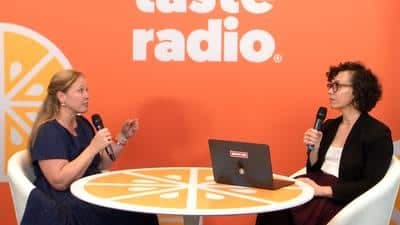
Melissa Travers [00:39] Hello everybody, I am Melissa Travers, director of community here at Bevnet. I am also the host and producer of the Non-Base podcast, and I am here today in the Taste Radio live stream studio with Joe Santeti, SVP of sales and marketing at ZoomEssence. It is so great to have you back here again. I think the last time we did this was at last Bevnet Live. Yeah,
Speaker 2 [01:01] it was last year this time. It was great. It's thank you for having me. It's great to be
Melissa Travers [01:04] back. Well, I'm glad we're making this a tradition. Um, so ZoomEssence, you guys design and manufacture flavors, and I was looking around on your website and I see Zooming technology. That sounds very futuresque, like a little bit of the Jeffersons or the Jetsons. The Jetsons, can you tell us all about what is zooming
Speaker 2 [01:27] technology? So zooming technology is our patent and proprietary drying process. I think the vast majority of the flavors you see in the marketplace today. Um, in powder format, use traditional high temperature spray dry systems.
Melissa Travers [01:40] Can you explain that too?
Speaker 2 [01:43] Yeah, I mean if you want to take a liquid and convert it into a powder for purposes of doing a ready to mix product or any type of powder based, maybe a topical for a chip or something like that, you would typically create a slurry, spray it into a tank, heat it at close to 400 degrees, suck out the moisture, and at the bottom of the tank you typically would have your flavor powders. Anything that you expose to high temperatures like that are going to have an impact. There's a lot of volatile materials, highly aromatic materials that are in flavors that when you expose them to high temperatures, they're going to flash off. And so what our zooming technology does is it enables us to convert a liquid to a powder using a low temperature spraying system. So essentially what we're able to do is dry at ambient temperatures, which is closer to 90 to 110 °F at the inlet temperature, which means the temperature in the tank never even really gets to that level. So with that, the benefits are you typically are not going to see all of those volatiles flash off. So a lot of the starting liquid materials you're going to see in powder form. So I'd say even here at Bevnet right we have a lot of ready to drink beverages and that's what a lot of the market is launching now in quick formats and I'd say the vast majority of them are probably using liquid flavors in that because liquid flavors traditionally over time has always been superior to powder flavors in large part because They're exposed to high temperatures. They flash off the volatiles, and so. You're not going to have nearly the quality and and and and also because they're not soluble they'll tend to raft. That drying process itself creates something within the particle structure that creates a lot of surface soil and a lot of fissures within the particle. And so when we dry, we're able to actually able to dry from the outside in so the particles look like a shrunken golf ball and solubilize instantaneously. So we actually use our flavor delivery format and our zooming technology. In ready to drink beverages as well as ready to mix, which creates a lot of other benefits for beverage brands who like to go back and forth between a ready to mix format or a ready to drink format.
Melissa Travers [03:52] You explained that so perfectly well. That's fantastic. I'm picturing the golf ball. So, and so for the folks in our audience, if they're wondering if it would make sense for them to reach out to ZoomEssence, are there particular kinds of formulations or beverages that make the most sense? How would someone know if it would make sense to reach out?
Speaker 2 [04:12] Well, I mean, if they're doing a ready to drink at all, it would make sense. I mean what we do covers and we have a full beverage team. Um, that does turnkey beverage development so we can do anything from we have a microthermics unit which if you don't know what that is, um, it's a piece of equipment that you can do, um, uh, high protein types of ready to drink applications. So it's, it's indirect steam. Um, type of process that you would need um in order to to actually stabilize and to actually um make that type of product in the market so we can do tunnel pasteurization, flash pasteurization, any type of retour coffees. Um, our team has the ability to do all of it and we use powder flavors in both types of applications, um. I mean, the hardest part for us when we're talking to other brands is to get them through that change management of switching from using what they've always used, which is liquid flavors in lieu of powders, because they always perceive them to be inferior. When you start to walk them through the science behind it and they start to play around at the bench, they start to recognize the significant value and benefits, and I'll give you some, right? The 11 of the downfalls of liquid flavors are they're heavily solvent-based. Solvents are what they use in flavors to get them to solubilize in a in a in a beverage. Well, if you're 80 to 85+% solvent, that's a lot of water to ship all over your flavors all over the country. So from a sustainability perspective, from a shipping cost perspective, from a storage and material handling, there's a lot of benefits if you could switch to powder. So the, the argument would be, well, but I'm not going to take my high quality product and go with an inferior product. So what if you could literally switch to powders and not affect quality and get all those other benefits and I think as we've worked with more and more brands and you know we started here at Bevnet 10 years ago plus and um as we start to work with brands as they mature and they start to get their own development teams and they start to play around with it, they start to see the true value in it and I think that transformation is really starting to take shape faster. Um, because some of the bigger players are talking about wanting to use powders instead of liquids, which is pretty remarkable. Yeah,
Melissa Travers [06:28] I mean just for the shipping from the shipping perspective alone, that's certainly not getting any cheaper and if you can achieve just the same or an even better quality flavor as you can with a liquid, then that makes it a no brainer. So whether you're an RTD beverage or maybe you're in a stick pack, if you're a powder, it makes sense. You and I were talking a little bit about Clean labor, clean label flavors and and especially with the current administration and with what everybody's talking about seeing come down the pike, what you know, whether it happens or not the way that we think it is, um, I think that there's a lot of confusion around what clean label flavors really are. What makes it clean? Like what's the line between clean and not clean?
Speaker 2 [07:11] So that's, that's such a, I'm not gonna say a rabbit hole, but it's such a good question of, I mean. I think consumers always look at flavors and think that natural flavors, because they come with all of these chemical compounds that are hard to pronounce, make them not real or make them bad for you, and they're all extracted from natural materials. So from an impact on the consumer, there's nothing wrong with using a natural flavor, and that's unfortunate. I think the clean label is your carriers and some of the others and how you formulate, and that is dictated by the brands and what their definition of clean label should be. I mean if you asked our regulatory team they would probably say anything you could find in your cupboard is defined as clean label, right? If you can eat it and it's something that would be in your cupboard at home, that should be clean label Maltodextrin, it's commonly used, you know, so those are things that I think are defined by the brand. Uh, our team will design to whatever their requirements of the brand are, and if they want clean label, we ask them what their definition of clean label is, and then we create around that because that's the important thing. It's, you know, I think there's this movement of sometimes I don't want flavor on my label, and it's like you can go with extracts and oils and oleoresins, um, and they'll be fine or just juices, and they'll be fine, but the beauty of flavors is and natural flavors in particular. is that it creates so much more tonality and complexity in the flavors that you really need to drive consumer preference that I think if you go with a single dimensional oil or olor resin, while it could make a nice tasting product, I think there's a lot to be said about what you can do across the broader spectrum to create these these pretty specific and Incredible flavors
Melissa Travers [08:54] and you know, especially if you're using functional ingredients, you're trying to minimize sugar, the flavor is going to take you a really, really long way. Last question for you. So here at Bevnet Live, are there any beverages or any presentations that struck you as particularly meaningful or interesting?
Speaker 2 [09:14] I, I, you know, I love the beverage showdown and everybody giving their pitches. I think that there was some Uh, good innovation, uh, you know, but we're, and we just had this conversation last night with a few of the people who were attending, um, the vast majority of the market is starting to, to trend towards wanting functional beverages across the board, right? I think the days of buying something that don't provide some level of benefit or value to you, you're probably not going to see a heck of a lot of them. And whether it's adaptogens or or mushrooms or gut health or I think there was a lot of that. The other thing that I. here is the non-alk movement still continues to kind of to to move forward, um, mocktails and things like that that I've seen upstairs that while we're nice executions and and and you know, I think something that continues as I think this generation is just not drinking as much alcohol, you have to find ways to reinvent and still resonate with the consumers.
Melissa Travers [10:11] Well, Joe Santeti, thank you so much for joining me from ZoomEssence in the Taste Radio live stream studio. It is always such a pleasure to have you here, and we always learn something. So thank you so much.
Speaker 2 [10:22] Thank you for having me. It's my pleasure.
Melissa Travers [10:23] Thank you so much. You can head right over here with your microphone. Next up, I am super excited about this next CEO Alda, the CEO of Skinergy. I had an opportunity to chat with Alda last night actually at the Bevnet afterparty, and I learned so much about you and the product, and now it's time for us to bring. All of that to our audience who's watching out there.
Speaker 3 [10:48] Yeah, thank you for having me. It's so nice to meet you last night too. Yeah,
Melissa Travers [10:51] no, that was, yeah, and really I was totally blown away by your whole story, so you have to share it with our audience. Please tell us about the origin story of Skinergy and you know bring us all the way up to the present time.
Speaker 3 [11:04] Yeah, well, starts very humbly. Um, I grew up in a small northern town in Iceland called Akurere, and I literally grew up on the harbor. So literally where all the fish farming and everything takes place in Northern Iceland, I grew up not even 10 steps away from. So this kind of like brings me back to my childhood of like bringing in the, you know, qualities and the artistry of creating a good quality fish and bringing it into uh an energy drink and a beverage uh with caffeine because that's all we need right now. In this economy,
Melissa Travers [11:40] right, right, right, right, exactly, um, I've been to Ak actually. No way. Yeah, yeah, yeah, it was part of our, part of the trip. It was absolutely beautiful. Oh, I love that.
Speaker 3 [11:50] I mean, I'm biased, but it's my favorite town.
Melissa Travers [11:52] Yeah, yeah. Um, and so when was Skinergy launched?
Speaker 3 [11:57] Skinergy officially was launched in August 2025, essentially, but only as like a pre-launch. Our big launch is actually coming in January 2026.
Melissa Travers [12:06] Very exciting. Well this is the perfect time for you to be here and what was the what was the aha moment that made you understand that it would be important to take this, you know, age old product from the place where you grew up? I'm sure it's a traditional process. What was the aha moment that took you from that to putting it into a can and sharing it with the public?
Speaker 3 [12:29] Yeah, well, in Iceland, collagen infused energy drinks are very, very popular, and they're growing at an insane rate. I think they're at like 6 to 1 against Red Bull these days. So like, people are now looking at, you know, brands like Red Bull and Celsius. They're like, OK, great. This gives me energy. But then next to them, you have Skynergy and they're like, oh, it gives me the same energy, but also long term benefits for my skin and my joints. So same price point. People, we put it on the shelves. We did like not even $1000 in marketing and we sold almost 10,000 cans. So I was like, OK, people want short term and long term benefit. So yeah, that kind of proved it and now we're off to the races
Melissa Travers [13:08] and you sold those 10,000 cans in Iceland or was it D2C? Where where did you sell those
Speaker 3 [13:13] in New York. Yeah, so just because something works in another country doesn't really always translate to, you know, the United States or wherever else. So that's why we did like a little soft launch program and it just went way too well and now I have a beverage company. It's not, yeah, not, not on the plans at all, but I feel like some people in beverage, we kind of just find ourselves, we're like, oh, yeah, I love this like one ingredient. It like really, you know, saved my life and helped me and every day and like just, and now all of a sudden we have a product with it in it and now we're just selling your lap
Melissa Travers [13:46] and you can't not do it.
Speaker 3 [13:48] No, now I can't. No, I mean, I could back out like two months ago, but now I'm way too deep in it.
Melissa Travers [13:53] And you know, the, the ingredient panel in the product is really impressive. Can you walk us through the ingredients that you're using to support skin health and, um, skin renewal?
Speaker 3 [14:05] Yeah, so we use cod fish skin. Which is the lightest form of marine collagen that you can get. So what that means is that, you know, all those like grass-fed collagen or bovine or whatever.
Melissa Travers [14:16] Yeah, you were telling apparently, you know, you have to be the bovine collagen. So is that less easily digested than
Speaker 3 [14:24] it takes a lot of energy for your body to digest it. You don't absorb a lot of it. So like it might say 20 g of protein or collagen on the can or whatever your powder or whatever you're using, but you're not getting that much. But with fish marine collagen, you're getting 95 to 98% of what's in there. And that's like, I feel like a lot of consumers are kind of realizing that all these claims they're like, oh, but am I actually like, is it actually working? And so when people drink one can, a whole can of Skinnergy, and they're very collagen deprived, sometimes they get like a little tingling in their cheek because the collagen is just like crazy, but it's totally normal. Like in Iceland, we just call it a natural facelift. But yeah, so when you actually drink something that is really beneficial, you, you're supposed to feel it.
Melissa Travers [15:10] So if you try Skinnergy and you feel a little tingling, do not call 911. That is just the product doing its work. The, in the process for the, the production process for the um the fish collagen peptides is a really interesting one. I saw it on your website, but can you walk us through that because that's a very intensive process and I think it sort of helps people understand why it really is such a more bio. Available source of collagen.
Speaker 3 [15:37] Yeah, I mean, I truly believe it's art. Like it's like how people make wine or, you know, artisanal cheese or whatever you want to call it. Like creating fish collagen is a work of art. Like these are not food scientists, these are food artists because they take something like fish skin that's usually like discarded because like as you, I don't know how much you know about fish farming, but as you like work the fish. I'm gonna go full fish nerd in here.
Melissa Travers [16:04] Um, we're going fish nerd people.
Speaker 3 [16:07] That's what this is call myself Alda the fish nerd. Um, anyways, I'm the crazy woman telling everyone to drink fish, which is not on the can anymore. That did not do well in marketing. And now it's just drink your skincare. But yeah, so when you like, you fish the fish, obviously, you take it up and you clean it, you take off the scales and the skin and usually that's discarded. So what my uncle found out many, many decades ago, he's like, we got to use all these discarded items of the fish like the skin, some of the bones and the scales. So what happens is when you crush that into a powder and then you hydrolyze it, which means you cut it with laser, so with water that that's used as a laser. So you cut it as many times as you possibly can until the molecular weight is so, so tiny, small and tiny that it's like lower than 600 dalton. That means that it can actually go through your skin sometimes that when you drink it, it actually, you don't digest it, it goes through your stomach lining into your bloodstream and straight into your skin and joints.
Melissa Travers [17:02] I think I got a tingle just hearing about that. I can't wait to actually try to drink the product. Can you tell us a little also a little bit why, like why should we be drinking skincare instead of putting, I don't know, you can spend so much money on lotions and serums and that kind of thing, but why is it beneficial to consume it?
Speaker 3 [17:22] Because, so serums, mo moisturizers, whatever you use in your day to day basis doesn't go into your skin. So it only works on the top layer of your skin. So right now you have 3 layers to your skin, right? The one you can see, the epidermis, and then the dermis, which is the middle layer, and then the hypodermis, which is the thickest, like lowest, deepest layer of your skin, right? So those 2 deeper layers you never do anything with with tropical skincare. So like you need to, in order to fully repair your skin and fully like keep it hydrated, strengthen the skin barrier, and make it like really healthy and like, you know, reverse aging and all of those like biohacking. You know, lingos that people name drop all the, all the time. Yeah, exactly. You have to do it from within. So, you're, like, if you are what you eat, I can see what you drink on your skin.
Melissa Travers [18:10] I am totally sold. And last question for you, 2026 is coming right up. We're hitting January with your launch. What stores or where are you going to launch when you launch in the United States?
Speaker 3 [18:21] So mostly in New York. That's where we're based at the moment. So West Side Market, Lincoln Market, all those like specialty grocery stores, Met Spas. I don't know if you know, but for every one star. Bucks in New York you've got 3 med spas.
Melissa Travers [18:34] That makes sense.
Speaker 3 [18:34] So yeah, it's kind of crazy. Yeah, so we're actually like on a mission to bring beverage where beverage has never been before, like into hair salons, into nail salons, like med spas, like we're creating a new beverage category which is, you know, collagen and caffeine to simplify it, but it is beauty and energy. So that's kind of the mission. So you're going to find beverage, you know, where you, when you go do your hair, you're going to have like a Skinnergy, you know, cooler and be like, oh, I'll grab one as I do my hair and get my nails done.
Melissa Travers [19:04] Well, I, I never necessarily would have considered it before, but I am truly sold on fish collagen peptides, and Skynergy. Alda, thank you so much for joining us from Skynergy. It was such a pleasure to have you in the live stream studio, and I hope you have a great rest of your time here at Bevnet Live. Yay too. Thank you so much for having me. You can head right here with your microphone. Thank you. And last but certainly not least, we have Brian Hansen, the, the general manager. Of KX and I hope that I pronounced that. Did I pronounce that right? You did great. You did great. OK. I also had a chance to catch up with you a little bit yesterday and I'm totally fascinated by the product, as is everybody else that I talked to who met you or interacted with it. So let's let's share with our audience a little bit about you and the product please. Thanks,
Speaker 4 [19:54] Melissa. First off, thanks for having me here. It's really exciting as you as director of community. Organization here and bringing everyone together. All the things I've heard about on Tas Radio and heard about Bevnet to finally get here to experience myself and it's all coming true. Oh,
Melissa Travers [20:07] such a pleasure. Thank you.
Speaker 4 [20:10] Yeah, so we make the world's first and only clinically proven cortisol stress reducer. It's made for high athletes and high performers and high performers of all kinds. What we allow people to do is really get to recovery. We're a functional beverage that has Revolutionized the category and really is a disruptor. People have been focusing so long on performance, but a big part of performance is actually recovery. So we allow people to get the rest and the recovery that they need to outperform yesterday.
Melissa Travers [20:39] We were talking a little bit about recovery itself and you were saying even the Doms that people can delayed onset muscle soreness that people can experience after working out. Are you telling me that CX can be a solution to that because I can hardly walk up the stairs a couple of days after leg day.
Speaker 4 [20:57] Well, I know what you mean. You know, we all have those friends that exercise a lot and sometimes they don't actually make their goals, you know, a big part of professional sports, and you look at some people like Shohei Otani and some of the best athletes in the world, they sleep for 10 or more hours a day because they understand that when we break down our muscles during training, we only grow our muscles and truly get to perform more after we get rest. And what rest is really is not just sleeping, but it's sleeping with deep REM. It's during that REM that you truly get to recover. And our product not only lowers cortisol, clinically proven to lower it 36% after just 48 hours, so that has near immediate effect, which frankly no one else does, but we also provide the electrolytes, the functional salts, the functional sugars that allow for muscle glycogen recovery, skin and DNA protection, serotonin and dopamine regulation, and the list goes on and on. We're really a one stop shop for true recovery.
Melissa Travers [21:49] I mean this is truly a functional ingredient uh are, you know, the previous guests just mentioned that everything is functional and I saw it on stage. I'm hearing people talk about it how are really um there are so many functional beverages and we just expect to see more and more and more of them. What are the ingredients in Ka acts that are functional? You mentioned them, uh. Little bit just now, but in terms of the cortisol reduction, what are the ingredients that help with
Speaker 4 [22:17] that? Yeah, you know, it's not just one ingredient either, and I'd like to go back for just a second, please. Pedro Schmidt, our founder and CEO, he went to EHT Zurich, amazing school, same school that Albert Einstein went to and he was studying pharmacology. When he graduated, he went to work in oncology and hepatology for a pharmaceutical company and in his Free time over about 5 years, he developed Body Recovery supplement. Originally he was thinking about making it for hangovers, and he realized that athletes and high performers could really benefit from this. We launched the brand in 2017 with a science-based approach, and it's not just using those ingredients that we're familiar with, but designing them in a patented way that can truly get a scientific approach to how we can best attack recovery immediately. Now what those ingredients include are all the things I mentioned as far as the categories, but magnesium, calcium, potassium, vitamin C, vitamin B, and then some amino acids and things we call bioactive substances, items like really tough to pronounce. I'm still working on it myself, sounds better in Swiss German. than it does in English, but phosphatyl dulcerine, which is found in leafy greens and shellfish, that's one of the amino acids that's essential and some other nonessential amino acids that really help us our product perform and outperform other other brands. But one key too is also how it's conveyed. Uh, you can take things and put them in liquid, and then they start to deteriorate over time. Or when you combine acidic and alkaline ingredients, they start to neutralize each other. So our products in our pharmaceutical grade pouches allow it to only be mixed into water right before consumption was the key. And then we have a ready to drink product which usually is what people see with. They see that product, they, they want to experience it. In our VCAP patented cap allows us to keep the acidic compounds and those amino acids separate from the alkaline compounds in the bottom. The bottom of the bottle is actually not water, it's all the alkaline ingredients. So when you crack the top, it breaks the foil, combines those two. We like to say you press, shake, and recover. It's an immediate effect. It's absolutely amazing, and it's good branding in the gym. While you're working out,
Melissa Travers [24:14] yeah, we, we have your product on display here so everyone can take a good look at it. Are the ingredients in that bottle the same as the ones in your powder packets because we have your powder packets and we have a shaker bottle and then we also have your patented ready to drink product are the. Ingredients the same between the two?
Speaker 4 [24:36] They are, yeah, so it's the same formula just two different ways to consume it. We have 1 ounce of powder in our packets. Those come 3 at a time. In fact, that's a big part of our sampling campaign. We tell people the proof is in the results. It's not about flavor. It's not about brand. It's not about image. All those things are wonderful. It's about truly outperforming yesterday with the results that come from it. And then in our bottle it's the exact same thing, but we add the water for you as well as those alkaline ingredients below, so it's a little less than 1 ounce of powder up in the neck of the bottle.
Melissa Travers [25:03] Gotcha. Excellent. So whichever way you go, you can't go wrong. You're going to get the same great product. Uh, you, so you really do have such a comprehensive ingredient panel and the functionality is key to your brand proposition. How do you communicate to customers exactly how it's going to help them while still existing within the guidelines for claims and making sure, you know, you're not gonna get in any trouble with the FDA?
Speaker 4 [25:30] Yeah, absolutely. You know, it's the regulatory environment in the United States is no joke. At the same time though, we're very, very pleased with our clinical studies and our results. We have 3 gold standard studies started with the University of Sevilla and the Swiss national soccer team. After 6 months of research there, they said the effect was extreme, and they published these results in Switzerland's largest newspaper, Blick. And since then we've done results, clinical studies in. Uh, Silicon Valley, and they all continue to show really amazing performance, such as 10% more REM, 15% more REM, HRV improvement of 10%, and also 6% more sleep duration. All these things lead to better fatigue assessments, better awareness, better mood, and really better results that can be clinically validated.
Melissa Travers [26:18] Well, sign me up, yeah, right, anytime. Um, you actually gave me some. I can't wait to try it after my next workout. Um, there, there are a number of different areas where I can certainly see this product thriving. How are you positioning yourselves within functional wellness, recovery, and then then just general wellness categories?
Speaker 4 [26:41] Yeah, our, our route to market was in Switzerland originally working with elite athletes. And trainers. Since then we've grown to become one of the top nutritional supplements. We're found in almost every single club, drug, vitamin shop, and pharmacy. Coming here to the United States. We started with a really great partner. You may have heard of Earth Bar inside Equinox. Earthbar allowed us to bring our product to the United States and test it, and it did so well that it was beating a number of the other products that we're all very familiar with in the The in the industry with isotonic beverages that led us to believe that we have something that America wants and since then we've expanded into vitamin shops, gyms, really work a lot with affiliates that are trainers and professional athletes and Olympians like Lara Gubarami, who is absolutely an amazing, probably best women's skier of all time, and we also work with F1 teams and Alfa Romero. We work with the Tudoor pro cycling team, and through that, them believing in the product, and then there are people that follow those athletes believing in the product. We're trying to replicate that here in the United States and we're right now transitioning from working with those affiliates and those gyms and those places where people can go and get their workout on into vitamin shops and More natural grocers and soon to be more regional and larger national grocers, because it's not just for athletes and high performers, it's also for anyone that just struggles to get their goals accomplished. You know, whether you're a mom or a first responder, or a firefighter, or just somebody that goes to the gym every day and wants to get stronger, we give you the opportunity to truly get the recovery you need. You know, sometimes we don't get enough sleep like at Bevnet, see a lot of people with Uh, late nights and early mornings, uh, but it allows the sleep that you do get to be better and more restful so you can feel better and perform better the next day.
Melissa Travers [28:20] Well, Brian Hanson of CX, I couldn't have asked for a better explanation. That was absolutely perfect. Thank you so much for sharing. Sharing that with our live stream audience and thanks to all of you for tuning in here at the Taste Radio live stream studio. Next up we have the new beverage showdown finals, part 2, so don't go anywhere, stick around and we'll see you next time.