Search across the BevNET CPG Media network including BevNET, Nosh, Brewbound, Taste Radio, Nombase and CPG Jobs.

Sponsored Workshop: Energy, focus, resilience: The innovation for differentiation
Transcript
Note: Transcripts are automatically generated and may contain inaccuracies and spelling errors.
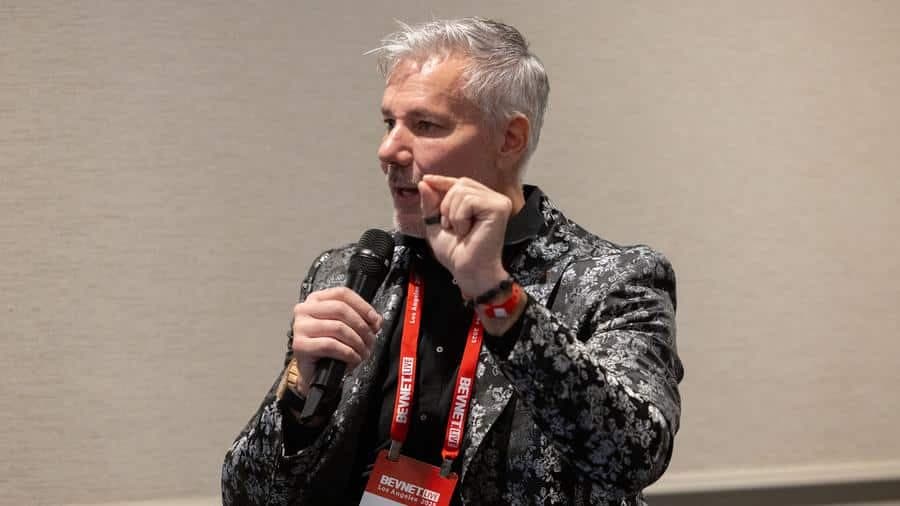
Melissa Travers [00:10] Hello, everybody. It's so great to see your faces here in the audience. Thanks so much for joining us today. We have a fantastic presentation that we are really excited to get to. Um, I am Melissa Travers. I am the director of community here at Bevnet and I am here with Shawn Wells. Shawn Wells is the Chief Science Officer of NNB Nutrition. You are also a biochemist, a dietitian, and one of the most respected formulators in the functional beverage and supplement industry. Um, you have more than 1100 formulations. And over 40 patented ingredients. So Shawn is going to walk all of us through how consumer need states for energy, focus, and resilience are changing, what the, what the industry has misunderstood, and what current science shows our bodies can actually benefit from, which is of course a big one. Uh, Shawn is going to introduce a new answer to caffeine and then move into cognitive performance and the future of ingredient technology designed for real effectiveness and ready to drink products. We are also going to have Life Cider, an update to fantastic beverage brands. You'll see the samples right there on your table. They're going to share their stories about how they've used NNB's Actives, the challenges they faced, and how. NNB helped solve them and get them to successful formulations. So again, thanks so much for joining us, Sean. Let's get right into it. NNB is certainly more than an ingredient supplier. Can you tell all of us what NNB does?
Speaker 2 [01:53] Yes, so ingredients is obviously what we do, but our slogan used to be we create ingredients, but now it's pure potent, precise ingredients. Because we've moved beyond that, we're setting the trend for new and novel ingredients. Uh, we make ingredients for a lot of the ingredient distributors in the industry, companies like uh Glanbia, Prenova, TSI, NutriScience, a lot of these ingredients you're getting from other distributors are actually, uh, ingredients I've worked on and, and our team has worked on, as well as obviously the NNB ingredients. And we've been in business for 10 years and we've seen literally every year doubling our growth year over year so it's been exciting, uh, we're a nine-figure uh company and. Uh, there's kind of no end in sight right now. We have, uh, ingredients that were considered to be more commodity. Uh, we stepped into creatine. And decided to make the purest creatine on the market. That's actually what it's called, uh, because it actually outperforms any creatine, including the German creatines. Uh, we actually have a collagen that's, that's the same way with just what's best in class as far as we test for solvents, toxins, impurities, all these things, and also look at the organoleptics, which is what it smells, tastes, how it mixes, etc. so. Uh, because we make all of our own ingredients and we have a team of over 100 scientists, we can modify these ingredients. We can change them for you, we can blend them for you, we can do the, uh, the solubility, particle size, uh, liposomal, um. Uh, you know, change the do some masking. Uh, all these different things that we can do and it's, it's just been an exciting ride helping our customers. We even do pre blending uh as well so that you can get your whole formula pre blended and then ship that over to the contract manufacturer.
Melissa Travers [04:05] Uh, great, great, uh, background. Um, I, I have a question for our audience. How many of you have a functional beverage or work with functional beverages? Yeah, it's basically the entire room. Why don't you set the stage a little bit for us and help us understand what the future of functional beverages is going to look like? It's a category that's been growing and growing and growing over the last 5-10 years. What are you looking towards in the future?
Speaker 2 [04:38] Well, I think you've obviously seen massive growth in RTDs and energy companies like Monster, around 20 billion last I checked, and They're they're huge markets, right, but we're seeing true functionality come into beverage where it's not just caffeine and flavor and fairy dusted other ingredients like taurine and CoQ10 and super leucine and whatever and then some of them are just kind of in a race to be over flavored and over caffeinated, but now we're seeing a more savvy consumer. which is exciting for people like me as a formulator, as someone who consumes these products as well, that they're truly functional products like where we are seeing functional mushrooms in these beverages, probiotics and prebiotics at legitimate dose, we're finally seeing people actually list the ingredients and what they're standardized to instead of just some proprietary blend and again where stuff's fairy dusted in. And it's just caffeine and flavor. And sucralose or sugar, it's really an exciting time, and I'm seeing a lot of our ingredients that we would have going into a company like Thorn or Designs for Health or you know Muscletech or whatever with these functional ingredients that have the studies and certainly have some cost associated with them. But we're seeing these uh clients of ours want these ingredients now in RTD because consumers are demanding something that's functional, something that's healthy, something that isn't like we'll get to caffeine in a minute, where it's you know fairly counterproductive and most people don't want to be using it but feel like that's the only choice. Now we're seeing more choices open up. But along with this, we are seeing fermentation be hot because it's something that's cleaner, right versus synthetic ingredients or even herbal extracts and along those lines we're seeing people want greater potency. And this is more on our client's side that they want ingredients that are tiny doses that have the solubility that are not going to affect organoleptics. So we've moved entirely away from herbal extracts. We're not doing them anymore. We're just doing pure compounds and we're trying to focus on very small doses and fermentation because that's vegan, that's clean, there's no toxic solvents associated with synthesis. There's no byproducts that hurt the environment with that synthesis. So this is where we're seeing things go, and our focus has been ready to consume ingredients. Every ingredient we're now working on. While supplements are a big focus for us. They need to be ready to consume and that's my own term that encapsulates ready to drink, uh, things like shots, RTDs, obviously like big beverages, but also gummies, uh, strips, uh, you know, things like the candies, like we're seeing food, we're seeing uh our ingredients go into lots of things. So now when we're launching an ingredient, we're ready for it to be soluble, we're ready for it to have the. The organoleptic challenges already covered before we even launch it. And so again, that's why we're just completely done with herbal extracts. There's no like multi-gram ingredients. There's no kind of like sediment and you know worries like from lot to lot when you have an ingredient that's extracted. That's one compound that's potentially standardized. Out of hundreds of compounds potentially in that plant. And so lot to lot you may actually have a different physiological effect. Just because one thing is standardized doesn't mean the other 99 things are. So this is where herbal extracts can actually be fairly inconsistent.
Melissa Travers [08:46] Oh, so you touched on caffeine a couple of times. You can buy yourself an energy drink that has 300 mg of caffeine in it, but more and more consumers are dealing with some of the negative side effects that come along with caffeine, and you all have a lot of research backing all of the products that you make and share. Can you tell us a little bit about what consumers are actually saying about the negative side effects of caffeine?
Speaker 2 [09:15] Yeah, this slide's really great here. I mean this is a fact right now that we're dealing with. You're seeing the market shift just like you're hearing about the trends with alcohol and Gen Z moving away from alcohol. We're also seeing this with caffeine. 93% of Americans consume caffeine daily in some form. 9 out of 10 want to consume less. That's a really compelling stat to put together. Think about that cognitive dissonance and how powerful the addiction is or how omnipotent, omni. Present it is, right? Like. We can't walk in most stores and get other choices for energy. We're just like, well, this is the one that's available, so we'll go with this. But essentially 81% of people are consuming caffeine daily and don't want to. That's super compelling. So if there were other things available and they were experiential, which by the way has now become a big focus, you're kind of getting my playbook for ingredients. Experiential is something that I moved to the top of the queue. I have over 100 ingredients right now that we're looking at in terms of commerciallizability. Experiential moves to the top. Because if people feel it, it's going to sell. I don't have to educate that much on it. I came out with T cream and dynamine prior to peraxanthine, which we'll talk about, but a lot of our ingredients that we're talking about have an ergogenic and experiential effect. Ergogenic meaning like increasing energy. I was just going to ask you. And so with 60% of Americans being slow metabolizers of caffeine, that's the majority. So when we talk about caffeine, we were talking about this yesterday, that like we may be saying the same word caffeine, but we're talking about a very different compound in how we experience it. For me, I'm drinking a Coke Zero at lunch, and days later it's out of my system and I had bad sleep because of that Coke Zero. She may be able to have like coffee like an hour before bed. So we're we're experiencing, she's not, she's not getting like much benefit from the caffeine if she's a super fast metabolizer. I'm not getting any benefit and I'm getting all the side effects, and somewhere in between there's what's called the Goldilocks zone where someone may get positive effects and little side effects, which I believe is only like 10 to 15% of the population is actually experiencing caffeine well. And as people start learning about this and realizing that there's other things available, you're going to see people moving away from caffeine. Is that going to happen rapidly? Maybe not. I don't know, but because caffeine is very cheap, very present, and it's easy to work with, obviously,
Melissa Travers [12:12] not to mention the fact that your body processes caffeine differently as you age.
Speaker 2 [12:17] 100% and medications that you take change it. Women actually process caffeine about half as well as men. Uh, birth control, oral contraceptive like that changes the way you metabolize caffeine. Smokers actually metabolize it more quickly because it increases your metabolism. Like there's a lot of differences. It's called bioindividuality in terms of how we experience these compounds, but in particular, like, and this is true of any compound, and if you start looking at study data, you realize that. Like when they say you get 40% more of this and 60% more of that, there was actually a range of what I would call like hyper responders or super responders and then hypo responders or even nonresponders. And then you're getting this number that's somewhere statistically in the middle, but that's not actually what happened if you look at all the different participants in the study. So this is where it gets interesting.
Melissa Travers [13:19] So, so many folks are looking to move away from caffeine, including me, but I also love caffeine and have been consuming it since I was, you know, 16 years old. How do you introduce something like paraxanthine to an audience who is incredibly familiar with caffeine, but they're looking for an alternative to that?
Speaker 2 [13:39] Well, this is one of those ones that, that try that, try one of these drinks. Like this is, uh, I have a friend that's like an AI billionaire and he was like shaking me down and like. You know, asking me all about this ingredient, and I was like just try it. Like that's what I go back to with experiential. If you feel it in one dose. And actually our alpha GPC has that kind of data, but this is something that you feel like truly feel different. People talk about being in the zone, like having more cognitive clarity. I used to talk about this as the paraxanthine was the metabolite of caffeine. Now I talk about that caffeine is the dirty precursor to paraxanthine. It's actually the clean thing you want and you can avoid the theophylline, which has tons of side effects as well. And you're avoiding all the bioindividuality like I talked about 96% of people experience paraxanthine well, and so you're getting all these benefits that you see up there. That you just don't get with caffeine. You get increased dopamine and serotonin, 50% more dopamine than caffeine. So that's literally just having more drive, more pleasure, right? And then you're you're getting more BDNF, brain drive neurotrophic factor, which is neuroplasticity. You're getting more blood flow to the brain, like dramatically more than caffeine, which can actually be vasoconstrictive. You're getting, um, actually there's a study we did. That you see mental errors. This is with athletes that did a multitasking test before and after the race. The caffeine group increased mental errors 20% at the end of the race when they took the test. It was a 10k race. The paraxanthine group decreased mental errors 10%, and so the delta between the two was over 30%, but that's, that's what's happening. Parianthine is actually improving cognitive function and resilience. And there's a time effect in a gaming study that we showed that in an e-gaming study. That the more they took it, the better the effect because it was actually healing the brain with blood flow, increasing glutathione and catalase, decrease oxidative stress, improved BDNF, all these ways of dopamine, all these ways of protecting the brain. It's truly neuroprotective, and caffeine has a time effect where you get worse and worse over time. And we see this in study after study, so it's very different. It's very experiential. So this is one of the ingredients that we like to talk about that we've worked on that's really the driving force behind this LifeScider X and the update.
Melissa Travers [16:28] You know, I think the fact that these are things that you can immediately feel is such an important point. Caffeine is something you can immediately feel, so if you're looking to substitute that with something else, that's incredibly, incredibly important. And same thing for all of the folks here who may have beverages that are positioned as Non-alk or alcohol alternatives, you also want to share something with an audience that they can immediately feel because you know you're at a social function or you're somewhere where you might want to drink. You really want people to have that immediate effect
Speaker 2 [16:58] and it does have like a verbal acuity effect that we've seen which like Uh, with social lubricants speaking of like your kind of non-alcoholic like substitutes for alcohol, which is like a huge trending area like we're seeing this like give you more energy but also like improve that like speech and verbal acuity and how I connect with you and like. You know, if you're on point in your conversation like that makes the social experience a lot easier. So this is one of those ingredients that we're seeing talked about for that reason and a lot of times JP will tell you or Daniel will tell you that these are getting used as mixers for some people with alcohol.
Melissa Travers [17:38] Right after this, I'm going to look for a big bag of paraxanthine. Can you tell us, how does it work?
Speaker 2 [17:45] Yeah, so it literally is the metabolite, as I said before, of caffeine, and your body normally when you consume caffeine, you'll get 70 to 80% paraxanthine. The problem is As I mentioned before, with the CYP1A2 gene, it's, it's what that's cytochrome P450 in the liver and how it breaks these things down into the metabolites. The way people do that is highly different, so the half-life of caffeine can be 1.5 hours to 10.5 hours, huge range. And then that's just half to get to half of the level in your in your blood plasma. And then to get to a quarter, it's another 1.5 to 10.5. So for me I'm more on this 1015 range. So for me to clear it out of my system, maybe get to 1/8 or 1/16, that means days later for me it's still in my system. And so you're going to a drip drop over time. And you're stuck with all the side effects of caffeine and it's a little bit of little bit of parazan, a little bit of this is very different experientially than clearing out the caffeine, theobroomine, theophylline, going right to paraxanthine, and it's a very nootropic experience in a way that you've never experienced caffeine unless you're just the unicorn that that truly metabolizes caffeine perfectly.
Melissa Travers [19:15] You live in the supplement world. It's, it's what you do. Do you find that consumers are taking paraxanthine on its own as a supplement? Do you find it more commonly used in beverages? How do you see consumers interacting with it?
Speaker 2 [19:28] I see, yes, supplements for sure. It's going into nootropics, fat burners, which we've shown it increases metabolism. Um, but certainly also in RTD. Everyone is moving, certainly Gen Z forward. You guys are all blessed to be in the right industry, right, right now. Because everyone in Gen Z forward like Gen Alpha is moving away from supplements, and I'm saying this as the supplement guy. They want ready to consume. They don't want any barriers. They don't want to take pills, tablets. They don't want to mix something. They want it ready to consume. We know this. And the economics of RTDs don't make sense for people that don't have enough money, you know this, like getting a powder is far cheaper, cheaper to ship, cheaper to buy, cheaper per serving, doesn't matter. They want ready to consume. And so RTD is where everything is going, including these ingredients we're talking about for sure. Also, another cool effect versus taking a capsule. This has been shown with caffeine and it's the case with perrixanthine in many ingredients is that there's a buckle slash sublingual effect where it's bypassing the liver and going under the tongue. And there is like an effect that can be felt for some of it depending on how you drink it and all these different things. That some of it's hitting you pretty quickly, like within seconds, versus when you take a capsule, it could be 30 minutes. So there is, there is that effect, sorry. That
Melissa Travers [21:09] was probably someone who's looking for Parisanthe.
Speaker 2 [21:14] Um, yeah.
Melissa Travers [21:16] Um, excellent, and I do want to take a minute just to say we'll be answering questions throughout the course of the presentation, so if you have a question about anything, please raise your hand. Yes, please. Well, it's funny you should ask because that was one of our next talking points. Excellent, excellent question.
Speaker 2 [21:38] There, so we did a study, uh, looking at organoleptics which again like I'm very focused on because this whole ready to consume, um, kind of prioritization or stratification or something along those lines that, that I'm thinking now and paraxanthine. is organoleptically slightly better than caffeine. So caffeine's bitter, paraxanthine is bitter, but my other ingredients, te cream and dynamine, if you know those ingredients, they're horrible. Like, Horrible. Like it, they're amazing ingredients, but that was a massive, massive challenge. Like it was like a bitterness that would last for minutes in your mouth and just It was very challenging to mask and that really held the ingredient back. That's not the case with perrixanthine. How about pricing? It's more expensive than caffeine, uh, just, uh, it's a lot more difficult to make it, um, and there's certainly patents and studies around it, and it's not being produced at the volumes like caffeine would be, so, uh, it's certainly more per serving, yeah.
Melissa Travers [22:46] Any more questions about paraxanthine before we move on to some other functional ingredients?
Speaker 2 [22:53] And I, while you're here, if you're drinking them, I guarantee by the end of this conversation you will feel it, and we can talk about it then. But there's also other ingredients in these products that we'll talk about.
Melissa Travers [23:06] We'll also notice it because you'll be speaking so coherently. Um, all right, so let's, let's move on to some other functional ingredients. Um, let's, so why do things like functional mushrooms, common choline sources, and other functional ingredients, why do they often fail to reach? Therapeutic dose in an RT RTD beverage because if that's one of your major selling points, then that's a huge problem.
Speaker 2 [23:35] Well, this goes back to the idea of us wanting to be more focused on like tiny doses on fermentation on pure ingredients because biomass presents challenge. So the more with mushrooms, for example, if you have a 5 g dose for a mixed blend of functional mushrooms. That's going to present a challenge. There may be settling a sediment at the bottom of your drink. It may not dissolve well. It may create organoleptic challenges again with taste and flavor. It may create stability issues with interactions over time with heat, with light, etc. So the smaller the doses we can get, the more pure we can get the compounds, the fermented, fermented aspect of it, we're avoiding the solvents and toxins. The better. So that is where we're 1,000% focused and not to say those ingredients aren't great, they are. We're just going down to what's the actual thing moving the needle so we can kind of remove a lot of the noise and the frustration when it comes to formulating. Anyone who's in here that's done work with a contract manufacturer, product developer knows how frustrating some active you really like can be, especially if it's an herbal compound. That it just creates issues over time and you know there's also sustainability discussions when it comes to herbs as well like rodeola we'll discuss is now on the sites list.
Melissa Travers [25:07] And so how does that shape NNB nutrition's innovation strategy? How does that shape the work that you're doing every day?
Speaker 2 [25:14] It's, it's everything that we're doing. Everything has to be tiny doses, pure compounds. Uh, we're looking at fermented, and then will it be ready to consume where it has the solubility, has the positive organoleptics, or else we're not doing it. Like literally if it, even if it would work well in a capsule, but we can't do it in ready to consume formats, we're not doing it. But also here this is a focus too. It's like need states for energy. We're talking about energy, but things are going beyond stimulants. I feel like people are now more in tune. I, I have like a bestselling book called The Energy Formula. Like I, I talk on biohacking. I talk on a lot of things beyond just supplements, but people are moving beyond. Simply stimulated. It's like we're moving beyond just having to be jacked up on bang or drink a bunch of alcohol or have nicotine. Now we're getting like more tuned in with our bodies. You know, I'm, I'm using like these wearables, these rings and looking at HRV and my sleep quality. I think I can actually feel the difference in rodeola or Ashwagandha or Schizandra or you know, these compounds or, you know, the mushrooms like we can now feel these things. We're using theanine and chamomile at night, not just like alcohol which actually worsens our sleep. So there's nuance to now having this discussion around energy. That there's cellular energy. People are talking about mitochondria. You know, like my mom is talking about, how do I, you know, enhance my mitochondrial function, you know, it's like that's really cool. Like, so now you're looking at ingredients like ergothionine, PQQ, CoQ10, PKTP, like these ingredients that would support mitochondrial function and cognitive function, having neuroplasticity, that verbal acuity, your ability to learn, your ability to protect. These neurons, right, like your brain cells, we used to think that you couldn't create new neurons. Now we understand that we can. And there's ingredients like bacopa that help with synaptic firing. There's there's a lot going on now instead of just caffeine and stimulation, stress management is a huge factor. I, uh, again having ingredients like theanine or magnolia, which is like, which is uh hanukol or dihydro um Hanukal beta which help with how well you deal with stress. Certainly all the adaptogens, right? And so we feel more relaxed and we used to think relaxed meant nighttime, but now we're seeing when we're relaxed, we're actually learning better, we're more productive. So that's different than being stimulated. So now people that may be having Caffeine, maybe have it with theanine, right, or some polyphenols as well. And then reducing oxidative stress, which if your body is kind of under attack, inflamed, uh, high glycemic, like you're not going to be energetically ideal, right? Like you're, it's like your car is breaking down and you're trying to push the gas.
Melissa Travers [28:20] Uh, I feel like that all the time. How did, so you know, the, the benefits of having an ingredient that people can actually feel in a single use is so incredibly important. How do you test that? How do you create ingredients that people can actually feel and know that they're actually delivering what you're saying they do?
Speaker 2 [28:40] Yeah, so we do, uh, we start with like in vitro work. We look at toxicity. Uh, then we move to, uh, um, in vivo work with animals, pre-clinical work, and then we'll do alpha-level studies, uh, with humans, and then we move to like a full clinical trial, uh, with CRO academic or even some of this decentralized data that's now blowing up, which is really cool. I don't know if you guys know about these studies. Um, definitely JP knows about a company called Reputable. Like where people will get sent wearables or maybe they have wearables, uh, they get sent the product and then you track them over a period of time and you can work with hundreds of people. Is it as tightly controlled as a kind of CRO or academic like clinical trial? No, but the data is more high powered and it's, it's an interesting thing that's coming on. Uh, where it is getting more and more controlled, where people are reporting in through the apps, they're reporting in with their diet, um, you know, it's, it's getting exciting.
Melissa Travers [29:46] Well, we had some really great information about caffeine and paraxanthine. Let's move on to another ingredient that I'm super excited about. That is genius pure, and that's alpha GPC. Can you start off by explaining what alpha-GPC is and what it does? So
Speaker 2 [30:04] there's two forms of bioavailable cholines that cross the blood-brain barrier that a lot of nootropic fans use. Certainly there's really just two choices, alpha-GPC and CDP choline. Alpha-GPC tastes better. CDP choline has some issues organeleptically. Our alpha GPC avoids using soy. It's non-hygroscopic. It's more concentrated. It's a better cost than certainly CDP coline or other alpha GPCs that are soy-based. And uh we've shown in an acute study, meaning like just one dose to double focus, and we do have uh update as well as life cider moving to putting that on their packaging that double your focus in just one can. And that is validated and so that's really exciting again. We have higher concentrations of alpha GPC than anyone out there because it is non-hygroscopic, meaning it doesn't pull in moisture and cause more issues in manufacturing. So this has been one of the most exciting new ingredients for us because people want to use those kind of claims.
Melissa Travers [31:21] I mean, I'm certainly familiar with Colleen. I'm sure so many of you are as well. Everything I know about it says I need to be taking it repeatedly over the. Course of a few weeks to feel a benefit. How did you come up with something that you can feel after just one use? What was that process like?
Speaker 2 [31:37] Yeah, and that's what's exciting. So CDP choline and even these other forms of alpha-GPC, they take effect in 68, 1012 weeks. A lot of times the data is in Alzheimer's and elderly individuals. Uh, with Genius Pure we showed with healthy individuals in just the one use, which is where we were really focused, no pun intended, uh, on, on really having significant impact because we know our customers are not saying like, hey, uh, take a can a day for the next 10 weeks and then this claim is valid. You don't know use case, right? So this is like you grab it out of the cooler. We can say in that one use for a fact that you will double your focus, and this is what we saw with our study participants and we feel very confident in that claim. As a matter of fact, at a higher dose, we actually saw about 150% increase, so even greater increase in focus. So it's really an ingredient that will and focus, by the way. Is probably the most trending term that I've seen that really customers really connect with like more than energy even uh we've had customers shift away from a lot of different claims and that's the one I'm hearing over and over and over that moves the needle, yeah. That's a great question. So we looked at multitasking. We looked at the ability to do task switching, which is really what multitasking is. Um, and we looked at, um, processing speed, uh, we looked at, uh, error rates, and so, um, we had this validated across a number of uh clinicians and researchers and using that we were able to validate that um you can truly double your, your focus because uh they were able to remarkably improve processing speed. Um, the ability to task switch and make less mental errors in the process. A lot of times, uh, when there's a lot of task switching and the, and the, um, and the, the task is difficult in terms of like memory. Um, you know, like if you're trying to remember like, uh, 4 numbers or you know remember different shapes and colors and you'll see like with more, uh, more things thrown at you like error rates go up dramatically and once the error rates go up, you actually have less cognitive resilience because now I'm frustrated because I got some wrong and then I'm getting more wrong like we saw the error rates go down, we saw the cognitive resilience improve, etc. so.
Melissa Travers [34:25] What are some of the interesting demographics that you're seeing in terms of the folks who are interested in Genius Pure and Alpha GPC? Is it busy moms? Is it athletes who need to, you know, focus on the game? Is it people with ADD? Like, who are, who are the, some of the interesting groups of folks who are really looking for this? Because I think that'll help some of the formulators and brands in the audience understand whether it might be right for you.
Speaker 2 [34:53] And that's the thing like you just mentioned some great use cases there and I really feel like while energy. Maybe that's why the word isn't connecting as well because of the monsters and Red Bulls and, you know, it just feels like um kind of like this. Teen, you know, word that that has been maybe bastardized a little bit and like along with this branding and uh where it feels extreme, you know, like it's really not connecting as well with maybe professional adults or, you know, moms that have like a busy day or or. Uh, what have you, but I will tell you that like focus is connecting across the board like that is the one that's, that's trending tremendously because if you are a mom, you want more, uh, focus, um, you know, if you're, if you're, um, an athlete, you want more focus, if you're a young person, you want more focus. ADD as you mentioned, you want more focus. I mean, honestly, that's where we see probably a huge impact is, is with those that have certainly focus issues.
Melissa Travers [35:59] Excellent. Well, let's move on to another ingredient here, um, and this, this involves fermentation technology, something that we're all hearing about all of the time. How do fermentation technologies, uh, such as solidro pure Um, in Mito prime, how do they enable higher potency, at lower dosage, and better consistency for things like herbs and mushrooms?
Speaker 2 [36:25] Yeah, so Cylira pure is salidicide. That is the active from Rodeola. There was a Rosabins and salidicide Rosabins really don't move the needle much. Saidicide was the active. We actually worked on a form of rodeola that had 6 times the salidrocyte. It was our ingredient called rodeo prime 6X, and that was before when we did do herbs and extracts. We saw where the market was going and said, why don't we just go for that pure compound, fermented, and this is a truly tiny dose. We're talking about 20 mg, maybe as high as 60 mg, so easy to formulate with very tiny impact when it comes to uh organoleptics. But significantly experiential. This would literally take 100 times the dose because regular rodeo is 1% salidoride, 99% other stuff. So that's what I mean. Like it's not very effective to formulate with these herbs because now I have to deal with this biomass and the flavor issues and what is it doing in the formula. And so you're talking about to get 60 mg I would need 6 g of rodeola. And so that's, that's probably a dose that you've never even tried. So when people talk about, I don't feel rodeola, my thought is probably you haven't tried enough and when you try this, it's very experiential and it's going to improve that cognitive resilience and that flexibility. It's not going to be a stimulant similar to paraxanthine or caffeine or tea cream or dynamine. This is going to be something that improves that verbal acuity, the cognitive resilience, improve BDNF, neuroplasticity, things like that. Also improve your immunological resilience, improve your physiological resilience across the board as adaptogens are so great at doing.
Melissa Travers [38:18] Any, any other notes on fermentation technology before we, we hear from our two brands? Well,
Speaker 2 [38:25] yeah, really quickly, uh, fermentation is the future. I, I promise you it's very complicated, uh, working with yeast, like doing this kind of uh genetic work to get these. Uh, um, little guys to make the, the compound you want it to make, so it can take years to figure it out, but once we do, super, super clean for the environment, for the individual, it is the future, um, so you're going to hear fermented more in the industry, which means probably in the next 5 years consumers will be talking fermented a lot more. But that's how we do make L ergothionine, which is the active from mushrooms, in particular. There are certain mushrooms like king oyster. And again, you've never experienced a dose like this because we're now seeing we started doing 1 mg 5 mg 10 mg, we're now moving into 50, 100, even as high as 350 mg we're looking at with L ergothionine. This is a mitochondrial antioxidant. It protects the mitochondria, the cellular powerhouse of the cell that creates ATP, and that includes your neurons in particular and your heart cells, the cardiomyocytes that are highly energy dependent. So this is where we see the greatest impact in the brain and in the heart. Therefore, when it comes to cognitive function, intelligence, and certainly cognitive decline as we age, memory, also endurance and and output in terms of the myocardium, the heart, that's where we see a huge effect with L ergothione and in particular this increase in lifespan in almost all the animal models. That we see a massive increase in lifespan. There's actually a straight line when we look at populations. We can't look at this in humans with lifespan, but when we look at populations consuming L ergothynine, the least to the most populations that consume the least amount of ergothyenine to the most is a straight line plot, and those people that consume the most are living 7 years longer than those that consume the least. So again, we feel this is an experiential ingredient, another one to talk about, and pretty exciting.
Melissa Travers [40:38] Mushrooms are always something that I think about needing to take over and over and over again. Do you feel the effects of something like this immediately?
Speaker 2 [40:46] Yes, it is acutely experiential as well, and We're seeing it be an incredible combination with something like salidracide, but this is really the active when you're, when you're talking about mushrooms. I feel like a lot more so than like beta glucans or other things that we thought were maybe the actives. I truly feel like ergothionine is what's driving the power of these functional mushrooms.
Melissa Travers [41:09] Fantastic. Well, without further ado, I would love to welcome JP from Life Cider. He is going to tell a little bit about working with NNB Nutrition, and, uh, hearing from him will be even better than hearing from me. So please take my mic in my seat, OK.
Speaker 2 [41:28] Hello JP. Hi Sean. Uh, JP's product is the Life Cider X that's on your table. He also has the Life Cider that is, he calls OG original gangster, uh, like meaning just that it's, uh, the non-parrianthinated, the non-X version. Uh, but having your RTD out there, um, I mean, first off, just tell a little bit about yourself, the growth of the product, um, so that they understand this, this, this company.
Speaker 3 [42:00] So quick backstory, some of you Bavnetians may remember me from the June 23 new beverage showdown in Manhattan, and so Bevnet is dear to my heart because that was my first real introduction to the world. I was a Nobody with a new drink and I got to be there and made it to the finals, made a big splash, and that was great and that was with our original. Also some great insights from our panel made a big difference in what I did prior to actually going to market with that. And now we have our reformulated version of OG which is now just hit 1,242 Walmarts two or three weeks ago. It's really incredible drink, but the real backstory happens at a lunch in Park City. A friend of a friend was a friend of Shawn's. I said, You guys got to meet, and we met and he said, OK, I love your OG. Let's make an energy version. And I was like, Bro, the world doesn't need another caffeinated beverage. And this is from a guy who caffeine wrecks me. I hadn't really had caffeine for a long time because I'm a very slow metabolizer of caffeine. And he said this isn't caffeine, and then he educated me on what paraxanthine is, and I was like, OK, well I don't really have the money to jump into the energy business. I'm already trying to raise enough money to do the functional beverage business. And but we talked and I said, OK, so if I did, what would be in it? And he helped me create the formula that is Lifecider X, and it's an incredible formula. It's 200 mg of paraxanthine with a big dose of alpha GPC. Our next rev will be our double your focus amount. And my, my family says I accidental touristed into my greatest creation. I've done a lot of things over my life, but my health journey with Life site or OG, some of you may know, I had severe acid reflux for a decade, was very overweight, drowned in my sleep, then got pneumonia from the drowning, and my grandma made me start drinking apple cider vinegar and water, and within 3 weeks my acid reflux was gone. And I didn't really understand why, but now the 70 million Americans have what I had, which is hypochloridria, not enough acid in your stomach, even though it presents like too much. Adding that acetic acid from apple cider vinegar gives you the digestive ability for those people in that part of the population to get rid of the, you know, the antacids that are actually doing you no good. So now here we have, we really, even though the company's 2 1/2, 3 years old, we really have just launched now like because new OG just came out for Walmart. X is going to go into a bunch of retailers in Q1 and it's exploding and it's very experiential, but a little more backstory when I did the first batch, even though I was very reticent to jump in the energy business. To a small batch because most of my investors are current NFL players, linemen, big guys, 10,000 to 15,000 calories a day. They don't digest their food well. They all invested in original life cider. And so when I decided to try to do a LifeSightr X, Um, I did a small batch, sent it to them, and they all called within a week and said, Bro, I actually used pretty colorful language, all of them, bro, this is incredible. Like my folks off the chart, like what we got to do this. And so they all wrote some more checks and we jumped into that and that really just came out in February, March is when that, so we're almost a brand new company and you know, here's the testimonial part. I can't imagine. What the difference that That Sean Wells and N&B have been for me as a partner. Like they have been incredible with the knowledge base. Like you know, again I accidental touristed into OG. It's a long stretch from there to what we've actually created, which is an incredible energy drink, which I think is going to be, you know, it's one of the two beverages that is an RTD that you know I think you're going to see explosive growth on both of them this year. Uh, so, you know, this, this is a big thank you tour for me, for Sean, and for NMB because they have been incredible partners with research. They've been flexible. They've been just, you know, awesome. I could, I could gush on for a while, so.
Speaker 2 [45:53] Well, thank you. Uh, so what do you think of when you think of NNB in terms of uh novelty, service, uh, you know, tech new technologies, etc.
Speaker 3 [46:04] I don't think any of you should use them, um, because I don't want you competing with me. I'm kidding. They're incredible. Like I, like they have become really truly dear friends, um, and you don't, you don't usually get that from a lot of your vendors, and they are more than vendors, they're really, they're an extension of, of my team. So the flexibility and the knowledge and everything's been really just unreal actually. You don't, you don't find this, I don't think, in most relationships in business.
Speaker 2 [46:30] OK, cool. Uh, what's up, Daniel. Thank you, JP, and I'd love to hear what you guys think of that product and if you feel it, uh, but we'll have Daniel from Update come up too, and that's the other drink that's on your table and Um, Man, I would love to just say something that's about to happen with Update, but you guys are gonna have to stay tuned in the next few weeks. This is gonna like rock the world, and I literally mean that. Like there's someone that's
Speaker 4 [47:01] anyway, what, what, what would you like to talk about? What's helpful for you guys? Huge,
Speaker 2 [47:05] huge, huge, huge, huge news coming for update, but they're going into Walmart, all 40 100 stores.
Speaker 4 [47:12] You never heard that and he didn't say that.
Speaker 2 [47:14] OK, uh, it's, it's really exciting, um. So Update, can you tell us about the brand and, and the, the growth?
Speaker 4 [47:23] Yeah, of course, yeah. Um, so the whole, the whole idea behind Update was, we had a crazy idea 5 years ago thinking starting an energy drink was going to be really easy, um, and 5 years later we're still pounding the pavement. Um, when we started it, the idea was the energy drink industry is kind of a sea of sameness, caffeine plus sugar, um, in the way products are branded, they tend to be either hyper masculine or very girly. There was nothing in the, In those two realms that really fit with myself or with the people I knew they were quite alienating these products, and then we started looking at the health aspect to them and working out how caffeine works. You guys have probably heard about paraxanthine already. And so we basically realized like what if we could create a product that gave you all the energy you want without the consequences and I went down a Reddit rabbit hole where I found Shaun. Um, and we basically found them about a year before they commercialized paraxanthine um and started formulating update around that. And the idea was, uh, all of a sudden you get the energy you want, you don't get any side effects, you can drink it later in the day, it's not going to keep you up at night, um, and we used, you know, really clean ingredients and dosed it. Uh, really effectively, so, you know, one of the gripes I had with functional products was, they tend to have a lot of functional ingredients, but feather dusty ingredients to make claims, and I think one of the principles we had from day one was anything in the product has to have a clinically backed dose of the ingredient in it, um, and together with Sean and his team, uh, we managed to formulate that product, um. Update's been a real journey. We started off thinking how easy it would be, like I said, so we went, we manufactured a bunch of product, thought, you know, after the first month we would be able to sign up one of the biggest distributors in New York and it would get into all the stores and people would just buy the product, and that was it. It turned out after 3 months we had exploding cans, we had, Uh, labels falling off cans, we had a bunch of issues and of course no distributor in New York. It was me running around with a backpack slinging cases and later on upgrading to an enterprise van, um, and doing it that way. Um, but nonetheless, we're here 5 years later, still, still surviving, so, uh, still around. Um, we launched in all the vitamin shops nationwide, which is really cool, um, and stores like Ewan and Central Market. I think the biggest learning I had was for a new brand to work. I, I live in New York, so it started off me, you know, doing this in New York and I think New York just didn't work for us. Um, and the key learning I had was like for a new brand to work, you really need the retailer to wanna lean in, um, and you need the customer to wanna discover new product. So Aw is probably like a great intersection of both of those things, um, but stores like Central Market, stores like the vitamin Shop, these were really great incubators for us, um. And uh and for the brand, particularly because we were using state of the art or, you know, tip of the spear kind of functional ingredients that people hadn't heard of before. Um, and so, yeah, I think uh if you're doing functional products, those were great stores, that was a great learning. Um, these guys are fantastic when it comes to new ingredients and uh and to work with their team and they get like really involved. I don't know if you want me to speak about this or if you have other things, but, You know, we basically, I don't know, Sean and I have spent Countless hours, dare I say days at flavor houses, science labs, um, podcasts, conference calls, like really trying to just dial in on how to make things work. Um, and when you're working with new ingredients, there's a lot of unknown. Like I said, we had exploding cans after 3 months. We were the first brand to ever use the parasantthhe ingredient, so no one knew what to expect, how it was gonna work, how it would interact with other ingredients, um, and, and I think really having a supplier. That is understanding that they're bringing innovative and new ingredients to the market, and then working with you as a partner to figure out how to formulate them, um, I think it's really important and, uh, you know, we, we work with maybe half a dozen suppliers now, um, none really have the same relationship we do with NNB. And One of the really cool things is these guys. Um, and I'm not saying this to toot their horn because it doesn't benefit me if they work with more people, but these guys, uh, really are very selective with the number of groups they work with, so that they can be hands-on. Um, so if you are thinking of doing anything with functional ingredients, uh, yeah, I, I would certainly hit these guys up.
Speaker 2 [52:05] Thank you. Like, uh, maybe just in closing, like what is, uh, what does, sorry, like the novel, um, ingredients, experiential ingredients, um, kind of, uh, also differentiation of ingredients, how does that factor in for you,
Speaker 4 [52:23] um. I think off the bat it immediately attracted. Uh, far more educated, um, intentional consumer, which again that was what we were going for, um, and that's where we see the white space in the energy drink category, it's in people who actually, you know, everyone needs energy but they want it in a clean way. Um, so definitely that was a big thing. Um, and then just the experiential factor, you know, I think there's so many brands out there using nootropics and adaptogens and functional ingredients, saying it gives you energy. The reality is we're all bioindividuals, so what works for Shaun might not work for me, or the dose of some nootropic that works for him when he feels something might mean nothing to me. And that's why caffeine is always used everywhere, because whether you metabolize it quickly or slowly, it works universally. We all feel it to some extent. And so I think it's really important when we were using. Uh, these functional ingredients, they actually gave you an acute effect, not just being told you have to drink it every day for three months to feel something. So I think that was another big thing and just goes back to like the intentionality behind the ingredients and the ingredients you've created and what they do.
Speaker 2 [53:36] Awesome. So what's, what's next, uh,
Speaker 4 [53:39] for you? Um, look, I mean, we've, we've been at this for a handful of years, just trying to grow. We'll continue to keep trying to grow, and I think just expand our nationwide presence, um, and yeah, watch this space early next year.
Speaker 2 [53:53] It's gonna be exciting. All right, guys, uh, is there any questions? How much time do we have? I think 5 minutes, right? 4 minutes. Uh, I'd love to have some questions and I will be available obviously after this, Dustin will be available. JP and Daniel will be available if you want to be, uh, uh, an investor or work with them. Uh, they're both incredible guys to work with and, uh, Dustin's our chief branding officer, but yeah. Yeah, go ahead. A little bit about on it? Uh, BHB beta hydroxybutyrate is an ingredient, uh, the salts that I actually brought to market with NNB, uh, so the ketone esters were already on the market, um, but the BHB salts, which is now GoBHB, uh, were the exclusive distributor for them and the manufacturer of those, so that's another company that I was talking about that, uh, we produce ingredients for, um. What do I think? I think there's a ton of exciting stuff coming out when it comes to neuroplasticity, uh, improving traumatic brain injury, uh, acute performance signaling when it comes to immunological issues and also cancer. Obviously some of those get kind of complex when it comes to supplements slash food application, but certainly. There's really like supplement food, clinical. I, I think there's a host of things coming and they stack well with certainly the ingredients that we already talked about, but I do think ketones is a very exciting area. There is now ferment, we make fermented ketones, speaking of which, we make all the different isomers, different salts, free acid forms, uh, so that's a very exciting area right now and, and there's new research coming out on the different isomers that actually the L, uh, works in particular in the brain, whereas the, the D works throughout the, the body, uh, and it's the majority of the, uh, kind of physiologic isomer. Is there any other questions? Oh, OK, yes.
Melissa Travers [56:07] All right, well, um, what a fantastic conversation. Thank you so much to our brands for presenting and hearing their side of the story. Hopefully, you know, it helps everybody understand how it might fit into your business practices. In closing, Sean, what, what should we go upstairs and out into the world? Thinking and knowing about functional beverages,
Speaker 2 [56:30] I think functional is about to explode. Like, just like I said, like we're riding multiple waves. RTD slash RTC as I would call it, is about to explode even more than you think it's already exploded. Because Gen Z, Gen Alpha, does not want supplements, and I hate to say that. And then we're seeing functional matter proprietary blends are going away. Full transparency matters. Having ingredients that actually move the needle and improve your health and physiology. Not just experiential in the moment and it's coming at a cost alcohol, caffeine, nicotine. We're seeing the customer, the consumer get far more savvy, as Daniel mentioned. And we're now meeting them, and they're willing to spend a lot more. Things used to be $1 a can, a doll like when I was young, like whatever, like 50 cents coffee. Now it's like people are spending 8 to $10 on a coffee that has chaga and whatever in it, right? And people are spending $5.06 $7 at the gym for uh core power or a pre-workout or energy drink that's functional that actually is healthy. Things are shifting dramatically. You're in the perfect industry. Now's the time. And now is the time to have researched ingredients that actually move the needle and are experiential.
Melissa Travers [57:57] Sean Wells, oh, we have another question. Yes, please.
Speaker 2 [58:09] Uh, we have to close, but these ingredients do work for all beverages. That's why we're talking about them here at Bevnet. So yes, these are beverage ready ingredients. Yes, yes, all that, that's what I call ready to consume. Yes, exactly, yeah.
Melissa Travers [58:26] And please hang out, ask all of your questions. We'll be sticking around, so come up and say hi, please. Thank you all so much for joining.