Search across the BevNET CPG Media network including BevNET, Nosh, Brewbound, Taste Radio, Nombase and CPG Jobs.

Sponsored Workshop: Streamlining Beverage Development and Avoiding Common Pitfalls
Transcript
Note: Transcripts are automatically generated and may contain inaccuracies and spelling errors.
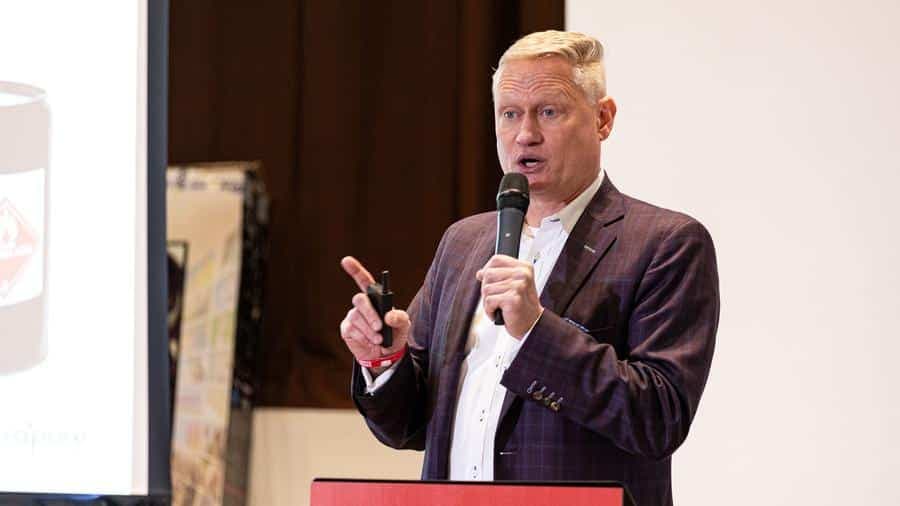
Derek Greer [00:16] My name is Derek. And I am the senior director and acting principal scientist at Sensipure. And today we're going to talk about streamlining. This is really going to handicap me. I have to. I talk with my hands. We're going to talk about streamlining beverages. So what we're going to do is we're going to look for things to watch for, best practices and things to watch out for pitfalls. We're going to discuss the five stages of developing a product. We're going to dream it. We're going to make it. We make sure it tastes good. We're going to evaluate our assumptions and then we're gonna launch it. Step one. Dream it. This is the fun part. You're not constrained by anything at this particular stage. Come up with whatever you want it to be. Maybe you want it to grow facial hair. Maybe you want to cure cancer. Whatever it is you want it to do, you're not constrained by anything. However, When you are dreaming it. You need to think about the claims you want to make. The government cares about claims, but who cares about claims more than the government are your competitors. It's called industry self-policing, and that's how the FDA basically regulates the food industry. You're going to make a claim. Your competitors are going to buy your product. They're going to send it to a lab, and they're going to analyze it. So when you're making a claim, you want to make sure that one, you can substantiate that claim. Let's say you're putting collagen in your product. There's a mountain of evidence that says collagen is good for skin, so you could say good for skin health, but we had a brand. I had a brand about 2 years ago. And their shtick was energy and then some. Now we call that out as a possible watch out because if let's say Monster or Red Bull goes, hello Mr. FDA, what does and then some mean? Could you please explain that to me? You're going to get a knock on the door. You're going to have to substantiate what and then some is to the government, not good. And then you're gonna have to change your label, also not good. So think about the claims you want to make. Next is processing. The reason I put processing is second, It is because if you're going to make claims that are validated by a third party, it's kosher, it's organic, it's NSF sports certified, it's Raintree certified, whatever that is, those things have to be validated. By the processor, the processor also has to be certified in that area. So if you say organic, you can't make the product at a non-organic certified facility. So you need to make sure that you're careful about what you select because if you pick a bunch of different products or a bunch of different certifications, your, your field goes down as to who you can select and that means the price goes up. Next, trigeminality. Do you want the product to do something to the consumer? The trigeminal nerve basically controls all the stuff in the front of your face. You bite your cheek, trigeminal nerve, eat a big piece of wasabi, and you get the burn in your sinuses, trigeminal nerve. All those things are related to the trigeminal nerve. So if you want it to tingle, you want it to be cooling, you want it to cause pain, whatever the thing you want it to do, think about those things. Last texture. When you put it in your mouth, do you want it to coat the mouth like you just drank some cream, or do you want it to be light and effervescent in the mouth and flavor and aroma? What do you want it to taste and smell like? So speaking of taste, the tongue actually doesn't really taste much. It actually tells you if it's good or bad for you. So let me explain. Bitter. Humans are very sensitive to bitter. Most natural poisons are alkaloids. Alkaloids are bitter. So before you even know what it is, when you put it in your mouth, if it's bitter, you're going to spit it out because you're going to get a negative response from the tongue because it probably is not good for you. Sweet is the opposite of bitter. You get a reward for eating things that are sweet because they have calories. Calories support life. Life is good, so you get a reward for that. Salty. is pleasure and pain. If you eat a little bit of salt on your food, yum, yum, yum, it's great. If you eat too much salt, take a tablespoon of salt and put it in your mouth, you're going to spit it out, because it's too much salt. It's not good for you. Acid, sour, is a watch out. Not necessarily because of fruits, because when fruits or food in general starts to ferment, it's usually lactobacillus. Lactobacillus makes cheese, makes sour cream, makes things bitter, or sorry, makes things sour, so it's a watch out. The last one is umami. Umami is specifically related to um. Glutamic acid, glutamic acid is important because it converts into glutamate. Glutamate is the number one excitatory neurotransmitter in your body. So when you eat it, you get rewards saying this is good for us. Eat some more of it. So, how do you actually taste? You taste actually via retro nasal olfaction. So retro in Greek means backwards. Nasal means related to the nose, olfaction means smelling. So when you converted to English, backwards nasal smell. So what you do is you eat the food, you swallow the food. The vapor drifts back up to your olfactory bulb, which is just behind this bone in your face, and that's how you taste. So now we've formulated, so now we've decided what we want to make. We've dreamed it. We've come up with the claims. We want to know what we want to do to the consumer. We're ready to formulate. How do you actually formulate? Do you just mix things together? Sometimes for fledgling brands you buy a scale at Amazon and you make it in your kitchen, and that's OK. But it can be messy. It can take a lot of time. And sometimes you end up with formulas like this, and you probably can't read it, so I'll read it to you. 3 tablespoons of lemon juice, 1/3 cup of sugar, 1 teaspoon of honey, 2 drops of monk fruit, 6 drops of lime flavor, 1 drop of cream flavor, and some ascorbic acid. Now I don't know about you, but I don't know how big a drop is. Is it a little drop? Is it a big drop? What kind of drop is it? So you get varied units and it's not necessarily precise. So what's going to have to happen is some food scientist somewhere is going to have to convert that to a beverage formula because you can't go to a manufacturer and say just add 6 drops of this flavor. So it's better to begin with the end in mind. Sorry, I borrowed Stephen Covey for a second. Know what you want. The bricks is a measure of sweetness. titratable acidity or TA is going to be how acidy is it? If you're not using sweetness, let's say you're not using sugar, how sweet do you want it to be if you're using stevia or some other non-nutritive sweetener, and then what claims do you want to make? So what you do is you put that in the top. These are all the things I want my product to be. And then all you have to do at the bottom is Decide how much you want to make. You fill in the table. It's a pretty straightforward math problem, but food scientists can do this. And then all you need to do. Decide on the color and the flavor. So I've made a base here. I've met all of my claims already without doing anything. I've done nothing yet. But I know that this formula is going to meet my alcohol claim, my juice claim. All those claims have been met mathematically, and now I just need to decide on the color and the flavor. Taste. Our next step, step 3, people will buy a product because it looks cool or you're making a really cool claim, but they'll only buy it once. If it doesn't taste good, they're never going to buy it again. So this is where you as a brand, have to actually start making decisions. The types of flavors are really important. The first decision that you need to make as a brand compounded flavors, compounded flavors are just mixes of chemicals. This is cis 2 hexanol. Most people it doesn't mean anything to you, but if I said that this chemical smells like green apples, when you cut open a green apple, you are smelling scis 2 hexanol. If I get all the flavor from green apples, I have a natural green apple flavor. If I get it from green apples and green peppers, I have a natural flavor with other natural flavors, whomf, W O N F with other natural flavors. If I get it from petroleum, I have an artificial flavor. But an important thing to note here, that chemical, cis2-hexanol has not changed. Where I get it from makes no difference. The only difference that it makes is the cost. And what you want to call it. So if I get it from hexane, I can basically 1 to 1. And so artificial flavors are very cheap. If I want a natural green apple flavor, I have to process about 750 pounds of apples to get enough SIS 2 exanol to sell you a natural green apple flavor. We can do it, but that's why natural flavors are so much more expensive. Maybe a natural flavor with W O F Wolf is good, or maybe our official is fine. But you have to make that decision. Next, wash flavors. Wash flavors are designed to remove terpenes. These are terpenes. I'm going to spare you the chemical definition of it. Suffice to say they're relatively straightforward. They're easy to manipulate, and they're really stinky. This one is called lemon. For a million points, does anyone want to guess what lemon smells like? It does. It smells like lemons, but it's got this guy right here. This guy is called the terminal double bond. What this is, is imagine a football player and I'm running down the field. I'm holding my football like this, running to the end zone. What do you think is going to happen to me and the football? Not good things. However, if I put the football in like this. I protect the football. By moving inside, however, It now smells like nail polish remover. So that's not good. So wash flavors reduce the load of terpenes, which means it's not as smelly as it could be, but it's also now a whole lot more stable. If you ever want to try this, juice a lemon in a glass with a little bit of water, put it in the sunlight in a window somewhere for a couple of hours, come back and smell it, and it'll smell like nail polish remover because you look at these guys the wrong way and they change. So that's why you wash the flavors. Next are emulsions. I don't know if you've ever tried to make a vinaigrette dressing, but if you make the vinaigrette and you shake, shake, shake, shake shake, and it looks like it's all together for just a second. That you're trying to make an emulsion there. So there's two ways to make an emulsion. One, you can homogenize it instead of shaking. You make really tiny little bubbles, and those little bubbles stay dispersed, or use an emulsifier like gum arabic, mustard flour, or something like that to put the oil and the water together because oil and water don't like living together, so you have to find some way to make them live together. Processed flavors. Processed flavors don't do a whole lot of processed flavors anymore, but I once upon a time I used to work for a company that used to make condiments from McDonald's, and McDonald's is neurotic about food safety and quality, and they insist that their caramel is made in the traditional way. So you have a tank, and the tank is filled with a little bit of water, a bunch of sugar, and you just heat it. That's it. And you just heat it until it turns into caramel. So if you've never spilled 3000 pounds of caramel before, it's delicious, but that is processed flavor. And the last one are reaction flavors. Reaction flavors are mallard reactions, same thing like when you make toast. It's a reaction between an amino acid and a carbohydrate, usually in the presence of heat, and it's good for making chocolates and coffees, beef and chicken flavors, those kinds of things. So now that we're in the formulation stage, you need to decide what type of these flavors is going to be best for your product. And you do iterative development. Now if you're the deciding factor, you've got the flavors there. You're the person who decides it. You iterate really, really fast. However, if you're using a third party, another developer or a flavor house, Going back and forth in the mail can take days, weeks, or months because we make a part, we send it to you, you get it in the mail, you taste it, then you give us feedback, back and forth. We go, back and forth. But if you can, if you have the opportunity to go to the formulator, to the flavor house, you're going to save a ton of time, and time is money, so that is really what you want to do now. We've dreamed it. We've tasted it. But so far, Only you and maybe a few of your colleagues have ever tasted this product, and I've got a lot of friends, and they have children, and I've seen a lot of ugly baby pictures and never once has a parent shown me an ugly baby picture and said, look at my ugly baby. What you need to know is, did you just make an ugly baby? or is this product something people really want to buy? Which means we need to do a sensory panel. Sensory panels are good for really kind of three things one, optimizing what the product is. Is it sweet enough? Does it need more salt? Is the flavor too much? I'm not sure. Removing bias, including your own. If I think the next big thing is a full fat, carbonated eggnog drink, maybe that's the next big thing. Maybe it's not, but somebody to tell me, is that the best idea or not the best idea? And then benchmarking. If you want to benchmark something, let's say you want to make a Red Bull knockoff. How close are you to Red Bull? Maybe you're really close. Maybe you're not close at all. Sensory panels will do this for you. There are two types of panels. One that says, is it different? And how? Or do you like it and why? That's, that's all they do. But these are very expensive because you have to pay people to come there and they're labor intensive because you have to manage those people, get the data from them. So one way you could do this is to make sure you validate your assumptions. is to do a preference panel. So let's say Caterpillar has an idea, because they do construction equipment, it's usually hot, it's dusty. Their idea is to launch a hydration drink, and maybe that's a great idea, maybe it's not, but Is it going to hurt the Caterpillar brand? Yes or no. If Bud Light had done a $50,000 consumer panel on a packaging change, it probably would have saved them a lot of heartache. So because they're expensive, what Sensippere is designed is something called Sensory Quant. It's not really any different than a panel, but it's a protocol that goes within the panel to make sure you get as much data out of it as possible. What we do is we've got 500 people registered in the city of Utah that cover most demographics and let's say like, you know what, I don't want a Utahan. I want somebody from Georgia. We've got partners across the United States. And we bring them to Utah unless they're in Georgia. And we run the panel and what you're after here. is data. So if I think the next big drink is dragon fruit, and I get the data here and it says, hm, most preferred strawberry watermelon, least preferred dragon fruit. So maybe my idea was not that good, and I saved myself a lot of time and a lot of failed products by making sure that I understand what the consumer wants. Also, you can get locked in iterations forever. Is it too sweet? Is it not sweet enough? Does it need more salt? It needs less salt. Sometimes you just need to know, does the consumer think that this is the right product? Yes or no? That's what this will tell you. So now, we've dreamed it. We've formulated it, we've tasted it. We've validated our assumption that we have got the best product. What do we do now? Well, now we decide, do we want to pilot it or not, because up to this point, probably you've only done it small. Maybe you've made a 1 gallon or 2, maybe 10 gallons, but probably not much, but you're moving from the small to the big. And even if you're a dry powder and you're moving from small to big. There's still something that you have to do. Let's fail. Because you want to fail small, fast, and cheap. You do not want to spend tons of time and tons of money on a production run just to fail. So right now we're going to discuss how to fail so we don't fail. The first thing is a can, you know, like aluminum can. What could possibly go wrong with an aluminum can? Actually, surprisingly, a lot can go wrong with aluminum cans. Aluminum, chemically speaking, is an acid. It's reactive. So when you put something in an aluminum can, you never have the contents actually touch the can. The cans are all lined. The inside. And the lid are both lined so the contents of the can never actually touch the product. That's not me. Definitely not me. And they're called, the liners are called BAi liners, and that stands for BPA or bisphenol A, not intentionally added. I don't know who named it, but that's what it's called. So when you hear Bpanny liners, that's what they're talking about. So the cans are sprayed on the inside and as a fun aside, if you've ever wondered why there's a colored dot on the bottom of some of the cans, that's because that's the line that the can was lined on. So that's because if there's a, there's to say I poisoned the liner and they're like, oh my God, we need to recall this stuff because it's been poisoned, they know which line it was on. These are some of the enemies of the aluminum can. The ones in red are particularly egregious. There's 3 things that aluminum cans really, really love, and you don't want them to love them, copper, chlorides, and I'll get to the last one in a bit. The only thing keeping that chloride, which has a negative charge from that really, really acidic aluminum, which has 3 positive charges, if those two get together, they're going to have a party and it's not going to be a party you want to attend. The only thing keeping those things apart. Is that liner And if you're not careful, what happens is you get leakers. Leakers are not good. There are two types of leakers. There's a primary leaker and a secondary leaker. Primary leakers are actual damage to the can. I put a hole in it. I dropped it. I ran a forklift through it. I did a bad seam. Something mechanical is wrong with the can. But remember, I said the cans are only lined on the inside. Now this cane is leaking. To the uncoated aluminum below it and all those chlorides and all those coppers, they're going to have a party and they're literally going to corrode the can from the outside inside to the can and then it's going to leak to these cans. If you're using a racked pallet system, your pallets are stacked on top of each other. You can imagine this becomes a cataclysmic problem, and I've been through a few of these, and they're almost always in the multi-million dollar issues. This is what it looks like. So here you can see that there's a damage here and there's a bad scene here, and you can see that it's starting to corrode the bottom of the can from the cans underneath it. And as a fun parting gift, you also get wet wet cardboard which attracts insects. And rodents and increases your damage claim. So secondary leakers are really, really bad. The way to avoid this is to do what's called a liner compatibility test. Liner compatibility tests are offered by every can manufacturer. They're free. They take about a week and it's time well spent to make sure that what you're going to put in that can stays inside the can. But because we've lined it, we have no problems, right? No. The liners are not inert, they actually love to absorb aroma chemicals, specifically terpenes. And so in the orange juice industry you have to add extra orange oil to the orange juice to compensate for the orange oil that the package is going to pull out of the juice. So you want to make sure that when you're formulating something, are you adding something that the liner loves, in which case you don't have a flavor anymore because it's all sitting in the liner. That's something you want to know before you start. You could also have issues with raw materials that you're not sure of. You could have insoluble material that settles to the bottom that people don't like. You can have color emulsions that break. You can have flucculation due to enzyme activity. It can turn brown. If it's a powder, it can be hygroscopic. It means it absorbs moisture and turns into a brick. Or you can expose it to UV light and you lose all the color. Worse still, it could just taste like crap. You want to know all these things before you start. How do you do that? You do pre-pilot testing. Now this is our equipment. It's fancy, but you don't have to have fancy equipment. You can do this in your kitchen. You can get a mason jar, a pot of water, and you can pasteurize it right there in your kitchen. That'll simulate what it's going to look like if it's been heated. Is it going to turn brown? Is the emulsion going to break? You want to know what about package testing? Well, you could put it in or shipping testing. You could put it in the trunk of your car and drive it around. You could put it in a garage or on top of your dryer in your house to simulate warm environments. You want to do as much as you can to make that product fail while you're controlling it before I see it as a consumer and it fails in my hands, because that's not good. So we're now to the last step. We're ready to launch it. We have one more decision we need to make as a brand before we launch, and that is do we want a pilot production run or a full production run. If we've done pre-pilot testing, we've validated, you know, what does it change color when we heat it, what happens when it sits in a hot environment, what happens when it exposed to UV light, those kinds of things. So we've done all the testing. Why can't we just go straight to full production? Well, let's talk about that. This is probably the number one thing besides cans that people fall into. I was at a copacker 3 weeks ago because of the same problem. A con man is going to say, listen, We buy stevia. We buy tons and tons of stevia. You could just use our stevia, right? Well, maybe is it Reb A? Is it Reb N? Is it Reb D? Is it 95% glycosides, 70% glycosides? What kind of stevia is it? OK, fine. Now don't use our TV. You could buy our juice. OK. How dark is the juice? Is it the same bricks juice? Because if it's lower bricks, it's going to affect my juice claim. Wait a second, affect my claim? I don't want to be affecting claims. OK, fine, don't use our juice. You can use salt. It's just salt, right? Sodium chloride. All right, uh, is it sea salt which has minerals in it? Is it pink Himalayan salt? Is it coarse salt? Is it granular salt? What kind of salt is it? 3 weeks ago, The con man said, Listen, we buy tons and tons of caramel color. Just use our caramel color. They didn't do a bench sample, which means they didn't test these ingredients, and nobody saw on the formula sheet that the brand uses 2x caramel color. They stock 5x caramel color. Uh oh. So when they called me, they had instead of a nice light yellow drink, they had something that looked like Coca-Cola. That's all because they didn't do some of these things. They said, Oh yeah, it's just the same. It's not the same. If you didn't buy it or you didn't test it, you should exercise extreme caution because the comman's not going to care. It's your money. They don't care. Sorry, it's brown. What are you going to do with it? So thankfully I was actually there that day because it was one of our customers and we were able to fix it. But more often than not you're kind of up a creek on that one. So make sure, don't assume the ingredients are the same. Water. The number one ingredient that you're going to put in your product is water. And unless you're using distilled water, water is not just water. This is the breakdown of water in the city I live in, Salt Lake City, Utah. And in Utah, remember these guys, we process a lot of copper. It's a mining town, so I can actually have not added any copper at all to my formula, but by way of the water, I've now added copper and chlorides. Uh oh. So you want to make sure that the processor processes their water. Typically it's RO, reverse osmosis, but some manufacturers are on a well. If they are on a well, what's the water report? Show it to me. I want to see what's in your water before you put it into my product. The last worst enemy of the languor. Oxygen. Water has oxygen in it. If you fill up a tub of water, you take a river fish, put it in that water, that fish will live because there's oxygen in that water. I don't want oxygen in my water. I want dead fish water. I want water over here. I don't want water right here. So you need to make sure they have deaeration equipment. Do you deaerate your water? Yes or no. And what is the do you run at? What is the dissolved oxygen you run at? You want dissolved oxygens about less than 1.2 ppm parts per million. Sometimes they'll express the PPD part per billion, but you want low. If they say R DO is at 3, no. You want it less than 1.2. Remember this guy? Lemony, with the, with the football, I like this. What do you think's gonna happen to that football when oxygen gets a hold of it? It's gonna smell like paint thinner. So you do not want oxygen in your water. There's also processing differences that you would not have been able to test for. There are going to be pumps that your product has to go through. If you have pulp, let's say you make aloe vera cells, they're going to get chewed up in that pump. If you have emulsion, it's going to get broken in this pump. It's going to go through filling equipment that you probably have not been able to test. It's going to go through flow panels. This is how you move product from one side of the facility to the other side of the facility, and each time you go through one of those little elbows, that's shear. Shear is not good for emotions. And yes, you may have heated it, but you didn't heat it in their process. There's also process damage. Processing lines are long. They're complicated. All you need is one little errant piece of plastic sticking out, and this is going to cause a primary leaker. That's enough damage to that can that it will have impacted the liner, and that's going to be a problem for you. And for this particular guy, it was even worse because it was hidden under a sleeve. So thankfully someone in quality was paying attention and said, Hmm, that doesn't feel right. He pulled the sleeve off and saw that they had issues. Stop the line. You walk the line with your hand to find out where the sharp piece is, and then you file it down. You can have bad seams. So really, All these things that you tested for before can still happen, because you've not done it on their line with their water and their process. So the question is, do you want to do a pilot study? The answer is yes. Yes, you do. But the rub is most commands don't want you to do one because they take a lot of time. They're a pain in the butt. They cost money, so they're going to say, No, no, no, we won't do it, we won't do it, can't do it, can't do it. You make sure that they do it. If they won't do it, then you've got two options one, find a different command or two, run the absolute minimum amount that they can that they can handle, whatever that amount is. Now we've walked through the 5 stages. How do you find the right partner? There's people here that do what we do. Some of them do it just as well as we do. I'm going to give you a recipe card of the things you want to look for, and you don't need all of them, but you need some of them. The first one, do they have a lab? That's important. You do not want to move from your lab, your Amazon scale in your kitchen to somebody else's Amazon scale in their kitchen. You need to make sure that they are able to write a batch formula so they can use metric units and pure units, but the units are all the same. Oops. Units are all the same. Lost my train of thought. Units are all the same. You also want to make sure that they have a flavor lab if possible. And why? Because that speeds up iteration. If I'm, I'm a developer and I have to call Sensip Pure Flavors in Utah and they have to mail me the flavors, then they formulate, then they mail it to you and we go back and forth in this triangle, it's going to take time. So if they have access to a lab, that's going to help you. Can they help you with claims? If the guy had, it's like energy and then some. If he had not had us as a, as a, as a vendor, he may have launched that product. Maybe he got in trouble, maybe he didn't, I don't know, but we advised him to not do it. Can I help you with ingredient declarations, nutrition facts panels? Can they help you validate your assumptions? Because you need to make sure if it's not a knockoff, it's not an energy drink like anything else, it's a brand new product. Are you able to validate that it's the right product? Do they have a way to do pre-production testing? Three weeks ago, if I was not there with the brown Coca-Cola stuff, they would have been up a creek. Do they have someone that can go to the site to make sure that it's made properly and that you're asking the right questions? And finally, can they do shelf life testing? Really, a shelf life test has to be done at manufacturer. You can do all the stuff beforehand, but that does not count for the pumps and the water and all the things. So when you do your full production run or your pilot production run, that's when you start shelf life testing. The last thing we need to mention is equipment. This is a Milwaukee refractometer. Most bottlers use this. It's cheap. It's 300 bucks, measured up to the 10th place. This is an anton par densitometer with cargo QC. This is $75,000 so the difference between these two pieces of equipment is stark both in cost and precision. I just want to call out here that you can see on the Milwaukee refractometer it says 12.1, whereas the N times par measures out to 5 different decimal places. Where this is important is when you're talking about yield. You're going to pay a comman money and you're going to say, Mr. Koan, Mr. and Mrs. Koman. I want 95% of my product back. You get a little bit of loss because of line loss, those kinds of things, but I want it all back. About a year and a half ago, I got called in because a certain conman had a 19.5% loss. And so the, the brand was very unhappy and the co-men, they didn't want to pay for it and so everyone was pointing fingers at each other and I got called in to basically adjudicate this problem. The problem was when the person who formulated the product, they made the product and they measured it on this Milwaukee ref reflectometer which does not adjust for temperature, and you see it says 25 here. This one says 20. So they measured on the roof ictometer and said let's say 2 bricks. And they said this is the specification 2 bricks. So the conman did not do a bench sample to validate that. They just said it's 2 bricks. We're going to run out of 2 bricks. Really the formula made up to 1.8 bricks. So because they're running at 2, but the formula is 1.8, I'm giving away a little bit extra stuff each time I put it into a can, and they gave that little bit of extra stuff until they ran 890 pounds of stuff out and they ended up losing 150,000 cans. So the equipment is important. So when you have a formula, you need to ask the developer what type of equipment did you measure this on just to make sure that you know and then if you go to the bottler and they have different equipment, they are aware of what the equipment was. So you want flavor technology, ability to make flavors, and you want commercialization expertise. Those are the kind of the two things that you want because they're, they're different. One is, is front. I'm making it taste good. The other one is back. I'm making sure I can make it. And that is a powerful combination. We're the destination for product development flavor creation. We're sent up here. Thank you.