Search across the BevNET CPG Media network including BevNET, Nosh, Brewbound, Taste Radio, Nombase and CPG Jobs.

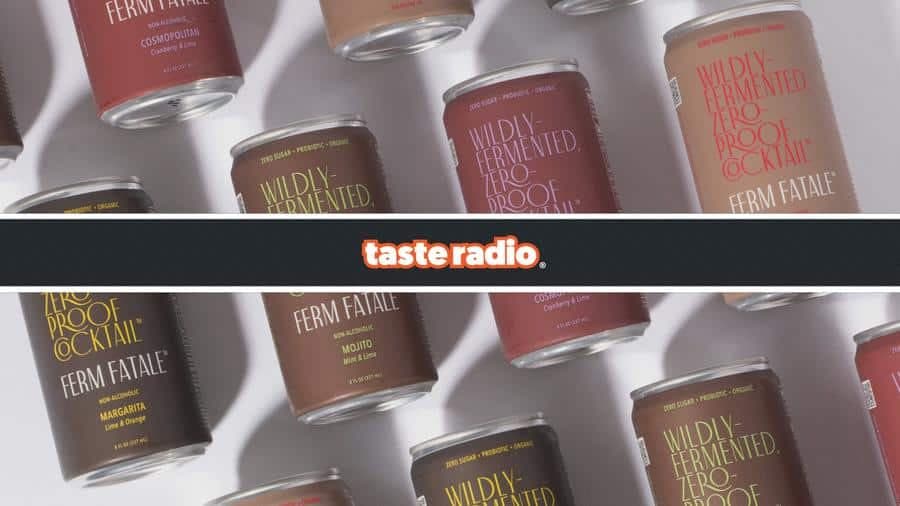
The ‘Fatale’ Journey Of An NA Brand
Transcript
Note: Transcripts are automatically generated and may contain inaccuracies and spelling errors.
Speaker 1 [00:04] Hey folks, it's Ray with Taste Radio. Right now I'm honored to be sitting down with Julie Cello, who is the founder of Firm Fatal. Julie, great to see you.
Speaker 2 [00:12] Hi Ray, it's so wonderful to be here again.
Speaker 1 [00:14] I know here in Marina del Rey. At Nosh Live, we're not at Bevnet Live, but we're here in the lower level of the hotel upstairs. Jennifer Garner's about to take the stage right now. It seems like maybe you've run into her a few times here in
Speaker 2 [00:28] LA. Yeah, it seems like she goes to the gym like I do.
Speaker 1 [00:32] OK, what gym is that so people can stock that gym?
Speaker 2 [00:35] Well, we used to go to Santa Monica Equinox, but recently there's a new exclusive gym that's opened up in Venice called Um, H U M
Speaker 1 [00:46] E H U M E. OK,
Speaker 2 [00:48] yeah, it doesn't even have a sign on it. It's a very Venice vibe.
Speaker 1 [00:52] OK, very good to know. I like this. We're sharing details here on the podcast that we probably shouldn't be sharing, but anyway, if you go, it's fine, right? Now people who are watching the video are probably wondering what the heck is bubbling over, about to bubble over in the center of the table here. It is the original version. Of your non-alcoholic kombucha brand, which was intended to replace alcoholic beverages called Firm Fatal, um, as people who are familiar with Bevnet probably remember, you were on stage as part of our new beverage showdown. Was that
Speaker 2 [01:27] 6 years ago? 9
Speaker 1 [01:28] years
Speaker 2 [01:29] ago?
Speaker 1 [01:29] No, it couldn't be
Speaker 2 [01:29] 9 years ago. Yes, it was 2015.
Speaker 1 [01:31] Oh my gosh,
Speaker 2 [01:32] and uh this is a very special product and I actually only have 2 bottles of it left. Oh my gosh, it's like liquid gold, and I decided to open one up to share with you this morning, Ray, because this interview feels like. Uh, an aged ferment in a way after everything that's happened in the non-alcoholic space. So it's, it's a special moment for me and I wanted to share this ferment with you.
Speaker 1 [02:00] Well, I am honored. Thank you so much. We actually have video of opening the bubble. We were a little worried or you were a little worried that we were going to have an explosion, but it turned out to be very bubbly but not explosive.
Speaker 2 [02:13] Yes, yes, I'm not surprised to see this, this level of activity. In this bottle after 9 years, um, it has not been refrigerated until last night, um, but it just goes to show how How resilient. Life is
Speaker 1 [02:34] absolutely can
Speaker 2 [02:34] be.
Speaker 1 [02:36] OK. I wasn't expecting to drink, uh, kombucha from a nine-y fermented kombucha this morning, but since it's open, uh, if you could pour, uh, pour my pour me a glass here, that'd be fantastic. Let's go for it pour yourself one as well. Look at that. Look at that indeed. I got a little scope in there as well.
Speaker 2 [02:56] This could be, don't be afraid to drink the scobie. It's actually really good for you.
Speaker 1 [03:00] OK. I, I, yep, that's good.
Speaker 2 [03:04] Do you remember in 2015 it was not fermented. There was tons of sugar in it, and I brought a bottle of tequila, and I was calling it a convertible social beverage at the time. And the reason why I was doing that is because I didn't think that people were quite ready to hear non-alcoholic beverage. At the time Ah, I don't think society was ready for where it is now
Speaker 1 [03:34] and more specifically non-alcoholic cocktail or or alcohol analog,
Speaker 2 [03:40] right?
Speaker 1 [03:40] Yeah, so I think what Firm Fatal started out as was intended to be a replacement for alcoholic beverages and you know that sounds very commonplace today because we see. Uh, ready to drink, non-alcoholic cocktails all over the place. You go to pretty much any restaurant in the United States. They have a non-alcoholic cocktail menu now. 9 years ago, definitely not the case. So you were way ahead of the curve, way ahead of the curve. Now let's taste this. Uh, cheers, Julie. Welcome back
Speaker 2 [04:12] Mm. You can, you get the alcohol in the nose right up front. Now that I'm 74 days alcohol-free, I'm pretty sensitive to. Alcohol. Yeah,
Speaker 1 [04:26] and so let's just clarify to our audience here, there is alcohol in this because it's been fermenting for 9 years. Yes. So how much alcohol is in here at this point?
Speaker 2 [04:35] If I had to guess, being a fermentation enthusiast but not a chemist, I would probably have to say somewhere between 3 and 4% alcohol.
Speaker 1 [04:44] OK, so not, not too bad. It's like near beer level.
Speaker 2 [04:47] No, I mean, I think it tastes amazing.
Speaker 1 [04:49] It does. It does taste amazing, and I feel like this is something. That modern consumers, especially here in Southern California, you know, certainly on the East Coast, parts of the East Coast as well, would love talk a bit about your interest in creating a product like this and why you thought that there was demand in white space for it out there.
Speaker 2 [05:12] Well, the inspiration for creating the product was inspired by a memory that I had 15 years prior, and that memory was me being at a Dave Matthews concert and sick with autoimmune disease, and I couldn't have alcohol and I was 24 years old. All my friends were. Tapping a keg and I felt super left out and when I was thinking about what do I wanna do now that I've moved to California I stepped away from a very successful private practice in Florida what do I wanna do with my life? I thought. I'll create a non-alcoholic drink company to. Appeal to the people that can't drink because there's nothing like that out there other than a Shirley Temple. So my idea really came from A deep place of not wanting anyone else to feel left out the way that I did.
Speaker 1 [06:13] Yeah, again, a lot of great ideas come from. A personal need and it turns out a lot of times that the personal need is one that's shared by other people, um, but in 2015. It seemed like there wasn't the kind of demand, frankly, there was, there was not the kind of demand that we're seeing for non-alk cocktails, non-alk spirits today. Did you see, uh, or did you anticipate. Challenges in being able to scale this opportunity given that The interest was pretty small at that point.
Speaker 2 [06:51] I didn't think that way, and I really My mind doesn't really operate that way in general being a lifelong entrepreneur and somebody that left home with $800 in their pocket on a Greyhound bus. I, I just. Had an idea, pitched it to a couple of millionaires, had $150,000 in my bank account the next morning, and I didn't think about strategy. I didn't think about what the world. I was ready for at the time. I, I made a decision to move on something that I mean it was the hardest venture I ever was a part of other than marriage. So I, I wasn't thinking about, am I going to succeed? I just assumed that I would somehow. As you know, there's like an 80% failure rate for beverage and higher than that, uh, and the fact that I survived as, as long as I did in the industry, I think is a sheer miracle in itself, and I think a lot of it is because I was one of the first brands.
Speaker 1 [08:00] Do you feel like firm Fatal would have a better shot or would have had a better shot had you launched, say, last year?
Speaker 2 [08:05] Absolutely,
Speaker 1 [08:06] yeah. Why is that?
Speaker 2 [08:09] Well, I had to keep raising money through a time period when people were telling me that my product was like wearing a rain jacket in the shower. I got a lot of hate in the beginning. I see what
Speaker 1 [08:20] you're saying is because why would you drink a cocktail unless it has alcohol in it.
Speaker 2 [08:24] Exactly. So I went through a hardship in the beginning of convincing people that this category was coming. I spent years in the beginning, you know, convincing people, and it wasn't. Uh, it was only Bevnet that that really saw the vision that I had in the beginning.
Speaker 1 [08:45] So You know, part of this conversation for me, Julie, is about Informing the audience about ways to avoid mistakes, um, and avoid a lot of the pitfalls that you unfortunately fell into or tripped over, um, so I wanna go over just a list of brand attributes, um, you know, company strategy that you think you could have. tweaked or in hindsight that you think you could have done better with. Oh boy, there's lots. Sure, I, I mean, that's, that's why we're here. So let's start out by talking about your knowledge or your Ability to understand the beverage industry at the outset of the brand did you feel like you were prepared to have conversations with beverage industry insiders, retailers, distributors, or did you feel like you really needed to know a lot more at the outset?
Speaker 2 [09:48] I think that My answer is twofold because if I would have known what I know now, I wouldn't have done it. I remember Barry on the telephone saying. Run, run now.
Speaker 1 [10:05] Who's Barry?
Speaker 2 [10:06] Barry isn't Barry work for, isn't he the editor of Bevnet?
Speaker 1 [10:10] Barry Nathanson is the publisher of Bevnet magazine, uh, a little different than an editor for sure, but I, I, I thought that was the Barry you were talking
Speaker 2 [10:18] about. Barry told me to run and I said how rude. Um,
Speaker 1 [10:24] you went Stephanie Tanner on him.
Speaker 2 [10:26] I did, and in hindsight, I wish I would have listened to Barry, um. However,
Speaker 1 [10:35] I think I gotta back up there. You, you, I mean you, it feels like you got a lot out of this journey. You wish you hadn't.
Speaker 2 [10:42] I did. I, I'm being facetious, but um, it was a struggle. I mean, I, I sacrificed a lot in order to bring the brand as far as it did. The end was tragic. I was the one that made the decision to close the company, which we'll touch on, but to answer your your question in full, I would say that. It was a good thing I was naive. OK, I wouldn't have done what I did. Balls out, so to speak, if I wasn't so naive and if you recall, I didn't even know what CPG meant when I was on stage in 2015. I think I had to ask you.
Speaker 1 [11:27] You, you're not the only one though.
Speaker 2 [11:28] You might be
Speaker 1 [11:28] CPG mean? You might be one of the few people to admit that, but it's true that there are a lot of entrepreneurs who don't know the lingo.
Speaker 2 [11:35] I had no idea what I was getting myself into.
Speaker 1 [11:38] Well, got you got yourself into it, I guess I'll ask the question a slightly different way. Do you feel like you would have been better off operating the business if you had a better understanding of retail strategy or how to raise money?
Speaker 2 [11:54] No, not at all. OK, no, I feel like. The time period that I was doing what I was doing, I was actually having buyers contact me. I didn't even have to do very much in the beginning. Because I was the only one available for them to reach out to, so it gave me an advantage.
Speaker 1 [12:17] Brand name goes a long way. I see new products come to market and their packaging or their brand name is really attractive and I say, hey, I wanna learn more about this. I feel like that was true with Firm Fatal as well. There's obviously an alliterative name. Um, there's something about it that seems kind of edgy and I wanted to learn more, but. Looking back, do you feel like the brand name was a strength or something that you could have adjusted?
Speaker 2 [12:46] I love the brand name and I would have never, I would never change it.
Speaker 1 [12:51] Did people understand, I mean, did they have a sense of who you were, what the brand represented? Or was it something where you said firm for tall and they were like, oh, what's that?
Speaker 2 [13:05] People would ask me where did I come up with the name for Ferm Fatale, but it was always well received by everyone that I spoke to, um,
Speaker 1 [13:13] and obviously it's a play on femme fatale, but Ferm,
Speaker 2 [13:16] right, right, I mean it's a fermented product, live clean, drink dirty. The slogan was oftentimes con confusing for some. But just like any brand new product or brand new category, so much education goes into everything. So the name just became another part of what needed to be educated upon.
Speaker 1 [13:38] I remember seeing your product in Erawan, I think it was probably 5 years ago, and I was so happy for you. I was so proud to see your product there. Um, you've told me though that sometimes. And in this case, it didn't do as well as you had hoped because why
Speaker 2 [13:56] a global pandemic. I launched, I launched at A one. 4 months before a global pandemic hit. I was the founder at Venice Aw doing tastings and Fucking crushing it. And then a global pandemic hit and all of a sudden I had to pivot and figure out what to do. I had a silent investor that said, Should we pause the company? I thought that was a ridiculous idea because, you know, as an entrepreneur I've, I've learned to plow through and you need to plow through. Um, Should I have done that, huh?
Speaker 1 [14:41] Well, what's interesting is that at the outset of the pandemic, it seemed like there were a lot of people drinking more and then a few months into the pandemic, people were starting to pull back and really think about their health and their alcohol consumption. That opportunity was a great opportunity, but you couldn't do in-store demos, right? What was your strategy at the time, getting people to try Firmfatal?
Speaker 2 [15:04] Trying to get people to try Firm Fata, I just laid hard into Facebook ads and went straight into D2C, and I did really well at it. I just. leaned heavily into D2C and it worked until it didn't anymore. Why, why did it stop working? Because then retail started to open back up and I was. You know, Trying to figure out how to get into retail whenever I'd been spending all my time on D2C and I was a one woman show. I had no one helping me. I had zero team members and a silent investor that was dripping $1.8 million in very slowly, which kept my hands tied behind my back. That was a bad decision.
Speaker 1 [15:51] You've mentioned investment a few times now. The initial investment, which got you $150,000 the $1.8 million over a period, I, I would think of eight years, is that right? Um. That's still a lot of money to raise and there are a lot of folks listening right now they're saying, hey, I just love the the 1st 150 but 1.8 million, that would be huge for my business. Why do you think, or, or I guess talk about your relationship with that investor and What made it work and what are some of the things that you wish You could have changed about that relationship during the years of firm Fatal.
Speaker 2 [16:30] Well, This is a very sensitive subject. People have asked me all along the way, how did you get someone to give you $1.8 million for a brand. Well, the fact of the matter is, is. I mentioned my first career. She was a client of mine. I sat with her whenever her husband died of cancer. And was Very invested in her wellbeing for many, many years this relationship I think I've had for well over 20 years so when I came up with the idea in a way she wanted to live vicariously through the experience, but she was not active, she did not make any decisions being so, so silent. And, you know, like having a personal relationship with her prior. The personal relationship started to bleed into the business and I started to develop a lot of resentment towards her and what is resentment but drinking poison in hopes that the other person dies and it was starting to really affect me and I didn't like the person that I became, Ray. During that time period because of the resentment that I had and I still, if I'm honest with you, I still struggle with, um, forgiving, but you know, at the same time she didn't know what she didn't know so I try to give her and that relationship the same grace I I try to give myself now because being an entrepreneur is. The deepest spiritual path that you'll ever go on. You want to find out what you're made of. Become a beverage founder and do it alone, you know. But back to other mistakes that I made, so I selected a co-packer that got away with a bunch of shady things in the beginning, and I let them slide in order to keep going.
Speaker 1 [18:30] What were some of the shady things?
Speaker 2 [18:32] Um, he wouldn't put the labels on the bottles because he didn't have an adequate machine to put the labels on. And the contract said that it was his responsibility, but since he refused to do it and said he couldn't find a machine and I didn't want to change the custom glass bottles, I would fly up to Portland and sit for 16 hours a day by myself in the cold with sideways rain coming through a door with a blowtorch to heat up the glass to get the adhesive to stick. When I say I've made sacrifices for this brand. I'm not kidding at all.
Speaker 1 [19:15] There's a legal recourse when a contract isn't going the way it's supposed to. Did you ever consider suing the co-packer?
Speaker 2 [19:23] Well, you, we haven't even gotten to the juicy part of what happened with the co-packer at the end of it, but the answer is that yes, we thought about it, but we knew. It was going to be very challenging to find someone like him. To create our live shelf stable, fermented product. These people are very challenging to find. Um, he wasn't challenging to find in the beginning. I don't know if I've told you this story, but how I found him is I went into Arawan. And I stood in front of the wall of kombucha, and I'm a big believer in manifestation. And I said to Spirit, show me my next co-packer. And I closed my eyes and I went like this, and when I opened my eyes I was pointing at his brand. I contacted him and said, would you co-pack? and he said yes, and the rest was history. But it every other brand on that shelf that Araon at the time, you know, you, you don't co-pack. It's, you don't co-pack for other people. Like you're so focused on your own brand, but this guy that I found was willing to do it,
Speaker 1 [20:44] if he has excess capacity,
Speaker 2 [20:46] and he was, he was a bit of a, you know, eccentric guy as well, so, you know. It takes kind of gangster type people to do gangster type things.
Speaker 1 [20:58] I would say so. Um, yeah, co-packing can be, I, I think every beverage founder that I've ever met has at one point said yes, finding the right co-packer is extremely important and everyone has a horror story or maybe not a horror story, but a story about something that went wrong. And in some cases. Something that goes so wrong that you lose whatever investment you put into that coat packer. So if it's a $50,000 run, something goes wrong, you're like, Sorry, we're not going to run it again for you.
Speaker 2 [21:27] The worst is what happened after the during the rebrand when you went to a can, when we went to a can. I, I raised $65,000 for the rebrand and relaunch, $65,000. So we're in the middle of it and a gasket blew in the middle of the production run and I saw the black plastic go all through. The margarita. And I said
Speaker 1 [21:52] halt this was actually in the beverages.
Speaker 2 [21:55] I was, I was there for it, and I said halt, throw it all away, get rid of the margarita. We're not, we're done with margarita. So we filled the other three flavors about 2 weeks after all of my Moscow mules started to pop off like bombs in the in the warehouse, so I knew that there was a problem with the Moscow Mule formulation. Sent it to a lab and and found out some information that, uh, again another shady move. And some lies that I had to deal with and I ended up uh launching, relaunching with just two flavors. At that point, The co-packer knew that we were going to likely sue him. And he went out of business and went bankrupt, and the investor said, I don't wanna go. I don't wanna go through with a lawsuit. Let's just push forward with the relaunch. Nobody knew what was going on at the time. I kept it really quiet because it was embarrassing and I didn't know. How to, I mean, I, I watch Instagram now and see these young. CPG founders out there, you know, sharing every detail of their experience. God bless their souls. I, I wasn't that founder. I, I hid behind the brand in a way. I, I, I didn't share information because it didn't feel safe being the only person running the show to be that vulnerable at the time. I can now, but yeah,
Speaker 1 [23:29] you know, I wish founders would be a little bit more open about. The mistakes and and the problems that they're going through, but I can understand the other side because you're trying to present a good face. You're trying to present Uh, uh, a business that is running well to investors, to retailers, nobody wants to hear, hey, you know, we lost $65,000 doing that because it makes you look, and even though you, you're not, and certainly not in the wrong in this case, but it might make you look incompetent and so an investor might say, well, I'm not gonna give this person any more money.
Speaker 2 [24:03] So yeah, I struggle, I struggle with the same issue now as a healer, you know, going back to my old career and working with clients. I, I. You know, like, do I really want to share my childhood trauma story to somebody that I'm trying to help them heal theirs. It's, there's a fine line with, you know, how to be the professional person and, and how to be vulnerable. I, I think it's a, an issue that many people in a leadership role face.
Speaker 1 [24:34] I loved the new look. I love the can. I loved the rebrand. I thought it was great. It sounds like at the end of the day there wasn't enough money. There wasn't enough interest from your investment partner and trying to find another co-hacker.
Speaker 2 [24:50] Well, it's actually not true.
Speaker 1 [24:51] No, OK, go ahead. So, so what, what exactly happened after you decided That that you had the right package, the right liquid, the right positioning to go forward with.
Speaker 2 [25:01] Yeah, you're the first person that I've, uh, told what actually happened. So at the end when he, he went out of business and took the co-packer went out of business, took my proprietary ingredient, and we also realized that the formulation wasn't exactly what he had been telling us it was. I needed to step away. I needed, so it I didn't fail. I chose to close.
Speaker 1 [25:28] Had you found another investor that said, hey, we're gonna give you a half a million dollars, would you have continued?
Speaker 2 [25:35] If I would have had a proper team, yes. The only thing that I really feel like I was missing team. And if I could speak directly to any founder out there right now, I would say do not lone wolf this. Don't you gotta have a team in order to succeed.
Speaker 1 [25:54] Well, I gotta tell you, Julie, you know, I, I really appreciate you sharing your story. Your journey is so unique, but it's also one that I think is somewhat similar to other CPG founders who have started and then closed their brands or businesses for one reason or another, and. The difference between you and those founders is that you're willing to share your story and it's so helpful. It creates, I think, a lot of solidarity among founders who are going through it right now trying to figure out how to plug those holes, which landmines not to step on, or the ones that at least are going to be fatal for the brand. And I really think that this is going to be so helpful to anyone who is starting a business or in the first couple of years of business. So thank you so much for taking the time. Um, while I'm certainly sad that Firm Fatal is no longer on the market, I'm so happy that you had this experience as an entrepreneur and that you were introduced to us here at Bevnet as a result, which is so great,
Speaker 2 [26:59] and it's so ironic that I did not find the capacity to become alcohol free myself until after I closed this company. That life is a very ironic thing and um. I'm just so grateful for the experience and for the friends that I met along the way.
Speaker 1 [27:17] Thank you. Thank you so much, Julie. And once again, uh, actually, I should, I should mention this, you know, there are people out there that are probably like, hey, you know, can I bend Julie's ear a little bit longer? Are you open to speaking to other folk? OK. What's the best way to talk to you? What's the best way to reach
Speaker 2 [27:31] you? Julie Julie Cello.com.
Speaker 1 [27:34] Very easy. Alright, Julie, thank you so much again. I'm gonna finish this, the rest of this. It really is
Speaker 2 [27:39] delicious. Thank you again, Ray.