Search across the BevNET CPG Media network including BevNET, Nosh, Brewbound, Taste Radio, Nombase and CPG Jobs.

Austin, Unfiltered. Hot Takes From CPG‘s OG City.
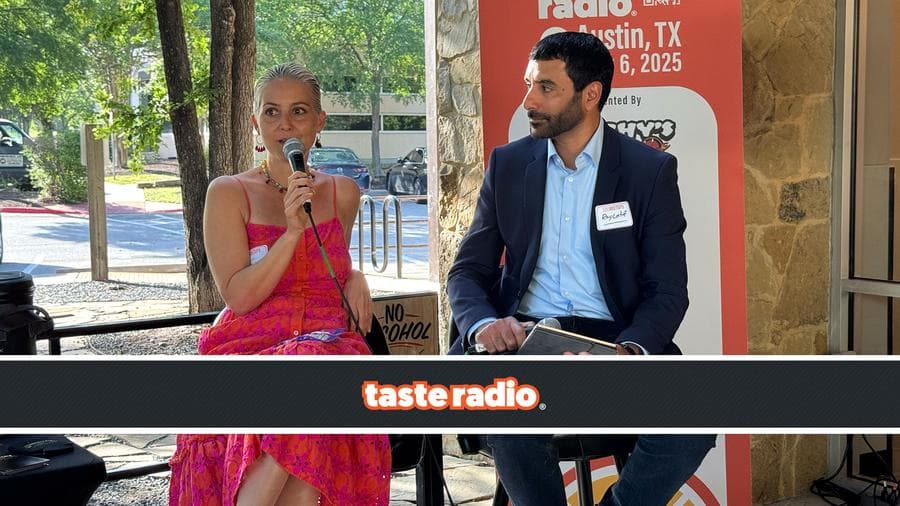
Big ideas, bold flavors, and unfiltered insights—welcome to Austin, where the future of CPG is being written in real time. At Taste Radio’s Austin Meetup, we sat down with trailblazers and trendsetters redefining how brands are built and scaled. From Better Sour co-founder Bella Hughes to Torchy’s Tacos founder Mike Rypka and Snaxshot’s Andrea Hernández, these conversations explore what it really takes to innovate, connect with consumers, and lead with authenticity in a rapidly evolving industry.
Show notes:
Interviews from Taste Radio’s Austin Meetup – Mike Rypka, the visionary founder of Torchy’s Tacos, shared his journey from launching a food trailer to building a nationally recognized franchise. Steven Santangelo of Matriarch Wealth Management discussed how his firm helps CPG founders navigate the complexities of financial planning, particularly during critical growth and exit stages. Bella Hughes, co-founder of Better Sour, reflected on building a culturally inspired candy brand and the challenges of innovation in a legacy category. Andrea Hernández, the sharp mind behind Snaxshot, delivered an unfiltered perspective on food and beverage trends, highlighting the importance of authenticity and emotional resonance in brand storytelling. And Michelle Breyer, CMO of the Texas-based accelerator SKU, shed light on how the organization nurtures early-stage consumer brands, emphasizing the pivotal role of founder mindset and market fit in driving long-term success.
Brands in this episode: Better Sour, Torchy’s Tacos, Fly By Jing, Siete, Wildwonder, Bachan’s, Daily Crunch, Leisure Hydration, BodyArmor, Vitaminwater, NoBull
Transcript
Note: Transcripts are automatically generated and may contain inaccuracies and spelling errors.
Speaker 1 [00:03] Our team is so lucky to have such valued partners, including Torchy's Tacos, as well as Matriarch Wealth Management, Sovereign Flavors, better sour skew, and golden key ingredients. Thank you so much to all our partners. Big round of applause for all of them. They do so much for this community. If you meet anyone from any of those companies, please strike up a conversation. They really are the best in the business at what they do. And of course everyone knows that when it comes to tacos, the best in the business is Torchy's, and I'm sitting right next to the guy who made it all happen. His name is Mike Ripka, the founder of Torchy's Tacos. Mike, thank you so much for having us.
Speaker 2 [00:39] Thank you, my man. Appreciate it. Yeah.
Speaker 1 [00:43] It all started in a food trailer in 2006. What was the original vision, and did you ever imagine it being as large as it is today?
Speaker 2 [00:51] Uh, not even close. So we started in a food trailer August 1st, 2006. I think my big hope and dream at that point was Get off 4 wheels and get into a brick and mortar. Um, and, uh, yeah, it's been a wild ride. Um, I've been obsessed with street food my whole life. Um, I'm a chef by trade, um, been in restaurants since I was 13 years old. My first job, I was a fry cook at Popeye's Fried Chicken. Um, shout out Popeye's, Popeyes. Give a shout out. Um, anyway, so I, I, I, I did that and Um, anyway, my original partner had this old trailer he couldn't sell. This was way before food trucks and stuff were cool and hip. And, um, you know, I'd gone to some banks with some business plans and they'd all laughed at me and said, no way, dude. Um, and so I, I mortgaged my house, maxed out my credit cards, threw my hat over the big fence, and Opened up Torchy's, um,
Speaker 1 [01:52] a very good business strategy for anyone listening. Definitely mortgage your house as many times as you can, max out those credit cards and you too could have a taco empire. Yes, that's right. That's right. No, you know what's interesting is you were absolutely right. At the outset, you had a vision, you had a dream, and then you were sort of at the outset of this movement for premium fast casual restaurants, tacos specifically. What made Torchy's so different? What made it so special?
Speaker 2 [02:18] So, uh, uh, for us, it's really about our people, our culture, um, and then the food. Um, you know, we, uh, we've got Damn Good in our logo, Torchy's Damn Good Tacos. Uh, the Damn Good really came from our first customers. That wasn't in our original logo the first month we were open. Um, and we really use that as our guiding light that, hey, if you're gonna say something's damn good, you better freaking deliver it. Um, and So, we really built early on just this really big culture around food, um, you know, I've got a book that came out, it's called Devil's in the Details, um, that hangs up in all our kitchens, every, at every restaurant we have. It's all about the details. Anybody who's in the food business knows there's lots of details that go into Running a restaurant, making things happen, making sure that your, your bartender's there, that your drinks are set up, that your food's in the right place, you got the right food, your recipes are in order and everything in between. And, um, you know, so we, I, I think, you know, we just always really had a really big culture around our food and taking care of our guests.
Speaker 1 [03:31] You and I were chatting before we're we hopped in the mics and you were talking about how much care goes into your sauces. You make everything from scratch at all of your locations, which I never thought was possible given the scale that you're at. Um, when you talk about quality, what does that mean to Torchy's?
Speaker 2 [03:48] Uh, you know, that, uh, first off, a lot of pride. Uh, we invest in a lot of, uh, training, um, and the quality really is really about, um, yeah, I have a big chef background. Um, one of my first jobs out of college, I got the privilege to be the executive chef at the World Bank in DC, um, and I, I kinda call that my PhD program. Um, I got to learn. How to cook Indian food, Ethiopian food, Thai food, um, you know, you name it, we made it. You're serving people from all over the world. Um, and that was really my big crash course on just cuisine in general. And, um, you know, I brought a lot of that through my career and into Torchy's and, um, you know, really making sure that, you know, we're using good quality ingredients and blending the right flavors and textures together. Um, so that we've got really craveable food that people kind of go, Man, there's something about that I can't quite make that out, but damn, it's good.
Speaker 1 [04:50] Whatever happened to craveability in food? I think it's been forgotten in particular in the food and beverage community. I think we're starting to see signs certainly from all the samples that we have out here and thank you all to the founders who brought samples because there's some amazing stuff on this table. If you haven't had a chance, please try some. But creveability is really important and passion is really important um you've gone through some personal struggles you talk about that in your book uh you know what have you learned about leadership and and how to overcome some of the more challenging parts of leading a business and entrepreneurship from those struggles.
Speaker 2 [05:23] Yeah, I think, you know, look, it takes a, it takes an army. Um, I think as an entrepreneur, you really got to ask yourself, You know, what are the things I don't know, um, and be humble enough to get that help from other people. Um, Also, as an entrepreneur, right? It's, it's sometimes it's hard to give up that control, right? Like, you know, what it needs to look like, how it needs to taste, and everything in between. But there's also, um, if you're willing and able Um, to put a little bit of that ego and some of that pride aside and say, hey, you know what, I suck at finances, but you know what? I'm gonna go out and get the best damn finance person I can and bring them in here and let them succeed. Um, and I think that's been probably one of my best things that has gotten me to where I am today is, is really building a strong. Reliable team that you know is bought into our culture and given them opportunities that they maybe didn't get somewhere else.
Speaker 1 [06:31] Well, I can attest to the amazing team that you have because I've been working with your team for the past two months to put this. Together and everyone's been incredible. So shout out to the Torches Tacos team. Shout out to Mike Ripka for creating such an incredible business and for being here with us and hosting us here today. Thank you so much,
Speaker 2 [06:47] Mike. I really appreciate it, man. Appreciate it. Thank you
Speaker 1 [06:49] very much. Yeah, round of applause for this fine gentleman right here. How are you?
Speaker 3 [06:56] Great, man. Great to be here.
Speaker 1 [06:57] Good to see you again. I like being in warm places with you. We first sat down in Miami and now we're here in Austin, and maybe we can be, I don't know, LA next time or something. Yeah,
Speaker 3 [07:05] that's why I didn't come to New York. It's
Speaker 1 [07:07] too cold. It was pretty chilly when we did this in New York. Yeah, but we did talk about in Miami. We talked about what matriarchal wealth management is all about, your broader investment philosophy, but for folks who may have missed that, didn't weren't at our Miami show, tell us about what you do.
Speaker 3 [07:21] Yeah, so we are a wealth management firm first and foremost, but we do a lot with consumer products companies. So my uncle's Mike Poli who invented vitamin water and body armor. So I've kind of grown up around CPG and the brands and I've actually worked at Glasso and an energy kitchen. Which no one here probably knows because it went out of business, but you know it's kind of been part of our ethos and I would say 65% of our clients are in the CPG space in some capacity.
Speaker 1 [07:48] Well, that's great to hear and you know if you could tell us a bit about the companies in your portfolio, I mean, I think I know them and they're incredible, but why did you choose them? Why did you think they were right for Matriarch?
Speaker 3 [08:00] Yeah, so aside from the family companies right now, which is Noble and Junkless, uh, we've made investments in Kraft Mix and Hope. Um, Craft Mix was an interesting one during the pandemic, uh, just kind of a powder that you would throw in at home with your vodka, your tequila, and it sounds pretty basic, but they're doing like 6 million in sales right now. They're number one on Amazon, QVC, um, and then Hope Hydration is a way to make free water. Kind of generate an ad spend and they have all these coolers they've done Ultra, F1, Coachella, and they're actually generating 2 to $3 million in revenue by just making a water fountain that has ads on it, and these two brands, they Hope actually just raised a Series A for $80 million so they're doing pretty well.
Speaker 1 [08:46] A Series A for 80 million. Yeah,
Speaker 3 [08:49] 80 million post valuation. We're pretty crazy for a water fountain,
Speaker 1 [08:52] a wise investment, I would say for Matriarch
Speaker 3 [08:54] then for some of the clients, yes, I mean we got in kind of early.
Speaker 1 [08:58] Yeah, well, talk a bit about how Matriarch supports CPG founders from the wealth management side of what you do.
Speaker 3 [09:03] Yeah, so a lot of you guys might do corporate cash management with like a big bank like a JPMorgan. Citibank, we do that as well. Um, we found that the rates are somewhat more competitive through Schwab, and we do lending as well for against your cash if you want to make investments. The real value add I would say is pre-transaction. So after you've done a Series A or B, we're going to go in with you and kind of look at, hey, what does it mean to you if the company were to sell tomorrow for million, you know, what does this mean for you and your family? We're going to do a lot of the pre-transaction liquidity planning work for you, set up some trusts in the states and really make sure that when you're signing a term sheet in 5 years for 20-300 million, you know what it means for you and your family. So it's kind of a multifaceted approach between what we can do for you now and what we're going to hopefully plan for later in the future.
Speaker 1 [09:53] Looking ahead, what really excites you most? that bird almost got you. Um, what really excites you most about what Matriarch is doing, um, specifically in terms of investment and support with founders.
Speaker 3 [10:06] Yes, I think it's just that we're a boutique wealth management firm, right? We're not JPMorgan where we have hundreds of thousands of employees, right? We have 6 employees and you're going to know all 6 of us when we work with you and it's a very customized and personalized approach, you know, we're going to know your family, your kids' names, right? We're going to be in the room because at the end of the day, we are structuring their trust and their future. Um, so I think that's the most important thing working with a firm like us is it's much more personalized and we're going to be friends usually at the end of the day.
Speaker 1 [10:36] Usually,
Speaker 3 [10:37] usually, I mean there's, you know, some people that we might rub the wrong way, but it's OK.
Speaker 1 [10:41] No, I think that in my interactions with you, Steven, I totally feel that because you're really approachable. You have a ton of experience doing what you do, and I feel like if I were a founder, my first phone call in your business would be. Matriarch. So thank you so much for what you do and thanks for being so friendly and approachable because I think your company is what we need these days.
Speaker 3 [11:02] No, always we appreciate it. If anyone wants to reach out, we'll be here the rest of the day and then you guys can email me at steven@ matriarchwm.com.
Speaker 1 [11:10] Thank you so much, Steven. I really appreciate your support as always. Thank you so much. Round of applause for Bella. Hello. Uh, you and I first met. Was it getting more awkward on here? No, you're good.
Speaker 4 [11:25] Nobody holding the candy because from beverage I used to be in beverage, how we first met and you're always sipping your beverage. Seth Goldman told me that now that I'm in candy, I can't like start eating it. I can hold it.
Speaker 1 [11:36] You could. It might make it difficult to do this conversation though. So, yeah, we first met in, I think it was, was it 2014. It was 2016.
Speaker 4 [11:45] It was, I think 2016 or 2017,
Speaker 1 [11:48] 2016 or 2017 at the time you were launching a company called Choka Tea, a better for you tea brand that you have since exited successfully. Congratulations on that. About a year after you exited, you started Better Sour. Talk about your vision for the brand and why candy?
Speaker 4 [12:03] Well, I am really lucky. I'm in business with my lifelong best friend. It is my 3rd time as a CPG founder. I actually had a failed ice cream company first that I usually don't talk about, but this is the most fun yet, and for Samira and I, we're daughters of Middle Eastern immigrants. We were born and raised in Hawaii, and to be Really honest, we did not like any of the candy in the market. We grew up totally obsessed with sour, and for us, you know, we really wanted the flavors of our heritage, which is everything from the Asia Pacific, like a guava or a calamansi lime, and then from the Middle East like a pomegranate or apricot. So really candy for foodies for adventurous eaters.
Speaker 1 [12:43] I've always wondered what is it like to start a candy brand because I've seen those little molds that you can make candy at home and maybe you started there, but to launch and scale a candy brand, it doesn't necessarily seem as intuitive as just making it at home and selling it from your kitchen.
Speaker 4 [12:58] Well, we definitely tried that and it was an utter failure. You 100% if you're going to get into confectionery, need a food scientist, and we wish we had studied food science, not art history, me. And her, but we came with the vision. Our candy's really special because it's actually all compound custom flavors. Worked with a CIA Culinary Institute of America trained chef and a food scientist to get our gummies.
Speaker 1 [13:26] How do you come up with new flavors? And you and I and Samira sat down for an interview for Taste Radio a few months back talking about a really special flavor that you created for a really special movie. But where does inspiration come from? And if you could talk about that latest flavor that I mentioned,
Speaker 4 [13:39] yeah, so. For us, it really goes back to just, I think those really evocative personal memories of childhood. We are totally obsessed with food. We are home chefs. Our favorite thing is to back home in Hawaii, we both have small family farms, spending time there, um, and it's all from memory, so very much nostalgia, but in a form factor that is posting double digit growth and then specific to gummy candy actually sours. are driving 69% of all the growth. So it's really nice when something that's deeply personal and really, really important, like finally at age 38 we can say we love candy actually matches up with like a total white space in a fast growing category.
Speaker 1 [14:24] Yeah, and I mean I love candy probably more than I should and my dentist loves me for all the candy I eat, but Better Sour is really well known for being a better for you candy brand as well. When I think about The brand is for though it's not necessarily for kids. Kids can eat it for sure, but who is your ideal consumer?
Speaker 4 [14:42] Oh, it's totally, you know, first and foremost for I know it sounds a little cringy see foodies, but it's for people that love to eat that are, you know, that like raise your hand if you take an hour and a half to go grocery shopping and you know the restaurant that's going to get the James Beard nomination before it does cause that's who this candy is for. And then I am a mom. Samira's a mom. It is really nice that our kids enjoy it too. I think like probably millennial and Gen Zs, they're overindexing when it comes to gummy candy consumption. A lot of those folks are having children, so it is very rewarding that the kids like it too. And our special flavor that came out last fall is a passion fruit flavor to get back to Ray's OG. Question, and we were lucky enough to collaborate with Disney on Moana 2, which, being born and raised in Hawaii and a woman-owned business, just had a lot of resonance for us, and it's my daughter's favorite movie, so
Speaker 1 [15:34] I was a cool mom. I was going to say, well, tell us all about that collaboration with Disney, but We already did that. We already did that interview, so I would highly recommend folks listening go to tasteradio.com, look up Better sour, and you'll find that interview, which is really revealing and a really awesome opportunity to be behind the scenes on brand collaborations with Disney. So thank you,
Speaker 4 [15:57] we went to about 20% more sour this year. So if you're lucky enough to see the little bag without the zipper because we're reducing our plastic consumption. Shameless sales lady here, so I brought a handful of these. They're a little more sour,
Speaker 1 [16:12] outstanding. Can I ask you one more thing? Sure. We first met at a Bevnet Live event in 2016, 2017. I did
Speaker 4 [16:20] not win. I was just a mere finalist.
Speaker 1 [16:22] Well, she, she was what Belle's talking about is a pitch slam competition that we hold called the New Beveridge Showdown. But
Speaker 4 [16:28] good things can happen to you if you don't win. That's what the message is here,
Speaker 1 [16:31] and I think the message is go to Bevnet Live because you can meet a lot of people there.
Speaker 4 [16:35] And you can become friends with Ray like almost 10 years
Speaker 1 [16:39] exactly. But our Bevnet Live event in New York City is coming up June 11th and 12th. It is going to be our biggest New York City event yet. I'm really excited for it and if you were still running a beverage company, I'd be like, yes, but we have other, we have other events coming up too. We have not in December, right? It is coming up. All of our events you can see on this little banner over here in the corner coming up. If you are in any one of those industries, you should definitely. Attend one of those events.
Speaker 4 [17:04] I learned about the industry. I'm a former contemporary art curator by reading publications like yours
Speaker 1 [17:11] and coming to events like Web Night
Speaker 4 [17:12] Live. 100%. Do you
Speaker 1 [17:13] see how I put those words in
Speaker 4 [17:14] your
Speaker 1 [17:14] mouth?
Speaker 4 [17:15] You just did it and now I obviously also read Snaxshot because this did not exist. Andrea, shout out to you when I got started. And now she's hiding her face.
Speaker 1 [17:22] She's coming up soon as well. Bella, you're the best. Thank you so much for everything. Thanks for your partnership. Thanks for bringing all this candy. Really appreciate it. Thank you. Aloha. Aloha. The founder of Snapshot, Andrea Hernandez, a round of applause. How are you?
Speaker 5 [17:40] I'm
Speaker 1 [17:41] good. Yeah, this is our first time sitting down for a conversation since we were in the frozen tundra of New York City. Speaking of cold places. Remember we were outside in that like hotel lobby or whatever it was?
Speaker 5 [17:52] Yeah, it was really weird, but also like I feel like. I love the hot weather. In my past life. I was probably like an iguana or something.
Speaker 1 [18:00] Well, you know, I think I might have been an iguana in a past life as well because I love it out here. People always ask, you know, what do you like more, the heat or the cold? Heat, yes, he, hands
Speaker 5 [18:10] up, heat or cold? Yes, hell yeah, OK, cool. You see, my people,
Speaker 1 [18:15] Andrea basically just took over the interview. That's why she's so awesome, and I love Snaxshot. I mean, when Snaxshot came out, it was the most original, groundbreaking, differentiated. Uh, I don't want to call it a media company, but you know what I'm talking about. How would you describe Snaxshot and what it is? I
Speaker 5 [18:31] would say it's, yeah, it is a media publication, but we're also like a cult that worships sexy pantry items and sultry snacks, so you find yourself in those interests, then this newsletter is for you, and we're also kind of like anti-industry because not gonna lie and no hate, love John John. I love you. You know this, but sometimes John Craven.
Speaker 1 [18:56] John Craven, our founder and CEO, yeah,
Speaker 5 [18:58] but you know, like sometimes industry shit is so boring. You kind of want it to be like, what the fuck are you talking about? So that's where I came in.
Speaker 1 [19:11] Well, you know, we used to be a family show until just now, but I'm OK. Oh, well done. No, it's OK.
Speaker 5 [19:20] Sorry for the kids in the audience. No,
Speaker 1 [19:21] but one of the things that's been so amazing about Snapshot has been you, you've been ahead of the curve on so many levels, you know, trends that started out as really nascent and nichey, you saw as having huge potential or at least potential to be broad. And generally accepted trends. How are you, how do you evaluate things that are new and exciting on the market?
Speaker 5 [19:44] I think the difference between what I do and like most publications like I include the consumer. I think that's like one of the biggest things that's like outside of this equation that I'm always so baffled by it's like, wait, you're not actually talking to the people who are buying this product to talk about it. Um, and I think that's the major, I think the difference between me and every other publication that I do have kind of like. And able to talk to just like regular people. I have a really young audience that I'm very, I'm always having to come out as a millennial. They're like Bestie, and I'm like, no guys, I'm like in my 30s, um, but I do think that that's one thing that I want to always like bring about like you have to talk to the people. You can't be saying like, oh my God guys, the future is protein, whatever, like let me see your kidney blood work like you're trying to tell me that 50 g per bar is good, but like is it really healthy? And I think. Kind of being a buffer of bullshit is what's really needed.
Speaker 1 [20:46] Yeah, I, I think you're absolutely right, and the number of food and beverage conglomerates that have asked you to comment on what they're doing and being able to call out on that BS. I'm not going to say the word because it's a family show, but call them out on their, uh, their products that may not align with consumer trends and may are just, you know, made up in some R&D lab. No offense to R&D labs, but like sometimes they get. The product right and the marketing wrong or the other way around. Yeah,
Speaker 5 [21:14] stop picking products that people don't want, OK, please. Like, you know what? Hot topic, hot take, aluminum can tariffs are not high enough, OK? The moment that we have toilet water being promoted, let them be higher. I'm just saying like there's some things that shouldn't be put out there,
Speaker 1 [21:32] OK. So do we already have toilet water and cans?
Speaker 5 [21:36] Yeah, there's a brand that's calling Flusher Thirst. What? Toilet water like. The moment that I start to see the, but I'm not making this up, you can Google it. It's a John
Speaker 1 [21:45] Craven, do you know about this? I have not heard about this yet, but
Speaker 5 [21:48] the moment that you start to see those brands out there, they're just like trying to be a liquid death of sorts, just like, you know what, I agree there should, the tariffs are not high enough. All right,
Speaker 1 [21:58] so you've often talked about vibe shifts. That's your term, vibe shifts. What is something that brands still don't get about building genuine connections with consumers? Yeah,
Speaker 5 [22:06] I think again it's like when you're trying to build stuff that people don't. Really need or. Like trying to force a narrative, so like you're your brand, you're 3 years old, you're uh raising $50 million at a 100 something million dollars dollar evaluation for what? So that you can push your narrative on something that's like basically a VC subsidized brand and not necessarily something that has product market fit like I feel like those stuff. Thank you. A lot of people don't wanna like bring it about, but I think that especially younger generations can kind of parse through it and be like, Well, this is kind of weird. This is kind of odd out of like when a lot of the prebiotic sodas came about, a lot of people were like, Oh, is this a psyop? Like why is this all of a sudden everywhere? And I think there's people that can, the gen the new generations in particular can kind of sniff out. The BS they're all some stuff like obviously the crunchy teens and the maha stuff like that is kind of a vibe shift that I saw coming and I wrote about before even the election was won, um, and I think that these are things that you kind of like social signallers and one of the things that Snapshot does is that I do try to deep dive into the cultural convergences of what helps end up in the grocery aisle so.
Speaker 1 [23:31] I have like 1000 more questions, but we only have a little bit of time. I'm going to ask this last one and we've got to be a little brief here. A brand that you think is quietly doing everything right.
Speaker 5 [23:40] I love fly by jings. I love fly by dings. I think that like another brand, Bains or Bains, I'm not sure how you pronounce it, but those brands that are like quietly like fucking crushing it and like they are trying to make they took something that was niche, appealed to the mainstreams, went into like all grosser like I remember when I like learned about back ends going into Ace Hardware and they're like, oh. You know we're complimentary to barbecue stuff. It's like, well, that's fucking genius. Like I'm assuming the margins are a lot more better than grocery stores, but stuff like that. I feel like those brands are doing really well, I think without adding all the fuzziness and the bullshit and like, oh we're gonna, you know, give you a fucking enlightenment experience with the $7 seltzer. Like I think those kinds of brands I'm bullish on.
Speaker 1 [24:33] Well, I feel like when I introduced you to the stage, we should have had, you know, that when Stone Cold Steve Austin comes to the stage and like it's like a sound of a brick going through a windshield. That's what we should have had you walk
Speaker 5 [24:44] up to. Oh my God, I'm so sorry.
Speaker 1 [24:46] No, why are you so sorry? I mean, like you're giving. Truth, authenticity, and I think love. I think honestly I, I really do I
Speaker 5 [24:53] care. I care about this industry. I feel like food and beverage is like the cornerstone of the most human experience and the fact that, you know, we either have to choose in between having either expensive ass like gassified pantry shit or, you know, fucking Skittle water. It's conversations to be had.
Speaker 1 [25:15] There are conversations to be had and more to come. Obviously, if you haven't met Andrea, you should go and seek her out and talk to her because she's going to give it to you straight as she just did. Thank you so much, Andrea. The best snapshot. If you're not already reading it, read snapshot. Michelle Breyer, the CMO of Scure, everyone, thank you so much for being here.
Speaker 6 [25:36] I just told her she'd be a great keynote speaker for us. Yeah,
Speaker 1 [25:40] yeah, yeah, I would say so,
Speaker 6 [25:42] and it's really hard to follow her because like what am I going to say like
Speaker 1 [25:46] anyway, well, look, Skew, as I mentioned, is one of the most impactful. Full companies in this area. You've worked with some of the biggest and best known brands to come out of Texas. Let's back up. What is SKU? What's the vision for the
Speaker 6 [26:01] company to take brands that have a lot of potential that are market validated but really need the mentorship and the education to take them to the next level. So a company like CIA is a perfect example because they were About 100,000 in sales. They had a product that was really unique, um, and they basically needed some mentors who could tell them or help them figure out their positioning. Uh, they rebranded during SKU from Must Be Nutty to Siete, but the product was great and the founders were great. It, it's just like how do we. You know, with the right people and the Hopefully they can get. They can get further along
Speaker 1 [26:52] quicker. Yeah, and you know that's what an accelerator program is, is accelerating a brand to its next level. You have an application program. Talk about what that entails and how brands go from application to graduation through SKU.
Speaker 6 [27:06] So right now we're accepting applications for fall. We'll get about 100 to 150. We go through them looking for a couple of things, you know, number one, do they have, um, are they already. Do they have traction, and it doesn't have to be a lot of traction, but have they already proved their concept? Is the product unique? Is it in a hot category? Do they have a, you know, one of the most important things, do they have a good why? Like, is the, does the founder have a good reason for why they came up with that product? And the founder is probably the most important thing, you know, like, is this somebody who has a passion? Are they dedicated? Are they, uh, do they have that, when you, when you see those founders, you just know it. Um, they They are their brand and so um yeah, so right now we have gotten quite a few good applications, but if you have a brand and you think that Skew could benefit you, please, I encourage you to apply skew.is
Speaker 1 [28:13] skew.is. People should write that down if they have pens and pencils. People use pencils anymore.
Speaker 6 [28:18] No, supposedly they shouldn't. Didn't Trump say that they use too many pencils? Oh jeez, what is it, like 50 pencils or
Speaker 1 [28:26] on to our next question. So Skew runs 2 cohorts a year. Um, now you look for 6 to 8 companies. You talked about the importance of the why. You talked about the importance of the founder. Where do trends fit into your selection process?
Speaker 6 [28:41] They're huge, you know, like, and sometimes a brand will. Apply where you didn't even know that was a trend. Like we have one in this current cohort, um, Paola. I don't know if anyone's familiar with it. It's an amazing pizza, frozen pizza company and they have a Asian Neapolitan pizza. Um, so, but the product is just really amazing, but it also kind of taps into a trend of like, you know, international flavors for different things that you wouldn't think would. Would necessarily have a different flavor. Yeah,
Speaker 1 [29:22] some of my favorite brands of today have graduated and gone through the SKU program Wild Wonder. Oh yeah, Daily Crunch, Leisure. All these brands are doing quite well. What helped them thrive during the During their program, during their part of the program, and then after as well,
Speaker 6 [29:40] the founders, all of those founders were incredible, very, very driven. They were coachable, you know, like they're very, very smart, but willing to listen, willing to kind of suck up all the knowledge that the mentors had, especially in areas that they didn't know about. I think Laurel from DailyCrunch talks about how Uh, she got so much help from the e-commerce mentor, and that was a game changer for her. So really being willing to, um, you know, know what you know, know what you don't know, it doesn't mean you have to do what the mentors are, are suggesting, but hopefully you'll be open to listening. But all very, very smart, creative founders.
Speaker 1 [30:24] I gotta ask you, you know, you mentioned CIA and you talked about nurturing that brand. Um, that brand has, uh, connected with consumers on so many different levels, um, and I think the hardest part is understanding who your customer is and speaking to them in a really clear authentic way, and this is something Andrea was chatting about as well is how do you actually give them what they want? How does SKU help people identify the right way to approach your target consumer?
Speaker 6 [30:53] Again, I think it comes down to having amazing mentors who have done this for whether they've done it for their own companies or they've done it for companies like General Mills or Coke. They can help them. Really identify many times like we had a company that went through and they were convinced that their market was millennial millennials and the research said no it's actually moms of kids because this is a product that is really you know that's who's going to be buying it so you know having people who understand how to really You know, look at data and evaluate it and then, um, you know, be able to use that in a, in a way and be authentic to your brand. I mean, don't try to be someone that you're not. Um, I think CIT did a really, really good job of like staying true to the, the spirit of their, their brand, and then, you know, other people flocked to them, but, uh, you know, even though what they're. You know, a billion dollar company now they haven't lost that kind of special sauce.
Speaker 1 [32:02] Amazing, an amazing brand that went through the SKU accelerator program. Sie at $100,000 sold to PepsiCo for a billion dollars. A remarkable success story and again. It went through. The brand went through Skew, and I can't encourage people enough to reach out to Michelle, talk to her team skew.is. Thank you so much for being here. There you go. There you go. And one last shout out for Bevnet Live summer 2025, June 11th and 12th in New York City. It is going to be the event for the beverage industry. If you have any kind of connection to beverages, it is the place to be. I just want to thank before we sign off, Michelle, everyone for being here today. This has been such an outstanding event, so great to see so many amazing people. Obviously we went a little over time with the interviews, but please stick around. The wonderful folks at Torchy's said that we can stay here for a little bit later, so please continue to have those conversations, share business cards, meet us at the Bevnet team, meet all the folks who helped us put this together once again. Torchy's Tacos, matriarch Wealth Management, sovereign flavors, better sour skew, and golden key ingredients. Can't thank our amazing partners enough. Once again, really appreciate everyone being here. Thanks again, and we'll talk soon.