

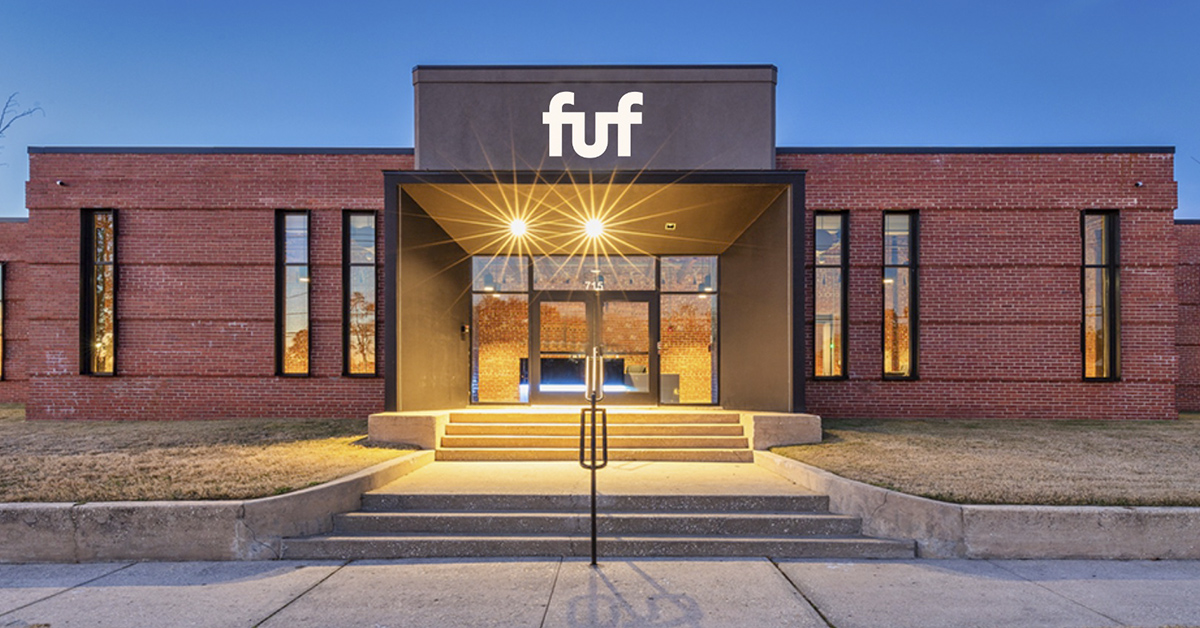
The largest private-label fermented beverage manufacturer in North America is brewing up something other than kombuchas and tepaches these days. FedUp Foods is jumping into coffee with a line of Regenerative Organic Certified (ROC) cold brews launching this week and produced out of its recently opened Wilmington, N.C. facility.
The Wilmington production center became operational on October 1 and marks the third manufacturing site for the North Carolina-based company. The facility adds roughly 70 million bottle capacity annually and was built as part of a three-year strategy to move into cold coffee production. In Wilmington, FedUp Foods is also able to produce the fermented beverages — kefir soda, kombucha, tepache and probiotic drinks — that the company makes in its Asheville and Erwin, Tenn. facilities.
Coffee seemed like a natural extension of the mission-driven company’s impact innovation model to create environmentally and nutritionally sustainable beverages, said co-founder and EVP of strategy and development, Zane Adams.
“We are brewers and fermenters by trade and by passion,” he said. “Coffee is one of those places in our food chain that is always pretty sexy. But also has a history where impact can be substantial by just changing a few things in how it is grown and processed.”
The drink maker is currently sourcing roasted beans from a supplier but has plans to move that process in-house in the future. The Fair Trade brews are offered in a 48 oz. multi-serve format and available in Medium and Dark roasts. Seeing as functionality is part of FedUp Foods’ identity, the private label coffees can also be produced with adaptogens like Lion’s Mane or L-theanine.
Although it is just beginning its journey as a private-label coffee manufacturer, Adams said he expects to extend the capabilities with a Buchi-branded version of cold brew in the next 12 to 18 months. At the moment there are no plans to bring a single-serve format but it is within the producers’ capabilities to do it down the line, Adams said.
“We like to put [branded products] in areas that will allow us to get a lot of good data which can inform us about formulation and packaging,” he said.
After the recent devastation incurred by Hurricane Helene in FedUp Foods’ home region of Asheville, N.C., Adams said the brand’s mission to support healthy and sustainable food systems has become even more imperative.
“The coffee industry has historically been challenged by unsustainable farming practices that deplete soil health and strain the communities that rely on it,” said FedUP Foods sourcing specialist Julie McGuire in a press release statement. “By prioritizing ROC beans, we’re not just producing better coffee—we’re actively supporting farming practices that restore ecosystems, improve soil health and ensure fair treatment for farmers.”
As a beverage category, coffee has been subjected to commoditization by multinational companies, Adams added. That focus on profit margins and lower supply costs has impacted not only coffee quality but environmental degradation in growing regions, he said.
The company is taking a “longer strategic view” to direct its growth in coffee where it will be testing markets with formats, varieties, functions and a messaging approach focused on sustainability.
“What is the future of food? What are people going to be drinking in 30, 50 or 90 years?” he said. “Where we can take a high-integrity, high-input, high-quality supply chain that is helping create a positive impact on the climate. How can we amplify that work, and where is the best place to do that?”