

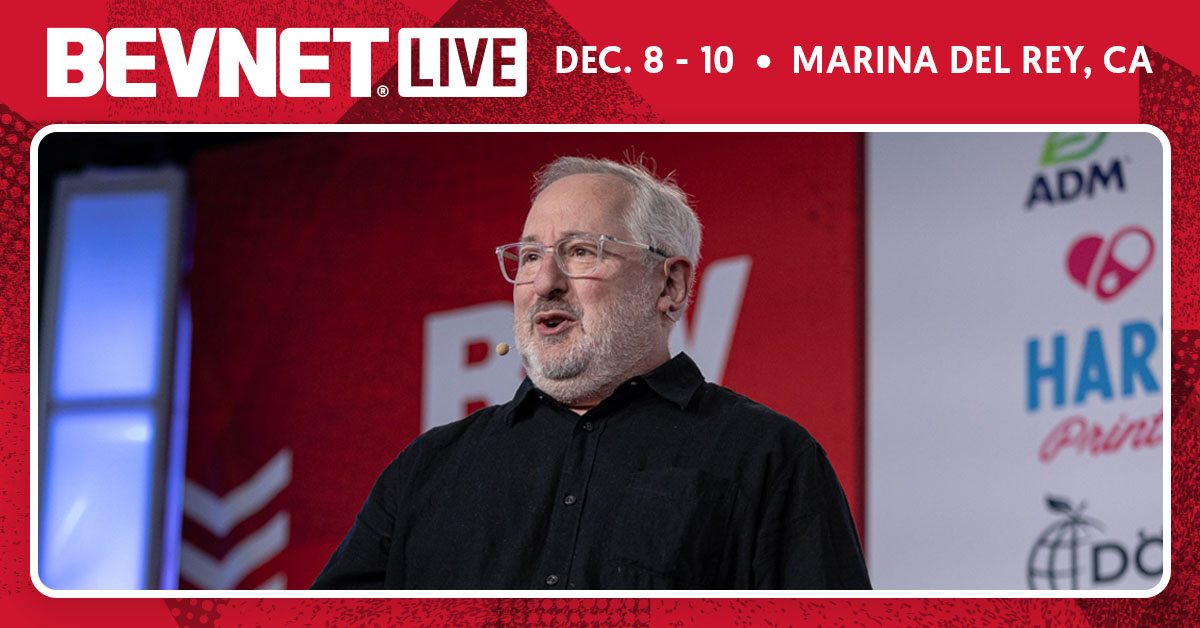
Happy Innovation Takes Emotion Into Account
Craig Dubitsky discussed how he’s bringing his considerable experience in creating “joyful” CPG brands into his new coffee venture happy, co-created with actor Robert Downey, Jr., during the opening session of BevNET Live Winter 2024 on Monday.
“I’m allergic to this word ‘disruption,’ Dubitsky said during the presentation. “It’s not about disrupting anything. No one ever said, ‘honey, next time you’re getting some toothpaste, can you get me some of that Hello toothpaste, they’re such challengers the way they disrupted my routine.’ No one says that.”
Dubitsky, who has also founded breakthrough brands such as cleaning products company Method, lip balm maker Eos and toothpaste company Hello, believes that in order for a product to bring the type of magic that upends a category, it has to innovate with emotion in mind.
“The only people that ever called us disruptive were the people being disrupted and they were being disrupted because they… weren’t delighting anybody. That’s the magic.”
According to Dubitsky, a product can only achieve cultural relevance via emotional innovation. These products are successful because they provide consumers with something that wasn’t in their lives before, improve the experience and have the ability to flip negative or neutral feelings about a product type in a positive direction, he said.
Those sentiments should be top of mind for any entrepreneur, Dubitsky emphasized, noting that these innovations are the ones that will be able to “go the distance.” He also tied that advice to his approach with happy, which has worked to differentiate itself primarily on its packaging type – a fully and easily recyclable cubical tin that actually pays returns to recycling companies – as well as its authentic commitment to support mental health and well-being year-round.
“We wanted to make sure we didn’t do something that was performative – every month now is a ‘month,’” he said. “What I mean by that is… Dry January’s coming up. Oh, that’s January. It’s Earth Month. Guess what? Every month [should be] earth month. Oh, it’s Pride Month. Guess what? If you’re at LGBTQ+ every f*cking minute is pride minute for you. This idea that we’re going to appropriate the calendar to our marketing needs and bend it to our will just makes my bullshit meter go into red.”
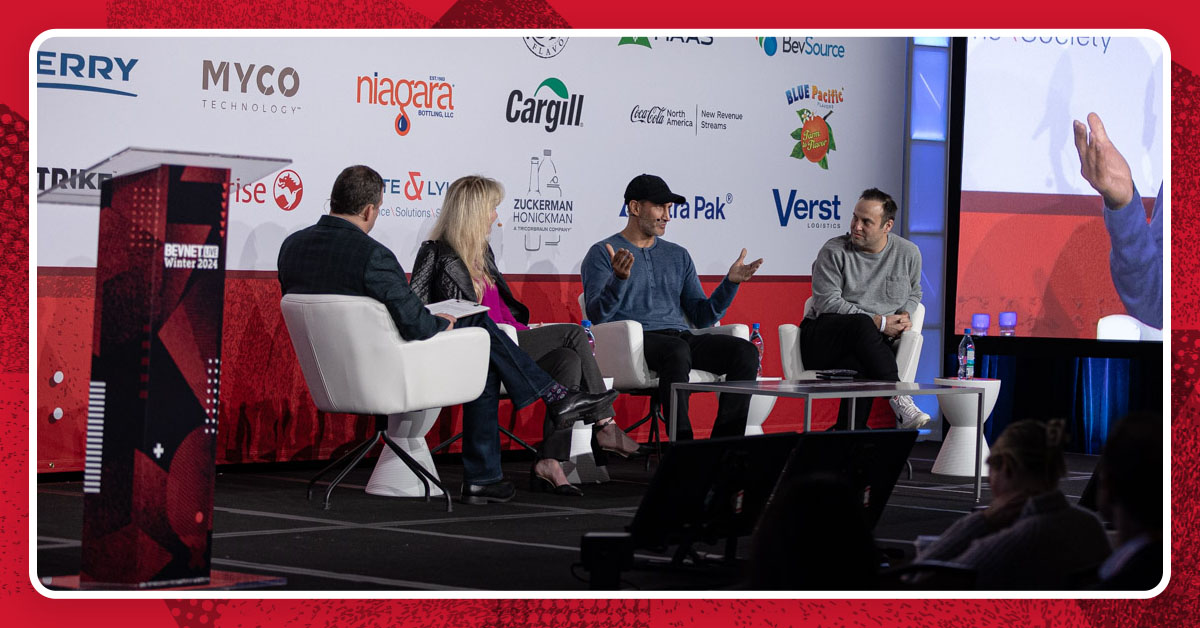
Why Beverage Does, and Doesn’t Work For VCs
The beverage industry has given select investors high returns, but not all firms and businesses are primed for success in the sector. According to the panelists, including Rocana Venture’s co-founder and general partner Gurdeep Prewal, Willow Growth Partner’s founder and general partner Deborah Benton and Barrel Ventures managing partner Nate Cooper, whether or not VC cash is right for your business is dependent on the firm itself and the relationships a founder has built.
“Beverage can be a fantastic VC investment, because the outcomes can be huge, and have been huge, which is very much in alignment with how venture capital and portfolio construction for venture capital works,” said Benton. “Why it may not be a great investment for venture capitalists, candidly, a lot of VCs [don’t] know beverage very well.”
She cautioned founders to seek out firms that at the least are focused on the space or are run by former operators. Prewal added that raising at any stage, even for the VCs themselves, is extremely difficult in the current market. Cooper said he believes money will begin to move once again, as long as there are more exits to PE and dollars flowing from other streams beyond “the big three.”.
Citing Rocana’s recent investment in functional beverage brand Recess, Prewal added that what made that deal so attractive was that the business is not “held hostage” by an exit to strategics like Coke, Pepsi or KDP, but rather could have options among a wider swath spanning beer and spirits players as well.
“The challenge here is that we’ve got to work through this cycle, and it’s probably going to take another three, five years before the caps are fully on again,” Prewal said. “Between now and then, it’s just going to be very selective.”
TikTok Shop 101
Social media could begin to play a key role in emerging brand’s sales strategies, according to Cameron Gould-Saltman, TikTok Shop’s head of food and beverage. He shared how the platform, an emerging product itself only 15 months post-launch, is utilizing data to constantly evolve how it works with brands.
Gould-Saltman explained that companies that have seen success on the platform are taking a creator-first approach to building their reach. While they must be comfortable ceding some control to influencers and creators, he believes this approach has been most effective to authentically build followings for a new storefront and introduce U.S. consumers to the concept of shopping via social media.
He also explained how the company’s commission fee structure is split between TikTok, creators and the business in addition to detailing the various fulfillment methods TikTok Shop partner brands can utilize. However, considering the platform’s early stage, he acknowledged those aspects will likely evolve as it continues to grow.
Additional highlights from BevNET Live Day One:
- Dora’s Naturals founder and CEO Cyrus Schwartz provided insight into how the distributor thinks about sustainable growth and assesses new geographies as well how it steers brands on their own growth aspirations as they take those first steps beyond their own backyard.
- Sprecher Brewing CEO Sharad Chadha shared his journey to revitalizing the Milwaukee-based brewers’ product innovation strategy and how the company has worked to become a fixture within its local community.
- Pilot’s cooler category manager Corey Nicely shared that the beverage cooler is the retailer’s largest segment and detailed the role the c-store retailer plays in a brand’s distribution journey.
- While in conversation with Wildwonder founder and CEO Rosa Li, Emil Capital Partners director Melissa Dolan, Albertson’s venture group senior director Karen Ivanis-Rogers and Basemakers CEO Max Baumann, KeHE senior category manager Christina Schmidt informed the crowd that the distributor has introduced a new opt-in fee structuring program that allows emerging brands trade associated, first-year onboarding fees for a consistent 2% flat rate.
- Heidi Dillion, Distill Ventures broke down how new trends such as “zebra striping” and temp drinking are impacting both spirits and the no-to-low alcohol movement. She described how trend data shapes the direction of Distill’s portfolio.