

Brewscape: The Latest Craft Beer Brand News
Rhinegeist Enters THC Beverages with Fuzzy Bones
Amid murky times for THC beverages, Ohio’s largest craft brewery, Rhinegeist, is wading into the intoxicating hemp beverage category with Fuzzy Bones.
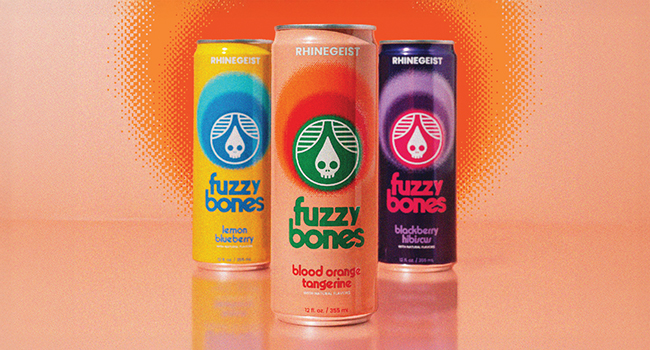
Fuzzy Bones is a line of non-alcoholic sparkling beverages made with real juice and infused with hemp-derived delta-9 THC.
The line will begin with three flavors – Blood Orange + Tangerine; Lemon Blueberry; and Blackberry Hibiscus – each 5 mg of THC and sold in 12 oz. slim can 4-packs. Each offering also contains 10 mg of either cannabinol (CBG) or cannabidiol (CBN), depending on the flavor.
“As the largest craft brewer in the state of Ohio, we recognize that there is some legitimacy, credibility and weight that we can offer by acknowledging that we want to participate in this category,” Rhinegeist CEO Adam Bankovich told Brewbound. “We’re also very appreciative of all the efforts that are ongoing to create regulation, which we are fully supportive of.”
Fuzzy Bones is the product of two years of research and study. Packaging bears the Rhinegeist name and “skull drop” logo, trading on the brand equity that the craft brewery has built over the last 12 years.
THC-infused beverages present a “meaningful” opportunity for Rhinegeist’s overall business, Bankovich said.
“This is something we believe is going to be a very real, very materially contributing component of our business going forward,” he said. “Everything that we’ve read, everything we’ve studied, everything the industry is talking about, acknowledges that this product category is one that will be here to stay.
“This does solve a true need state and a different occasion for consumers,” he continued, adding that from “Cali sober” drinkers, to those looking to moderate consumption, THC beverages are becoming a “true every day presence in people’s lives.”
Fuzzy Bones is now available in Rhinegeist’s Cincinnati taproom for onsite consumption and to-go sales to 21+ consumers at an $18.99 price point, which will also be the suggested retail price in retailers, Bankovich said.
The brand will soon be available for direct-to-consumer shipping in states where legally permitted, with a $22.99 (plus shipping) price point per 4-pack. Rhinegeist is also exploring subscribe-and-save and bundling options, Bankovich added.
The company is in active negotiations with distributors to carry Fuzzy Bones, including in states where Rhinegeist’s beer is not yet distributed, Bankovich said. Rhinegeist’s existing nine-state footprint includes Ohio, Indiana, Kentucky, Pennsylvania, Tennessee, Michigan, West Virginia, Wisconsin and Illinois.
“I don’t believe we’ve talked to any distributor yet who doesn’t acknowledge the impact this category is having and that it is a category that is likely here to stay,” Bankovich said.
Molson Coors CEO: Taking $3.6B Goodwill Impairment a Way to ‘Check Ourselves’
Molson Coors’ Q3 financial performance brought expected declines as the beer giant and others in the industry continue to tackle macroeconomic headwinds and soft beer trends.
But what brought some surprise to analysts in the company’s latest earnings release, was a nearly $3.65 billion non-cash goodwill impairment charge in the quarter. $77.5 million of that charge was “attributable to noncontrolling interests.”
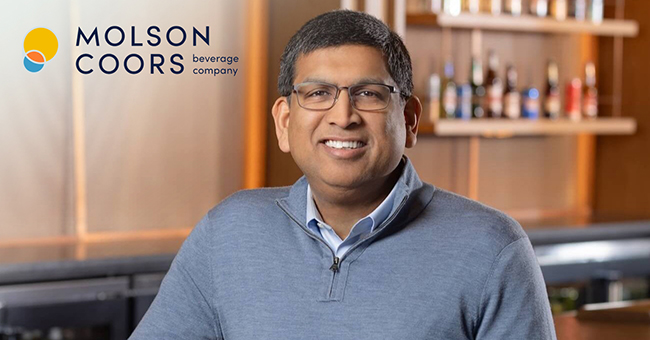
On a call with investors and analysts following the release, Molson Coors CEO and president Rahul Goyal said the impairment charge was due to a “number of factors,” including the company’s 2025 performance and outlook, discount rates, risk premium and valuation multiples. In evaluating the company, he noted that Molson Coors needs to “check ourselves to make sure we’re thinking of the business in a prudent way,” and “the impairment is a function of that.”
“We can get this business back to top and bottom [line] growth,” he added. “We think we are very undervalued in the context of our market cap right now.”
Molson Coors has an $8.1 billion market capitalization.
Additionally, the company took a $273.9 million intangible impairment loss in the quarter, credited in part to its Staropramen and Blue Run Spirits brands. $75.3 million of that loss was credited to Blue Run, which Molson Coors acquired a majority stake in for $78 million ($65 million cash) in 2023.
Goyal’s leadership run has started off with a bang, including the restructuring and realignment of Molson Coors’ Americas business unit, the departure of chief commercial officer Michelle St. Jacques, and the elimination of 400 salaried positions in the Americas division – equivalent to about 9% of the division’s headcount.
“I want to assure you that we are moving with a sense of urgency and with a clear purpose,” Goyal said.
New Belgium to Test New RTDs, Add Bell’s Two Hearted Stubby Bottle, Take Oberon Light Year-Round
A pair of new ready-to-drink (RTD) offerings are coming from New Belgium in 2026, including Kirin’s top-selling canned cocktail and a vodka cocktail with a “subtle nod” to the Voodoo Ranger franchise.
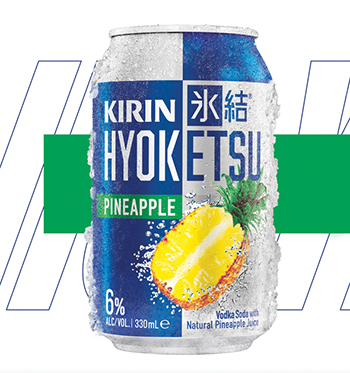
As part of their incubator approach to test, learn and prove new launches, New Belgium will bring parent company Kirin’s Hyoketsu vodka soda to the U.S.
The 5.8% ABV vodka RTD inspired by the chuhai cocktail will be available in two flavors – Pineapple and Strawberry – beginning in March. Hawaii and Tampa, Florida, will be the first test markets.
In addition to Hyoketsu, New Belgium will launch Vandal Cocktails, a 10% ABV vodka-based RTD focused on the convenience channel.
Arizona, Nevada, New Mexico and Ohio will get Vandal first. The first flavors out of the gate include Blue Razz, Cherry Limeade and Citrus Charge. Each can includes two vodka shots.
“Lots of our convenience store chains are really excited about this one,” Dye Yonushonis said.
The package features a masked bandit-style doppelganger of the Voodoo Ranger.
New Belgium is taking the learnings from launching hard refresher brand LightStrike this year and applying them to Hyoketsu and Vandal. Among those lessons was that scale in RTD offerings doesn’t come overnight, Dye Yonushonis said.
“It’s either bought or built,” she continued, citing BeatBox, Carbliss and Surfside as successful examples that have “built region by region, channel by channel, step by step, adjusting along the way.”

Boston Beer Q3 2025: Angry Orchard, Sun Cruiser Gains Can’t Offset Losses
Boston Beer’s transformation from a craft brewer to an adult beverage company, which began in earnest about a decade ago, is looking like an even better bet as traditional beer’s declines outpace those of the beyond beer segment.
Traditional beer has declined about 5.5% in 2025, founder, chairman and CEO Jim Koch said during a call with investors and analysts to discuss the company’s third quarter. By comparison, the category’s non-traditional segments – hard cider, hard seltzer, flavored malt beverages (FMB), and other ready-to-drink (RTD) offerings – appear to be down “maybe 1% or 2%,” he said.
“Think of us as having a bias towards growth,” Koch said. “That is how we look at the world. We believe that we should be growing our revenue. As a company, we are heavily weighted away from traditional beer towards what people call beyond beer. I like to call it a fourth category because it’s not just beyond beer, it’s beyond liquor, beyond wine.”
Koch’s optimism came after an expectedly tough quarter. Boston Beer’s shipments (sales to wholesalers) declined 13.7% and depletions (sales to retailers) declined 3%. Net revenue declined 11.2%, to $537.5 million.
Beyond beer offerings now account for 85% of the company’s volume, driven by its largest brands, Twisted Tea and Truly Hard Seltzer. For the first three quarters of 2025 (data ending October 5), both have declined in dollar sales and volume in Circana-tracked multi-outlet grocery, mass retail and convenience stores (MULO+C):
Twisted Tea, dollars -5%, volume -6.9%;
Truly, dollars -14.4%, volume -16.2%.
The losses of both Twisted Tea and Truly – the category’s No. 10 and No. 14 largest brand families, respectively – have outpaced their segments’ declines. FMBs, to which Twisted Tea belongs, have declined 3% in dollars and 5.3% in volume year-to-date (YTD) through October 5. Hard seltzer has declined 5.1% in dollars and 7.8% in volume.
Twisted Tea’s declines “surprised us,” Koch told the analysts. The company had expected 7% dollar sales growth in 2025. The twin problems plaguing Twisted Tea are a loss of shelf space to spirits-based RTDs, including vodka-based teas, and excessive prices, he said.
Included in the set of space-stealing vodka-based teas is Boston Beer’s Sun Cruiser, the hard tea and lemonade brand the company launched last year. The company estimates 20% of Twisted Tea’s losses can be attributed to this group, but any share that Sun Cruiser has picked up “is revenue and gross margin accretive for us,” due to the brand’s higher price point, Koch said.
To combat softness in sales of Twisted Tea 12-packs, which the company said were priced higher than Constellation Brands’ Modelo Especial and Anheuser-Busch InBev’s Stella Artois at some retailers, Boston Beer is trialing 16 oz. can 4-packs priced at $10 and below in certain markets.
Twisted Tea Light (4% ABV) and Twisted Tea Extreme (8% ABV) have each gained shelf space. Boston Beer is adding an Extreme variety pack early next year, which may include Twisted Tea Extreme Long Island Iced Tea, which was unveiled earlier this month at the National Association of Convenience Stores (NACS) annual trade show, according to a Goldman Sachs report. The higher ABV line also includes Extreme Lemon and Extreme Blue Raz.
In its sophomore year, Sun Cruiser has become the fourth-largest spirits-based RTD brand, Koch said. After reaching national distribution in early 2025, the brand has gained large-scale chain placements and tripled its points of distribution. Sun Cruiser is the leading vodka-based tea and lemonade RTD in the on-premise, according to NIQ data cited by Koch.
To build Sun Cruiser’s momentum, Boston Beer is rolling out 19.2 oz. single-serve cans nationwide in early 2026 after a New England trial and sponsoring sports and music venues. The 19.2s will replace 24 oz. resealable cans.
“We believe Sun Cruiser will be the next iconic brand for our company and an important growth contributor for the beyond beer category,” Koch said. “We are focused on building the brand’s distribution, displays and retail promotion while investing in media and key sponsorships that keep the brand relevant throughout the four seasons of the year.”
Angry Orchard hard cider returned to growth in 2025, “driven by a higher level of focus across the organization, including increased investment and new sponsorships,” Koch said. YTD through October 5, dollar sales of flagship Angry Orchard Crisp have increased 3.1% and volume increased 2.1%, which accelerated to +7% and +6.5%, respectively, in the last 12 weeks (L12W).
The brand is gaining momentum going into Q4. In the one-week period ending October 12, Angry Orchard recorded double-digit growth in dollar sales (+16.5%) and volume (+13.1%), according to Circana. A spooky-season boost could be attributed to Angry Orchard’s seasonal programming featuring Jason Voorhees, the fictional killer in the popular Friday the 13th movie franchise.

Boston Beer Promotes Phil Hodges to Chief Operating Officer
Boston Beer Company’s chief supply chain officer (CSCO) Phil Hodges has been promoted to chief operating officer, effective immediately.
Hodges’ new responsibilities include overseeing “day-to-day operations across all functions” and “continuing to improve execution and implementation [of] the company’s previously announced brand building and margin enhancement initiatives,” according to a release.
He will report directly to Koch, who retains his role as CEO – a position he took in August with former CEO Michael Spillane’s departure from the company. Koch’s primary focus will remain on “high-impact areas, including the company’s innovation pipeline, wholesaler relations, brand investment strategy and talent and culture.”
Hodges has served as CSCO since May 2023, after a year of consulting for the company. His resume includes stints at Carlsberg, Kraft Foods and Mondelez.
The role of CSCO will be passed to Phil Savastano, who has been with the company since March 2024, leading operations for Samuel Adams’ Pennsylvania brewery.
Voodoo Ranger’s 2026 Plan: Sweet Ride IPA, G-Force 11% ABV Singles; Plus, Invincible & Borderlands Partnerships
New Belgium Brewing has big plans for Voodoo Ranger in 2026, from two new IPAs to partnerships with two of the biggest TV and video game releases of the year.
The goal is to bring new consumers into the Voodoo Ranger franchise through new products and partnerships that energize its core portfolio.
New Belgium’s big Voodoo Ranger bets for next year include:
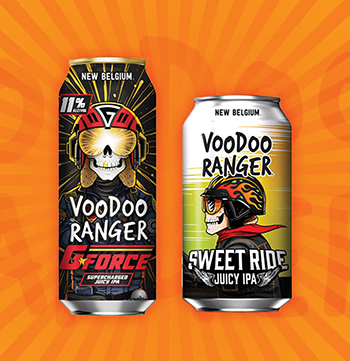
• Sweet Ride, a 6.5% ABV IPA targeted to the grocery channel;
• And G-Force, an 11% ABV IPA in 19.2 oz. single-serve cans for convenience.
Both new items were revealed during New Belgium’s distributor meeting in September in Fort Collins, Colorado.
The expectations for Sweet Ride are big. New Belgium VP of marketing Dave Knospe predicted Sweet Ride will be “the biggest craft launch of the year.” Sweet Ride will roll out in the spring, first in the Voodoo Ranger Hoppy Pack to 30,000 points of distribution to drive consumer trial, as well as on draft. Individual 6-packs will follow.
Starting in the Hoppy Pack will put Sweet Ride in front of core Voodoo Ranger drinkers while also bringing new energy to the pack to help reverse trends after a tough 2025 due to lost distribution as Walmart eliminated rotator packs. Hoppy Pack is the No. 1 IPA variety pack in NIQ-tracked retailers.
“We’re pumped on this thing because we think this is going to solve a huge problem within the category, in multipacks, in everyday drinkability,” Knospe said.
Knospe described Sweet Ride as a “crushable,” “bright, crisp, lightly fruit-flavored IPA” with some “bitterness to round it out.” Those attributes fit what New Belgium’s research and the Harris Poll showed Generation Z drinkers are seeking: fruity, sweet and lighter profiles.
New Belgium also views the 5% to 8% ABV range of beer – which makes up 70% of craft’s volume – as ripe for disruption. Knospe pointed to a lack of breakthrough brands in that space over the last five years.
“Of the top 20 brands in everyday drinkability, none of them are new within the last five years,” he explained. “In the craft sense, usually the top brands are new brands. They pop up, they go through the sophomore slump, they get discontinued. They do it again. That’s the cycle. None of the top 20 in this entire space are considered even remotely new.
“This is what the category needs, innovation that is built to attract new drinkers into craft and get this category healthy once again, build something for today’s consumer, not the consumer of 2010,” Knospe said.
Meanwhile, G-Force is aimed at building on Voodoo Ranger’s dominance of craft singles in convenience and building on the 24% share of craft single dollars held by top brands Voodoo Ranger Imperial IPA and Juice Force.
Kiron Chakraborty, director of core brands Voodoo Ranger, described G-Force as a “supercharged juicy IPA” set to arrive in February.
“This isn’t just another SKU,” he said. “It is built to thrive in convenience.”
G-Force is expected to build on the success of Imperial, Juice Force and Tropic Force.
New Belgium is hoping it has its next big things with Sweet Ride and G-Force in 2026, while also energizing its core offerings.
“We have to attract the next wave of drinkers through Sweet Ride, but we also have to do it with what we have in our portfolio today,” Knospe said.
Beyond Sweet Ride and G-Force, New Belgium is launching a partnership with Amazon’s Invincible, the animated superhero series voiced by Mark Hamill, Walton Goggins, Steven Yuen and Gillian Jacobs that has amassed 6.6 billion views and is big with 21- to 34-year-olds.
Invincible vs. Voodoo Ranger will be a limited-edition Blood Orange IPA in the Hoppy variety pack that will be available for summer – ahead of Invicible’s first video game release.
“We are committed to adding energy to our existing portfolio,” Knospe said of Hoppy Pack. “We’re going to feature Invincible and bring in a whole new wave of drinkers that may not have even considered a craft beer before.”
The gamer community factors heavily into Voodoo Ranger’s plans. Voodoo Ranger will go even bigger than ever before into gaming in 2026 with Borderland 4, which is running a $100 million ad campaign and is expected to be among the biggest video game releases of next year. The game will be cross-promoted on Voodoo Ranger IPA 6-packs.
“This younger generation, almost all of them consider themselves to be gamers,” Knospe said, noting that 70% of gamers average eight hours a week playing.
“It’s bigger than Hollywood now, and these people are loyal to the brands that sponsor their favorite games and their favorite streamers,” he added.
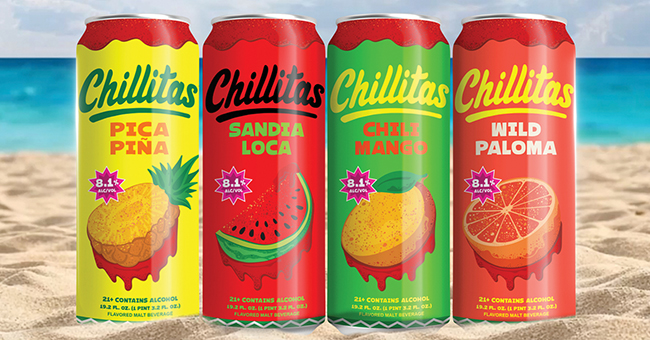
BeatBox Parent Co. to Add Chillitas FMB Line in 2026 Targeted to 2nd Generation Latinos
The founders of BeatBox are hoping 2026 will bring them their second hit brand aimed at a new generation of consumers.
BeatBox parent company Future Proof — which was the subject of rumors of a sale to AB-InBev as of press time — will launch Chillitas in February, a new-to-world, flavored malt beverage (FMB) outside of the company’s flagship party punch brand.
Chillitas will target second-generation Latino consumers, who make up 20% of the U.S. population and are expected to grow to 33% by 2030, BeatBox co-founder and chief marketing and experience officer Brad Schultz and SVP of global marketing Zech Francis told Brewbound.
What Chillitas is not is a chelada, Schultz and Francis stressed.
“We don’t have any tomato in it, which we think is a big competitive advantage for us,” Francis said. “We don’t have beer in it because, frankly, look at the macro trends with what’s happening in beer. There are a lot of consumers that feel like beer is not aligned with where they are as consumers.
“There is this Chelada shopper who doesn’t want the beer and tomato,” Schultz added. “They want something light.”
Schultz sees an opportunity to create a new product at the “magical intersection” of cheladas, FMBs and hard seltzers with an elevated ABV at 8.1%.
Available in four flavors – Chili Mango, Wild Paloma, Pica Piña and Sandia Loca – Chillitas will be sold in 19.2 oz. single-serve cans that feature “Spanglish” text (a mix of Spanish and English).
Although Chillitas will not trade on BeatBox’s brand equity, the reputation has carried over with retailers and distributors, leading to early adoption, Schultz said.
The new product will roll out in eight states – Arizona, California, Colorado, Illinois, Nevada, New Mexico, Oklahoma and Texas – with retailers such as Vallarta, Cardenas Markets, Superior Grocers, Circle K and HEB on board.
“We feel pretty confident within the first few months of launch, this will get into 30,000 to 40,000 accounts, pretty much immediately after launch,” Francis said.
In a fall 2026 Phase Two, Chillitas is expected to add 20 states.
Schultz and Francis also see an on-premise opportunity for Chillitas with Tajin chamoy rim dressings as a ritual similar to adding an orange slice to a Blue Moon or a lime to a Corona.
The idea for Chillitas has been marinating for years. As BeatBox leaned into being a leading flavored alcohol producer, the company zeroed in on Tajin, chamoy, sweet, salty, spicy flavors that extended beyond cheladas into traditional CPG products such as popcorn, chips and sorbets. However, the right opportunity didn’t fully emerge until around eight months ago.
A small team began working on what would become Chillitas, partnering with “The Drip Committee,” a group of around 25 Latino influencers who met monthly to help shape the liquid and branding while also offering weekly feedback by text.
“They have a voice, but right now, we’re just using the brain power to validate what we’re building,” Schultz said. “And come launch, they’re going to be launch partners.”


Receive your free magazine!
Join thousands of other food and beverage professionals who utilize BevNET Magazine to stay up-to-date on current trends and news within the food and beverage world.
Receive your free copy of the magazine 6x per year in digital or print and utilize insights on consumer behavior, brand growth, category volume, and trend forecasting.
Subscribe