

Clear Mission: The Innovations Behind Protein’s Refreshing Surge
Protein’s role in the ready-to-drink beverage market is being rewritten in real time.
The macronutrient is no longer strictly a pre- or post-workout recovery fuel; it has become one of the most – if not the most – influential forces reshaping the modern beverage landscape. From creamy shakes crafted with ultrafiltered milk to “modern sodas” to lighter functional drinks, brands are working to redefine what protein means as the category both grows and diversifies rapidly across numerous usage occasions.
In the 52-week period ended April 19, the U.S. RTD protein supplement market climbed 7.5% year-over-year to nearly $6.5 billion, according to SPINS data. While traditional meal replacement drinks still lead the category, the market is increasingly influenced by adjacent innovations, according to Scott Dicker, senior director and head of research and insights at SPINS.
“You’re seeing other categories jumping on high protein,” he said, pointing to offerings like protein sodas and sparkling waters as part of a broader wave where “soda is now a vehicle for functional delivery.” That’s due in part to the rise of brands like Olipop and Poppi, which renewed interest in digestive health and opened the door for other “modern sodas” with various functional benefits, one that has fast drawn protein fortification as the lead experiment.
With the RTD protein category becoming significantly more saturated, differentiation is more important than ever; consumer expectations are fragmenting by use occasion, and innovation is spreading far beyond traditional meal-replacement formats and gym fuel. Protein is increasingly being reframed around daily nutrition, satiety and meal accompaniments – a role that many of the new protein sodas hope to fill.
Against that backdrop, the market is evolving beyond the race for higher protein counts alone, according to a recent report from the plant-based food company PURIS. Today’s consumers are seeking beverages that deliver meaningful, everyday benefits such as sustained energy, digestive support, lower sugar content, clean labels and improved drinkability.
This shift has positioned beverages – especially clear protein drinks, ultrafiltered milk-based products and hybrid offerings (i.e. protein + energy, protein + creatine) – as one of the leading spaces for protein innovation. Protein consumption continues to rise across demographics, fueled by growing awareness around nutrition, satiety and wellness. Those trends are being further accelerated by interest in GLP-1 weight loss medications and macro-focused eating habits, which stress protein consumption above all else in the name of nutritional efficiency.
According to Circana’s most recent “Share of Sip” report, consumer motivations for protein vary across generations, including active “lifestylers” seeking to satisfy hunger and boost energy, fitness enthusiasts looking for workout fuel, and boomers and seniors seeking support for overall well-being and longevity. Beverages have become an increasingly popular snack option, with 68% of respondents saying they sometimes have a drink as a snack, per Circana.
That functional expansion is being driven by both consumer demand and a shift in how beverages are formulated and perceived.
A Clear Opportunity
If shakes defined the last growth cycle, clear protein, a highly-filtered, highly mixable whey isolate that allows for a less viscous blend, may define the next. It’s opened up new consumption occasions where protein fortification allows products to be positioned somewhere between a hydration beverage and a refreshment with benefits, depending on the brand and specific format.
“Clear has made it possible [for protein] to be in both carbonated and fruity flavors, whereas traditional shakes have a much more milkshake-like texture and consistency,” said Dicker, adding that “soda is now a vehicle for functional delivery.”
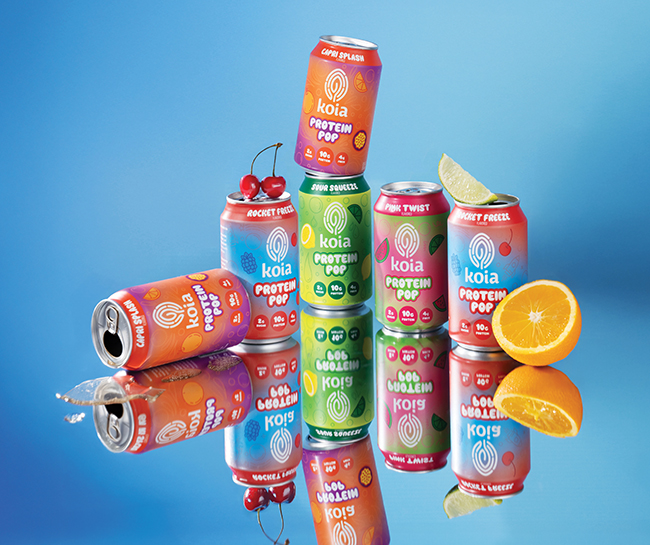
For plant-based protein purveyor Koia, the decision to enter the space stemmed from both technical opportunities and shifts in consumer behavior. The Los Angeles, Calif.-based brand recently hit the market with the first plant-based RTD protein soda after VP of product development Niyati Parikh flagged a key patent around clear protein and believed it would open the door to a new generation of beverages.
For Koia CEO Chris Hunter, who was initially hesitant to launch a protein soda, the use case was as much a breakthrough as the technology itself.
“What I saw was that my wife and I were having lunch, we cracked open one of these protein sodas and drank it, and it dawned on me that this was the use occasion,” said Hunter, noting that instead of replacing protein shakes or smoothies, clear protein is positioned as an additional moment: refreshment with benefits.
In January, Koia officially debuted Protein Pop as a TikTok Shop exclusive. Available in four flavors – Rocket Freeze, Sour Squeeze, Pink Twist and Capri Splash – each 12 oz. can delivers 10 grams of protein, 5 grams of prebiotic fiber and 2 grams of sugar. The line is currently rolling out to Target stores nationwide.
That move builds on Koia’s broader trajectory as a plant-based, dairy-free company born, in part, from Hunter’s own health journey and his son’s dairy intolerance. From day one, the brand was designed around key formulation pillars, including clean ingredients, complete plant protein, low sugar and high fiber.
According to Hunter, Koia “set out to build a lifestyle brand at a time in the category that there weren’t many.”
From a refrigerated, retail-native start, Koia is now available in roughly 35,000 doors across natural, conventional, mass and foodservice channels – including Starbucks – while a growing shelf-stable Amazon and DTC business lets the brand follow consumers from the cold case to the pantry set and, with Protein Pop, into the soda aisle as well.
“I’m thinking about where protein is added that’s not a normal kind of occasion, and that might be in chips, popcorn, sauces and things like that. Will that stay around? I don’t know, and that’s why we’re not pushing the innovation there,” said Hunter. “The furthest we’re pushing, at least currently, is things within subsets that we feel have stability in protein, so that’s where clear protein comes in. It’s new and exciting, but still a familiar way for people to consume proteins.”
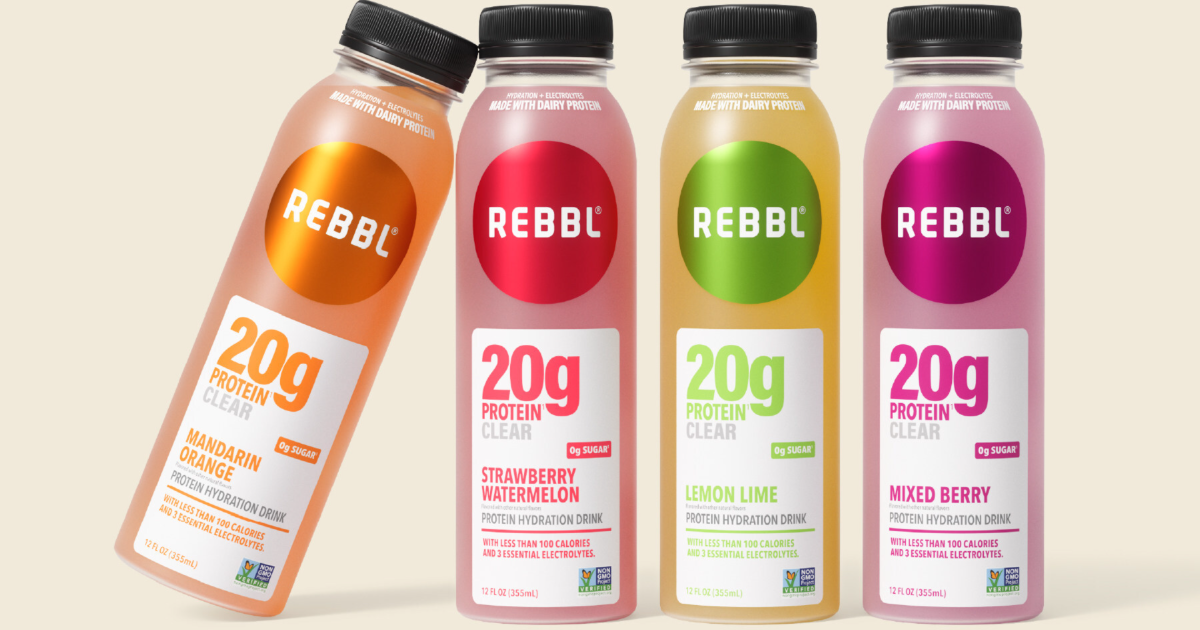
Elsewhere, REBBL – which was snapped up by SYSTM Foods in 2022 – is gearing up to launch a non-carbonated clear protein beverage featuring whey protein as the hero ingredient. Debuting in four flavors – Mixed Berry, Lemon Lime, Strawberry Watermelon and Mandarin Orange – each 12 oz. bottle of REBBL Clear Protein delivers 20 grams of protein and essential electrolytes, including 300mg potassium, 100mg magnesium and 95mg sodium.
“I think that’ll appeal a lot to our female consumers, particularly as women are looking to increase their protein – sometimes they may want a shake and sometimes they may not want a shake,” said Elizabeth Stephenson, CEO of SYSTM Foods. “I think it’ll also work really well in terms of workouts. You come off a workout and want something that also has hydration.”
During its first-quarter earnings call in May, legacy protein player BellRing Brands announced the upcoming launch of Premier Protein Soda, slated for Q4. The new offering will deliver 15 grams of protein and is expected to “bring in new, younger consumers, increase basket sizes and expand usage,” per CEO Darcy Davenport.
“Premier Protein sparkling soda targets one of the most underserved segments of the category. Premier will be the first scaled player to enter this rapidly growing segment,” Davenport told analysts and investors during the earnings call. “The initial launch of this refreshing protein item will be in a significant mass retailer, ecommerce and many other FDM retailers.”
According to Joshua Schall, founder of J. Schall Consulting, clear protein beverages – particularly sodas – meet consumer demand by offering a more refreshing, fruit-forward alternative to traditional shakes. The appeal lies in the lighter flavors and incremental use cases.
Long term, Schall believes the category can continue to grow if products maintain drinkability and align closely with the soda experience consumers already enjoy, while providing a convenient way for consumers to reach their protein goals.
“I think, just like any protein product, such as popcorn, it all comes down to ‘how many does the market need?’” he said. “This is something that is going to be a commodity. The price point it’s at now is probably not the price point that it is going to survive at; just like Poppi and Olipop, the price needs to be closer to parity with what they’re competing against.”
He continued, “Right now, I don’t think there’s a clear winner – you need a brand to push this up to a Few hundred million dollars and toward a billion-dollar category. I don’t think there is one yet, but all it takes is one with the right marketing and positioning.”
Dairy’s Resurgence
While clear protein is undeniably having a moment, ultra-filtered milk is also enjoying rising popularity as a protein source amid a broader revival in the dairy industry. The U.S. Food and Drug Administration’s (FDA) updated Dietary Guidelines
have marked a major shift in federal nutrition policy, elevating dairy to play a central role in a healthy diet.
“All positive media around milk, dairy, or ultrafiltered milk definitely play together. People are realizing that the human diet is evolving, and more protein is being marketed as healthier, and we’re believers in that, obviously,” said Manny Lubin, co-founder of Slate Milk.
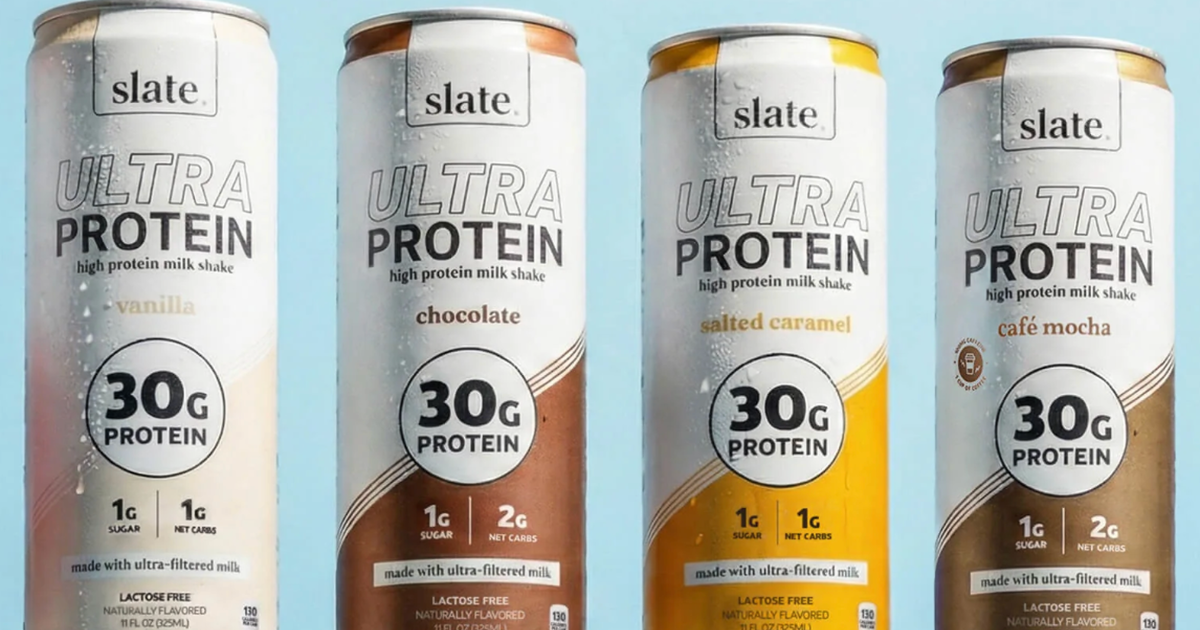
Launched in 2019, Slate has steadily evolved from a lactose-free canned chocolate milk company into a broader protein beverage platform, now offering a range of flavors with 20, 30, and 42 grams of protein – all featuring ultrafiltered milk as the hero ingredient. Its products are available in nearly 20,000 doors nationwide.
“When [co-founder] Josh [Belinsky] and I discovered ultra-filtered milk and started using those products, we realized it tasted great, it was lower in sugar, higher in protein and didn’t give you that chalky aftertaste,” said Lubin, noting that Slate’s R&D process “started and ended with taste.”
Most recently, Slate debuted a new line of 30-gram Ultra Protein Shakes in six flavors: Chocolate, Vanilla, Salted Caramel, Strawberry, Cookies & Cream and Cafe Mocha. Like the rest of the brand’s products, the new offerings feature ultrafiltered milk as the hero ingredient.
“We’ve seen that the demand for protein drinks has grown significantly since we launched, and how that’s affected us is we’ve been able to create products and product lines based on the needs of consumers in different consumption moments,” said Lubin. “What’s interesting about protein drinks is that they’ve long been thought of for post-workouts and bodybuilders, and I think what we’ve realized is we’ve grown to solve the problem of people wanting a snack that’s high in protein and ways to get protein conveniently throughout the day.”
Elsewhere, brands are capitalizing on the growing demand for ultrafiltered milk by reformulating existing product lines. Case in point: In May, Muscle Milk announced its “most significant transformation” yet after nearly 30 years on the market, rolling out a formulation and packaging refresh across its RTD line to reposition the brand from strictly gym fuel to “protein for all.”
“Our intention here was to be able to keep the people who’ve loved us for decades and to appeal to many more new [consumers]. The growth in the protein category is coming much more from people who have not traditionally consumed it, [but] it’s still critically important that we appeal to the people who’ve been with us for the past three decades,” Pines told BevNET.
That effort to broaden the category’s appeal beyond traditional protein consumers aligns with what industry analysts believe is a wider shift in consumer behavior and dietary priorities.
“Protein has never been, or probably very rarely, in the consumer’s mind, an impulse type of purchase like energy [drinks]. But I think with the new nutritional standards and the younger generational change of how consumers are perceiving diets – higher protein, lower carbs, lower fat – these consumers do start to think, ‘I do need to get my protein,’ or ‘I haven’t met my protein goals yet today,’” said Schall.
Have We Reached Peak Protein?
Despite protein’s continued proliferation, industry experts and brands alike are confident the category has yet to reach its peak.
“Protein will never go away. Will we continue to see high single-digit or double-digit growth? I think there will be a plateau point, just like with other [categories], but it will always be of interest and of need,” said Sally Lyons Wyatt, global EVP and chief advisor of consumer goods and foodservice insights at Circana.
According to Lubin, “When we think about protein, it’s not a fad diet; it’s the evolution of the human diet. This is what’s next, this is how we optimize our diet as human beings, by getting more protein in – it can help build and maintain muscle. There are so many benefits.”
Across shakes, sodas, dairy innovations and clear protein formats, one thing is clear (no pun intended): protein is no longer just a category; it’s an infrastructure of beverage innovation. The key question ahead is not whether consumers will still want more protein, but which formats, brands and taste profiles will define how they get it.


Receive your free magazine!
Join thousands of other food and beverage professionals who utilize BevNET Magazine to stay up-to-date on current trends and news within the food and beverage world.
Receive your free copy of the magazine 6x per year in digital or print and utilize insights on consumer behavior, brand growth, category volume, and trend forecasting.
Subscribe